
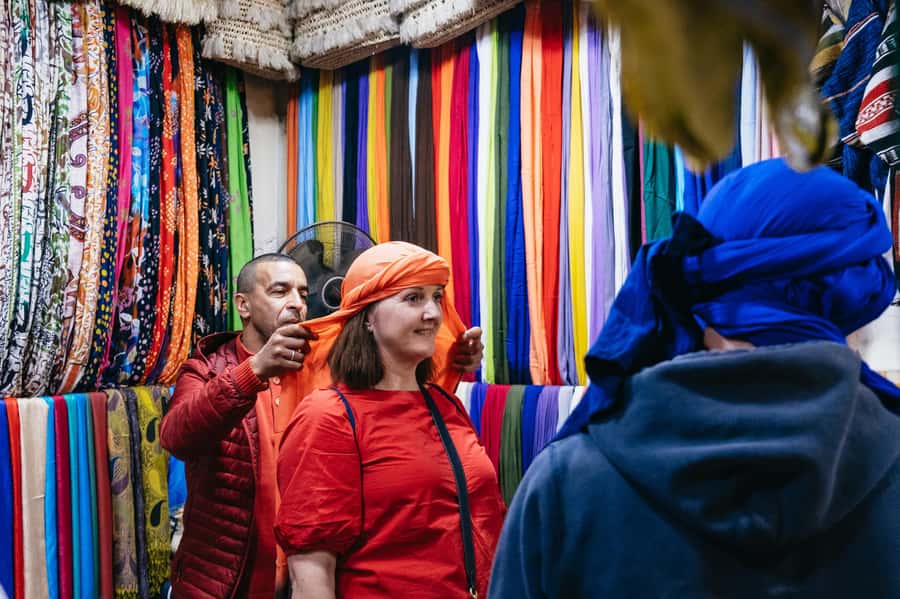
Review · OLD TOWN WALKING TOURS
Marrakech: Colorful Medina Souks Guided Walking Tour
The Medina rewards curious wanderers. This three-hour walk leads you through Marrakech’s trading lanes, artisan workshops, spice stalls, and craft markets with a local guide who can explain what you are seeing instead of leaving you to guess. I especially like the chance to visit working artisans and the practical help with bargaining. The main drawback is that the souks can feel crowded, confusing, and commercially intense, particularly if you prefer quiet sightseeing.
I also like that you can choose between a shared group and a private tour. Guides such as Mo, who grew up in the Medina, and Ya Ya, who has adapted the pace for a guest with a disability, have helped make the experience feel personal rather than scripted. Just allow extra time to find the meeting point, since it changes with the option you book.
Key things to know before you go
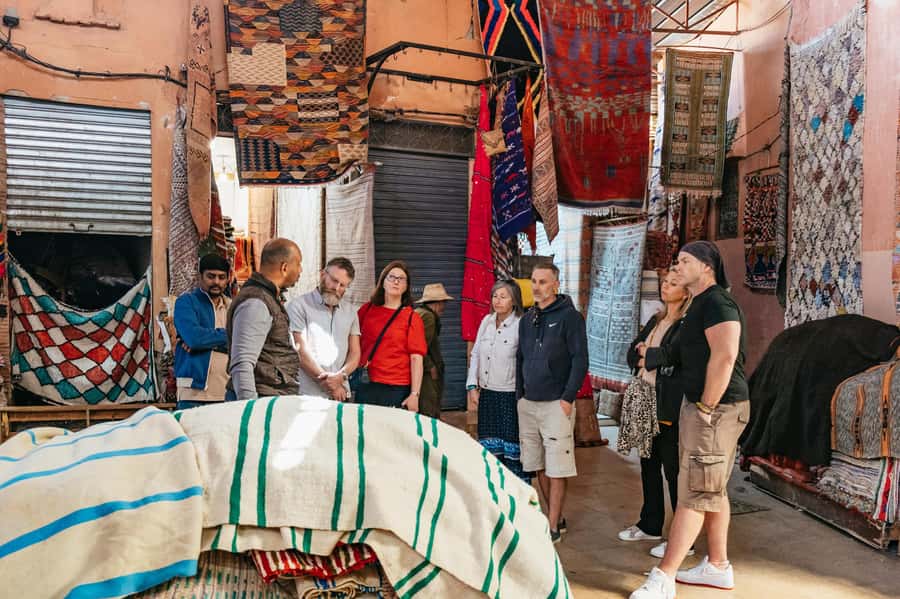
- You see more than the main shopping lanes: The route reaches artisan streets, local workshops, small bakeries, and less obvious corners of the Medina.
- The guide makes the souks easier to read: You learn how the markets are divided and where shoes, metalwork, spices, leather, rugs, jewelry, and other goods are made or sold.
- Bargaining help is part of the value: Guides may explain local customs and help you judge prices or negotiate with shopkeepers.
- The route begins near Jemaa el-Fnaa: Café de France and the famous square provide easy reference points before you enter the maze.
- Private tours offer more control: You can ask for more time with certain crafts, shopping interests, or photo stops.
- The price is modest for three hours: At $20 per person, the tour is especially useful as an introduction to Marrakech rather than a full cultural program.
Why a guided walk helps in Marrakech
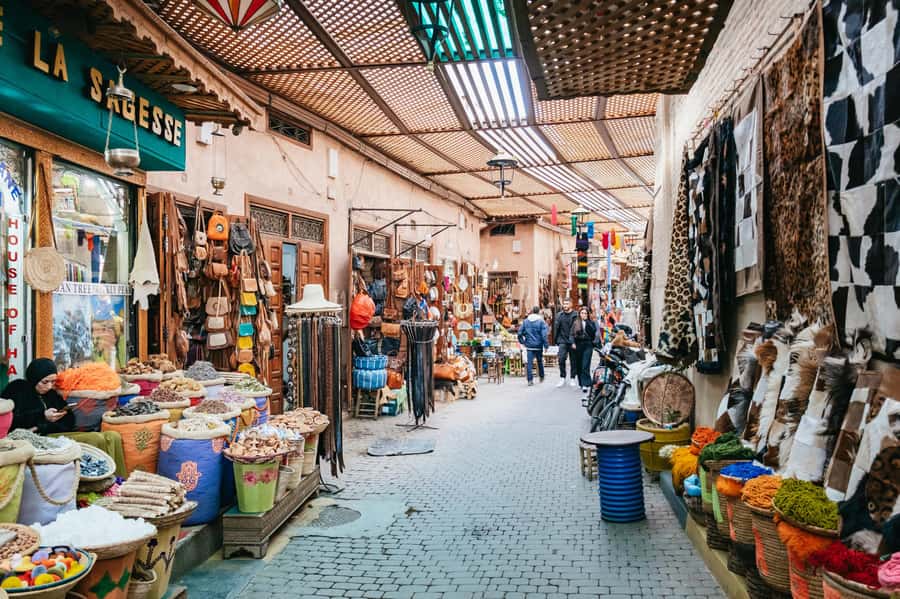
Marrakech’s Medina is not difficult because it lacks things to see. It is difficult because it has too much to see at once. A narrow lane may lead from leather goods to brass lamps, then suddenly open into a square filled with baskets, spices, or pottery. Without context, the souks can become a blur of color and sales pitches.
A guide gives the place a working structure. You learn how different sections are organized and why certain lanes focus on particular crafts. That changes the experience from simply passing shops to understanding how the Medina functions as a commercial neighborhood.
I would book this early in your stay. Several guides, including Abdel, Yahya, and Mo, have helped visitors feel confident enough to return to the souks alone later. That is a useful measure of a good introductory tour. You are not just shown a few shops. You are taught how to move through the area with less uncertainty.
The tour also gives you a local point of reference. Guides can explain customs, introduce artisans, suggest places to eat, and help you decide when a product is worth considering. You still need to make your own buying choices, but you are less likely to feel lost or rushed.
More Old Town Walking Tours in Morocco:
- Marrakech: Saadian Tombs & Bahia Palace, Medina Guided Tour
★ 4.6 · 1,989 reviews - Explore Fes: Unforgettable Guided Walking Tour of the Medina
★ 4.7 · 1,339 reviews - Marrakech: Medina by Night Walking Tour with Moroccan Tea
★ 4.6 · 586 reviews
Starting at Café de France and Jemaa el-Fnaa
The route includes a short stop at Café de France, followed by time at Jemaa el-Fnaa. These locations help you get your bearings before the lanes become more complicated.
Café de France is used for a brief photo stop and visit. It is a practical starting point because it is a recognizable landmark near the square. The stop is only about 10 minutes, so do not expect a long café visit or an extended history talk here.
Jemaa el-Fnaa receives roughly 20 minutes. The guide can introduce the square as the public heart of Marrakech before leading you into the market lanes. This opening gives you a sense of how the broad, open square connects with the denser Medina around it.
If you are meeting the guide here, arrive early. One of the few recurring practical complaints is that the meeting point can be tricky to locate. Use the exact location supplied with your booking, check a map in advance, and avoid arriving at the last minute. Once you are inside the Medina, finding the right person can be harder than it looks.
Souk Semmarine and the art of getting oriented
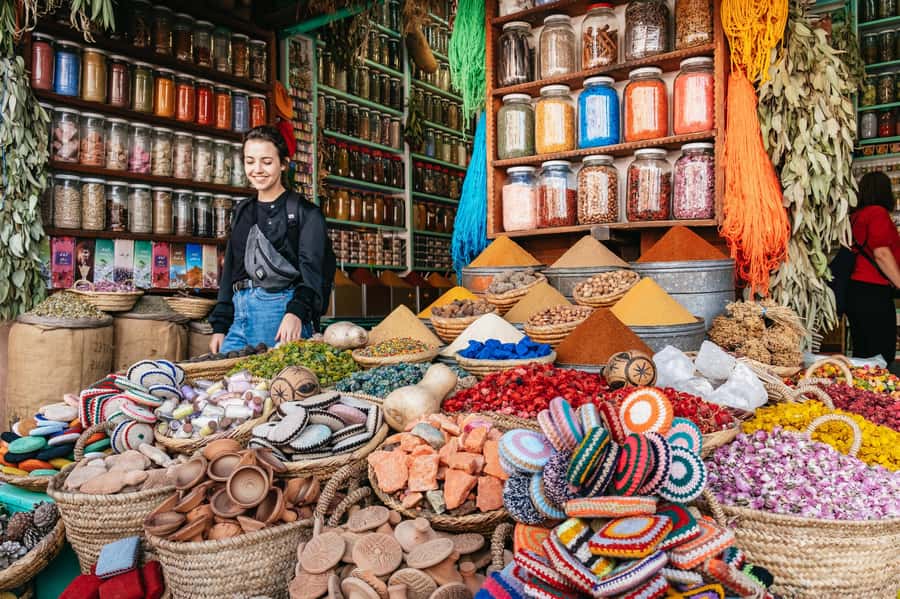
Souk Semmarine is one of the main market passages on the route, with about 30 minutes of guided walking and photo stops. This is where the full character of the souks begins to appear: displays crowd the lane, shopkeepers call out to passing customers, and pedestrians share space with the working traffic of the Medina.
The guide is useful here because the main lane can feel like a shopping corridor rather than a historic neighborhood. You may see slippers, bags, jewelry, fabrics, pottery, and other goods arranged to catch your eye. A guide can point out the difference between a display aimed at visitors and the work happening in the smaller lanes nearby.
This is also a good place to learn basic bargaining habits. The tour does not remove the need to negotiate, but it can make the process less awkward. You may learn when to make an offer, how to say no politely, and how to keep walking if you are not interested. One practical tip from the experience is simple: avoid prolonged eye contact with persistent sellers, say no thank you politely, and continue moving.
You should not treat every recommendation as an instruction to buy. The best use of this section is to observe, ask questions, and note the kinds of goods you may want to find later. If you shop immediately, keep track of prices and avoid letting the excitement of the setting make the decision for you.
Rahba Kedima and the market’s sensory side
The walk continues to Rahba Kedima for around 15 minutes. This stop adds a different mood to the route, with stalls and displays that may include spices, herbs, baskets, and traditional goods.
A guide can explain how Moroccan spices and herbal products are used, though specific demonstrations depend on the day and the guide. Some tours include a stop at an herbalist, where you might taste Moroccan tea and learn about argan or other oils. The experience has a shopping element, so be clear with yourself about what you want before accepting samples or product advice.
This is one of the places where the tour’s value depends on the guide’s approach. Mohammad and other guides have been praised for explaining products without making the visit feel forced. Still, a herbalist stop often has a sales purpose. Enjoy the information, ask about prices, and remember that you do not need to purchase anything.
The square also offers useful photo opportunities. If photography matters to you, tell the guide early. Ahmed and Latif have adjusted walks to include good picture locations, and Latif was specifically praised for his photography skills.
More Guided Walks in Morocco:
- Fez: Guided Walking Tour of the Historic Medina
★ 5.0 · 359 reviews - Marrakech: Monuments, Souks and Medina Guided Walking Tour
★ 4.8 · 208 reviews - Marrakech: Souk by Night Medina Guided Walking Tour.
★ 4.3 · 166 reviews - Private Tour –In Old Medina of Fez with a Professional Guide
★ 4.7 · 146 reviews
Souk Cherifia and smaller craft lanes
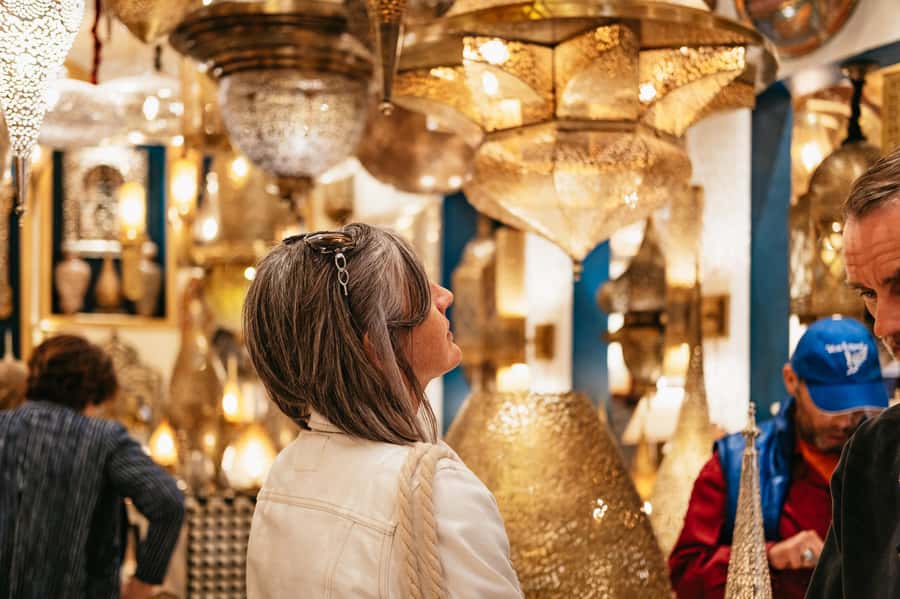
The route allows about 20 minutes at Souk Cherifia. This is a chance to move away from the most obvious shopping corridor and look more closely at the craft side of the Medina.
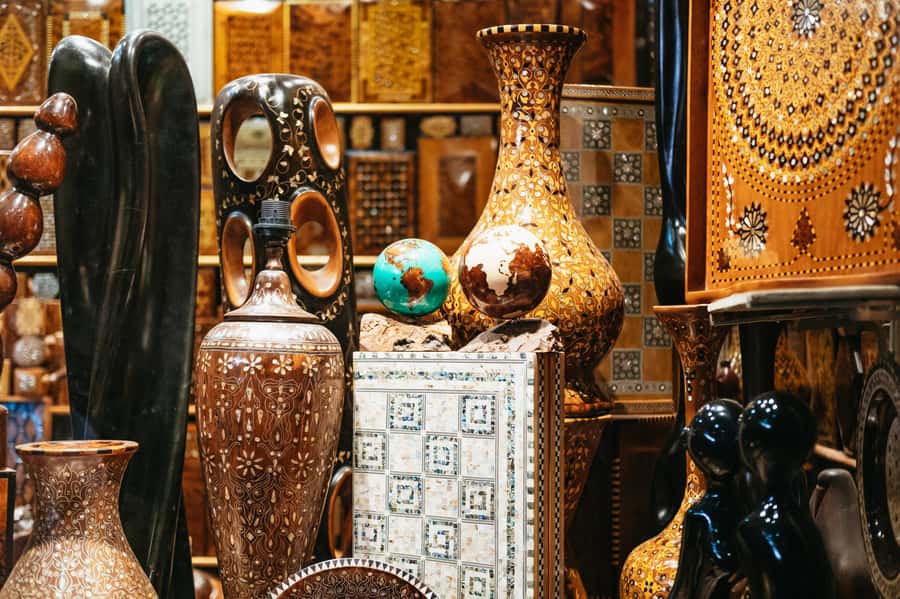
Depending on the guide and the day, you might see handmade slippers, leather goods, jewelry, woodwork, dyed thread, brass pieces, or other traditional crafts. Several guides have taken visitors to places where shoes are made, thread is colored, and metalwork is produced. These short workshop visits give you something a shop display cannot: a sense of the labor behind the finished object.
I value this part of the walk because it helps you understand why handmade Moroccan goods vary in price. A simple-looking item may involve several stages of cutting, shaping, dyeing, stitching, or polishing. You do not need to become an expert shopper, but seeing the work makes it easier to ask better questions.
You may also visit a women’s cooperative or stop for Moroccan tea. One tour included a break at a cooperative, while another included a community bakery said to be around 400 years old. These stops are not guaranteed as identical features on every departure, but they show the kind of local detail that may fit into the route.
The wider Medina and the value of local knowledge
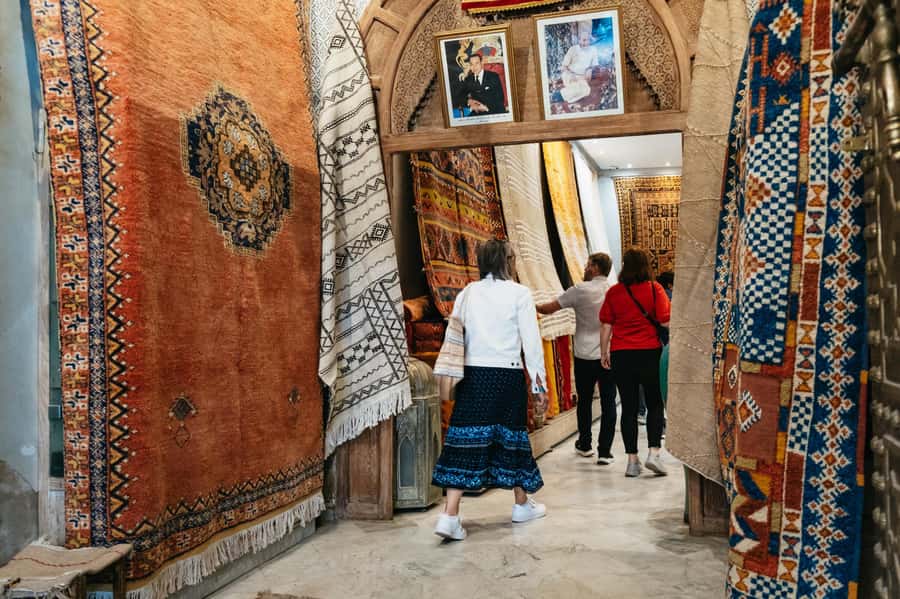
The final major section is a roughly 30-minute guided visit through the Medina. By this point, the walk is less about ticking off one market after another and more about connecting the parts.
The Medina is a living neighborhood, not simply a retail district. People work, shop, transport goods, and move through the lanes as part of ordinary life. You may need to step aside for passing traffic, watch where you walk, and share narrow spaces with residents. That can be tiring, but it is also what makes the area feel real rather than staged for sightseeing.
A local guide can take you into back streets that are easy to miss on your own. Mo’s experience growing up in the Medina has been especially useful for explaining how the area works and sharing personal stories. Other guides, including Ismail, Ali, Abdel, Hussein, Youssef, and Mohammed, have been praised for adapting the walk to questions, shopping interests, and the pace of the group.
This personal element is the strongest reason to choose a guide instead of wandering alone. You can certainly explore the Medina independently, but you may miss workshops, turn down the wrong lane, or spend your time only along the most commercial passages. The tour gives you a map in your head.
Shared group or private tour?
The shared option is the better value if you want a low-cost introduction and enjoy meeting other people. A group can make the walk more social, and the $20 price is hard to fault for three hours with a live guide in several market areas.
The tradeoff is less control. The pace must suit the group, and you may not get as much time for a particular craft or shop. The route can also feel more structured than a private walk.
A private tour costs more than the basic per-person price may suggest, depending on the option selected, but it gives you more flexibility. You can focus on rugs, jewelry, spices, food, photography, or artisan work. You can also ask more questions and take breaks when needed.
Private pickup is available with the relevant option. The guide can meet you in the lobby of your hotel or riad, followed by transport in a private van. Do not assume hotel pickup is included in every booking, since it depends on the option you choose.
If this is your first visit, I would choose private if your budget allows and you have a specific shopping list. If you simply want orientation, the shared walk should do the job.
What to buy, and how to avoid buying too much
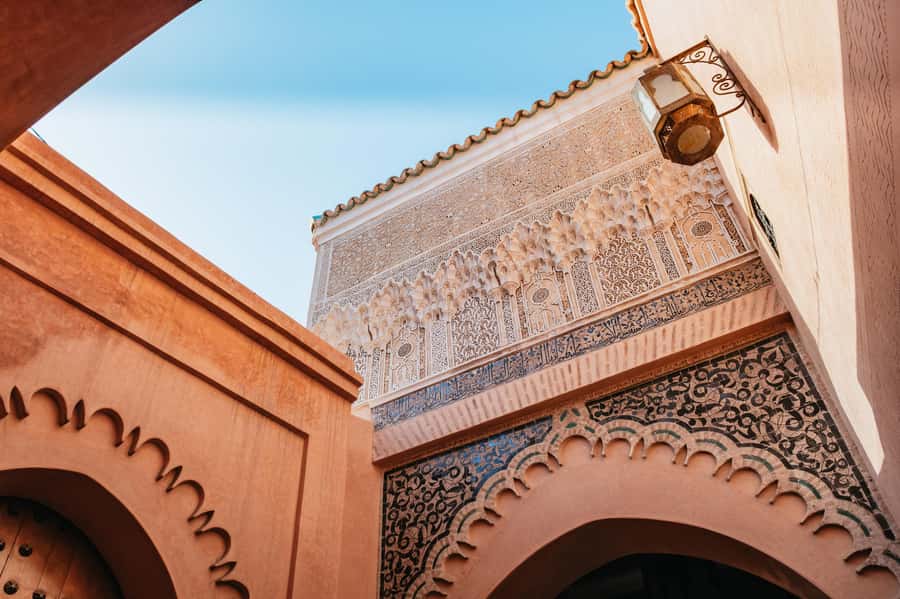
The route may introduce you to slippers, woodwork, brass, iron and bronze goods, jewelry, kaftans, carpets, spices, pottery, leather, oils, bags, and small decorative items. That is a lot of temptation in a short time.
I suggest deciding before the tour whether you are mainly sightseeing, shopping, or doing both. If you are looking for a rug or larger craft, tell the guide at the start. If you want small gifts, ask for help comparing quality and prices rather than buying the first attractive item.
Bargaining is expected in many souks, but it should remain courteous. A guide can help you gain confidence, and some have negotiated alongside guests. Still, the final price is between you and the seller. Do not bargain aggressively over a small amount if you are happy with the item and the price.
Keep purchases manageable during the walk. Carrying several bags through narrow lanes can make the final hour less pleasant. You can always return later after learning where the relevant market section is.
Pace, comfort, and practical details
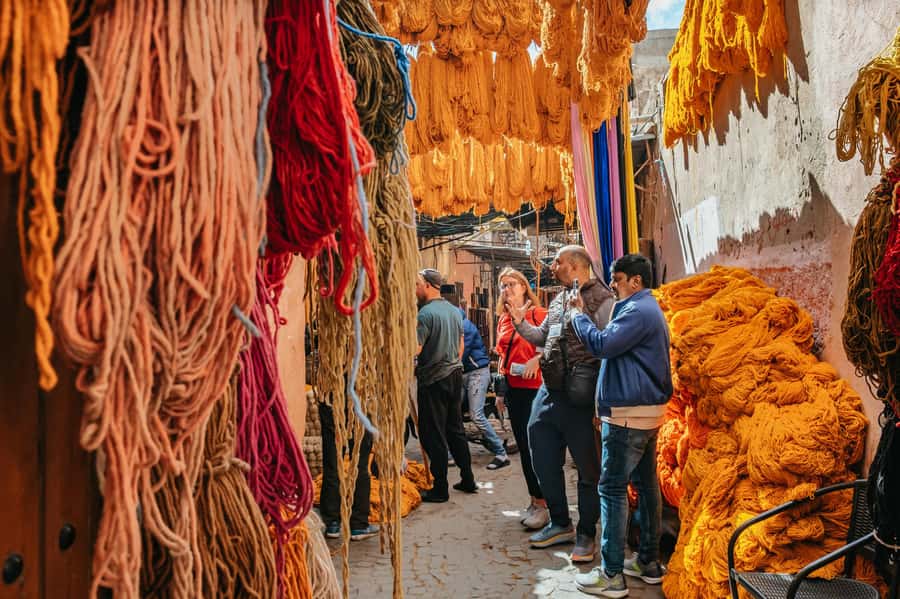
This is a walking tour, and the three hours pass on foot through narrow, uneven, crowded streets. Wear shoes that you can comfortably use for a sustained walk. The description does not promise a fixed number of rest stops, but some guides include tea or seated breaks.
The route may feel demanding if you dislike close crowds, sales pressure, or frequent stops at shops. On the other hand, the walking is what allows you to reach smaller lanes and workshops that vehicles cannot access.
English, French, German, Arabic, Italian, and Spanish guides are available. The quality of the experience will depend partly on the individual guide, but the strongest guide reports describe friendly explanations, humor, local stories, and a willingness to answer questions.
One private tour guide adjusted the pace for a guest with a disability. That is encouraging, but you should discuss your needs when booking rather than assume every route or guide will suit you.
The tour ends with drop-off options around Café de France and the Medina area, depending on the booking. Food and drinks are not included, and personal purchases are your responsibility.
Is $20 a fair price?
At $20 per person, this is good value if you are new to Marrakech and want three hours of local orientation. The guide, route planning, cultural explanation, and help with bargaining add up to more than the cost of simply walking through the souks without a plan.
The price is especially reasonable for a shared tour. You may not receive a long historical lecture or visit every major sight, but that is not really the purpose. This is a practical introduction to the Medina’s working markets.
A private tour can be worth the extra cost for families, couples, photographers, shoppers with specific goals, or anyone who dislikes group pacing. The ability to shape the route and ask detailed questions can save time and reduce shopping stress.
Who should book this Medina walk?
I recommend it most strongly for first-time visitors to Marrakech, especially if you plan to shop or feel uneasy about getting lost. It is also a good first activity because it helps you understand the layout before exploring independently.
You will likely enjoy it if you like local crafts, food traditions, photography, street life, and informal cultural explanation. It suits people who want to see artisans at work rather than only visit grand palaces and monuments.
I would hesitate if you want a quiet walk with little commercial interaction. The souks are active, sellers may approach you, and some stops can include opportunities to buy products. The route is also not designed as a full tour of Marrakech’s palaces, tombs, or museums.
Should you book it?
Book this tour if you want to get your bearings fast, learn how the souks are organized, and see craft work you might miss alone. The combination of a low price, three hours, multilingual guides, and shared or private choices makes it a sensible first-day activity.
Choose the private version if you have mobility concerns, particular shopping goals, or a strong interest in photography and artisan work. Choose the shared version if you want the best value and a straightforward introduction.
Arrive early at the meeting point, bring comfortable shoes, and treat shopping as optional. With the right attitude, this walk gives you more than souvenirs. It helps you read the Medina on your own.
FAQ
How long does the Marrakech souks walking tour last?
The tour lasts three hours.
How much does the tour cost?
The listed price is $20 per person.
Where does the tour begin?
The meeting point depends on the option you book. The route includes Café de France and Jemaa el-Fnaa, and the guide may meet private guests in their hotel or riad lobby when pickup is selected.
Is hotel pickup included?
Hotel pickup is available only with the relevant option. For a private tour with pickup, the guide meets you in your hotel or riad lobby and transport is provided in a private van.
Is the tour shared or private?
You can choose a shared group walking tour or a private walking tour.
Which languages are available?
Live guides are available in English, French, German, Arabic, Italian, and Spanish.
Are food and drinks included?
No. Food, drinks, and personal expenses are not included.
Can I cancel the tour?
You can cancel up to 24 hours in advance for a full refund. The activity also offers a reserve-now, pay-later option.
Just added around Morocco
- Marrakech 3-Hour Walking Tour★ 4.3 · 120 reviews
- Marrakech: Monuments, Souks and Medina Guided Walking Tour★ 4.8 · 208 reviews
- Marrakech: Souk by Night Medina Guided Walking Tour.★ 4.3 · 166 reviews
- Marrakech: Authentic Moroccan Food Walking Tour & Dinner★ 4.8 · 261 reviews
- Marrakech: Customized Guided Walking Tour★ 4.3 · 82 reviews
- Marrakech: Uncover Hidden Gems on a Half-Day Walking Tour★ 4.2 · 92 reviews
- Marrakech Guided Souks Tour with a Local Insider★ 4.6 · 109 reviews
- Marrakech: 3-Hour Monuments, Souks & Old Medina Walking Tour★ 4.7 · 133 reviews
Old Town Walking Tours, compared.
Underground Vaults Walking Tour in Edinburgh Old Town
Read our review →
3-Hour Walking Tour of Old Town & Prague Castle
Read our review →

Old Town and Jewish Quarter Guided Walking Tour
Read our review →
Cartagena: Historic Center and Getsemaní Shared Walking Tour
Read our review →Browse the lists this tour appears in