
Review · STREET ART WALKING TOURS
Naples Essentials: Monuments, Local Life & Street Art
Naples reveals itself one street at a time. This two-hour walk links Piazza del Plebiscito and its grand monuments with the everyday drama of the Quartieri Spagnoli, giving you both the postcard city and the real one. I like the clear route, and I especially like the way Maradona street art is treated as part of local culture, not just a quick photo stop. The main drawback is pace: two hours covers a lot, so you will see the exteriors of major sights rather than enter them.
The guide makes a real difference here. Davide has been praised for his humor, historical detail, and ability to keep even a reluctant teenager interested. You should expect stories, legends, and lively explanation rather than a dry list of dates. Just wear good shoes, leave large bags behind, and prepare for busy streets and uneven paving.
Key points at a glance
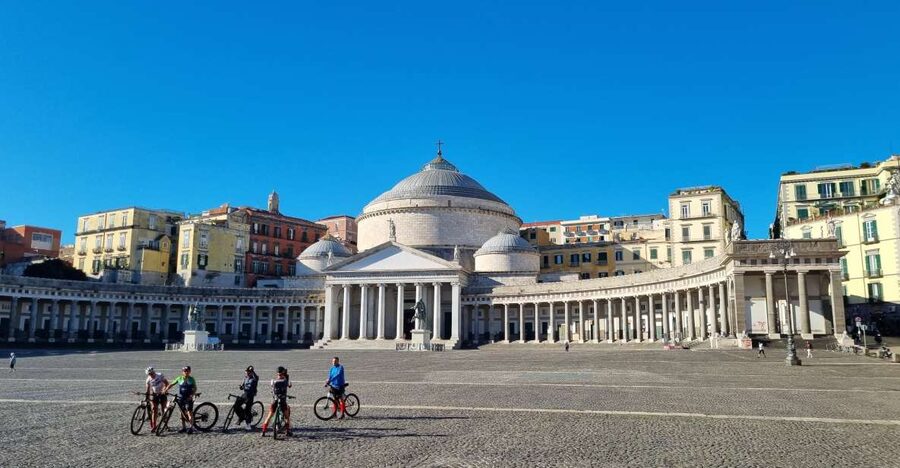
- Piazza del Plebiscito sets the scene: Begin among Naples’ grandest public buildings, including the Royal Palace, Basilica of San Francesco di Paola, and San Carlo Opera House.
- The route mixes monuments with daily life: You move from royal architecture and medieval power to laundry, narrow alleys, and local voices in the Quartieri Spagnoli.
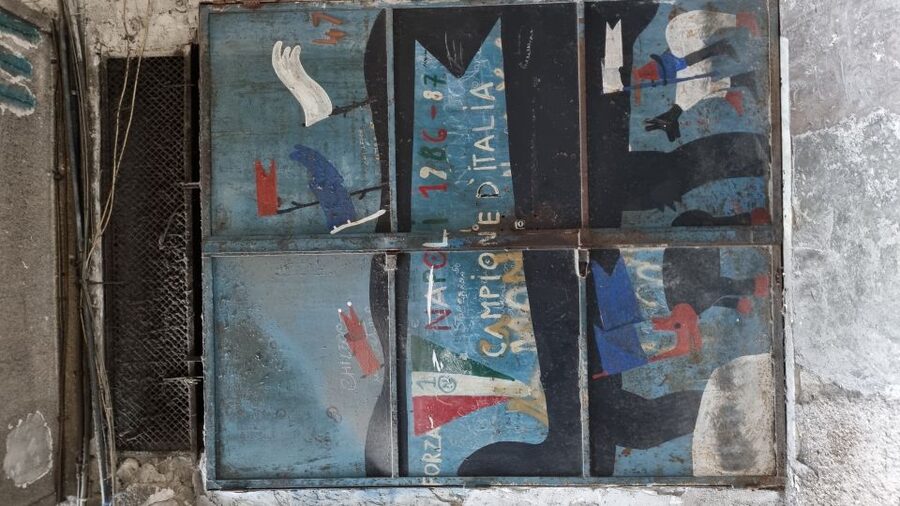
- Maradona is a cultural subject, not a footnote: The murals open a window onto Naples’ football devotion and civic identity.
- Galleria Umberto I offers a graceful change of mood: Its glass dome and Belle Époque design provide a calm architectural pause between major streets.
- Toledo Metro provides a modern finale: The walk ends near one of Europe’s most admired metro stations, linking old Naples with present-day city life.
- The price is fair for a guided introduction: At $28 per person, you are paying mainly for a focused route and local interpretation, not attraction admission.
Starting with the royal scale of Piazza del Plebiscito
Piazza del Plebiscito is an excellent starting point because it gives you Naples at full volume. The broad square feels ceremonial, open, and grand, a sharp contrast to the tight lanes you will enter later.
Your guide points out the exterior of the Royal Palace, which recalls the city’s long connection with royal government and political ambition. Across the square, the Basilica of San Francesco di Paola brings a strong neoclassical presence, with its rounded form and imposing colonnade helping define the space.
You also see the San Carlo Opera House, the oldest opera house still in use in Europe. This is an exterior visit, so do not expect a performance or an interior tour. Still, its place in the route helps explain Naples as a city of music, ceremony, and public spectacle.
I like this opening because the guide can establish the city’s big themes quickly. Naples is not presented as only an archaeological destination or only a food city. You begin with government, religion, theater, and public life in one square.
The practical issue is crowds and movement. Piazza del Plebiscito is a working meeting point, not a quiet museum courtyard. Stay close to the guide, especially if the group is large, and listen for the meeting instructions before the walk gets underway.
More Street Art Walking Tours in Naples:
- Naples Spanish Quarters Walking Tour Street Art, Folklore & Sweet
★ 5.0 · 797 reviews - Naples: Street Art, Wine and Food Tasting Walking Tour
★ 5.0 · 163 reviews - London: Street Art and Graffiti Guided Walking Tour
★ 4.9 · 1,354 reviews
Castel Nuovo and the city’s medieval power
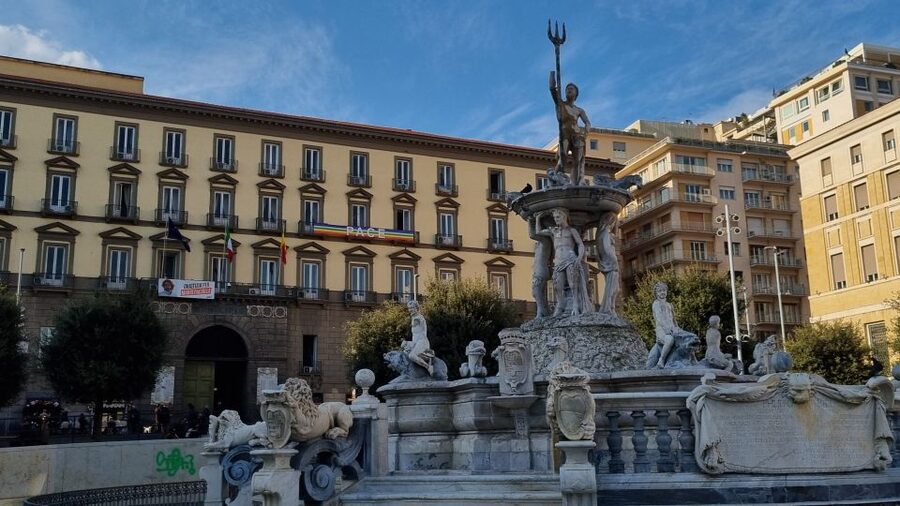
From the square, the walk continues toward Castel Nuovo, also called Maschio Angioino. Its heavy medieval form makes an immediate contrast with the elegance of the piazza and the opera house.
The castle’s monumental Arch of Triumph is one of the route’s strongest visual points. It recalls Naples as a major Mediterranean capital and gives your guide a useful doorway into the city’s political past. The tour does not include entry, so you will be appreciating the castle from outside.
That limitation is worth understanding before you book. If your main goal is to explore castle rooms, galleries, or archaeological displays, this is not the right product by itself. If you want a well-explained orientation to the city, seeing the castle in its urban setting is useful.
I prefer tours that show how a monument relates to its surroundings. Here, the castle is not isolated behind a ticket gate. You see it as part of the city’s public life, surrounded by streets and daily movement. The guide’s stories help turn a large stone building into evidence of Naples’ importance and changing rulers.
A graceful pause beneath Galleria Umberto I
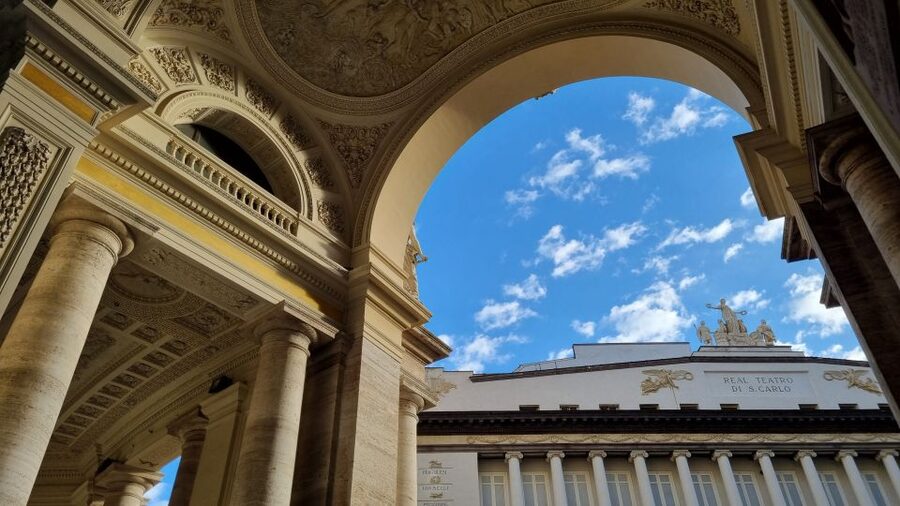
Galleria Umberto I changes the mood again. After the open square and fortress-like castle, you enter a grand covered passage marked by a spectacular glass dome and Belle Époque atmosphere.
The gallery is a good place to look up. Its design gives you a quick lesson in the confidence and style of late nineteenth-century urban Naples. It also provides a visual break from the traffic and narrow lanes outside.
This part of the walk is short, but it earns its place. You are not simply ticking off famous names. You are seeing how Naples shifted between royal ceremony, commercial elegance, and neighborhood life. The route works because each stop has a different feel.
Do not expect a long architectural lecture here. The tour lasts only two hours, and the guide has to keep the group moving. If you want detailed design history or time for careful photography, you may need to return on your own.
Entering the Quartieri Spagnoli
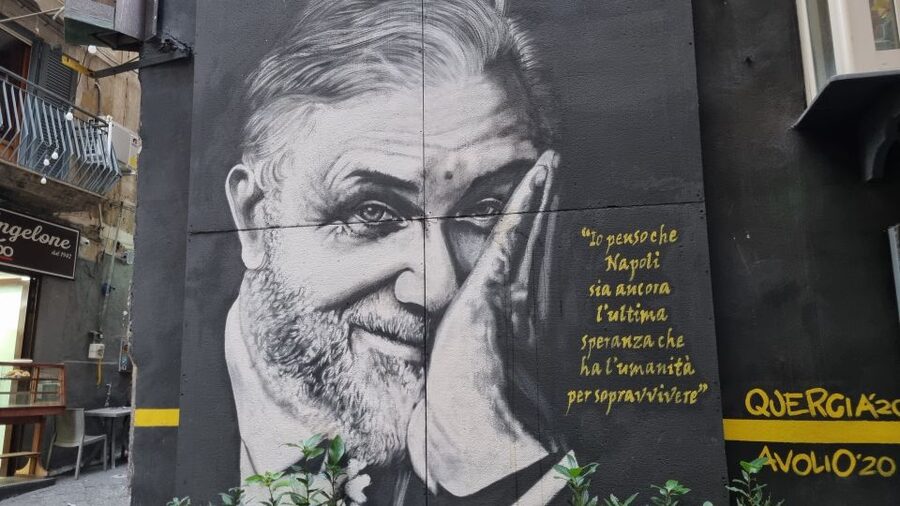
The biggest change comes when you leave the formal center and enter the Quartieri Spagnoli. The streets narrow, buildings press closer together, and the atmosphere becomes more personal.
You can expect laundry overhead, street art, local voices, and uneven streets. This is the Naples many visitors hope to see but may not know how to approach on their own. A local guide gives the setting context and helps you read the neighborhood without reducing it to scenery.
I like this portion most because it connects history with daily life. Grand buildings tell you what rulers wanted Naples to be. The Quartieri Spagnoli shows how people actually use the city, from the arrangement of homes and lanes to the sounds and movement at street level.
The area is busy and the route can feel cramped. That is part of the experience, but it also demands patience. Keep your belongings secure, watch your footing, and do not expect the smooth pavement of a modern sightseeing route. Large bags are not allowed, and this is sensible given the tight streets.
The tour is not designed as a food walk, so you should not expect tastings or restaurant stops. Food and drinks are not included. The focus is on neighborhood character, stories, and the meaning behind what you see.
More Hidden Gems Walking Tours in Naples:
- Dublin Highlights and Hidden Gems Guided Walking Tour
★ 5.0 · 6,020 reviews - Explore Berlin: See All The Iconic Sights & Some Hidden Gems
★ 5.0 · 4,429 reviews - Kyoto Geisha Walking Tour: Gion District & Hidden Gems
★ 4.7 · 3,273 reviews - Marrakech: Ben Youssef, Secret Garden, & Souks Walking Tour
★ 4.6 · 2,802 reviews
Why Maradona matters in Naples
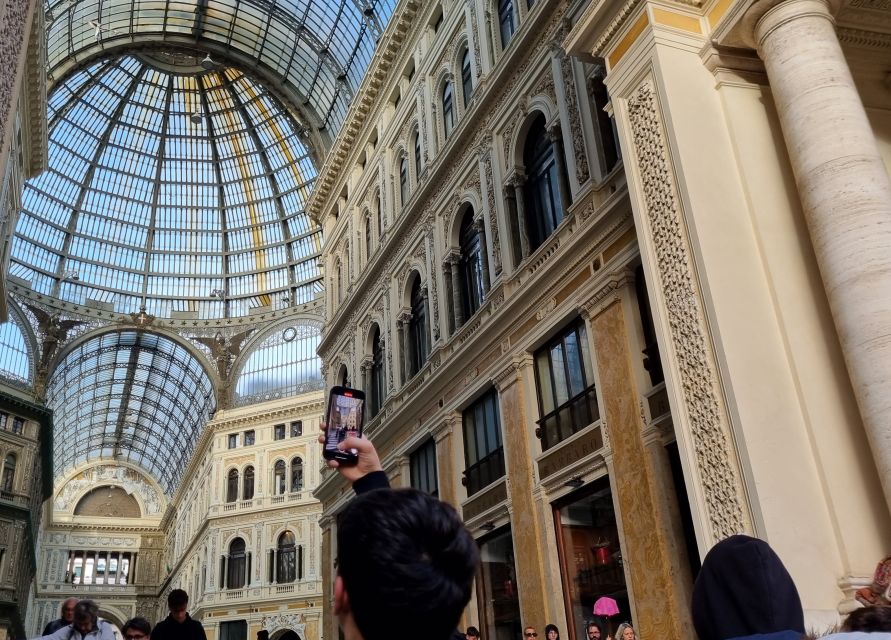
The Maradona murals are more than a football-themed photo opportunity. Diego Armando Maradona remains deeply loved in Naples, and the guide explains why his image carries such emotional weight.
This is one of the tour’s most distinctive features. A standard monument walk might mention kings, churches, and opera houses, then stop. Here, the guide gives space to a modern figure who became part of the city’s identity.
You do not need to be a football expert to understand the point. The Maradona material shows how a city can attach pride, memory, and belonging to a public figure. It also gives you a clearer sense of local feeling than another list of architectural facts would.
A small warning for sports fans: the subject can inspire strong opinions. One participant even joked about the guide’s preference for Maradona over Pelé. That playful rivalry fits the mood, but if you are hoping for a neutral football seminar, this is not that. It is a short cultural explanation within a broader city walk.
Davide appears especially effective in this setting. His style is described as humorous, professional, and easy to follow. That matters in the Quartieri Spagnoli, where the surroundings can compete for your attention.
Via Toledo and the art of the Toledo Metro station
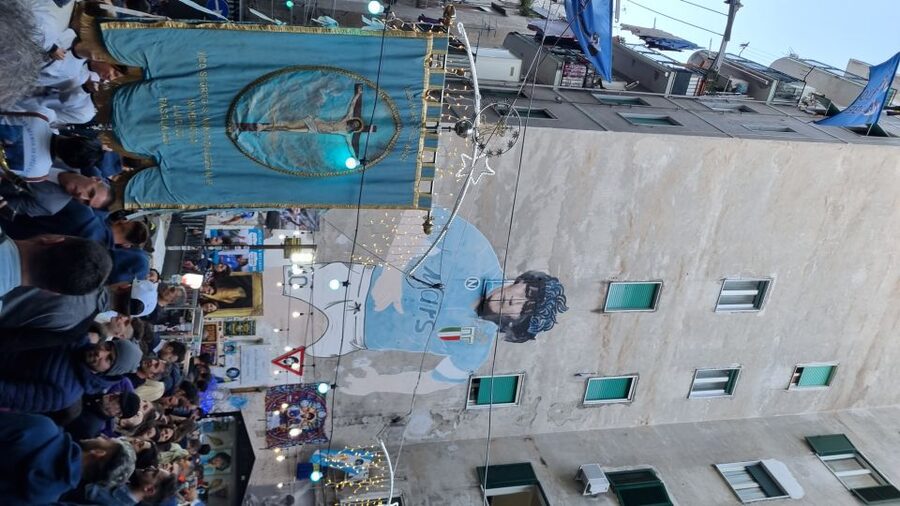
The route finishes along Via Toledo, one of Naples’ main streets. This is where older institutions and modern city life meet, making it a fitting final stretch after the contrasting neighborhoods and monuments.
You pass the historic Bank of Naples and continue toward Toledo Metro Art Station. The station is considered one of the most beautiful metro stations in Europe, and it gives the walk a modern ending rather than leaving you with only royal and medieval Naples.
This final stop is practical as well as attractive. You finish in a part of the city connected to everyday movement, so it can be a useful point from which to continue exploring. The experience does not promise a full transport tour or an underground architectural study, but the station adds a memorable last image.
I like the structure of the ending. The route begins with a ceremonial square and concludes with public infrastructure used by ordinary people. That arc helps you understand Naples as a living city rather than an outdoor museum.
What two hours can and cannot cover

Two hours is enough for a useful first look, but not enough for deep visits inside the monuments. The tour moves at a steady pace through busy areas, and the itinerary may change slightly because of local conditions or events.
You should think of this as an orientation walk. It introduces major places, gives you local context, and helps you decide where to return later. It is not a substitute for the Royal Palace, Castel Nuovo, or San Carlo Opera House if you want interior access.
The compact timing is also a strength. At $28 per person, the price is reasonable for a licensed local guide leading a focused route through several distinct parts of Naples. Headsets are provided when required, which can help when traffic and street noise make group listening difficult.
The value depends on how you like to explore. I think the price works well for a first morning or afternoon in Naples, especially if you want help getting oriented. It is less attractive if you already know the center or prefer wandering alone with a map.
The tour is offered in English, Spanish, and Italian. A private group can be arranged subject to availability, which may suit families, friends, or small groups that want a different pace. Children under 10 are not suitable for this activity, and it is not designed for wheelchair users because of the walking conditions and uneven streets.
Shoes, weather, and the practical side
Wear comfortable shoes. That advice is not filler here. You will walk through busy streets and uneven areas, and the route is more enjoyable when you are not thinking about sore feet.
Bring an umbrella because the tour runs in all weather. There is no promise of shelter or a weather-related cancellation, so dress for the forecast. The walk is outdoors for most of its duration, with the gallery and metro station providing brief changes of setting rather than a fully indoor experience.
Do not bring luggage or large bags. Travel light, keep your hands free, and make it easier for yourself to move through narrow streets. The meeting point may vary depending on the option booked, so check your specific booking details before setting out.
The free cancellation period extends to 24 hours in advance, and a reserve-now, pay-later option is available. Those policies are useful if your Naples plans are still shifting, but the larger practical question is whether you want a guide-led introduction at a fixed pace.
Who will enjoy this Naples walk most?

I would recommend it most strongly to first-time visitors who want a quick, well-shaped introduction. You get royal monuments, a medieval castle, nineteenth-century architecture, a famous neighborhood, modern street art, and a major metro station without spending a full day on one subject.
It also suits anyone who wants local explanation rather than a silent photo walk. The strongest praise has focused on the guide’s humor, clear storytelling, and ability to make history accessible. Davide, in particular, has been credited with keeping the experience interesting for a teenager who expected to dislike a guided city tour.
Families with older children may find the mix useful, but the stated minimum age is 10. Sports fans will appreciate the Maradona section, while people less interested in football can still treat it as a lesson in local identity.
You may want something else if you need step-free access, dislike city crowds, or want lengthy time inside museums and monuments. This is an active urban walk, not a relaxed hop-on, hop-off outing.
Should you book Naples Essentials?
Book it if you want a lively first orientation to central Naples and value a local guide who can connect grand monuments with ordinary street life. The route has a strong balance: Piazza del Plebiscito gives you scale, Castel Nuovo supplies medieval drama, Galleria Umberto I adds elegance, the Quartieri Spagnoli brings you close to daily life, and Maradona gives the city a modern emotional center.
Skip it if your priority is interior admission, extensive photography time, or accessible, level streets. For most first-time visitors who can manage moderate walking, $28 is a fair price for two hours of context and direction. I would take it early in a Naples stay, then use the rest of your visit to return to the places that caught your attention.
FAQ
How long does the Naples walking tour last?
The tour lasts two hours.
What languages are available?
The live guide can lead the tour in English, Spanish, or Italian.
Does the tour include entry to the monuments?
No. Entry to attractions is not included. The route focuses on guided views and explanations from the streets and public areas.
Is food or drink included?
No. Food and drinks are not included in the tour price.
Is the tour suitable for children?
The tour is not suitable for children under 10 years old.
Can wheelchair users join the tour?
No. The tour is not suitable for wheelchair users because it includes moderate walking through busy areas and uneven streets.
What should I bring?
Bring comfortable shoes and an umbrella. Do not bring luggage or large bags.
Just added around Naples
- Naples: Street Food Experience With 6 Stops★ 4.7 · 392 reviews
- Naples: Spanish Quarters Walking Tour★ 4.6 · 72 reviews
- Napoli: Walking Tour of Naples with Local Tour Guide★ 4.9 · 95 reviews
- Naples: Historic Center and Sansevero Chapel Walking Tour★ 4.8 · 208 reviews
- Naples: Old Town Guided Walking Tour★ 4.8 · 553 reviews
- Naples: Street Art, Wine and Food Tasting Walking Tour★ 5.0 · 163 reviews
- Naples: Diego Maradona Guided City Walking Tour★ 4.4 · 77 reviews
- Naples: City Walking Tour w/ Underground Roman Ruins Ticket★ 4.6 · 284 reviews
Street Art Walking Tours, compared.


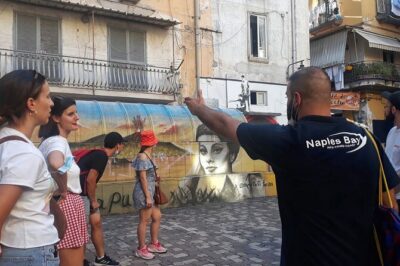
Naples Spanish Quarters Walking Tour Street Art, Folklore & Sweet
Read our review →

NYC: Brooklyn Graffiti & Street Art Walking Tour in Bushwick
Read our review →
Browse the lists this tour appears in