
Review · FREE WALKING TOURS
Nuremberg: Free Walking Tour
Nuremberg’s past is impossible to ignore. This walking tour connects the city’s medieval glory, wartime destruction, Nazi-era legacy, and modern recovery in one useful circuit. I especially like the local perspective, since guide Andreas was born and raised here and learned the city from his grandfather. I also like the mix of grand sights and small details, from the Imperial Castle and churches to Nuremberg sausages, bakeries, beer, and the story of a surprisingly humane hangman.
The main consideration is scope. In about two hours and 15 minutes, you see many major sights, but you do not tour the Nuremberg Trials courthouse or the former Nazi rally grounds. The tour also involves steady walking and outdoor stops, so comfortable shoes and weather-ready clothing matter.
Key points to know before you go
- A local guide gives the tour its character: Andreas, Alexandra, Tom, and other guides bring personal knowledge, humor, and practical city tips.
- The route covers Nuremberg’s central story: You move from the medieval market and churches to the castle, Dürer’s home, rebuilt streets, and the Nazi-era legacy.
- The pace is active but manageable: The tour lasts roughly 2 to 2.5 hours, with walks between several stops and talks lasting around 10 to 15 minutes.
- The small-group option helps: A smaller group makes it easier to hear, ask questions, and keep the experience personal.
- The price offers strong value: The listed cost is $3.54 per person, though a tip for the guide is not included.
- Food advice is part of the experience: You get suggestions for local specialties, bakeries, coffee shops, bars, and places where locals eat and drink.
Why this tour works well for a first day in Nuremberg
Nuremberg can look easy to understand at first. The old center is compact, the castle sits above it, and many sights are close together. But the city’s story has several sharp turns. It was a powerful medieval trading center, a major stage for Nazi propaganda, a target of heavy bombing, and a city that had to decide how to live with that past.
This tour gives you a useful framework before you explore on your own. Instead of seeing a church, a bridge, or a half-timbered house as an isolated photo stop, you hear how it fits into the city’s wider story.
I also like the way the guides balance serious material with everyday life. Andreas grew up in Nuremberg and presents the city as a home, not just a museum. Alexandra is praised for clear explanations, patience, and practical food tips. Tom is known for energetic storytelling, humor, and recommendations for places to eat and have a drink.
That variety matters because the quality of a walking tour depends heavily on the person holding the umbrella. The strongest reports describe guides who keep the information lively without making difficult subjects feel cheap or theatrical.
More Free Walking Tours in Germany:
- English Hamburg City Center Pay-What-You-Want Walking Tour
★ 4.9 · 262 reviews - English Harbor&St. Pauli Pay-What-You-Want Walking Tour
★ 4.8 · 197 reviews - Bamberg Free Walking Tour
★ 4.7 · 84 reviews
Meeting at the Schöner Brunnen
The tour begins at the Schöner Brunnen, the ornate fountain beside Hauptmarkt. Look for the white umbrella with a green symbol, which is the key meeting-point marker.
This is a sensible place to start. Hauptmarkt is one of the central open spaces in the old town, and the fountain gives you an immediate sense of Nuremberg’s medieval ambition. It is also a practical spot for orienting yourself before the group heads through the historic center.
The first part of the tour introduces Nuremberg’s medieval importance and its later changes. The guide may also begin explaining local food and customs here, which helps connect the city’s grand history to the things you can actually eat and see during your stay.
The meeting point is outdoors, so arrive ready for the weather. On hot days, the route includes some shade but not every stop is protected. One particularly hot-day account noted that a stop in full sun felt much harder than the shaded portions.
Hauptmarkt and the medieval center
At Hauptmarkt, the guide sets the stage for Nuremberg’s Golden Age in the late Middle Ages. This is where the tour begins to show why the city became so important in the first place.
The focus is not only on dates and rulers. You get a sense of how trade, religion, craft, and civic power shaped the old center. The guide also explains typical Nuremberg specialties and points you toward places to try them later.
That practical advice is one of the better features of the tour. You are not left with a list of historic names and no idea what to order for lunch. You may hear about local sausages, beer, bakeries, coffee shops, and bars that are useful for the rest of your visit.
Hauptmarkt can be busy, especially at popular times, so stay close to the guide and keep the umbrella in sight. The tour is designed for conversation and questions, but a crowded square can make it harder to hear if you drift toward the back.
St. Sebaldus Church and Old City Hall
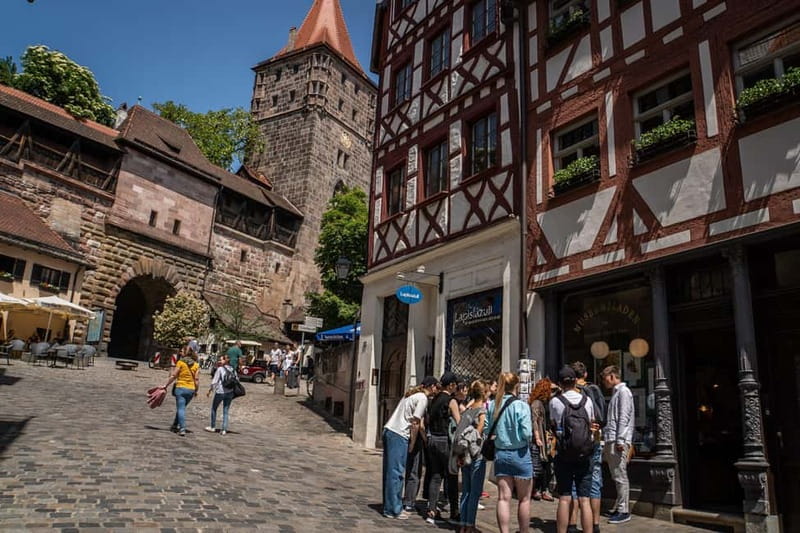
The route continues to St. Sebaldus Church, one of the key religious buildings in the old center. The guide uses the church to explain Nuremberg’s medieval religious life and the role these buildings played in the city’s public identity.
You should expect an exterior-focused walking tour rather than a long interior visit at every stop. The value here is the explanation around the building, including how the church fits into the development of the surrounding city.
Next comes Old City Hall. This stop shifts attention from religious power to civic government. It is a useful contrast with St. Sebaldus because you begin to see how Nuremberg was shaped by institutions, officials, merchants, and public life.
The guides are often praised for giving information in manageable pieces. Alexandra, in particular, is described as presenting plenty of material in short, clear sections. That is helpful in a city where several centuries can appear in one street.
A few more walks around Germany worth a look
- Discover Berlin Half-Day Walking Tour
★ 5.0 · 9,624 reviews - Berlin City walk Government District and Places of Democracy
★ 4.7 · 8,467 reviews - Berlin: Third Reich & Cold War Guided Walking Tour
★ 4.9 · 8,378 reviews - Munich: Third Reich & WWII Walking Tour
★ 4.6 · 6,181 reviews
The Imperial Castle above Nuremberg
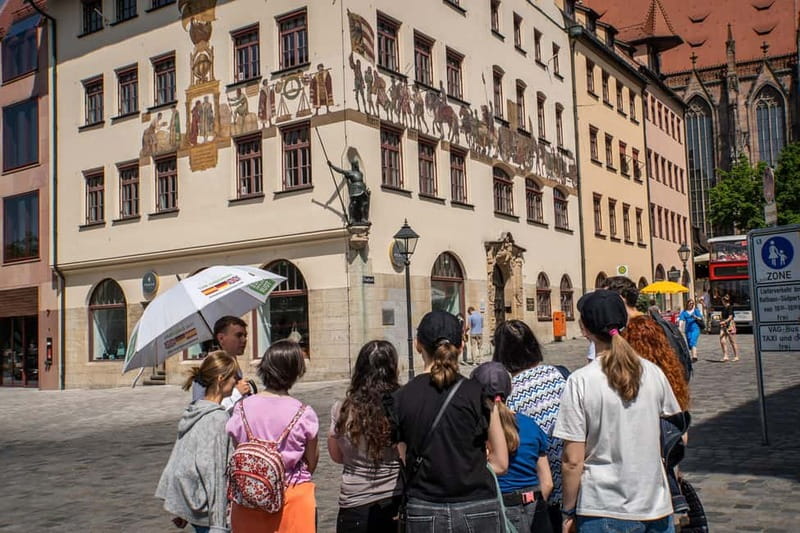
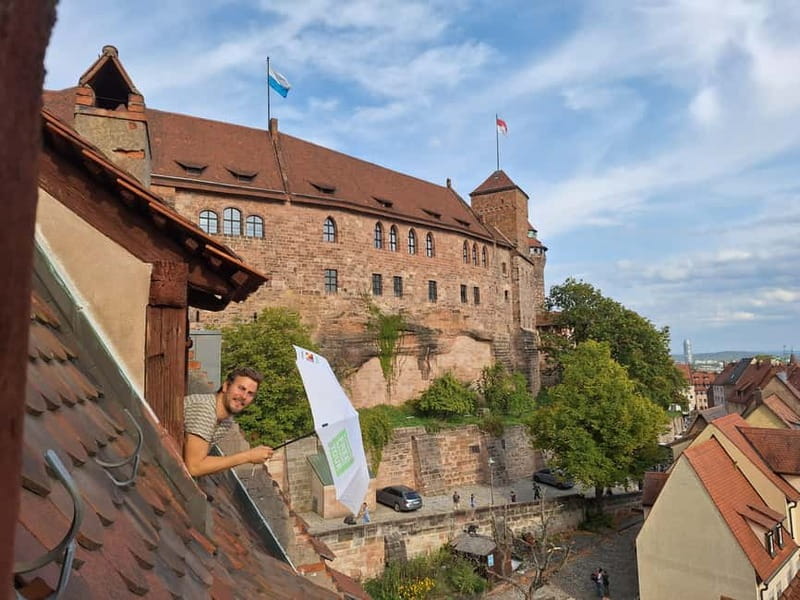
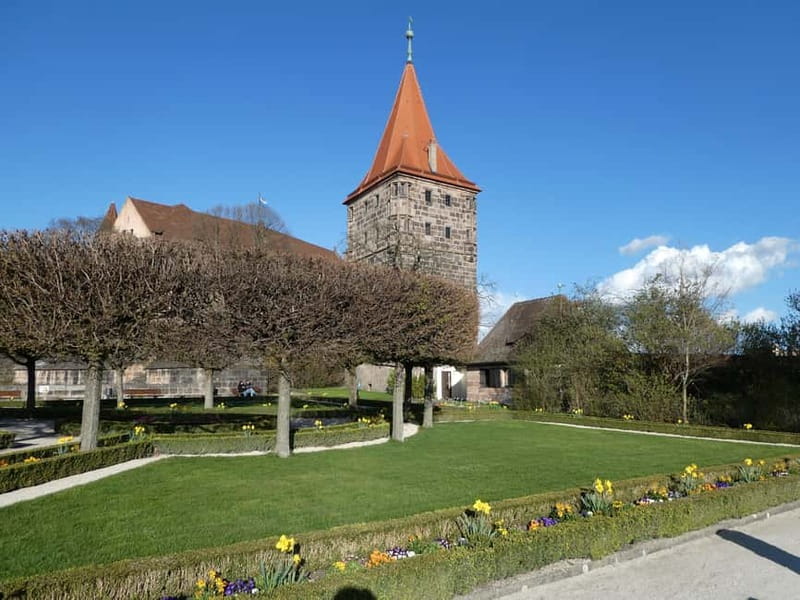
The Imperial Castle is the tour’s grandest architectural stop. From here, you get a stronger sense of Nuremberg’s position as an important imperial city and the way the castle dominates the old center.
The route includes walking uphill, so this is one place where sensible shoes pay off. The tour is not simply a castle visit. The guide explains why the castle matters and how it connects with the political and medieval story introduced earlier at Hauptmarkt.
You should not expect a full museum tour of every room. The included experience is a guided walking tour, and the focus is on the city around you, its buildings, and its past. If you want a long, detailed visit inside the castle complex, you may need extra time before or after the tour.
Still, this stop gives the route a strong visual payoff. You see the castle, the older buildings below it, and the way Nuremberg’s historic core has been put back together after wartime destruction.
Albrecht Dürer’s House and the city’s artistic side
The walk then reaches Albrecht Dürer’s House, the former home of one of Germany’s most important artists. The guide places Dürer within Nuremberg’s cultural story rather than treating his house as an unrelated attraction.
This is a welcome change of mood after the political and religious stops. Dürer represents the city’s role in art, printing, and intellectual life, and his presence helps explain why Nuremberg was more than a trading center or imperial outpost.
The tour does not include a separate museum admission according to the provided details. You see the house and hear its story from outside as part of the walking route. If Dürer is a major interest for you, set aside additional time to investigate the site beyond the tour.
Weissgerbergasse and Nuremberg’s restored streets
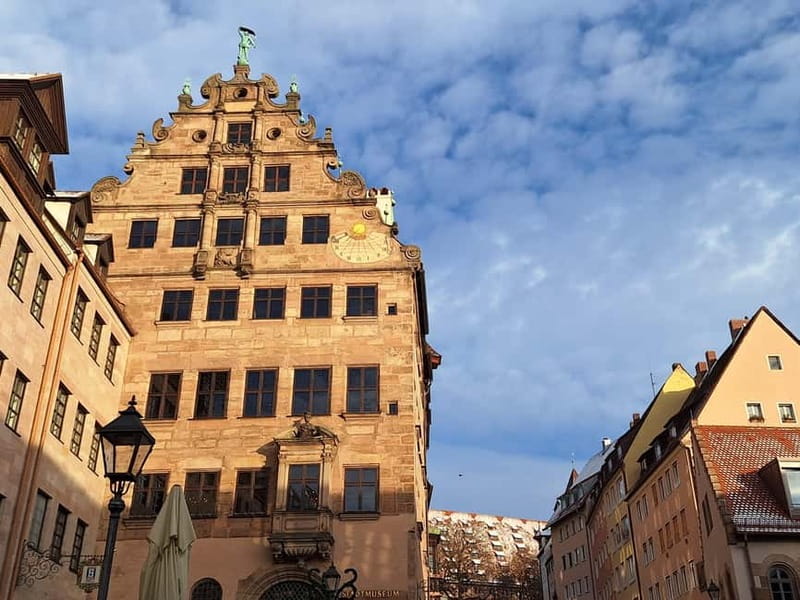
Weissgerbergasse offers one of the prettiest sections of the route. Its half-timbered houses give you the traditional image many people hope to find in Nuremberg, with narrow streets and carefully restored historic facades.
This is also where the subject of reconstruction becomes especially important. Much of Nuremberg was badly damaged during World War II, so the old-looking streets you see today are connected to a major rebuilding effort. The guide explains how the city dealt with the loss and how it decided what to restore.
That context keeps the stop from becoming a simple photo break. You can admire the architecture while also thinking about what is original, what was rebuilt, and what a city chooses to preserve after disaster.
A camera is useful here, but do not let photos pull you away from the group. The route continues through active streets, and the guide may be speaking while you move between viewpoints.
The Hangman’s Bridge and Franz Schmidt
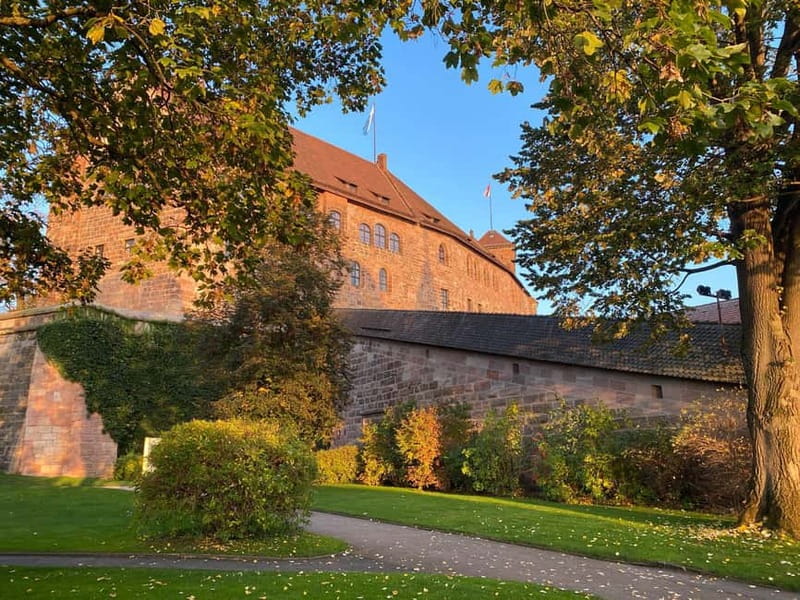
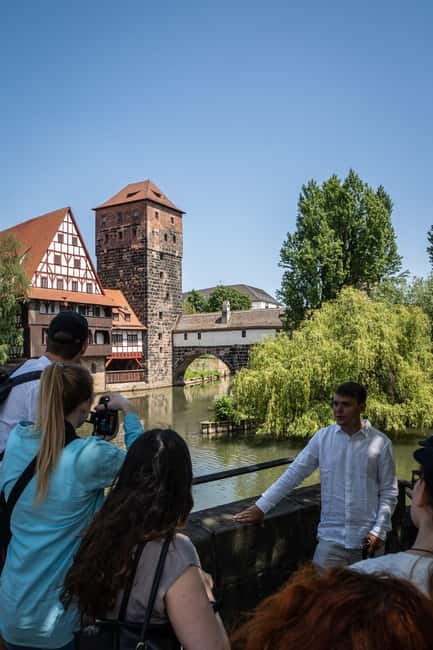
The Hangman’s Bridge brings one of the tour’s more unusual stories. Here you hear about Franz Schmidt, Nuremberg’s hangman, whose life was more complicated and human than his job title suggests.
This kind of story gives the tour texture. Medieval history can become a parade of emperors and church buildings, but Schmidt offers a look at ordinary law, punishment, reputation, and social life. The guide explains why he was considered more friendly and respectable than you might expect from someone in that profession.
The bridge also adds another layer to the city’s old center. Nuremberg’s history is not only about famous artists and imperial buildings. It includes people working in difficult jobs, families living under strict rules, and everyday lives that rarely appear in grand historical accounts.
After this stop, the group returns to the Schöner Brunnen. The guides allow time for questions and can help with plans around Nuremberg, including food and places to visit next.
Nuremberg’s wartime destruction and Nazi-era legacy
The most serious part of the tour concerns the Third Reich, World War II, and the city’s later effort to face that past. Nuremberg has a particularly difficult connection to Nazi history because it was used for major party rallies and later became the setting for the Nuremberg Trials.
The central walking route introduces this subject rather than covering every related site. You hear about the city’s role, its destruction during the war, and the choices made during reconstruction. The guides also explain how Nuremberg has dealt with the heritage of the Nazi era.
This section requires a steady tone. The strongest guide descriptions praise sensitivity, clear explanations, and an ability to discuss hard subjects without turning them into entertainment. That balance is important, especially for visitors who want historical context rather than sensational stories.
The courthouse for the Nuremberg Trials and the former Nazi rally grounds are not included. If those subjects are a main reason for your visit, treat this walking tour as an introduction and plan separate visits. The tour helps you understand the background, but it does not replace a dedicated Nazi-era site visit.
Guide style, group size, and pacing
Guide performance is one of the strongest parts of this experience. Andreas is praised for his love of Nuremberg, humor, and ability to answer questions. Alexandra receives credit for patience, clear explanations, and thoughtful treatment of difficult history. Tom is described as energetic, entertaining, and full of useful local suggestions.
The tour is available in English, German, and Spanish. The English delivery has been praised as clear, including by visitors who appreciated the guides’ ability to explain complicated history without making it feel like a lecture.
A small group is available. That can make a real difference at church walls, narrow streets, and crowded squares. You can hear more easily, ask questions without shouting, and stay connected to the guide.
The pace is generally unhurried between stops, but this is still a walking tour of more than two hours. You will spend much of the time standing outdoors. Wear comfortable shoes, carry water, and check the forecast before leaving.
Is $3.54 good value?
At a listed price of $3.54 per person, this is an unusually inexpensive way to get oriented in Nuremberg. The tour lasts around 2 to 2.5 hours and covers many of the city center’s main sights, while also adding stories you would be unlikely to pick up from a quick walk on your own.
The important detail is that the guide’s tip is not included. The low booking price should not be treated as the full cost of the experience. Bring cash if you plan to tip, since one visitor specifically wished they had remembered it.
The value is strongest if you are visiting Nuremberg for the first time or have limited time. You get a route, historical context, food suggestions, and a chance to ask what to do next. It is less useful if you want long indoor visits, a dedicated castle tour, or an in-depth examination of the courthouse and Nazi rally grounds.
Free cancellation up to 24 hours before the start and reserve-now, pay-later booking also give you some flexibility. Check the available start times when you book.
Who should book this Nuremberg walk?
I would recommend it to first-time visitors, history fans, architecture lovers, and anyone who wants a local introduction before exploring alone. It also suits short stays because the route brings together the castle, major churches, Dürer’s home, pretty old streets, and several key historical themes.
Food-minded visitors should take note. The guides offer suggestions for sausages, beer, bakeries, coffee shops, and bars, and those tips may be as useful as the formal sightseeing.
Families and mixed-age groups may appreciate the storytelling style, although the Nazi-era material and stories about punishment are serious. You should be comfortable with those subjects being part of a general city tour.
I would be more cautious if you have mobility concerns, dislike standing outdoors, or want a highly specialized historical tour. The route is on foot, and the full experience depends on moving between several stops in changing weather.
My recommendation
Book this tour if you want a broad, lively introduction to Nuremberg rather than a deep visit to one museum or historical site. The local guides, especially Andreas, Alexandra, and Tom, add warmth and humor, while the route gives proper weight to the city’s medieval achievements, wartime destruction, and Nazi-era responsibility.
Bring comfortable shoes, water, weather protection, and cash for a tip. If the Third Reich and Nuremberg Trials are your main focus, add separate time for the courthouse and former rally grounds. For nearly any other first visit, this is a smart and inexpensive way to get your bearings and choose what deserves a closer look.
FAQ
Where does the Nuremberg Free Walking Tour begin?
The tour begins at the Schöner Brunnen in Nuremberg. Look for the white umbrella with a green symbol.
How long does the walking tour last?
It lasts about 2 to 2.5 hours, with the stated tour length being approximately 2 hours and 15 minutes.
Which languages are available?
The tour is available in English, German, and Spanish.
What sights are included?
The route includes Hauptmarkt, St. Sebaldus Church, Old City Hall, the Imperial Castle, Albrecht Dürer’s House, Weissgerbergasse, and the Hangman’s Bridge before returning to the Schöner Brunnen.
Does the tour visit the Nuremberg Trials courthouse?
No. The courthouse of the Nuremberg Trials is not included in this walking tour.
Does the tour visit the former Nazi rally grounds?
No. The former Nazi rally grounds are not included.
Is the tour suitable for people who speak English?
Yes. The tour is offered in English, and the guides have been praised for clear explanations and good communication.
Should I bring cash?
Bring cash if you want to tip the guide. A tip is not included in the listed price.
What should I wear and bring?
Wear comfortable walking shoes and dress for the weather. Bring water and a camera, and check the forecast before the tour.
Just added around Germany
- Berlin Walking Tour★ 4.5 · 378 reviews
- Berlin Street Art Walking Tour – Off The Grid★ 5.0 · 270 reviews
- Berlin Highlights Private Guided Walking Tour★ 4.5 · 89 reviews
- Small Group Walking Tour of East Berlin with a French Guide★ 5.0 · 176 reviews
- Private Walking Tour: World War 2 and Cold War Sites in Berlin★ 5.0 · 230 reviews
- East Meets West: Berlin Food Culture & Street Art★ 5.0 · 157 reviews
- Kreuzberg Berlin: Off the Beaten Track PRIVATE Walking Tour★ 5.0 · 128 reviews
- The History of Berlin: WWII PRIVATE Walking Tour With Locals★ 5.0 · 209 reviews
Free Walking Tours, compared.


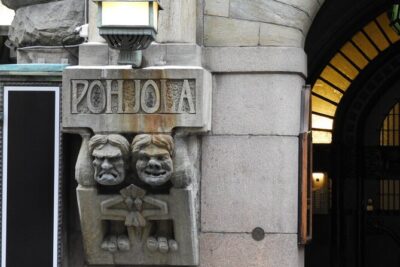
Discover Helsinki – Tip-based Tour by RED UMBRELLA – 2026
Read our review →
Downtown Asheville Tip-Based Sightseeing Walking Tour
Read our review →

Ghosts, Legends & Mysteries of Rome Tip-Based Walking Tour
Read our review →
English Hamburg City Center Pay-What-You-Want Walking Tour
Read our review →
Browse the lists this tour appears in