
Review · USA WALKING TOURS
Portland, Maine: Hidden Histories Guided Walking Tour
Portland’s past is tucked into ordinary streets. This two-hour walk with Dugan Murphy brings the city to life through stories of Wabanaki diplomats, Chinese laundrymen, independent women, war, fire, and trade. I like the small group, capped at 15 people, and the way Dugan uses old images to show how Portland changed. I also like that each ticket helps restore the Abyssinian Meeting House.
The main drawback is physical rather than historical: you cover 1.5 miles on hills, cobblestones, and staircases. The tour runs rain or shine, and there are no bathroom stops, so you need good shoes, weather-ready clothing, and a little stamina.
Key points at a glance
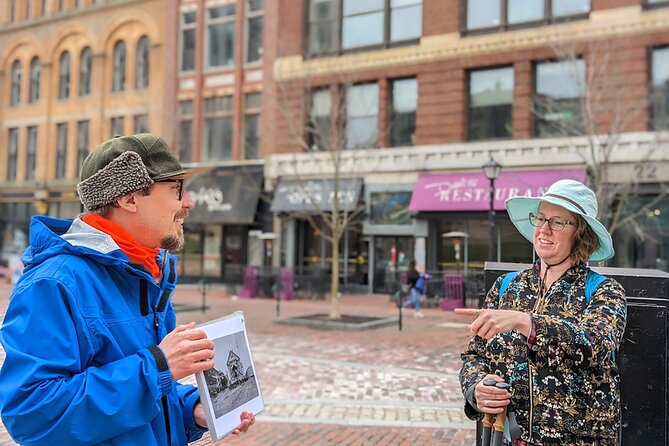
- A local guide with a clear personal style: Dugan Murphy leads the walk and has guided more than 34,000 people in his hometown.
- Stories beyond the postcard view: You hear about Wabanaki diplomacy, Chinese laundrymen, women who built independent lives, abolitionism, and the Great Fire of 1866.
- A compact Old Port route: The walk begins at Post Office Park and ends at Bell Buoy Park, close to restaurants, shops, and the waterfront.
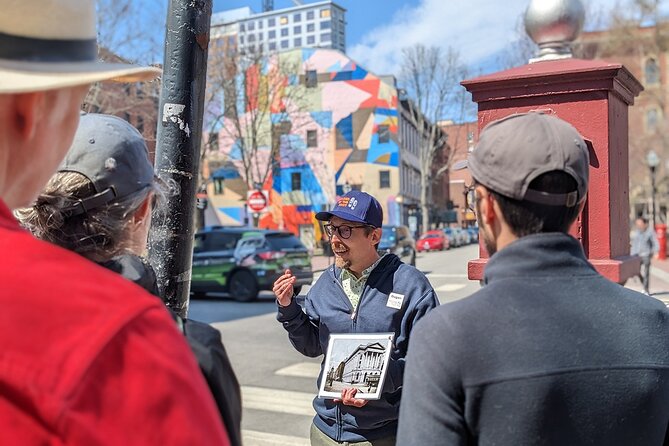
- Old photographs add useful context: Dugan brings images of earlier Portland, helping you see what changed and what survived.
- Small groups make questions easy: With no more than 15 people, the pace feels personal rather than like a procession.
- A meaningful extra benefit: The ticket includes a donation to the restoration of the Abyssinian Meeting House and a 10 percent discount on Portland Paddle water tours.
Why Portland’s ordinary streets tell unusual stories
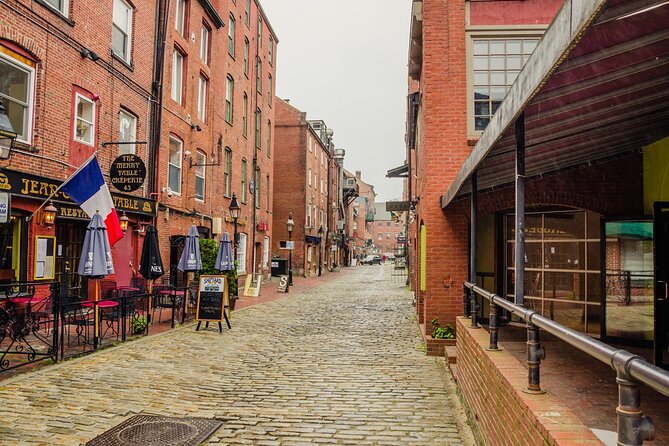
Portland is easy to admire at street level. Brick sidewalks, Victorian buildings, working docks, and Casco Bay give the city plenty of visual appeal. But a short stroll can also flatten the place into a pleasant collection of façades unless someone explains who built, used, challenged, and changed it.
That is the purpose of this tour. Instead of treating the Old Port as a preserved shopping district, Dugan connects its buildings and streets to the forces that shaped Portland: war, weather, commerce, migration, fire, and social change.
I especially like the range of people included in the storytelling. You are not given only the names of wealthy merchants and civic leaders. The tour brings in Indigenous Wabanaki diplomats, Chinese laundrymen, Black Portlanders, women who made independent lives, and other people whose work and choices helped form the city.
Dugan has worked as a full-time public historian in Portland and has been an official tour partner of the Maine Historical Society since 2023. That background matters because the walk is not just a string of dates. It is built around people, choices, and the consequences of change.
His style also gets strong praise for being clear and funny. If you have trouble following guides who speak quickly, this may be a particularly good fit. Dugan is described as speaking slowly, with clear pronunciation, while keeping the tone relaxed and lively.
More Guided Walks in the USA:
- History and Hauntings of Salem Guided Walking Tour
★ 5.0 · 14,564 reviews - Historic Charleston Guided Sightseeing Walking Tour
★ 5.0 · 6,216 reviews - Cambridge: Harvard University Student-Guided Walking Tour
★ 4.6 · 3,931 reviews
Starting at Post Office Park in the Old Port
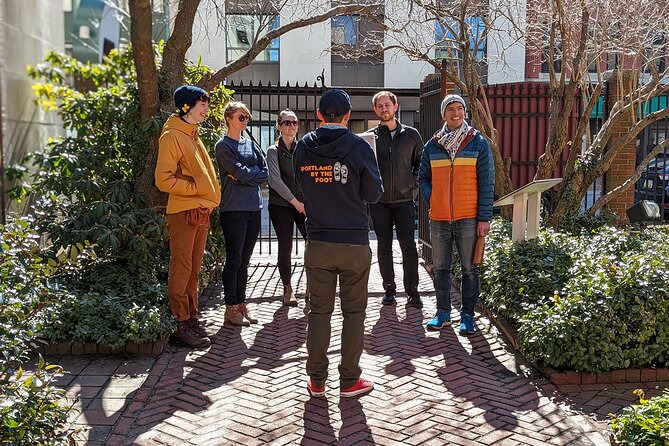
You meet Dugan at Post Office Park, on the corner of Middle and Exchange Streets. Look for the small boulders at the corner and a sign marked Portland by the Foot. The meeting point is about half a mile, or 0.8 kilometers, from the cruise ship terminal.
That location is useful for first-time visitors because you begin in the heart of the Old Port, not on the edge of town. If you arrive by cruise ship, allow enough time to walk uphill from the terminal and find the meeting point without rushing.
The first portion covers downtown and lasts about 45 minutes. This opening gives you the basic framework for understanding Portland before the walk moves toward the waterfront.
Expect Dugan to use photographs and visual material during the tour. These images help bridge the gap between the Portland you see now and the city that once occupied the same streets. A modern façade can be hard to read on its own. An old photograph can show a vanished structure, a different street use, or a waterfront that once operated in another way.
The group size is limited to 15. That is small enough for questions to feel natural, and several people have praised Dugan for pausing to invite questions at each stop. You are not required to be a history specialist. The format works well if you enjoy asking why a place looks the way it does.
Downtown Portland and the people behind the buildings
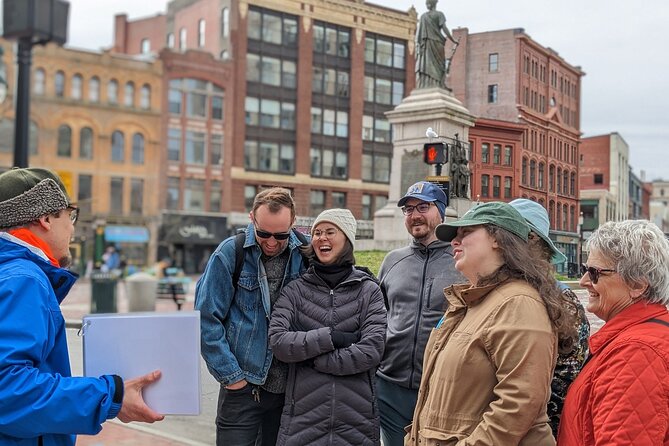
The downtown section is where the tour broadens beyond architecture. You learn about the people and pressures that shaped Portland, including communities often left out of a quick city introduction.
The stories of Wabanaki diplomats place Portland within a much older human setting. That is important context. The city is not simply a colonial or Victorian creation, and understanding Indigenous diplomacy gives you a fuller picture of how power and contact worked in the region.
The discussion also includes Chinese laundrymen. Their presence points to the working lives and immigrant communities that helped make Portland function, even when their stories did not receive much attention in traditional sightseeing tours.
Women receive particular attention as well. The tour looks at female figures who forged independent lives along Maine’s rocky coast. This is one of the more appealing parts of the walk for anyone who wants social history rather than a list of building dates. You get a sense of how individual women operated within the limits of their time and made room for themselves.
The city’s role in the abolitionist movement is also part of the wider story. That gives the walk moral and political substance without taking you far from the streets under your feet.
I would expect this section to suit curious first-time visitors, but it can also reward repeat visitors. If you already know the main Portland sights, the value lies in the people and connections that are usually skipped.
Old Port buildings and the ashes of 1866
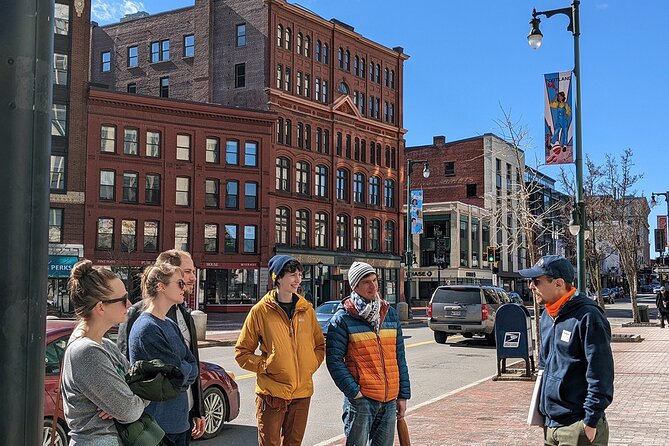
The tour then spends about 45 minutes in the Old Port. This is the section most likely to appeal to visitors who come for Portland’s architecture, but the approach is more thoughtful than simply pointing out attractive buildings.
You see buildings that rose after the Great Fire of 1866. The fire provides a clear example of how disaster can redraw a city. Instead of treating the rebuilt streets as a charming historic backdrop, Dugan explains the forces that led to reconstruction and how the city responded.
That context changes the way you look at the brick sidewalks and Victorian-era buildings. They are not all untouched survivors from an earlier era. Some are products of rebuilding, economic decisions, changing needs, and the desire to restore a working city after destruction.
The Old Port is also where the tour’s balance between beauty and commerce becomes clear. The district is attractive and full of shops and restaurants, but it grew from practical trade and waterfront work. Dugan’s storytelling helps connect the polished streets to the city’s economic past.
The route is described as an easy walking pace, but do not confuse that with completely flat terrain. Portland is hilly, and you will encounter cobblestones. There is one staircase of six steps and two staircases totaling 24 steps. If you need to avoid stairs, tell Dugan, and he can reroute you while showing the same landmarks.
That flexibility is useful, but you should still assess your comfort before booking. The tour is not suitable for people with a low level of fitness or heart problems. The total distance is 1.5 miles, with no more than about 0.2 miles between individual stops, so the walk is broken into manageable pieces rather than one long push.
A few more walks around the USA worth a look
- New Orleans Premier Ghost, Voodoo and Vampire Walking Tour
★ 4.5 · 12,856 reviews - Little Havana Food and Walking Tour in Miami
★ 5.0 · 8,882 reviews - Chicago: Gangsters and Ghosts Walking Tour
★ 5.0 · 7,155 reviews - Boston: Freedom Trail History Small Group Walking Tour
★ 5.0 · 6,450 reviews
Commercial Street and the working waterfront
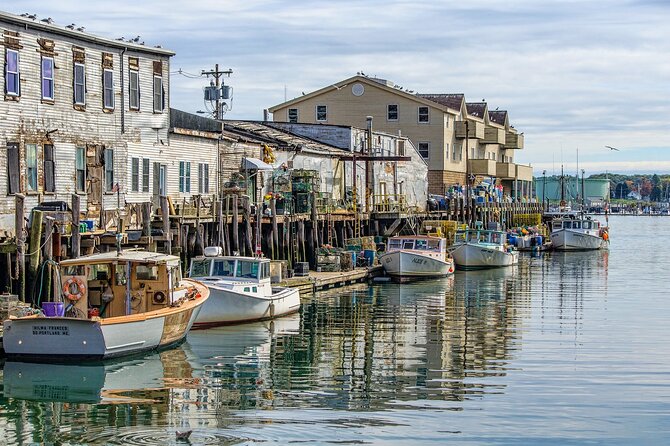
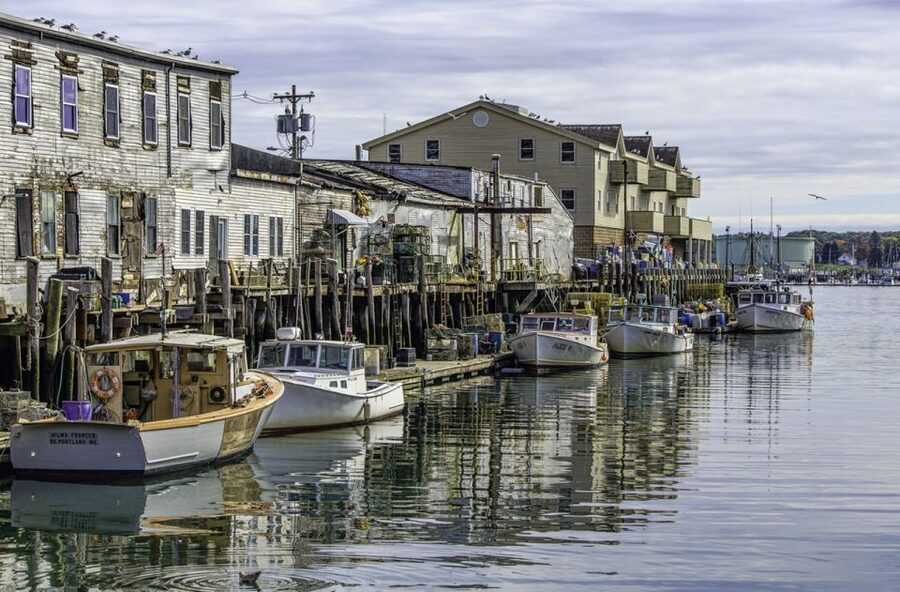
The final 30 minutes take you along Commercial Street, where Portland’s connection to Casco Bay becomes more direct. This is the working waterfront portion of the route, and it gives the walk a different mood from the brick-lined Old Port.
You can expect fresh ocean air and views toward the water while hearing how economics and geography shaped Portland. The waterfront is not only scenery. It explains why the city grew where it did and why commerce, shipping, labor, and changing industries mattered so much to its development.
Commercial Street also makes a good final chapter because it brings the historic themes into the present. You are still in a functioning part of the city, with activity around you, rather than in an isolated museum setting.
The tour ends at Bell Buoy Park, about a five-minute walk from the starting point. That is a convenient finish. You can continue along the waterfront, stop for a meal, browse nearby boutiques, or arrange another activity without needing transportation back to the beginning.
A 10 percent discount on Portland Paddle water tours is included, with instructions provided during confirmation. That pairing makes practical sense: the walking tour gives you the city’s historical frame, while a later water outing can show you Portland and Casco Bay from another angle.
Dugan Murphy’s guide style
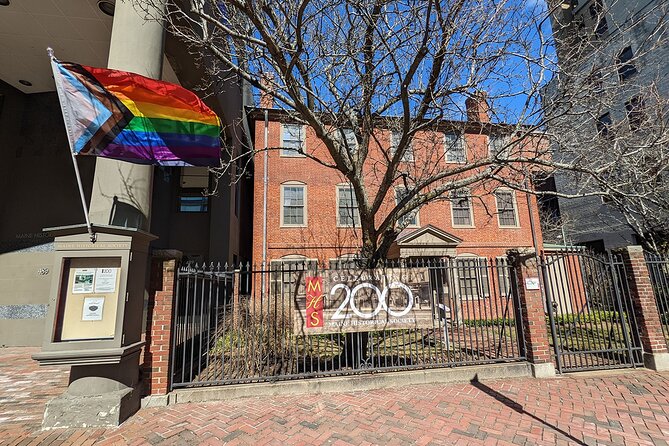
The guide can make or break a walking tour, and Dugan’s strongest quality appears to be his mix of detail and ease. He has been described as entertaining, down to earth, witty, clear, and passionate about Portland.
Those qualities matter because local history can become a blur of names and years. Humor gives the information some breathing room, while old photographs give the stories something concrete to hold onto.
I also like that Dugan encourages questions rather than delivering a fixed speech with no room for conversation. If you are curious about a building, person, or street, you have a good chance to ask about it. The small group makes that exchange practical.
His style is not likely to suit someone who wants a silent photo walk or a quick checklist of attractions. The tour is built around explanation and conversation. You should choose it if you want to understand Portland, not merely photograph it.
The strong rating of 4.9 from 78 reviews fits the repeated praise for his humor, clarity, local perspective, and ability to keep two hours moving. Several people describe the time as passing quickly, which is a useful sign for a history-focused walk.
What the $54 price includes
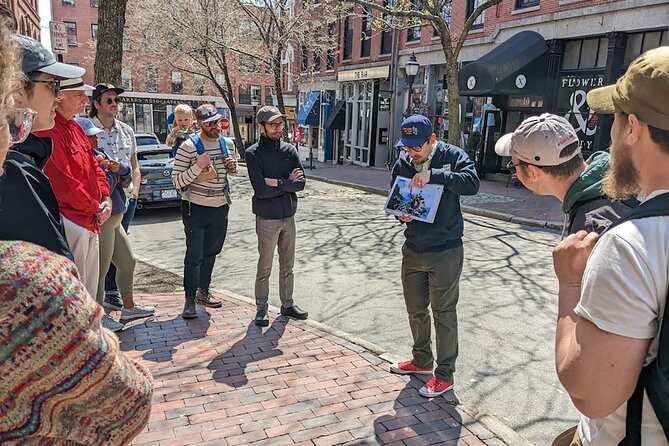
At $54 per person, this is not the cheapest way to spend two hours in Portland. You can walk the Old Port on your own for free. The question is what you gain by joining the tour.
The answer is structure, access to local interpretation, old images, and a wider range of stories than you are likely to find by wandering without preparation. You are also paying for a small group rather than a large street crowd. For visitors who care about local history, that makes the price reasonable.
The donation to the Abyssinian Meeting House adds another layer of value. A portion of every ticket supports restoration of the building, identified as the third-oldest Black church still standing in the United States. Your ticket therefore supports a local preservation effort as well as the tour itself.
The Portland Paddle discount may also improve the value if you already plan to take a water tour. It should not be the main reason to book, but it is a useful extra.
I would consider $54 fair for visitors who want a guided introduction with real local detail. If you mainly want views, shopping, and a casual stroll, you may find the price harder to justify.
Who should book this walk?
This tour suits you best if you:
- Want Portland stories that go beyond the main tourist stops
- Enjoy history presented through people and personal anecdotes
- Prefer a small group with room for questions
- Are visiting for the first time and want your bearings
- Have been to Portland before but want a different look at familiar streets
- Can comfortably walk 1.5 miles on hills and cobblestones
- Are interested in Indigenous, immigrant, Black, and women’s history
- Like guides who mix humor with serious subject matter
It may not be the right choice if stairs, hills, or outdoor walking are difficult for you. The tour runs in all weather, so rain is not a reason for the guide to cancel. Bring an umbrella, water, comfortable shoes, and clothing suited to the forecast.
There are no bathroom stops along the way. Use one before meeting at Post Office Park. Pets are not allowed, although assistance dogs are permitted.
The tour is wheelchair accessible, and Dugan can reroute around the stairs if needed. Still, Portland’s hills and cobblestones mean you should discuss your needs in advance and be realistic about the route.
Should you book Portland’s Hidden Histories tour?
Book it if you want Portland to become more than a pretty waterfront town. The strongest reasons are Dugan Murphy’s clear and humorous style, the small group, the old photographs, and the attention given to people often left out of standard city tours.
I would especially recommend it early in your stay. The route ends near restaurants, boutiques, the waterfront, and other activities, so you can use the walk to plan the rest of your time.
Skip it if you want a flat, stop-free stroll or if you prefer exploring entirely on your own. For most visitors who enjoy local stories and can manage the hills, $54 buys a thoughtful introduction to Portland, with the added benefit of supporting the Abyssinian Meeting House.
FAQ
How long is the Portland Hidden Histories tour?
The tour lasts two hours.
How far do you walk?
You walk about 1.5 miles in total.
Where does the tour begin?
It begins at Post Office Park, on the corner of Middle and Exchange Streets in Portland’s Old Port.
Where does the tour end?
The tour ends at Bell Buoy Park, about a five-minute walk from the starting point.
How large is the group?
The group is limited to no more than 15 people.
Is the tour wheelchair accessible?
Yes, the tour is wheelchair accessible. You should tell Dugan if you need to avoid the stairs so he can reroute you.
Are there stairs on the route?
Yes. The route includes a six-step staircase and two staircases totaling 24 steps. Portland also has hills and cobblestones.
Does the tour run in bad weather?
Yes. The tour takes place rain or shine. Bring an umbrella and wear weather-appropriate clothing.
Is the tour offered in English?
Yes. The live tour guide speaks English.
What is included with the ticket?
The ticket includes the guide, a donation toward restoration of the Abyssinian Meeting House, and a 10 percent discount on Portland Paddle water tours.
Just added around the USA
- Savor Bar Harbor Culinary Walking Tour in Maine★ 5.0 · 169 reviews
- Savor Bar Harbor Culinary Walking Tour★ 4.5 · 75 reviews
- 90-minute Ghost Walking Tour in Bar Harbor★ 4.5 · 161 reviews
- Baltimore Walking Foodie Tour in Fells Point★ 5.0 · 182 reviews
- The Original Fells Point Ghost Walk by Baltimore Ghost Tours★ 4.5 · 73 reviews
- The Story of Austin: Downtown History Walking Tour★ 5.0 · 216 reviews
- Austin Small Group Morning Walk★ 5.0 · 412 reviews
- Austin Murder Walk★ 5.0 · 310 reviews
USA Walking Tours, compared.
History and Hauntings of Salem Guided Walking Tour
Read our review →
New Orleans Premier Ghost, Voodoo and Vampire Walking Tour
Read our review →
Freedom Trail History Small Group Walking Tour
Read our review →
Historic Charleston Guided Sightseeing Walking Tour
Read our review →
New Orleans Food Walking Tour of the French Quarter with Small-Group Option
Read our review →
St. Louis Cemetery No. 1 Official Walking Tour
Read our review →Browse the lists this tour appears in