
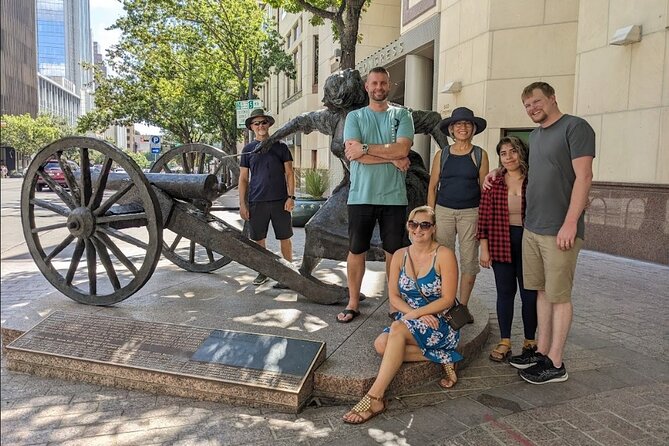
Review · HISTORY WALKING TOURS
The Story of Austin: Downtown History Walking Tour
Austin’s past gets stranger by the block. This two-hour walk ties together the city’s early frontier days, its old vice district, famous writers, live music culture, and grand downtown buildings. I like the way it gives you a quick sense of how Austin grew, and I especially like the stop inside the historic Driskill Hotel. Guides such as Emily, Caroline, and David Hess also add useful food, drink, and music suggestions for the rest of your visit.
The main drawback is that this is an outdoor city walk, with no seats provided at the stops. You cover about 1.1 miles on sidewalks, so the distance is modest, but Austin heat and the frank discussion of the old red light district may not suit every visitor.
Key points to know before you book
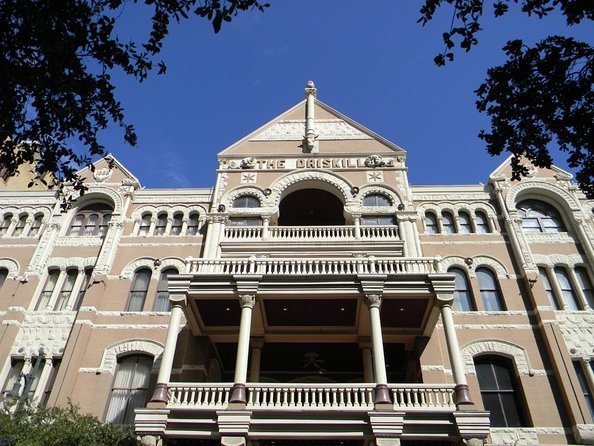
- The Driskill Hotel is the only interior stop: You get 15 minutes inside one of Austin’s best-known historic buildings.
- The walk covers about 1.1 miles: The route is generally low-intensity and follows a mostly flat, wheel-friendly path.
- Austin’s vice district takes center stage: Expect stories about prostitution, crime, politics, and the rough old-west character of early Austin.
- 6th Street gets both past and present treatment: You learn why the street matters historically and how it connects with Austin’s music scene today.
- Guides add practical city advice: Emily, Caroline, and David have been praised for restaurant, brewery, nightlife, and live music recommendations.
- The group can reach 40 people: A large group is possible, though many departures may be smaller.
Why this short walk works as an Austin introduction
At $32 per person, this tour is priced like a useful orientation rather than a major sightseeing expense. You are not paying for museum admissions or a long list of attractions. You are paying for two hours of guided context, a simple route through downtown, and access to the Driskill Hotel.
That can be good value during a first visit. Austin has plenty of interesting buildings and stories, but they do not always explain themselves. A guide helps connect the city’s early settlement, Texas politics, literature, vice, architecture, and music culture in one walk.
I would take this tour near the beginning of an Austin stay. You finish at Congress Avenue and East 4th Street, only two blocks from the starting point, so you can use the rest of the afternoon to follow up on places or neighborhoods that catch your interest.
The pace is one of the tour’s strongest points. The route is not designed as a forced march. You stop often for explanations, and the total distance is manageable for most people with moderate fitness. Still, you should bring water, especially in warm weather. There are no seats arranged at each stop, so you may be standing during the talks.
More History Walking Tours in the USA
- History and Hauntings of Salem Guided Walking Tour
★ 5.0 · 14,564 reviews - Boston: Freedom Trail History Small Group Walking Tour
★ 5.0 · 6,450 reviews - Historic Charleston Guided Sightseeing Walking Tour
★ 5.0 · 6,216 reviews
Dumont’s Down Low Bar and Austin’s rough beginnings
The tour begins at Halcyon, at 218 West 4th Street, then moves to Dumont’s Down Low Bar. You do not go inside the bar. The value here is the setting and the story, not an interior visit.
This area once belonged to a vice district that helped shape Austin’s early identity. The guide explains how the city began, how an old-west attitude influenced local life, and why Austin developed one of the Southwest’s biggest red light districts.
That subject gives the tour a sharper edge than a standard architecture walk. You hear about the less polished side of the city: prostitution, vice, lawlessness, and the people who built their lives around them. The point is not to admire the district, but to understand how central it was to Austin’s growth and reputation.
You spend about 20 minutes here. That is a sizable part of a two-hour tour, so the stop sets the tone. If you prefer history that deals only in famous leaders and handsome buildings, this may feel uncomfortable. If you want the complicated version of a city’s past, it is an effective opening.
The tour is recommended for ages 13 and up because of this material. Parents should decide for themselves if the subject is right for younger teenagers.
O. Henry’s Austin home and the city’s literary side
The next stop is the O. Henry Home and Museum. Again, you stay outside. The guide uses the home as a starting point for stories about William Sydney Porter, better known as O. Henry, during his years in Austin.
You get about 10 minutes here, enough for a concise introduction rather than a full literary tour. The stop adds a welcome change of pace after the red light district. Austin’s story is not only about saloons, politics, and music. It also includes writers who lived here before finding a wider audience.
Because you do not enter the museum, this stop is best for background and atmosphere. If O. Henry is a special interest, you may want to investigate the site separately. On this walk, the emphasis is on how one person fits into the larger story of Austin.
I like this kind of stop because it makes downtown feel less like a collection of streets and more like a place where real people lived, worked, and tried to get ahead.
The Dickinson Hannig Museum and an Alamo survivor’s Austin life
The Joseph and Susanna Dickinson Hannig Museum brings the tour into Texas history on a more personal scale. Outside the home on 5th Street, the guide explains how Susanna Dickinson, the last survivor of the Alamo, eventually ended up in Austin.
You spend only about five minutes here, so expect a focused story rather than a museum visit. The stop is still important because it links one of the most famous events in Texas history with an ordinary downtown address and the later life of a survivor.
That connection is useful. The Alamo is often presented as a single dramatic battle, frozen in time. This stop reminds you that people connected to it went on living, moving, raising families, and becoming part of Texas communities.
The home also helps break up the tour’s subjects. You move from Austin’s vice district to literature, then to the Alamo and local domestic history. The result is a broader picture of the city than you would get from a tour focused only on bars or architecture.
Same streets, a different way to see them:
- New Orleans Premier Ghost, Voodoo and Vampire Walking Tour
★ 4.5 · 12,856 reviews - Little Havana Food and Walking Tour in Miami
★ 5.0 · 8,882 reviews - Chicago: Gangsters and Ghosts Walking Tour
★ 5.0 · 7,155 reviews - New Orleans Food Walking Tour of the French Quarter with Small-Group Option
★ 5.0 · 6,118 reviews
6th Street, from historic corridor to music address

The 6th Street stop lasts about 10 minutes and covers both the street’s historic importance and its current role in Austin. This is where the tour connects most clearly with the city’s public image as a music destination.
You learn why 6th Street became so important and how its identity has changed. The guide also helps place the street within Austin’s larger music culture, which is useful if you plan to hear live music during your stay.
Do not expect a full evening entertainment crawl. This is a short history stop, not a concert tour or a list of venues. Its practical value is that it gives you context before you explore on your own.
The guides are especially helpful here if you want suggestions for music, food, or drinks. Caroline has been praised for specific local recommendations, while Emily has offered advice on restaurants, breweries, and places to hear live music. David has also been singled out for useful city suggestions.
You may want to write down recommendations as you go. The tour ends near Congress Avenue, not at a restaurant or music venue, so you will need to make your own plans afterward.
Inside the Driskill, Austin’s grand old hotel
The Driskill is the tour’s one interior visit and its clearest architectural highlight. Built in 1886, the hotel is sometimes called the people’s hotel. During about 15 minutes inside, the guide tells stories involving greed, politics, vice, music, celebrities, and more.
This is where the tour’s separate threads come together. The Driskill is not treated as a pretty old hotel alone. It becomes a stage for Austin’s social and political life, with the guide using the building to explain how power, money, entertainment, and scandal shaped the city.
The indoor stop is also practical. Austin weather can make a walking tour tiring, and a break inside offers some relief. One participant specifically praised the balance between walking and indoor time, while another noted a restroom break roughly two-thirds of the way through the route. You can also use the restroom at Halcyon Coffee at the start if you tell staff you are with the walking tour. No purchase is required.
The Driskill visit is brief, so do not expect a full hotel tour or access to every room. Its strength is the storytelling. You see the building while hearing why it matters.
The route, pace, and physical effort
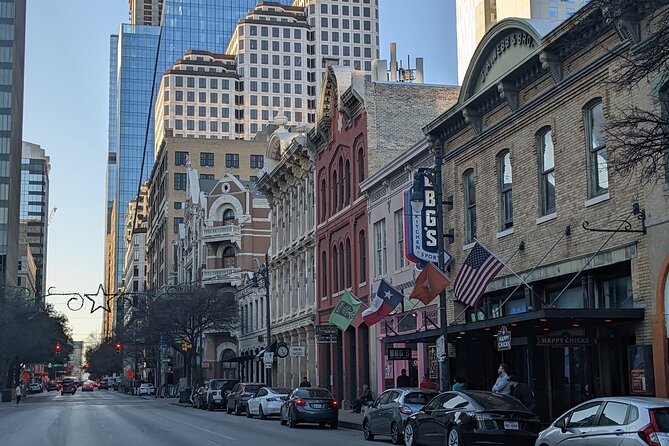
The complete route covers about 1.1 miles and takes roughly two hours. That makes it a reasonable choice if you want an introduction without giving up an entire day.
The walk uses city sidewalks and is described as low intensity, with a mostly flat, wheel-friendly route. You should still expect to stand at several stops. No seating is provided, and the tour asks for a moderate level of physical fitness.
I would wear comfortable shoes and carry water. Austin’s heat can make even a short walk feel longer, and one guide specifically advises bringing water. A hat or sunscreen may also be useful, though those items are general preparation rather than tour requirements.
Service animals are allowed, and the tour operates near public transportation. The group size can reach 40 people. That maximum matters if you prefer a quiet, intimate walk. A larger group may make questions harder to hear or ask, especially on busy sidewalks. On the other hand, the short stops and clear route keep the experience fairly simple to follow.
The guides make the difference
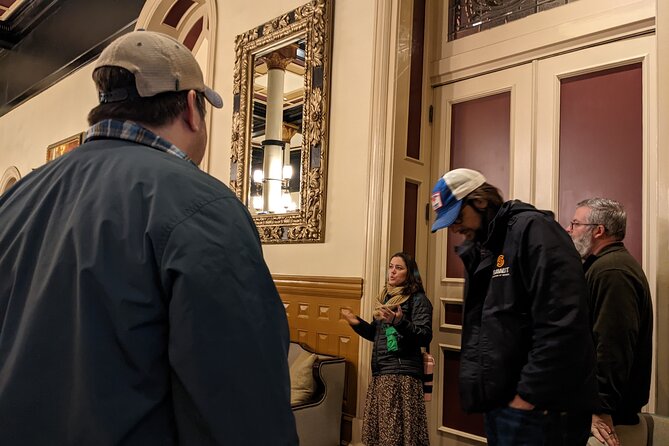
The tour’s structure is solid, but the guide determines how much you get from it. Emily, Caroline, and David Hess have each been praised for clear explanations, friendly delivery, and strong local suggestions.
Emily is repeatedly described as enthusiastic and good at making Texas and Austin history easy to follow. She also has a practical habit of helping people plan the rest of their visit, with advice on restaurants, breweries, and music.
Caroline is praised for making the walk fun while adding food and activity ideas. She has also been noted for taking time at the end to give recommendations based on individual interests.
David is described as friendly, entertaining, and a strong ambassador for Austin. His approach appears to combine city history with useful tips, rather than treating the tour as a memorized lecture.
The exact guide matters, but all these strengths point to the same benefit: you get a local voice, not just dates and building names. Ask questions during the walk, and save a few minutes at the end for suggestions.
Who will get the most from this tour?
I would recommend it most strongly to first-time visitors who want a quick downtown orientation. It works well for solo visitors, couples, families with older children, and friends who want history without a demanding schedule.
It is also a good choice if you have only a couple of free hours. The route gives you an overview of downtown, introduces several key stories, and leaves you close to where you began.
History fans should appreciate the mix of subjects. The tour covers the city’s origins, the Victorian-era red light district, O. Henry, the Alamo connection, 6th Street, and the Driskill. It is not limited to one period or one type of building.
You may want something else if you want to enter several museums, spend long periods inside historic buildings, or focus entirely on Austin’s music scene. Only the Driskill includes an interior visit, and the 6th Street discussion is brief.
Price, timing, and cancellation advice
The $32 price is fair for a two-hour guided walk with a hotel interior visit and a route that requires little advance planning. The value is strongest if you would otherwise spend time trying to piece downtown together on your own.
The tour is often booked about 13 days ahead, so I would reserve before your trip if your schedule is fixed. Confirmation arrives at booking, and the experience is offered in English with a mobile ticket.
You can cancel for a full refund up to 24 hours before the start time. Cancellations within 24 hours are not refunded, and changes in that window are not accepted. The tour requires good weather. If poor weather causes cancellation, you are offered another date or a full refund.
Should you book The Story of Austin?
Book it if you want an easy, story-led introduction to downtown and prefer a mix of history, architecture, local characters, and practical recommendations. I especially like it for a first morning or afternoon in Austin, when the route can help you decide where to spend the rest of your visit.
Skip it if you want a long indoor museum experience or a dedicated live music tour. For most visitors with moderate fitness, though, the short distance, comfortable pace, Driskill visit, and strong guides make $32 a sensible way to get your bearings.
FAQ
How long does The Story of Austin walking tour last?
The tour lasts approximately two hours.
How far do you walk?
The route covers about 1.1 miles through downtown Austin.
Where does the tour start?
It starts at Halcyon, located at 218 West 4th Street, Austin, Texas 78701.
Where does the tour end?
It ends at 320 Congress Avenue, outside the Koppell Building near East 4th Street and Congress Avenue. This is two blocks from the starting point.
Do you go inside the historic buildings?
You go inside the Driskill Hotel. The tour visits the exterior of Dumont’s Down Low Bar, the O. Henry Home and Museum, and the Joseph and Susanna Dickinson Hannig Museum.
Is the tour suitable for children?
The tour is recommended for ages 13 and older because it discusses the historic red light district.
What happens if the weather is poor?
The experience requires good weather. If it is canceled because of poor weather, you can choose another date or receive a full refund.
Just added around the USA
- Savor Bar Harbor Culinary Walking Tour in Maine★ 5.0 · 169 reviews
- Savor Bar Harbor Culinary Walking Tour★ 4.5 · 75 reviews
- 90-minute Ghost Walking Tour in Bar Harbor★ 4.5 · 161 reviews
- Baltimore Walking Foodie Tour in Fells Point★ 5.0 · 182 reviews
- The Original Fells Point Ghost Walk by Baltimore Ghost Tours★ 4.5 · 73 reviews
- Austin Small Group Morning Walk★ 5.0 · 412 reviews
- Austin Downtown Private Walking Food Tour With Secret Food Tours★ 5.0 · 71 reviews
- The Madam’s Curse Walking Ghost Tour★ 4.5 · 103 reviews
History Walking Tours, compared.
History and Hauntings of Salem Guided Walking Tour
Read our review →

Freedom Trail History Small Group Walking Tour
Read our review →
Historic Charleston Guided Sightseeing Walking Tour
Read our review →
Tapas Walking Tour with Food, Wine, and History
Read our review →
Savannah History and Haunts Candlelit Ghost Walking Tour
Read our review →
A History of Terror – Belfast City Centre Walking Tour
Read our review →Browse the lists this tour appears in