
Review · PRIVATE WALKING TOURS
Ravenna: Exclusive Private Walking Tour with a Local Expert
Ravenna’s mosaics reward a closer look. This private three-hour walk links four remarkable monuments, and I like the way a local guide explains both the pictures and the power struggles behind them. I also like the calm pace: you have time to ask questions and look up at the ceilings without being hurried. The main drawback is that the €141 price per person does not include the €12.50 admission ticket.
The strongest part is the guiding. Marta, Chiara, Giuseppe, Sabrina, and other guides have earned praise for art-history training, clear explanations, warm conversation, and well-timed visits. You will walk between sites, so comfortable shoes matter, and the tour still runs in rain.
Four details that make this Ravenna tour worthwhile
- Four major mosaic sites in three hours: Visit Sant’Apollinare Nuovo, Galla Placidia, San Vitale, and the Battistero Neoniano in one focused route.
- A truly private format: Your group has a personal guide, which makes it easier to ask questions and adjust the pace.
- Strong art-history interpretation: Guides explain iconography, politics, Christian symbolism, architecture, and Ravenna’s changing role.
- A compact walking route: The longest stated transfer is about 15 minutes, followed by two five-minute walks.
- A flexible, human touch: Past tours have included local anecdotes, market advice, gelato suggestions, and even a mosaic atelier visit when the guide had time.
- Good practical flexibility: The experience is wheelchair accessible, available in English or Italian, and can be canceled up to 24 hours before departure for a full refund.
Why Ravenna’s mosaics need a guide
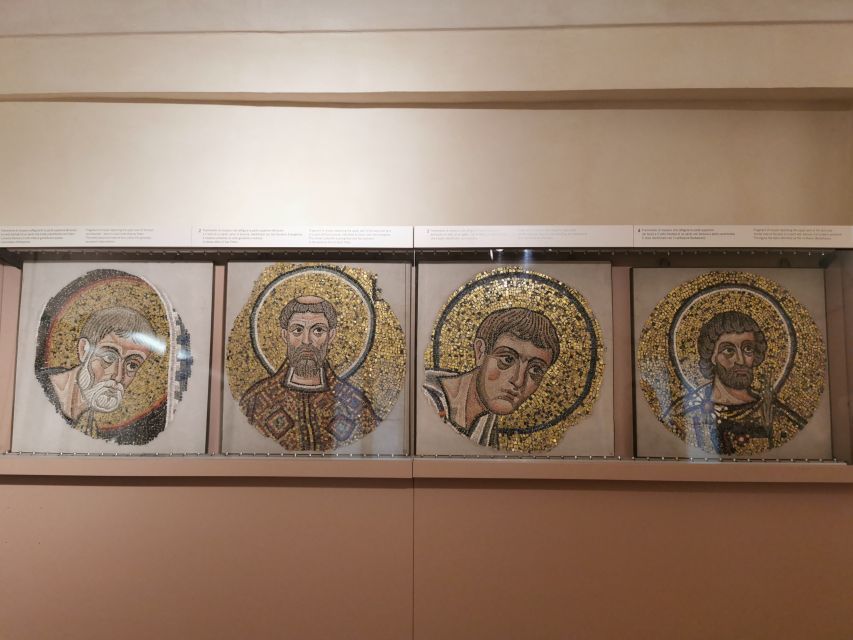
You can enter these buildings alone and see plenty. Gold backgrounds, jewel-like stones, imperial faces, and solemn saints make an immediate impression. But Ravenna’s best details often sit high above eye level, and the scenes make much more sense when someone explains who commissioned them, what they meant, and why their style changed.
That is where this tour earns its keep. The guides do not simply point out famous pictures. They explain how Ravenna connected the Roman world, early Christianity, and the Byzantine Empire. You may hear about Emperor Justinian, Empress Theodora, biblical stories, Christian symbols, and the political messages built into the mosaics.
The personal format matters here. In a large group, you may hear a speech and move on. With a private guide, you can stop over a detail, ask a basic question without embarrassment, or request more background on art, religion, or architecture. Several guides are described as trained art historians, and that academic grounding appears to be balanced with an easy, conversational manner.
Marta receives especially warm praise for making historical figures feel like real people rather than names in a textbook. Chiara is noted for clear explanations and local anecdotes. Giuseppe is praised for his enthusiasm for Ravenna and its past. The individual guide assigned to you will vary, but the pattern is consistent: serious subject knowledge delivered in a friendly way.
More Private Walking Tours in Italy
- Private 3 hrs Venice Tour: St Mark’s, Walking tour & Boat tour
★ 4.0 · 3,372 reviews - Private Best of Venice Walking Tour with St Mark’s Basilica
★ 4.0 · 1,063 reviews - Venice: Private Walking Tour with a Local
★ 4.6 · 761 reviews
Sant’Apollinare Nuovo: start with a long visual story
The tour begins at the Basilica of Sant’Apollinare Nuovo on Via di Roma 53. Starting here gives you a useful introduction to Ravenna’s mosaic language before the tour moves into smaller and more intimate spaces.
The basilica was first built as a Palatine Chapel and later became a church. Its nave is lined with mosaic panels showing scenes from the Old and New Testaments. Your guide can help you read the panels as a sequence rather than a collection of glittering fragments.
One important image is the Procession of the Magi. The three wise men move toward the infant Jesus, and the scene gives you a chance to look at clothing, gesture, faces, and movement. These details can be easy to miss if you are only taking photographs from the center aisle.
The basilica is large compared with the Mausoleum of Galla Placidia, so it gives you a broad view of how Ravenna’s artists used repeated figures and carefully arranged scenes. I would pay attention to the contrast between the scale of the building and the tiny pieces used to make the images. The guide’s explanation turns that contrast into something more than a technical curiosity.
A possible limitation is the amount of visual material. Even with a well-paced visit, you cannot study every panel closely in a short tour. Let your guide choose the most important sections, then return later if one scene catches your attention.
Galla Placidia: Ravenna’s most intimate interior
From Sant’Apollinare Nuovo, you walk for about 15 minutes to the Mausoleum of Galla Placidia. This is the longest stated walk on the route, and it gives your guide time to connect the first basilica with Ravenna’s wider story.
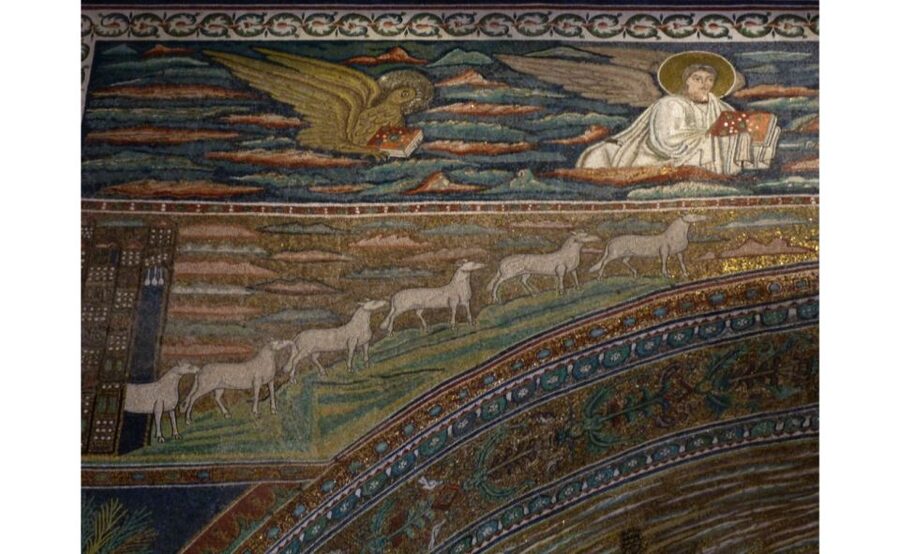
The mausoleum is much smaller than San Vitale, but its compact size is part of its force. Inside, deep blue surfaces and detailed patterns create a quiet, enclosed feeling. The ceiling is especially memorable, with a starry design that makes the room seem far larger and higher than it is.
Your guide will likely direct your attention to the Good Shepherd mosaic. It is more than a pleasant pastoral scene. The image carries Christian meaning, and the surrounding decoration helps explain how early Christian artists combined familiar visual forms with new religious ideas.
This is one of the places where a personal guide makes a real difference. You may find yourself looking at a small figure, a border pattern, or a change in color while the guide explains what it suggests. Because the room is compact, the pace must be considerate. A thoughtful guide knows when to speak and when to let you simply look.
The mausoleum can feel intense after the larger basilica. You are moving from a long narrative program into a concentrated space where every surface competes for attention. The tour’s three-hour length helps prevent the visit from turning into an exhausting catalogue of dates and names.
San Vitale: imperial power in mosaic form
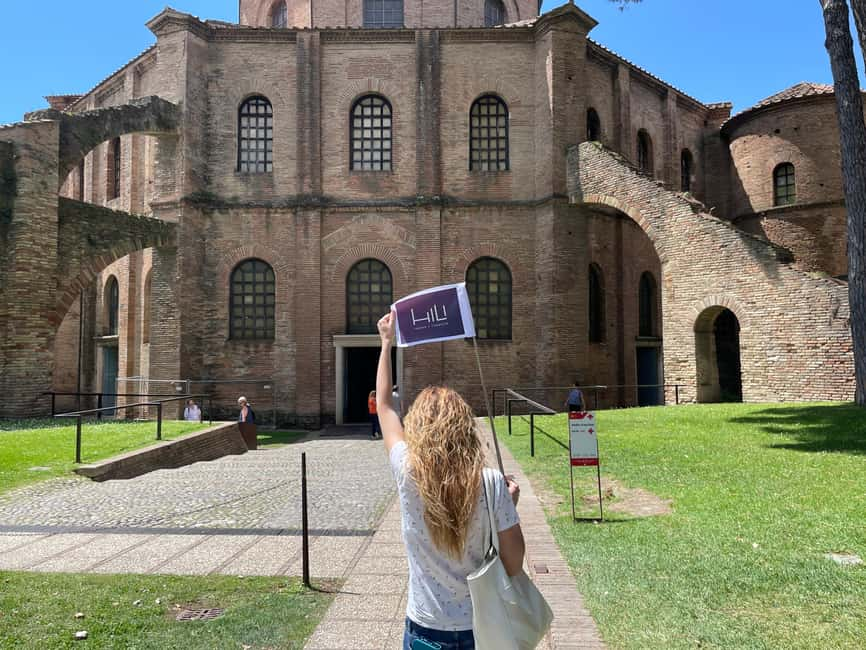
After Galla Placidia, the walk to the Basilica of San Vitale takes about five minutes. This is the architectural showpiece of the route, and it is also the place where Ravenna’s religious art and imperial politics come together most clearly.
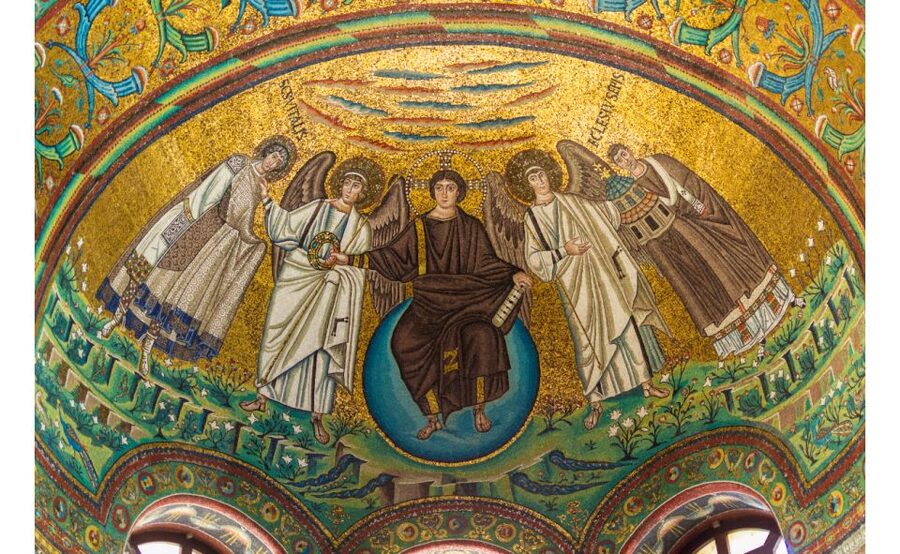
San Vitale has an octagonal design and a tall dome. The building’s shape alone is worth studying, but the mosaics around the apse are the real focus. The images of Emperor Justinian and Empress Theodora are among the most famous works in Ravenna.
Look at the way the imperial figures are presented. They are not casual portraits. Their clothing, attendants, position, and ritual objects communicate authority. Justinian and Theodora appear in a sacred setting, linking imperial power with Christian worship.
A guide can explain why these scenes matter without reducing them to a list of dates. The best explanations connect architecture, ceremony, religion, and government. This is also where the earlier stops begin to make more sense. You have already seen biblical narratives and Christian symbols. Now you can consider how those ideas were used in an imperial setting.
San Vitale may be the stop where you want the most time, but the tour has a fixed three-hour shape. A private format helps because you can ask your guide to linger over the Justinian and Theodora panels or explain a detail that interests you. Still, you will not have unlimited time for every corner of the basilica.
Several people who toured with Marta describe her as especially good at explaining iconography and placing the mosaics in their political setting. That is valuable at San Vitale, where a quick look tells you that the images are important, but not necessarily why.
Same streets, a different way to see them:
- Venice: Doge’s Palace and St Mark’s Basilica Walking Tour
★ 4.4 · 6,291 reviews - Milan: Guided Walking Tour & Last Supper Visit with Ticket
★ 4.7 · 5,409 reviews - Naples: Street Food Walking Tour with Local Guide
★ 4.9 · 4,976 reviews - Florence: Highlights Walking Tour with Expert Guide
★ 4.6 · 4,662 reviews
Battistero Neoniano: a small finish with one bold scene
The final stop is the Battistero Neoniano, also called the Baptistery of Neon or the Orthodox Baptistery. It is about a five-minute walk from San Vitale, and the guided visit lasts around 20 minutes.
The central feature is the ceiling mosaic showing the Baptism of Christ. The scene is tied directly to the building’s original purpose, so the symbolism is easier to connect with the architecture than it may be in a larger church.
The baptistery is a fitting final stop because it brings the tour back to a single, clearly defined Christian image. After the broad stories at Sant’Apollinare Nuovo, the small blue world of Galla Placidia, and the imperial imagery of San Vitale, you finish with a focused scene built around baptism.
Twenty minutes is enough for a guided explanation, but you may want more time if you enjoy studying decorative patterns. The tour ends at the baptistery, which is useful if you want to continue exploring Ravenna on your own afterward.
The walking pace and private format
The route is compact by city-tour standards. The listed walks are approximately 15 minutes, five minutes, and five minutes. Much of the interest happens inside the monuments, not during long transfers, so you spend your energy on the art.
A private group is the biggest practical advantage. You do not need to wait for a large party to gather, and you can ask questions throughout the visit. One guide was praised for adjusting the itinerary and taking the group to a mosaic atelier, where an artist demonstrated the craft. That kind of addition is not guaranteed, but it shows what can happen when the guide has room to respond to your interests.
Past visitors also appreciated that the tour did not feel hurried. Some described the experience as closer to talking with a professor than following a guide with a radio and earpiece. That suits Ravenna, where the pleasure comes from looking carefully rather than racing between landmarks.
The pace may be less ideal if you want a very fast overview with little explanation. This is an interpretive tour. You will hear about history, art, symbolism, and local life, so plan to pay attention.
Cost, tickets, and what you receive
The listed price is $141 per person, with a separate admission charge of €12.50 per person. That makes the total cost higher than the headline price suggests, so factor in both amounts before booking.
For a solo visitor or a couple, the value depends on how much you want from the art. If you only need directions and a quick look, the price may feel high. If you want to understand what you are seeing, the private format and specialist guiding make a stronger case.
You are paying for three hours of attention across four major sites. The guides have been praised for clear delivery, strong preparation, patience, and the ability to answer questions. One person called the price a bargain for the quality of the information. I would describe it as worthwhile for anyone who might otherwise leave Ravenna knowing the mosaics were beautiful but not understanding their meaning.
Admission tickets are not included, but the guide assists with the purchase. That is helpful because you do not need to work out the entry process alone.
Who should book this Ravenna walk
I would recommend it most strongly to:
- First-time visitors who want a clear introduction to Ravenna’s major mosaics.
- Couples or families who prefer a private guide to a large group.
- Art and architecture enthusiasts who want help with iconography and Byzantine design.
- Visitors making a short stay or day trip who need an efficient route.
- People who enjoy asking questions rather than listening silently to a fixed speech.
- Anyone who wants local suggestions alongside formal sightseeing.
It also suits people who are curious about the connection between art and power. The tour is not just about decorative surfaces. It can help you understand how Ravenna’s churches communicate belief, authority, ceremony, and identity.
You may prefer to explore alone if you already have strong art-history training, want long periods of quiet, or plan to spend several hours at each monument. In that case, a private guide could feel too structured.
Useful planning advice before you go
The meeting point can vary according to the option booked, so check your confirmed details carefully. One stated starting point is Sant’Apollinare Nuovo at Via di Roma 53.
Wear comfortable shoes. The distances are short, but you will be on foot between the sites and standing inside the monuments. The tour runs in rain, so weather does not automatically cancel the plan.
English and Italian are available. The experience is wheelchair accessible, though you should still confirm the meeting details and route arrangements when booking if access is important for your group.
The tour allows cancellation up to 24 hours before departure for a full refund, and you can reserve while paying later. Those terms are useful if your Ravenna visit depends on a train connection or a changing Italy itinerary.
Should you book this tour?
Book it if you want Ravenna’s mosaics explained by someone who can connect visual details with religion, politics, architecture, and local life. The repeated praise for Marta, Chiara, Giuseppe, and the other guides points to the tour’s main strength: clear, personal interpretation delivered at a humane pace.
I would be less likely to book it if you want a low-cost admission-only visit or prefer to linger alone for a full morning. For everyone else, especially first-time visitors with only a few hours, the four-site route offers a sensible introduction and a much better chance of remembering what you saw.
FAQ
How long does the tour last?
The tour lasts three hours.
Which sites are included?
The guided visit includes Sant’Apollinare Nuovo, the Mausoleum of Galla Placidia, the Basilica of San Vitale, and the Battistero Neoniano.
Are admission tickets included?
No. Admission tickets cost €12.50 per person, and the guide assists with the purchase.
Is this a private tour?
Yes. It is offered for a private group with a personal guide.
Which languages are available?
The tour is available in English and Italian.
Does the tour operate in rainy weather?
Yes. The tour takes place even if it rains.
Can I cancel for a full refund?
Yes. You can cancel up to 24 hours in advance for a full refund.
Just added around Italy
- Bergamo: Digital guide made by a local for your walking tour★ 5.0 · 184 reviews
- Full Day Tour by Car and Walking among the Apulian Beauties★ 4.5 · 182 reviews
- The Original Street Food Walking Tour in Bari★ 4.5 · 226 reviews
- Bari Walking City Tour★ 4.5 · 511 reviews
- Bari: Street Food Walking Tour with a Local Guide★ 5.0 · 160 reviews
- Bari Walking Tour with Pasta Experience★ 4.5 · 270 reviews
- Assisi Private Walking Tour including St. Francis Basilica★ 5.0 · 124 reviews
- Private St. Francis Basilica of Assisi and City Walking Tour★ 5.0 · 114 reviews
Private Walking Tours, compared.
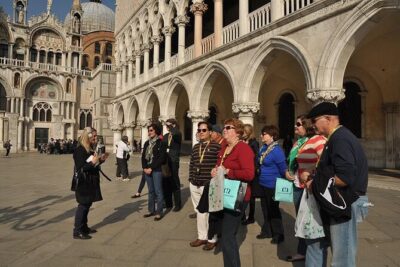
Private 3 hrs Venice Tour: St Mark’s, Walking tour & Boat tour
Read our review →
Private Street Food Evening Walking Tour in Ho Chi Minh City
Read our review →
Old Quebec City: Grand Walking Tour with Private Option
Read our review →
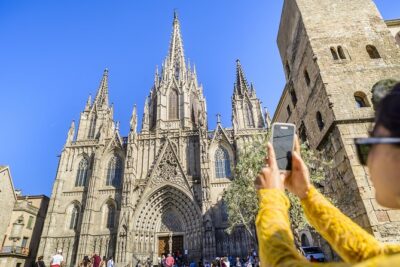
Barcelona Helicopter, Sailboat & Old Town Private Walking Tour
Read our review →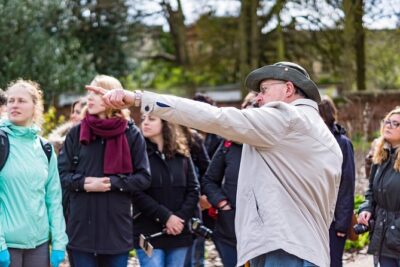
Browse the lists this tour appears in