
Review · GHOST AND HAUNTED WALKING TOURS
Salem Voodoo, Vampires, and Ghosts Guided Walking Tour
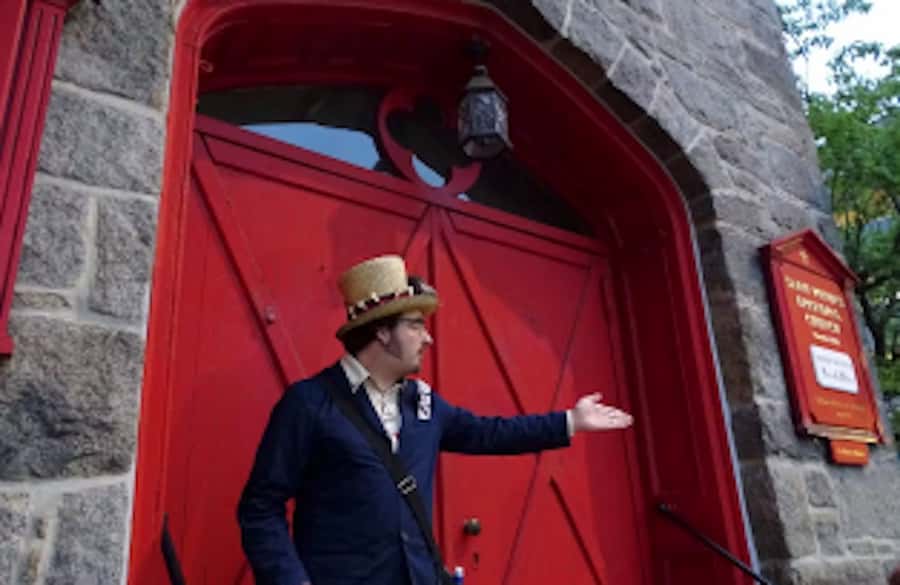
Salem gets stranger after sunset. This 90-minute walk pairs documented witch trial history with stories of voodoo, vampires, haunted graves, and modern ghost hunting. I like the way the guides move beyond costume-shop theatrics, and I like the chance to examine your own photos for possible orbs or other odd traces. The main drawback is the brisk route and sometimes gruesome material, which may not suit young children or anyone seeking a quiet history walk.
You meet at the Revere Bell by the Salem Visitor Center, then walk through the historic center with a licensed guide who also works as a paranormal investigator. Guides such as Dr. Vitka, Mike, and Vin have earned praise for clear storytelling, personal investigation stories, and keeping a group together through busy streets. The tour runs daily in the evening, with weekend afternoon departures also available.
What makes this Salem ghost tour worth your time
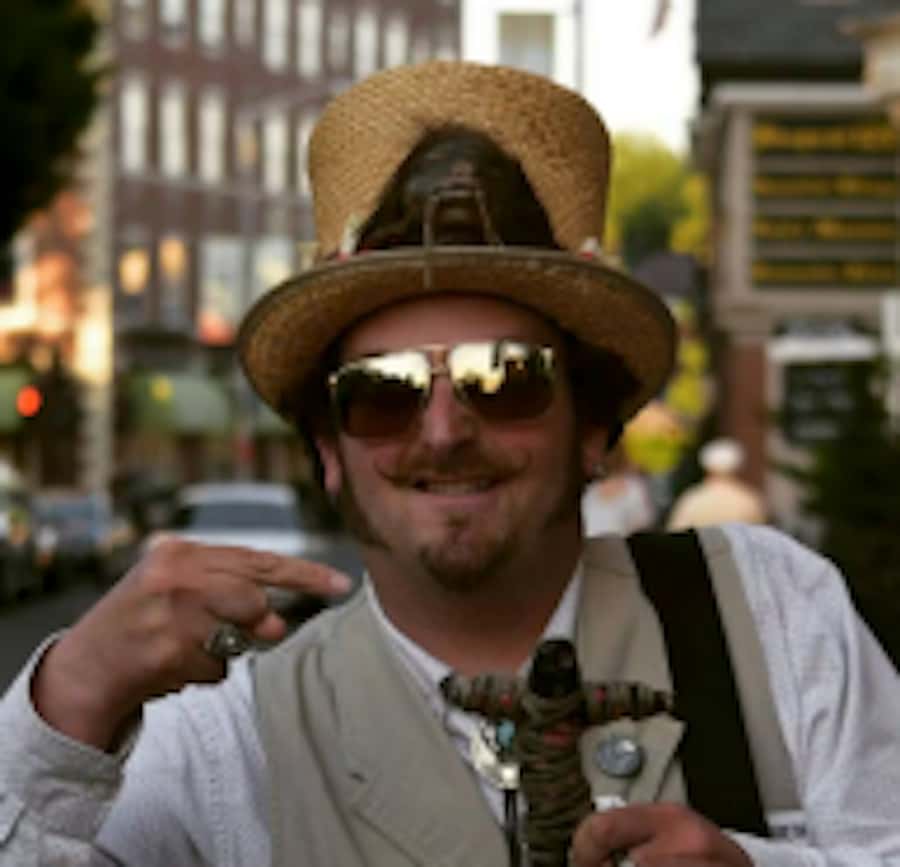
- Giles Corey’s grim final stand: Hear how the accused man was pressed to death after refusing to enter a plea.
- Tituba and the witch trial story: Learn about the enslaved woman whose testimony helped fuel the panic and whose story connects to the tour’s voodoo theme.
- Real investigation material: See photographs taken at Salem sites and learn how ghost hunters assess orbs, ectoplasm, and possible apparitions.
- More than witchcraft: The route adds New England vampire folklore, blood-drinking cases, Harry Houdini, Hocus Pocus, and notorious murder stories.
- A useful evening orientation: The walk links major historic sites in central Salem, helping you get your bearings early in your visit.
- A strong guide-led experience: Guides are praised for dramatic delivery, historical detail, and respectful treatment of the 1692 victims.
Starting at the Revere Bell after dark
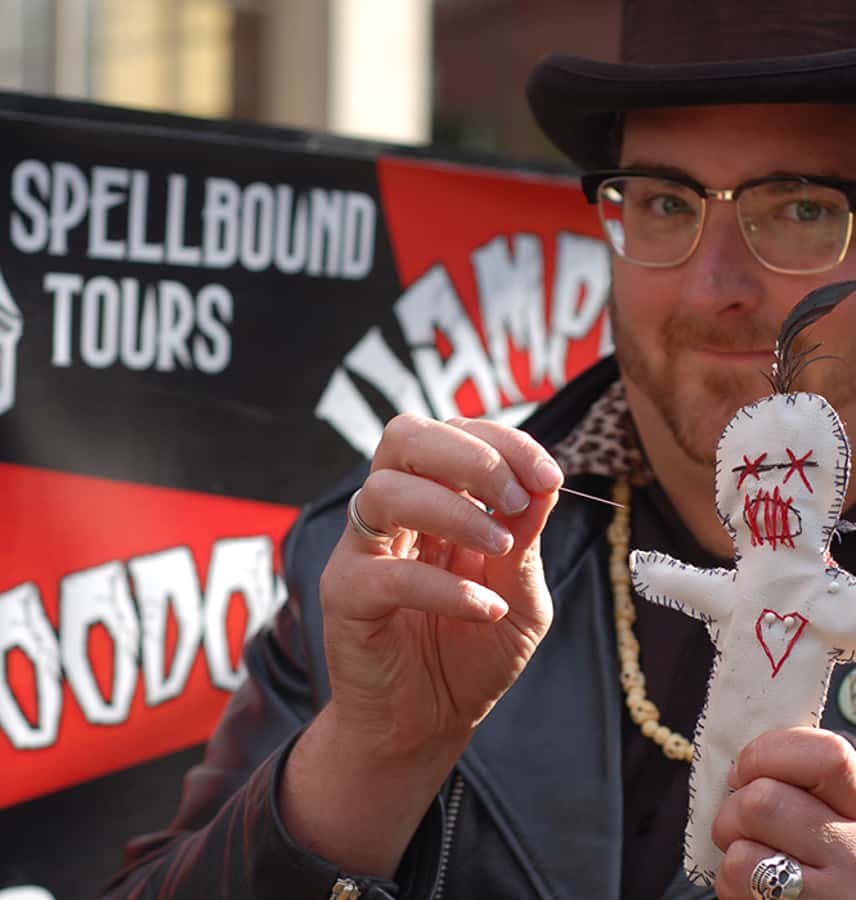
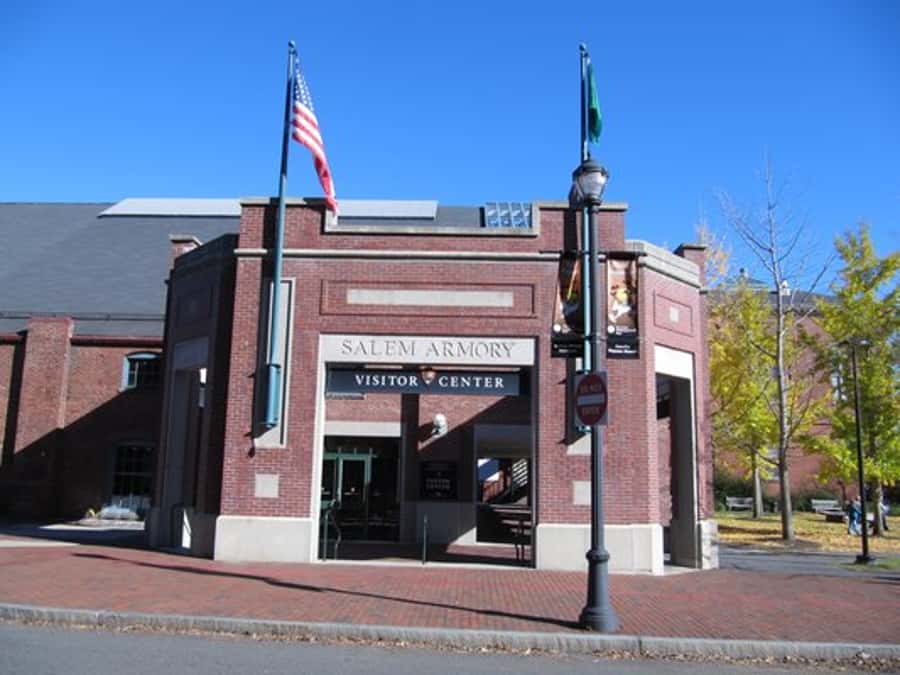
The meeting point at 2 New Liberty Street is easy to place: look for the Revere Bell in front of the Salem Visitor Center. This central location puts you near Salem’s best-known historic sights, so you can arrive early, use nearby public transportation, and get oriented before the group sets off.
The walk lasts about an hour and a half. Admission to nearly every stop is included in the walk itself, though the route passes the Peabody Essex Museum without including museum entry. You are paying mainly for the guide’s interpretation, pacing, research, and storytelling, not for a series of indoor admissions.
Evening timing matters here. Salem can feel very different once daylight fades, and the guide uses that mood without turning the walk into a costumed performance. The afternoon option, offered on weekends, may be better if you want clearer photographs or prefer not to walk after dark.
The group can reach as many as 40 people. That is large enough for a lively atmosphere but may make it harder to ask long questions at every stop. The guides have been praised for making sure the group stays together, including during crowded periods when foot traffic and cars complicate the route.
More Ghost Walking Tours in the USA
- New Orleans Premier Ghost, Voodoo and Vampire Walking Tour
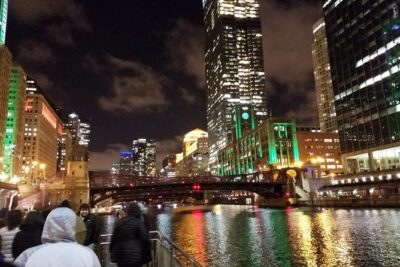
★ 4.5 · 12,856 reviews - Chicago: Gangsters and Ghosts Walking Tour
★ 5.0 · 7,155 reviews - Savannah History and Haunts Candlelit Ghost Walking Tour
★ 5.0 · 3,235 reviews
At 2 New Liberty Street, Salem’s witch trial streets
The first stop introduces the streets connected with the infamous 1692 trials. Rather than treating the witch panic as a simple story of evil witches and heroic townspeople, the guide explains the strange facts, social fears, and religious pressure behind the accusations.
This is a good opening because it gives you a framework for the rest of the walk. Salem’s haunted stories make more sense when you first understand the real people who were accused, imprisoned, examined, and killed.
The guide also begins the paranormal side of the tour here. You will hear how investigators approach unusual photographs and activity, while being encouraged to keep your own camera ready. The tone is curious rather than purely theatrical, though the tour clearly welcomes spooky interpretations.
Giles Corey at 15 Federal Street
At 15 Federal Street, the tour turns to one of the most brutal episodes in Salem’s past. This is associated with the place where Giles Corey was pressed under heavy stones after refusing to plead in court.
The story is difficult, and the guide does not soften it. Corey’s death is often remembered because it shows how the legal machinery of the trials could punish a person who refused to participate in it. The tour also connects his final curse against Salem with later haunted legends.
You spend only about eight minutes here, but it is one of the route’s strongest history stops. If you prefer ghost stories without graphic detail, this is the point where you may want to prepare yourself.
The churchyard at 24 St. Peter Street
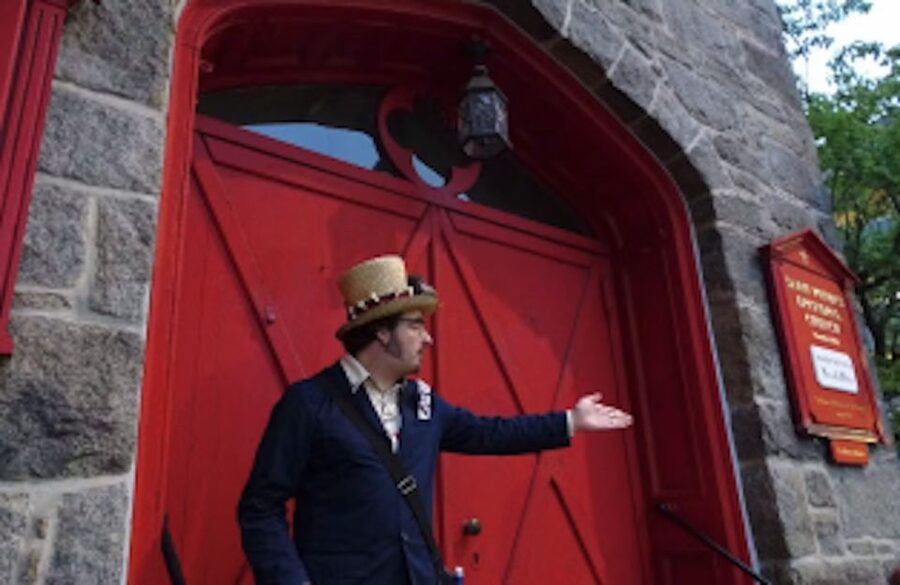
The next stop is brief, about five minutes, at a church graveyard with links to the witch trial era. The antique gravestones provide one of the better photo opportunities on the route, especially for anyone interested in old cemetery design and worn lettering.
This is less a long lecture than a pause to look closely. You get another sense of Salem as a town where ordinary streets, churches, graves, and homes sit close to the events that made it famous.
Same streets, a different way to see them:
- History and Hauntings of Salem Guided Walking Tour
★ 5.0 · 14,564 reviews - Little Havana Food and Walking Tour in Miami
★ 5.0 · 8,882 reviews - Boston: Freedom Trail History Small Group Walking Tour
★ 5.0 · 6,450 reviews - Historic Charleston Guided Sightseeing Walking Tour
★ 5.0 · 6,216 reviews
The Witch Dungeon and Tituba’s complicated story
At 10 Federal Street, the tour explains where accused witches were held while awaiting trial and execution. The stop covers the Puritan setting, the fear that drove the accusations, and the role of Tituba, an enslaved woman whose story is central to the tour’s voodoo theme.
The guide presents Tituba as an important figure in the panic and discusses the possibility that she practiced forms of voodoo in secret. This part deserves a careful ear because historical accounts of Tituba are tangled with later storytelling, changing labels, and limited surviving evidence. The value is in seeing how her identity was used within the trials and how later generations shaped her image.
This is also presented as one of Salem’s most active haunted locations. You are encouraged to take photographs, and the guide may help you examine them for unusual shapes or light patterns. That can be fun, but I would treat the evidence as an invitation to question what you see, not as proof that every bright spot is a spirit.
Bridget Bishop’s former land at Turner’s Seafood
The stop at Turner’s Seafood at Lyceum Hall connects two very different chapters of Salem’s past. The site is associated with Bridget Bishop, the first person executed during the 1692 trials, and with reports of a restless haunting.
The guide also points out that Alexander Graham Bell demonstrated his telephone here before a large audience. That detail gives the stop extra range. Salem’s story is not only witch trials and ghosts, and this location makes the point neatly.
Reports of physical sensations and strange photographs add the paranormal angle. It is a compact stop, lasting about eight minutes, so you will hear the main story rather than receive a full account of Bishop’s life or Bell’s demonstration.
Old Town Hall and the Hocus Pocus connection
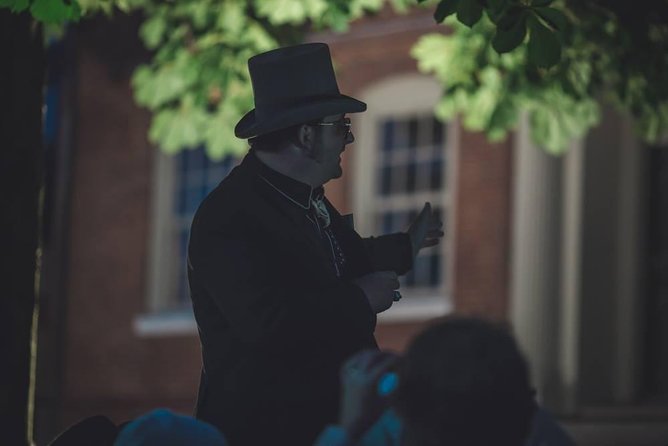
At Old Town Hall, film fans get a quick stop connected with Hocus Pocus. The location was used for the film’s large I Put a Spell On You party scene.
You have roughly five minutes here, enough for a photograph and a bit of film context. This is one of the lighter moments on the route, and it helps break up the darker accounts of imprisonment, execution, and murder.
If you are visiting Salem because of the movie, this stop will be especially useful. If you care more about colonial history, it is easy to treat it as a quick photo pause.
Vampire folklore at Derby Square
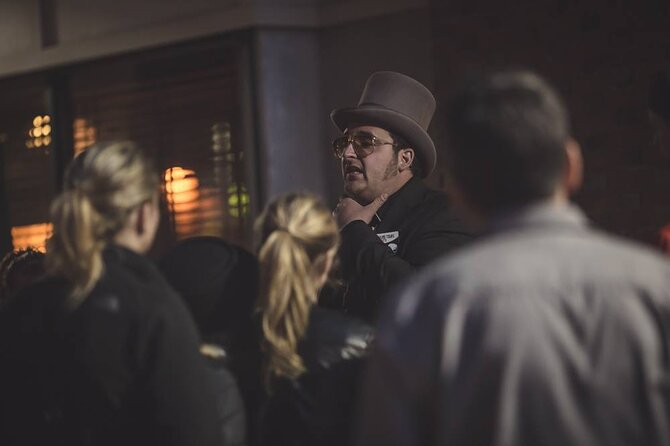
Derby Square brings the tour into vampire territory. The guide discusses New England vampire folklore and accounts of people who drank blood in modern times.
This material is presented as disturbing rather than romantic. The focus is on how vampire beliefs developed and on documented cases of blood drinking, giving you a glimpse of the fear surrounding illness, death, and unexplained physical decline in earlier communities.
The vampire section is one of the tour’s clearest departures from the 1692 Salem trials. That variety is part of the appeal, but it also means the walk is not a focused study of witch trial history. You are getting a broad survey of Salem’s darker legends.
Houdini Way and Salem’s less expected stories
At Houdini Way, you hear about Harry Houdini’s dramatic escape in Salem. It is a short stop, about five minutes, but it adds a welcome change of pace.
Houdini’s appearance on the route reminds you that Salem’s history includes performance, spectacle, and public fascination, not just tragedy. The tour uses these smaller stories well because they keep the walk from becoming one long sequence of cemetery and murder accounts.
Central Street and the murder stories
Central Street brings some of the tour’s harshest modern crime stories. The guide discusses the Boston Strangler and Carl Panzram, both linked to murders in Salem according to the tour’s account.
This is another section where the content can become graphic. The stop lasts about five minutes, but the subject matter may linger longer than the actual talk. If you are bringing children, use your judgment. The tour allows children when accompanied by an adult, but permission to attend does not mean every story will be suitable for them.
A haunted bar at 300 Derby Street
The stop at 300 Derby Street is brief, only about three minutes, and centers on a haunted bar. It works as a quick atmospheric pause rather than a major history lesson.
You may find this part less substantial than the witch trial sites or the cemetery. Still, the short stop helps maintain the route’s rhythm and shows how ghost stories attach themselves to ordinary places where people eat, drink, and gather.
The Burying Point and Salem’s trial-era graves
The Old Burying Point is one of the most important stops. Dating to 1636, it is among the oldest cemeteries in the United States and includes the graves of witch trial judges and townspeople who lived through the crisis.
You will see the tombstone of judge John Hathorne, an ancestor of author Nathaniel Hawthorne. The guide also explains Hawthorne’s connection to the cemetery and the possibility, in the tour’s playful ghost-story spirit, that he still spends time there.
This stop blends genuine American history with modern magical practice and haunting reports. That mixture can feel uncomfortable if you want strict separation between fact and legend, but the guide’s job is to show where the records end and the stories begin.
Allow yourself time to look at the stones. The cemetery is not just a backdrop for spooky photos. It is a place where the people who shaped Salem’s most painful episode are still physically present in the town center.
The Peabody Essex Museum and Axelrod Walkway Park
The walk passes the Peabody Essex Museum, a major Salem art museum that also holds objects connected to the town’s darker stories. Museum admission is not included, so you should plan a separate visit if you want to go inside.
The final presentation takes place around Axelrod Walkway Park, where the guide shares ghost photographs collected during years of investigation. This is where the tour’s main themes come together: old buildings, personal accounts, photographic evidence, and the question of how much you are willing to accept as paranormal.
You will also get help examining your own photographs for orbs, ectoplasm, or possible apparitions. A practical tip: take several ordinary photographs, not just pictures aimed at the most famous haunted spots. Comparing similar images can make it easier to notice reflections, dust, lens flare, and other ordinary causes.
Guide style, group size, and walking effort
The guides are licensed public guides, historians, and paranormal investigators rather than costumed actors. That difference matters. The best part of the experience is the spoken interpretation, especially when a guide links a trial record to a later legend or explains how an investigator tests a claim.
Guides named in the tour’s feedback include Dr. Vitka, Mike, and Vin. Their strengths include strong public speaking, humor, dramatic timing, personal investigation stories, and attention to people who need help keeping up. One guide was also praised for maintaining composure when drunken passersby tried to disrupt the group.
The route is described as an easy walk through central Salem. You should still wear comfortable shoes, since the tour includes streets, graveyards, and several stops where you may stand while listening. There is no need for a high level of fitness, and most people can participate. Service animals are allowed, and well-behaved pets are welcome.
Who will get the most from this tour?
I would choose this tour if you want three things at once: Salem’s witch trial history, a lively ghost walk, and unusual side stories that include vampires, Houdini, film locations, and notorious crimes.
It suits couples, friends, solo visitors, and families with older children who can handle grim subjects. It is especially useful early in a Salem visit because the route gives you a map of the central historic area and points out places you may want to revisit in daylight.
I would choose something else if you want a strictly academic account of the trials, a quiet cemetery visit, or a tour devoted only to confirmed historical evidence. The voodoo, vampirism, and paranormal sections are central to the experience, not minor extras.
The tour earns its value through the guide rather than through included attractions. Since almost all stops are free to enter, the price makes sense when you care about strong narration, local stories, and a guide who can connect visible places with less obvious details. It makes less sense if you plan to walk the same streets on your own and do not enjoy ghost investigation or theatrical storytelling.
Should you book Salem Voodoo, Vampires, and Ghosts?
Book it if you want Salem with the lights turned low but the history kept in view. The strongest reasons are the guide quality, the clear focus on real witch trial events, the visit to the Burying Point, and the unusual mix of voodoo, vampire folklore, ghost photographs, and modern crime.
Choose an evening departure for the full spooky mood, or a weekend afternoon walk if you prefer easier photographs and better visibility. Keep an open but sensible mind: enjoy the legends, listen for the historical evidence behind them, and remember that an orb in a photograph is not automatically a ghost. With that approach, this is a lively and useful way to meet Salem’s darker side.
FAQ
How long does the Salem Voodoo, Vampires, and Ghosts tour last?
The walking tour lasts approximately 90 minutes.
Where does the tour begin?
It begins at the Revere Bell in front of the Salem Visitor Center, at 2 New Liberty Street in Salem, Massachusetts.
Where does the tour end?
The activity ends back at the meeting point.
Is the tour offered during the day?
The tour is offered daily in the evening. An afternoon option is available on weekends.
Is the tour conducted in English?
Yes. An English-speaking guide leads the experience.
Are children and service animals allowed?
Children must be accompanied by an adult. Service animals are allowed, and well-behaved pets are welcome.
What is the cancellation policy?
You can cancel at least 24 hours before the local start time for a full refund. Cancellations or changes made less than 24 hours before the start time are not accepted for a refund.
Just added around the USA
- Savor Bar Harbor Culinary Walking Tour in Maine★ 5.0 · 169 reviews
- Savor Bar Harbor Culinary Walking Tour★ 4.5 · 75 reviews
- 90-minute Ghost Walking Tour in Bar Harbor★ 4.5 · 161 reviews
- Baltimore Walking Foodie Tour in Fells Point★ 5.0 · 182 reviews
- The Original Fells Point Ghost Walk by Baltimore Ghost Tours★ 4.5 · 73 reviews
- The Story of Austin: Downtown History Walking Tour★ 5.0 · 216 reviews
- Austin Small Group Morning Walk★ 5.0 · 412 reviews
- The Madam’s Curse Walking Ghost Tour★ 4.5 · 103 reviews
Ghost and Haunted Walking Tours, compared.
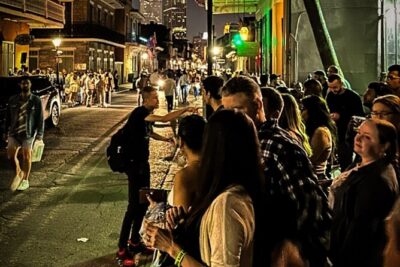
New Orleans Premier Ghost, Voodoo and Vampire Walking Tour
Read our review →
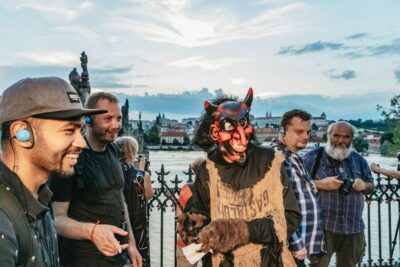
Ghost Walking Tour Where Legends Come To Life
Read our review →
Savannah History and Haunts Candlelit Ghost Walking Tour
Read our review →

Ghosts of Charleston Night-Time Walking Tour with Unitarian Church Graveyard
Read our review →
New Orleans Haunted Ghost, Voodoo & Vampire Walking Tour
Read our review →Browse the lists this tour appears in