
Review · HIDDEN GEMS WALKING TOURS
Seoul: Nighttime Hidden Gems Walking Tour
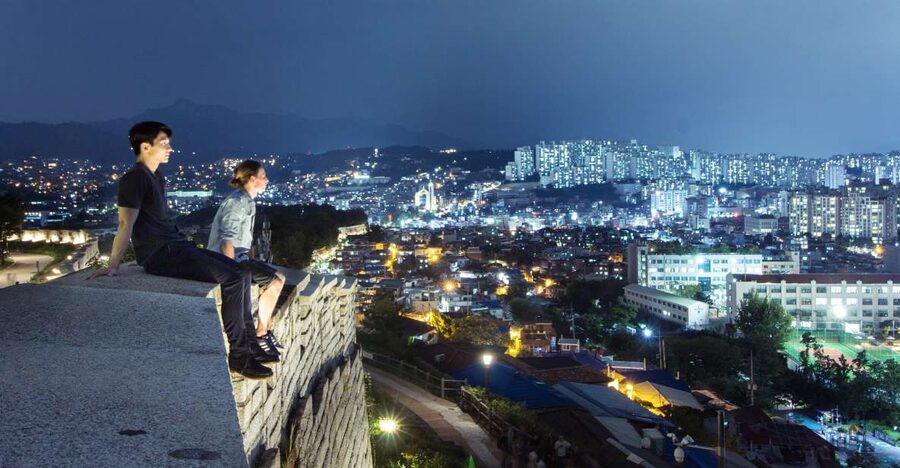
Seoul glows brightest from its hills. This two-hour walk links Seoul National University, Ihwa Mural Village, Naksan Park, and Hanyang City Wall in one compact evening outing. I like the mix of city views and everyday Korean stories, especially the talk about student life, housing, work culture, and the social pressures behind modern Seoul.
I also like that local guides such as Leah, Jessica, Smin, Ethan, and Jun make room for questions rather than rushing from one photo stop to the next. The main catch is clear: the route climbs steep streets and stairs, so it is not suitable for people with mobility difficulties and may feel tiring if you rarely walk uphill.
Key points at a glance
- A hilltop view that improves as the sky darkens: The higher you walk around Naksan, the more Seoul’s lights open below you.
- Korean society explained through real places: Seoul National University, old hillside homes, and Hyehwa’s streets become starting points for conversations about education, work, housing, and local life.
- A manageable but genuine climb: The walk includes slopes and stairs, with pauses at stops, but high heels are a poor choice.
- A quieter side of central Seoul: Ihwa Mural Village and the city wall feel far removed from the usual shopping streets and major palace routes.
- Strong guiding is part of the value: Guides including Leah, Smin, Jessica, Ethan, Jun, and June are praised for clear English, humor, patience, cultural insight, and photo help.
- Good timing for twilight: A start around 5:30 pm can let you see the change from daylight to evening lights, depending on the season and weather.
Why this short Seoul walk is worth your evening
At $33 per person, this is not the cheapest way to see a viewpoint in Seoul. It is a fair price if you want the sights tied together by a guide who can explain how the city works, rather than simply point out a wall or mural.
The route is especially useful early in your visit. You get a quick introduction to Korean education, social expectations, old neighborhoods, and Seoul’s rapid growth. I would not treat it as a formal history lecture. Its strength is the way it connects broad ideas to streets you can see and walk through.
The tour lasts two hours, which keeps the commitment reasonable. You can fit it into an evening without giving up dinner or a later plan. The tradeoff is pace: there is a lot to cover, and some stops receive only a short explanation before the group moves uphill again.
A guide may use a microphone and personal receivers. This detail matters in a group, particularly when you are standing near traffic, walls, or open viewpoints. Katarzyna from Switzerland specifically appreciated being able to hear every story clearly.
More Hidden Gems Walking Tours in the world:
- Dublin Highlights and Hidden Gems Guided Walking Tour
★ 5.0 · 6,020 reviews - Kyoto Geisha Walking Tour: Gion District & Hidden Gems
★ 4.7 · 3,273 reviews - Marrakech: Ben Youssef, Secret Garden, & Souks Walking Tour
★ 4.6 · 2,802 reviews
Meeting at Hyehwa Station Exit 2
The meeting point is outside Exit 2 of Hyehwa Station. A guide waits there, making the start simple for anyone using Seoul’s subway system.
Hyehwa is a useful starting area because the evening begins in a lively cultural district before moving toward quieter slopes. The nearby Maronie Park helps set the scene, with a look at the atmosphere around local arts and university life. You are not just being driven to a lookout. The tour begins with the neighborhood itself.
The exact guide can vary. Leah is praised for humor, patience, and thoughtful answers. Jessica is known for keeping the mood light while offering plenty of information. Smin, Ethan, Jun, June, Lisa, Ms. Kim, and others have also led the walk. Their styles differ, but the shared pattern is clear: good English, openness to questions, and a willingness to offer practical help after the tour.
Do not arrive in high heels. Wear shoes with a firm sole and bring water. Even if the walk is described as easy, the route is not flat.
Seoul National University and the pressure to succeed
The Seoul National University stop gives the evening its social focus. It is presented as Korea’s number one university, and the discussion uses student life to explain a larger part of Korean culture.
You can expect conversation about education, competition, and the expectations placed on young people. This is one of the strongest parts of the outing because it moves beyond palace dates and famous food. You begin to see how schooling affects families, careers, and ideas of success.
The stop is not simply about admiring a university campus. It gives you a framework for understanding the people you see across Seoul. Questions about study, work, and social status are connected here to ordinary life.
Several guides have also spoken openly about the difficulties faced by Korean students. That direct approach is valuable, though the subject can be serious. If you want only cheerful sightseeing, this may feel heavier than expected. If you want a more honest picture of Korean society, it adds real substance to the walk.
Maronie Park and Hyehwa’s local character
Maronie Park helps connect the university area with Hyehwa’s broader identity. The tour uses the district to discuss local culture and the way residents experience the area.
Hyehwa has also dealt with problems linked to uneducated drunken tourists, a point Leah addressed directly during one tour. That kind of explanation can change how you look at a neighborhood. Streets that seem like simple nightlife areas also have residents, students, workers, and long-term community concerns.
The value here is not a long list of monuments. It is context. You hear about the gap between a place marketed for fun and the people who live with the noise and behavior that can come with it.
That honest tone is one reason the walk feels different from a standard sightseeing circuit. Your guide can talk about difficult subjects without turning the evening into a scolding. Leah, Smin, and Ethan are particularly praised for answering questions in a friendly, open way.
A few more walks around the world worth a look
- Magical London: Harry Potter Guided Walking Tour
★ 4.7 · 22,044 reviews - Reykjavik Food Walk – Local Foodie Adventure in Iceland
★ 5.0 · 18,952 reviews - History and Hauntings of Salem Guided Walking Tour
★ 5.0 · 14,564 reviews - New Orleans Premier Ghost, Voodoo and Vampire Walking Tour
★ 4.5 · 12,856 reviews
Ihwa Mural Village and the old hillside homes
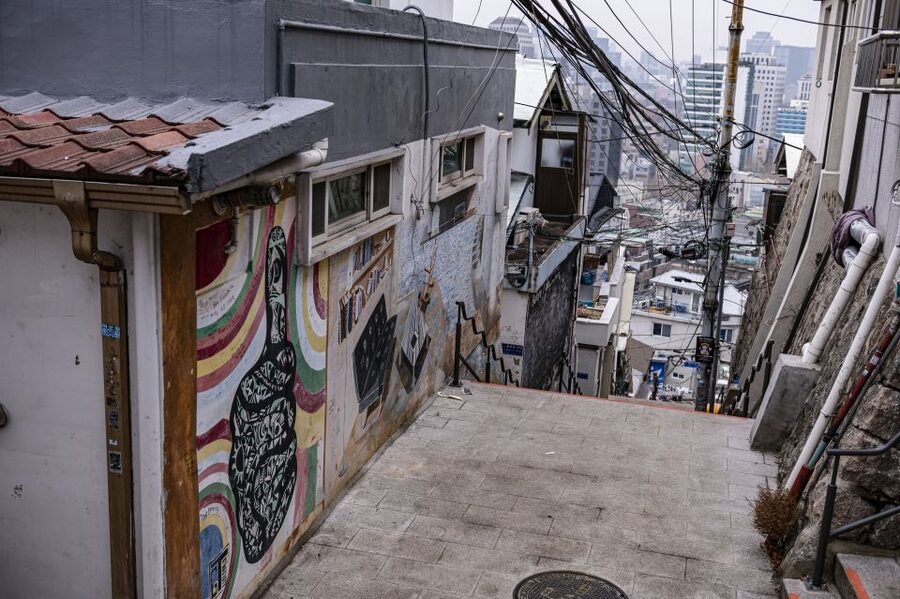
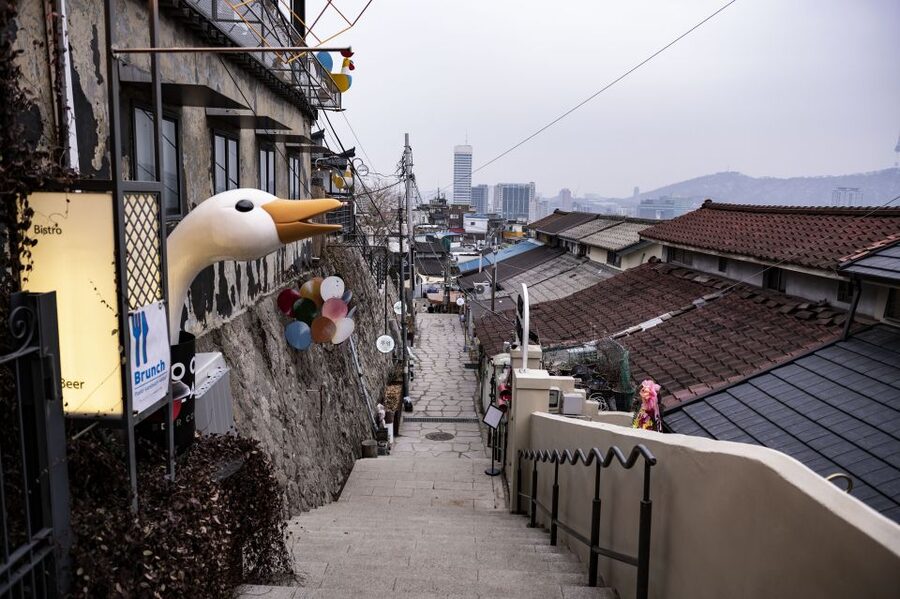
Ihwa Mural Village is one of the most photogenic stops. The old village sits on a hill, with painted walls and narrow lanes that make good photo backgrounds. At night, the setting takes on a softer, more atmospheric feel than it might during a busy daytime visit.
The murals are only part of the story. The tour explains the idea of a moon village, a term connected with hillside settlements and the people who lived in them. That context matters because the area is not just a decorative art zone. It reflects older housing patterns and the changing value of hillside neighborhoods.
You may find this stop more moving after hearing how the village developed and how its identity changed. One person described the moon village as an unexpected favorite after initially feeling uncertain about it. That is a useful warning: do not judge this stop only by the first wall painting you see.
Ihwa also has practical limits. The lanes can be steep, and the art itself may not be the main attraction for everyone. I would come here for the combination of place, story, and views, not just for a checklist of murals.
Naksan Park and the climb toward Seoul’s lights
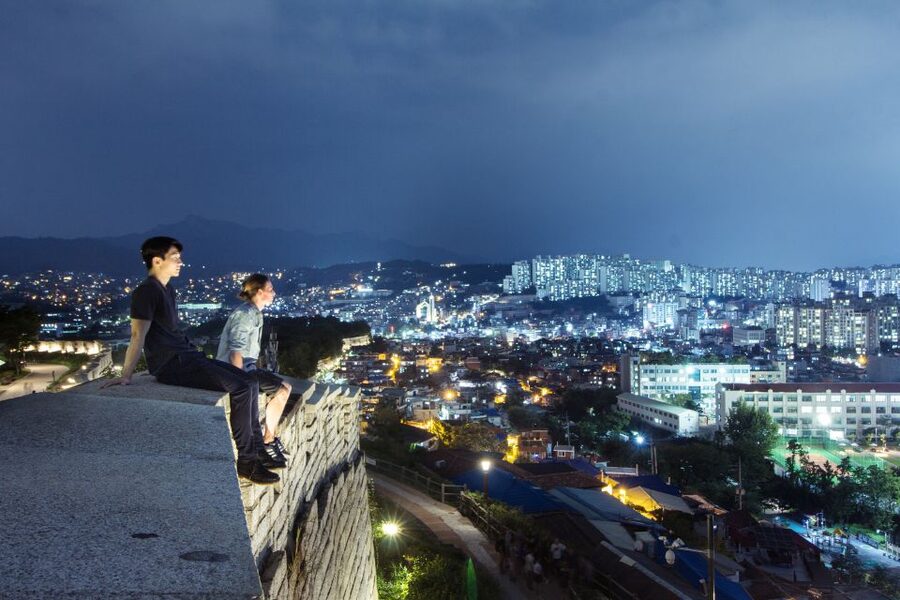
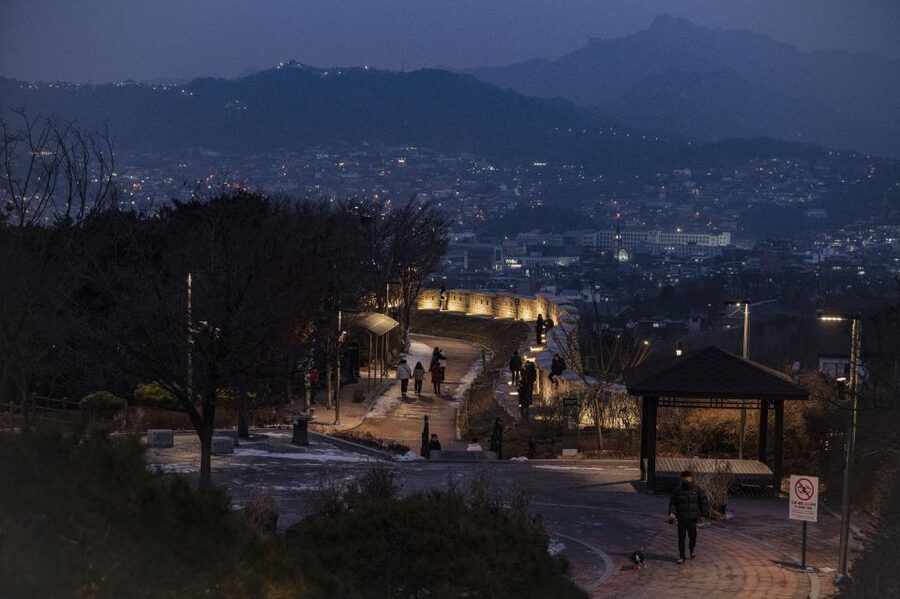
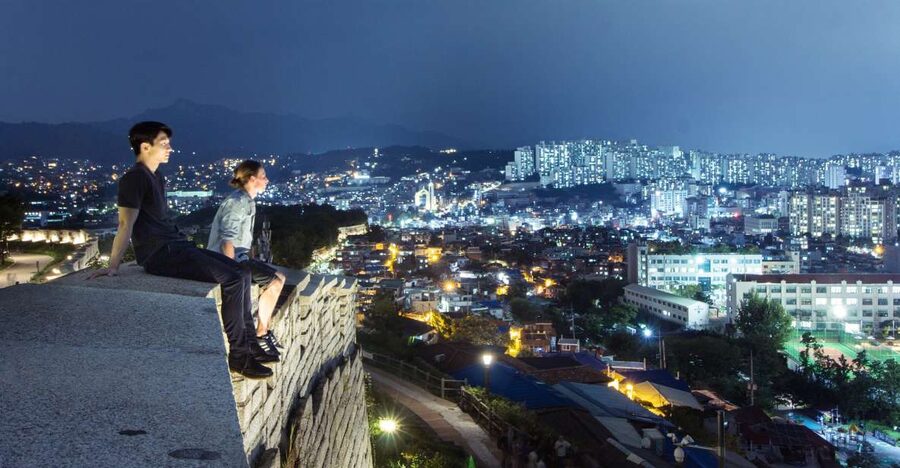
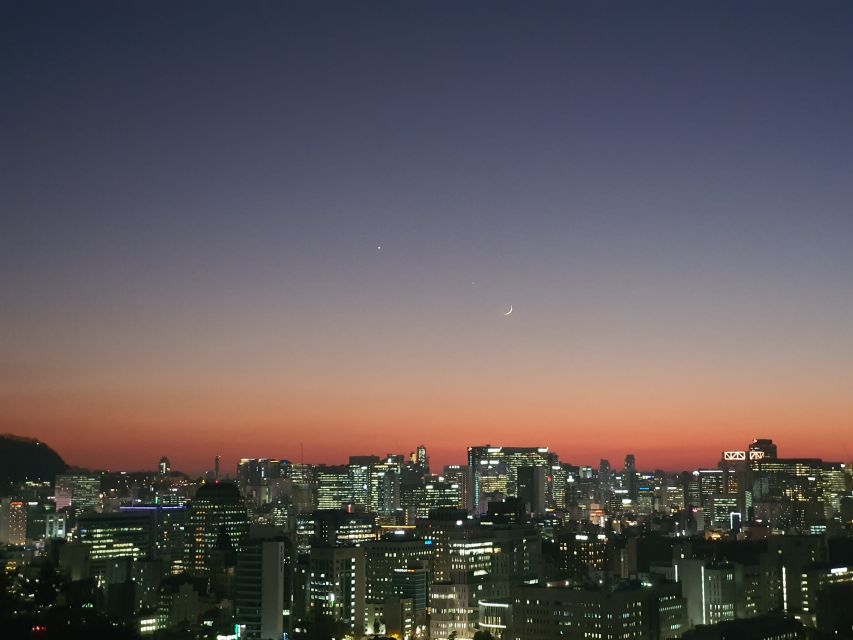
Naksan Park brings the walk higher and gives you the evening view you came for. As the route climbs, more of Seoul’s lights appear below. The change from twilight to full night is the visual payoff of the tour.
The walk includes slopes, stairs, and some uneven footing. Guides usually stop along the way so the group can catch its breath and hear the next explanation. Several people found the pace comfortable because the pauses were built into the route, while others pointed out that the uphill sections deserve advance warning.
This is not a mountain hike, but it is more than a flat city stroll. A 58-year-old participant with a fake knee managed it, yet that should not be taken as a promise that everyone will find it easy. Your own balance, knees, and comfort with stairs matter more than the distance.
At Naksan, you get both the view and a sense of Seoul’s shape. The tour explains how the capital was located and how the old city related to the surrounding hills. That makes the view easier to read. You are not just looking at a mass of lights. You are seeing how the city grew around older boundaries and higher ground.
Bring a phone or camera if you enjoy night photography. Jessica has helped people find better angles and offered photo advice, while other guides have taken pictures for participants. The timing of sunset depends on the season, and clouds can spoil the color, but the city lights remain the main reward.
Hanyang City Wall, history with a modern backdrop
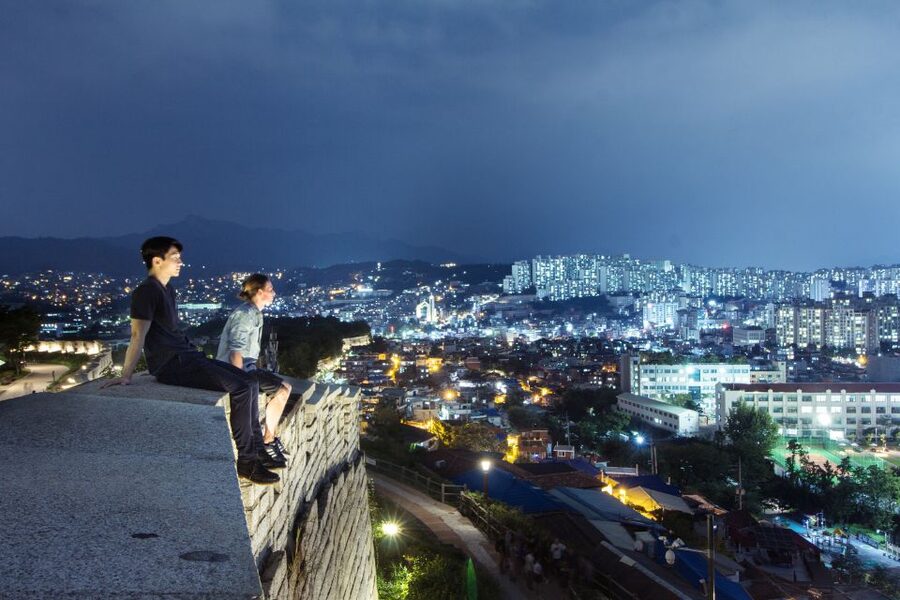
The walk along Hanyang City Wall is the final major setting. The wall is a historical monument, but it also works as one of Seoul’s best night viewpoints. The city spreads below while the old stone route guides you along the hill.
This pairing of old wall and modern skyline is what gives the tour its shape. Seoul’s past is not sealed away in a museum. It sits beside apartments, roads, schools, and bright commercial districts.
The wall has also become recognizable to fans of K-Pop Demon Hunters, which adds a current pop-culture link to the older site. That detail may appeal to younger visitors, but you do not need to know the show to enjoy the location.
The route encourages you to look back as well as forward. You learn about the capital’s earlier boundaries, then see a huge modern city stretching beyond them. The contrast is more useful than a long list of dates because it gives you a physical sense of change.
What the guides add to the experience
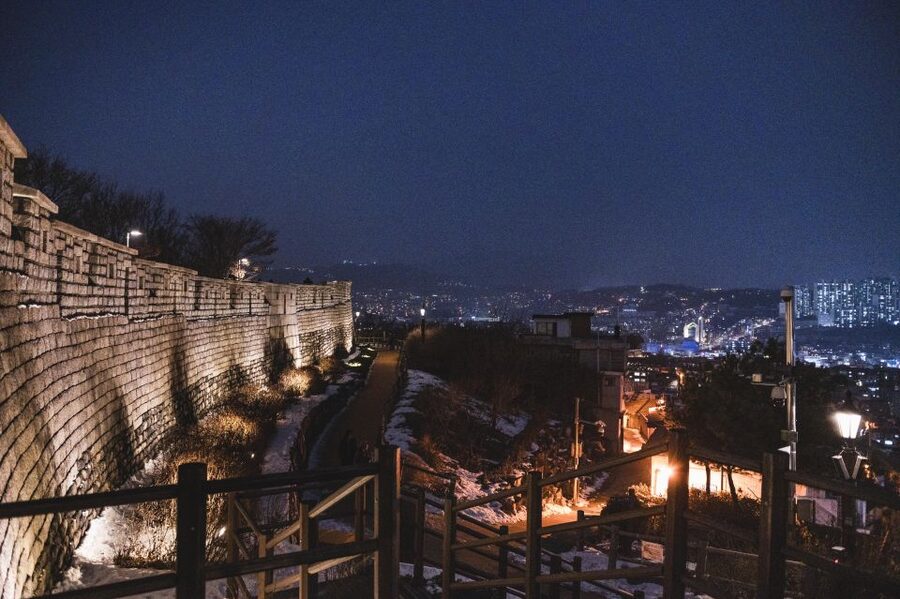
The guide makes or breaks a walking tour, and this one depends heavily on the person leading your group. The available guide names include Leah, Jessica, Smin, Ethan, Jun, June, Lisa, Ms. Kim, and others.
Leah receives repeated praise for humor, patience, cultural insight, and a willingness to answer many questions. Jessica is often described as engaging and upbeat, with good advice for photos and clear explanations. Smin is valued for her views on Korean society, while Ethan has helped with restaurant suggestions, transportation questions, and practical problems after the walk.
Jun and June are praised for humor and clear English. Ms. Kim has been especially helpful with photo stops and breaks. One guide also handled a guest who struggled with English, which suggests the guides can adapt when a group has different needs.
You should still understand the nature of a group tour. The experience is not a private conversation, and the guide must keep several people moving together. Group sizes can be around 16 people, which is large enough for a social atmosphere but small enough for questions when the guide manages the pace well.
How hard is the walk?
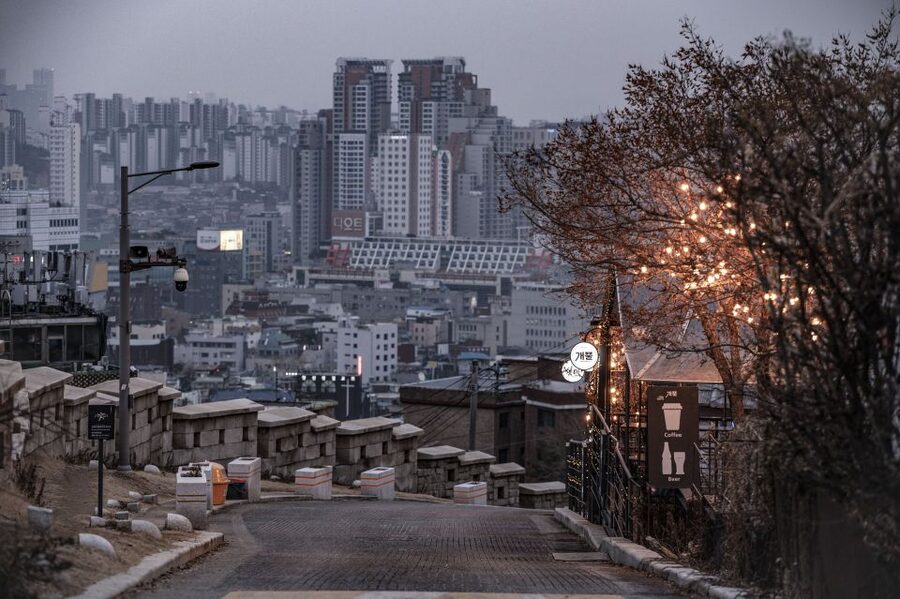
The most important planning point is the uphill route. There are steep streets, stairs, and sections where you need careful footing. The guides include regular stops, so you are not expected to climb without pauses, but the terrain remains part of the experience.
This outing suits you if you can walk uphill for two hours with breaks. It is not suitable for people with mobility impairments, and the stated guidance says it is not suitable for people over 70. That age limit is blunt, but it reflects the slopes and stairs rather than the distance alone.
Wear comfortable walking shoes. Leave high heels at your hotel. In winter, hot packs are included, which is useful because a hilltop evening can feel colder than the streets below.
Rain does not automatically ruin the tour. One guide kept checking on the group during heavy rain and helped people stay comfortable. Still, weather affects views, footing, and enjoyment, so a clear evening gives you the best chance of seeing Seoul at its brightest.
Who gets the best value from $33?
I think the price works best for three kinds of visitors:
- First-time visitors who want a quick social and historical introduction to Seoul.
- Repeat visitors who have already seen the palaces and shopping districts and want a different side of the city.
- Curious walkers who enjoy asking questions about education, housing, work culture, and daily life.
The value is less obvious if you only want a viewpoint. You can find night views elsewhere, and this tour requires you to follow a set route at a group pace. The $33 pays for the guide’s interpretation, the connected route, and the chance to reach several hillside sites without working out the path yourself.
The two-hour length is another point in its favor. It is short enough to fit between other plans, but long enough to move from university culture to old villages and the city wall. I would consider it good value for a first or second night in Seoul, especially if you want help understanding the city rather than only photographing it.
Free cancellation up to 24 hours before the start and the reserve-now, pay-later option make the booking less rigid. Those policies are useful when weather or a busy Seoul schedule may change your plans.
Should you book this Seoul night walk?
Book it if you want views with explanation, not just views. The strongest part is the connection between Seoul’s physical setting and Korean society: university pressure, old hillside housing, neighborhood problems, city planning, and the contrast between a historic wall and a modern capital.
Skip it if stairs are a serious problem, if you dislike group walking, or if your ideal evening means sitting still with a drink. The climb is real, even with breaks.
For most fit visitors, I would put it near the start of a Seoul trip. You will leave with better questions about the city, useful local suggestions, and a clearer sense of how Seoul’s old hills and modern ambitions fit together.
FAQ
How long does the Seoul nighttime walking tour last?
The tour lasts two hours.
Where does the tour meet?
The meeting point is outside Exit 2 of Hyehwa Station, where a guide will be waiting.
What language is the tour conducted in?
The live tour guide speaks English.
Which places are visited during the walk?
The route includes Seoul National University, Maronie Park, Ihwa Mural Village, Naksan Park, and Hanyang City Wall.
Is the walk suitable for someone with mobility problems?
No. The route goes uphill and includes steep sections and stairs, so it is not suitable for people with mobility impairments.
What should I wear for the tour?
Wear comfortable walking shoes. High-heeled shoes are not allowed. Hot packs are provided during the winter season.
Just added around the world
- Bern Private Walking Tour with a Local★ 4.5 · 75 reviews
- Bern Walking Tour: Explore Top Sights & Hidden Gems★ 5.0 · 108 reviews
- Berlin Walking Tour★ 4.5 · 378 reviews
- Small Group Walking Tour of East Berlin with a French Guide★ 5.0 · 176 reviews
- Berlin Street Art Walking Tour – Off The Grid★ 5.0 · 270 reviews
- Berlin Highlights Private Guided Walking Tour★ 4.5 · 89 reviews
- Private Walking Tour: World War 2 and Cold War Sites in Berlin★ 5.0 · 230 reviews
- Kreuzberg Berlin: Off the Beaten Track PRIVATE Walking Tour★ 5.0 · 128 reviews
Hidden Gems Walking Tours, compared.
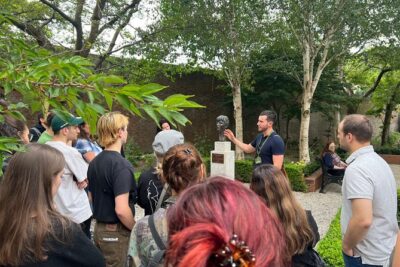
Dublin Highlights and Hidden Gems Guided Walking Tour
Read our review →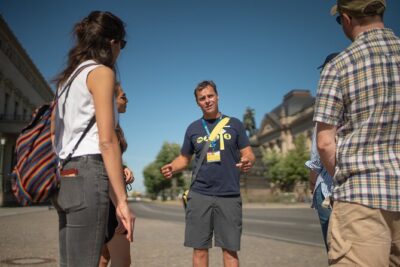
Explore Berlin: See All The Iconic Sights & Some Hidden Gems
Read our review →
Kyoto Geisha Walking Tour: Gion District & Hidden Gems
Read our review →
Ben Youssef, Secret Garden, & Souks Walking Tour
Read our review →
Montmartre Hidden Gems and Scenic Highlights Walking Tour
Read our review →
Guided Walking Tour of City Highlights & Hidden Gems
Read our review →
Paranormal Night Walking Tour & Secret Backstreets
Read our review →Browse the lists this tour appears in