
Review · ITALY WALKING TOURS
Syracuse: Ortigia and Neapolis Guided Walking Tour
Two ancient cities share one small island. This private Syracuse tour connects the Greek and Roman remains of Neapolis with the narrow lanes of Ortigia, giving you both the big archaeological sights and the living center of town. I like the chance to see the Temple of Athena inside Syracuse Cathedral, and I like having a guide explain the Greek, Roman, Arab, and Spanish layers instead of leaving you to decode the ruins alone. The main drawback is cost: at $317.20 for up to five people, it is good value for a full private group, but expensive for one or two people, especially since monument tickets are extra.
The three-hour plan covers a lot of ground, and some groups have spent three and a half to four hours with guides such as Giuseppe, Anna, Marcelo, Laura, and Rosanna. That extra time can be a blessing if you ask questions, but you should wear practical shoes, bring water and a hat, and expect a walking-heavy outing. The tour is wheelchair accessible and suitable for children, with guides making an effort to involve younger family members.
Key points at a glance
- Two sides of Syracuse in one outing: See the ancient Greek and Roman remains at Neapolis, then walk through Ortigia’s historic lanes.
- Athena’s Temple lives on: Syracuse Cathedral incorporates the ancient pagan temple, letting you read several eras in one building.
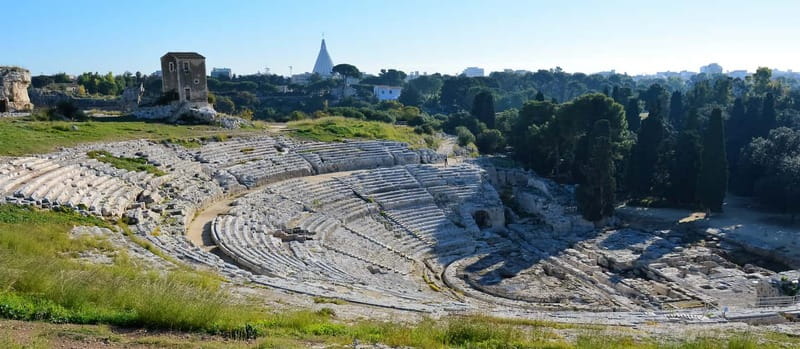
- The Greek Theater brings the best views: The theater looks toward the Ionian Sea and is one of the tour’s strongest scenic stops.
- Private guiding makes the difference: A group of up to five can ask questions freely and set a comfortable pace.
- Tickets are extra: The archaeological park admission is not included. One recent booking noted a fee of €13 per person, but check the current price.
- Good family flexibility: Children of all ages are welcome, and the tour includes headsets to make the guide easier to hear.
Why this Syracuse tour works
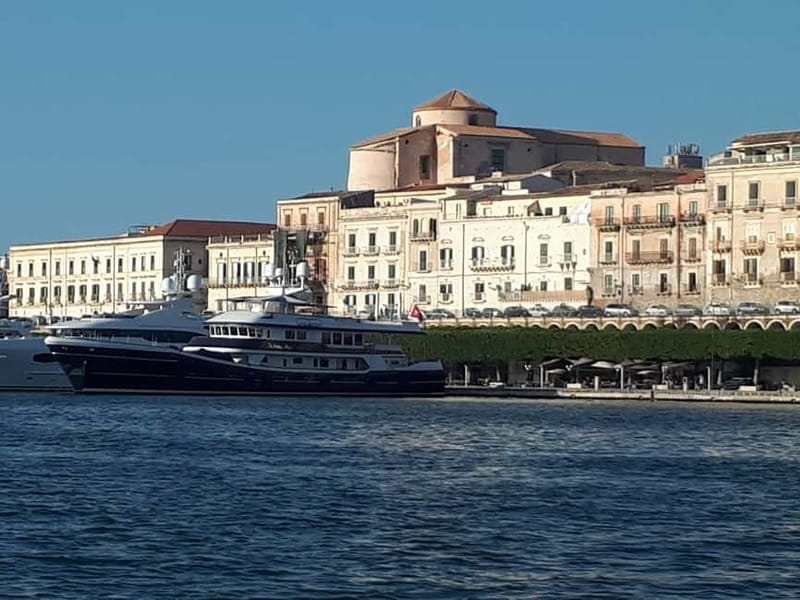
Syracuse can feel like two separate destinations. Neapolis is a broad archaeological zone filled with theaters, quarries, and monumental remains. Ortigia is a compact island of streets, churches, squares, and sea views. Seeing only one gives you an incomplete picture.
This tour joins them in one route. That matters because the city’s story is not confined to a single ruin. You begin with the public power of ancient Syracuse, then move into a place where old stones were reused and adapted over many centuries.
I especially like the private format. With a maximum of five people, you can stop to ask about a carved detail, a religious practice, or a local legend without holding up a large group. Several guides, including Giuseppe and Anna, are praised for making the past feel lively and for answering a steady stream of questions. That personal exchange is the strongest reason to choose this over simply walking through the park with a guidebook.
The tour is sold as three hours, but the pace can stretch. Some groups received three and a half hours or more, particularly when visiting both Neapolis and Ortigia in detail. Do not build a tight lunch reservation or train connection immediately afterward.
More Guided Walks in Italy:
- Milan: Guided Walking Tour & Last Supper Visit with Ticket
★ 4.7 · 5,409 reviews - Naples: Street Food Walking Tour with Local Guide
★ 4.9 · 4,976 reviews - Florence: Highlights Walking Tour with Expert Guide
★ 4.6 · 4,662 reviews
Starting at Neapolis and finding your guide
The listed meeting point is the ticket office at Biglietteria Parco Archeologico Neapolis on Via Luigi Bernabò Brea in Syracuse. Your guide meets you there with a sign showing the local partner’s name. The itinerary also indicates another possible starting point near the Temple of Apollo, so check your confirmed meeting instructions carefully.
This is a practical place to begin because you are already at the archaeological park. It avoids wasting your limited tour time crossing the city before the main sights. The activity also advertises skip-the-ticket-line access, but that does not mean admission is free. The park entrance is not included in the tour price.
One important cost detail deserves attention. The group price is $317.20 for as many as five people, not per person. For a family or a group of friends, that works out much better than it first appears. A full group pays about $63.44 each before entrance fees. For one person, however, the same price is a serious splurge.
Neapolis: theaters, quarries, and ancient scale
The Neapolis Archaeological Park is the tour’s largest chapter. Here you get a sense of Syracuse as a major Mediterranean power through its public buildings and carved stone spaces.
The park includes two ancient theaters, with the Greek Theater as the major highlight. Your guide explains how Greek civic life, performance, and religious practice shaped the site. The theater’s setting also gives you lovely views toward the Ionian Sea, adding scenery to what could otherwise become a sequence of stone remains.
I find guided interpretation especially useful here because ruins can look simple at first glance. A theater, quarry, or wall does not explain its original purpose by itself. A good guide supplies the connection between the physical remains and the people who used them.
The second theater is Roman, and its presence helps show how Syracuse changed under Roman control. The tour presents the city across several periods rather than treating Greek Syracuse as the only story worth hearing. That broader view is one of its better qualities.
The park also includes Paradise Latomia and the Ear of Dionysus. These dramatic stone spaces are not just photo stops. Their scale helps you understand how much labor went into cutting Syracuse’s rock, and the guide can connect them with local stories and the city’s political past.
Bring water. The park requires walking, and the combination of open spaces, uneven surfaces, and Sicilian sun can wear you down. Comfortable shoes are not optional advice here. A hat is also sensible, especially for a midday departure.
The Cathedral and the Temple of Athena

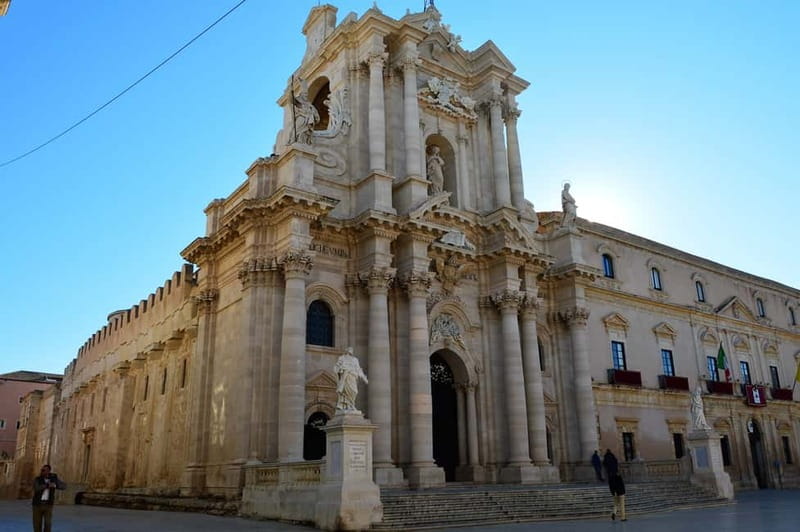
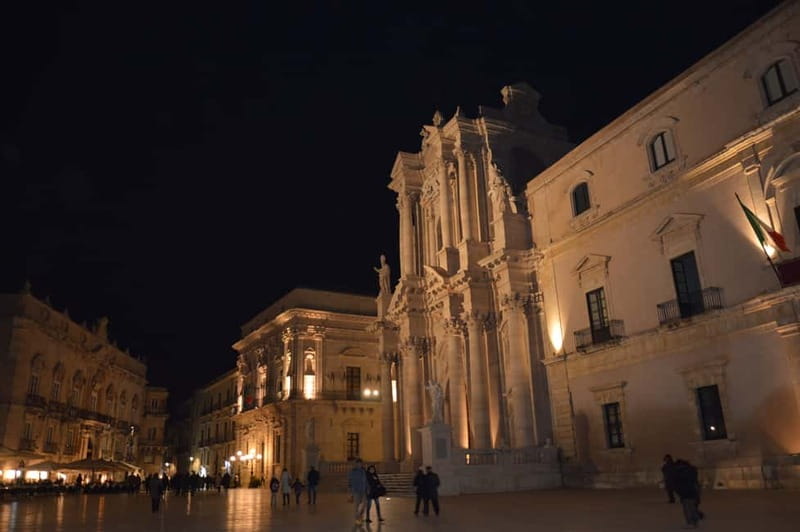
Ortigia’s most memorable lesson is found in Syracuse Cathedral. The building incorporates the pagan Temple of Athena, so you can see ancient Greek columns within a later Christian church. It is a powerful example of how Syracuse repeatedly reused its own past.
Your guide points out the building’s changing architectural styles and explains how religious use shifted over time. This is much more rewarding than simply admiring the facade. You are looking at an old temple that was adapted rather than erased, with later construction wrapped around earlier sacred elements.
The stop is listed as a 30-minute guided visit and photo stop. That gives you enough time to study the details without turning the whole tour into an architecture lecture. Guides such as Anna and Rosanna are praised for connecting local history, art, and architecture in a clear way.
The Cathedral also gives the tour an important contrast. At Neapolis, you see ancient buildings as archaeological remains. In Ortigia, you see ancient material still functioning within the city. The past is not parked behind a fence. It is part of the building people use today.
A few more walks around Italy worth a look
- Venice: Doge’s Palace and St Mark’s Basilica Walking Tour
★ 4.4 · 6,291 reviews - Venice: San Marco to Rialto Walk & Spritz Like a Local
★ 4.2 · 3,651 reviews - Uffizi & Accademia Timed Entry: Small Group Duomo Walking Tour
★ 4.5 · 3,630 reviews - Venice Walking Tour and Gondola Ride
★ 3.5 · 3,630 reviews
Walking Ortigia’s narrow streets
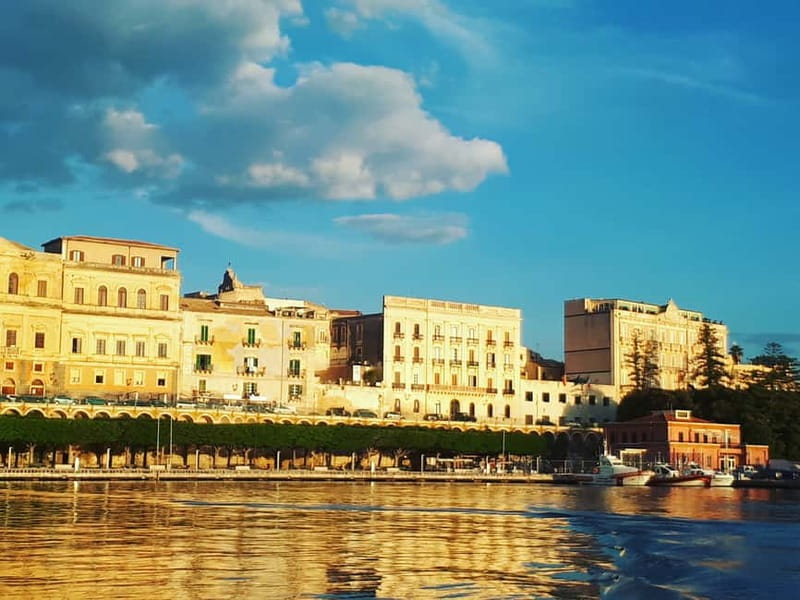
After the open spaces of Neapolis, Ortigia feels close, layered, and pleasantly confusing. The route leads through a maze of old streets and toward the island’s key sights. This is where a local guide earns the fee, since the pleasure comes from the connections between places rather than from one single monument.
You may hear about Syracuse’s Greek origins and later Roman, Arab, and Spanish periods. Marcelo is praised for covering those changes in detail, while Giuseppe is noted for mixing historical explanation with stories and legends. Those touches help prevent the walk from becoming a list of dates.
The private setting also gives you room to shape the walk. If you are fascinated by archaeology, ask for more context. If your children need a change of pace, guides are accustomed to involving parents and kids. One family found Anna patient even after a delayed arrival, while another family appreciated Giuseppe’s interactive storytelling with teenagers.
Do not expect a quiet museum-style experience. Ortigia is a functioning part of Syracuse, and its appeal comes from walking through real streets rather than moving from one isolated monument to another. The tradeoff is that the route can feel less controlled than the archaeological park, particularly in bad weather. Giuseppe continued through a sudden rainstorm according to one account, but you should still pack sensible clothing.
The guides make or break the day
The most consistent praise goes to the guides. Anna is repeatedly described as passionate, efficient, patient, and strong on local history, architecture, and art. Giuseppe receives high marks for energy, storytelling, and his ability to handle detailed questions. Marcelo is praised for his enthusiasm for archaeology and for covering Syracuse’s long sequence of foreign rulers.
Laura and Rosanna are also singled out for friendly, engaging presentations. The important point is not that every guide uses the same style. It is that the private format allows the guide’s strengths to come through.
A good guide here should do more than identify monuments. You want someone who explains why Athena’s temple became a cathedral, why the theaters matter, and how Syracuse remained important through different occupations. The best accounts describe guides who made the history feel alive without losing the facts.
Headsets are included, which is useful in open spaces and on busy streets. You do not have to stand shoulder to shoulder with the guide to hear every explanation. For older visitors or families with different walking speeds, the private format also allows a more forgiving pace. One group of four older adults specifically appreciated being accommodated at a slower speed.
Price, tickets, and practical value
The cost is $317.20 per private group of up to five. That makes the tour most attractive for a family, two couples, or a group of friends who can divide the price. At maximum capacity, you pay roughly $63.44 per person before admissions.
The archaeological park ticket is extra. One booking specifically noted a €13 entrance fee per person, so confirm the current amount before you go. You may also need to account for any transport between Neapolis and Ortigia if your guide arranges or suggests it, since pickup, drop-off, food, and drinks are not included.
What are you paying for? You are paying for a licensed guide, a private group, headsets, and a carefully connected explanation of two major parts of Syracuse. You are not paying for entry tickets or hotel transportation.
For a couple, the value depends on your priorities. If you enjoy history and want to ask plenty of questions, the private service can justify the price. If you mainly want to see the sights quickly, self-guided admission to the park followed by an independent walk around Ortigia will cost less.
The flexible cancellation policy allows a full refund when you cancel at least 24 hours ahead, and you can reserve now and pay later. Those terms are useful, but the more important planning issue is time. Allow breathing room after the scheduled three hours.
Who will enjoy this most
I would choose this tour if you want context, not just photographs. It suits first-time visitors who want Syracuse explained in one coherent outing, especially if you have limited time in town.
It is also a strong choice for:
- Families with children who respond well to stories and questions
- Small groups that want a private guide rather than a large walking party
- History and architecture fans
- Visitors who want both the archaeological park and Ortigia
- People who prefer a slower pace with room to stop and ask questions
You should think twice if you dislike walking, hot weather, uneven outdoor surfaces, or extra admission costs. The route covers a great deal, and the longer versions can run well beyond three hours.
The tour is wheelchair accessible, which broadens its usefulness, but the supplied details do not describe every surface or route condition. If you use a wheelchair, confirm the exact path and any access limits at the archaeological sites before booking.
What to bring and how to plan your day
Wear comfortable shoes with a secure sole. Bring a bottle of water and a hat. These are simple items, but they matter more here than a clever packing list.
Keep your schedule open after the tour. Several groups received extra time with their guides, and the route covers two areas rather than one compact monument. If you are arranging lunch, transport, or a museum visit afterward, allow a generous buffer.
Confirm the meeting point and start time before the day begins. One guide contacted a group that morning to verify the details, which is helpful, but you should still check your own booking information.
If rain is possible, carry a light layer or umbrella. The tour can continue in poor weather, but Ortigia’s open streets and Neapolis’ outdoor ruins are more enjoyable when you are prepared.
Should you book the Syracuse Ortigia and Neapolis tour?
Book it if you are a group of up to five and want the ancient city explained by a lively local guide. The strongest parts are the private questions, the Cathedral’s unusual blend of temple and church, the Greek Theater, and the chance to connect Neapolis with Ortigia in one outing.
I would not book it purely for convenience. Tickets, food, drinks, and pickup are extra, and three hours of walking can become longer. But if you care about how Greek, Roman, Christian, Arab, and Spanish Syracuse overlap, this is a thoughtful way to see the city.
For the best value, fill the group. For the best experience, request or welcome a guide who matches your interests, then arrive ready to walk, listen, and ask questions.
FAQ
How long is the Syracuse Ortigia and Neapolis tour?
The scheduled duration is three hours. Some groups have spent three and a half to four hours with their guide, so allow extra time.
What is included in the price?
The price includes a licensed guide and headsets to help you hear the commentary. Entrance fees, pickup and drop-off, food, and drinks are not included.
Is the archaeological park admission included?
No. The Neapolis Archaeological Park ticket is extra. One booking noted a €13 per-person admission fee, but you should check the current price.
Where does the tour start?
The main meeting point is the Biglietteria Parco Archeologico Neapolis ticket office at Via Luigi Bernabò Brea, 96100 Siracusa. The itinerary also lists the Temple of Apollo as another possible starting location, so confirm your exact instructions.
Which languages are available?
The live guide is available in English, French, Italian, Russian, Spanish, and German.
Is the tour suitable for children and wheelchair users?
Yes. Children of all ages can join, and the guide can involve both parents and children. The activity is also listed as wheelchair accessible, though you should confirm the precise route and site conditions if needed.
Just added around Italy
- Bergamo: Digital guide made by a local for your walking tour★ 5.0 · 184 reviews
- The Original Street Food Walking Tour in Bari★ 4.5 · 226 reviews
- Full Day Tour by Car and Walking among the Apulian Beauties★ 4.5 · 182 reviews
- Bari Walking City Tour★ 4.5 · 511 reviews
- Bari: Street Food Walking Tour with a Local Guide★ 5.0 · 160 reviews
- Bari Walking Tour with Pasta Experience★ 4.5 · 270 reviews
- Assisi Private Walking Tour including St. Francis Basilica★ 5.0 · 124 reviews
- Private St. Francis Basilica of Assisi and City Walking Tour★ 5.0 · 114 reviews
Italy Walking Tours, compared.
Doge’s Palace and St Mark’s Basilica Walking Tour
Read our review →
Guided Walking Tour & Last Supper Visit with Ticket
Read our review →
San Marco to Rialto Walk & Spritz Like a Local
Read our review →
Uffizi & Accademia Timed Entry: Small Group Duomo Walking Tour
Read our review →
Browse the lists this tour appears in