
Review · ITALY WALKING TOURS
Syracuse: Ortigia Classic Walking Tour
Ortigia rewards slow walking. This $22 tour makes Syracuse’s old town easy to read, from the ancient Temple of Apollo to the papyrus-lined Aretusa Spring. I like the compact route and the guides’ clear explanations, especially Eva’s friendly pace and strong command of local history. I also like that the group is usually around 10 people, even though the official limit is 25. The main drawback is that narrow streets, school groups, cars, and several tour parties can sometimes make the walk feel crowded.
This is a smart first look at Siracusa. You’ll see the major sights, hear the stories behind them, and get useful ideas for the rest of your visit. Just remember that the optional cathedral entry costs an additional €2, and the meeting point can be a little unclear among the other tour groups near Ortigia’s entrance.
Key points to know before booking
- A strong two-hour introduction: The route covers the Temple of Apollo, Piazza Archimede, Piazza Duomo, Aretusa Spring, the waterfront, Giudecca, and the Church of Saint John Baptist.
- Usually a small group: Although up to 25 people can join, groups often number about 10, making it easier to ask questions and keep up.
- Excellent guide feedback: Eva receives particular praise for her clear English, pleasant manner, steady pace, and helpful suggestions.
- The cathedral visit is optional: The €2 entrance fee is not included, and access depends on opening conditions.
- Headsets help in busy streets: Audio equipment is provided free when the group is larger, so you can hear without crowding around the guide.
- Come ready for weather and walking: The tour runs rain or shine, and comfortable shoes are essential.
Why this Ortigia walk works so well
Ortigia is small enough to explore on foot, yet its layers can be confusing at first. Greek temples, medieval lanes, Baroque façades, Jewish history, Catholic traditions, and daily Sicilian life all occupy the same few streets. A good guide helps you connect those pieces instead of seeing them as a string of attractive buildings.
This tour takes two hours and costs $22 per person. That is reasonable value if you want a clear orientation before exploring on your own. You are paying less for admission to major sights than for a local explanation of what you are seeing, since most of the route is outdoors and the cathedral ticket is separate.
I especially like the route’s shape. It begins at the entrance to Ortigia, moves through its central squares, reaches the sea and the Aretusa Spring, then turns through Giudecca before ending around Piazza Archimede or the Fountain of Diana. You cover a lot without spending the whole day on formal sightseeing.
The tour is offered in English or Italian. In very small groups, the guide may explain things in both languages. Headsets are available for larger groups, which is useful when traffic, school groups, or other walking tours make it hard to stand close to the guide.
A few more walks around Italy worth a look
- Venice: Doge’s Palace and St Mark’s Basilica Walking Tour
★ 4.4 · 6,291 reviews - Milan: Guided Walking Tour & Last Supper Visit with Ticket
★ 4.7 · 5,409 reviews - Naples: Street Food Walking Tour with Local Guide
★ 4.9 · 4,976 reviews
Starting at the Temple of Apollo
The meeting point is near Largo XXV Luglio, at the entrance to Ortigia. The precise meeting arrangement can vary by booking option, so I would check the details carefully and allow time to identify the correct guide. Several walking tours can gather in the same area, and one person found the meeting point a little vague.
The first major stop is the Temple of Apollo. Its weathered stone columns introduce Syracuse as one of the most important Greek colonies in the western Mediterranean. The temple is described as the first large stone temple built by ancient Greeks in the western colonies, which gives the opening stop real weight.
You will not simply be looking at old blocks. The guide sets up the ancient city before leading you farther into modern Ortigia. That is valuable because the island can look thoroughly Italian at street level, while its earliest story reaches back to Greek settlement and temple building.
This is also where comfortable shoes begin to matter. The route is a walking tour through old streets and squares, not a coach excursion with frequent seats and long breaks.
Piazza Archimede and the Fountain of Diana
From the temple, the route continues toward Piazza Archimede. This is one of the island’s useful orientation points, and it helps you understand how the central streets connect.
The square is associated with Archimedes, Syracuse’s famous ancient mathematician and engineer. The tour uses the area to explain the city’s earlier civilizations and its continuing local identity. You can expect a guided stop rather than a long free period, so listen closely if you want the historical context.
Nearby, the Fountain of Diana gives the route a more decorative pause. It is a natural place for photographs, and the tour may end here as well, depending on the drop-off arrangement.
One practical point: Ortigia’s streets can be crowded. School parties, other walking groups, and vehicles entering areas that feel pedestrian-only can interrupt the flow. The guide’s job is partly historical and partly logistical, keeping everyone together while finding room to stop.
The strongest guide feedback focuses on this balance. Eva is praised for allowing time to take pictures while still keeping the group moving. That sounds minor, but it makes a real difference on a short tour. You want enough time to look up at a façade without losing the thread of the explanation.
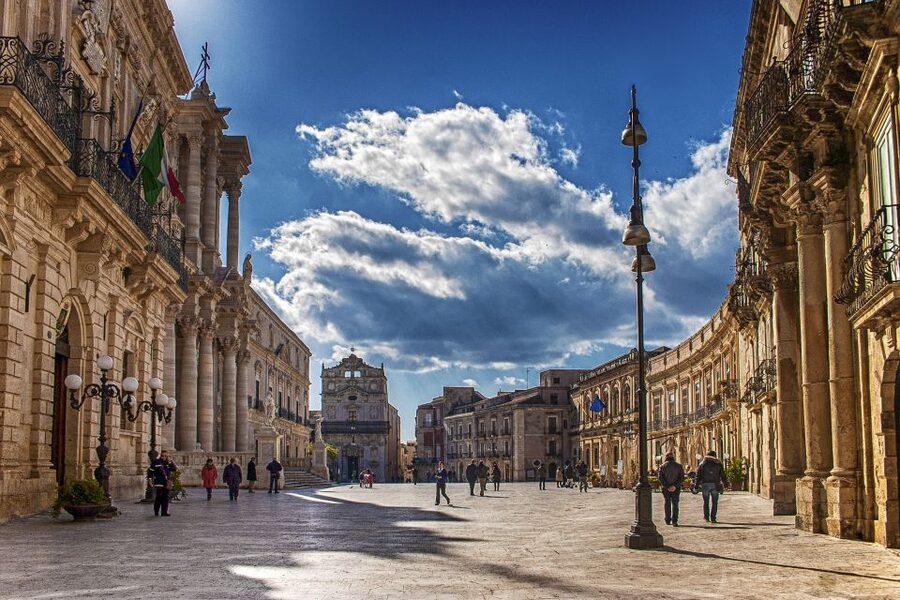
Piazza Duomo and the cathedral built over a Greek temple
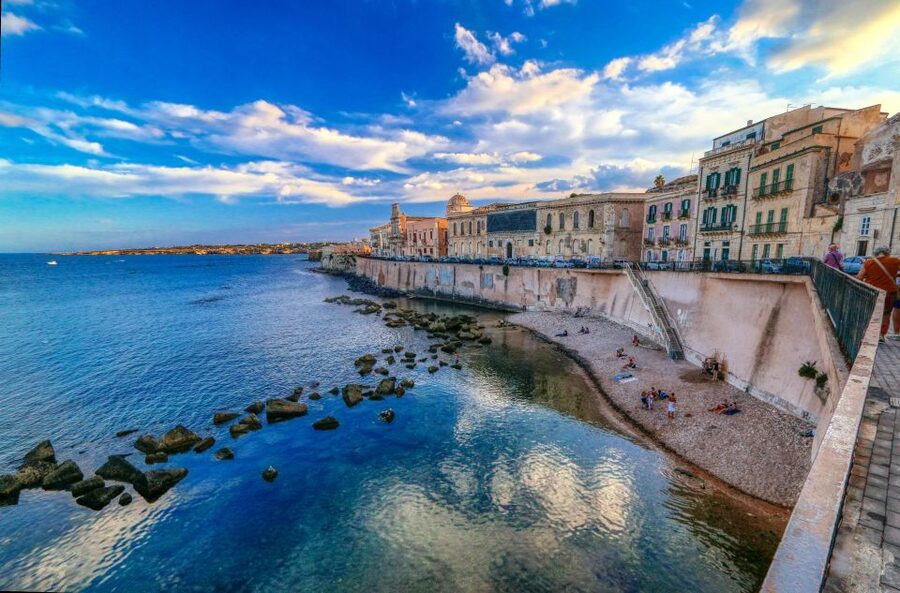
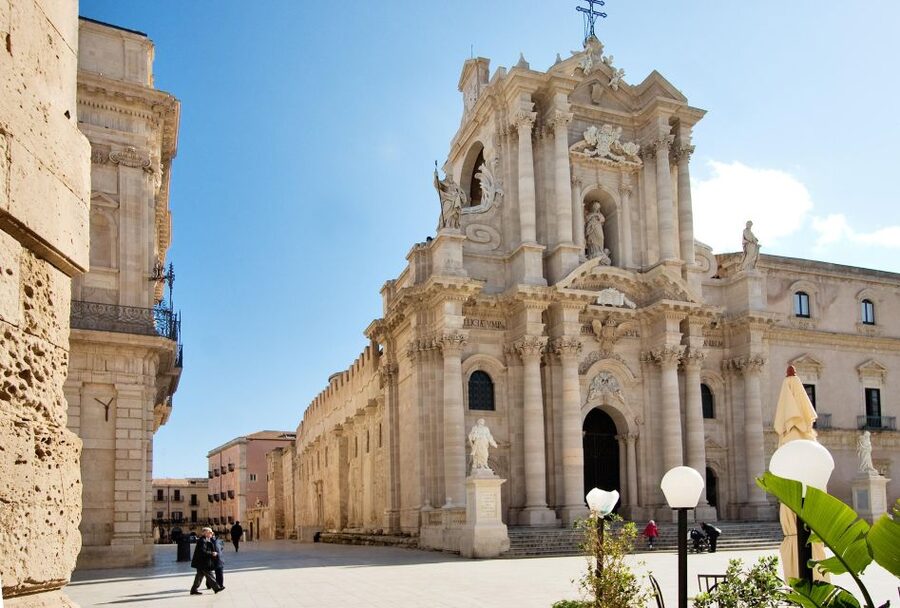
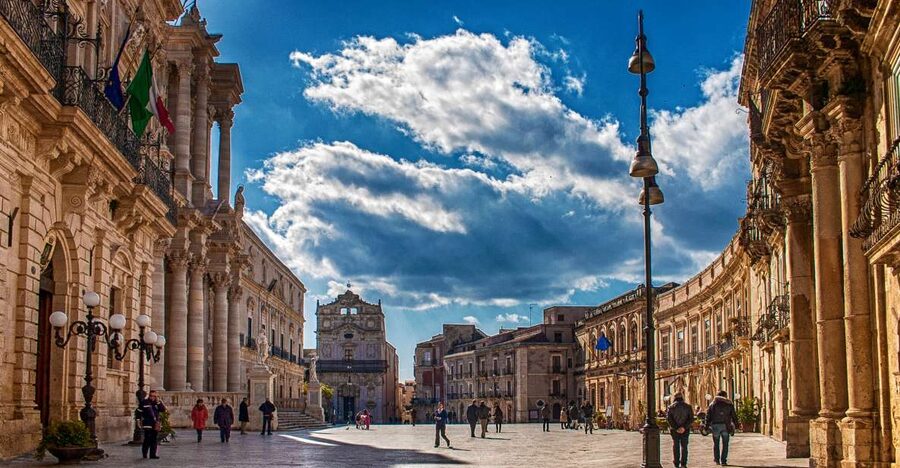
Piazza Duomo is the visual center of the walk. Its surrounding palazzi and churches create a broad, elegant space after the tighter lanes near the entrance. Here, the guide discusses Palazzo Vermexio, Palazzo Beneventano del Bosco, the Church of Saint Lucy, and the cathedral.
The cathedral is the most unusual part of this stop. It was built into an ancient Greek temple, so its structure contains a visible connection between pagan antiquity and Christian worship. This is exactly the kind of detail that can be easy to miss if you visit without context.
The building is also frequently used for weddings, so access can change. If entry is possible, you can go inside with the guide for an additional €2. That small fee is not included in the tour price. If the church is unavailable, the guide may offer a short coffee break instead.
I would treat the interior as a useful bonus, not the reason to book the walk. The square itself is a major reward, and the explanation of the cathedral’s earlier temple gives you something memorable even if you stay outside.
Same streets, a different way to see them:
- Florence: Highlights Walking Tour with Expert Guide
★ 4.6 · 4,662 reviews - Venice: San Marco to Rialto Walk & Spritz Like a Local
★ 4.2 · 3,651 reviews - Venice Walking Tour and Gondola Ride
★ 3.5 · 3,630 reviews - Uffizi & Accademia Timed Entry: Small Group Duomo Walking Tour
★ 4.5 · 3,630 reviews
Aretusa Spring and the sea views
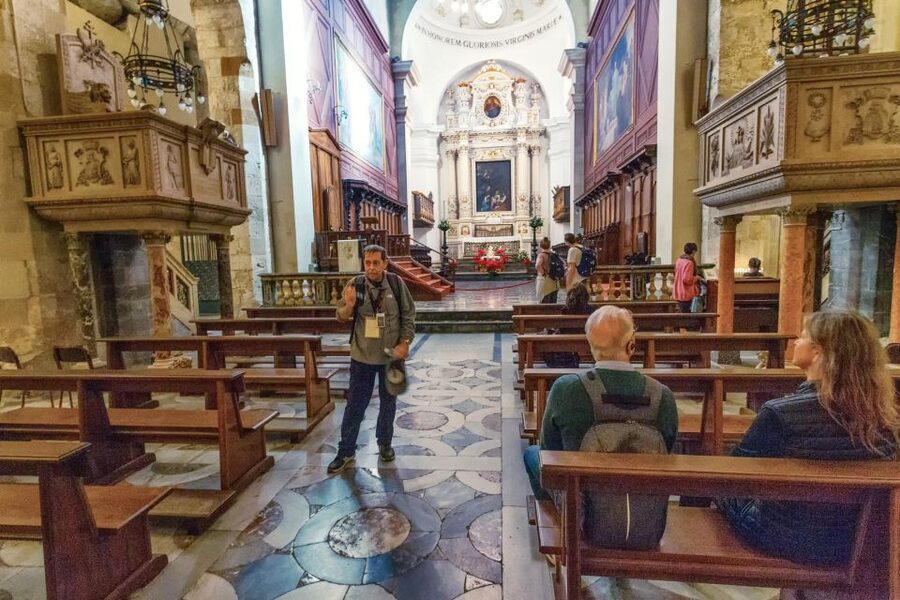
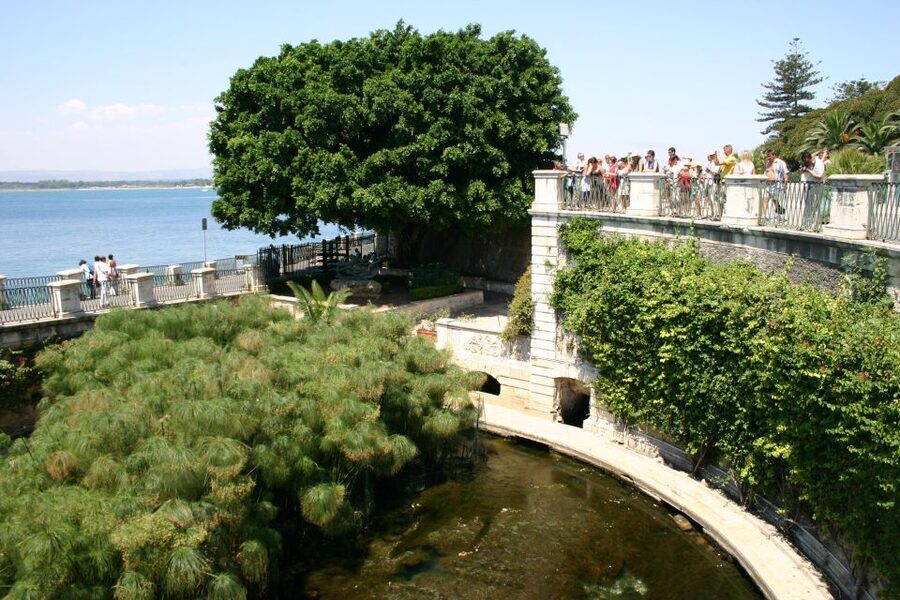
The walk then reaches the Aretusa Spring, one of Syracuse’s most distinctive sights. This freshwater spring sits close to the sea and is known for its papyrus plants. Its story is tied to Greek mythology, giving the guide a chance to connect landscape, legend, and the city’s ancient identity.
This stop also gives you a change of pace. After streets and façades, you get open views and water. The spring is not just a scenic photo stop. Its location and papyrus make it a useful example of how Syracuse’s natural features shaped the stories people told about the city.
From here, the route follows the seafront promenade toward Castello Maniace. The itinerary describes scenic views on the way rather than an extended castle visit, so do not book this tour expecting a full examination of the fortress interior. You will see the area as part of a coastal walk.
I like this section because it prevents the experience from becoming a nonstop list of buildings. You get time to notice the sea, the edge of the island, and the way Ortigia opens outward after the dense old center.
Giudecca and the Church of Saint John Baptist
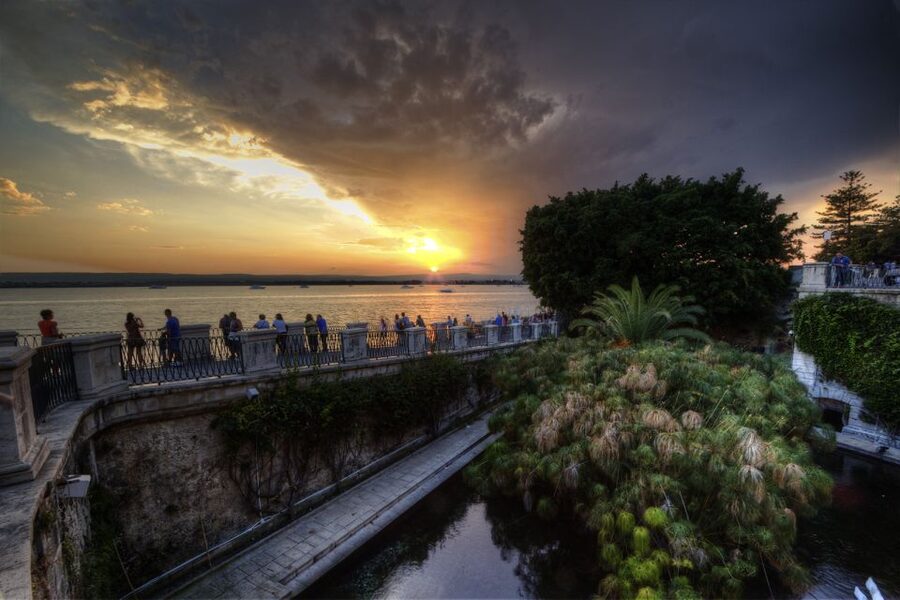
The tour continues through Via della Giudecca, the former Jewish district. This adds an important layer to the city’s story and helps you see Ortigia as more than a Greek and Catholic site.
The guide discusses the area’s past and points out traces of its earlier role. The value here is not simply identifying an old quarter. It is understanding that Syracuse’s identity changed over time as different communities lived, worshipped, traded, and built within the same compact island.
The Church of Saint John Baptist is another guided stop. Its place in the route gives you a chance to see a less obvious part of Ortigia, away from the best-known cathedral square. The walk’s emphasis is on history and local culture, so the guide may also explain religious traditions and the everyday meaning of major celebrations.
St. Lucy’s feast receives special attention. The guide explains the saint’s importance and the grand procession associated with her celebration. This is useful background if you see religious symbols, processions, or festival references elsewhere in Sicily. It also shows how the city’s traditions remain part of daily life, rather than being confined to museums.
What the guide adds to the experience
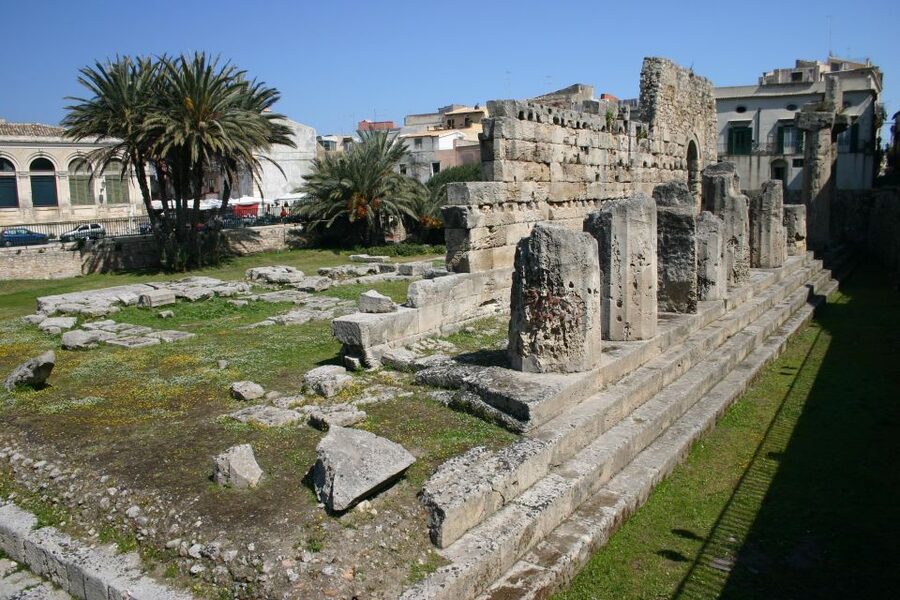
The guide is the main reason this tour earns its price. Buildings such as the Temple of Apollo and the cathedral are impressive without help, but their connections become much clearer when someone explains the changes in religion, architecture, and local custom.
Eva receives especially strong praise for her clear English, friendly attitude, and ability to answer questions. She is also described as maintaining a comfortable pace and giving people time for photographs. Other guides have been praised for strong communication and for making the history of Siracusa interesting rather than dry.
That said, guide quality can vary from one departure to another. The consistent strengths you should look for are clear explanations, practical control of the group, and willingness to answer questions. Headsets help when provided, especially in the busiest streets.
The tour is not designed for an intimate private experience. It is a shared walk, with a maximum of 25 people. In practice, the usual group size of about 10 is more appealing. If your departure is full, expect less freedom to stop and a greater need to stay close to the guide.
Crowds, traffic, and the pace of the route
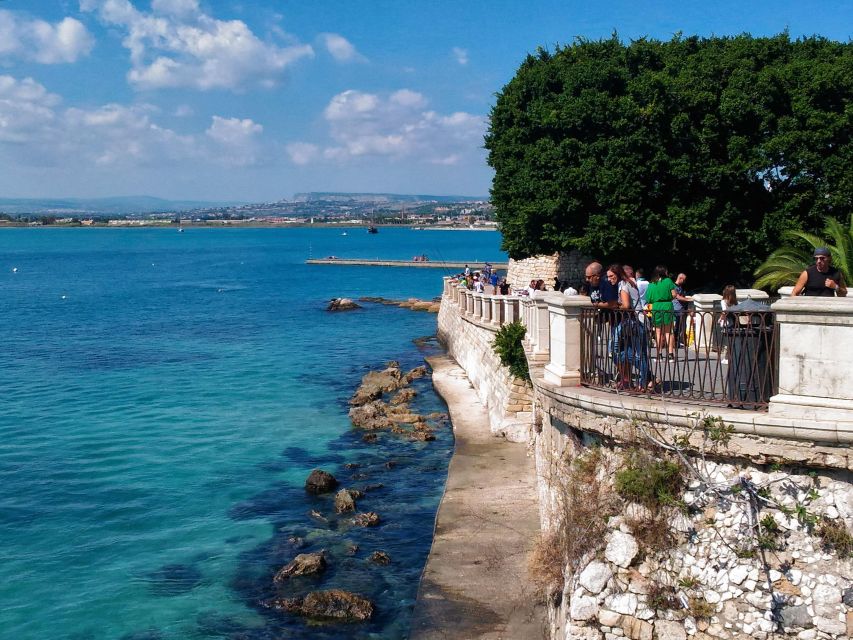
Ortigia is compact, popular, and active. That combination can be charming, but it can also be frustrating. Narrow streets leave little room when walking groups meet, and school excursions can be noisy. Cars and scooters may also appear where you expect a pedestrian zone.
This is not a fault unique to the tour, but it affects the mood. A quiet historical explanation can be interrupted by traffic or by another group using the same square. The guide’s radio system helps, but it does not remove the crowds.
The pace appears well judged for a two-hour introduction. You move often, stop for explanations, and have some time for photos. It is not a slow architectural study, and it does not offer long independent visits at every stop.
If you want to examine every column, church interior, and palace façade in detail, plan to return on your own. The tour is best used to identify what deserves a second look.
Price, timing, and who will get the most from it
At $22, this is good value for a first visit to Ortigia. You receive a live guide in English or Italian, a structured route through the old town, and access to local stories that are difficult to assemble quickly from a guidebook. The optional cathedral ticket adds only €2, but remember to budget for it if you want to enter.
The two-hour length suits a first morning or afternoon activity. You can use it to get oriented, then return to the cathedral, seafront, or Giudecca with a better sense of what you are seeing. It also works well near the start of a longer Sicily trip because the guide can offer suggestions for restaurants, nearby towns, monuments, and other activities.
I would recommend it most strongly to:
- First-time visitors to Syracuse
- People who want historical context without a full-day commitment
- Cruise or short-stay visitors with limited time
- Travelers who enjoy walking but prefer a guide to set the route
- Visitors interested in Greek, Christian, Jewish, and local Sicilian culture together
You may want something else if you dislike shared groups, crowded streets, or fixed pacing. The tour is also less suitable if your main aim is a detailed cathedral interior visit or an extended visit to Castello Maniace, since neither is the central focus.
The tour is wheelchair accessible, though the busy old streets may still require patience. It runs rain or shine, so bring suitable clothing and shoes. Free cancellation is available up to 24 hours before the tour, and you can reserve while paying later, which helps if your schedule is still shifting.
Should you book the Ortigia Classic Walking Tour?
Yes, if you want an affordable and well-paced introduction to Syracuse’s old town. The route covers the essential sights, but the real value comes from the connections: a Greek temple beneath a Christian cathedral, a myth-linked spring with papyrus, a former Jewish quarter, and living traditions such as St. Lucy’s procession.
I would book it early in your stay and use the rest of the day to revisit the places that catch your eye. Check the meeting instructions carefully, wear comfortable shoes, and arrive ready for crowds. If Eva is leading your departure, expect a particularly warm and well-organized presentation, but any guide who keeps the explanations clear and the group moving can make this a worthwhile start to Ortigia.
FAQ
How long does the Ortigia walking tour last?
The tour lasts two hours. Starting times vary, so check availability for the departure that suits your schedule.
Where does the tour begin?
The tour begins near Largo XXV Luglio at the entrance to Ortigia, close to the Temple of Apollo. The exact meeting point may vary depending on the booking option.
Where does the tour end?
The tour ends around Piazza Archimede or the Fountain of Diana, depending on the drop-off arrangement.
Is the cathedral entrance included?
No. Entry to the cathedral is optional and costs €2. If the cathedral is open to visitors, you may enter with the guide.
What languages are available?
The tour is offered in English or Italian. In very small groups, the guide may explain the tour in both languages.
Is the tour wheelchair accessible?
Yes, the activity is described as wheelchair accessible.
Does the tour run in bad weather?
Yes. The tour takes place rain or shine, so bring clothing suitable for the forecast and wear comfortable shoes.
Are headsets provided?
Headsets are provided free when the group is larger, helping you hear the guide clearly in busy streets.
Just added around Italy
- Bergamo: Digital guide made by a local for your walking tour★ 5.0 · 184 reviews
- Full Day Tour by Car and Walking among the Apulian Beauties★ 4.5 · 182 reviews
- The Original Street Food Walking Tour in Bari★ 4.5 · 226 reviews
- Bari Walking City Tour★ 4.5 · 511 reviews
- Bari: Street Food Walking Tour with a Local Guide★ 5.0 · 160 reviews
- Bari Walking Tour with Pasta Experience★ 4.5 · 270 reviews
- Assisi Private Walking Tour including St. Francis Basilica★ 5.0 · 124 reviews
- Private St. Francis Basilica of Assisi and City Walking Tour★ 5.0 · 114 reviews
Italy Walking Tours, compared.
Doge’s Palace and St Mark’s Basilica Walking Tour
Read our review →
Guided Walking Tour & Last Supper Visit with Ticket
Read our review →
San Marco to Rialto Walk & Spritz Like a Local
Read our review →
Uffizi & Accademia Timed Entry: Small Group Duomo Walking Tour
Read our review →
Browse the lists this tour appears in