
Review · HISTORY WALKING TOURS
Amsterdam: Iconic Canals & Historic Sights Walking Tour
Amsterdam reveals itself one canal, crooked house, and quiet courtyard at a time. This two-hour walk gives you a useful first look at the city, linking Dam Square, the Royal Palace, Oude Kerk, the Jewish Quarter, and Begijnhof through stories of trade, tolerance, war, and daily life.
I like the central route, which puts major sights and lesser-known corners into one compact outing. I also like the mix of grand architecture and human stories, especially the wartime history of the Jewish Quarter and the explanation of Amsterdam’s bike culture. The main consideration is that the tour moves through busy streets and the Red Light District, so it may feel brisk and crowded at times.
At $4.71 per person, this is unusually inexpensive for a two-hour guided walk. It operates in the spirit of a tip-based tour, and a recent booking note makes clear that guides expect a tip at the end. That is a fair point to budget for if you value the guide’s time and stories.
Key points at a glance

- A practical first walk: The route begins at the National Monument in Dam Square and connects several central sights without requiring public transport.
- Five distinct Amsterdam settings: You move from the Royal Palace and Oude Kerk to canals, the Jewish Quarter, and the quiet Begijnhof.
- History with human scale: The guide covers Golden Age power, wartime suffering, resistance, religious tolerance, and modern cycling habits.
- Strong guide feedback: Adrián received special praise in Spanish, while Craig was described as friendly and well informed about the city.
- A very low starting price: The advertised cost is $4.71 per person, with food, drinks, and paid attraction admissions left out.
- Good in wet weather: The walk runs rain or shine, so comfortable shoes and a weather-ready layer are sensible.
Starting at Dam Square and the National Monument

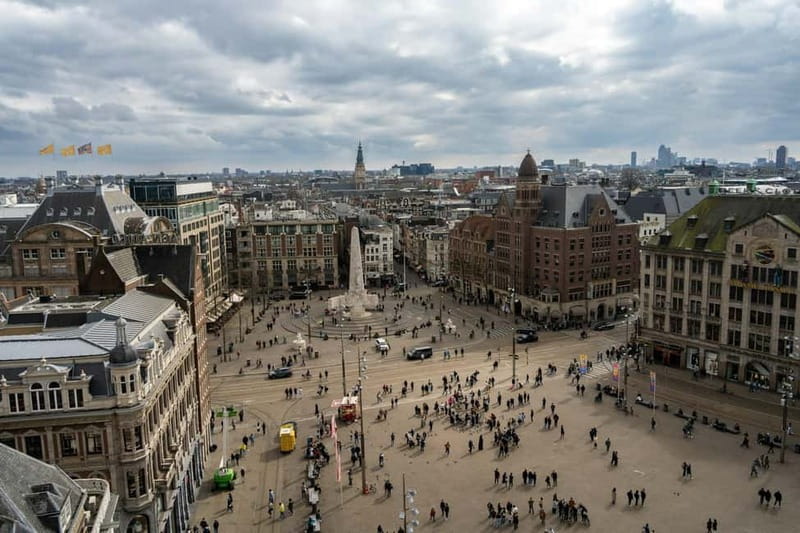
The meeting point is in front of the National Monument in Dam Square. This is a sensible place to begin because it is easy to recognize, central, and surrounded by some of Amsterdam’s most important buildings.
Dam Square also gives your guide a natural way to explain the city’s political and civic center before the walk turns toward quieter streets. You can expect the opening section to set up Amsterdam’s rise from a trading town to a globally important city.
The square can be busy, so arrive with enough time to locate the National Monument rather than looking for a small shop or side street. The meeting point is specific, but a large central square is rarely peaceful. Keep your phone and belongings secure while you wait, and look for the guide near the monument.
This first stop is less about spending time inside an attraction and more about getting your bearings. That matters in Amsterdam, where the historic center is compact but packed with canals, lanes, bikes, shops, and passing crowds.
More History Walking Tours in Amsterdam
- Amsterdam: Haunted History and Ghost Walking Tour
★ 4.5 · 488 reviews - Amsterdam History Walking Tour
★ 5.0 · 281 reviews - Amsterdam: Highlights & History Walking Tour
★ 4.8 · 266 reviews
The Royal Palace and Amsterdam’s public face
The Royal Palace of Amsterdam receives about 24 minutes of guided attention. From the outside, its scale and formal design contrast with the narrow canal houses that give Amsterdam its familiar look.
The palace began as a city hall during the Dutch Golden Age and later became a royal residence. On this walk, the building helps explain the wealth and confidence that shaped central Amsterdam. You will hear about its connection to the monarchy and see why it remains one of the city’s key symbols.
The tour does not include admission to the palace. That keeps the walk inexpensive, but it also means you should not expect a full interior visit as part of the two-hour route. If you want to explore paid attractions afterward, you can do so separately.
I find this approach useful for a first visit. You get context and an exterior view without spending a large part of a short walking tour indoors. If palace interiors are your main interest, plan extra time after the tour and check opening details separately.
Oude Kerk in the Red Light District
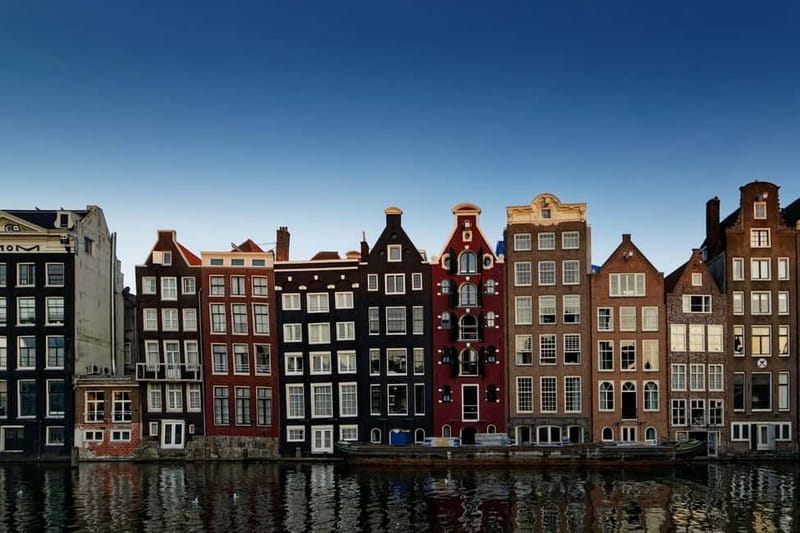
From Dam Square, the route continues to Oude Kerk, Amsterdam’s oldest building. The church sits in the heart of the Red Light District, creating one of the tour’s sharpest contrasts: medieval religious architecture beside one of the city’s most controversial modern districts.
The guide spends roughly 24 minutes here, using Oude Kerk to explain Amsterdam’s long past rather than treating the Red Light District as a novelty. That is important. You will get more from this stop if you pay attention to the tension between faith, commerce, public life, and the city’s reputation for tolerance.
The district can be crowded and visually intense. Some people will find the setting fascinating; others may feel uncomfortable with the subject matter or the number of people passing through. The tour includes the area, but the supplied details do not indicate that admission to Oude Kerk is included. Paid entry is optional and separate.
You should also keep the walking pace in mind. A guide can explain the church and its setting, but 24 minutes is enough for an introduction, not a detailed architectural study. For most people, that balance works well because the route has several other major stops.
Canals, bridges, leaning houses, and secret churches
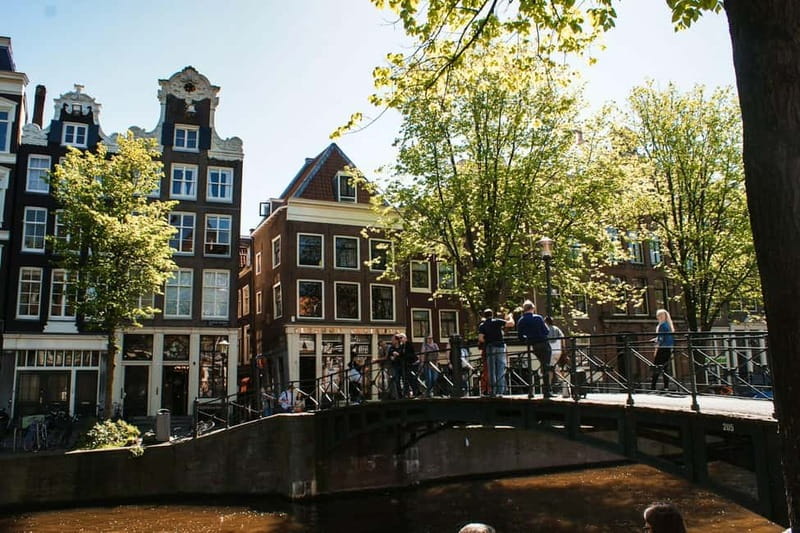
The canal section is the part most likely to deliver the Amsterdam images you came to see. Over about 24 minutes, you pass canals, bridges, churches, courtyards, and the city’s famously leaning houses.
The value here is not simply taking photographs. Your guide explains why Amsterdam developed around waterways and how the built environment reflects the city’s commercial past. Leaning houses are not just picturesque oddities. They are part of the visual character that makes the center feel unlike a conventional European capital.
You will also hear about secret churches and tucked-away courtyards. These details show how different religious groups found ways to worship and live in a city that often valued practical compromise. The tour’s theme of tolerance becomes more concrete when you see how public streets can conceal private spaces.
This section is also where comfortable shoes matter. Amsterdam’s center is best understood on foot, but you will be walking on city streets for two hours and sharing space with bicycles. The route is listed as wheelchair accessible, though busy lanes, bridges, and changing street conditions can still affect how comfortable the walk feels for each person.
More History Walking Tours in the Netherlands
- Anne Frank and Amsterdam Jewish History Walking Tour
★ 5.0 · 259 reviews - Amsterdam: Ghost Walking Tour and Dark History
★ 4.8 · 118 reviews - Amsterdam: Anna Frank and World War II History Walking Tour
★ 4.8 · 86 reviews - Amsterdam Private Historical Walking Tour
★ 5.0 · 75 reviews
The Jewish Quarter and stories of wartime courage
The Jewish Quarter adds the tour’s most serious historical weight. Here, the guide discusses the Nazi occupation, tragedy, bravery, and resistance during the Second World War.
This part of the walk is not just another stop on a sightseeing checklist. It gives you a way to understand how Amsterdam’s ideals of tolerance were tested by occupation and persecution. The stories help connect the city’s past to real people and difficult choices rather than leaving history at the level of dates and buildings.
Expect the tone to change. The earlier sections focus on architecture, trade, religion, and everyday city life. The Jewish Quarter asks you to slow down mentally, listen carefully, and treat the subject with respect.
The tour cannot cover Amsterdam’s entire wartime story in 24 minutes. Still, it offers an important introduction and can help you decide which museums or memorial sites you want to visit later. Paid attractions are not included, so any follow-up visits require separate planning and payment.
Begijnhof, a quiet pause behind the city streets
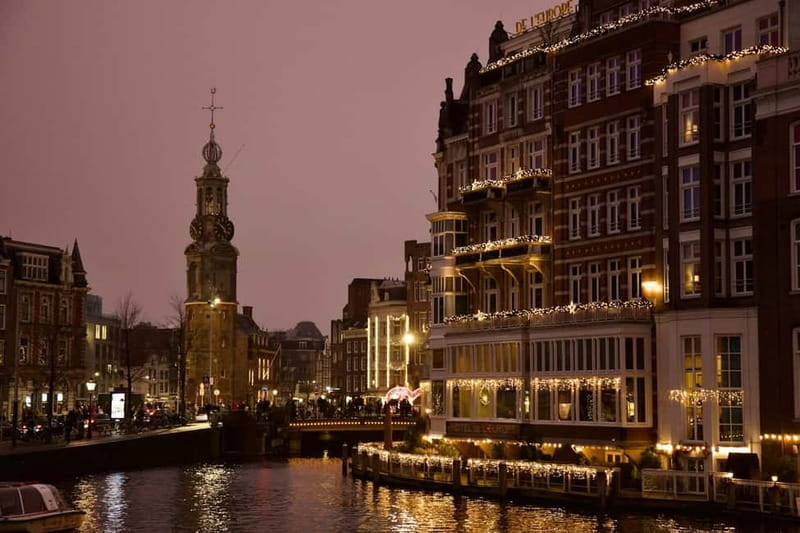
Begijnhof provides a welcome change of pace near the end of the walk. This peaceful enclosed courtyard has centuries of history and feels far removed from the noise of central streets.
The setting shows another side of Amsterdam: inward-looking, residential, and calm. It is a good place to appreciate how the city can hide quiet spaces behind busy routes. The contrast also gives the tour a satisfying rhythm. You begin in a large public square, pass through crowded and historic districts, then finish in a more reflective setting.
You should treat Begijnhof as a lived historic place, not simply a photo stop. Keep your voice low and follow any posted rules. The tour provides an introduction rather than a long independent visit, so you may want to return later if the courtyard becomes one of your favorite places.
The supplied schedule assigns similar time blocks to each main stop. That creates a clear structure, but it also means no single site receives extensive attention. I see this as a strength for first-time visitors and a limitation for anyone seeking a specialist tour of one neighborhood.
Why the bike talk matters
Amsterdam’s bikes are part of the city’s daily machinery, not just a tourist image. The guide explains why bicycles outnumber people in the city and how cycling became central to local life.
That advice has real practical value. Many first-time visitors make the mistake of watching car traffic while ignoring bike lanes. A walking guide can help you understand the street pattern before you wander off on your own.
You still need to pay attention. The tour’s promise to help you cross the street without getting hit by a bike is delivered with humor, but the warning is serious. Follow your guide and avoid stepping into marked cycle paths while taking pictures.
This is one of the small details that makes a city walk useful beyond the two-hour schedule. You learn not only what you are looking at, but also how to move through Amsterdam with fewer mistakes.
Guides, languages, and the human side of the walk
The tour is led by a live local guide in English or Spanish. Recent feedback gives two guides specific praise: Adrián was called a fantastic guide in Spanish, and Craig was praised for being friendly and knowing a great deal about the city.
That praise points to the most important variable in a walking tour: delivery. The route itself is strong, but the experience depends on whether the guide can connect the palace, church, canals, Jewish Quarter, and Begijnhof into one understandable story.
The guide also provides tips on where to eat, drink, and explore. Those suggestions can be especially useful at the end of a first day, when you know the center better but still need help choosing what to do next.
The tour is not designed as a private, highly specialized experience. You get a broad introduction, a local voice, and a chance to ask questions while moving through the city. If you prefer a slow pace or detailed art history, you may want a longer or more focused tour.
Is $4.71 a good value?
At $4.71 per person, the advertised price is excellent for two hours of live guiding. You receive a central orientation, historical explanation, practical bike advice, and restaurant and activity tips in one compact package.
The low price should not be treated as the total cost of the experience. Food and drinks are not included, paid attraction admissions are separate, and the guide expects a tip at the end. Craig’s feedback specifically notes that tipping is expected and fair, so plan for that rather than being caught off guard.
The value is strongest if you are new to Amsterdam and want to learn the city’s layout quickly. You can use the walk to decide where to return, which museums to visit, and which neighborhoods deserve more time.
It is less valuable if you have already explored all five areas or want long interior visits. The tour is built around movement and storytelling, not extended time inside the Royal Palace or Oude Kerk.
Who should book this Amsterdam walk?
I would recommend it to first-time visitors, short-stay visitors, solo explorers, couples, and anyone who wants a clear introduction before sightseeing alone. The route gives you history, architecture, practical street advice, and a sense of how Amsterdam’s central districts fit together.
It also suits people who want options. The English and Spanish language choices make it easier to follow, and the live guide format leaves room for local tips and questions.
Families and visitors with mobility concerns should note the listed wheelchair accessibility, while also considering the busy streets, bicycles, bridges, and two-hour duration. Comfortable shoes are essential for everyone.
I would hesitate only if your main goal is a quiet walk, a private guide, or lengthy visits inside paid attractions. The Red Light District and wartime history also make this more than a lighthearted canal stroll.
Final verdict: a smart first look at Amsterdam
Book this tour if you want to understand Amsterdam before spending the rest of your visit exploring independently. Its best qualities are the well-chosen route, the mix of famous sights and quieter corners, and the human stories that connect them.
The walk is short enough to fit into a busy schedule and cheap enough to leave room in your budget for museums, meals, and canal-side stops. Just arrive ready to walk, watch for bikes, respect the serious parts of the route, and include a guide tip in your plans.
At $4.71, this is an easy recommendation for a first orientation. It will not replace a palace visit, a wartime museum, or a slow afternoon by the canals, but it can show you where those next steps should be.
FAQ
Where does the Amsterdam walking tour begin?
The tour begins in front of the National Monument in Dam Square.
How long does the walking tour last?
The walking tour lasts two hours.
Which sights are included on the route?
The route includes Dam Square, the Royal Palace of Amsterdam, Oude Kerk, Amsterdam’s canals, the Jewish Quarter, and Begijnhof.
Is the tour available in English?
Yes. The tour is available with a live English-speaking or Spanish-speaking guide.
Is the tour wheelchair accessible?
Yes, the activity is listed as wheelchair accessible.
Are food, drinks, and attraction admissions included?
No. Food and drinks are not included, and admission to paid attractions is optional and separate.
What should I bring?
Bring comfortable shoes. The tour runs rain or shine, so weather-appropriate clothing is also practical.
Just added around Amsterdam
- Small Group Walking Tour in Amsterdam with Friendly and Fun Guide★ 5.0 · 281 reviews
- Amsterdam: Private Introduction Walking Tour (TOP RATED)★ 5.0 · 223 reviews
- Humans of Amsterdam: Cultural Walking Tour incl. meeting 2 locals★ 5.0 · 320 reviews
- Amsterdam Private Historical Walking Tour★ 5.0 · 75 reviews
- Private Tour: Amsterdam City Walking Tour and Canal Cruise★ 4.5 · 142 reviews
- Anne Frank and Jewish Quarter Amsterdam Private Walking Tour★ 5.0 · 684 reviews
- Amsterdam: Anne Frank and World War II Walking Tour (TOP RATED)★ 4.5 · 72 reviews
- Small Group Walking Tour – Hello Amsterdam★ 5.0 · 505 reviews
History Walking Tours, compared.
History and Hauntings of Salem Guided Walking Tour
Read our review →
Freedom Trail History Small Group Walking Tour
Read our review →
Historic Charleston Guided Sightseeing Walking Tour
Read our review →
Tapas Walking Tour with Food, Wine, and History
Read our review →
Savannah History and Haunts Candlelit Ghost Walking Tour
Read our review →
A History of Terror – Belfast City Centre Walking Tour
Read our review →Browse the lists this tour appears in