
Review · SMALL-GROUP WALKING TOURS
Florence: Uffizi & Accademia Small Group Walking Tour
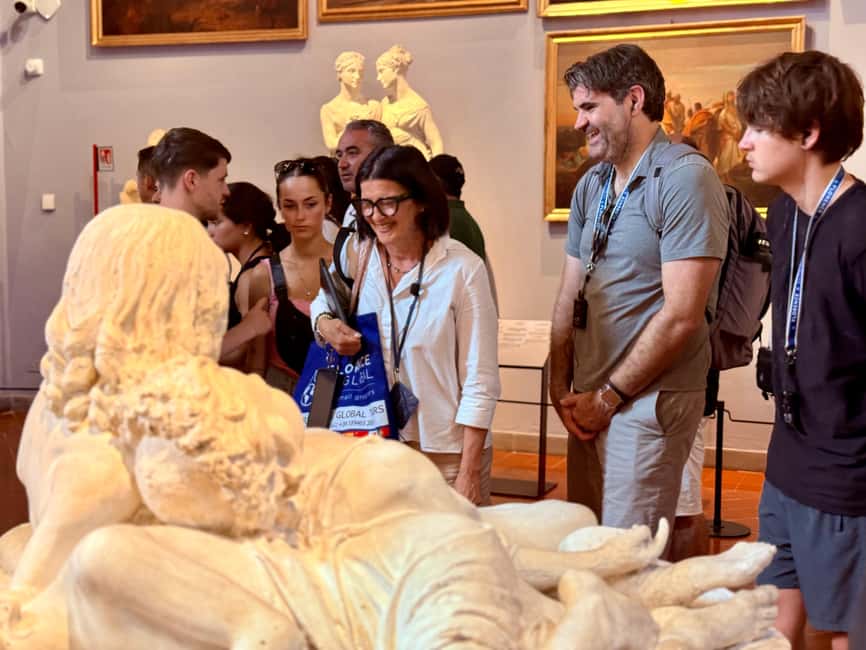
Florence puts its masterpieces within walking distance. This four-hour tour joins Michelangelo’s David, the Duomo, Piazza della Signoria, and the Uffizi in one carefully planned route. I like the small groups of 10 to 15, and I like that the guides bring real humor and feeling to the art, not just dates and names. The main drawback is the pace: four hours without a reliable bathroom or drink break can feel long, especially in summer.
The route gives you two of Florence’s major museums plus the city center between them. Guides such as Deborah, Rosa, Sylvia, Margaret, and Anna have been praised for clear explanations, good crowd control, and an ability to make Renaissance art understandable. Still, $148 per person is a serious price, so this tour makes the most sense if you want expert help and timed museum entry rather than a quick self-guided visit.
Key points at a glance
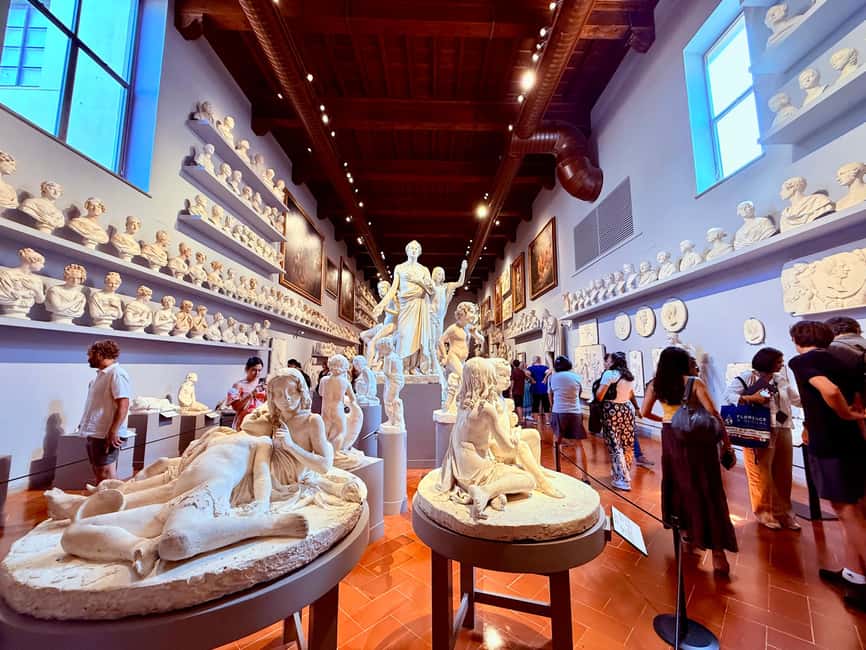
- Two major museums in four hours: Visit the Accademia and Uffizi in one morning or afternoon, with the city’s main squares linking them.
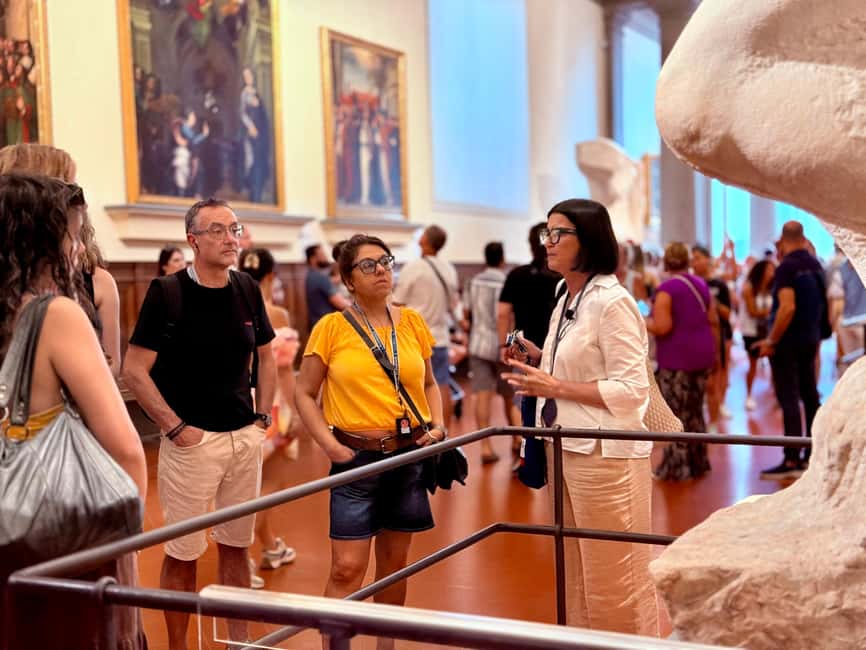
- David gets proper attention: The guide explains Michelangelo’s sculpture before giving you time to look closely at the marble.
- The walking route adds context: Duomo Square and Piazza della Signoria connect the art to Florence’s streets, churches, and public life.
- Small groups help in crowded galleries: Groups usually range from 10 to 15 people, though some departures may be smaller.
- Guides are the heart of the experience: Deborah, Rosa, Sylvia, Margaret, and others are praised for art knowledge, humor, warmth, and crowd management.
- Plan for four active hours: Wear comfortable shoes, carry water if allowed, and use the bathroom before the tour begins.
Why this Florence tour works well
Florence is compact, but its art is not simple. You can walk from the Accademia to the Duomo and then to the Uffizi in a short time, yet each museum can easily swallow half a day. The challenge is knowing what deserves your attention and understanding why the works matter.
This tour gives you a clear path through the city’s main artistic landmarks. You do not spend your time guessing which entrance to use or trying to read a crowded museum label. Your guide leads the group through the Accademia first, across central Florence, and into the Uffizi for the final gallery visit.
That order makes sense. Michelangelo’s David provides a powerful opening, the outdoor walk gives your eyes a break, and the Uffizi finishes the day with a wider sweep of Renaissance painting. You get a sample of sculpture, architecture, civic history, and painting rather than four straight hours indoors.
The small-group format matters. A group of 10 to 15 is easier to hear and easier for a guide to manage than a large coach group. At times, the group may be much smaller. One departure had only three people, creating a nearly private visit, while other groups had around 10 to 12 participants.
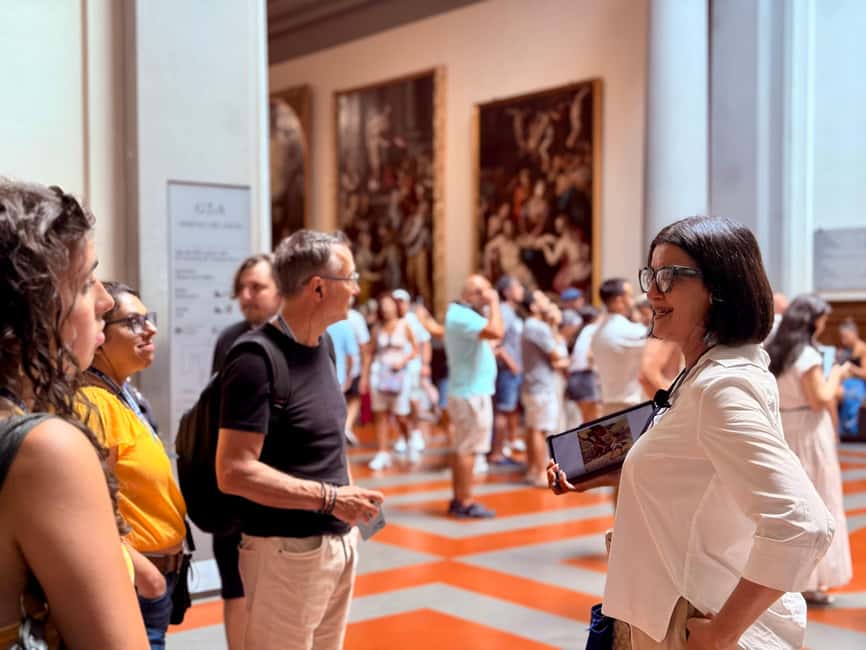
You also receive a radio and headset. That may sound minor, but it is essential in a full gallery. You can stand a few steps away from the guide, look at the painting instead of the speaker, and still follow the explanation.
More Small-Group Walking Tours in Florence:
- Uffizi & Accademia Timed Entry: Small Group Duomo Walking Tour
★ 4.5 · 3,630 reviews - Michelangelo’s David, Accademia & Uffizi Small Group Tour
★ 4.5 · 1,986 reviews - Florence: Small Group Guided Walking Tour
★ 4.7 · 176 reviews
Michelangelo’s David at the Accademia
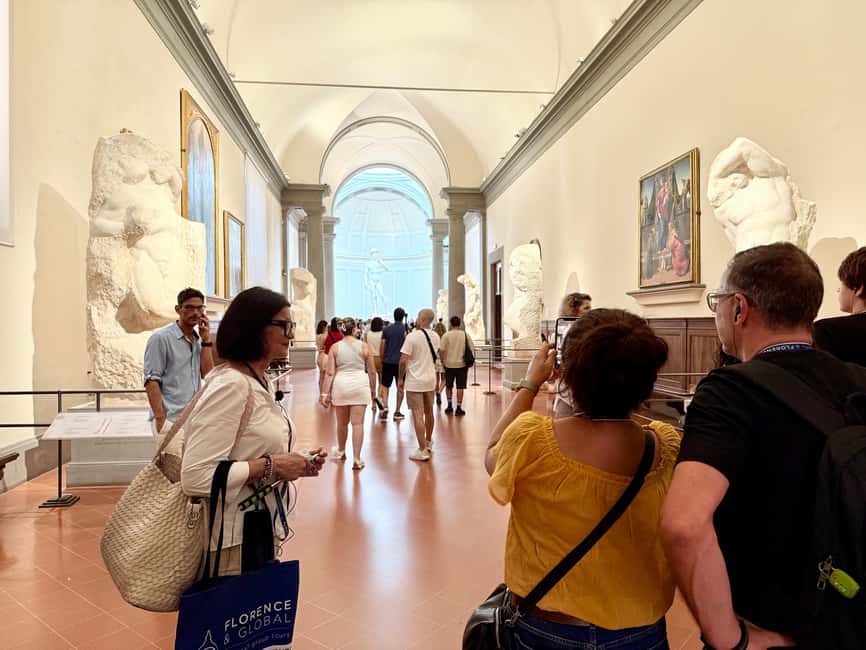
The Accademia is best known for one work, and the tour gives David the attention you came to Florence to find. Your guide explains how Michelangelo’s enormous marble figure became a symbol of Florence, then helps you notice details that are easy to miss when you are simply staring at the famous statue.
Look closely at the scale, the pose, and the tension in the body. David is not a relaxed portrait. The expression and stance suggest the moment before action, which gives the sculpture its force. A good guide can help you see how Michelangelo used the human body to communicate thought and emotion.
The Accademia contains more than David, and the guide also introduces other important works. Still, you should expect this part to focus on the museum’s best-known pieces rather than provide an exhaustive visit to every room.
You may have a short period to look around independently and use the restroom. This is where planning matters. One reported problem was a long bathroom queue during the brief break, with no practical chance to use the facilities. Use a bathroom before the tour starts, and do not count on a generous pause at the Accademia.
The museum can also be crowded. Skip-the-ticket-line entry helps, but it does not turn the Accademia into an empty building. One guide, Deborah, was praised for knowing how to move through busy areas and for using staff-only shortcuts when available. That kind of access depends on the day and the museum, so treat it as a possible benefit, not a promise.
Duomo Square and Florence’s open-air history lesson
After the Accademia, the tour moves into the center of Florence. Duomo Square gives you a chance to admire the cathedral façade, Giotto’s bell tower, and Brunelleschi’s famous dome from outside.
The dome is the key sight here. Brunelleschi’s construction solved a major engineering problem and changed the profile of Florence. Your guide can explain why the dome mattered to the city and why it remains such a strong symbol of Florentine ambition.
This part is more than a walk between museums. You begin to see the city as a connected story. The artists inside the galleries worked in the same world as the architects, guilds, merchants, and powerful families who shaped the buildings around you.
There is no climb of the dome included. You admire it from the square, which is useful for a first visit but important to understand when planning your day. If climbing the dome is a priority, you would need a separate arrangement.
The walking portion also means you need sensible footwear. Florence’s historic center is easy to cover on foot, but four hours of museum floors and city streets can tire you. Comfortable shoes are not a decorative suggestion here.
Piazza della Signoria and public art
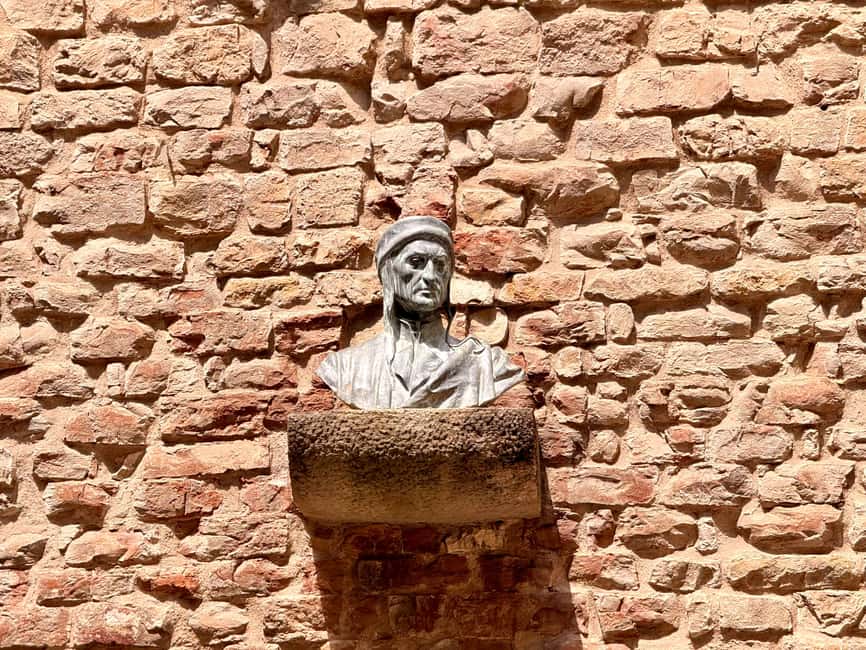
The route continues through Piazza della Signoria, Florence’s great civic square. This is where the city’s political power, public sculpture, and palace architecture come together.
The square helps explain why Renaissance art was not confined to private homes or museum walls. Sculpture in Florence was public language. It announced power, celebrated heroes, warned citizens, and shaped the identity of the city.
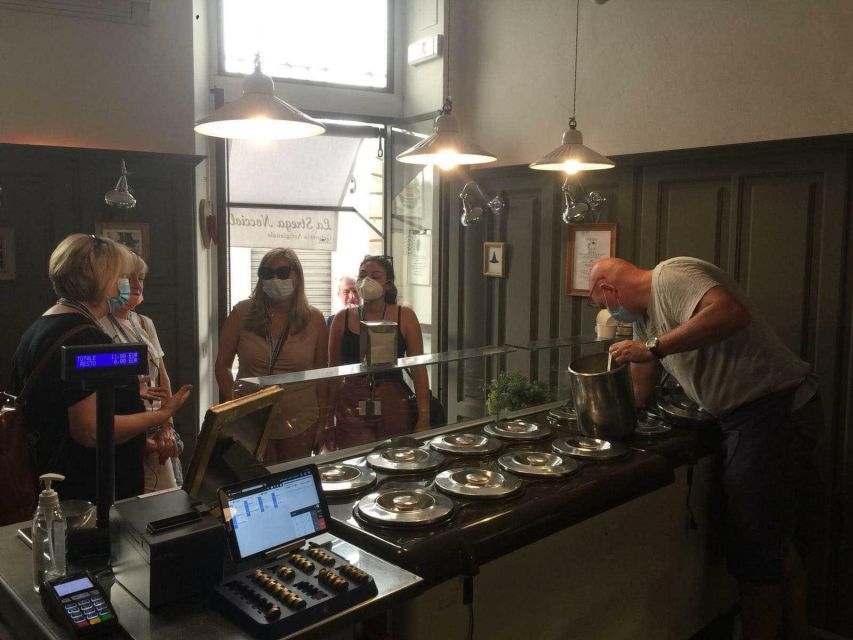
Your guide may also add small local details along the way. One guide used the walk to explain differences in gelato quality and point out where to find better options. That is the kind of practical city advice that can make the tour more useful beyond the four-hour route.
The walk is not a separate long city tour. It is a focused connection between the Accademia and Uffizi, with stops at the city’s most important central sights. If you want a detailed architectural tour of every building, this experience will feel selective. If you want useful orientation and context, it works well.
A few more walks around Florence worth a look
- Florence: Highlights Walking Tour with Expert Guide
★ 4.6 · 4,662 reviews - Florence: Duomo Complex with Tickets & City Walk Guided Tour
★ 4.7 · 2,057 reviews - Florence: Guided Walking Tour
★ 4.6 · 1,602 reviews - Florence: Renaissance and Medici Tales Guided Walking Tour
★ 4.8 · 1,549 reviews
The Uffizi and the great Renaissance paintings
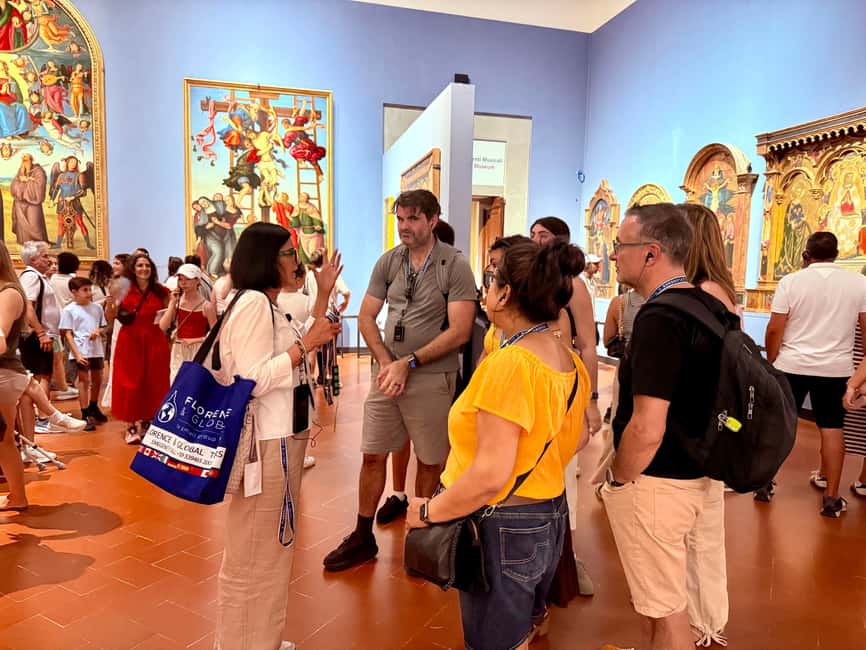
The Uffizi is the grand finale, and it is the section where a guide earns the tour price. The museum contains far more art than anyone can absorb in a single visit. A good route gives you the major works without leaving you lost in room after room.
The tour highlights paintings by Botticelli, Leonardo, Michelangelo, and other major artists. Botticelli’s Birth of Venus is the obvious star, but the value comes from seeing it in relation to the works around it.
Your guide can help you follow changes in style, subject, and technique. You may see how artists handled religious scenes, human figures, perspective, movement, and classical ideas. Without that framework, the Uffizi can become a parade of famous names. With it, the galleries begin to make sense as a sequence.
Botticelli’s paintings reward close looking. The flowing lines, pale figures, and mythological subject can make the work seem light and decorative at first. A good explanation brings out the ideas beneath the surface and shows why the painting mattered to Florentine culture.
The Leonardo and Michelangelo sections add another layer. You are not simply checking off famous artists. You are comparing different ways of treating the human body, space, light, and emotion.
The Uffizi can be crowded, especially during high season. Your guide needs to keep the group together while finding a clear place from which everyone can see. Several guides, including Sylvia, Deborah, and Margaret, were praised for doing exactly that.
The museum’s upper floor and terrace provide views toward the Ponte Vecchio and the city. This is a welcome change after the dense galleries. Bring your camera, but remember that the terrace is a short scenic pause, not a long rest stop.
What the guides add to the visit
The strongest part of this experience is the guide. The route is valuable, but the person leading it determines whether the tour feels rushed or rewarding.
Deborah is repeatedly praised for her command of the art, her humor, and her ability to handle crowds. She also helped a participant who became unwell from heat and made sure missed sections were covered later. That suggests a guide who watches the group rather than simply reciting a script.
Rosa is praised for explaining art and taking photographs for participants. Sylvia is described as energetic, clear, and attentive to the needs of a group. Margaret is remembered for making art history lively and easy to follow. Other guides, including Amanda, Anna, Elena, Cosetta, Caterina, and Rosie, have also earned praise for their warmth and command of the subject.
Guide assignments can change, so you cannot book a particular person unless the tour operator confirms that option. The useful point is that the guiding quality appears to be a central part of the experience, not an afterthought.
The best guides also adjust to the group. Families, teenagers, and adults with little art background can follow the visit without needing a university course in Renaissance history. At the same time, people who already know the basics can ask questions and get more from the works.
Pace, breaks, and practical comfort
Four hours is long enough to cover the key sights, but it is also long enough to expose weak planning. The route includes two museums and outdoor walking. You may be standing for much of the time.
The bathroom situation deserves special attention. One departure included only about 10 minutes at the Accademia, and a queue made the restroom unusable for one participant. Another group had a guide who made sure there were adequate stops. Because the experience can vary by crowd conditions and guide, use the bathroom before meeting the group.
Water is also important. One participant found the tour tiring and had no chance to stop for a drink. Carry water if museum rules and the day’s conditions allow it. In warm weather, eat something beforehand and avoid treating this as a gentle stroll.
The tour is listed as wheelchair accessible, but you should still confirm the exact meeting point and route when booking. The historic center and museum layouts can involve crowded passages and changes in level. A guide helped one family with a stroller use an elevator entrance, which is encouraging, but individual needs should be explained in advance.
Large bags and luggage are not allowed. Bring your passport or identity card, including identification for children, and provide traveler names exactly as they appear on those documents.
Is $148 a fair price?
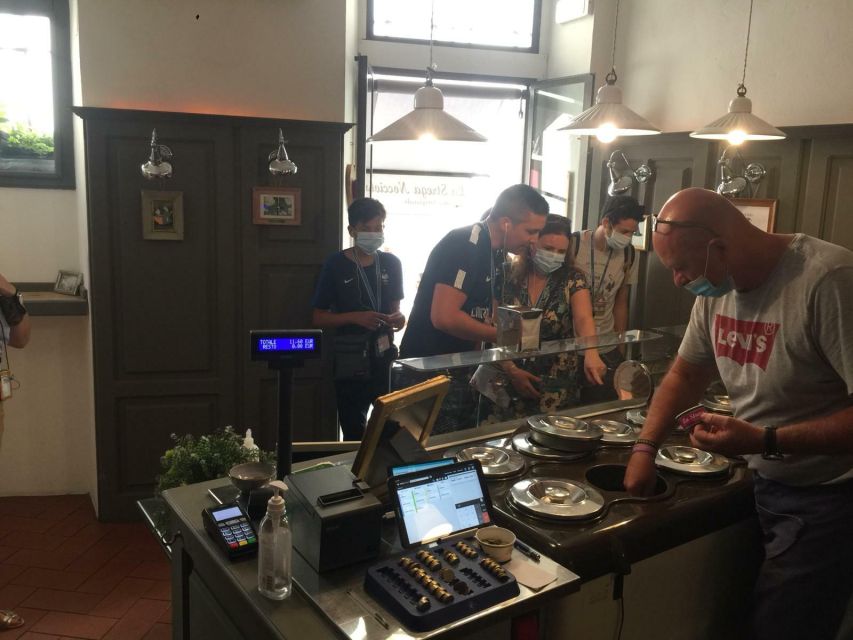
At $148 per person, this is not a budget museum visit. You are paying for two skip-the-ticket-line entries, a live guide, headsets, and a carefully organized route through Florence.
The value depends on what you want. If you are comfortable studying maps, reserving museum tickets, and researching the major works, you could spend less by visiting independently. You would also have more freedom to linger, take breaks, or return to a favorite gallery.
I think the price is easier to justify if you have only one day in Florence, are visiting during a crowded period, or want help making sense of Renaissance art. Getting both museums in one four-hour block saves planning time and reduces the risk of losing hours in ticket lines.
The skip-the-line benefit is useful but should be understood correctly. It means you use a reserved or priority entrance rather than the ordinary ticket queue. Museum security, group entry procedures, and crowd levels can still create a wait. One group waited less than 15 minutes, while another experienced heavy crowds but moved through with help from the guide.
On the first Sunday of each month, state museums may offer free admission, but advance tickets cannot be reserved, so entry is not guaranteed. That is one day when the tour’s normal ticket value is harder to judge.
Who should book this tour?
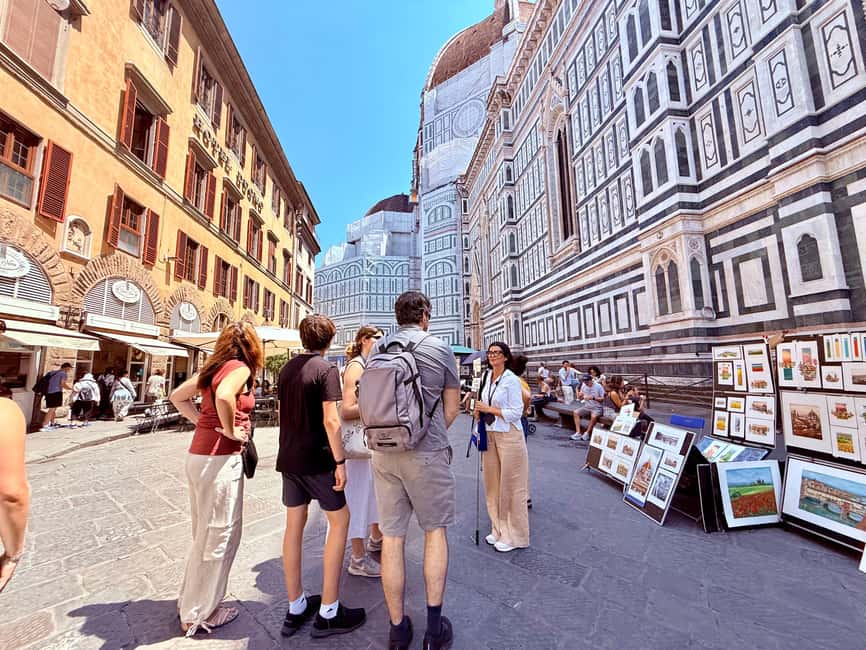
This tour suits a first visit to Florence, especially if David and the Uffizi are at the top of your list. It is also a good fit for families and older children who benefit from stories, clear explanations, and a guide who can keep the route moving.
You will get the most from it if you enjoy art but do not want to prepare a long museum plan. The tour gives you a solid introduction, then leaves you free to return to a museum later if you want more time.
It is less suitable if you dislike group schedules or prefer to spend 20 minutes with one painting. Four hours is a fixed route, and the group must continue even when one room captures your attention.
Book it if you value interpretation, organization, and priority entry. Skip it if your main goal is the lowest possible cost or complete freedom inside the museums.
FAQ
How long is the Florence Uffizi and Accademia tour?
The tour lasts four hours.
Which museums are included?
The tour includes skip-the-ticket-line entry to the Accademia and the Uffizi.
Will I see Michelangelo’s David?
Yes. The Accademia visit includes a guided look at Michelangelo’s David.
Will the tour visit the Duomo?
The group walks through Duomo Square to admire the cathedral façade and Brunelleschi’s dome from outside. A dome climb is not included in the provided tour details.
Does the tour include the Ponte Vecchio?
The tour includes views of the Ponte Vecchio and Florence from the upper floor and terrace of the Uffizi.
How large is the group?
Small groups generally contain 10 to 15 people. Some departures may be smaller.
Are headsets provided?
Yes. Radios and headsets are included so you can hear the guide inside the museums and during the walking sections.
What languages are available?
Live guides are available in English, German, Spanish, French, and Italian.
Can I cancel the tour?
You can cancel up to 24 hours in advance for a full refund. The activity also offers reserve-now, pay-later booking.
Should you book it?
Book this tour if you want Florence’s essential art sights explained in one organized half-day. The guide quality, small groups, museum access, and outdoor route make it a strong introduction, particularly for first-time visitors.
Just prepare for a demanding four hours. Wear good shoes, use the bathroom first, carry water when permitted, and do not expect to study every gallery at length. At $148, you are buying expert direction and time saved, not merely admission tickets. For many visitors, that help is what turns David, the Duomo, and the Uffizi from a checklist into a connected picture of Florence.
Just added around Florence
- Florence: Heart of Florence Guided Walking Tour★ 4.0 · 81 reviews
- Florence: The Medici Family Guided Walking Tour★ 4.7 · 129 reviews
- Florence: Tuscan Food and Wine Guided Walking Tour★ 4.8 · 72 reviews
- Florence Walking Tour & Skip-the-Line David at Accademia★ 4.7 · 159 reviews
- Florence: Walking Tour with David, Duomo & Uffizi Gallery★ 4.7 · 414 reviews
- Florence: Pitti Palace and Boboli Gardens Walking Tour★ 4.6 · 182 reviews
- Florence: Small Group Guided Walking Tour★ 4.7 · 176 reviews
- Florence Street Food Walking Tour with Wine in Duomo Area★ 4.9 · 76 reviews
Small-Group Walking Tours, compared.

Amsterdam Anne Frank: Small-Group Walking Tour & Local Guide
Read our review →
Freedom Trail History Small Group Walking Tour
Read our review →
New Orleans Food Walking Tour of the French Quarter with Small-Group Option
Read our review →
Barcelona Tapas and Wine Experience Small-Group Walking Tour
Read our review →
Reykjavík Small group Walking Tour – by CityWalk
Read our review →
Best of Lisbon Small-Group Guided Walking Tour
Read our review →
Small Group Boat Cruise and Guided Walking Tour
Read our review →
Browse the lists this tour appears in