
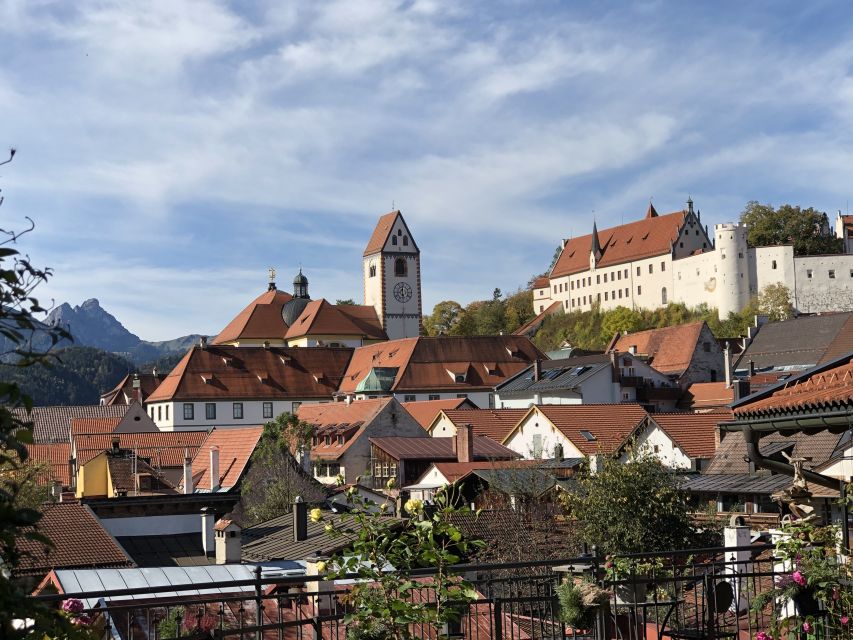
Review · OLD TOWN WALKING TOURS
Füssen: Old Town Guided Walking Tour in German
Small-town history comes alive here. This 90-minute German-language walk gives you a close look at Füssen’s old streets, medieval remains, churches, and castle art without taking up half your day. I like the small groups of up to 10 people, which make it easier to hear the guide and ask questions. I also like the $9 price, a very fair deal for a guided introduction to one of Bavaria’s most attractive historic towns.
The main point to consider is the language. The live guide speaks German, so this tour works best if you understand German well enough to follow stories and questions. If not, you may prefer exploring with a written guide or an English-language option elsewhere. The route is wheelchair accessible, but this is still a walking tour through historic streets, so comfortable shoes are sensible.
Key points at a glance
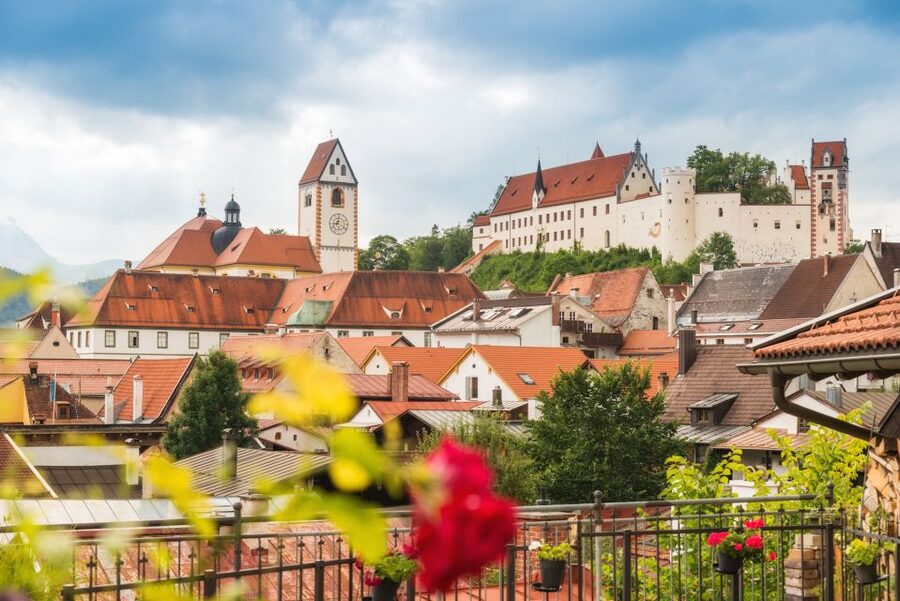
- A 90-minute walk through Füssen’s historic center: You get a focused introduction without committing to a long half-day excursion.
- Medieval walls at Sebastian Cemetery: This stop adds a tangible link to Füssen’s earlier defenses and town boundaries.
- A compact group capped at 10 people: The guide can speak to the group rather than simply recite facts to a crowd.
- Churches with very different characters: The Franciscan Monastery, Holy Spirit Hospital Church, and St. Mang Basilica each add another layer to the town’s story.
- Paintings in the High Castle courtyard: This is one of the tour’s most striking visual stops and a good reason to keep your camera ready.
- Guides who welcome questions: Ella and Frau Schulz have been singled out for clear, enthusiastic explanations and generous time with the group.
Starting at Kaiser-Maximilian-Platz
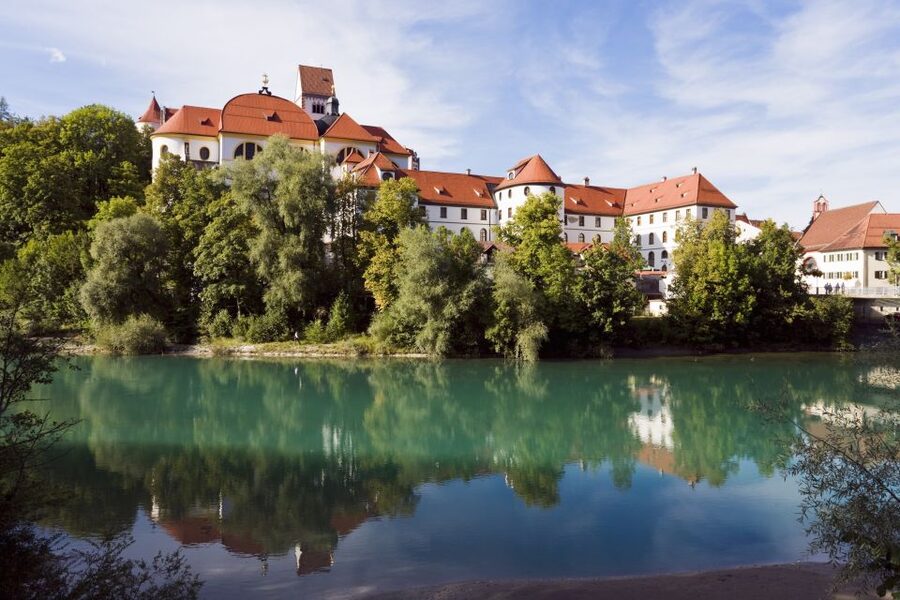
You meet outside the Tourist Information at Kaiser-Maximilian-Platz 1. Arrive 10 minutes early. That small cushion matters because the walk begins from the town center, and a late arrival could mean trying to catch up with a group already moving through the old streets.
The meeting point is practical for a first visit. You are not being sent to an obscure edge of town or a remote parking area. From here, the tour quickly shifts from orientation to observation, with historic architecture close around you.
I like this kind of beginning because Füssen can be easy to treat as a quick stop on the way to Neuschwanstein Castle. A walking tour helps you give the town its own time. The castle may draw the biggest crowds, but Füssen’s center has its own story, built from Roman-era connections, medieval walls, religious institutions, local trade, and later civic life.
The tour is conducted in German. That is not a minor detail. A guide can point out a building in any language, but the value of this experience comes from the explanations, local stories, and answers to questions. If your German is comfortable, you should get much more from the hour and a half.
More Old Town Walking Tours in Germany
- Nuremberg: Old Town Guided Walking Tour
★ 4.6 · 2,416 reviews - Munich: Old Town & Viktualienmarkt City Walk in German
★ 4.7 · 2,304 reviews - Heidelberg: Walking Tour of the Old Town
★ 4.6 · 1,742 reviews
Following Füssen from Roman times onward
The tour covers Füssen’s development from the Roman period to the present. That wide time span gives the walk a useful shape. Instead of seeing a church, gate, or wall as an isolated photo stop, you can connect the pieces and understand how the town changed over time.
The guide’s job is especially important here. Streets and façades can look lovely without telling you much. A good explanation gives you the reason behind what you are seeing, points out details you might pass on your own, and shows how the town’s religious and civic buildings fit together.
The strongest feedback about this tour centers on the guides’ explanations. Ella has been praised for welcoming questions, while Frau Schulz was described as speaking with real commitment and extending the walk to almost two hours. That does not guarantee every departure will run long, but it suggests a guide may give the group time when the conversation is worthwhile.
I would treat the advertised 1.5 hours as the planning figure. If you have a train, restaurant booking, or castle connection afterward, leave extra time rather than counting on a precise finish. A longer conversation can be a benefit, but it can also affect a tightly packed schedule.
Sebastian Cemetery and the medieval city wall
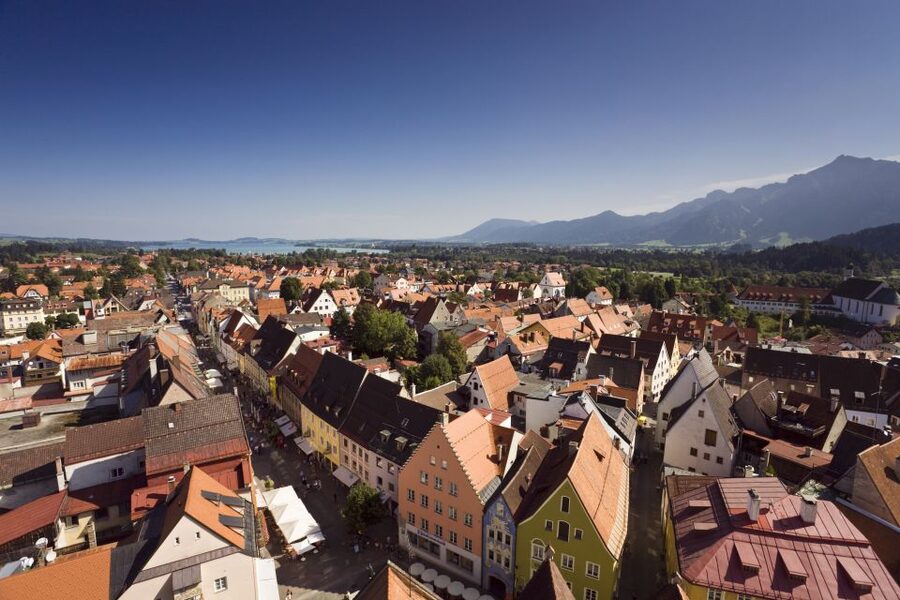
Sebastian Cemetery is one of the first places where the town’s earlier defenses become visible. The medieval city wall here offers a physical reminder that Füssen was once a protected settlement, not simply a picturesque collection of old buildings.
This is the sort of stop I value on a town walk. A wall is easy to photograph, but its real interest comes from its purpose. It helps you picture the limits of the old town and understand why streets, gates, and religious buildings developed in the way they did.
The cemetery setting also changes the pace. You move away from the ordinary flow of town streets and get a quieter view of the old structure. Your guide can provide the context that a sign may not cover, especially about how the wall relates to the town’s past.
Do not expect a major museum visit here. The appeal is the combination of place, surviving architecture, and explanation. If you prefer grand interiors and famous masterpieces at every stop, this part may feel modest. If you enjoy small clues that reveal how a town worked, it should be rewarding.
The Franciscan Monastery and Bleichertörle
The Franciscan Monastery adds a religious dimension to the route. It is paired with the Bleichertörle, another reminder that Füssen’s old center was shaped by gateways, walls, and movement through the town.
The value of seeing these sites together is the contrast. The monastery represents a religious community and its place in local life. The Bleichertörle points toward the town’s defensive and practical side. A guide can link those subjects instead of leaving you with disconnected names.
The route also includes the Lechuferweg. Even without a long riverside detour, this part helps vary the walk. Historic centers can become a blur of façades after a while, so a change in setting gives you another way to read Füssen.
The walk is not built around shopping or food stops. You will not be handed a snack or drink, and refreshments are not included. That keeps the price low and the focus on the town, but you should eat or bring water according to your own plans.
Same streets, a different way to see them:
- Discover Berlin Half-Day Walking Tour
★ 5.0 · 9,624 reviews - Berlin City walk Government District and Places of Democracy
★ 4.7 · 8,467 reviews - Berlin: Third Reich & Cold War Guided Walking Tour
★ 4.9 · 8,378 reviews - Munich: Third Reich & WWII Walking Tour
★ 4.6 · 6,181 reviews
The Holy Spirit Hospital Church
The Holy Spirit Hospital Church is a key interior stop. Its appearance and atmosphere offer a change from the exterior walls and street views, and the impressive interior gives the guide a chance to explain how religious buildings shaped Füssen’s identity.
Church visits can be brief, so pay attention to the guide’s interpretation rather than expecting a long period of independent exploration. The point is not only to look upward at decoration. It is to understand why this church mattered and how it fits into the town’s story.
Because the tour is in German, this may be one of the moments when language makes the biggest difference. Religious art and architecture often depend on details, symbols, and local background. If you follow German well, the explanation should make the interior more meaningful than a quick unaccompanied visit.
The church also gives the route a good rhythm. You move between open streets, historic structures, and an ornate interior, so the 90 minutes do not feel like one repeated view of old buildings.
St. Mang Basilica and the High Castle courtyard
The walk continues to St. Mang Basilica, one of Füssen’s major religious landmarks. Along with the Holy Spirit Hospital Church, it shows that the town’s architectural character is not limited to defensive walls and narrow streets.
The basilica is part of the larger story of local power and faith. Your guide can help place it in relation to the monastery, the old town, and the High Castle. That connection is useful because Füssen’s most important buildings are close together, yet their roles were not identical.
The Courtyard of the High Castle is the visual highlight for many people. Here you can admire the painted façades and the courtyard’s decorative character. This is the kind of place where a guide earns the modest tour fee quickly, because painted architectural details can be easy to miss or misunderstand when you are walking alone.
I recommend taking a moment to look beyond the first obvious image. Study how the paintings interact with the building’s windows, corners, and perspective. The courtyard is not merely a backdrop for photographs. It shows how architecture could be made to appear more elaborate through painted detail.
The supplied information does not promise a full castle tour or access to every interior. Keep your expectations focused on the courtyard and its paintings. If you want an extensive palace visit, you will need separate plans.
What the small group changes
The group limit is 10 participants. That is a meaningful advantage in an old town where streets can be narrow and sound can bounce off stone façades.
A small group makes it easier to stay close to the guide, hear the German commentary, and ask a question without interrupting a large crowd. It also allows the guide to adjust the pace when people want more detail, something that appears to have happened on departures led by Ella and Frau Schulz.
There is a trade-off. Small-group departures can sell out, especially at popular times, so you may have fewer choices if you wait until the last minute. Check the available start times before building the rest of your day around the walk.
The tour is wheelchair accessible, which makes it more practical for many visitors. Still, the route passes through a historic center, and the supplied details do not describe every surface or entrance. If you use a wheelchair, confirm the specific departure details when booking and allow a little flexibility around old-town access.
Is $9 a fair price?
Yes, for most German-speaking visitors, the price is excellent. At $9 per person, you are paying roughly the cost of a simple café stop for a live introduction to several important parts of Füssen.
The value comes from the range of stops: Sebastian Cemetery, the medieval wall, the Franciscan Monastery, Bleichertörle, Lechuferweg, the Holy Spirit Hospital Church, St. Mang Basilica, and the High Castle courtyard. You are not paying for transport, a meal, or a long attraction ticket. You are paying for interpretation and a well-planned route.
That distinction matters. If you already know Füssen well or prefer to wander alone, you may not need the tour. But for a first visit, the guide can save you from passing the best details without noticing them.
The German-only format is the main limit on value. If you cannot follow German, $9 is still inexpensive, but the experience will be much less useful. The tour is not advertised as multilingual, and only a German-speaking guide is included.
Who should book this walk?
I would recommend it most strongly to:
- German-speaking first-time visitors to Füssen
- Anyone interested in local history, churches, walls, and architecture
- Visitors who want a short activity before or after seeing the area’s larger attractions
- People who prefer small groups over large guided crowds
- Independent explorers who want context without booking a full-day excursion
- Visitors who want a wheelchair-accessible tour option
Families may also find the 90-minute length manageable, though the supplied information does not describe a child-specific format. The walk is short enough to fit into a busy day, but it still covers enough ground to feel worthwhile.
I would be more cautious if you need English commentary, dislike religious sites, or want extended time inside museums and palaces. This is a town walk, not a full attraction pass. Its strength is the connection between places.
Timing, cancellations, and practical planning
You can cancel up to 24 hours before the activity for a full refund, and the reserve-now, pay-later option gives you some flexibility while planning a Bavaria itinerary. Availability and starting times vary, so check them before making other bookings.
Meet outside the Tourist Information at Kaiser-Maximilian-Platz 1, and arrive 10 minutes early. Transfers to the meeting point are not included, so you need to make your own way there.
Food and drinks are also not included. The walk lasts 1.5 hours, and one recent departure lasted close to two hours, so plan a drink or meal either before the tour or after it. Most of all, wear shoes suited to walking and bring the German skills needed to follow a live local explanation.
Should you book the Füssen Old Town tour?
Book it if you understand German and want a low-cost, well-focused introduction to Füssen beyond the usual quick photograph. The combination of medieval walls, churches, the Lechuferweg, and the painted High Castle courtyard gives you a strong sense of the town in only 90 minutes.
The best reason to choose it is the small group and the guide-led storytelling. The strongest guide feedback points to people such as Ella and Frau Schulz, who answer questions and explain with real energy. That personal contact is what turns a pleasant walk into a useful one.
Skip it if you need English, want a full castle interior tour, or prefer to explore at your own pace without a fixed route. For everyone else, $9 is a small price for a clearer understanding of Füssen’s old center and the details you might otherwise walk past.
FAQ
Where does the Füssen walking tour meet?
The meeting point is outside the Tourist Information at Kaiser-Maximilian-Platz 1.
How long does the tour last?
The scheduled duration is 1.5 hours. One reported departure lasted almost two hours, so leave extra time if your schedule is tight.
What language is the tour conducted in?
The live guide speaks German. German is the only language listed for this experience.
How many people can join the group?
The tour is limited to 10 participants, making it a small-group experience.
Is the walking tour wheelchair accessible?
Yes, the activity is listed as wheelchair accessible.
Can I cancel and receive a refund?
Yes. You can cancel up to 24 hours in advance for a full refund. You can also reserve now and pay later.
Just added around Germany
- Berlin Walking Tour★ 4.5 · 378 reviews
- Small Group Walking Tour of East Berlin with a French Guide★ 5.0 · 176 reviews
- Berlin Street Art Walking Tour – Off The Grid★ 5.0 · 270 reviews
- Berlin Highlights Private Guided Walking Tour★ 4.5 · 89 reviews
- Private Walking Tour: World War 2 and Cold War Sites in Berlin★ 5.0 · 230 reviews
- East Meets West: Berlin Food Culture & Street Art★ 5.0 · 157 reviews
- Kreuzberg Berlin: Off the Beaten Track PRIVATE Walking Tour★ 5.0 · 128 reviews
- The History of Berlin: WWII PRIVATE Walking Tour With Locals★ 5.0 · 209 reviews
Old Town Walking Tours, compared.
Underground Vaults Walking Tour in Edinburgh Old Town
Read our review →
3-Hour Walking Tour of Old Town & Prague Castle
Read our review →
Old Town and Jewish Quarter Guided Walking Tour
Read our review →
Cartagena: Historic Center and Getsemaní Shared Walking Tour
Read our review →Browse the lists this tour appears in