
Review · HISTORY WALKING TOURS
Porto: Jewish Heritage Walking Tour
Jewish traces survive in Porto’s hills. This walking tour follows old lanes, stairs, viewpoints, and former Jewish quarters while explaining a community that dates to the 12th century. I like the way it connects Jewish history with Porto’s wider story, and I especially like the small details, such as inscriptions and symbols that are easy to miss alone. The main drawback is clear: you do not enter Porto’s synagogue or Jewish Heritage Museum, and the route is a serious workout.
The guide makes or breaks this experience, and the guides have earned strong praise for warmth, humor, patience, and careful research. Ricardo Silva is often singled out for his archive work and his use of images to explain places that no longer look as they once did. Give yourself three hours, wear good shoes, and expect steep streets rather than a gentle stroll.
Key points to know before you book
- The route reaches three former Jewish neighborhoods: You walk across several parts of Porto, not just one compact quarter.
- Hidden evidence matters more than grand monuments: Look for inscriptions, symbols, old street patterns, and sites where Jewish life once took place.
- The tour covers the 12th century through modern times: Stories include coexistence with Christians, the Inquisition, forced conversion, World War II, and the modern community.
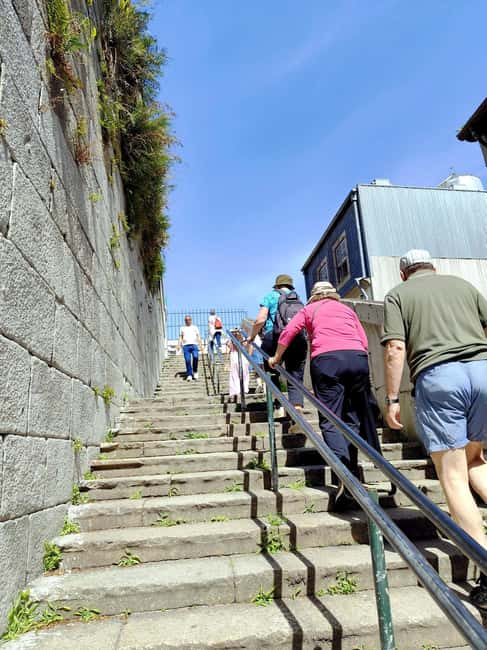
- Porto’s hills are part of the experience: Sant’ana Street, the Esnoga stairs, Jewish Mountain, and other climbs require a moderate level of fitness.
- The synagogue is not included: This is an outdoor history walk, not a synagogue or museum visit.
- The guides receive unusually warm praise: Ricardo, Pedro, Vanessa, Maria, Jorge, Daniel, and others are described as engaging, patient, and well prepared.
Porto’s Jewish story begins in the old streets
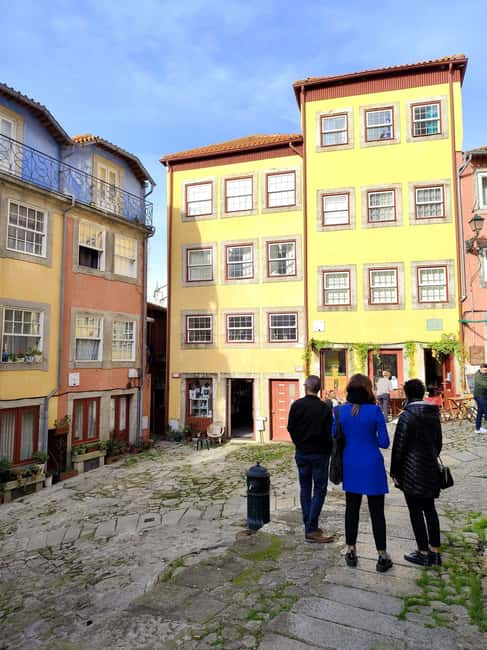
The tour starts at a central meeting point, with the exact location depending on the option you book. From there, you follow your guide into the heart of Porto’s former Jewish areas, moving through narrow lanes and stairways rather than broad sightseeing avenues.
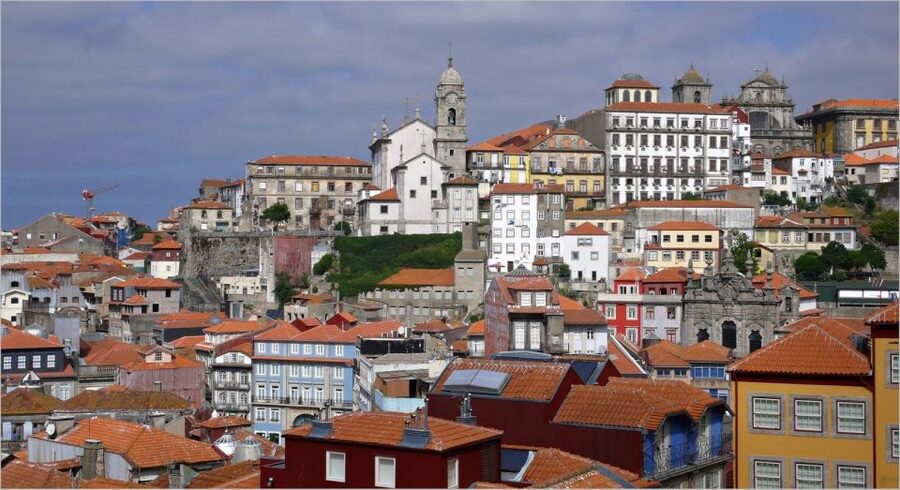
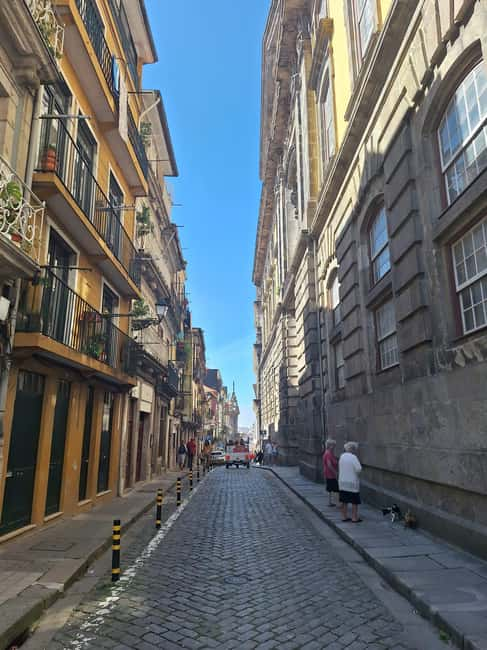
That setting is important. Porto does not offer a single preserved Jewish quarter with a line of grand buildings. Much of the physical evidence has disappeared or been altered. The tour’s value comes from learning how to read the city: a street name, a building detail, a small inscription, or a location that made sense only when you understood who lived and traded there.
The story reaches back to the 12th century, when Porto’s Jewish community lived alongside local Christians and took part in the city’s trade. You learn where wealthier Jewish families settled, how business links worked, and how Jewish residents shaped parts of urban life.
I appreciate that the tour does not treat Jewish history as a separate subject floating above Porto. Churches, commercial streets, viewpoints, and older neighborhoods all become part of the story. That wider setting helps you understand both cooperation and tension between communities.
More History Walking Tours in Portugal
- Porto: Historic City Center Walking Tour
★ 4.7 · 1,172 reviews - Porto: Historical Center Walking Tour
★ 4.8 · 898 reviews - PORTO: Historical Walking Tour
★ 4.8 · 92 reviews
Rua de Sant’Ana and the first neighborhood
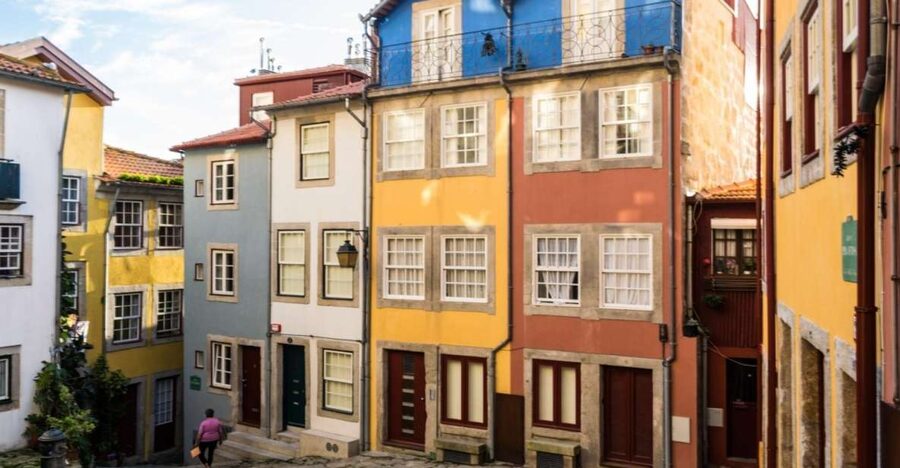
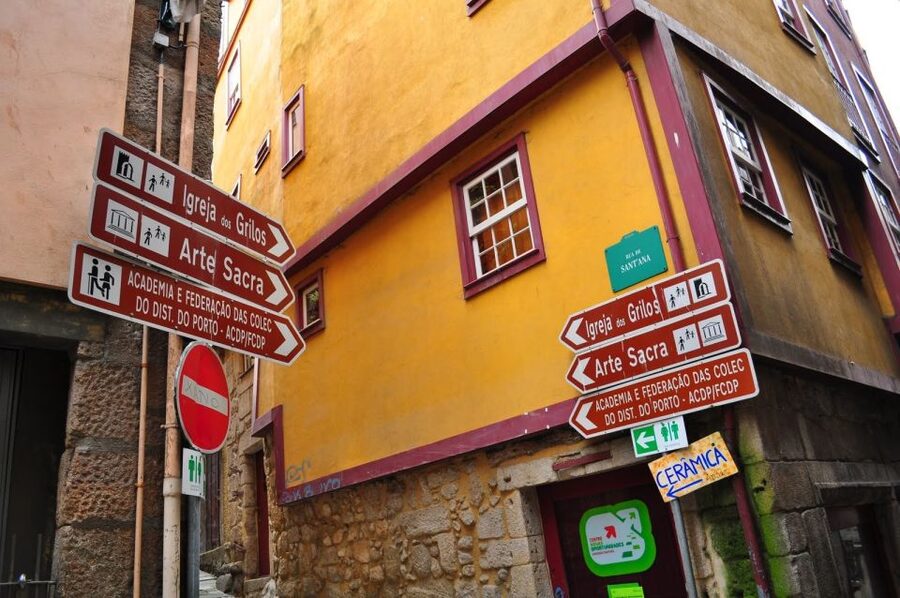
Rua de Sant’Ana is one of the first substantial stops, with roughly 30 minutes set aside for a guided walk. The street and its surrounding lanes help introduce Porto’s older Jewish quarters and the way the community occupied the city.
Do not expect a preserved synagogue façade or a neatly marked row of Jewish homes. Instead, your guide explains what once stood in these places and points out evidence that can be easy to overlook. This is where a strong guide matters most. Several guides, especially Ricardo, have been praised for research into archives and for identifying small marks that a casual walk would miss.
The route also covers the first, second, and third Jewish neighborhoods of Porto. That wider movement gives the tour a useful structure. You are not simply hearing a list of dates. You are seeing how Jewish settlement shifted through the city and where different groups lived or worked.
The lack of visible remains can disappoint you if you expect a museum-style visit. One useful way to approach this stop is to treat the street as historical evidence rather than a display. The buildings may look ordinary, but the explanation gives them meaning.
Comércio do Porto Street and the city’s trading life
The walk continues along Comércio do Porto Street, linking Jewish life with Porto’s commercial past. The tour explains the good trade relations between Jewish and Christian residents and identifies where prosperous Jewish families settled.
This part is valuable because it avoids reducing the community’s story to persecution alone. The difficult chapters matter, but so do work, business, family, and everyday contact between neighbors. You get a fuller sense of the community before later events disrupted Jewish life in Portugal.
The guides also place the story within Portuguese history. The tour covers the effects of the Inquisition and forced conversion, including the way some Jewish symbols were left behind after people were compelled to change their public religious identity. One participant specifically praised the way these details changed how ordinary buildings and sights appeared afterward.
That is a useful promise of the tour: you leave with a new way to look at Porto. A church or old wall may still be a church or old wall, but you may also understand what came before it and what happened to the people who lived nearby.
S. Bento da Vitória Church and difficult chapters
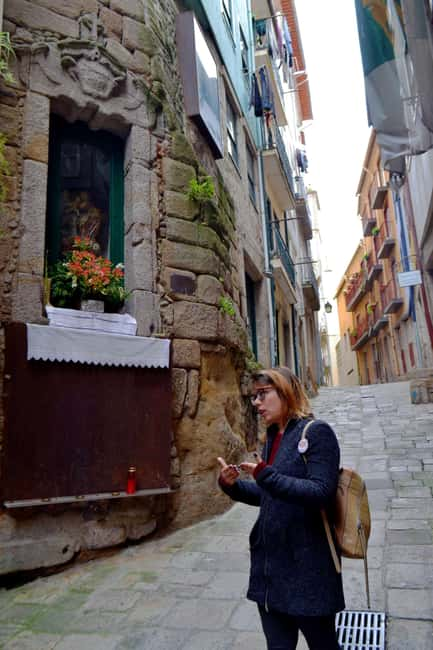
The route reaches S. Bento da Vitória Church, a stop that helps explain the religious and political setting around Porto’s Jewish community. The exact presentation will depend on your guide, but the subject includes the pressure placed on Jews, the Inquisition, and the consequences of forced conversion.
This is not light sightseeing. The material includes exclusion, struggle, and the loss of a community’s public presence. A good guide needs to explain these events clearly without turning the walk into a dry lecture. The strongest feedback about this tour points to guides who add humor at the right moments while treating the subject with care.
Ricardo Silva receives particular praise for using photographs and other images on his phone to show places that are difficult to access or no longer look the same. That can be especially helpful here, where the current streets alone may not reveal much about the past.
The tour also discusses later history, including the period around World War II and the current state of Porto’s Jewish community. This broad time span gives the walk more purpose. You are not stopping in the 15th century and leaving the story unfinished.
More Jewish Heritage Walking Tours in Porto:
- Amsterdam Anne Frank: Small-Group Walking Tour & Local Guide
★ 4.8 · 12,789 reviews - Anne Frank’s Story – Guided Walking Tour through Amsterdam
★ 5.0 · 11,619 reviews - Prague: Jewish Quarter Walking Tour with Admission Tickets
★ 4.7 · 3,729 reviews - Amsterdam: Anne Frank Guided Walking Tour in DE/EN/IT/ES
★ 4.9 · 3,107 reviews
Miradouro da Vitória: history with a view
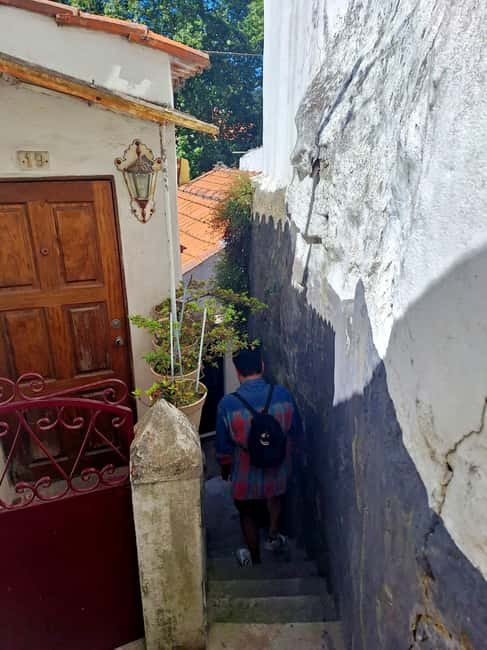
At Miradouro da Vitória, the tour pauses for about 30 minutes and gives you time for photographs and views across Porto. This is one of the more scenic parts of the route, but the viewpoint also provides a chance to place the Jewish neighborhoods within the city’s larger shape.
After walking through close lanes and steep passages, the open view is a welcome change. It gives your legs a break and helps you see why Porto’s hills matter. The city’s physical divisions, slopes, and older districts become easier to understand from above.
This stop is still part of the lesson, not just a photo break. Your guide may use the view to explain where communities lived, traded, or moved. The mix of scenery and history keeps the tour from feeling like three hours of dates and names.
The weather can affect this section. Rain has not stopped guides from continuing, with covered spots used when possible, but Porto’s stone streets can feel harder in wet conditions. Bring suitable footwear and keep your pace steady.
The Esnoga stairs, Virtudes Garden, and Jewish Mountain
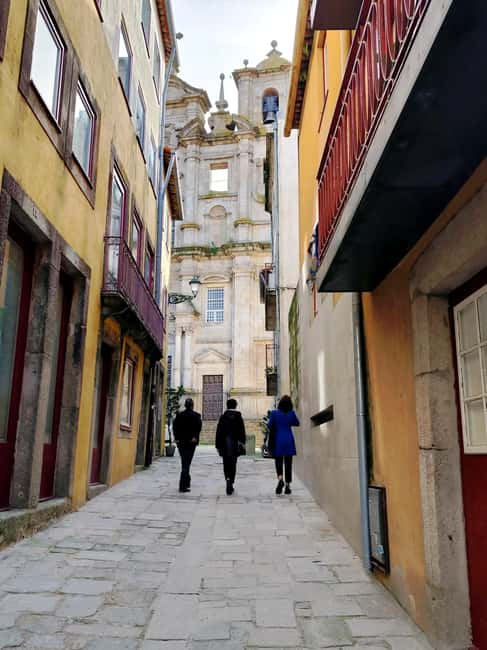
The climb continues toward the Esnoga stairs, the Virtudes Garden, and Jewish Mountain. These names give the route a strong sense of place, but they also signal the physical demand. Porto is hilly, and the tour includes steep streets and stairs that may leave you tired before the final stop.
The Esnoga stairs are especially meaningful because esnoga refers to synagogue. Here, the guide connects the street and its name with the former Jewish presence, helping you understand how a place name can preserve a trace even when the original community is gone.
Virtudes Garden offers another scenic pause and is the final location. The tour concludes at Parque das Virtudes, rather than returning you to the starting point. Plan your day with that finish in mind.
The walking pace is not described as a race, and guides are praised for patience and for answering questions. Still, the experience is not suited to people with mobility impairments, wheelchair users, or anyone with a low level of fitness. Some participants have found two hours enough because the hills caught up with them, even though the scheduled duration is three hours.
Captain Arthur Carlos de Barros Basto and the modern community
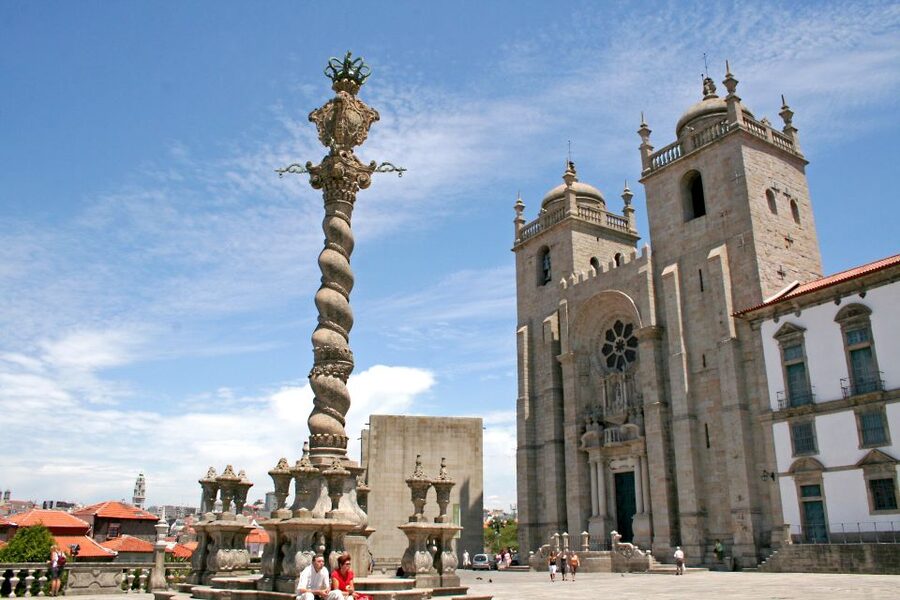
One of the key figures discussed is Captain Arthur Carlos de Barros Basto, also known by his Hebrew name, Abraham Israel Ben-Rosh. He founded Porto’s Jewish community and played a major role in the construction of the Kadoorie Mekor Haim synagogue.
His story gives the tour a bridge between the older Jewish presence and the modern community. It also explains why Porto’s synagogue matters, even though you do not visit it on this walk.
The tour includes information about the synagogue and Jewish sites, but the wording is important: the synagogue visit and Jewish Heritage Museum visit are not included. If entering the synagogue is a priority, you will need to arrange that separately. One past participant expected the synagogue to be part of the walk and found its absence disappointing, while another understood the security difficulties involved.
That limitation is not a flaw if you book this for the outdoor route and historical explanation. It is a problem only if you expect an interior visit. I would treat the walking tour and a synagogue visit as two separate plans.
What the guides do best
Guide quality is the strongest part of this experience. Ricardo is praised for archive research, detailed explanations, humor, and the ability to show small inscriptions and symbols. Pedro is described as friendly, lively, and well informed. Vanessa and Maria receive similar praise for patience, clear storytelling, and welcoming questions.
The best guides do more than repeat facts. They check that you understand, adapt to questions, and use photographs when the present-day street no longer shows the past. That matters here because so much of the story depends on interpretation.
There is one practical issue: finding the guide can be difficult. One person had trouble locating the meeting point and suggested that guides should have clearer identification. Read the meeting instructions carefully and arrive with enough time to spare.
Group size can vary. A private group option is available, and smaller groups have been praised because they make questions easier. The advertised duration is three hours, though some tours have finished closer to two hours, either because the group was tired or because the guide covered the route more quickly. That flexibility can be useful, but do not assume every outing will fill the full three hours.
Is $35 good value?
At $35 per person, this is a fair price for a three-hour walking tour with a local guide. You are paying for research, interpretation, and access to details that are difficult to find without help, not for admission tickets or transportation.
The value is strongest if you care about Jewish history, Porto’s older neighborhoods, or the way historical clues survive in ordinary streets. The tour can also suit you if you have already seen the main churches and viewpoints and want a more focused way to understand the city.
The value is weaker if you want a museum visit, a preserved Jewish quarter, or a relaxed walk with little climbing. Since there are few visible remains, the quality of the explanation carries most of the experience.
Free cancellation up to 24 hours before the start and a reserve-now, pay-later option make the booking fairly flexible. Those terms are useful when you are arranging a busy Porto schedule, but the bigger decision is physical: can you manage the hills and stairs?
Practical advice for a better walk
Wear comfortable shoes with a firm grip. Porto’s stone streets, stairs, and slopes are the main physical challenge, and sandals or thin soles may make the route less pleasant.
Bring water, especially in warm weather. The tour includes several uphill sections, and the viewpoint stops do not remove the effort required to reach them.
Ask questions. The guides are repeatedly praised for patience and for responding carefully, and the subject rewards curiosity. Ask about the inscriptions, the three Jewish neighborhoods, the Kadoorie Mekor Haim synagogue, or what changed during the Inquisition.
Do not judge the tour by the first street alone. The visible evidence is limited, but the guide’s explanation builds a picture from names, locations, old symbols, and historical events.
If you want to visit the synagogue or Jewish Heritage Museum, make a separate plan. Neither is included in the walking route.
Who should book this Porto Jewish heritage walk?
I would recommend it to anyone with a serious interest in Jewish history, Portuguese history, religious coexistence, or lesser-known sides of Porto. It is also a good choice for repeat visitors who want more than the usual riverfront and church circuit.
You should be comfortable walking uphill for up to three hours. If you have mobility limits, use a wheelchair, or tire easily on steep streets, this is not the right tour.
Book it if you value stories, local interpretation, and small clues more than grand surviving monuments. Skip it if you need an indoor attraction or expect to enter a synagogue. For the right visitor, $35 buys a thoughtful look at a community that shaped Porto, even when the city has made much of that presence hard to see.
FAQ
Where does the tour start?
The tour has two possible starting options at Pelourinho do Porto. The exact meeting point may vary depending on the option booked.
How long does the tour last?
The stated duration is three hours. Some participants have finished after about two hours, often because the hills and stairs became tiring.
What languages are available?
The tour is offered in English and Portuguese.
Is the tour private?
A private group option is available. Group size may otherwise vary.
Does the tour visit Porto’s synagogue?
No. A visit to Porto’s synagogue is not included.
Can I visit the Jewish Heritage Museum during the tour?
No. The Jewish Heritage Museum is not included in this walking experience.
Is transportation included?
No. The activity is a walking tour, and transportation is not included.
What should I bring?
Bring comfortable shoes. Porto has steep streets and stairs, and a moderate amount of walking is involved.
Is the tour suitable for wheelchair users or people with low fitness?
No. The tour is not suitable for wheelchair users, people with mobility impairments, or people with a low level of fitness.
More History Walking Tours in Porto
- History and Hauntings of Salem Guided Walking Tour
★ 5.0 · 14,564 reviews - Lisbon: History, Stories and Lifestyle Walking Tour
★ 4.8 · 10,902 reviews - Boston: Freedom Trail History Small Group Walking Tour
★ 5.0 · 6,450 reviews - Historic Charleston Guided Sightseeing Walking Tour
★ 5.0 · 6,216 reviews
Just added around Porto
- PORTO: Historical Walking Tour★ 4.8 · 92 reviews
- Porto: Sunset Walking Tour with Port Wine and Views★ 4.6 · 95 reviews
- Porto: City Center Walking Tour★ 4.6 · 227 reviews
- Porto: Highlights & hidden gems Walk – max 10★ 5.0 · 441 reviews
- Porto: Historical Center Walking Tour★ 4.8 · 898 reviews
- Porto: 3-Hour Walking City Tour & Lello Bookstore Visit★ 4.7 · 99 reviews
- Porto: Harry Potter and City of Porto Guided Walking Tour★ 4.9 · 501 reviews
- Essential Porto Walking Tour★ 4.6 · 129 reviews
History Walking Tours, compared.
History and Hauntings of Salem Guided Walking Tour
Read our review →
Freedom Trail History Small Group Walking Tour
Read our review →
Historic Charleston Guided Sightseeing Walking Tour
Read our review →
Tapas Walking Tour with Food, Wine, and History
Read our review →
Savannah History and Haunts Candlelit Ghost Walking Tour
Read our review →
A History of Terror – Belfast City Centre Walking Tour
Read our review →Browse the lists this tour appears in