
Review · HIDDEN GEMS WALKING TOURS
Kyoto: Gion Hidden Gems & Geisha Culture Tour
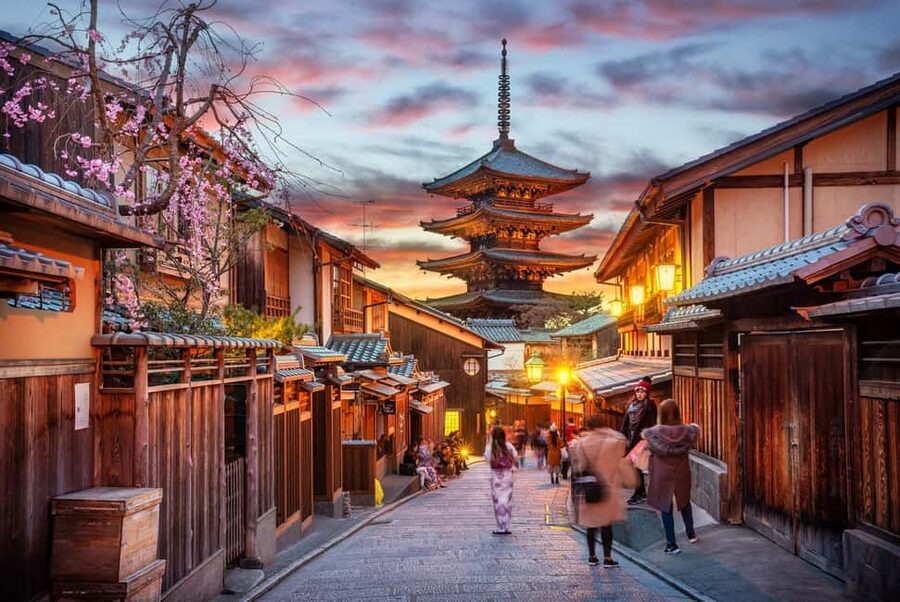
Gion reveals itself after the crowds thin. This $23 walking tour links willow-lined canals, old shrines, wooden townhouses, and the geisha district in two brisk hours. I like the mix of famous sights and quieter lanes, and I especially like that guides explain the customs behind geisha culture rather than treating it as a photo opportunity. The main drawback is the pace: there is a lot to see, and you need comfortable shoes and reasonable mobility.
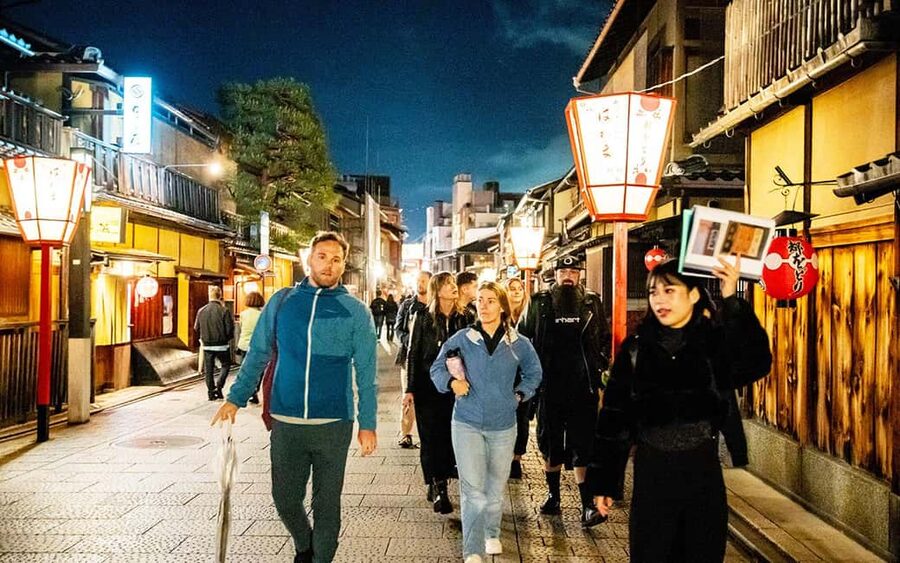
The route is strongest in the late afternoon or evening, when Hanamikoji Street and the lanes around Gion take on a calmer mood. Guides such as Uta, Takumi, Mai, Dan, Wajid, and Alex have been praised for clear explanations, good restaurant suggestions, and patience with questions. Still, a geisha sighting is never guaranteed, and rain can make the stone paths less pleasant.
Key points before you book
- $23 buys two hours with an English-speaking local guide, a fair price for a first look at central Gion.
- Shirakawa Canal gives you Kyoto’s classic opening scene, with willow trees, tea houses, stone paths, and water beside the route.
- The tour reaches several shrines, including Tatsumi-jinja, Yasaka Shrine, and Yasui Kompira-Gu.
- You walk through old lanes and Edo-period wooden townhouses, not just the main tourist streets.
- Hanamikoji Street is the finale, with an explanation of geiko and maiko training, dress, dance, and hairstyles.
- You may see a geisha or maiko, but the sighting depends on timing and chance.
Starting beside Shijo Bridge
The meeting point is the McDonald’s Shijo Ohashi store at 105-1 Hashimoto-cho, Shimogyo-ku, Kyoto-shi. Look for a guide holding a sign marked Local Guide Stars beside the restaurant. The front entrance can be crowded, so checking the side area matters.
This is a practical starting point. Shijo Bridge puts you close to the Kamo River and the eastern side of central Kyoto. From here, the walk quickly moves away from ordinary city traffic and toward the traditional streets of Gion.
The tour lasts two hours, so it is not a slow photography walk. You will stop for explanations and pictures, but you should expect steady movement between sites. Takumi has been praised for keeping the group moving while still giving useful information. Other guides, including Noa, have been noted for waiting until everyone caught up before speaking.
That small habit makes a difference. Gion’s lanes can be narrow, and a group can stretch out quickly. A guide who controls the pace helps you hear the explanation instead of trying to catch up.
More Hidden Gems Walking Tours in Kyoto:
- Kyoto Geisha Walking Tour: Gion District & Hidden Gems
★ 4.7 · 3,273 reviews - Kyoto Arashiyama Walking Tour: Bamboo, Monkeys, Gardens & Secrets
★ 5.0 · 1,216 reviews - Dublin Highlights and Hidden Gems Guided Walking Tour
★ 5.0 · 6,020 reviews
Shirakawa Canal and Gion’s postcard view
The first major sight is Shirakawa Canal. Willow trees hang over the water, traditional tea houses line the route, and stone paving gives the area the old Kyoto look most people hope to find.
This is one of the prettiest parts of the walk, but it is also the place where you should keep your camera under control. The canal area is photogenic, and it is easy to focus only on pictures. Your guide adds value by explaining what you are seeing and pointing out the details that can be missed when you walk alone.
The canal also sets the tone for the rest of the tour. Gion is not a museum district. It is a working area with restaurants, private buildings, shrines, and traditional entertainment houses. You are walking through a real neighborhood, so quiet voices and respectful photography matter.
Tatsumi-jinja Shrine, a small stop with atmosphere
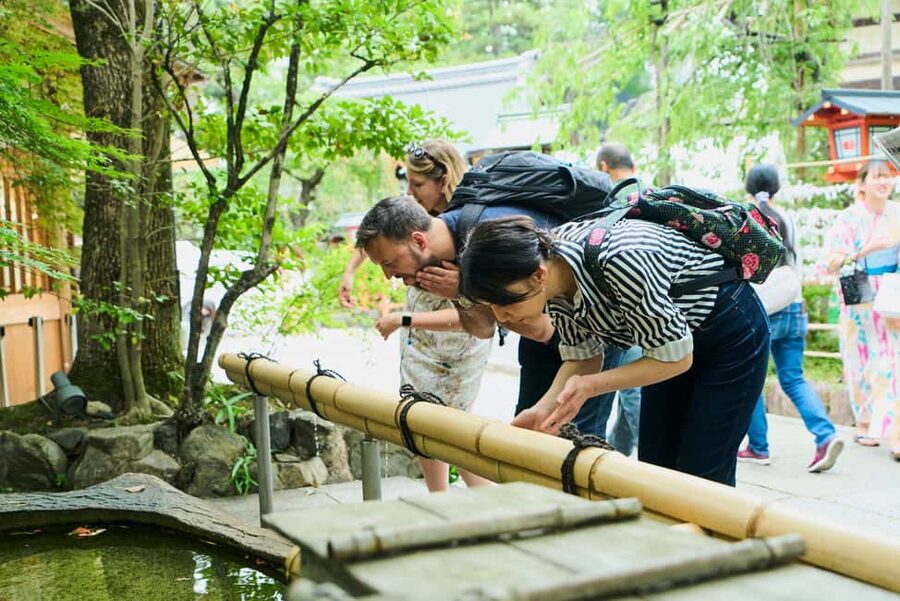
Tatsumi-jinja Shrine offers a more intimate pause than the larger Yasaka Shrine later in the walk. It sits among the traditional streets and helps show how religious sites are woven into Gion’s daily setting.
The stop includes time for pictures and a guide’s explanation. This is useful because small shrines can be easy to pass without understanding their place in the neighborhood. The tour’s strength is not just taking you to famous points. It gives you a reason to notice the smaller ones too.
You should not expect a long temple visit here. The schedule covers many locations, so each stop is relatively focused. If you prefer one shrine with a long, quiet visit, this will feel quick. If you want a broad introduction to Gion, the short stop works well.
Yasaka Shrine and the older side of Kyoto
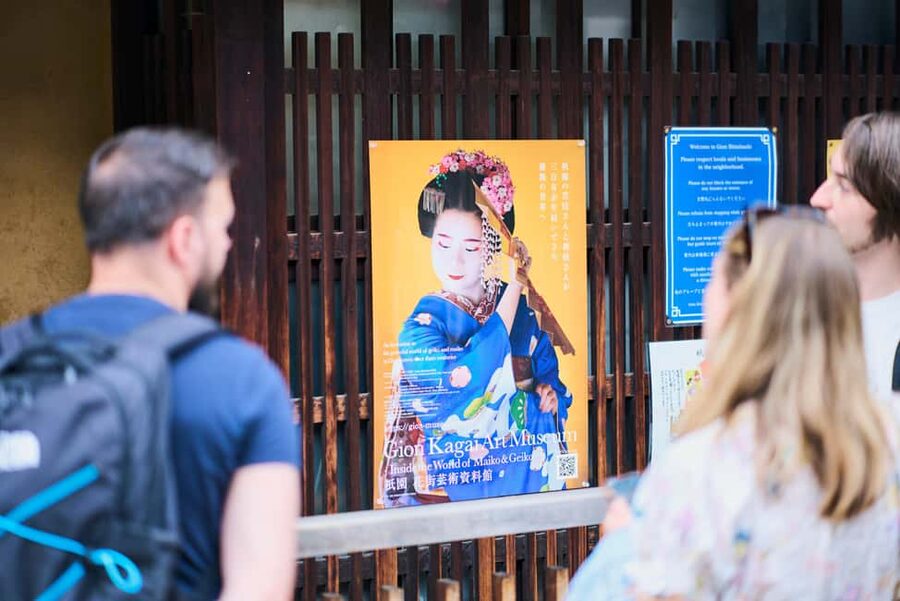
Yasaka Shrine is one of the major religious sights on the route. It gives the walk a larger sense of scale after the narrow canal lanes and small shrine.
The guide’s role is especially useful here. Yasaka Shrine can be visited independently, but a local explanation helps connect the buildings and customs to Kyoto’s past. You also have a chance to pause for photographs before continuing toward the old streets near Ninenzaka.
The itinerary includes scenic walking between stops, not only visits inside shrine grounds. That matters because the transitions are part of the experience. You see the change from a major shrine precinct to lanes lined with older wooden buildings and small businesses.
More Cultural Walking Tours in Kyoto:
- Kyoto Gion: 2-Hour Geisha Culture & History Walking Tour
★ 5.0 · 1,186 reviews - Kyoto Gion Cultural Walk & Geisha Show with Dining Options
★ 5.0 · 518 reviews - Kyoto: Geisha Dinner & Gion Cultural Walk
★ 5.0 · 73 reviews - Savannah First Squares Culinary & Cultural Walking Food Tour
★ 5.0 · 3,229 reviews
Edo-period townhouses and quiet backstreets
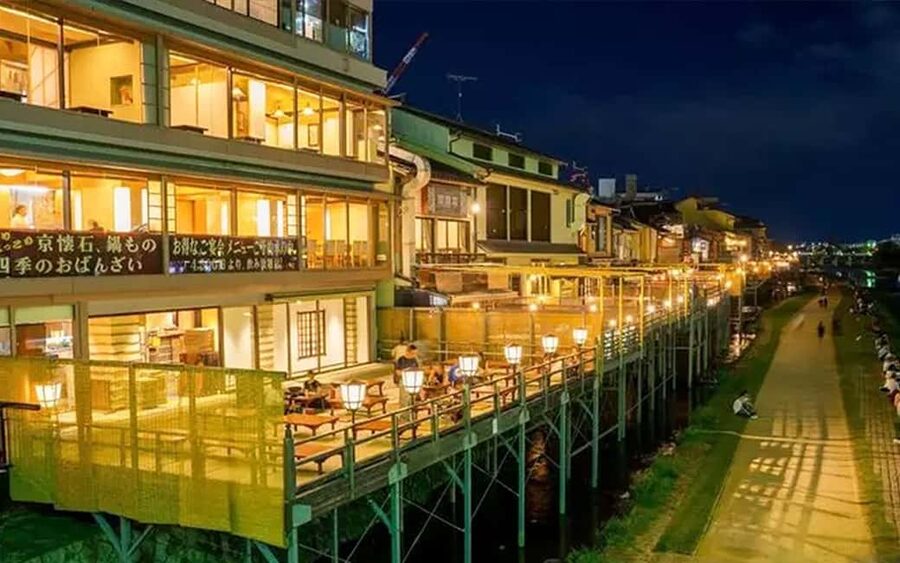
One of the best parts of the walk is the movement through quieter streets with Edo-period wooden townhouses. These buildings give Gion its character, but you can easily pass them without learning what makes them different from a modern shopfront.
The guide points out the traditional appearance and the way the streets preserve an older side of Kyoto. You may find the backstreets more memorable than the headline sights because they are less crowded and easier to appreciate at walking speed.
The word quiet needs a little qualification. Gion is a popular part of Kyoto, and conditions change by time and season. Evening tours often have fewer people around, and several visitors particularly liked the late-night atmosphere. Still, you should not expect every lane to be empty.
This is also where local manners matter most. Avoid blocking entrances, keep voices down, and do not photograph people without permission. The point is to see the district without turning private life into a stage.
Ninenzaka and Hōkan-ji Temple
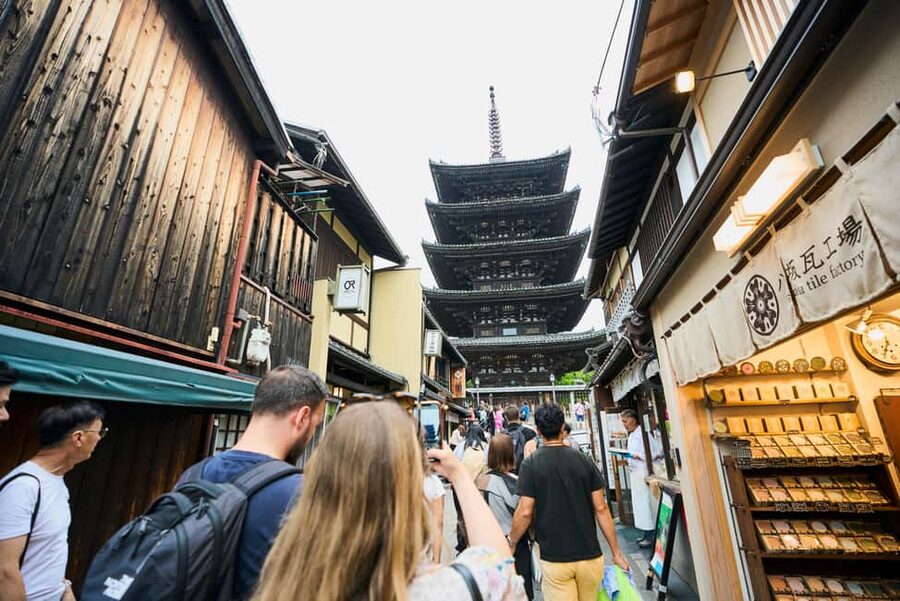
The route continues toward Ninenzaka, one of Kyoto’s best-known traditional streets. Its sloping stone paths and old-style buildings make it an attractive place for pictures, but the route can be tiring if you are not used to walking on uneven surfaces.
Hōkan-ji Temple, often recognized by its tall pagoda, adds one of the most recognizable views in this part of Kyoto. The guide makes a photo stop and explains the setting as you walk through the area.
This section is likely to feel busier than the smaller lanes near Shirakawa Canal. That contrast is useful. You see both sides of the Gion and Higashiyama area: quiet passages that reward careful looking, and famous streets that draw more visitors.
Because the tour includes several stops in a short time, you may not have a long independent break at Ninenzaka or Hōkan-ji. If you want to shop, eat, or take dozens of photographs, plan to return on your own.
Yasui Kompira-Gu and its unusual focus
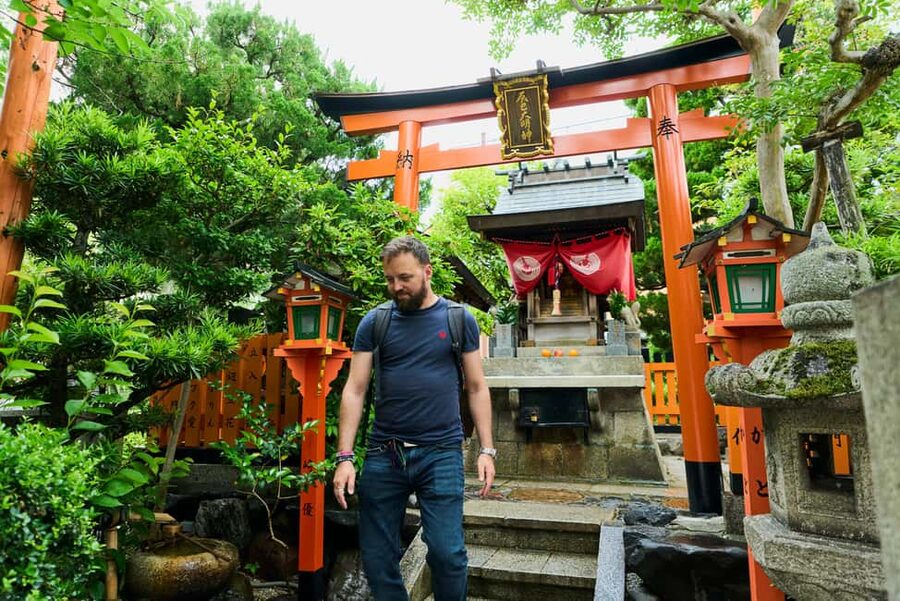
Yasui Kompira-Gu Shrine is another important stop before the tour reaches Hanamikoji Street. The visit gives the route a different religious setting and breaks up the run of scenic streets.
The stop is guided, with time for pictures and a walk through the shrine grounds. The value here comes from context. You are not simply collecting attractive locations. You are seeing how shrines appear throughout Kyoto’s older neighborhoods and how each stop adds a different layer to the walk.
As with the other shrines, the tour does not promise an extended ceremony or a long private visit. The format is an introduction, not a specialist religious tour.
Hanamikoji Street and the world of geiko and maiko
The final stop is Hanamikoji-dori, the heart of Gion’s traditional entertainment district. This is where the tour explains geisha culture in the most detail.
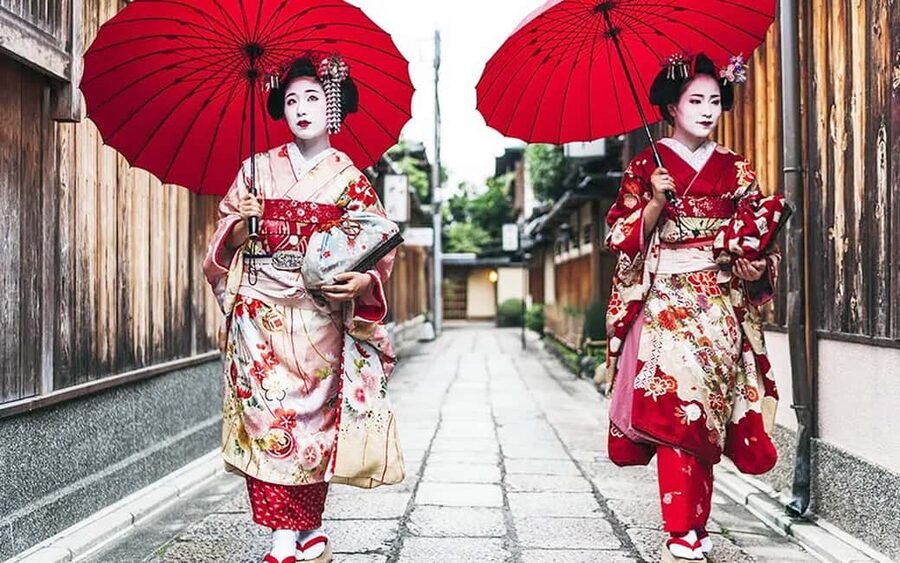
You learn about the strict training required of geiko and maiko, their graceful dances, and the work behind their kimonos and hairstyles. The explanation helps correct the shallow idea that geisha are simply dressed performers. The training, presentation, and craft are central to the culture you are seeing.
You may catch sight of a geisha or maiko walking to an evening engagement. Several people on the tour did see one, and some saw both. But no guide can promise this. Treat it as a possible bonus, not the reason to pay for the walk.
If you do see someone, follow the local etiquette your guide explains. Do not chase, block the path, or use flash photography. Flash is not permitted inside temples, and respectful behavior is important throughout Gion.
Hanamikoji works well as the ending because the guide can connect the buildings and lanes you have just seen with the traditional arts still practiced in the district. You finish with a better understanding of why Gion looks the way it does, not just a collection of attractive photographs.
What the guides do best

The strongest part of this experience is the guiding. The rating is 4.9 from 126 reviews, and the praise is unusually consistent around clear storytelling, friendly behavior, and useful answers.
Uta has been singled out for warmth, enthusiasm, and cultural insight. She also handled a family group with children aged eight and ten well. Takumi has been praised for explaining the geisha tradition with respect, keeping a large group engaged, and adding personal stories. Dan received praise for historical detail and restaurant suggestions, while Wajid was valued for explaining Japanese terms in clear English.
You may get a different guide, so the experience will not be identical every time. That is worth keeping in mind. The common strength is the format: a local English-speaking guide leads you through places that can seem confusing or disconnected when visited alone.
Restaurant recommendations are another useful extra. Several guides gave suggestions for places to eat after the walk, and some people used those recommendations immediately. They are not part of the formal tour, but they can help you turn the tour into a useful first evening in Kyoto.
Is $23 good value?
At $23 per person, this is good value if you are new to Kyoto and want orientation without committing to a half-day tour. You get two hours, an English-speaking guide, several shrines, classic Gion streets, and an explanation of geisha culture.
The value is less about admission tickets. The route does not promise a special performance, private tea-house access, or guaranteed geisha meeting. You are paying for local interpretation and a well-planned walk through an area that is easy to experience superficially.
I would book it early in a Kyoto visit. Several people found it useful as an introduction, and the guide’s restaurant tips can help with later plans. If you already know Gion well, the tour may feel too basic, though the quieter lanes and cultural explanations could still add something.
Timing, weather, and walking conditions
Late afternoon and evening are the most appealing times based on the experience described. The light can suit the traditional streets, and the area may feel calmer after the busiest hours. A night walk also fits the geisha district, since the route discusses people heading to evening engagements.
Weather affects the experience. The tour runs in rain, so bring an umbrella or raincoat. Wet stone paths can be slippery, and one person found bad weather reduced the enjoyment. Bring water and sunscreen in warm weather, and wear shoes that can handle two hours of walking.
This is not a good choice for wheelchair users or people with mobility impairments. The route includes stone-paved lanes, slopes, and steady walking between many stops. The description does not provide a detailed distance or step count, so anyone concerned about walking should ask before booking.
Who should take this Gion walk?
I would recommend it to first-time visitors who want cultural context without a long commitment. It suits couples, families with older children, and solo visitors who prefer a guide for their first look at Gion.
It is also a good choice if you like history explained in plain language rather than a lecture packed with dates. The best guides keep the tone friendly, answer questions, and wait for the group.
You may want a different plan if your main goal is shopping, dining, extended temple visits, or guaranteed contact with geisha culture. You will walk past many places worth revisiting, but the two-hour schedule does not leave much free time.
Should you book it?
Book this tour if you want a compact, affordable introduction to Gion with strong local explanation. The mix of Shirakawa Canal, Tatsumi-jinja, Yasaka Shrine, Ninenzaka, Hōkan-ji, Yasui Kompira-Gu, and Hanamikoji Street gives you a useful first map of the district.
Choose an evening time if available, especially if you hope to see Gion after the crowds thin. Just keep your expectations realistic: the geisha sighting is possible, not promised. For most people, the real reward is understanding the streets, shrines, homes, and traditions that make the district worth walking slowly through.
FAQ
How long does the Gion tour last?
The tour lasts two hours.
How much does the tour cost?
The listed price is $23 per person.
What language is the tour conducted in?
The tour is conducted in English by a live local guide.
Where is the meeting point?
Meet beside the McDonald’s Shijo Ohashi store at 105-1 Hashimoto-cho, Shimogyo-ku, Kyoto-shi, Kyoto. Look for a guide holding a Local Guide Stars sign.
Can I see a geisha or maiko?
You may see a geisha or maiko on Hanamikoji Street, but sightings are not guaranteed.
What sights are included?
The route includes Shirakawa Canal, Tatsumi-jinja Shrine, Yasaka Shrine, Ninenzaka, Hōkan-ji Temple, Yasui Kompira-Gu Shrine, and Hanamikoji-dori.
What should I bring?
Wear comfortable walking shoes and bring water and sunscreen. For rainy weather, bring an umbrella or raincoat.
Is the tour suitable for wheelchair users?
No. The experience is not suitable for wheelchair users or people with mobility impairments.
Just added around Kyoto
- Kyoto : Private Custom Walking Tour With A Local Guide★ 4.6 · 144 reviews
- Kyoto: Private 2.5 Hour Historical Walking Tour★ 4.9 · 121 reviews
- Kyoto: Private Walking Tour with a Local★ 4.6 · 118 reviews
- Kyoto: Izakaya Bars Guided Walking Tour★ 4.9 · 815 reviews
- Kyoto: Gion Sunset Walking Tour with Local Guide★ 4.7 · 351 reviews
- Kyoto: Gion Walking Tour★ 5.0 · 195 reviews
- Kyoto Gion Cultural Walk & Geisha Show with Dining Options★ 5.0 · 518 reviews
- Kyoto: Imperial Palace & Nijo Castle Guided Walking Tour★ 4.7 · 453 reviews
Hidden Gems Walking Tours, compared.
Dublin Highlights and Hidden Gems Guided Walking Tour
Read our review →
Explore Berlin: See All The Iconic Sights & Some Hidden Gems
Read our review →
Kyoto Geisha Walking Tour: Gion District & Hidden Gems
Read our review →
Ben Youssef, Secret Garden, & Souks Walking Tour
Read our review →
Montmartre Hidden Gems and Scenic Highlights Walking Tour
Read our review →
Guided Walking Tour of City Highlights & Hidden Gems
Read our review →
Paranormal Night Walking Tour & Secret Backstreets
Read our review →Browse the lists this tour appears in