
Review · GERMANY WALKING TOURS
1.5 hour walking tour through beautiful Leipzig
Leipzig tells its stories on foot. This 1.5-hour walk packs Bach, Goethe, church history, coffee culture, and the city’s famous market square into a compact route through the Old Town. I especially like the low $11 price and the way the tour links famous names to real places, from Bach’s church to Auerbach’s Cellar. The main drawback is clear: the tour is conducted in German only.
I also like that you start at the New Bach Monument, right beside St. Thomas Church, instead of wasting time finding an obscure meeting point. You will see several major sights without needing public transport, and the route includes courtyards and passageways that are easy to miss on your own. Guide Frau Ölschläger has been singled out for her warm, engaging way of explaining Leipzig.
Key points at a glance
- Bach begins the story: Start at St. Thomas Church, where Johann Sebastian Bach worked and where the St. Thomas Choir remains part of Leipzig’s identity.
- A $11 introduction to the city: For the price of a casual snack, you get 90 minutes with a live guide and a clear introduction to central Leipzig.
- Coffee, commerce, and courtyards: See Zum Arabischen Kaffeebaum, Barthels Hof, the market square, and Leipzig’s handsome covered passages.
- Faust comes to life: In the Mädler Passage, above Auerbach’s Cellar, you hear the legend that helped make the place famous.
- A practical language check: The tour is in German only, so it works best if you can follow spoken German with reasonable ease.
- Easy for many mobility needs: The walk is wheelchair accessible and suitable for people with walking disabilities, though it takes place outdoors in all weather.
Why this short Leipzig walk works
A 90-minute city walk can be either a useful first look or a hurried parade of names. This one has a good chance of being useful because the stops connect to one another. Bach leads into Leipzig’s church life, the coffee house points to the city’s trading and social past, the market square shows civic power, and the passages reveal how Leipzig’s center developed around courtyards and commercial buildings.
I like this kind of route because you get a framework for the city rather than a pile of isolated facts. Afterward, you will know which places deserve a longer visit. You can return to St. Nicholas Church, browse the passageways, or pause at the market square with a better sense of what you are seeing.
The tour also keeps its promise on value. At $11 per person, the price is modest for a live introduction led by a guide. Food, drinks, and hotel arrangements are not included, but that is not a serious issue for a short Old Town walk. You are paying for interpretation and orientation, not a package of extras you may not want.
The strongest reason to book is the guide’s role. The available feedback repeatedly praises the tour as informative, interesting, and pleasant, with Frau Ölschläger receiving particular appreciation for her clear and friendly delivery. That matters in Leipzig, where many buildings look attractive at first glance but become much more meaningful once you know the people and events tied to them.
A few more walks around Germany worth a look
- Discover Berlin Half-Day Walking Tour
★ 5.0 · 9,624 reviews - Berlin City walk Government District and Places of Democracy
★ 4.7 · 8,467 reviews - Berlin: Third Reich & Cold War Guided Walking Tour
★ 4.9 · 8,378 reviews
Meeting Johann Sebastian Bach at St. Thomas Church
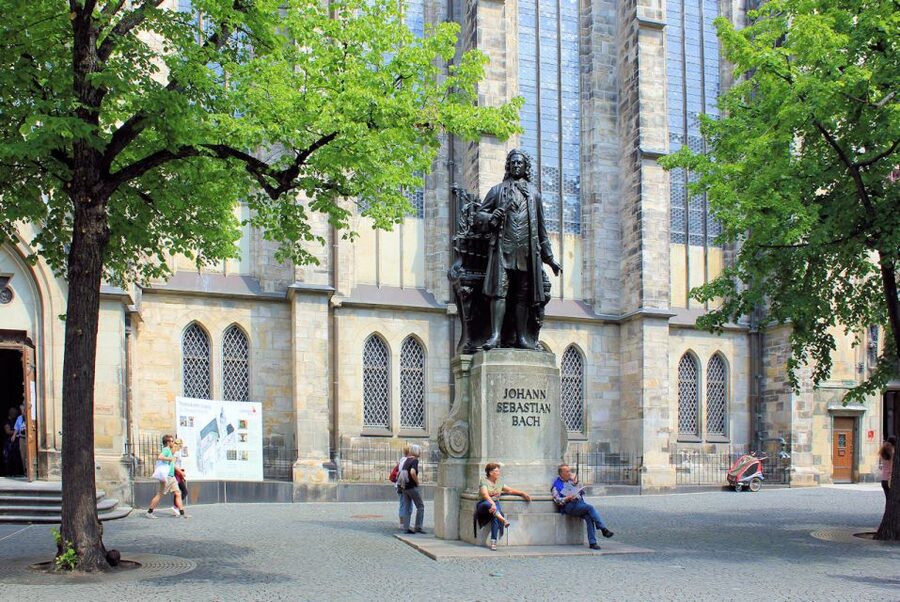
The tour starts at the New Bach Monument in Thomaskirchhof, directly in front of St. Thomas Church. Look for the guide holding a sign marked Treffpunkt Leipzig, and arrive at least five minutes early. This is a sensible meeting point because the church is one of Leipzig’s most important landmarks and gives the tour an immediate sense of place.
The opening focus is Johann Sebastian Bach and his work. Bach lived in Leipzig and served as music director at St. Thomas Church, so this is not a loose connection added for tourists. The church was central to his professional life, and the St. Thomas Choir remains tied to that tradition.
I like starting here because Bach gives Leipzig a human face. You are not simply looking at an old church facade. You are hearing about a composer whose daily work, music, and responsibilities were tied to this building and its community.
The tour also explains the St. Thomas Choir. That detail helps you understand why the church matters beyond architecture. If you are interested in classical music, this opening should be one of the highlights. If you are not, the guide’s explanation still gives you a useful entry into Leipzig’s cultural identity.
The tour does not include a separate admission promise or an extended interior visit, so you should treat this stop as a guided introduction rather than a full church tour. If St. Thomas Church catches your attention, you can plan a return visit afterward.
From an old coffee house to Barthels Hof
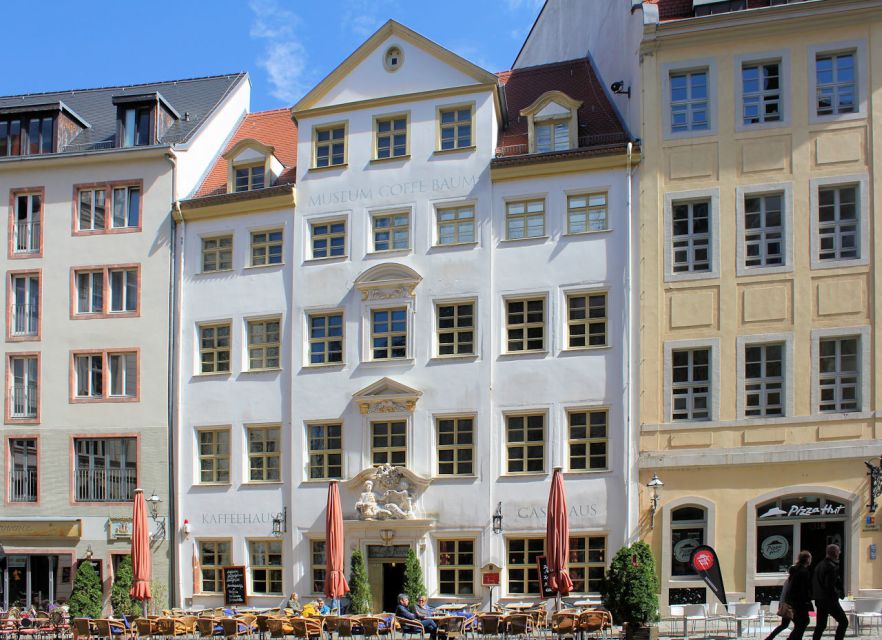
From the church, the route takes you toward Zum Arabischen Kaffeebaum, described as one of Europe’s oldest coffee houses. That makes it an excellent stop for understanding Leipzig as a meeting place for commerce, ideas, and ordinary social life.
A coffee house can tell you plenty about a city. It is less formal than a church and more personal than a grand public building. Here, the subject shifts from Bach’s music to the habits and public life that shaped Leipzig’s center.
You then continue to Barthels Hof, a handsome historic courtyard complex. The important thing is not just the facade. Leipzig’s Old Town contains passageways and courtyards that show how business and city life were arranged behind the main streets.
This is one of the route’s best features. You get a view of Leipzig beyond its postcard landmarks. The Old Town is not only churches and monuments. It is also a network of commercial spaces, inner courtyards, and routes that connect one public square to another.
The guide’s explanation is especially useful here because the architectural details may not announce their purpose. You might notice a decorative entrance or a narrow passage, but a local guide can explain how these spaces fit into the city’s story.
Leipzig’s market square and Renaissance town hall
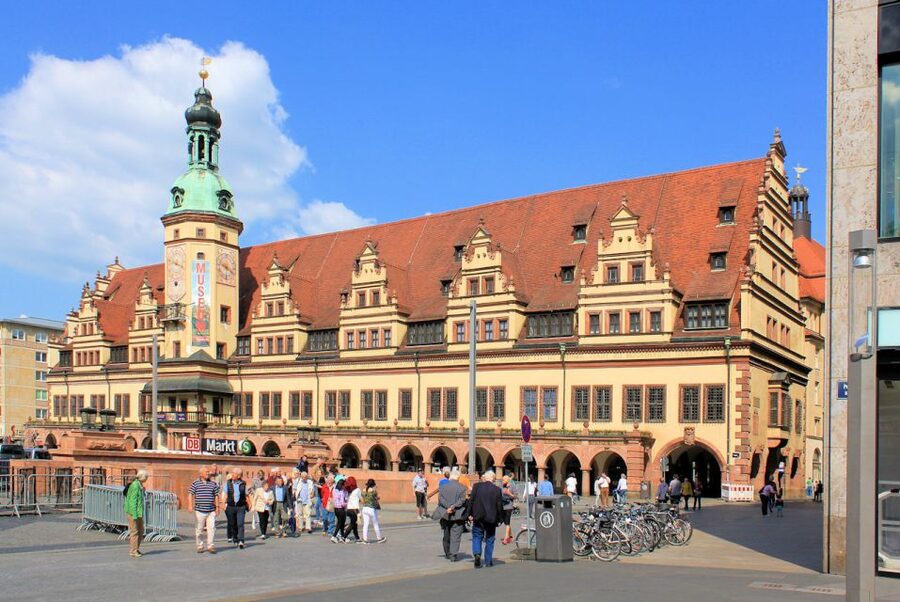
The walk continues through the market square, where you can see the Renaissance town hall and get a feel for present-day Leipzig. This is the most naturally open and public part of the route. Unlike the quieter churchyard, the market square gives you a sense of how the center functions now.
The town hall supplies the civic backdrop. The market gives the stop its everyday character. You are not only studying a historic building. You are also watching local life move around it.
That combination is valuable for first-time visitors. A city tour should help you see both the official face of a place and its ordinary rhythm. Here, Leipzig’s historic center is not presented as a museum frozen in time. People still meet, shop, cross the square, and use the area as part of daily life.
The square can also be one of the more active sections of the walk. Keep close enough to hear the guide, especially if the area is crowded. Since no group-size information is provided, I would not assume an intimate private-tour setting. The experience is built around a public walking route.
Same streets, a different way to see them:
- Munich: Third Reich & WWII Walking Tour
★ 4.6 · 6,181 reviews - Berlin: Discover Berlin Walking Tour
★ 4.9 · 5,998 reviews - Berlin’s Best: 2 Hour Walking Tour Third Reich and the Cold War
★ 5.0 · 5,486 reviews - Berlin: Hidden Backyards Guided Walking Tour
★ 4.8 · 5,360 reviews
Mädler Passage, Faust, and the young Goethe
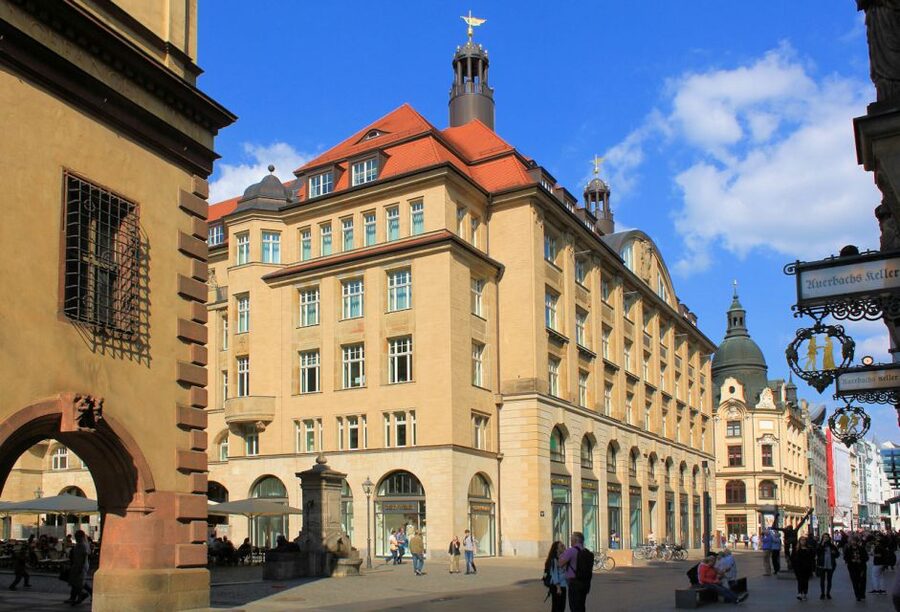
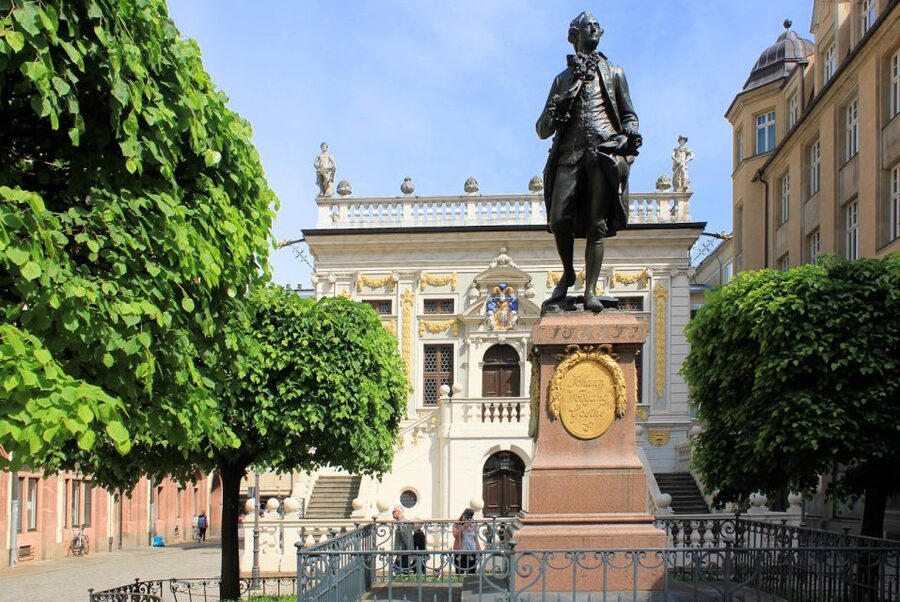
The Mädler Passage brings together literature, architecture, and Leipzig’s student culture. Above Auerbach’s Cellar, the guide explains the Faust legend, then the route continues to the Naschmarkt, where Johann Wolfgang Goethe appears in his younger days as a student.
This section gives the tour a different tone. Bach represents Leipzig’s musical life, while Goethe and Faust connect the city to German literature. The result is a broader picture of Leipzig as a place where art, study, debate, and public life met.
Auerbach’s Cellar is especially interesting because its fame reaches beyond food and drink. The location is linked with the Faust story, and the Mädler Passage gives you the physical setting for that tale. You may not get a long literary lecture, but the guide helps you understand why this particular passage and cellar matter.
The Naschmarkt adds another layer. Learning about Goethe as a student makes the city feel less remote. Famous people were once young, busy, and moving through the same streets as everyone else. That is a small detail, but it can make a historic center easier to picture.
I would pay close attention here if you enjoy literature or German culture. If your interests are mainly architecture and music, this is still a pleasant change of subject, though some of the references may carry more weight if you already know the Faust story.
Leipzig’s lanes, courtyards, and smaller details
After the major landmarks, the route takes you through some of Leipzig’s more appealing alleyways and courtyards. This is where the tour earns its keep as a walking experience rather than a simple checklist.
Large sights are easy to find with a map. Smaller passages are not always obvious, especially when they connect busy streets with enclosed courtyards. A guide helps you notice how the Old Town fits together.
The route promises Leipzig’s heritage, events, and famous people, but the strongest moments may be the transitions between the headline stops. Walking from a church to a coffee house, then through a passage to a market, gives you a physical sense of the city’s compact center.
You should wear comfortable shoes. The total duration is only 1.5 hours, but the experience is entirely on foot, and the tour continues in rain or sunshine. Leipzig’s weather can change your comfort level, so bring suitable clothing rather than hoping for perfect conditions.
The walk is wheelchair accessible and suitable for people with walking disabilities. That is useful information, especially for visitors who want a city introduction without relying on a bus or other transport. Still, because this is an outdoor route through streets, squares, and passages, you may want to confirm any specific access needs before booking.
St. Nicholas Church and the call for freedom
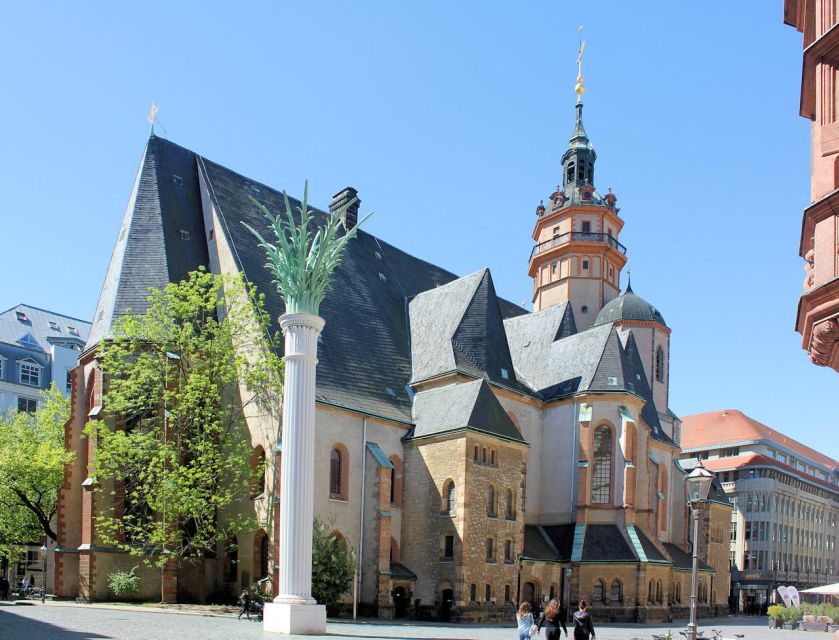
The final major stop is St. Nicholas Church, Leipzig’s oldest church. Its importance is not limited to age or architecture. It is also tied to the peaceful civic movement that helped bring the call We are the people to the world.
This gives the tour a modern political and social dimension. You move from Bach and Goethe to a place associated with public protest and major change. That broad time span is one of the walk’s strengths. Leipzig’s story is not trapped in the past.
St. Nicholas Church helps you see how churches in German cities could function as more than places of worship. They could also become gathering places for public discussion and peaceful civic action. The guide’s explanation should help connect the building to Leipzig’s wider role in recent German history.
The stop is a strong way to finish because it leaves you with something to think about. The route begins with music and ends with citizens making their voices heard. In between, you encounter trade, literature, civic life, and urban design.
As with St. Thomas Church, the tour’s purpose is an introduction. You may want extra time at St. Nicholas Church afterward if its history interests you.
German-only guiding and guide quality
The live guide speaks German only. This is the most important booking decision. If you understand conversational German, the tour offers a more natural way to hear local history. If you do not, the experience will be difficult to follow, even though the route itself is easy to walk.
The guide’s presentation seems to be a major strength. Descriptions of the experience emphasize clear information, interesting stories, and a sympathetic manner. Frau Ölschläger is specifically praised for making the sights and explanations easy to enjoy.
That does not mean every departure will feel identical. The guide on your date may be different, and the pace or emphasis can change. Still, the structure gives the guide plenty to work with, from Bach and the choir to Faust, Goethe, and St. Nicholas Church.
I would choose this tour over a self-guided walk if you want context without spending half a day. You will not get every detail about Leipzig, but you should leave with a useful map in your head and several places marked for a return visit.
Price, timing, and who should book
At $11, this is good value for a 90-minute guided walk through central Leipzig. The price is low enough to make sense even if you are staying only briefly, and the route covers several of the city’s best-known cultural points.
The tour suits:
- First-time visitors who want an Old Town orientation
- Music fans interested in Bach and the St. Thomas Choir
- Visitors curious about Goethe, Faust, and German cultural history
- People who prefer walking to organized vehicle tours
- Visitors who need a wheelchair-accessible activity
- Anyone comfortable following a tour in German
It is less suitable if you need English guiding, want a long interior visit at the churches, or prefer a slow tour focused on one subject. Ninety minutes gives you a strong introduction, not an exhaustive examination of Leipzig.
You can reserve now and pay later, which helps if your plans are still shifting. Cancellation is free up to 24 hours before the start time for a full refund. Those policies make the $11 commitment fairly easy to manage.
Should you book this Leipzig tour?
Book it if you want a short, inexpensive introduction to Leipzig with real cultural substance. The best parts are the Bach opening at St. Thomas Church, the mix of major sights and smaller courtyards, the Faust connection at Mädler Passage, and the final stop at St. Nicholas Church.
Skip it if you cannot follow German or if you want a private, highly specialized tour. For German-speaking visitors, though, this is a sensible way to get oriented quickly. Arrive early at the New Bach Monument, dress for the weather, wear comfortable shoes, and let the guide connect Leipzig’s music, literature, commerce, and civic life.
FAQ
How long is the Leipzig walking tour?
The tour lasts 1.5 hours.
What is the price?
The price is $11 per person.
Where does the tour meet?
The meeting point is the New Bach Monument in Thomaskirchhof, at Thomaskirchhof 18, in front of St. Thomas Church.
How do I identify the guide?
The guide will be holding a sign that reads Treffpunkt Leipzig.
How early should I arrive?
You should arrive at least five minutes before the tour begins.
What language is the tour conducted in?
The live tour is conducted in German only.
Is the tour wheelchair accessible?
Yes. The tour is wheelchair accessible and suitable for people with walking disabilities.
Does the tour run if it rains?
Yes. The tour takes place rain or shine.
Can I cancel for a full refund?
Yes. You can cancel up to 24 hours in advance for a full refund.
Just added around Germany
- Berlin Walking Tour★ 4.5 · 378 reviews
- Small Group Walking Tour of East Berlin with a French Guide★ 5.0 · 176 reviews
- Berlin Street Art Walking Tour – Off The Grid★ 5.0 · 270 reviews
- Berlin Highlights Private Guided Walking Tour★ 4.5 · 89 reviews
- Private Walking Tour: World War 2 and Cold War Sites in Berlin★ 5.0 · 230 reviews
- East Meets West: Berlin Food Culture & Street Art★ 5.0 · 157 reviews
- Kreuzberg Berlin: Off the Beaten Track PRIVATE Walking Tour★ 5.0 · 128 reviews
- The History of Berlin: WWII PRIVATE Walking Tour With Locals★ 5.0 · 209 reviews
Germany Walking Tours, compared.

Berlin City walk Government District and Places of Democracy
Read our review →
Berlin’s Best: 2 Hour Walking Tour Third Reich and the Cold War
Read our review →

Explore Berlin: See All The Iconic Sights & Some Hidden Gems
Read our review →Browse the lists this tour appears in