
Review · BERLIN WALKING TOURS
Berlin: Discover Berlin Walking Tour
Berlin’s past is never far away. This walking tour links the Brandenburg Gate, Checkpoint Charlie, Museum Island, Bebelplatz, and the former bunker site into one clear story of the city. I like the strong historical context and the way guides connect Prussian, Nazi, Cold War, and modern Berlin. I also like the choice of a shorter or longer route. The main drawback is simple: you are outside for two to four hours, often in exposed weather.
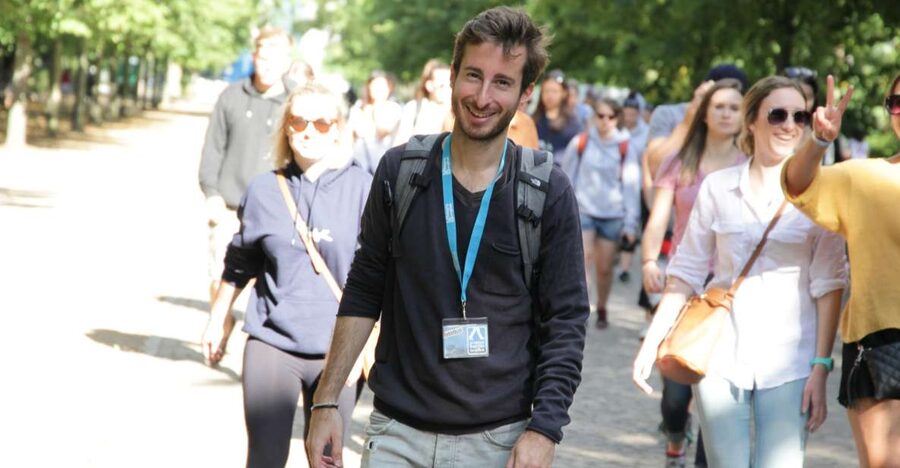
The best guides make this more than a checklist of monuments. Anja, a historian and archaeologist, was praised for making complex events easy to follow, while Gregor and Gregory added personal family connections to Berlin’s changes. Still, this is not an intimate museum visit. You see sites from outside, cover plenty of ground, and need weather-ready clothing.
Key points to know before booking
- The route brings Berlin’s biggest historical themes together: Prussian power, imperial ambition, Nazi crimes, the Berlin Wall, reunification, and today’s capital.
- Major stops include the Brandenburg Gate, Checkpoint Charlie, Museum Island, Bebelplatz, Palace Square, and the former Hitler bunker site.
- The guide matters greatly: Names praised for clear storytelling include Anja, Philipp, Gregor, Georgia, Tobi, Luisa, Walid, Glen, and Stefan.
- You can choose between a two-hour and four-hour option, useful if you want either a quick orientation or a fuller history lesson.
- The tour runs rain or shine, so cold, rain, or snow can affect your comfort and the amount of time you enjoy standing outdoors.
- At $23 per person, it offers strong value if you want one guided introduction to central Berlin rather than several separate sightseeing stops.
Why this walking tour works as a first look at Berlin
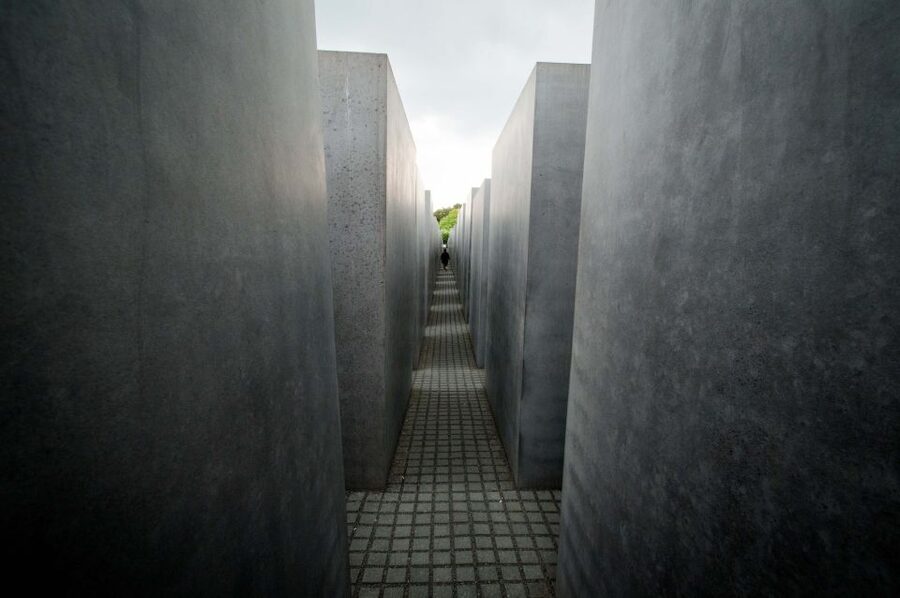
Berlin can feel like several cities placed on top of one another. Medieval settlements, Prussian royal power, the German Empire, Nazi rule, a divided Cold War capital, and a reunified European capital all occupy the same central streets.
That layering is the real reason to take this tour. You are not simply walking from one famous building to another. You are given a timeline that helps you understand why Berlin looks and feels so different from many other European capitals.
The route is especially useful if you have only a day or two in town. It covers many of the central sights in one outing, then leaves you with a better idea of which places deserve a longer indoor visit later.
I would not treat it as a substitute for Berlin’s museums or memorials. It is an introduction, not the final word. But as an introduction, it has a sensible scope and a price that makes sense.
A few more walks around Berlin worth a look
- Discover Berlin Half-Day Walking Tour
★ 5.0 · 9,624 reviews - Berlin City walk Government District and Places of Democracy
★ 4.7 · 8,467 reviews - Berlin: Third Reich & Cold War Guided Walking Tour
★ 4.9 · 8,378 reviews
From Berlin’s origins to the Prussian center
The story begins with Berlin’s early beginnings, including its medieval origins in a swampy area. That detail may sound modest, but it gives you a useful starting point: the city was not born as a grand imperial capital. Its importance grew over time.
From there, the narrative moves into Prussian and imperial Berlin. This part helps explain the grand spaces around the historic center, including Palace Square and the buildings near Museum Island. You get a better sense of how rulers used architecture to express power, order, and ambition.
This historical framing is one of the tour’s best features. A building can look impressive on its own, but it becomes more meaningful when you understand who paid for it, what political message it sent, and how later governments reused or challenged that symbolism.
The guides also bring in individual figures connected with Berlin. Albert Einstein and Marlene Dietrich appear in the wider story, along with John F. Kennedy. These names keep the tour from becoming a march through dates and rulers. They show Berlin as a place shaped by science, art, politics, and popular culture.
Brandenburg Gate and the changing meaning of a symbol
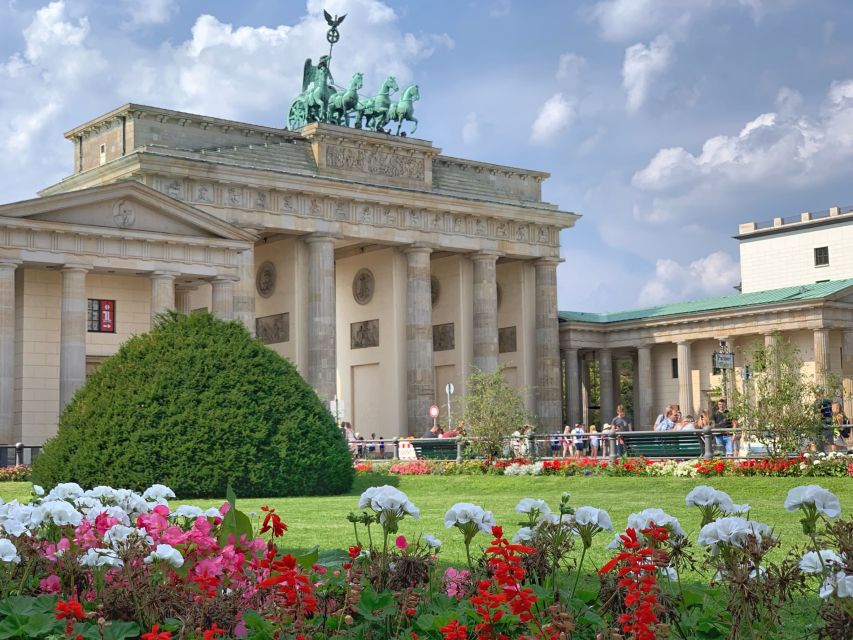
The Brandenburg Gate is one of Berlin’s essential stops. It is easy to photograph and easy to recognize, but its meaning has changed repeatedly.
The gate began as a symbol of Prussian authority. Later, it was used by imperial rulers, Nazi leaders, and Cold War governments. After the Berlin Wall fell, it became one of the clearest public symbols of German reunification.
A guide can help you read those changes instead of seeing only a handsome neoclassical gateway. Pay attention to how the site has been used by different political systems. The physical structure stayed in place while its public meaning shifted around it.
The stop is also a good example of the tour’s larger method. Rather than isolating one event, the guide places the gate within several centuries of Berlin’s story. That makes it more useful for a first visit than a quick photo stop.
Bebelplatz and the Nazi book burning
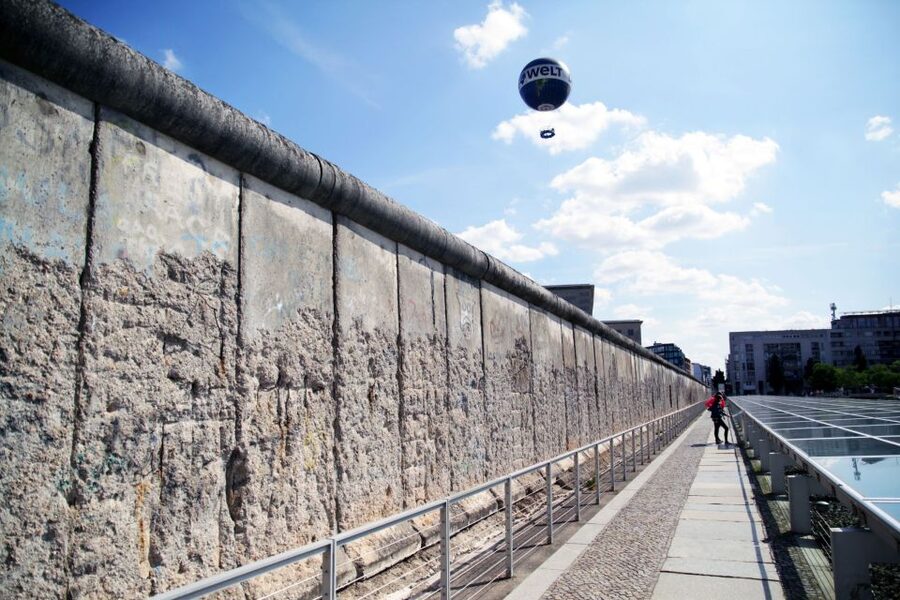
Bebelplatz is a quieter but more troubling stop. It is associated with the Nazi book burning of 1933, when books viewed as politically or culturally unacceptable were destroyed in public ceremonies.
The square also contains a memorial connected with that event. The guide discusses the controversy surrounding the memorial’s design, which gives you something more thoughtful than a simple account of what happened.
This is one of the tour’s strongest moments because the location does not rely on huge ruins or dramatic scenery. The square looks calm. The history is not. A good explanation makes clear how public spaces can be used to intimidate, control culture, and stage political loyalty.
You should expect serious subject matter here. The tour deals directly with Nazi persecution and the murdered Jews of Europe. It does not turn these subjects into entertainment, although several guides are praised for using warmth and occasional humor elsewhere to keep the overall experience approachable.
Same streets, a different way to see them:
- Berlin’s Best: 2 Hour Walking Tour Third Reich and the Cold War
★ 5.0 · 5,486 reviews - Berlin: Hidden Backyards Guided Walking Tour
★ 4.8 · 5,360 reviews - Explore Berlin: See All The Iconic Sights & Some Hidden Gems
★ 5.0 · 4,429 reviews - Third Reich Berlin: Hitler and WWII Walking Tour
★ 5.0 · 3,301 reviews
The former bunker site and Berlin’s final days

Another major stop is the place above Hitler’s bunker, where he took his life in April 1945. The bunker itself is not presented as a preserved attraction, and that is important. You are standing above the site rather than entering a grand underground ruin.
The power of this stop comes from the contrast between the ordinary modern setting and the events that took place below it. The guide explains Berlin’s final days during the Second World War and the political collapse surrounding Hitler’s death.
This is a sensitive subject, and the quality of the explanation matters. The purpose is not to glorify Hitler or turn the bunker into a morbid curiosity. It is to understand the end of the Nazi regime and the destruction left behind.
If you want a full treatment of wartime Berlin, you will need more time elsewhere. This stop gives you context and location, but it cannot replace a museum visit or a longer study of the period.
Checkpoint Charlie and the Cold War city
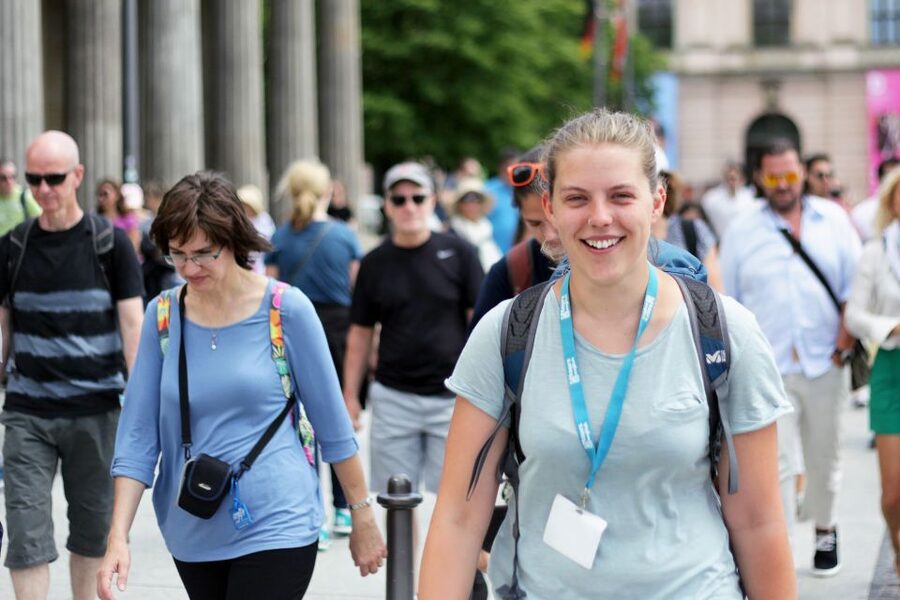
Checkpoint Charlie introduces a different Berlin. After the Second World War, the city became divided between competing political systems, and the Berlin Wall turned that division into concrete, barbed wire, checkpoints, and armed borders.
The stop helps explain the role of Checkpoint Charlie as a crossing point between East and West Berlin. You also hear about daring escapes across the Wall before its fall in 1989.
That human detail is valuable. Political history can feel abstract when it is reduced to speeches and treaties. Escape attempts remind you that ordinary people faced immediate personal risks because of the city’s division.
At the same time, you should keep your expectations realistic. Checkpoint Charlie is a well-known city sight in a modern urban setting, not an untouched Cold War scene. The guide’s explanation supplies much of the meaning.
This is where local experience can add real value. Gregory and Gregor were especially praised for connecting the city’s political changes with family memories of growing up in Berlin. That kind of personal link can help you understand that the Wall is not distant ancient history. Its effects remain part of living memory.
Museum Island, Berlin Cathedral, and Palace Square
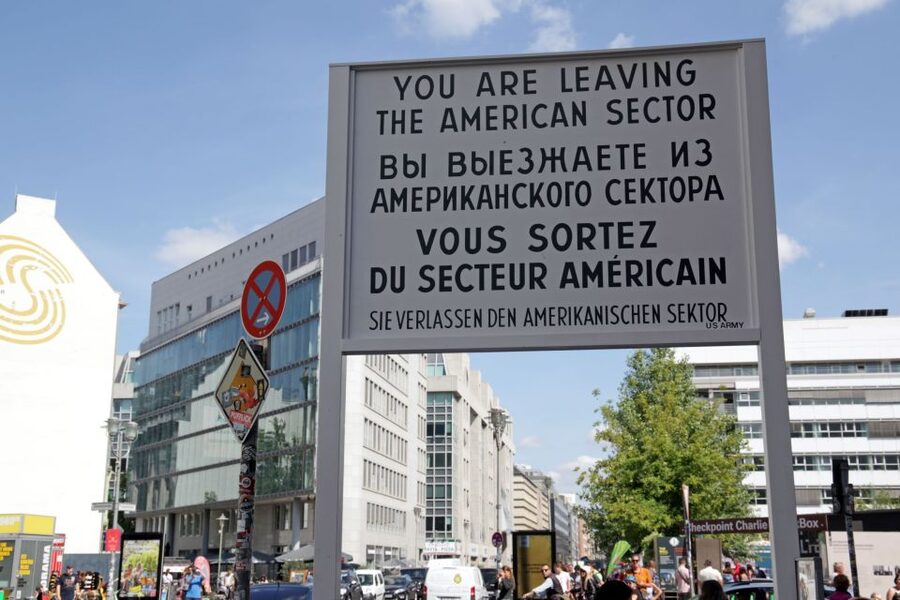
Museum Island gives the tour a chance to move beyond war and division. The island contains major cultural and architectural sights, including Berlin Cathedral, and sits near the former royal center at Palace Square.
You may not enter the museums during this walking tour, so think of this portion as orientation. Your guide can explain how the area developed, how Berlin presented itself as a center of art and learning, and how the royal and imperial past still shapes the city center.
Berlin Cathedral is a striking landmark, but the wider setting matters just as much. Around Museum Island and Palace Square, you can see layers of monarchy, war damage, reconstruction, cultural life, and modern public space close together.
If you plan to visit the museums, this tour can help you choose where to spend your time. It gives you a map in your head before you commit several hours to a collection.
How the guides shape the experience
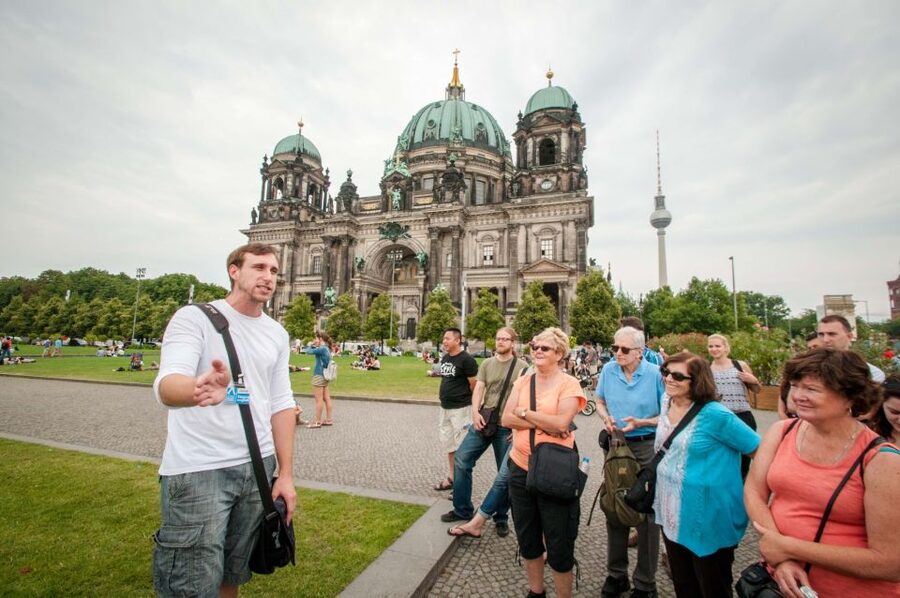
The most consistent praise goes to the guides’ storytelling. That is more important here than polished presentation because the subject matter is dense and often painful.
Anja was described as a historian and archaeologist who gave clear context for both Berlin’s beginnings and the events of the Second World War and Cold War. Philipp was praised for joining historical detail with current Berlin culture. Tobi used humor and energy, while Luisa remained engaging in cold and rain.
Several guides also made the tour work for different ages. Walid was noted for keeping the pace manageable and the explanations easy to follow for a 13-year-old. That suggests the tour can suit families, provided children are ready for serious topics.
You may be assigned another guide. That means the exact tone can vary, but the repeated strengths are clear: clear explanations, an open attitude toward questions, humor used carefully, and a willingness to connect the past with present-day Berlin.
The best guides do not simply recite facts. They explain why an event matters, how one period led into another, and where Berlin still carries the marks of its past.
Two hours or four hours?
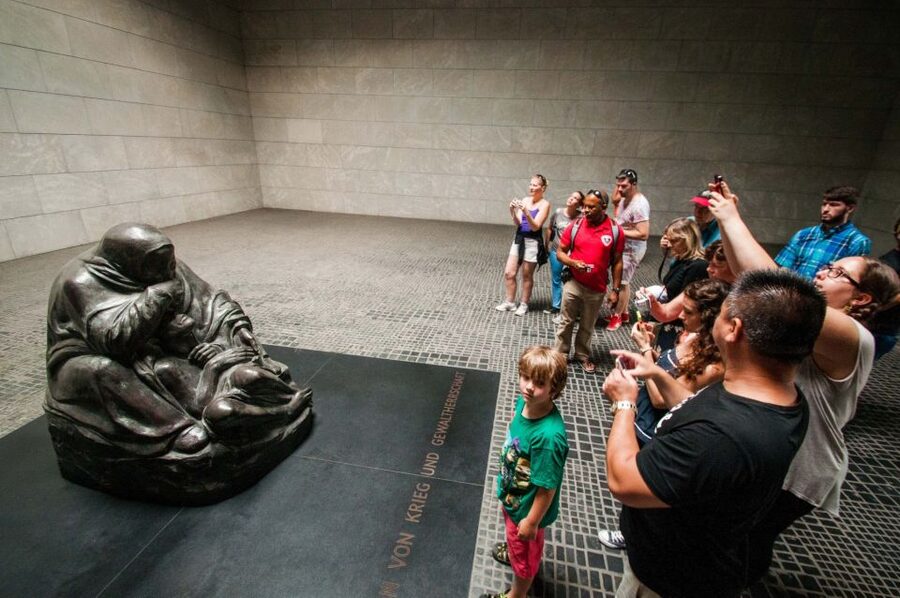
The shorter option is a good fit if you need a compact introduction or want to protect time for museums, food, and other plans. You will still see key central sights and get the main historical sequence.
The longer option makes more sense if Berlin’s history is your main reason for visiting. Two to four hours is enough time to add more explanation, questions, and pauses without turning the outing into an all-day commitment.
Do not choose based only on the clock. Think about your energy and the weather. This is a walking experience, and the tour takes place outdoors. In cold conditions, even an excellent guide cannot make a long stop feel warm.
Joel received particular praise for adjusting the pace during freezing weather and snow, using sheltered places for longer explanations and checking that people were comfortable. That is exactly the kind of practical guiding you want on a winter day.
Still, bring a coat and dress for rain. The tour runs in all weather, and the meeting point depends on the option you book, so check the specific details before you leave.
Is $23 good value?
At $23 per person, the tour is good value if you want a broad introduction to central Berlin with a live guide. You are paying for the connections between places, not just access to them. The Brandenburg Gate, Checkpoint Charlie, and Museum Island are free to see on your own, but the historical meaning is much harder to assemble without help.
The value is strongest for first-time visitors, people with limited time, and anyone who wants to understand the city before visiting museums independently.
The calculation changes if you already know Berlin well or prefer slow, self-guided sightseeing. You may find the pace and number of stops less appealing than choosing one neighborhood and exploring it in detail.
A private group is available, which may suit people who want a more personal format. The supplied information does not specify the private-group price, so check that before booking.
Free cancellation up to 24 hours in advance and the option to reserve now and pay later reduce the risk when your schedule is still changing. Those policies are useful, but the main value remains the guide’s ability to make the city’s history understandable.
Who should book this Berlin walk?
I would recommend it to first-time visitors, history-minded people, families with older children, and anyone who wants to see the major central sights efficiently.
It is also a strong first activity in Berlin. Afterward, you can decide which museums, memorials, or neighborhoods deserve more of your time. Several guides also offer practical suggestions for the rest of your stay, which makes the tour useful beyond its official ending.
You may want something else if you dislike walking, standing outside, or discussing difficult twentieth-century history. The route covers Nazi persecution, the Holocaust, Hitler’s final days, the Berlin Wall, and escape attempts. This is serious material, even when the guide brings humor and warmth.
My verdict on the Discover Berlin Walking Tour
Book this tour if you want the city’s major sights explained as one connected story. At $23, it gives you a lot for a few hours, and the repeated praise for guides such as Anja, Philipp, Gregor, Georgia, Tobi, Luisa, Walid, Glen, and Stefan suggests that storytelling is its strongest asset.
Choose the longer option if history is central to your trip. Choose the shorter route if you mainly need orientation. Either way, wear sensible clothing, expect rain or shine, and remember that the most important parts of Berlin are not always the prettiest ones.
FAQ
How long does the Discover Berlin Walking Tour last?
You can choose an option lasting approximately two to four hours. Check availability for the starting times and the exact duration of the option you select.
What sights does the tour visit?
The tour includes the Brandenburg Gate, Checkpoint Charlie, Museum Island, Berlin Cathedral, Palace Square, Bebelplatz, the Berlin Wall area, and the site above Hitler’s former bunker.
Is the former Hitler bunker open to visitors?
No specific entry is included. The tour takes you above the site where Hitler took his life in April 1945 and explains its historical importance.
What languages are available?
The live tour is available in German and English.
Does the tour run in bad weather?
Yes. It takes place rain or shine, so bring clothing suitable for the forecast.
Is this a private tour?
A private group option is available. The meeting point can vary depending on the option booked.
Can I cancel the booking?
You can cancel up to 24 hours in advance for a full refund. You can also reserve your place and pay later.
Just added around Berlin
- Berlin Walking Tour★ 4.5 · 378 reviews
- Berlin Highlights Private Guided Walking Tour★ 4.5 · 89 reviews
- Small Group Walking Tour of East Berlin with a French Guide★ 5.0 · 176 reviews
- Berlin Street Art Walking Tour – Off The Grid★ 5.0 · 270 reviews
- Private Walking Tour: World War 2 and Cold War Sites in Berlin★ 5.0 · 230 reviews
- East Meets West: Berlin Food Culture & Street Art★ 5.0 · 157 reviews
- Kreuzberg Berlin: Off the Beaten Track PRIVATE Walking Tour★ 5.0 · 128 reviews
- The History of Berlin: WWII PRIVATE Walking Tour With Locals★ 5.0 · 209 reviews
Berlin Walking Tours, compared.

Berlin City walk Government District and Places of Democracy
Read our review →
Berlin’s Best: 2 Hour Walking Tour Third Reich and the Cold War
Read our review →

Explore Berlin: See All The Iconic Sights & Some Hidden Gems
Read our review →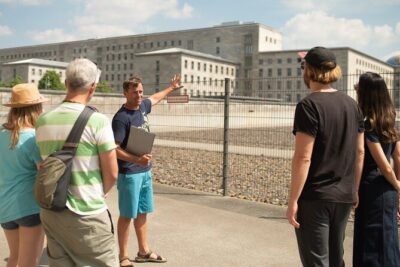
Third Reich Berlin: Hitler and WWII Walking Tour
Read our review →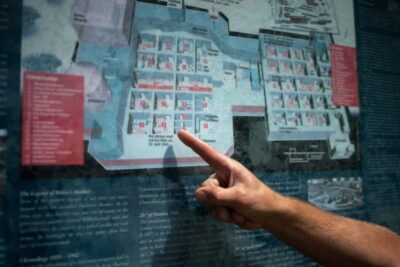
Browse the lists this tour appears in