
Review · BERLIN WALKING TOURS
Berlin: Third Reich, Hitler, and WWII Walking Tour
Berlin’s darkest story is told in ordinary streets. This three-hour walk connects Nazi power, wartime destruction, and the Soviet assault through central Berlin, with stops at Hitler’s bunker, the Reichstag, the Holocaust Memorial, and the Topography of Terror. I especially like the route’s clear focus and the way it links scattered sites into one readable story.
I also like the guides’ approach. Names such as Maggie, Campbell, Emma, Nikolai, Rebecca, and Jamie G appear repeatedly in the feedback, with praise for their clarity, humor, patience, and care when discussing painful subjects. The main drawback is simple: this is a serious three-hour walk, and cold, wind, rain, or snow can make it tiring. One January group completed it in freezing weather, while another appreciated a short refreshment break after about two hours.
Key points to know before booking
- The route follows Nazi power from government offices to the Führer’s Bunker, showing how Hitler’s regime operated and where it ended.
- You visit real locations rather than a single museum, including the Reichstag, Brandenburg Gate area, Hitler’s bunker site, and the former Nazi security headquarters.
- The Topography of Terror is the final stop, giving you a useful chance to continue with indoor historical material after the walk.
- Guides use stories, questions, and personal explanation, which helps younger visitors and people with only a basic grasp of World War II.
- The meeting point is easy to find outside Friedrichstraße station, beside the Tränenpalast, with blue lanyards, yellow name tags, and yellow umbrellas.
- At $19 per person, the tour offers strong value, especially if you want a structured introduction before exploring Berlin’s museums alone.
Why this three-hour walk works in Berlin
Berlin’s Nazi-era sites are spread across the city center, and many are easy to miss. A plain stretch of pavement may mark the location of a former ministry, bunker, or police headquarters. Without a guide, you can walk past important places without realizing what happened there.
This tour gives those locations a sequence. You begin with the machinery of Nazi power, follow the regime toward its collapse, and finish with the institutions that carried out terror. The result is more useful than a collection of disconnected photo stops.
The tour is also careful about tone. The subject is grim, but the best guides make it understandable rather than theatrical. Feedback praises guides including Maggie, Emma, Rebecca, Jamie G, Callum, and Nikolai for explaining difficult material in plain language, answering questions, and keeping the group involved.
I like that balance. You do not need an advanced background in German history, but you also will not be given only a quick parade of famous names. Several guides have been praised for adding smaller stories about the people and groups involved, which helps explain how a dictatorship worked at street level.
The advertised length is three hours. Some groups have finished just under three and a half hours, and the route includes plenty of walking between stops. Plan for a serious outing rather than a casual stroll.
A few more walks around Berlin worth a look
- Discover Berlin Half-Day Walking Tour
★ 5.0 · 9,624 reviews - Berlin City walk Government District and Places of Democracy
★ 4.7 · 8,467 reviews - Berlin: Third Reich & Cold War Guided Walking Tour
★ 4.9 · 8,378 reviews
Friedrichstraße and the Palace of Tears meeting point
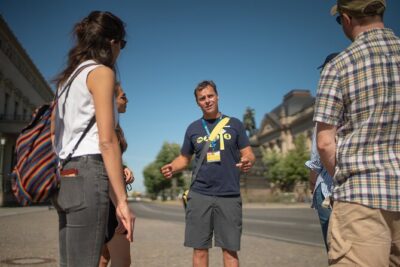
The usual meeting point is outside Friedrichstraße train station, on the square between the station and the Tränenpalast, or Palace of Tears. Look for a guide with a blue lanyard and yellow name tag, usually holding a yellow umbrella.
This is a practical place to meet because Friedrichstraße is a major transport hub. Still, give yourself enough time to find the correct side of the station. The Palace of Tears is a useful landmark, and the address provided is Reichstagufer 17, 10117 Berlin.
The tour may begin at another place if you book an option with a different starting arrangement. Private options can include hotel pickup, but the standard meeting instructions point to Friedrichstraße.
Before setting off, I would use the station facilities and bring water. You will be outside for most of the morning or afternoon, and the subject matter requires attention from the start.
Friedrichstraße and the opening view of wartime Berlin
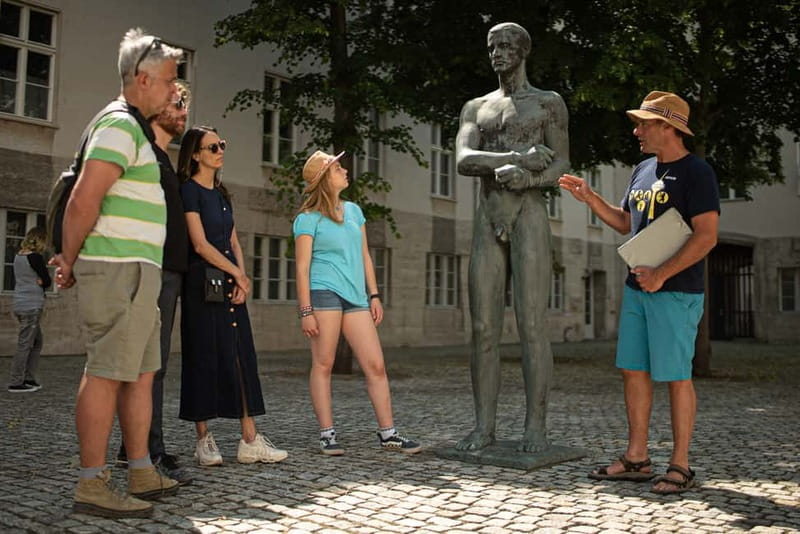
The first guided stop at Friedrichstraße lasts about 15 minutes. This opening section helps place you in central Berlin before the route moves toward the government quarter.
Friedrichstraße is now a busy transport and shopping street, which makes the contrast especially sharp. Nazi Berlin is not presented as a distant ruin. Its former centers of power sit among working streets, offices, memorials, and train lines.
A good guide uses this first stop to explain how central Berlin functioned during the Nazi period. You begin to see the city not only as a collection of monuments, but as the administrative center of a dictatorship.
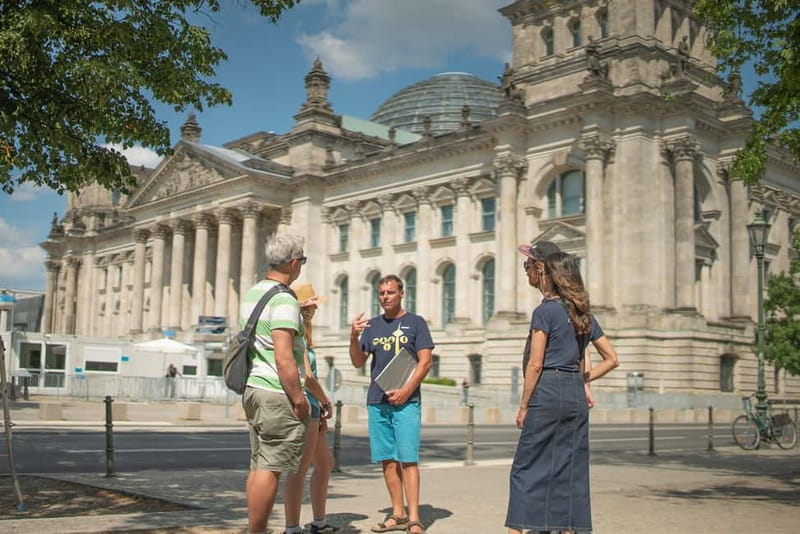
This is also where the guide’s style matters. Maggie has been praised for asking questions and bringing the group into the discussion. That approach can help if you are traveling with older children or teenagers who may not respond well to a long lecture.
The Reichstag and the final battle for Berlin
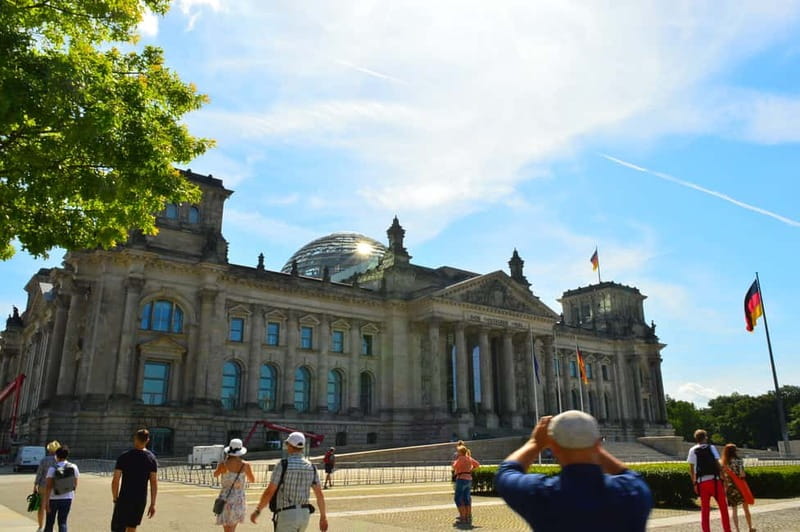
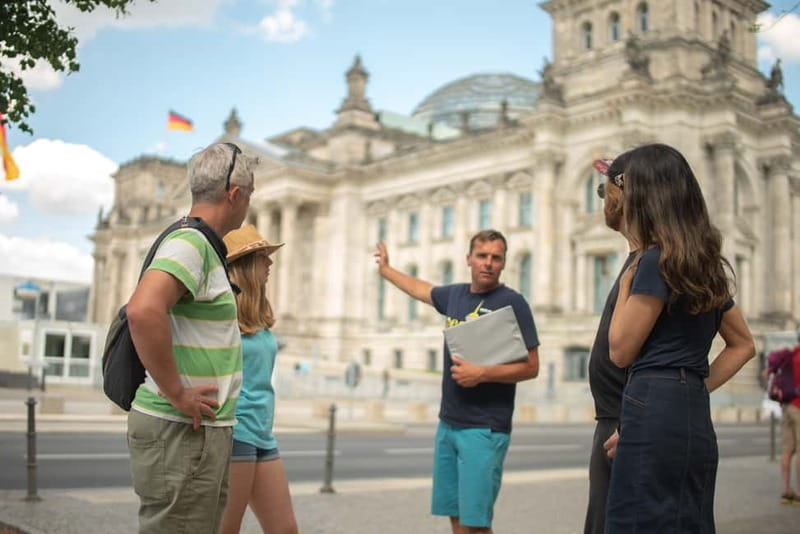
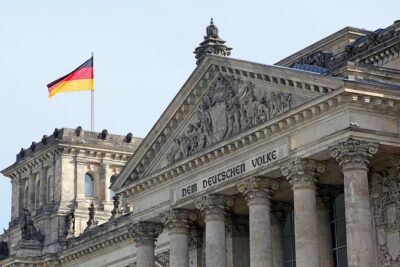
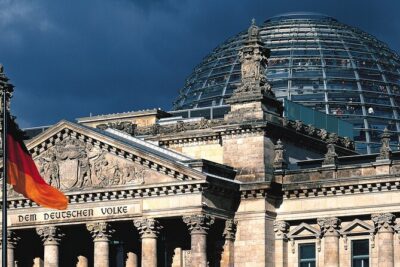
The walk continues to the Reichstag, another 15-minute guided stop and photo opportunity. The building is one of Berlin’s best-known sights, but the tour focuses on its role in the final fighting of World War II.
The Reichstag became a symbolic target during the Soviet assault on Berlin. Standing outside, you hear how the last phase of Nazi Germany played out around the government district and why the building became such a powerful image of defeat.
I find this stop valuable because it connects military events with the city you can see today. The Reichstag is not treated only as a handsome landmark. It becomes part of the final chapter of the regime.
The visit is exterior-based, so do not expect entry into the Reichstag as part of this tour. You receive a guided explanation and time for photographs.
Same streets, a different way to see them:
- Berlin: Discover Berlin Walking Tour
★ 4.9 · 5,998 reviews - Berlin’s Best: 2 Hour Walking Tour Third Reich and the Cold War
★ 5.0 · 5,486 reviews - Berlin: Hidden Backyards Guided Walking Tour
★ 4.8 · 5,360 reviews - Explore Berlin: See All The Iconic Sights & Some Hidden Gems
★ 5.0 · 4,429 reviews
Brandenburg Gate and the changing meaning of a symbol
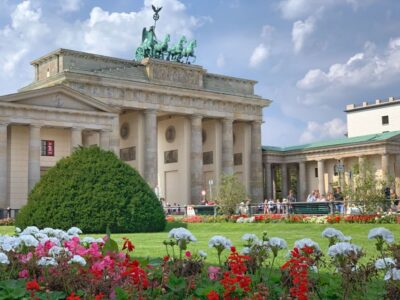
The route passes through the Brandenburg Gate area. This famous monument has carried several political meanings, and the guide explains its use as a Nazi symbol and later as part of the Cold War divide.
That changing symbolism is one of the more useful themes on the walk. The gate did not belong to one political era. Its meaning shifted as Berlin moved from Nazi rule to Soviet occupation, division, and eventual reunification.
You may already have photographs of the Brandenburg Gate on your list, but the historical explanation gives the stop more weight. I like the way it shows how governments try to claim familiar public symbols for their own purposes.
The stop itself is not a long museum visit. Think of it as a short outdoor explanation within the wider route.
The Soviet War Memorial in Tiergarten
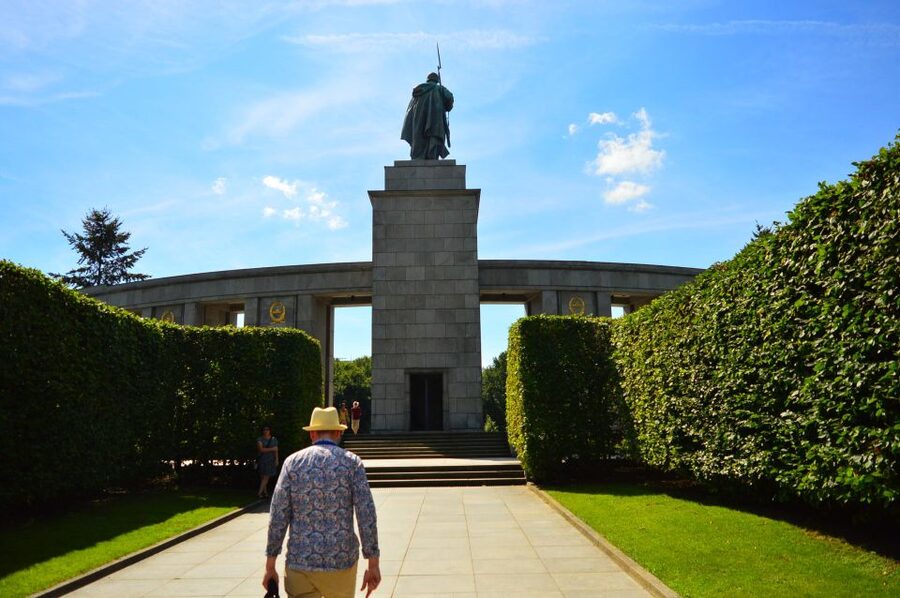
The Soviet War Memorial in Tiergarten offers one of the route’s clearest physical reminders of the fighting. The monument is flanked by T-34 tanks and Red Army howitzers, and the guide explains its place in the Soviet victory over Nazi Germany.
This stop lasts about 15 minutes. It gives the tour a necessary shift in viewpoint. Much of the route concerns Nazi institutions and crimes, but the Soviet advance was the force that reached Berlin and brought the European war to an end.
The military hardware makes the stop vivid, especially for anyone interested in World War II. At the same time, the memorial is not simply a display of tanks. Your guide places it within the wider story of the battle for Berlin and the city’s postwar division.
There is no indoor shelter listed here, so weather matters. In cold conditions, the group may feel the exposure. Wear a warm coat, gloves, and shoes that can handle several hours outside.
The Holocaust Memorial and the human cost
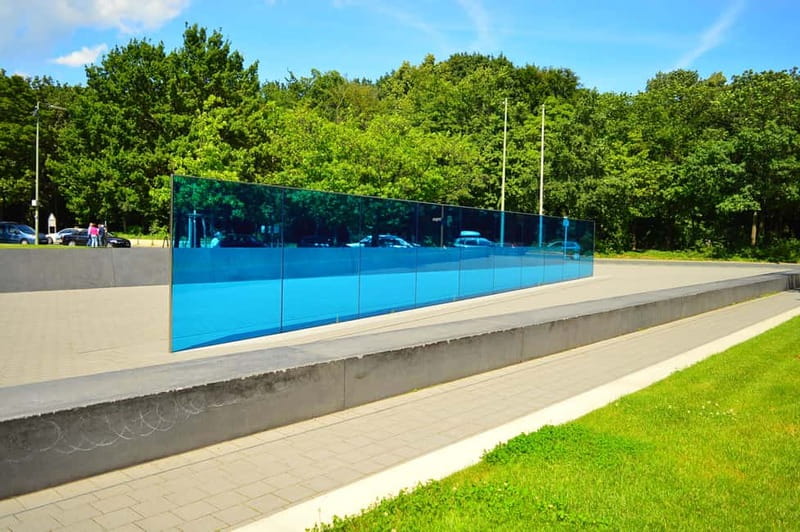
The next stop is the Holocaust Memorial, with about 15 minutes of guided explanation and time for photographs. This section shifts the focus from Nazi leadership and military events to the victims of the Holocaust.
The memorial can prompt different reactions, and the guide’s manner is important. The strongest feedback praises guides for treating the subject with respect while still explaining it clearly. Jasper, for example, was praised for maintaining respect for victims while making the history easy to follow.
Do not expect this stop to provide the full museum treatment of the Holocaust. It is part of an outdoor walking route, so the explanation is necessarily limited. I see it as a moment for context and reflection, not a replacement for a dedicated memorial visit.
If you have time after the tour, you may want to return to this area at your own pace. The walking tour gives you a foundation, but the memorial deserves more than a hurried photograph.
Hitler’s bunker site and the final days of the regime
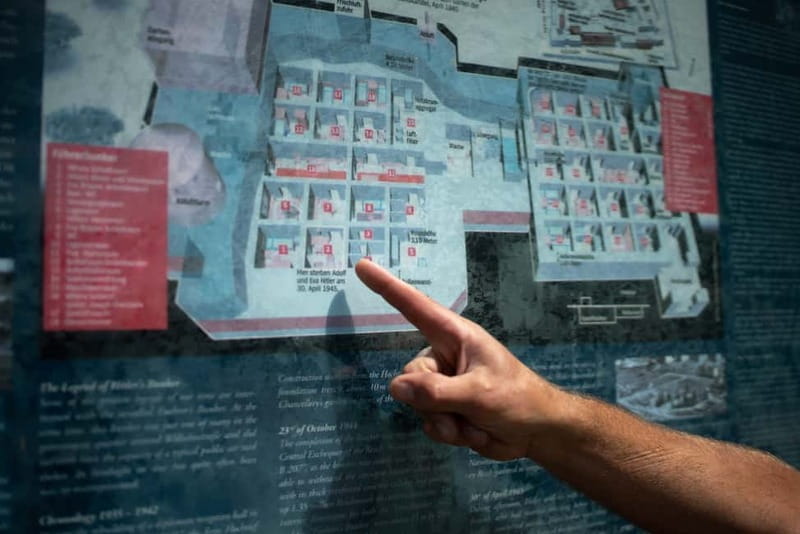
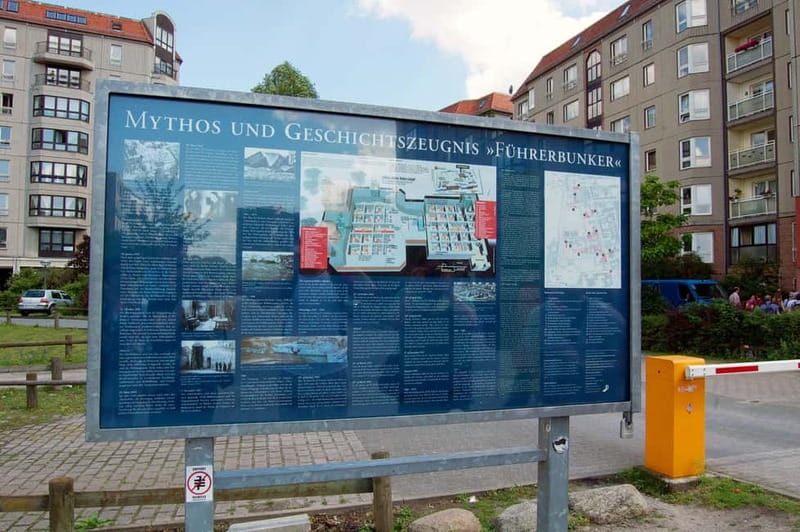
The stop at Hitler’s Bunker is one of the main reasons many people book this experience. The bunker itself is not open as a visitor attraction. You stand above the former location and learn what happened during Hitler’s final days.
The guide explains the bunker’s role, Hitler’s suicide, and the fate of his remains. This is not presented as a dramatic shrine. The location is ordinary, and that is part of the point. The regime’s final command center is now marked by an unremarkable urban setting.
I appreciate that the tour treats the place as a historical site rather than a spectacle. The focus is on decisions, collapse, and consequences. You hear how the leadership circle behaved as Soviet forces closed in, and why the bunker became the last center of Nazi authority.
This is another short outdoor stop, listed at about 15 minutes. Expect explanation rather than access below ground. If you want a museum display about the bunker, this tour will not provide that, but it does explain the site within the wider fall of Berlin.
Detlev-Rohwedder-Haus and the machinery of Nazi government
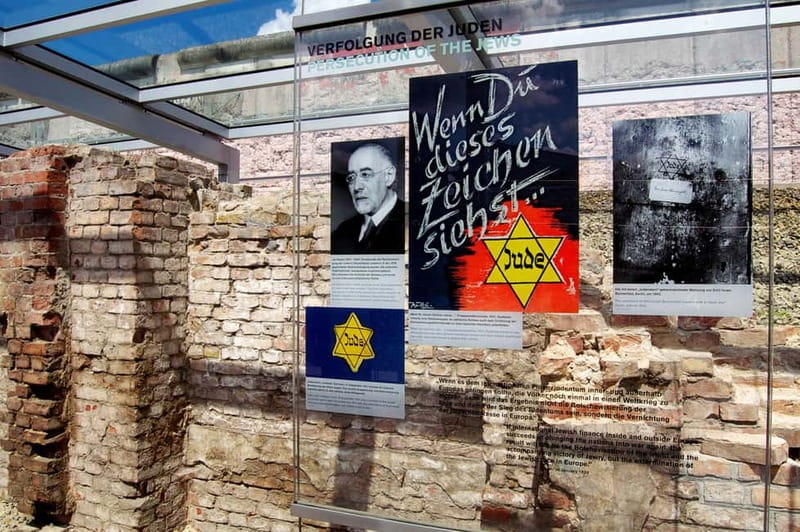
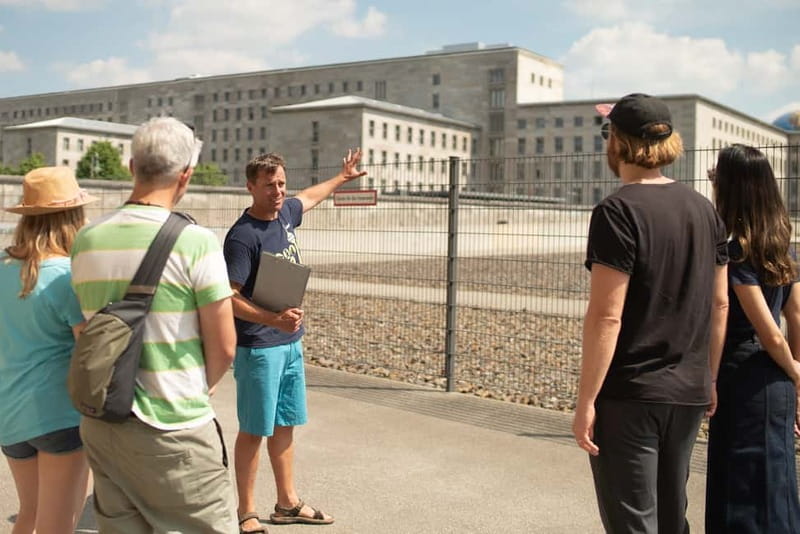
The route then reaches the Detlev-Rohwedder-Haus, where you spend around 15 minutes with the guide. This building is tied to the former Air Ministry, associated with Hermann Göring and the Luftwaffe.
The stop helps explain the difference between Nazi propaganda, political leadership, military planning, and police terror. The regime did not operate from one office. It relied on a network of ministries and agencies, each handling part of the war and dictatorship.
The building itself may not look like a dramatic ruin. That is why the explanation matters. You see how official power was organized behind imposing government façades.
The tour also points out the former locations of Joseph Goebbels’ Propaganda Ministry and Heinrich Himmler’s SS and Gestapo headquarters. These offices were key centers of communication, surveillance, and repression. In many cases, the original buildings have changed or disappeared, so the guide’s location-based explanation is especially useful.
The planned Germania axis and Nazi visions of Berlin
As you walk through the former government district, the guide discusses Hitler’s plans for Germania, the vast redesign of Berlin promoted by architect Albert Speer.
This part adds a layer beyond battlefield history. You learn how architecture was meant to project power, control movement, and turn Berlin into the symbolic capital of Nazi Europe. The grand plan remained incomplete, but its scale reveals the regime’s ambition.
I like this part because it connects political ideas to city planning. You are not only hearing about speeches and armies. You are seeing how a dictatorship tried to shape streets, buildings, and public space around its ideology.
The route can feel dense here, especially if you are new to the subject. Guides such as Rebecca and Callum have been praised for using individual stories and clear explanations to make larger political events easier to grasp.
The Topography of Terror and the final stop
The tour finishes at the Topography of Terror, with the final guided section lasting about 16 minutes. The documentation center occupies the former area of the SS and Gestapo headquarters and focuses on Nazi persecution and terror.
This is a strong ending because the tour moves from the visible centers of government to the institutions that enforced dictatorship. You finish with a clearer idea of how propaganda, policing, imprisonment, and mass violence fit together.
The walk does not include a full indoor visit or museum admission as part of the stated inclusions. You receive the walking tour and guide, then finish at the Dokumentationszentrum Topographie des Terrors. I would allow extra time afterward if you want to examine the exhibits at your own pace.
The location is also useful for continuing your day. You finish with a major historical center nearby rather than being left far from public transport or central sights.
What the $19 price really buys you
At $19 per person, this is good value if you want a structured account of Berlin’s Nazi history. You are paying for three hours with a live guide, an organized route, and interpretation at sites that would be difficult to understand on your own.
The price is especially fair for first-time visitors. A guide helps you connect the Reichstag, Brandenburg Gate, bunker site, Nazi ministries, war memorial, Holocaust Memorial, and Topography of Terror into one timeline.
The value depends on your expectations. This is not a private history seminar, and the standard option may involve a group. You also do not receive museum admission, meals, or transport. The cost covers the walking tour and guide.
Private and small-group options are available if you want more room for questions or a more personal pace. The standard walk is likely the better bargain for most people, while a private option may suit families or groups with a particular interest in military history.
Guides, pace, and the practical side of the walk
The most consistent strength is the guiding. Maggie has been praised for kindness and for drawing questions from the group. Campbell has been described as funny and well organized. Emma, Rebecca, Jamie G, Nikolai, Callum, Hannah, JR, and others are praised for clear explanations and strong command of the subject.
That does not mean every guide will present the material in exactly the same way. You may get more humor from one guide, more personal stories from another, or a stronger focus on military events. The common thread is an effort to keep the history understandable and respectful.
The tour operates in rain or shine. Bring comfortable shoes, comfortable clothing, and weather-appropriate layers. A refreshment break may be included after about two hours, but you should not treat that as a guaranteed café stop with food provided. One guide, Jasper, helped the group locate cafés, bathrooms, and public buildings during a winter break.
Languages include English, German, and Spanish. You can book a private or small-group format, and the tour offers free cancellation up to 24 hours before the start time. Reserve now and pay later is also available, which helps if your Berlin schedule may change.
Who should book this Berlin history walk?
I would book this tour early in a Berlin visit if you want a clear introduction to Nazi-era Berlin. It is particularly useful for first-time visitors, families with older children, students studying Nazi Germany, and anyone who wants to understand the city before visiting its museums.
The tour also suits World War II enthusiasts, though you should expect more than military detail. The route covers political power, propaganda, police terror, architecture, victims, and the battle for Berlin.
I would think twice if you dislike long outdoor walks or want extended indoor museum time. The subject is somber, and the route can be physically demanding in bad weather. It is also not a light sightseeing outing, so plan something less demanding afterward.
Should you book it?
Yes, if you want a serious, well-priced introduction to Berlin’s Third Reich and World War II sites. The route is strong, the final stop at the Topography of Terror is useful, and the guides are repeatedly praised for being clear, friendly, patient, and respectful.
Book it with proper shoes and weather protection, and leave time afterward for the Topography of Terror and the Holocaust Memorial. If you want maximum interaction, choose a private or small-group option. For most visitors, though, the $19 standard tour offers an efficient and meaningful way to understand a difficult part of Berlin’s past.
FAQ
How long does the Berlin Third Reich, Hitler, and WWII Walking Tour last?
The tour is scheduled for three hours. Some groups have finished just under three and a half hours.
Where does the tour meet?
The usual meeting point is outside Friedrichstraße train station, on the square between the station and the Tränenpalast, also called the Palace of Tears.
How do I recognize the guide?
Guides wear a blue lanyard and yellow name tag and hold yellow umbrellas at the meeting point.
Which languages are available?
The tour is offered in English, German, and Spanish.
Is the tour private or shared?
Private and small-group options are available. Pickup is optional for private options only.
Does the tour operate in bad weather?
Yes. The tour operates rain or shine, so bring comfortable shoes, comfortable clothes, and weather-appropriate clothing.
What is included in the price?
The stated inclusions are the walking tour and the guide.
Can I cancel the booking?
You can cancel up to 24 hours in advance for a full refund. A reserve-now-and-pay-later option is also available.
Just added around Berlin
- Berlin Walking Tour★ 4.5 · 378 reviews
- Small Group Walking Tour of East Berlin with a French Guide★ 5.0 · 176 reviews
- Berlin Street Art Walking Tour – Off The Grid★ 5.0 · 270 reviews
- Berlin Highlights Private Guided Walking Tour★ 4.5 · 89 reviews
- Private Walking Tour: World War 2 and Cold War Sites in Berlin★ 5.0 · 230 reviews
- East Meets West: Berlin Food Culture & Street Art★ 5.0 · 157 reviews
- Kreuzberg Berlin: Off the Beaten Track PRIVATE Walking Tour★ 5.0 · 128 reviews
- The History of Berlin: WWII PRIVATE Walking Tour With Locals★ 5.0 · 209 reviews
Berlin Walking Tours, compared.
Berlin City walk Government District and Places of Democracy
Read our review →
Berlin’s Best: 2 Hour Walking Tour Third Reich and the Cold War
Read our review →
Explore Berlin: See All The Iconic Sights & Some Hidden Gems
Read our review →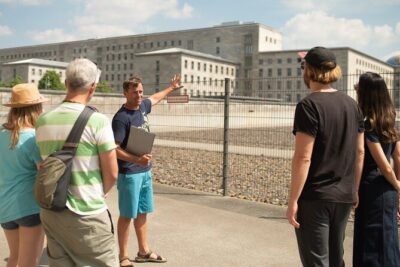
Third Reich Berlin: Hitler and WWII Walking Tour
Read our review →Browse the lists this tour appears in