
Review · SMALL-GROUP WALKING TOURS
Rome: Fountains and Squares Small-Group Walking Tour
Ancient Rome meets Baroque drama. This small-group walk links the Spanish Steps, Piazza Navona, Pantheon, Sant’Ignazio, and Trevi Fountain in a compact route that gives you a useful first look at central Rome. I especially like the inside visit to the Pantheon and the chance to see Bernini’s fountains while a guide explains the rivalries, stories, and odd details behind them. The main drawback is that it is still a walking tour through busy streets, and the church visits require suitable clothing.
The $45.55 price feels fair if you want context rather than a quick list of monuments. The guides, including Stefano, Bruno, Matteo, Andrea, and Paolo, are repeatedly praised for humor, warmth, and strong command of Roman history. Bring good shoes, arrive early, and do not expect a relaxed café stop: food and drinks are not part of the tour.
Key points at a glance
- A strong first-day route: Start at the Spanish Steps and finish around the Trevi Fountain, with several central sights in between.
- Bernini takes center stage: See the half-sunken Barcaccia Fountain and the Fountain of the Four Rivers in their real city settings.
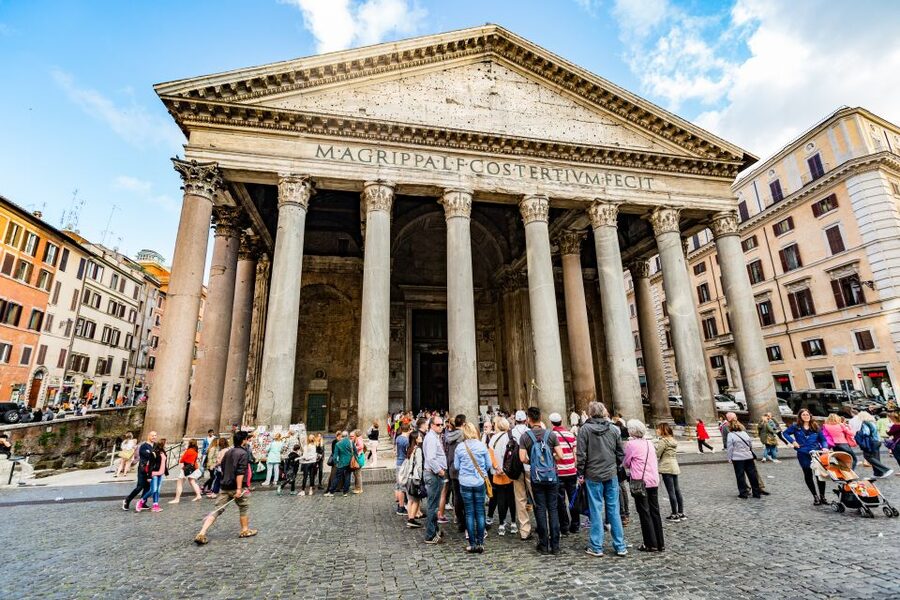
- The Pantheon is visited inside: You get more than an exterior photo and a brief explanation from the pavement.
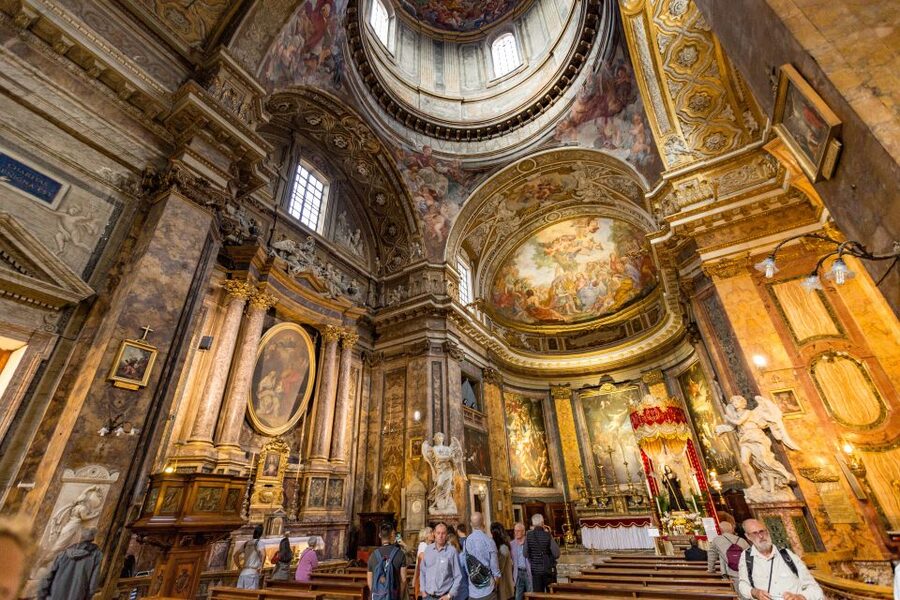
- Sant’Ignazio adds a surprise: Its painted dome uses trompe l’oeil to create an architectural illusion.
- Small group, up to 20 people: This is easier to hear and follow than a large city walk, though group size can still affect the pace.
- Church clothing matters: Cover your shoulders and knees, and leave strollers, wheelchairs, and large bags behind.
Why this Rome walk works well
Rome is not a city you understand by checking off isolated sights. One fountain leads to a church, a church opens onto a piazza, and beneath all of it are layers from ancient Rome, the Renaissance, and the Baroque period. This tour makes those links clear in about two and a half hours.
The route is especially useful if you are new to the historic center. You will see major sights without spending your whole day on one large archaeological site. You also get a guide who can point out details you might pass without noticing, such as the visual tricks at Sant’Ignazio or the political theater built into Rome’s grand squares.
The group limit is 20 people. That is not a private tour, but it is small enough to make following the guide manageable. One group had only two participants, while another had around 10, which created a more personal experience. Do not count on such a tiny group, but the format gives you a better chance of hearing the commentary than a huge walking crowd.
The tour is conducted in English, with no interpreting during the walk. That keeps the pace moving, but it also means this is not the right choice if someone in your group needs regular translation.
More Small-Group Walking Tours in Rome:
- Rome: Small-Group Guided Day or Night Walking Tour
★ 4.8 · 1,009 reviews - Rome: Small-Group City Highlights Moonlight Walking Tour
★ 4.9 · 949 reviews - Rome: Guided Small Group Walking Tour of City Highlights
★ 5.0 · 682 reviews
Starting at the Spanish Steps
Meet at the bottom of the Spanish Steps, by the entrance to the Keats Shelley Museum and in front of the Acqua di Parma store. Look for a guide wearing a GETYOURGUIDE badge or holding a matching sign. Arrive 10 minutes early. A late start is a bad idea here because the group may leave promptly, and one detailed account warns that even a few minutes can mean missing the tour.
The Spanish Steps lead your eye upward to Trinità dei Monti, the late Renaissance church at the top. The staircase itself is one of Rome’s most recognizable urban spaces, but the value of beginning here is practical: you immediately get a sense of how Rome layers dramatic architecture into everyday streets.
The tour then moves away from the steps and into the historic center. Wear shoes with solid support. Rome’s center is best handled on foot, and even a short walk can feel tiring if your footwear is flimsy or your clothes are uncomfortable.
Piazza Navona and the drama of Bernini
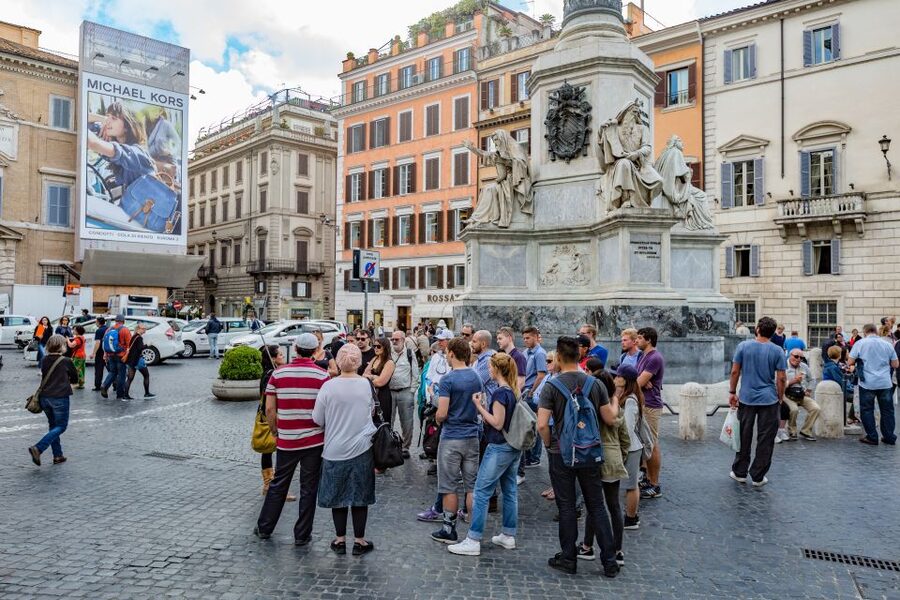
Piazza Navona is the grand set piece of the walk. Its long, open shape follows the footprint of the Stadium of Domitian, built in 85 A.D. for athletic contests. The modern piazza is not simply an attractive square. Its form preserves the memory of an ancient sporting venue while its fountains and churches belong to Baroque Rome.
The main attraction is Bernini’s Fountain of the Four Rivers. Its sculptural figures represent four major rivers, and the fountain captures the Baroque taste for movement, theatrical gestures, and elaborate symbolism. The guide’s explanation is useful here because the fountain can look like a busy mass of stone if you do not know what to look for.
Piazza Navona is also a good place to understand the rivalry between major Roman artists. The tour introduces work associated with Bernini and Francesco Borromini, two names that often appear together when Rome’s Baroque architecture is discussed. You do not need an art degree to enjoy the square, but the background gives the details more meaning.
The tradeoff is that this is a public city square, not a quiet museum gallery. Depending on the time of day, it can be crowded and noisy. Stay close enough to hear the guide, especially during the explanation of the fountain.
Entering the Pantheon
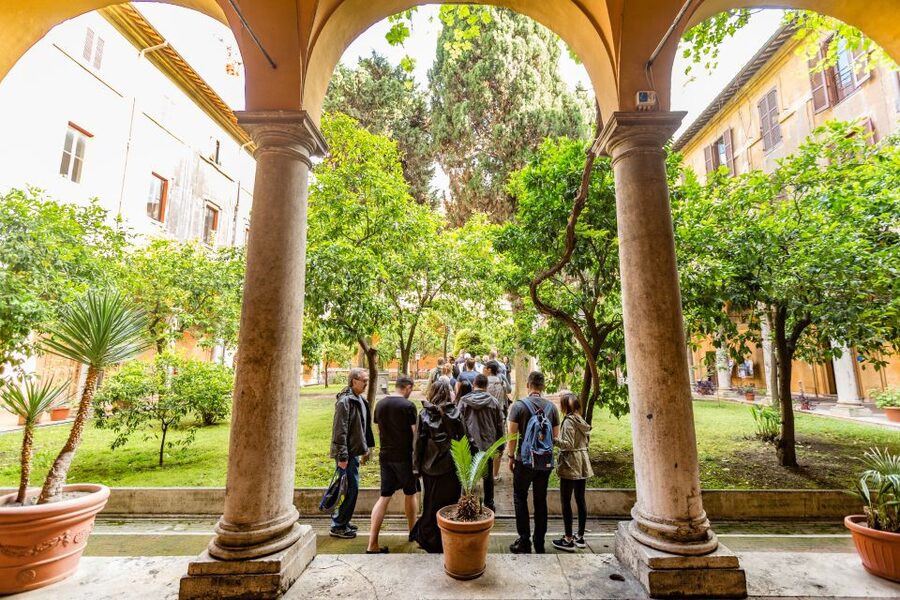
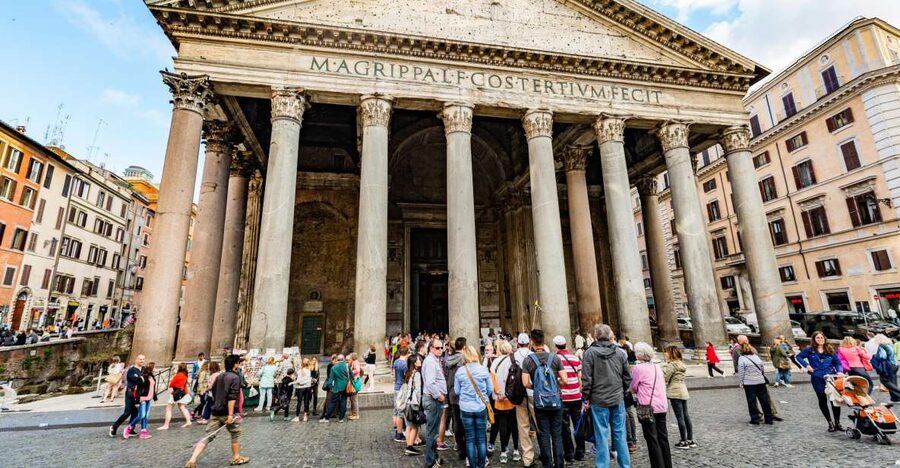
The Pantheon is the tour’s most important interior stop. From the outside, it looks imposing. Once inside, its great dome and central opening make the building feel far more ambitious than its plain exterior suggests.
This is a remarkably intact Greek-Roman temple, and the visit helps connect the later fountains and churches to the ancient city beneath them. You are not simply looking at old stone. You are entering a building that still communicates the scale and confidence of Roman engineering.
The Pantheon also contains the tomb of Raphael, the Renaissance painter and architect. That gives the visit another layer, linking ancient Rome with the artists who later borrowed from, studied, and reshaped its forms.
Allow yourself a moment to look upward. The dome is the reason the Pantheon can stop a fast-moving itinerary in its tracks. The tour does not give you unlimited time at each sight, so if you want extended quiet inside, return on your own later.
The schedule is described in slightly different ways, with the experience listed as two hours in some places and two and a half hours in the booking details. Plan for the longer duration, since that is the stated tour length and allows room for walking and explanations.
A few more walks around Rome worth a look
- Rome: Guided Food Walking Tour with Wine in Trastevere
★ 4.9 · 3,105 reviews - Rome: Trastevere & Campo de Fiori Street Food Walking Tour
★ 4.9 · 2,768 reviews - Rome: Paranormal Night Walking Tour & Secret Backstreets
★ 4.9 · 1,921 reviews - Rome: Trastevere Street Food Walking Tour with Local Expert
★ 4.8 · 1,784 reviews
The Column of Marcus Aurelius and a cinematic Rome
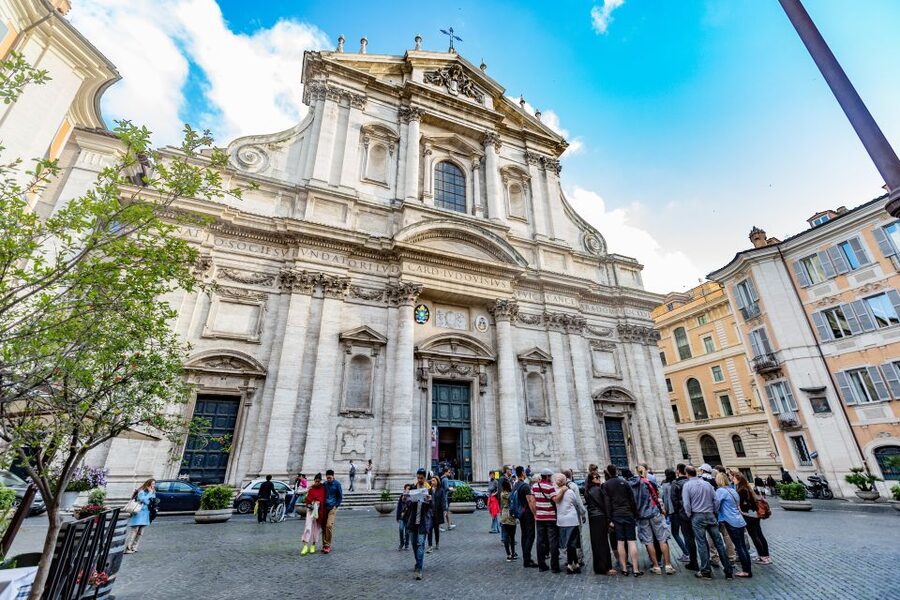
After the Pantheon, the route passes the carved Column of Marcus Aurelius. Its reliefs show scenes from the emperor’s military campaigns, wound around the column in a long stone narrative.
This is an easy sight to overlook because it rises in an active public area rather than inside a quiet archaeological compound. The guide gives you a reason to stop and look closely. The column also adds an imperial Roman monument to a route otherwise dominated by Renaissance and Baroque fountains.
The tour information connects this area with scenes from the film Gladiator. That detail will appeal to movie fans, but the column is worth seeing even if you have never watched the film. Its real interest is the carved storytelling and the way ancient monuments remain part of modern Rome.
Do not expect a full film-location tour. The movie reference is one detail within a broader walk focused on fountains, squares, churches, and central monuments.
Sant’Ignazio and Rome’s painted illusion
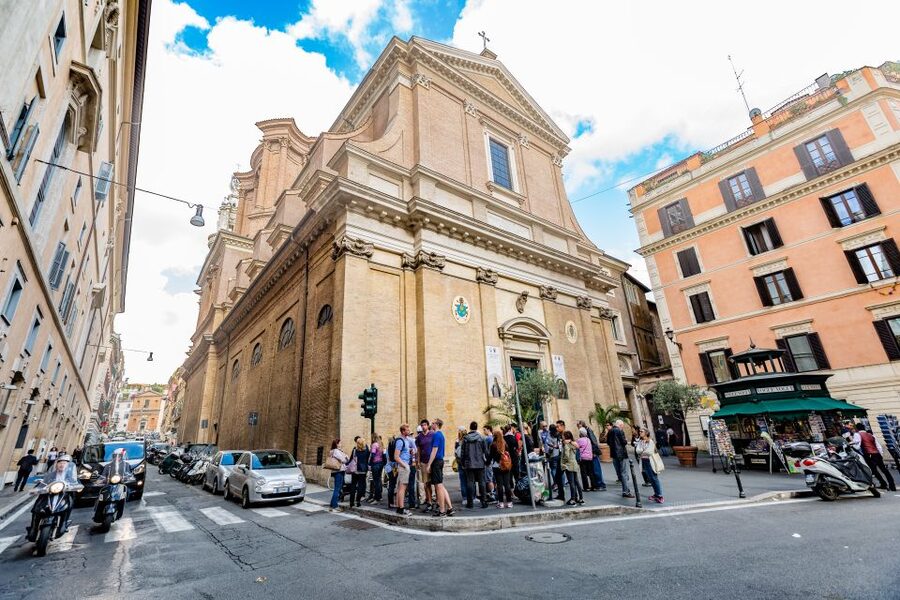
Sant’Ignazio Church brings a welcome change of pace. Its most famous feature is the trompe l’oeil decoration that makes a painted ceiling appear to open into a much larger architectural space.
This is one of the tour’s best surprises because it rewards careful looking rather than sheer size. The Pantheon impresses through its scale. Sant’Ignazio plays a visual trick. You may find yourself checking the ceiling twice to work out where the real architecture ends.
The church visit also shows how Rome’s religious buildings were designed to create emotion through art, height, light, and illusion. The guide can make that connection clear in a few minutes, which is one reason this walk offers more value than simply following a map between famous fountains.
Dress properly for this stop and the other churches. You need clothing that covers your shoulders and knees. Sleeveless shirts, short skirts, and shorts are specifically not allowed. Carrying something light to cover up is a sensible solution, especially in warm weather.
Bernini’s Barcaccia Fountain at Piazza di Spagna
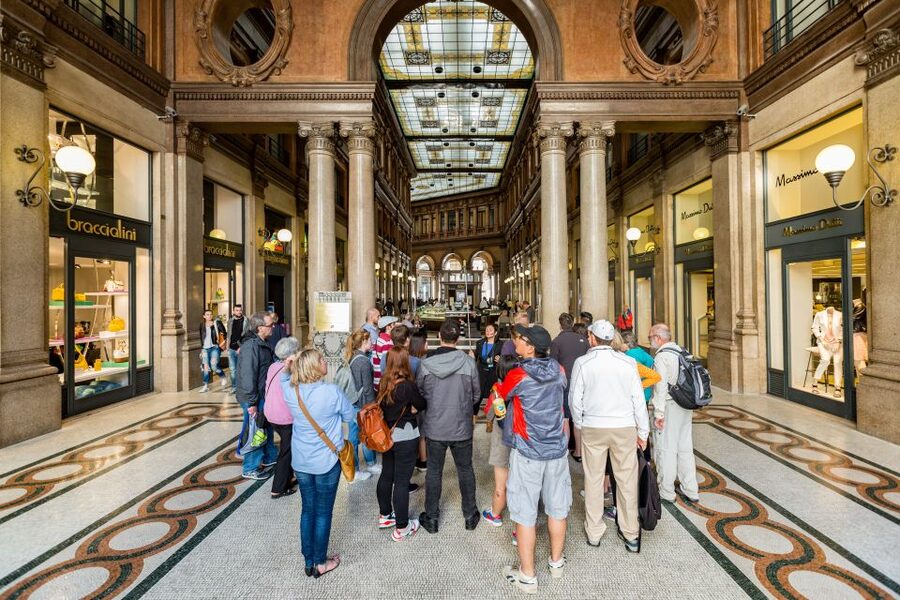
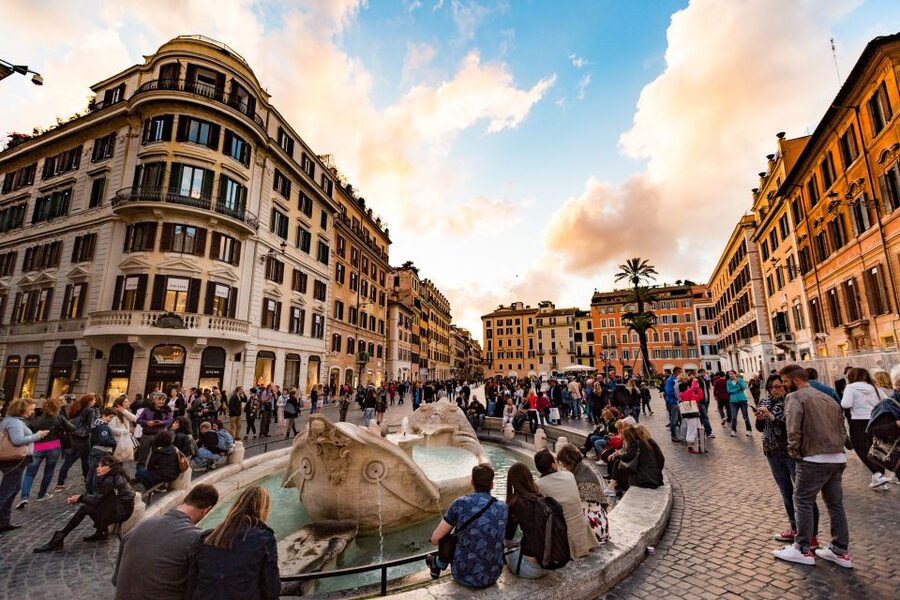
The tour begins near the Spanish Steps, but the early route also highlights Bernini’s Barcaccia Fountain, the low, half-sunken boat in Piazza di Spagna. Its shape is playful and unusual compared with Rome’s grander fountains.
The fountain appears to have settled into the pavement, as if water and stone have turned a small boat into a permanent urban sculpture. That grounded design makes it easy to miss if you are focused only on the staircase above. A guide helps you see why the fountain belongs in a tour devoted to Rome’s Baroque imagination.
This is also where the walk’s theme becomes clear. Rome’s fountains were not merely public utilities. They decorated meeting places, advertised artistic skill, and helped powerful patrons shape the city’s image.
Because the route starts here, you may want to visit the Spanish Steps before the official meeting time if you have not seen them. The tour itself is not designed for a long independent pause at every opening view.
Finishing at the Trevi Fountain
The Trevi Fountain is the natural finale. It is one of Rome’s most theatrical fountains, with water, rock, horses, and the central figure of Oceanus arranged like a stage set against the palace behind it.
The familiar coin tradition gives the ending a simple ritual: toss a coin into the fountain and wish to return to Rome. It is touristy, of course, but it is also harmless fun and fits the mood of a first visit.
The fountain can be crowded, so keep your expectations realistic. You may have to find a place at the edge of the square rather than getting an uninterrupted view. One useful piece of feedback noted that the final stop felt rushed, possibly because of rain or time pressure. That is a fair caution. If the Trevi Fountain matters most to you, plan to return independently for a longer look and photographs.
The route is described as starting at the Spanish Steps and ending at the Trevi Fountain. However, the meeting-point information also says the activity ends back at the meeting point. Confirm the final arrangement when booking, especially if you have a timed reservation afterward.
What the guides add
The strongest part of this experience is the human element. Stefano receives repeated praise for energy, humor, patience, and the ability to make facts easy to follow. Bruno is described as personable and flexible, and one group even received a tiramisu treat. Matteo and Andrea are also singled out for enthusiasm and clear explanations.
That does not mean every guide will deliver the same personality. It does show the kind of experience the company aims for: an informal walk where history is explained with jokes, stories, and practical suggestions for the rest of your stay.
Several guide-led walks continued despite rain, including one on a cold and very wet December morning. That is a sign of a dependable schedule, but it is also a reminder to check the forecast. The route is outdoors for most of its length. A raincoat and shoes with good grip will make a big difference on a wet day.
A guide may also point you toward a good gelato stop, though food and drinks are not included. One person enjoyed ice cream during a related stop, while another ended the outing with a beer alongside the guide. Treat those as personal extras, not promised parts of the tour.
Price, pace, and practical limits
At $45.55 per person, this tour makes sense if you want a guide to organize the central sights and explain what you are seeing. You are paying for the route, the live English commentary, and entry to the Pantheon as part of the walk. It is not a full-day history course or a private tour.
The pace is described as comfortable by several participants, but it still involves steady walking and standing. You should be able to manage city sidewalks and church interiors without a wheelchair or stroller. Large bags, oversize luggage, and baby strollers are not suitable for this route.
The tour is not designed for children under 10. It also does not allow pets, smoking, or food and drinks during the activity. These rules may feel strict, but they help the group keep moving through churches and busy public spaces.
A tip for the guide is welcomed if you feel the walk earned it. Since guides such as Stefano have been praised for keeping the group together, answering questions, and making two hours pass quickly, tipping can be a reasonable way to recognize that extra effort.
Free cancellation is available up to 24 hours before the start, and you can reserve now and pay later. Those terms help if your Rome schedule is still changing.
Who should book this walk?
I would choose this tour for a first or second day in Rome. It gives you a useful map of the historic center and helps you decide which places deserve a longer return visit. It also suits anyone who prefers stories and context to silently photographing monuments.
It is a good match for couples, solo visitors, older children over 10, and friends who can comfortably walk for more than two hours. The English-only format works best when everyone in the group can follow a live explanation without translation.
I would skip it if you want long, quiet visits inside each church, extensive time at the Trevi Fountain, or a route built around accessible transport. I would also reconsider it if rain, heat, or restrictive church clothing will make walking unpleasant.
For most visitors, the combination of the Pantheon, Piazza Navona, Sant’Ignazio, Bernini’s fountains, and the Trevi Fountain offers solid value. Book it early in your Rome stay, arrive before the meeting time, wear comfortable shoes, and keep the rest of the day flexible. That gives you the best chance to enjoy the walk without rushing to your next appointment.
FAQ
How long does the tour last?
The activity is listed as lasting 2.5 hours. Some descriptions refer to it as a two-hour walk, so you should allow the full two and a half hours when planning your day.
Where does the tour begin?
Meet at the entrance of the Keats Shelley Museum at the bottom of the Spanish Steps, in front of the Acqua di Parma store. The guide will have a GETYOURGUIDE badge or sign.
Where does the tour finish?
The route is described as ending at the Trevi Fountain. The meeting-point details also state that the activity ends back at the meeting point, so confirm the final arrangement when you book.
Is the tour conducted in English?
Yes. A live English-speaking guide leads the tour, and translating during the activity is not allowed.
What sights are included?
The route includes the Spanish Steps area, Trinità dei Monti, Piazza Navona, the Stadium of Domitian area, the Pantheon, the Column of Marcus Aurelius, Sant’Ignazio Church, and the Trevi Fountain. It also includes Bernini’s Barcaccia Fountain at Piazza di Spagna.
Can I enter the Pantheon?
Yes. Looking inside the Pantheon is part of the experience.
What should I wear?
Wear comfortable shoes and clothing suitable for church visits. Your shoulders and knees must be covered, so shorts, short skirts, and sleeveless shirts are not allowed.
Is the tour suitable for wheelchairs, strollers, or young children?
The tour is not suitable for wheelchair users, baby strollers, or children under 10. Large bags, oversize luggage, and pets are also not allowed.
Can I cancel the booking?
Yes. You can cancel up to 24 hours before the tour for a full refund. The reserve-now, pay-later option is also available.
Just added around Rome
- Rome: Colosseum and Ancient Rome Guided Walking Tour★ 4.5 · 95 reviews
- Rome: Trevi Fountain, Spanish Steps & Pantheon Walking Tour★ 4.6 · 336 reviews
- Rome: Guided Walking Tour and Pantheon Priority Entry Ticket★ 4.3 · 317 reviews
- Rome Walking Tour: Pantheon, Trevi, Navona & Hidden Gems★ 4.8 · 501 reviews
- Rome: Trastevere Food Walking Tour with Beer and Wine★ 4.9 · 71 reviews
- Rome Trastevere Walking Food Tour★ 4.8 · 97 reviews
- Rome: Underground Trastevere Guided Walking Tour★ 4.8 · 87 reviews
- Rome: Relics from the Passion of the Christ Walking Tour★ 4.9 · 84 reviews
Small-Group Walking Tours, compared.

Amsterdam Anne Frank: Small-Group Walking Tour & Local Guide
Read our review →
Freedom Trail History Small Group Walking Tour
Read our review →
New Orleans Food Walking Tour of the French Quarter with Small-Group Option
Read our review →
Barcelona Tapas and Wine Experience Small-Group Walking Tour
Read our review →
Reykjavík Small group Walking Tour – by CityWalk
Read our review →
Best of Lisbon Small-Group Guided Walking Tour
Read our review →
Small Group Boat Cruise and Guided Walking Tour
Read our review →
Browse the lists this tour appears in