
Review · FOOD WALKING TOURS
Old Cairo Guided Walk Tour: History, Culture & Street Bites
Old Cairo rewards slow feet. This $31 walking tour takes you from Bab al-Futuh through centuries of Islamic Cairo, with grand mosques, a 17th-century Ottoman house, El Moez Street, and Khan el Khalili packed into three to four hours. I like the strong mix of major monuments and everyday street life, and I especially like that entrance fees, bottled water, snacks, and a local meal are included.
The guides are the heart of the outing. Names such as Randa, Nahed, Ruby, Ehab, and Dina appear often in the feedback, with praise for clear explanations, humor, patience, and help in the market. The main caution is physical: rough streets, stairs, heat, and a steady walking pace make this unsuitable for wheelchair users and tiring for anyone with limited mobility.
Key points to know before you go
- Bab al-Futuh begins the story: Meet at one of Cairo’s great medieval gates, rather than starting inside a modern tourist district.
- The route links major Islamic sites: Al-Hakim Mosque, Bayt al-Suhaymi, Sultan Barquq, the Qalawun Complex, and Al-Hussein Mosque all appear in one compact walk.
- Food is part of the tour: Expect Egyptian street food such as koshary or Egyptian pie, plus zalabya, halabessa, or similar local snacks.
- A good guide changes the market experience: Guides such as Randa and Nahed have helped visitors understand bargaining and feel more at ease around persistent sellers.
- The value is strong at $31: Tickets, guiding, water, snacks, food, and optional hotel transport are bundled together.
- Plan for real walking: Wear shoes with grip, cover your shoulders and knees, and bring sunscreen, a hat, and cash.
Starting at Bab al-Futuh, Cairo’s northern gate
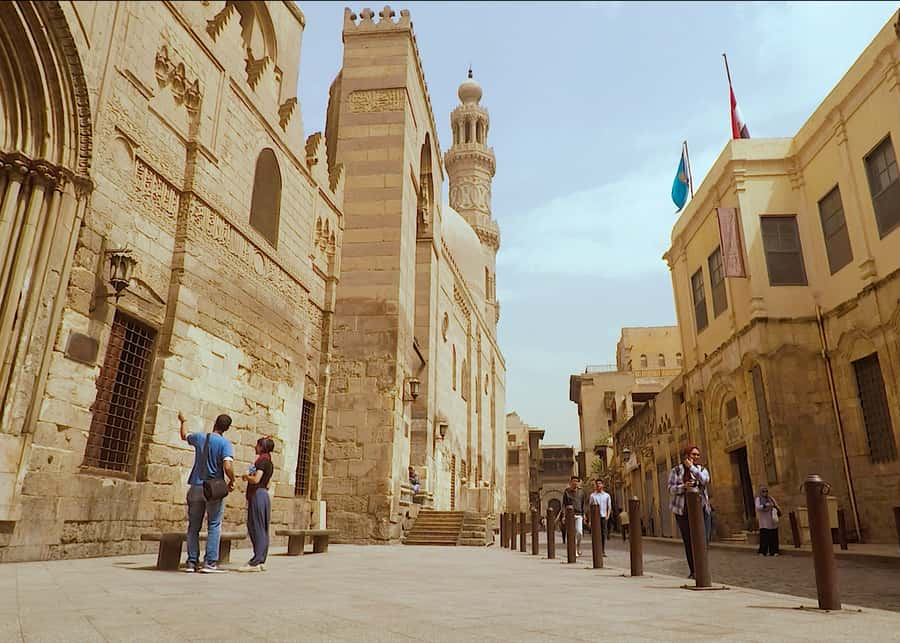
The meeting point is in front of Bab al-Futuh, one of the main gates in Cairo’s old city walls. It is a fitting start because the gate gives you a physical sense of entering an older Cairo, not just arriving at another sightseeing stop.
Allow time to find the guide and arrive promptly. If you book hotel pickup, transport is available from Cairo or Giza city limits, but the exact pickup time is confirmed the day before by WhatsApp, email, or phone. Traffic can affect the schedule. One account describes a delay of more than 30 minutes caused by a driver who did not know the roads well, while another notes that the guide helped keep the timing on track for an airport departure.
If you meet at Bab al-Futuh yourself, you avoid some of that road traffic. You also begin directly on foot, which is useful for a walking route with many short stops.
More Food Walking Tours in the world:
- Reykjavik Food Walk – Local Foodie Adventure in Iceland
★ 5.0 · 18,952 reviews - Little Havana Food and Walking Tour in Miami
★ 5.0 · 8,882 reviews - New Orleans Food Walking Tour of the French Quarter with Small-Group Option
★ 5.0 · 6,118 reviews
Al-Hakim Mosque and the quiet start
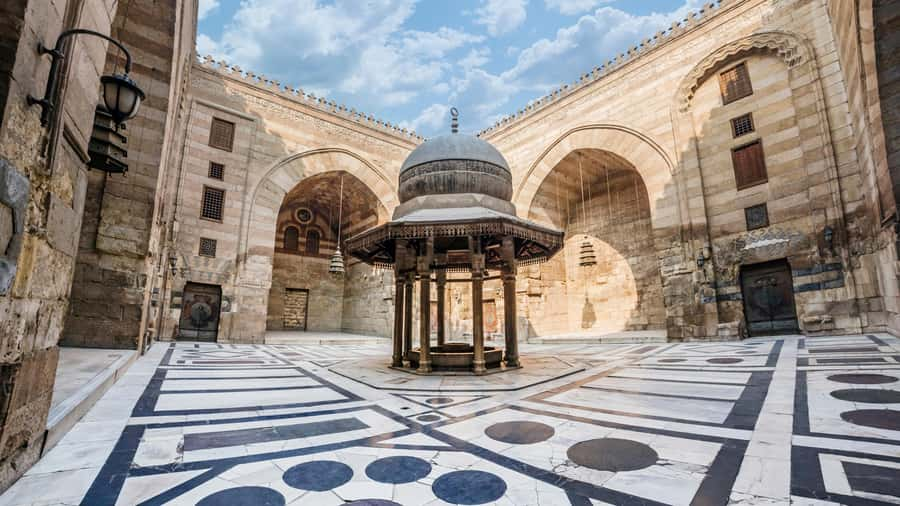
The first major visit is Al-Hakim Mosque, one of Cairo’s oldest and largest Fatimid mosques. Its massive minarets, stone walls, and open courtyard give the tour an immediate sense of scale, but this is not only a photo stop.
Your Egyptologist guide explains the mosque’s place in Cairo’s religious and architectural story. The courtyard also gives you a calmer pause before the route turns toward narrower streets and market areas. The planned visit lasts about 25 minutes, enough for an introduction and a look at the main features without turning the stop into a long lecture.
This part suits you if you like context. Without a guide, old Islamic buildings can blur together after a while. Here, the explanations help separate Fatimid, Mamluk, and Ottoman elements as the walk continues.
Bayt al-Suhaymi and life behind the walls
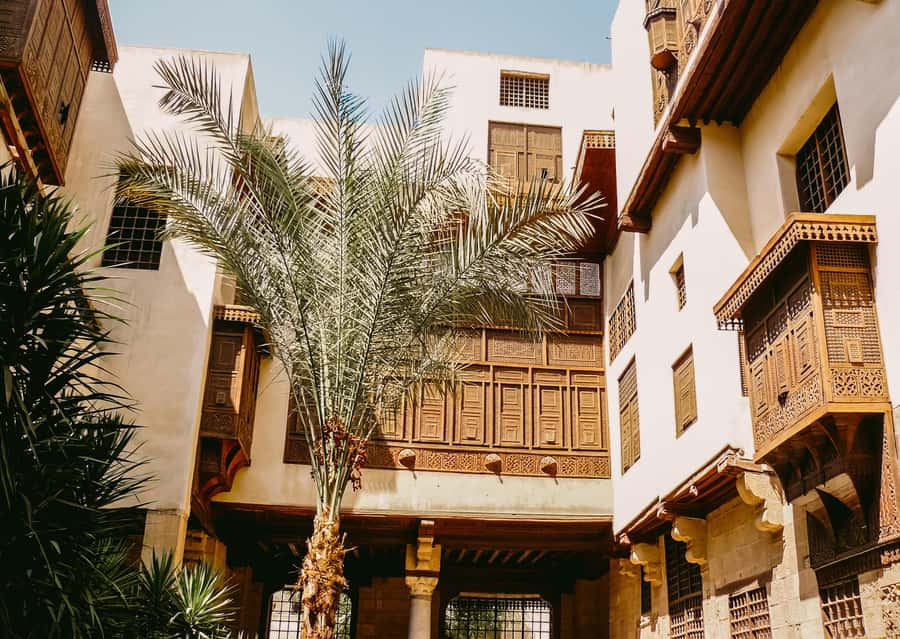
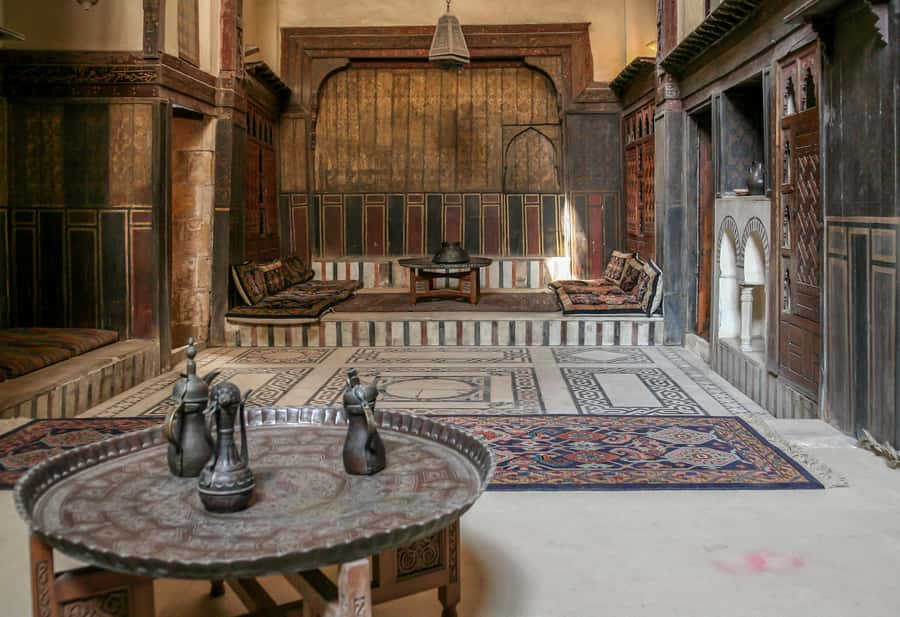
Bayt al-Suhaymi is one of the most useful stops for understanding domestic life in historic Cairo. This 17th-century Ottoman residence offers a change from mosques and public monuments, with rooms, courtyards, and traditional architectural details.
The guide uses the house to explain how people lived, received visitors, and organized private space. That makes the stop feel more personal than a simple procession from one grand façade to another. The planned visit is about 25 minutes.
You should not expect a large museum with a long list of displays. The appeal is the building itself and the chance to picture daily life inside an old Cairo home. If you enjoy architecture, woodwork, courtyards, and the difference between public and private spaces, this is one of the tour’s most rewarding stops.
El Moez Street, where the route becomes a living neighborhood
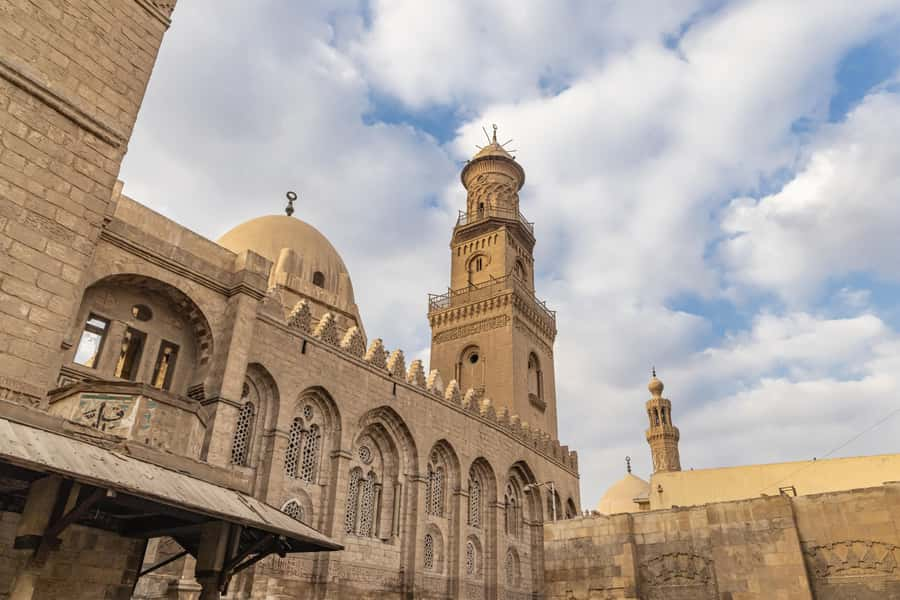
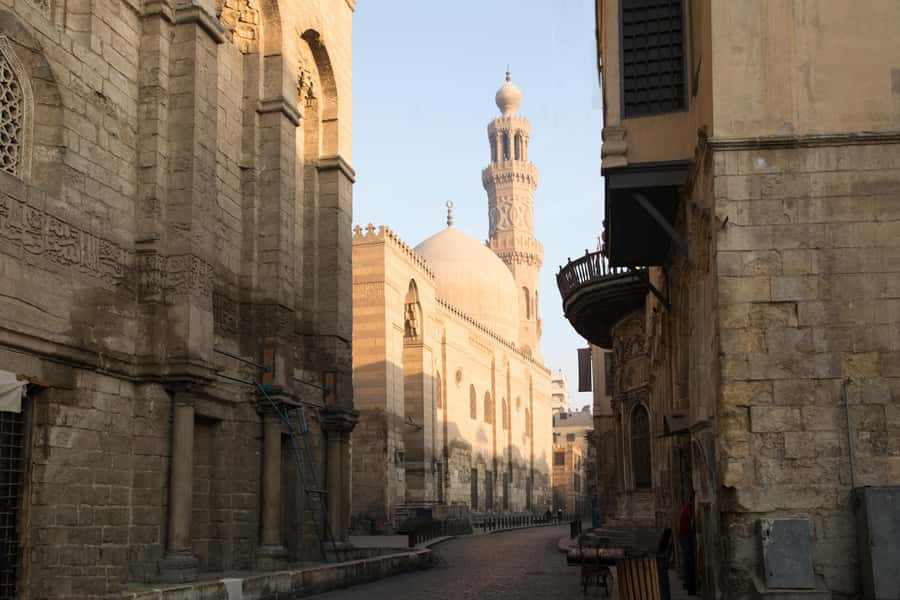
El Moez Street connects the monuments with the city around them. The route passes historic Islamic buildings, local vendors, cafes, and narrow streets where modern Cairo continues its daily business beside centuries-old stonework.
The scheduled walk here is only about 15 minutes, but the street is also the setting for several other stops. The short listed time should not be read as a full exploration of every side lane. Instead, think of it as a guided passage through the main historic corridor, with explanations along the way.
This is where comfortable footwear matters. The route includes uneven ground and stairs, and one especially practical account warns that the terrain is not for the faint of heart. Wear shoes that can handle rough pavement. Loose clothing that covers shoulders, arms, legs, and knees is also expected, especially when entering religious sites.
More History Walking Tours in the world:
- History and Hauntings of Salem Guided Walking Tour
★ 5.0 · 14,564 reviews - Lisbon: History, Stories and Lifestyle Walking Tour
★ 4.8 · 10,902 reviews - Boston: Freedom Trail History Small Group Walking Tour
★ 5.0 · 6,450 reviews - Historic Charleston Guided Sightseeing Walking Tour
★ 5.0 · 6,216 reviews
Sultan Barquq and the Mamluk architectural high point
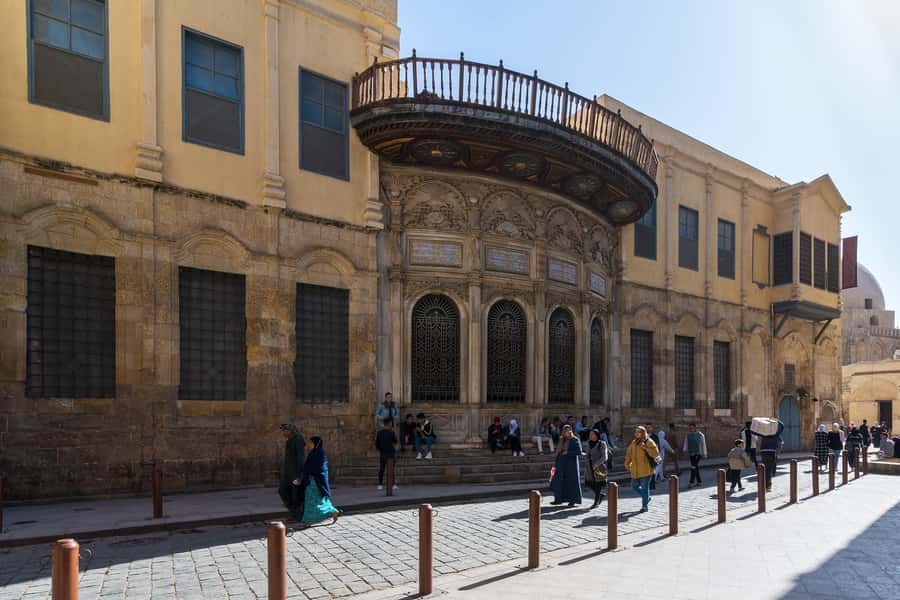
The Mosque and Khanqah of Al-Nasir Faraj Ibn Barquq follows in the middle of the route, with about 20 minutes set aside for the visit. The supplied tour description also highlights Sultan Barquq Mosque and its elaborate Mamluk design.
The site is important because it was more than a place for prayer. It served as a mosque, madrasa, and Sufi lodge, giving the guide several ways to explain religious education and spiritual life in medieval Cairo. Look for the scale and detail of the architecture, but listen closely to the building’s different roles. That is what turns decorative stone into a story about how the city functioned.
The guide’s skill matters here. Randa, Nahed, and other guides are repeatedly praised for making complicated history easy to follow, often with humor. That style is useful in a site where a long list of rulers and dates could otherwise become hard work.
The Qalawun Complex and a compact lesson in medieval Cairo

Next comes the Qalawun Complex, which includes a mosque, madrasa, and mausoleum. The planned visit lasts about 25 minutes, making it one of the longer monument stops.
The complex shows how religious, educational, and memorial spaces could be brought together in one grand project. Your guide explains the cultural and architectural importance of the site, while you get time to study the details and understand how it fits into the wider route along El Moez Street.
I would pay attention to the transitions between the buildings. This tour works best when you see it as a connected story rather than a string of isolated photo stops. Fatimid, Ottoman, and Mamluk buildings appear close together, and the guide helps you notice the changes.
Al-Hussein Mosque, a spiritual pause before the market
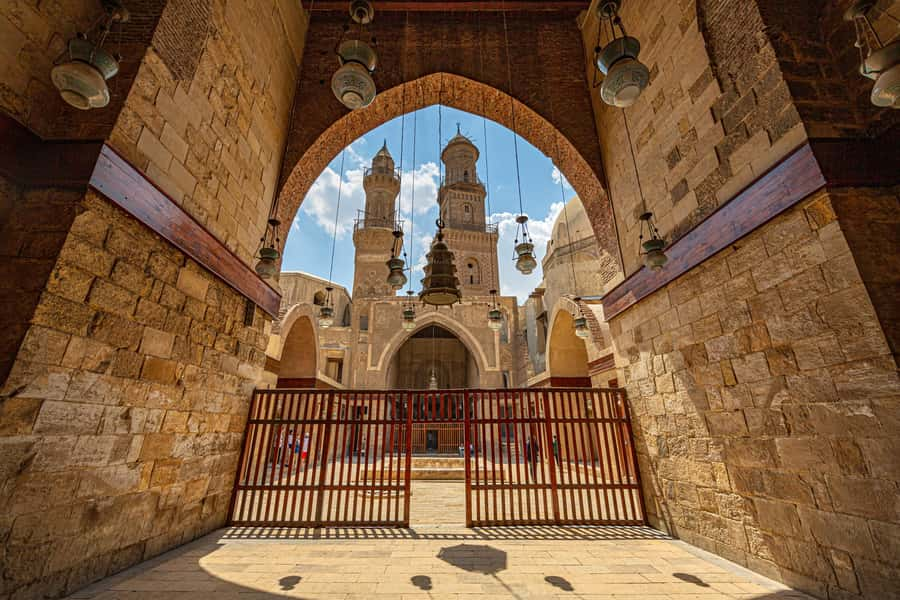
The tour then reaches Al-Hussein Mosque, located in the center of Islamic Cairo. About 20 minutes are planned here.
The atmosphere changes. After the architecture and street movement of El Moez Street, the mosque offers a quieter moment for reflection. Religious sites require respectful behavior and clothing, and women should carry a scarf or wear one when needed.
The tour description presents this as the spiritual end of the historic section, before shopping and food take over. The route may change if a listed site is closed, so the exact order is not guaranteed. That flexibility is practical in a living historic district, where access can vary.
Khan el Khalili, with help during the bargaining
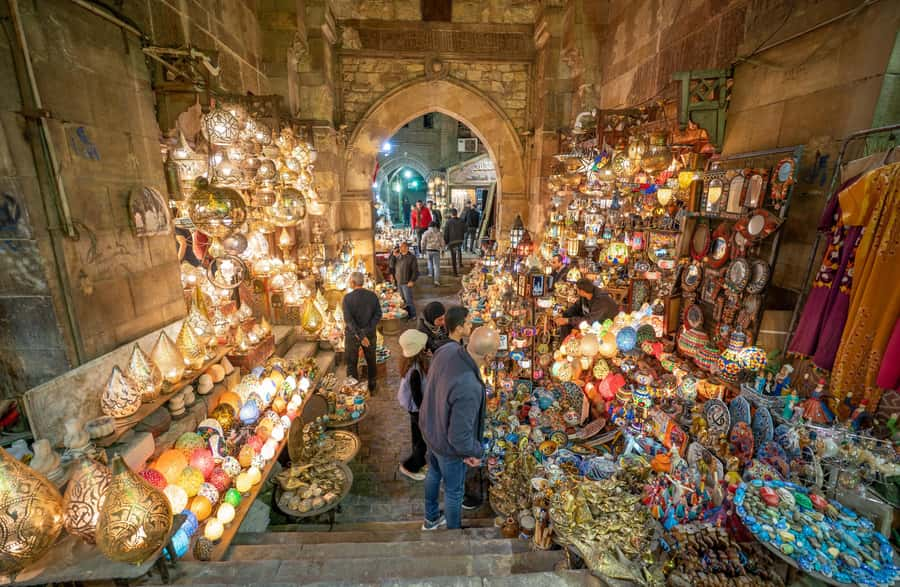
Khan el Khalili is the final major stop. The planned guided visit lasts about 15 minutes, although you may spend additional time shopping or walking through the market area afterward.
The stalls offer spices, jewelry, textiles, souvenirs, and other goods. This is not a silent museum. Sellers may approach you, and bargaining is part of the experience. Guides such as Randa, Nahed, and Ruby have been praised for helping people handle the market with confidence, pointing out shops with fair prices, and making sure groups do not get separated.
That support can be worth more than it sounds. A first visit to Khan el Khalili can feel confusing, especially if you are alone or trying to judge prices quickly. The guide does not remove the need to make your own choices, but you have someone nearby to explain the rhythm of the market and help you avoid obvious mistakes.
Bring cash for optional purchases. Shopping is not included in the price, and the tour does not cover expenses beyond the listed inclusions.
Street food: koshary, Egyptian pie, and sweet snacks
Food gives the walk a useful local finish. Depending on the option and availability, you may try authentic koshary or Egyptian pie, along with zalabya, halabessa, or similar Egyptian street snacks. Some accounts describe a local juice or drink as part of the food portion, but the exact selection can vary.
Koshary is a filling Egyptian dish, while Egyptian pie offers a different taste and texture. Zalabya is a sweet snack, and halabessa is a seasoned chickpea dish or snack. The meal is not presented as a formal restaurant event. It is meant to add familiar local flavors to a walking tour.
The food receives strong praise, including specific approval for the Egyptian pizza and pancakes. Vegetarian food is also available according to one detailed account. If you have allergies or dietary restrictions, ask the provider or guide before eating, since the exact food choice is not fixed in the tour information.
What the $31 price really covers
At $31 per person, the tour offers solid value if you want a guided introduction rather than a self-directed walk. The price includes entrance fees to all attractions, a professional Egyptologist guide, bottled water, local snacks, street food, and service tax.
Hotel pickup and drop-off are included only when you select that option. Otherwise, you meet at Bab al-Futuh. That distinction matters when comparing the total cost with other Cairo tours.
The value comes from the number of stops and the guide’s help with interpretation and navigation. You are not paying only for transport or a meal. You are getting access to several historic sites, a route through the market district, and food in one half-day outing.
There are limits. Three to four hours is enough for an overview, not a slow study of every monument. The tour can also feel full, especially if you want extended shopping time or long photo breaks. One comment suggests that a longer break halfway through would improve the pace.
The guides make the biggest difference
The strongest part of this tour is the human element. Guides named Randa and Nahed receive especially warm praise for their humor, patience, care, and ability to explain history in plain language. Ruby, Ehab, Dina, Rehab, Bassant, Samaa, Ahmed, David, Haisam, and others are also praised for clear explanations and friendly service.
Guide quality can vary because you are assigned a guide rather than choosing one. Still, the pattern is encouraging. A good guide helps you understand religious buildings, answers questions, watches the group in crowded streets, and keeps the outing moving.
Language options include English, French, Spanish, Arabic, and German. If you are traveling alone, the guided structure is particularly useful. It gives you company in the market and reduces the work of finding each monument.
Pace, clothing, and practical limits
The walk covers uneven streets and includes stairs. It is not suitable for wheelchair users, and baby strollers and large bags are not allowed. Leave luggage at your hotel or another secure place.
Wear loose clothing that covers shoulders, arms, legs, and knees. Carry a scarf for religious sites, along with sunscreen, a hat, and water. Bottled water is included, but having your own supply is still sensible during a warm day.
You should also keep an eye on the clock if you have a flight or another booking. Pickup traffic can be unpredictable, and the walk itself generally takes close to the full three to four hours. Tell the guide early if you have a firm departure time. One guide was specifically praised for helping a participant return to a hotel in time for an airport transfer.
Cancellation is flexible: you can cancel up to 24 hours ahead for a full refund, and reserve now while paying later. Those terms are useful if your Cairo schedule is still shifting.
Who should book this Old Cairo walk?
I would choose this tour for a first visit to Cairo, especially if you want a clear introduction to Islamic Cairo without arranging separate tickets, guides, food, and transport. It also suits solo visitors, couples, and anyone who prefers history explained along the way rather than read from a guidebook.
It is a good match for people who enjoy walking, architecture, markets, and local food. The route gives you both monumental buildings and ordinary street scenes, which makes it more varied than a mosque-only visit.
I would think twice if you dislike uneven ground, crowded markets, stairs, or a structured schedule. It is also not the best choice if you want an unhurried shopping afternoon. The market visit is useful, but short, and the full route has plenty to cover.
Should you book it?
Book this tour if you want a well-priced first look at Islamic Cairo, with the hard work of route planning and ticket buying handled for you. The combination of Bab al-Futuh, Al-Hakim Mosque, Bayt al-Suhaymi, El Moez Street, Mamluk monuments, Al-Hussein Mosque, Khan el Khalili, and Egyptian food gives you a lot in one half-day.
Skip it if you need step-free access or prefer to explore at your own pace. For most active visitors, though, the $31 price is persuasive, particularly because food, admission fees, water, and a guide are included. Arrive ready to walk, dress respectfully, keep some cash handy, and expect the guide to be the key part of the day.
FAQ
Where does the Old Cairo walking tour start?
The meeting point is in front of Bab al-Futuh. Pickup and drop-off from a hotel or selected location within Cairo or Giza are available when that option is booked.
How long does the tour last?
The tour lasts about three to four hours. The walking route includes several historic sites, the market, and local food.
What attractions are included?
The route includes Bab al-Futuh, Al-Hakim Mosque, Bayt al-Suhaymi, El Moez Street, Khan el Khalili, the Mosque and Khanqah of Al-Nasir Faraj Ibn Barquq, the Qalawun Complex, and Al-Hussein Mosque.
Is food included?
Yes. The inclusions list bottled water, local snacks such as zalabya or halabessa, and street food such as koshary or Egyptian pie. The exact selection may vary.
Are entrance fees included?
Yes. Entrance fees to all attractions listed for the tour are included.
Which languages are available?
Live guiding is available in English, French, Spanish, Arabic, and German.
What should I wear?
Wear loose clothing covering your shoulders, arms, legs, and knees. Women should carry a scarf for religious sites and use it when needed.
Is the tour suitable for wheelchair users?
No. The tour is not suitable for wheelchair users, and the route includes rough streets and stairs.
Can I cancel or pay later?
You can cancel up to 24 hours in advance for a full refund. A reserve-now, pay-later option is also available.
More Cultural Walking Tours in the world
- Savannah First Squares Culinary & Cultural Walking Food Tour
★ 5.0 · 3,229 reviews - Tokyo Tsukiji Fish Market Food and Culture Walking Tour
★ 5.0 · 3,184 reviews - New Orleans French Quarter, Voodoo and Culture Walking Tour
★ 4.5 · 2,961 reviews - Amsterdam: Cultural Highlights Walking Tour
★ 4.9 · 2,629 reviews
Just added around the world
- Bern Private Walking Tour with a Local★ 4.5 · 75 reviews
- Berlin Walking Tour★ 4.5 · 378 reviews
- Bern Walking Tour: Explore Top Sights & Hidden Gems★ 5.0 · 108 reviews
- Small Group Walking Tour of East Berlin with a French Guide★ 5.0 · 176 reviews
- Berlin Street Art Walking Tour – Off The Grid★ 5.0 · 270 reviews
- Berlin Highlights Private Guided Walking Tour★ 4.5 · 89 reviews
- Private Walking Tour: World War 2 and Cold War Sites in Berlin★ 5.0 · 230 reviews
- Kreuzberg Berlin: Off the Beaten Track PRIVATE Walking Tour★ 5.0 · 128 reviews
Food Walking Tours, compared.

Reykjavik Food Walk – Local Foodie Adventure in Iceland
Read our review →

New Orleans Food Walking Tour of the French Quarter with Small-Group Option
Read our review →

Authentic Parisian Gourmet Food Tour with 10 Local Dishes & Wines
Read our review →

Tapas Walking Tour with Food, Wine, and History
Read our review →
Browse the lists this tour appears in