
Review · OSLO WALKING TOURS
Oslo: Best of Oslo Walking Tour
Start with Oslo’s story, not just its sights. This two-hour walk links the Nobel Peace Center, Christiania, Akershus Fortress, and Aker Brygge into a useful first look at Norway’s capital. I like the clear route and the guides’ mix of history, local customs, cafés, and practical tips. I also like the included audio app, which lets you keep exploring after the guide leaves. The main drawback is that nearly every landmark is viewed from outside, so this is an orientation tour rather than a museum visit.
The price is $38 per person, which feels fair if you are new to Oslo and want a quick sense of its layout. Guides such as Amelia, Anastasia, Olaf, Oliver, Judit, and Minji have been praised for clear English, good timing, and lively stories. Allow extra care in winter, when snow and uncleared sidewalks can make the walk difficult for anyone using a wheelchair or dealing with limited mobility.
Key points at a glance
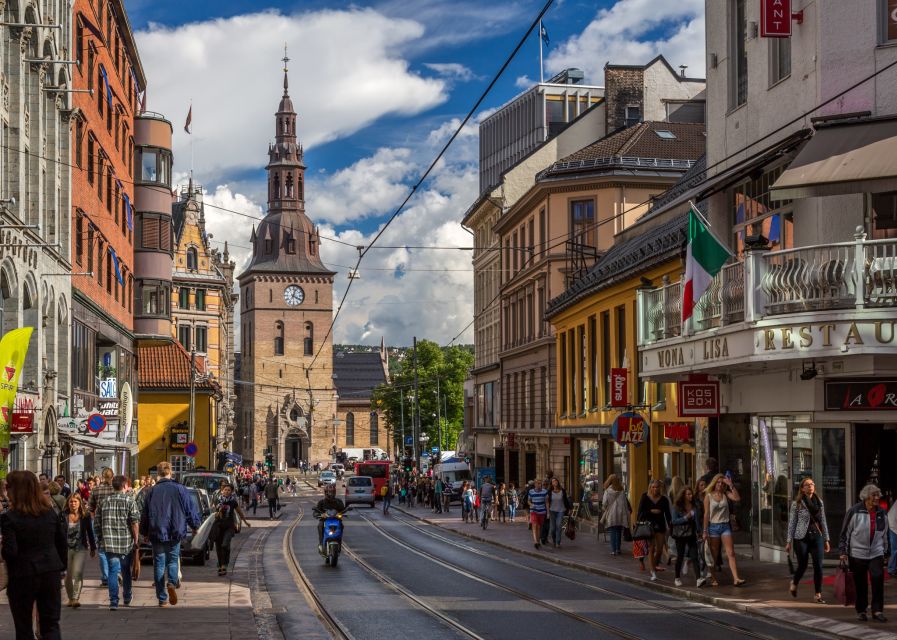
- Two hours through central Oslo: The route covers Karl Johan Street, the Parliament, Oslo Cathedral, Christiania Torv, the Opera House, Akershus Fortress, City Hall, and the waterfront.
- Strong first-day choice: You get practical bearings before deciding which museums, neighborhoods, restaurants, or ferries deserve more time.
- History with human stories: Guides explain Oslo’s former name, the Nobel Peace Award, the Tiger City nickname, Norwegian government, and everyday culture.
- English or German commentary: Choose your language when booking, then arrive five minutes early at the correct meeting point.
- No attraction admissions: You pass the major buildings but do not enter them, and public transportation is not included.
- Extra exploring after the walk: A QR code gives you access to a sightseeing app with audio routes around Oslo.
Why this walk works well on a first day
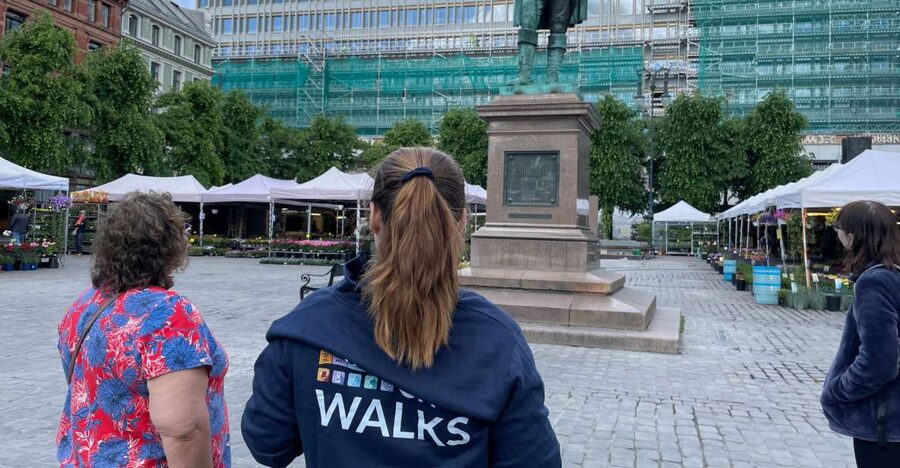
Oslo can feel spread out at first. The center combines grand civic buildings, old lanes, a modern waterfront, palace grounds, shopping streets, and newer cultural buildings. A guided walk helps you connect these pieces before you start moving around on your own.
I especially like the balance between famous sights and simple orientation. You see the Norwegian Parliament and Grand Hotel, but you also hear about cafés, restaurants, bars, public buildings, and the way Oslo has changed over time. That mix gives you more than a parade of photo stops.
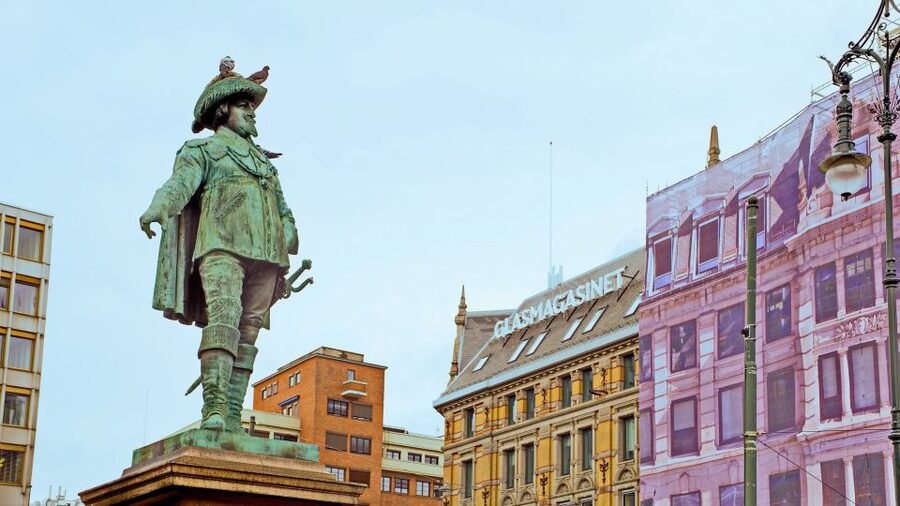
The tour is also efficient. It begins and ends near central landmarks, with two possible starting and finishing points: Universitetsplassen or the Nobel Peace Center. The exact meeting point depends on the language and booking option. For English, meet near the statue of P.A. Munch by the Faculty of Law entrance at University Aula, Karl Johan Street 47. German tours meet at the Nobel Peace Center on Brynjulf Bulls plass 1.
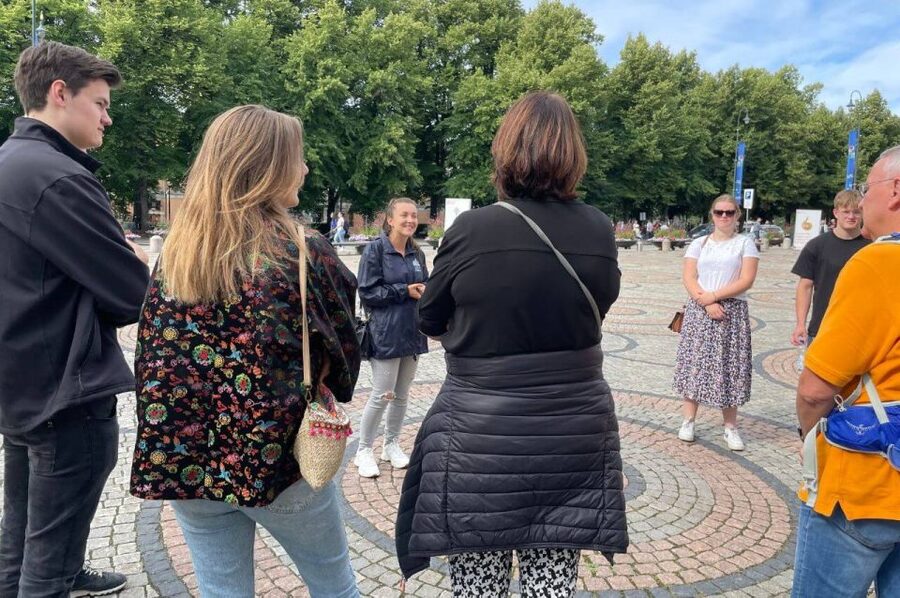
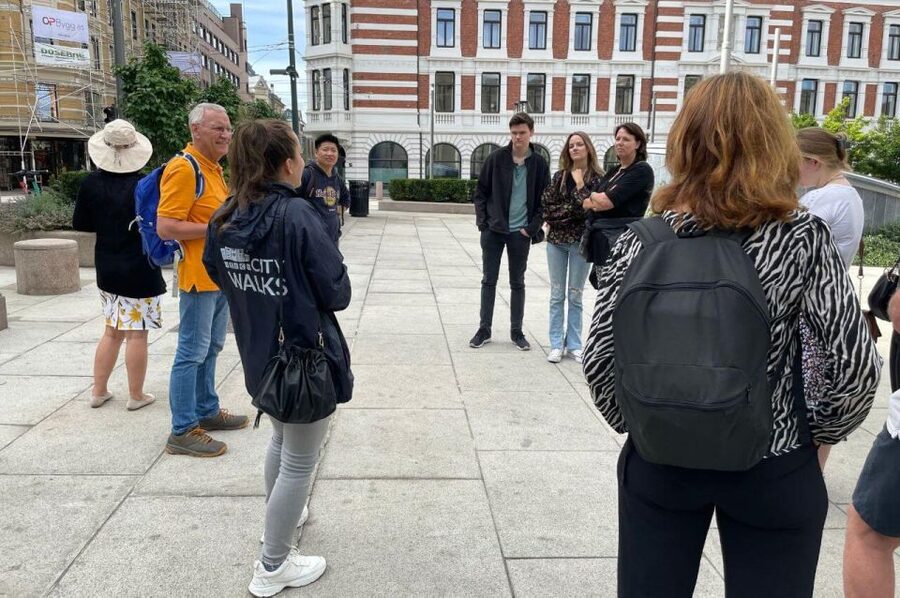
The guides generally keep a steady pace. One group of 13 received earpieces, which helped everyone hear, while other groups were small enough to feel more personal. That means the atmosphere can vary, but the basic format suits people who want a structured introduction without spending half a day on their feet.
A few more walks around Norway worth a look
- Bergen: Past & Present Small Group Guided Walking Tour
★ 4.9 · 1,609 reviews - Walking Tour in Bergen of the Past and Present
★ 5.0 · 1,575 reviews - Oslo: Guided Walking Tour of Central Oslo with Local Guide
★ 4.7 · 936 reviews
From Karl Johan Street to the Norwegian Parliament
The walk brings you into Oslo’s formal center, beginning around Universitetsplassen or the Nobel Peace Center. From there, the route moves past Paleet, the Norwegian Parliament, the Grand Hotel, and the National Theater.
Karl Johan Street is the natural spine of this part of town. It connects the Royal Palace area with the central station and passes many of Oslo’s best-known civic buildings. Your guide can help you read the street as more than a shopping route, pointing out how monarchy, government, culture, and commerce meet here.
The Norwegian Parliament is an important stop because the tour explains how Norway’s political system works, not just when the building was built. Several guides have been praised for answering questions about Norwegian government and modern life in plain English. That is useful if you want context instead of a list of dates.
The Grand Hotel adds another layer. It is tied to the Nobel Peace Award ceremony, making this one of the places where Oslo’s international role becomes easier to understand. You also learn why Oslo is called the Tiger City, a nickname that makes more sense once you hear the story behind it.
The National Theater and University of Oslo help fill out the picture of Oslo as a capital built around public institutions. This section is mostly about exterior views and commentary, so do not expect guided entry into the theater, Parliament, or university.
Oslo Cathedral, the bazaars, and the old commercial center
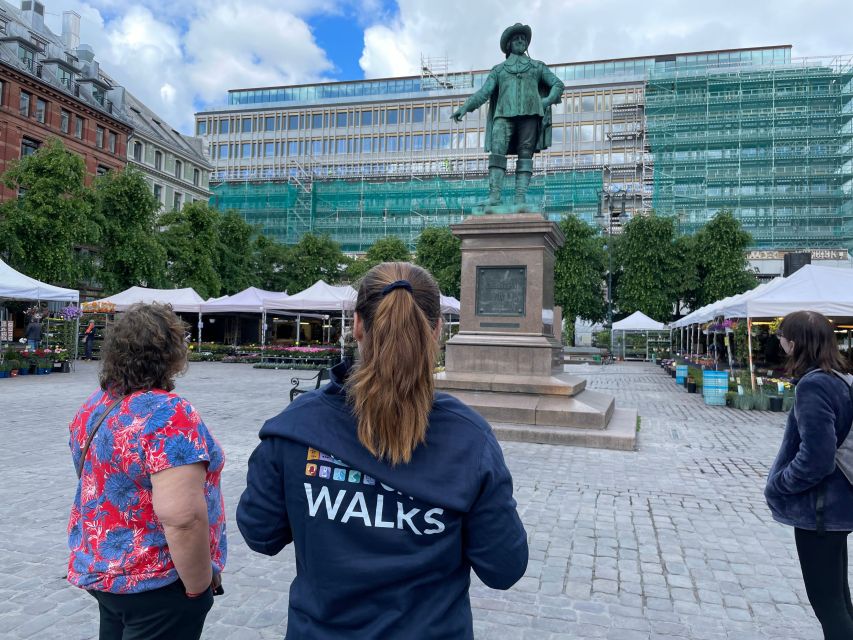
The route then reaches the Oslo Bazaars, GlasMagasinet Stortorv, and Oslo Cathedral. This is a useful change of mood after the formal buildings around Karl Johan Street.
The bazaars sit beside the cathedral and add an older, more textured feel to central Oslo. GlasMagasinet represents the city’s shopping side, while the cathedral offers a quieter religious and architectural landmark. The guide ties these stops together so you can see how Oslo’s public life developed around squares, markets, churches, and commercial streets.
Stortorvet is also where the tour can help you orient yourself for later meals and independent wandering. You may hear café or bakery suggestions, including a recommendation for W.B. Samson and its cinnamon buns. That kind of advice is small but useful, especially when you want an easy stop after the walk.
The tour passes Stortorvet Gjestgiveri and the Fire Tower as part of its central-city route. Do not expect a long break here. The value lies in seeing several nearby landmarks while hearing how the older city fits into present-day Oslo.
The Opera House and Oslo’s changing waterfront
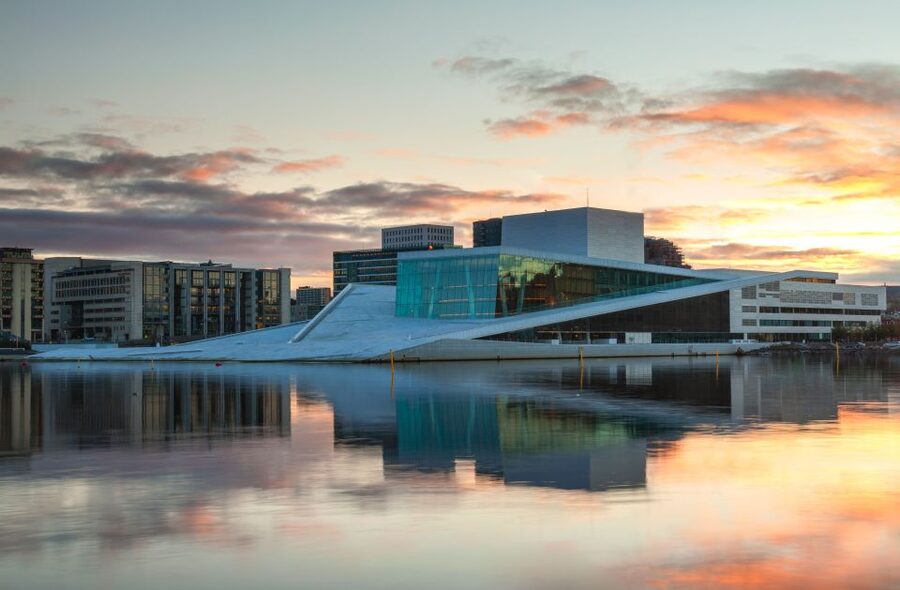
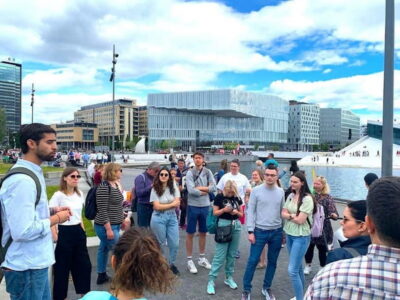
The Norwegian Opera House is one of the most memorable exterior stops. Its pale, sloping surfaces reach toward the water, and the route presents it as a symbolic pearl beside the harbor. The building is easy to recognize, but the guide adds meaning by placing it within Oslo’s newer waterfront development.
This is where the tour shifts from older streets to modern architecture. You pass the Tiger Sculpture, Oslo’s Second City Hall, and the waterfront area near Langkaia and KOK Oslo Sauna. The contrast is part of the appeal: Oslo is not only a city of royal buildings and medieval traces. It is also a place that keeps reshaping its harbor.
The sauna stop is a pass-by point, not a sauna session. Likewise, the Opera House is seen from the route rather than entered. If you want interior architecture, a performance, or time on the Opera House roof, plan a separate visit.
The guide’s job here is to connect the buildings and public spaces. Several guides have been praised for explaining modern developments along with older stories, which makes this part more useful than a quick photo stop.
Same streets, a different way to see them:
- City Walking Tour – Bergen On Foot
★ 5.0 · 436 reviews - Oslo: Historic Myths & Legends Evening Walking Tour
★ 4.8 · 408 reviews - Bergen: Sightseeing Walking Tour with Ferry Ride
★ 4.9 · 296 reviews - Taste of Oslo Walking Tour
★ 4.5 · 282 reviews
Christiania Torv and the city’s former name
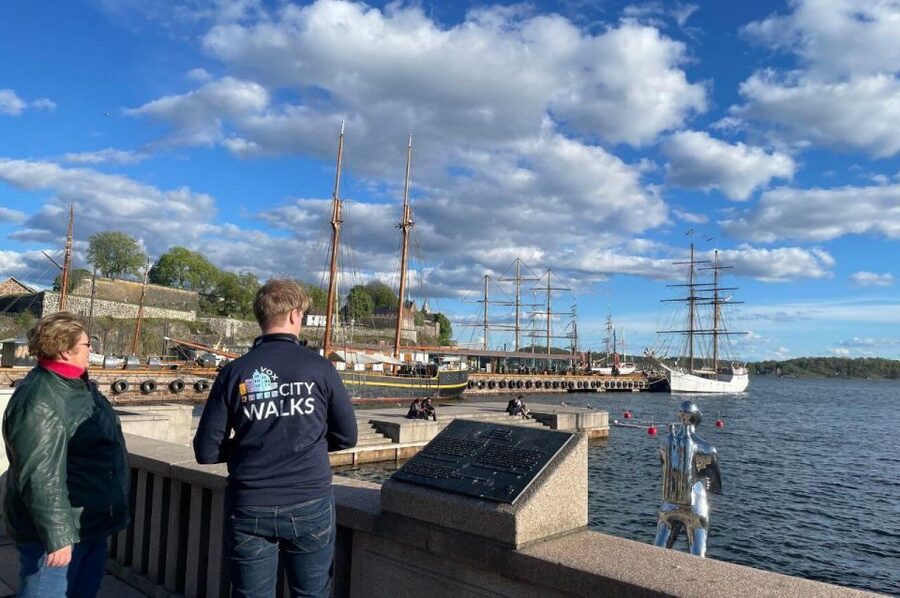
Christiania Torv is one of the most important history stops. The guide explains the original city center and why the capital has changed its name several times over roughly 300 years.
This is where the tour gives Oslo a longer timeline. Instead of treating the city as a single, fixed place, you learn how names and centers shifted. The old name Christiania is not just a label on a map. It points to an earlier phase of the capital and helps explain why certain streets and squares feel different from newer parts of central Oslo.
Kvadraturen, the historic grid near Christiania Torv, is another strong section for walkers. You pass the old city hall, known as Gamle rådhus, and Anatomigården. These stops offer a glimpse of older Oslo without requiring a separate museum ticket.
The route does not turn this into a detailed architectural lecture. That is a benefit for some people and a limitation for others. If you love close study of old buildings, you may want to return independently with more time. For a two-hour overview, the guide gives enough background to make the area easier to appreciate later.
Akershus Fortress and Ceremony Pier
Akershus Fortress brings military and royal history into the route. The fortress overlooks the harbor and gives you a clear sense of Oslo’s position beside the Skagerrak strait.
The walk passes the fortress rather than promising a full interior tour. That distinction matters. You will hear why the site matters and see its setting, but entry to attractions is not included in the $38 price.
Nearby Ceremony Pier connects the waterfront to national events and public occasions. This is another place where the guide can explain how Oslo uses its harbor and civic spaces. You get a sense of the city as both a working capital and a ceremonial center.
If weather is poor, this section may feel less comfortable because much of the experience is outdoors. Still, the tour has continued in rain, snow, hail, and cold conditions, with guides keeping the commentary going. Wear shoes with reliable grip and bring rain protection. Oslo weather does not always check your itinerary before changing its mind.
City Hall, Aker Brygge, and Tjuvholmen
Oslo City Hall is a major landmark on the route. Its public role connects naturally with the earlier Parliament stop and the Nobel Peace Award story. Together, these buildings help you understand the civic side of Oslo.
After City Hall, the route heads toward Anatomigården and Aker Brygge. Aker Brygge is presented as an alternative quarter with restaurants, bars, shopping, and waterfront space. This gives you a practical place to return later, especially if you want a meal near the harbor.
Tjuvholmen continues the modern waterfront theme. The neighborhood is included as a pass-by stop, so you should not expect a long neighborhood exploration. Still, seeing Aker Brygge and Tjuvholmen in the same walk helps you compare the two areas and decide where to spend more time.
The waterfront section is especially useful for people with only a short stay. You can finish the tour with several ideas for the afternoon: return to the harbor, visit a museum on your own, explore the fortress, or follow one of the audio routes in the app.
The Royal Palace and the final stretch along Karl Johan
The Royal Palace appears later in the route, along with the monument to Karl Johan. These stops bring you back toward the ceremonial heart of Oslo.
The palace is another exterior sight on this tour. Your guide explains its place in Norwegian public life, while the Karl Johan monument connects the street to the monarch who gives the route its name. The walk then passes the Norwegian National Theater before finishing near Universitetsplassen or the Nobel Peace Center.
This ending works well because you finish close to central transport, cafés, and several major sights. It also gives you a chance to ask final questions. Guides have often offered suggestions for museums, restaurants, ferries, and later walks. One particularly useful tip from the tour experience was taking a ferry around the islands, which can be a good follow-up if the weather cooperates.
What the guides do best
The strongest part of this experience is the live commentary. Guides such as Olaf have been praised for humor and stories, while Oliver has been noted for local suggestions and a warm manner. Anastasia, Amelia, Judit, Csilla, Marija, Emilia, and Minji have also been singled out for clear explanations, friendly service, and good command of English.
The best guides do not simply recite facts. They explain what landmarks mean to Norwegian people, answer questions, and adjust the pace so the group can keep up. One guide even waited for the whole group to gather before continuing, an important detail when city streets are busy.
You should still keep expectations realistic. The guide may be excellent, but group size, weather, and language choice affect the feel of the walk. The tour is also delivered in English or German only.
Price, pace, and practical value
At $38 per person, this is not the cheapest way to see central Oslo, since you can walk many of these streets for free. The price pays for structure, explanation, and the ability to ask questions as you go.
I think the value is strongest if this is your first or second day in Oslo. You can use the route to choose where to spend more time, rather than guessing from a map. The included sightseeing app adds value because it gives you audio-guided routes for further exploration, including sights such as Frogner Stadion, Trinity Church, Grensen, Karl Johan’s monument, and Aamodt Bridge.
The tour lasts two hours and runs at a practical pace, but it is still a continuous outdoor walk. Public transportation is not included, and attraction admissions are separate. Arrive five minutes early, scan the QR code on your voucher for the app, and confirm the meeting point carefully.
Winter needs special planning. Snow and ice may make sidewalks hard to manage, and one wheelchair user had to leave early because of the conditions. The guide may try to help, but the route should not be treated as fully accessible in poor winter weather.
Should you book the Best of Oslo Walking Tour?
Book it if you want a fast, story-led introduction to central Oslo, especially at the start of your visit. It suits first-time visitors, couples, families with older children, short-stay guests, and anyone who likes to learn the basics before exploring alone.
Skip it if you want museum entry, a slow architectural study, or a tour focused on one neighborhood. You will pass many attractions without going inside. For most first-time visitors, though, the combination of central landmarks, Christiania, the waterfront, practical tips, and the follow-up audio app makes this a useful two-hour investment.
FAQ
How long is the Best of Oslo Walking Tour?
The guided walk lasts approximately two hours.
What languages are available?
Live commentary is available in English or German. You select your language when booking.
Where does the English tour meet?
The English tour meets near the statue of P.A. Munch by the Faculty of Law building entrance at University Aula, Karl Johan Street 47.
Where does the German tour meet?
The German tour meets at the Nobel Peace Center at Brynjulf Bulls plass 1.
Does the tour enter the museums and landmarks?
No. The route passes landmarks and attractions, but admission tickets are not included.
Is public transportation included?
No. You must arrange and pay for any public transportation you use.
What is included besides the guide?
The booking includes a sightseeing mobile app. Scan the QR code on your voucher to access its audio-guided routes.
Is the tour suitable in winter?
The tour operates in winter conditions, but snow and uncleared sidewalks can make the walk difficult, particularly for people with mobility issues or wheelchair users.
Just added around Norway
- City Walking Tour – Bergen On Foot★ 5.0 · 436 reviews
- Food and Culture walk★ 4.5 · 243 reviews
- 3 Hour Guided Food Walk Tour in Alesund, Norway★ 5.0 · 124 reviews
- Stavanger: Private Walking Tour with a Local★ 4.5 · 100 reviews
- Oslo: Snowy Forest Torchlight Walk with Campfire★ 4.6 · 254 reviews
- Oslo: Norwegian Food Tour & Hidden Gems City Walk★ 4.8 · 165 reviews
- Oslo: Private Walking Tour★ 4.8 · 87 reviews
- Oslo: Private Walking Tour with a Local★ 4.5 · 263 reviews
Oslo Walking Tours, compared.
Guided Walking Tour of Central Oslo with Local Guide
Read our review →



Browse the lists this tour appears in