
Review · HISTORY WALKING TOURS
Oslo: Historic Myths & Legends Evening Walking Tour
Oslo gets more interesting after dark. This two-hour walk turns central Oslo into a storybook of Viking beliefs, trolls, old punishments, fortress prisoners, and bold city robberies. I like the mix of folklore and documented history, and I like that the route includes major sights such as City Hall, Christiania Torv, and Akershus Fortress without treating them like mere photo stops. The main consideration is weather: Oslo evenings can be bitterly cold, windy, and dark, so warm clothing and sturdy shoes matter.
I also like the human touch provided by guides such as Maria and Anastasia, who are repeatedly praised for humor, energy, clear English, and useful suggestions for exploring Oslo afterward. This is not a ghost-hunting expedition, and you will not go underground. Instead, the supernatural tales are used to explain Norwegian culture and how older beliefs shaped daily life.
Five things to know before you book
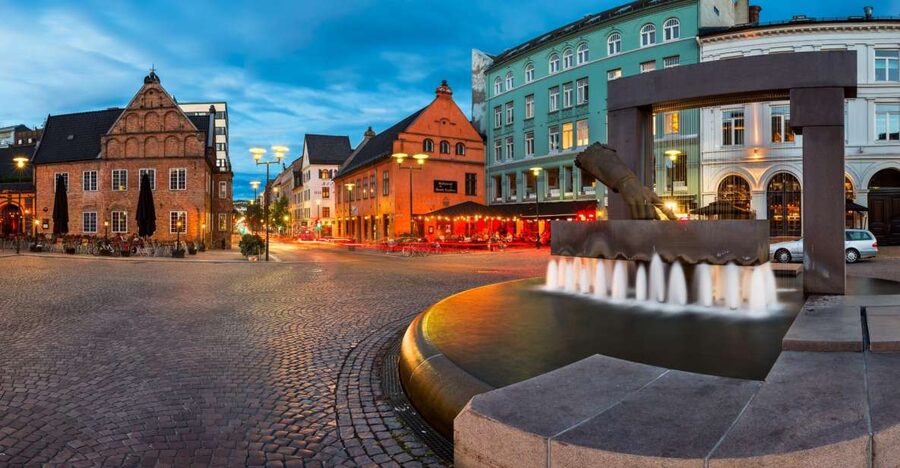
- City Hall begins the story: Look for the Swans fountain at the entrance to Oslo City Hall on Fridtjof Nansen’s square.
- Folklore is central: Expect stories about trolls, nisse, huldra, ghosts, underground kingdoms, protective bells, and other Norwegian beliefs.
- The route reaches Akershus Fortress: You will hear about its design, prisoners, defenses, and changing role in Oslo’s past.
- Crime gets its own chapter: Bankplassen provides the setting for tales of audacious thefts, robberies, and medieval punishment.
- Cold-weather planning matters: Several people enjoyed the walk in freezing conditions, but piercing wind and temperatures below minus 10 degrees made proper clothing essential.
What this Oslo evening walk actually offers
This is best understood as a guided introduction to Oslo rather than a theatrical ghost tour. The stories add color to familiar streets, but the guide also explains the city’s past, its architecture, Norwegian folklore, and the way old beliefs reflected ordinary fears and hopes.
The route covers central sights at a relaxed pace. You will stop often to listen, ask questions, take photographs, and look closely at details you might otherwise pass without noticing. One useful quality of the tour is its range. It can move from Norse mythology to medieval law, from Viking ideas to Second World War history, then back to a local tale about trolls.
The tone is informal. Guides such as Maria and Anastasia have been praised for making the walk conversational rather than stiff. You can expect room for questions and, if the group is comfortable, a few side stories and local suggestions.
The route is not presented as a frightening experience. If you want jump scares, haunted tunnels, or actors in costume, this is the wrong choice. If you want a lively explanation of why legends mattered to Norwegian people, it fits well.
More Crime and Mystery Walks in Norway:
- Prague: Ghost Walking Tour Where Legends Come To Life
★ 4.4 · 5,253 reviews - Edinburgh Darkside Walking Tour: Mysteries, Murder and Legends
★ 5.0 · 3,862 reviews - Historical Walking Tour: Legends of Bruges
★ 5.0 · 2,541 reviews
Meeting the guide at City Hall
The walk begins near the Swans fountain at the entrance to Oslo City Hall, on Fridtjof Nansen’s square. Give yourself enough time to locate the fountain, especially if you are arriving in the dark or dealing with winter weather.
City Hall is a useful starting point because it connects modern Oslo with older national stories. The building’s wooden friezes depict Viking beliefs, and the guide uses these details to explain how Norse ideas appear in Norwegian art and public spaces.
You are not simply told that Vikings sailed the Nordic seas. The opening discussion places their voyages alongside the beliefs, symbols, and supernatural figures that helped explain the world around them. This is a good early lesson in how mythology can be read through buildings and decoration rather than only through books.
The City Hall stop also gives you a quick orientation to central Oslo. If this is your first day in Norway, the route provides a helpful framework for later sightseeing. Several guides have offered suggestions for other places to visit, so keep a note on your phone for recommendations that sound useful.
Christiania Torv and Oslo’s older center
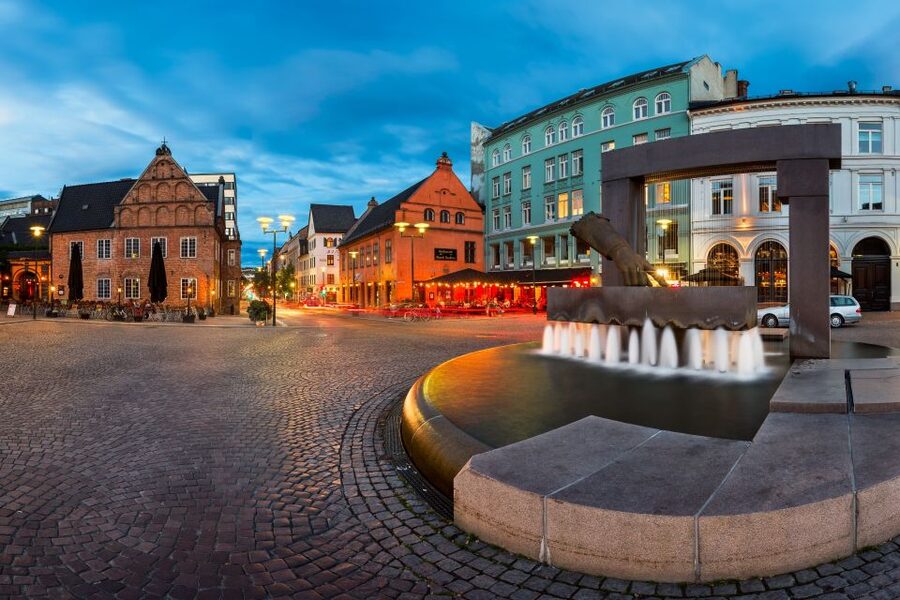
From City Hall, the walk continues to Christiania Torv, one of the city’s historic squares. Here, the guide shifts from broad national folklore to stories tied more closely to Oslo’s streets and changing identity.
The value of this stop is the setting. A square can look ordinary if you only pass through it, but stories about past events give it a social life. You hear about the people, choices, and incidents that left their mark on the city. The guide’s job is to connect the physical place with what happened there, and this is where a strong storyteller makes a real difference.
The walk does not rely only on the most familiar Viking material. You will hear lesser-known stories and local details that make central Oslo feel less like a collection of monuments and more like a place where generations lived, argued, worked, feared, and celebrated.
This is also a good section for questions. The guides have been praised for answering patiently and for handling a broad range of interests. You can ask about history, folklore, architecture, or practical places to visit later.
Akershus Fortress, engineering, and prisoners

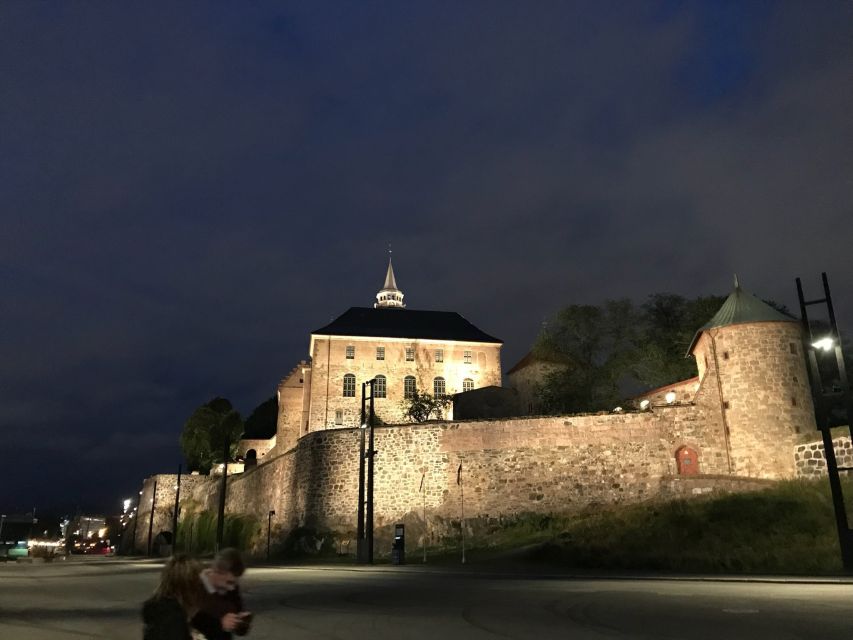
Akershus Fortress is the route’s most substantial historic sight. Its walls and defensive design offer a clear way to understand why Oslo needed protection through different periods.
The guide explains the fortress’s engineering and layout in accessible language. You do not need a background in military history to follow the story. Instead, the focus is on how the site worked, why its defenses mattered, and how the fortress changed as Oslo changed.
The human stories are just as important. The walk includes accounts of prisoners held within the fortress and the fates they faced. This gives the site a darker edge, but the emphasis remains on historical context rather than horror.
You should expect to walk outdoors around the fortress area, so shoes matter. The activity is specifically not suitable for people with mobility impairments or wheelchair users. The supplied information does not describe a detailed route surface or stair count, so anyone concerned about walking conditions should contact the provider before booking.
The fortress section is particularly effective for anyone who enjoys places with several layers of history. You are not only looking at old walls. You are hearing about defense, imprisonment, justice, fear, and the practical problems of protecting a city.
More Night Walking Tours in Norway:
- Private Street Food Evening Walking Tour in Ho Chi Minh City
★ 5.0 · 3,175 reviews - Granada: Albaicín and Sacromonte Guided Sunset Walking Tour
★ 4.9 · 2,962 reviews - Bremen: Walking Tour in German with Night Guard
★ 4.7 · 2,922 reviews - Ghosts of Charleston Night-Time Walking Tour with Unitarian Church Graveyard
★ 4.5 · 2,835 reviews
Bankplassen and Oslo’s criminal past
At Bankplassen, the subject turns toward thefts and robberies. This change of pace helps keep the tour from becoming a single long lesson about mythology.
The stories focus on daring crimes that once shook the city, along with the justice system of medieval Oslo. You learn how crimes were treated and what punishments could follow. That material gives you a sharper sense of how different older ideas of law and order were from modern expectations.
I find this section useful because it puts everyday behavior into context. A city’s history is not only made by rulers and explorers. It is also shaped by thieves, victims, guards, judges, prisoners, and the officials trying to control them.
The crime stories are described in a fun and engaging way, but you should not expect a forensic investigation or a full legal history. They are short episodes within a broader city walk, chosen for their drama and their ability to show how Oslo worked.
Trolls, nisse, huldra, and the practical side of folklore
The folklore is the feature that gives this walk its personality. You will hear about mischievous trolls, kind-hearted nisse, and mysterious huldra, along with tales of ghosts and underground kingdoms.
The guide’s approach is cultural rather than sensational. The tour explains what these stories meant and why they survived. Folklore can reveal what people feared, what they hoped would protect them, and how they made sense of places they could not explain.
One especially memorable detail from the tour material is the discussion of fears surrounding flutes and the protective role of bells. Details like these are more useful than a basic list of Norse gods because they show how beliefs could affect ordinary behavior.
You will also hear about trolls in a playful way. The guides clearly enjoy the subject, and the stories give the evening a light tone even when the material turns toward death, punishment, or prison life.
The tour can cover material from early origins through the Second World War. That broad span is helpful if you want a general introduction, though it also means no single period receives a full academic treatment.
The evening atmosphere and the question of darkness
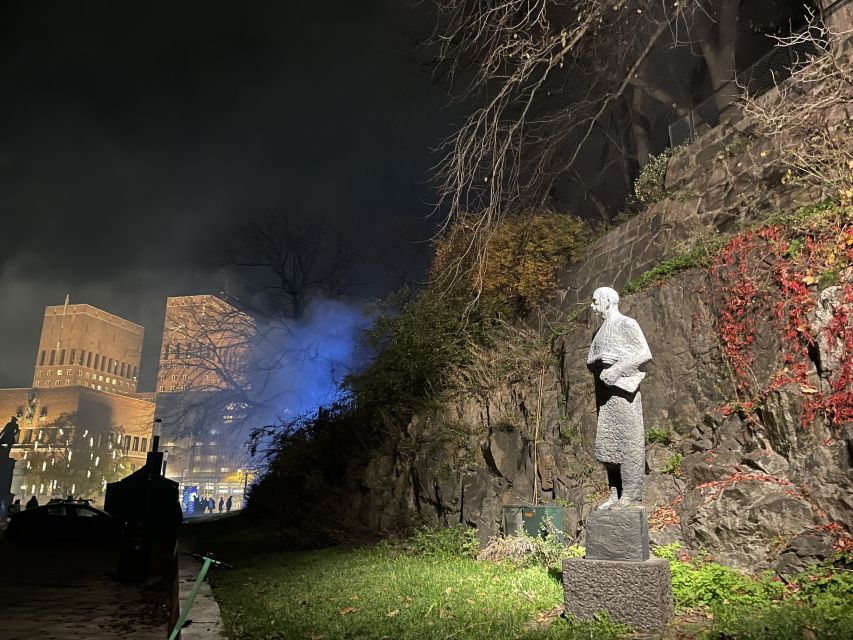
The evening timing changes the feel of central Oslo. In December, a tour running from 4:00 to 6:00 p.m. may take place almost entirely in darkness. City lights, old walls, and the fortress create a fitting mood for tales of legends and hidden fears.
Darkness also has practical drawbacks. You need to pay attention to where you are walking, and photographs may not show as much detail as they would in daylight. The guide takes care to point out important sights, but you may want to return to City Hall or other locations during the day if architecture and close-up viewing are your main interests.
In warmer months, the light can add its own charm. One October outing included a striking sunset, while summer walks benefit from longer daylight. The tour works in either season, but the experience changes quite a bit.
Winter visitors should take the cold seriously. People have enjoyed this walk in snow, wind, and temperatures in the minus 10s, but that does not make the conditions mild. Wear a warm coat, gloves, a hat, and shoes that can handle two hours outside. Comfortable shoes are specifically required, and you should dress for wind rather than only checking the air temperature.
The guides make or break this kind of tour
A folklore walk depends heavily on delivery. The stories need timing, humor, and enough historical explanation to keep them from becoming a string of disconnected tales.
Maria receives especially strong praise for being personable, funny, patient, and full of useful information. Anastasia is also noted for vivid storytelling, enthusiasm, and excellent English. Other guides have been described as interactive and passionate about Oslo and Norway.
That matters because the tour covers many subjects. A flat presentation could make Viking beliefs, medieval punishment, and city architecture feel scattered. A lively guide can show how those pieces fit together.
You should expect an English-speaking guide throughout. The experience is suitable for solo visitors because the format makes it easy to learn the city while joining a shared activity. It also suits couples and older families with teenagers.
The official age guidance says children under 13 are not suitable. However, one family reported that children aged 8 and 10 loved the tour, and another parent said a 13-year-old called it one of the best walking tours they had taken. That suggests the material can appeal to younger listeners, but the provider’s stated age limit should guide your booking decision.
Is $42 a fair price?
At $42 per person, this is not the cheapest way to walk around Oslo. You can see many central streets without paying anything, and you can visit some sights independently.
The price becomes easier to justify if you value interpretation. For two hours, you receive a live English-speaking guide, a planned route through several important areas, historical context, folklore, crime stories, and suggestions for continuing your sightseeing. You are paying less for admission and more for the connection between places.
The route also saves you from doing all the research yourself. City Hall, Christiania Torv, Akershus Fortress, and Bankplassen are easy to visit independently, but it takes time to find the stories that link them together.
I would consider it good value for a first or second day in Oslo, especially if you want a general orientation. It is less suitable if you have already taken several city tours, prefer museums and long indoor visits, or want a specialist lecture on Viking archaeology.
Food, drinks, hotel pickup, and hotel drop-off are not included. Plan to eat before or after the walk and make your own way to the meeting point.
Who should book this Oslo tour?
This walk suits you if you enjoy history delivered through short stories rather than formal lectures. It is also a good choice if you want to see Oslo at night, hear local folklore, and visit major sights while learning details that are easy to miss alone.
It works especially well for:
- First-time visitors who want a quick sense of Oslo’s past
- Solo visitors looking for an easy shared activity
- People interested in Norse mythology and Norwegian folklore
- Anyone who enjoys tales of crime, punishment, prisons, and old justice
- Couples and families with teenagers who can manage two hours of outdoor walking
- Visitors who want practical ideas for the rest of their Oslo stay
You may want to skip it if you dislike cold-weather walks, need step-free access, or want a dedicated ghost tour. The experience is also not designed for wheelchair users or people with mobility impairments.
Should you book the Historic Myths and Legends walk?
I would book this tour if you want an entertaining introduction to Oslo that mixes major sights with unusual stories. The strongest reasons are the guides, the range of subjects, and the way folklore is connected to real places rather than treated as a separate fantasy show.
Bring warm clothing in winter, wear comfortable shoes, and arrive ready to listen outdoors. If you want the best value, take it early in your stay so you can use the guide’s suggestions during the rest of your visit.
Skip it only if you want an indoor experience, a purely academic history lesson, or a true ghost investigation. For most visitors who enjoy stories and can handle a two-hour walk, $42 is a reasonable price for a lively look at Oslo’s less obvious past.
FAQ
Where does the Oslo myths and legends tour meet?
Meet the guide near the Swans fountain at the entrance to Oslo City Hall, on Fridtjof Nansen’s square.
How long does the walking tour last?
The tour lasts two hours.
What language is the tour conducted in?
The tour is conducted in English with a live English-speaking guide.
Does the tour visit Akershus Fortress?
Yes. The route includes Akershus Fortress, where the guide discusses its design, defensive role, prisoners, and past events.
Is this a ghost-hunting tour?
No. The tour discusses ghosts and underground kingdoms as part of Norwegian history and culture, but it does not involve underground exploration or ghost hunting.
Is the tour suitable for wheelchair users or people with mobility impairments?
No. The activity is listed as unsuitable for wheelchair users and people with mobility impairments. Children under 13 are also listed as unsuitable.
What should I bring?
Bring comfortable shoes. In cold or windy weather, you should also dress warmly because the entire experience takes place outdoors.
More History Walking Tours in Norway
- History and Hauntings of Salem Guided Walking Tour
★ 5.0 · 14,564 reviews - Lisbon: History, Stories and Lifestyle Walking Tour
★ 4.8 · 10,902 reviews - Boston: Freedom Trail History Small Group Walking Tour
★ 5.0 · 6,450 reviews - Historic Charleston Guided Sightseeing Walking Tour
★ 5.0 · 6,216 reviews
Just added around Norway
- City Walking Tour – Bergen On Foot★ 5.0 · 436 reviews
- Food and Culture walk★ 4.5 · 243 reviews
- 3 Hour Guided Food Walk Tour in Alesund, Norway★ 5.0 · 124 reviews
- Stavanger: Private Walking Tour with a Local★ 4.5 · 100 reviews
- Oslo: Snowy Forest Torchlight Walk with Campfire★ 4.6 · 254 reviews
- Oslo: Private Walking Tour★ 4.8 · 87 reviews
- Oslo: Private Walking Tour with a Local★ 4.5 · 263 reviews
- Oslo: Norwegian Food Tour & Hidden Gems City Walk★ 4.8 · 165 reviews
History Walking Tours, compared.

History and Hauntings of Salem Guided Walking Tour
Read our review →

Freedom Trail History Small Group Walking Tour
Read our review →
Historic Charleston Guided Sightseeing Walking Tour
Read our review →
Tapas Walking Tour with Food, Wine, and History
Read our review →
Savannah History and Haunts Candlelit Ghost Walking Tour
Read our review →
A History of Terror – Belfast City Centre Walking Tour
Read our review →Browse the lists this tour appears in