
Review · HISTORY WALKING TOURS
Philadelphia: History, Highlights & Revolution Walking Tour
History feels close in Philadelphia. This 150-minute walking tour links Independence Hall, the Liberty Bell, Elfreth’s Alley, and other Old City landmarks with stories that give the city more meaning. I like the stop at the Museum of the American Revolution, where you see George Washington’s wartime tent and a live presentation. I also like that part of your $45 ticket supports a local historic organization.
The main consideration is simple: much of the tour happens outdoors, and several major attractions are viewed from the outside or as photo stops rather than full interior visits. You will walk through the historic district at a steady pace, so comfortable shoes and weather-ready clothing matter.
Key things to know before you book
- The tour covers the essentials in 150 minutes: Independence Hall, Congress Hall, the Liberty Bell, Carpenters’ Hall, Elfreth’s Alley, the Betsy Ross House, Benjamin Franklin’s grave, and more.
- The Museum of the American Revolution adds real substance: You receive a special presentation featuring George Washington’s war tent, plus discounted museum admission for a later visit.
- The guide makes the difference: Guides such as Adam, Tom, David, Nina, John, Caroline, and PJ have been praised for clear storytelling, humor, patience, and strong answers to questions.
- You begin at Signer’s Garden: Meet at the Signer Statue, then finish in Old City, close to the main historic sights and dining options.
- The tour works well for a first visit: It gives you a useful map of Philadelphia’s Revolutionary landmarks before you decide which sites deserve more time.
- Parking needs planning: Old City garages and lots are the practical choice because street parking may allow only two hours, less than the tour length.
Why this Philadelphia walking tour works
Philadelphia’s historic district can feel like a checklist if you visit without a plan. You see a bell, a brick building, a graveyard, and a famous street, but the connections between them can be easy to miss.
This tour gives those places a common thread. Your guide explains how the city functioned during the Revolutionary era, who used these buildings, and how the founding story included many people beyond the best-known names.
I especially like the balance between famous sights and less obvious stops. Independence Hall and the Liberty Bell draw most first-time visitors, but Carpenters’ Hall, Elfreth’s Alley, and the President’s House site add texture. The tour also makes room for stories about people whose work and lives were important but often receive little attention in schoolbook versions of American history.
The guides appear to be one of the strongest parts of the experience. Adam is repeatedly praised for making the past feel alive and for handling questions with patience. Tom receives similar praise for humor, detail, and his ability to involve the group. Nina has been especially good with families and teenagers, while Caroline and David are noted for relaxed pacing and useful restaurant suggestions afterward.
That personal element matters. Philadelphia’s historic sites are impressive, but a good guide helps you notice the details and understand why each place matters.
More History Walking Tours in the USA
- History and Hauntings of Salem Guided Walking Tour
★ 5.0 · 14,564 reviews - Boston: Freedom Trail History Small Group Walking Tour
★ 5.0 · 6,450 reviews - Historic Charleston Guided Sightseeing Walking Tour
★ 5.0 · 6,216 reviews
Starting at Signer’s Garden and Independence Mall
You meet at the Signer Statue in Signer’s Garden. This is a sensible starting point because it puts you near Independence Mall and the central cluster of Philadelphia’s founding-era landmarks.
The opening section introduces the setting before the group moves through Independence National Historical Park. You can expect a guided walk past major sites rather than a long museum-style lecture. The guide provides the background needed to understand the buildings and public spaces ahead.
Independence Mall is broad and open, which helps the group move easily, but it also means you may be exposed to sun, wind, or rain. One group completed the walk in windy drizzle and still found the pace comfortable, but weather can affect your enjoyment.
This is a good point to ask questions. Several guides have made a habit of asking what people want to focus on, such as a particular founder or event. If you have a strong interest in Benjamin Franklin, the Continental Congress, the Constitution, or the Revolutionary War, tell your guide early.
Independence Hall and Congress Hall from the outside
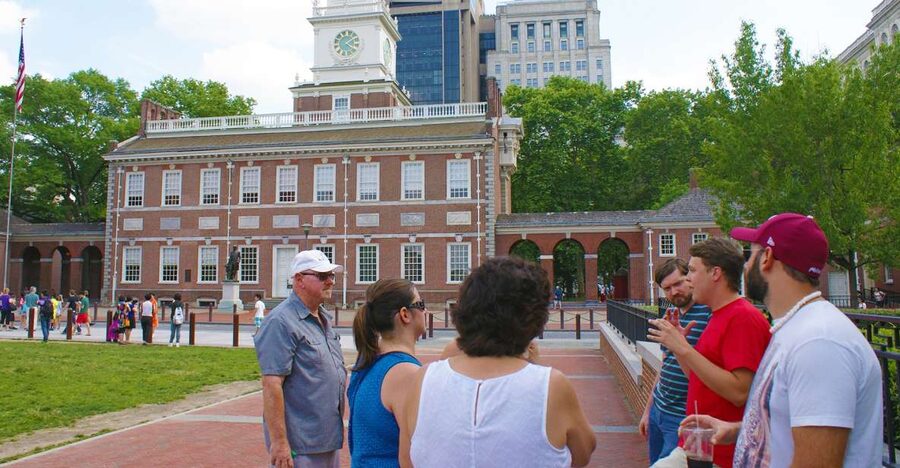
Independence Hall is the emotional center of the tour. This is where the Declaration of Independence and the United States Constitution were created, and your guide explains the building’s role in those events.
The itinerary lists Independence Hall as a guided sightseeing stop and pass-by, so you should not book this experience expecting a full interior tour of the building. That is an important distinction. If you want to walk through the rooms themselves, you will need to arrange a separate visit.
Congress Hall sits nearby and helps show how the new government operated after independence. Seeing it alongside Independence Hall gives you a clearer sense of the area as a working political center, not just a collection of preserved facades.
I like this part because your guide can supply the context that a quick photograph cannot. You learn why these buildings mattered, how the political process unfolded, and why Philadelphia became such an important stage during the founding period.
The Liberty Bell photo stop
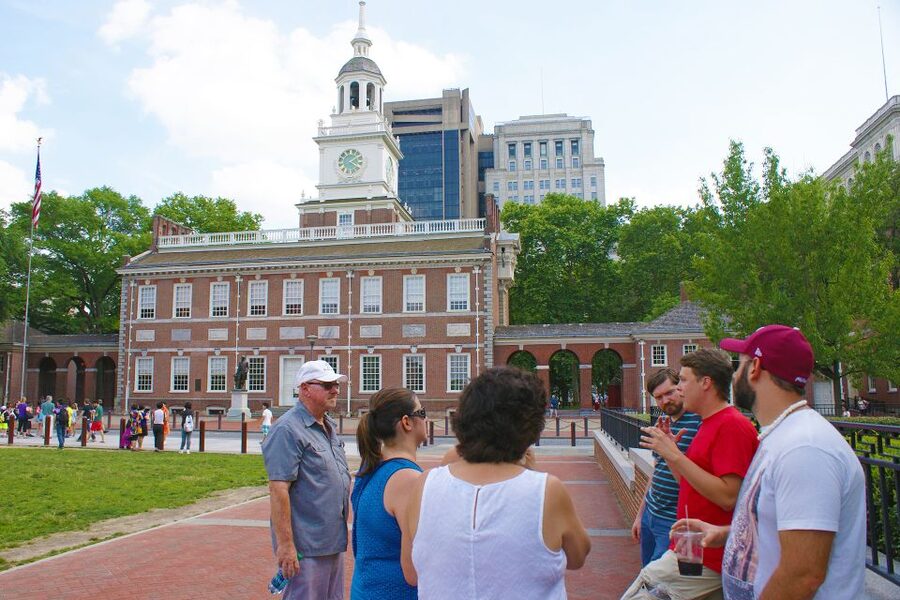
The Liberty Bell is one of the easiest symbols of American freedom to recognize. The tour includes a guided visit and photo stop, allowing you to see the bell and hear about its place in Philadelphia’s public memory.
This portion is likely to appeal to first-time visitors, families, and anyone with limited time. You get the essential experience without spending the whole afternoon on one attraction.
Keep in mind that the stop is presented as sightseeing and photography rather than a full independent visit with extended time inside the Liberty Bell Center. If you want to examine the bell at length or explore its exhibits, plan additional time after the walk.
The guide helps prevent the stop from becoming a quick photograph with no context. You learn why the bell became such a powerful symbol and how it fits into the larger story of American independence.
Same streets, a different way to see them:
- New Orleans Premier Ghost, Voodoo and Vampire Walking Tour
★ 4.5 · 12,856 reviews - Little Havana Food and Walking Tour in Miami
★ 5.0 · 8,882 reviews - Chicago: Gangsters and Ghosts Walking Tour
★ 5.0 · 7,155 reviews - New Orleans Food Walking Tour of the French Quarter with Small-Group Option
★ 5.0 · 6,118 reviews
Carpenters’ Hall and the less familiar founding story
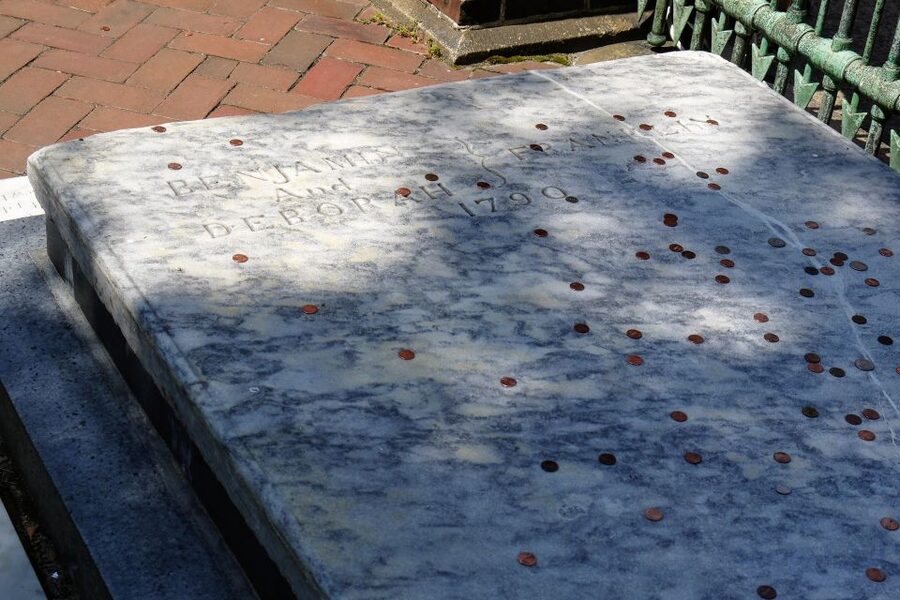
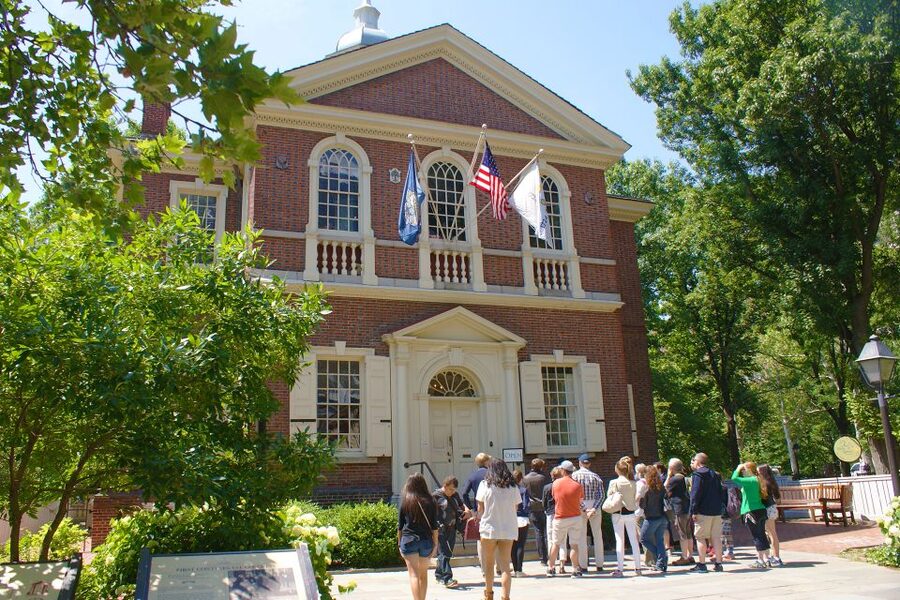
Carpenters’ Hall gives the route a welcome change of pace. It is less instantly familiar than Independence Hall, but it helps broaden the story beyond the most famous names and buildings.
This is one of the stops where a guide’s storytelling matters most. The group can connect the building to the meetings, trades, and civic activity that helped Philadelphia function during a period of political upheaval.
I appreciate that the tour does not treat the Revolutionary era as the work of only a few celebrated men. The experience also points toward the contributions of ordinary workers, enslaved people, women, craftspeople, and others who shaped the city and the new nation. The exact emphasis can vary with the guide, so ask questions if you want more attention on those voices.
The Museum of the American Revolution presentation
The museum portion is the tour’s strongest indoor feature. You receive a special presentation at the Museum of the American Revolution, including George Washington’s wartime tent.
That tent gives the military story a more personal scale. Washington is often presented as a distant national figure, but the tent connects him to the physical demands of campaigning and leadership during the war.
The experience includes a live demonstration or presentation, depending on the scheduled format. Several people have also described a short film or museum presentation as part of their visit, so the exact format may vary. The important point is that you are not simply standing outside the museum and hearing a sales pitch. You get a focused introduction to one of the museum’s major objects.
Your ticket also includes discounted admission to the museum after the tour. That is useful if you want more time with the exhibits, since the walking portion can only offer a brief look. I would treat the tour presentation as an introduction, then return later if you want a fuller understanding of the war and its competing viewpoints.
The museum stop also improves the value of the $45 price. You are paying for a live guide, the national park service fee, the presentation, and a discount toward a larger museum visit. The tour is not the cheapest way to see Old City, but it combines several landmarks with interpretation and a follow-up option.
Elfreth’s Alley and everyday colonial Philadelphia
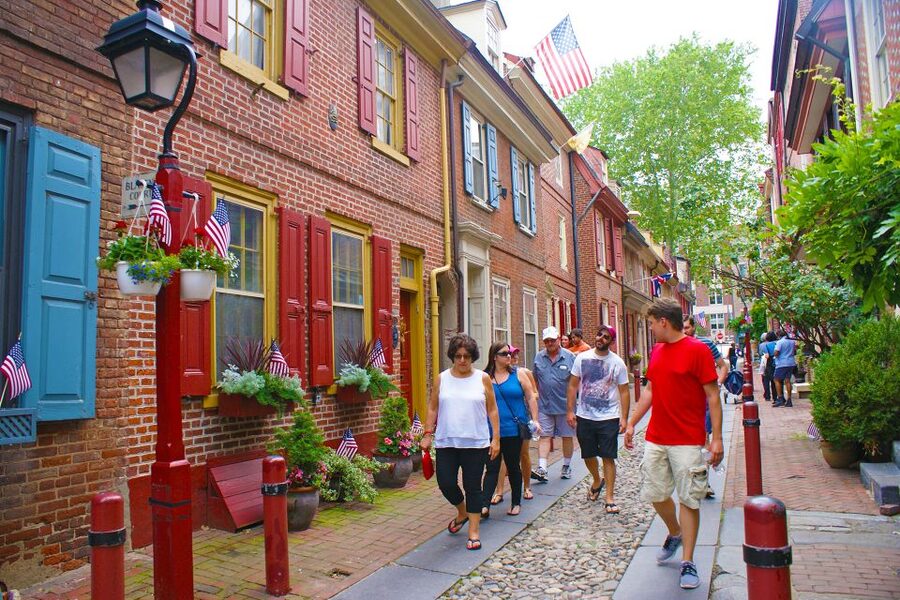
Elfreth’s Alley is one of the most memorable stretches of the route. It is known as the nation’s oldest continuously inhabited residential street, and its narrow lane and historic homes offer a different view of Philadelphia from the grand political buildings.
Here, the story becomes more domestic. Instead of focusing only on presidents, generals, and declarations, you get a sense of how people lived in the city’s homes and neighborhoods.
This stop is especially good for photographs, but your guide adds value by explaining what the houses represent. The setting helps you picture Philadelphia as a lived-in city, not simply the place where famous documents were signed.
The drawback is that a short group tour cannot explore every house or provide a complete architectural survey. Think of Elfreth’s Alley as a vivid introduction, with the option to return if you want a slower look.
Betsy Ross House and the limits of famous stories
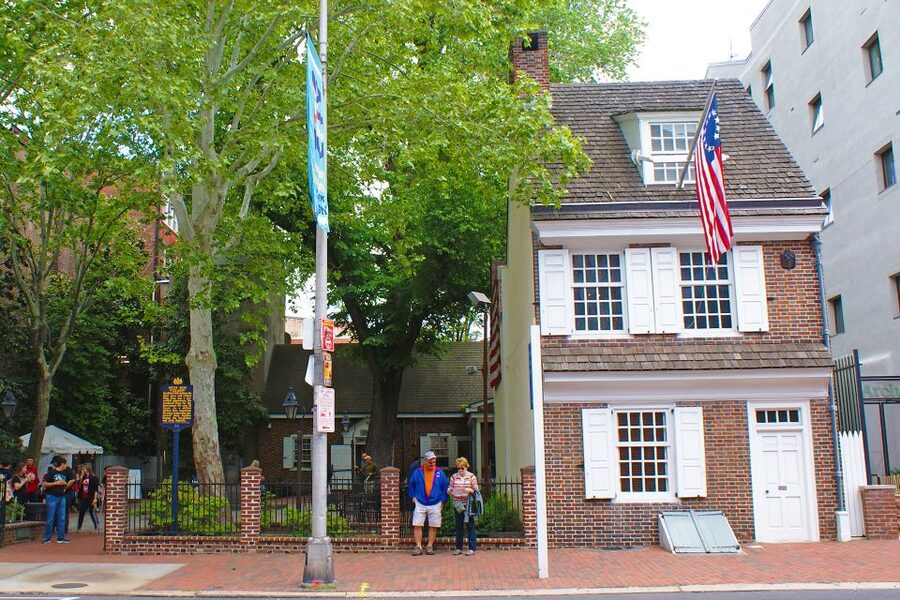
The Betsy Ross House is another popular photo stop. Ross is widely credited with creating the first American flag, making her home one of the most recognizable locations on the route.
Your guide discusses the story and the way her reputation became part of the national founding narrative. This is a useful chance to consider how historical traditions are formed and repeated.
The tour includes a guided visit to the site, but the overall schedule remains tight. You should not expect the same amount of time as a dedicated house tour. If Betsy Ross or women’s roles in the Revolution are central interests for you, ask your guide for more detail and consider returning later.
Benjamin Franklin’s grave and the working city
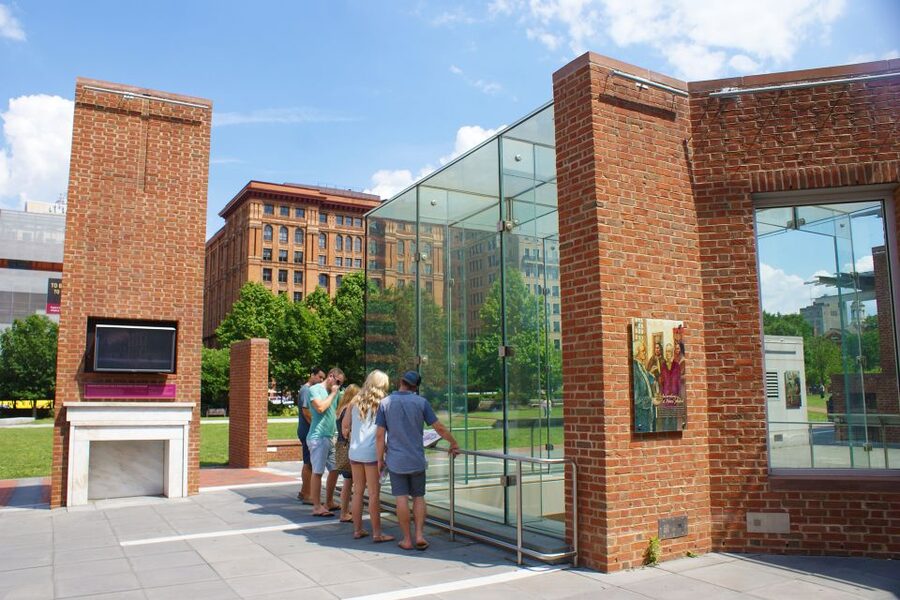
The stop at Benjamin Franklin’s burial site offers a quieter moment. Franklin is tied to science, publishing, diplomacy, civic projects, and the founding of the United States, so his grave provides a natural place to connect several parts of Philadelphia’s story.
This is listed as a photo stop and guided sightseeing stop. It is not a long cemetery visit, but it adds a personal note to the route.
The final portion includes North 6th Street and Market Street, where your guide continues pointing out the relationship between the historic district and modern Philadelphia. You finish in Old City, which makes it easy to continue sightseeing, find lunch, or visit the museum with your discounted admission.
Several guides have offered food recommendations at the end, and the timing can work well for a meal afterward. One guide even directed a group toward Campos, a useful tip if you are ready for a quick Philadelphia sandwich after two and a half hours on foot.
How much value do you get for $45?
At $45 per person, this tour is priced above a basic free walk but below the cost of building the same experience from separate guided visits. The value depends on how much help you want connecting the sites.
If you already know Philadelphia well and prefer to read plaques at your own speed, you may find the tour too structured. You will also need to pay attention to the difference between passing a landmark, taking a photo, and entering a museum.
For a first visit, I think the price is fair. You receive a local English-speaking guide, a 150-minute route, the national park service fee, a museum presentation, discounted museum admission, and a donation to a local community organization.
The donation is a worthwhile touch. It gives the ticket a local benefit beyond the time spent with your guide, though the supplied details do not name the organization or state the donation amount.
Walking pace, accessibility, and practical planning
The tour is listed as wheelchair accessible. Even so, contact the provider if you have specific mobility needs, since the experience takes place across historic streets and public areas and includes a steady amount of walking.
Wear supportive shoes. The route covers several Old City neighborhoods, and stopping often does not mean you are standing still for the entire time.
Allow extra time if you are driving. Old City has parking lots and garages, but street or metered parking is a poor choice because the maximum time may be two hours, shorter than the tour.
You can cancel up to 24 hours before the activity for a full refund, and you can reserve now while paying later. The tour is offered in English with a live guide.
Who should take this tour?
I would choose this tour if you have a half day in Philadelphia and want a clear introduction to the historic district. It is also a good fit for families, school-age children, first-time visitors, and adults who know the famous names but want a better sense of how the pieces connect.
The experience appears particularly strong for people who enjoy questions and conversation. Guides have adjusted their explanations for teenagers, older relatives, and groups with specific interests. Small groups have also been praised for making the walk more personal, though group size can vary by departure.
I would be more cautious if you dislike outdoor walking, want extended time inside every attraction, or prefer to explore without a guide. The tour gives you a broad and well-organized introduction, not a full visit to every museum and historic house.
Should you book the Philadelphia Revolution Walking Tour?
Book it if you want the main Old City sights explained by a lively local guide rather than visited as disconnected photo stops. The combination of Independence Hall, the Liberty Bell, Elfreth’s Alley, Betsy Ross House, Franklin’s grave, and the Museum of the American Revolution makes good use of 150 minutes.
The strongest reason to go is the quality of the guiding. Adam, Tom, David, Nina, John, Caroline, and PJ have all been praised for clear explanations, humor, patience, and genuine enthusiasm for Philadelphia.
Just set your expectations correctly: you will see some major landmarks from the outside, the museum presentation is brief, and the walking route is only an introduction. For a first look at Philadelphia’s founding story, the $45 price is sensible. I would take the tour early in your stay, then return to the museum or any site that deserves more time.
FAQ
How long is the Philadelphia history walking tour?
The tour lasts 150 minutes, or two and a half hours.
Where does the tour begin?
Meet your guide at the Signer Statue in Signer’s Garden.
Where does the tour finish?
The tour finishes in Old City.
Is the tour offered in English?
Yes. It includes a live English-speaking guide.
Does the tour enter Independence Hall?
Independence Hall is listed as a guided sightseeing and pass-by stop. The provided details do not include an interior visit.
Is admission to the Museum of the American Revolution included?
The tour includes a special presentation at the museum and discounted admission that you can use after the tour. Full museum admission is not listed as included.
Does the tour include the Liberty Bell?
Yes. The Liberty Bell is included as a guided sightseeing and photo stop.
Is the tour wheelchair accessible?
Yes, the activity is listed as wheelchair accessible.
What happens if I need to cancel?
You can cancel up to 24 hours in advance for a full refund.
Can I pay later?
Yes. You can reserve your place and pay later, keeping your plans flexible.
More City Highlights Walking Tours in the USA
- Highlights of Charleston Guided Walking Tour
★ 5.0 · 2,206 reviews - Downtown Nashville Guided Sightseeing Walking Tour
★ 5.0 · 1,304 reviews - Boston History Tour: Scenic Walk Through Time & Landmarks
★ 5.0 · 627 reviews - Downtown Asheville Tip-Based Sightseeing Walking Tour
★ 5.0 · 360 reviews
Just added around the USA
- Walking Tour of Boston’s Freedom Trail★ 4.5 · 77 reviews
- Downtown Freedom Trail Walking Tour – History & Architecture★ 4.5 · 194 reviews
- Boston Seafood Lovers Food and History Walking Tour★ 5.0 · 208 reviews
- Boston “Death and Dying” Walking Ghost Tour★ 4.5 · 223 reviews
- Boston Food of the North End Private Walking Tour★ 5.0 · 174 reviews
- Boston Movie Mile Walking Tour★ 4.5 · 119 reviews
- Boston Historic Taverns Tour with Tastings and Ferry★ 5.0 · 156 reviews
- 1 If By Land Walking Tours★ 5.0 · 95 reviews
History Walking Tours, compared.
History and Hauntings of Salem Guided Walking Tour
Read our review →
Freedom Trail History Small Group Walking Tour
Read our review →
Historic Charleston Guided Sightseeing Walking Tour
Read our review →
Tapas Walking Tour with Food, Wine, and History
Read our review →
Savannah History and Haunts Candlelit Ghost Walking Tour
Read our review →
A History of Terror – Belfast City Centre Walking Tour
Read our review →Browse the lists this tour appears in