Review · HISTORY WALKING TOURS
Rio de Janeiro: Little Africa Heritage Walking Tour
History lives under your feet here. This 150-minute walk through Rio’s port district brings Brazil’s African past into view, from Cais do Valongo to the streets where samba took shape. I like the rooftop pause at the Rio Art Museum, with its broad look over Mauá Square and Guanabara Bay, and I like the way the tour connects slavery, food, dance, music, and present-day racial life. The main drawback is simple: you spend about two and a half hours outdoors, often in strong heat, and the tour runs rain or shine.
The guides are the heart of the experience. Luana, Nathalia, Larissa, Ryane, Marina, Eddie, Raquel, and others have been praised for warmth, clear English, humor, and a personal connection to Afro-Brazilian culture. I especially value a guide who can handle difficult subjects such as slavery, structural racism, and sexism without turning the walk into a lecture.
You meet in front of the Rio Art Museum and return there at the end. There is no hotel pickup, and you need to arrive five minutes early because the guide waits only 15 minutes. Comfortable shoes, water, sunscreen, and light clothing are not optional extras here. They are your basic walking kit.
Key points to know before you go
- The tour begins at the Rio Art Museum: You get an early view of Mauá Square and Guanabara Bay before walking into the port district.
- Little Africa is the main subject: The route explains how formerly enslaved people shaped this part of Rio after Brazil ended the slave trade.
- Pedra do Sal connects history with samba: This stop is linked to the birth of samba and remains one of the most meaningful places on the walk.
- Cais do Valongo is the hardest stop: The former slave landing site gives the tour its most serious and sobering focus.
- The guides add real personality: Luana, Nathalia, Larissa, Ryane, Marina, Eddie, and Raquel have all been praised for strong storytelling and thoughtful answers.
- The price is fair for a focused history walk: At $40 per person, you are paying for a specialist guide and a carefully connected route, not transport or food.
Why Little Africa belongs near the top of your Rio list
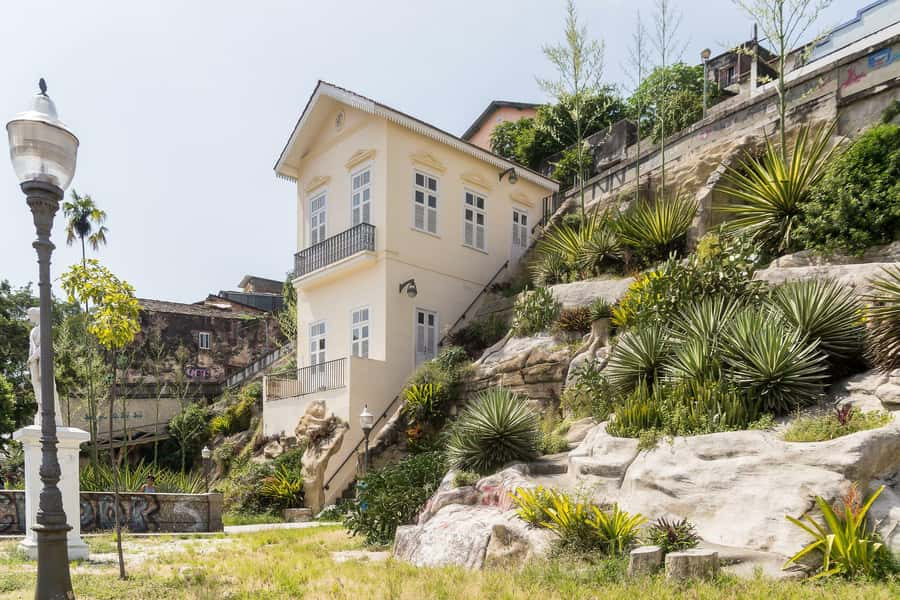
Rio is often sold through beaches, viewpoints, carnival, and football. Those are all part of the city, but they do not explain the full story. The port area gives you a clearer look at how African people shaped Brazilian society, even as their history was ignored or softened in many popular city tours.
At the turn of the 20th century, several port neighborhoods became known as Little Africa. Freed people remained in the area after the slave trade was outlawed, working, building families, making music, preparing food, and creating traditions that still shape Rio.
That context makes this walk useful early in your trip. One person described taking it near the start of a Brazil visit and finding that it helped make the country easier to understand. I agree with that logic. The walk gives you a framework for seeing food, music, religion, dance, and race in a more informed way.
The subject is not light. You will hear about slavery and the treatment of African people in Brazil. A good guide needs to be direct without being careless, and the guides on this experience are repeatedly praised for doing just that. Nathalia, in particular, has been singled out for answering sensitive questions with both honesty and good judgment.
More History Walking Tours in the world:
- History and Hauntings of Salem Guided Walking Tour
★ 5.0 · 14,564 reviews - Lisbon: History, Stories and Lifestyle Walking Tour
★ 4.8 · 10,902 reviews - Boston: Freedom Trail History Small Group Walking Tour
★ 5.0 · 6,450 reviews
Starting at the Rio Art Museum and Mauá Square
The meeting point is in front of the Museu de Arte do Rio. This is a practical location in the port district, but you should not treat the museum stop as a quick photo opportunity. The guide begins with Brazil’s colonial period, creating the background needed for the rest of the walk.
That opening matters. Without it, the later stops could feel like disconnected sites. With it, you can follow the links between colonial labor, the slave trade, emancipation, migration, and the formation of Afro-Brazilian communities.
There is also a 10-minute break at the museum. From the rooftop, you can look across Mauá Square toward Guanabara Bay. This is one of the tour’s best visual moments because the view gives you Rio’s port setting before the guide turns your attention to the people who lived and worked around it.
The rooftop pause also gives your feet a short rest. Do not expect a long museum visit or time to study exhibitions. The attraction here is the view and the introductory explanation.
Morro da Conceição: a neighborhood with layers
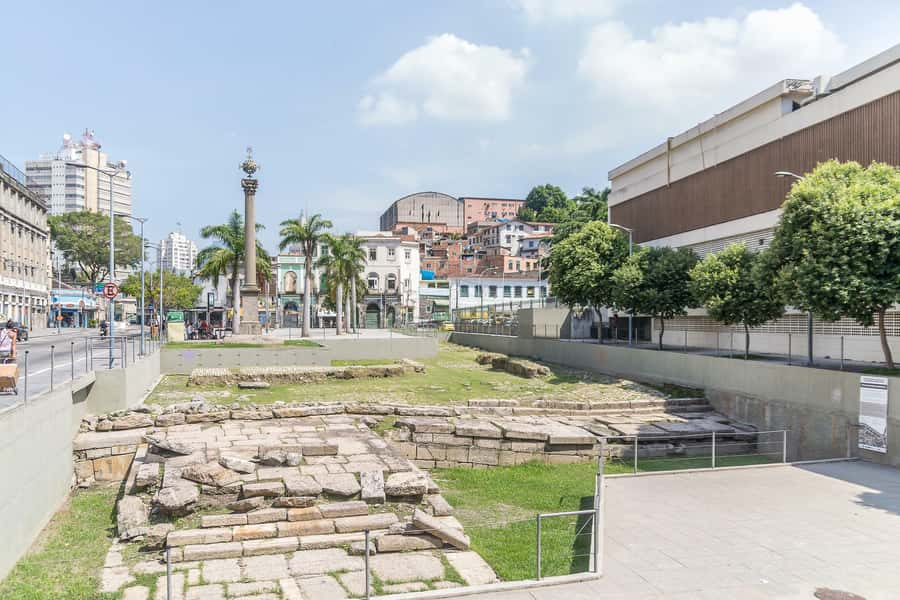
The walk continues toward Morro da Conceição, with about 20 minutes devoted to guided walking. The hill gives the route some physical variety and helps you see that Little Africa is not a single monument or neatly marked district. Its story is spread through streets, slopes, buildings, plazas, art, and memories.
Your guide will point out details that are easy to pass without context. This is one reason a local guide adds value. Alone, you could walk through the port area and see attractive old buildings or street art without understanding who lived there, what changed, and why the district matters.
The walk is not designed as a strenuous hike, but it is still a city walk with some uneven surfaces and outdoor exposure. If you dislike walking in heat, the weather will affect your enjoyment. A participant described being outside in the heat for the full two and a half hours, while another praised a guide who continued during heavy rain. The tour’s rain-or-shine policy is useful to know before booking.
Largo de São Francisco da Prainha and Afro-Brazilian food
Largo de São Francisco da Prainha brings the story closer to daily life. The stop focuses on African influence in Brazilian gastronomy, a subject that can make history feel immediate rather than distant.
Food traditions often carry memory in ways that textbooks do not. Ingredients, cooking methods, and shared dishes show how African culture continued through generations, even under brutal conditions. Here, the guide links the port community to the food culture you may encounter elsewhere in Rio and Brazil.
This is also one of the places where the walk may leave you hungry. Food is not included, but several guides have offered suggestions for eating afterward. One group continued to lunch at a restaurant serving bobó de camarão, a shrimp stew, after receiving recommendations from Nathalia. Another participant wished the tour included lunch near the plaza with its bars and restaurants.
That gives you a useful plan: take notes on the food suggestions and stay in the area afterward if your schedule allows. Do not expect a tasting during the paid tour. The value here is the explanation, not a meal.
A few more walks around the world worth a look
- Magical London: Harry Potter Guided Walking Tour
★ 4.7 · 22,044 reviews - Reykjavik Food Walk – Local Foodie Adventure in Iceland
★ 5.0 · 18,952 reviews - New Orleans Premier Ghost, Voodoo and Vampire Walking Tour
★ 4.5 · 12,856 reviews - Amsterdam Anne Frank: Small-Group Walking Tour & Local Guide
★ 4.8 · 12,789 reviews
Mercedes Baptista and the place of Afro dance
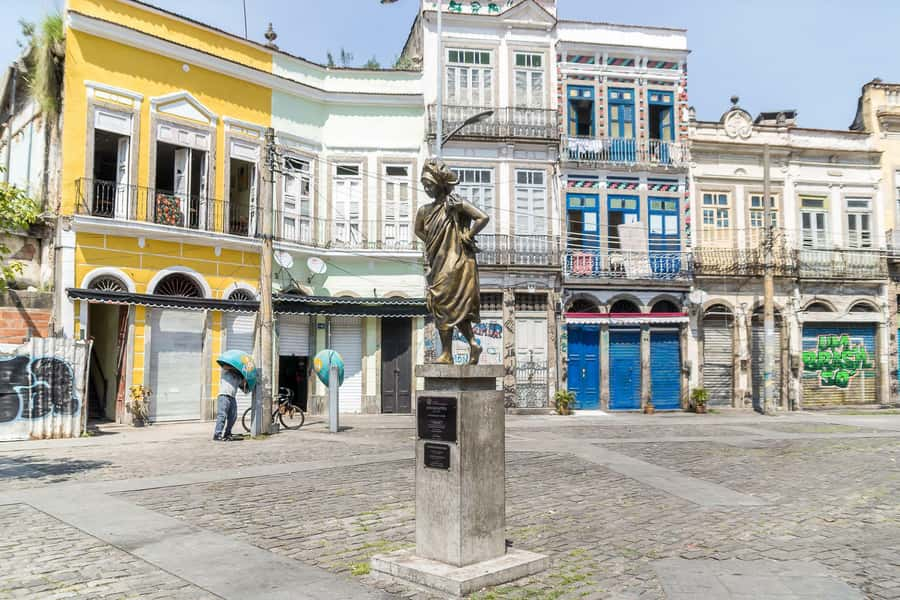
The tour includes a statue honoring Mercedes Baptista, a major figure in Brazilian dance. She was the first Black dancer at Rio’s Municipal Theater and a forerunner of Afro dance in Brazil.
This stop broadens the walk beyond slavery and samba. It shows how Black artists challenged exclusion in formal cultural institutions and helped establish new forms of expression. The subject also gives your guide room to discuss how race and opportunity shaped Brazilian performing arts.
The statue is a useful reminder that public memory matters. Whom a city honors, where it places those memorials, and how guides explain them all influence how you understand the city. This is not simply a stop for a photograph. It is a chance to see the connection between personal achievement and wider cultural change.
Pedra do Sal and samba’s birthplace
Pedra do Sal is the tour’s most musical stop. It is considered the place where samba was born, and it sits within the oldest continuously inhabited Black neighborhood in Brazil.
The site links community life to music. Samba did not appear from nowhere as a polished performance for tourists. It grew from African musical traditions, social gatherings, local neighborhoods, and the creativity of people whose cultural contributions were often pushed aside.
Your guide may also connect Pedra do Sal to the broader story of Rio’s African diaspora. One participant described the guide’s explanations as a way to understand how Little Africa connects with the wider world. That larger view is important. This is not only a local Rio story. It is part of the history of African people and their descendants across the Americas.
If you have heard samba mainly through carnival images, Pedra do Sal helps put the music back into a community setting. The stop may be brief, around 20 minutes, but it is one of the places where the tour’s themes come together most clearly.
The Hanging Garden of Valongo
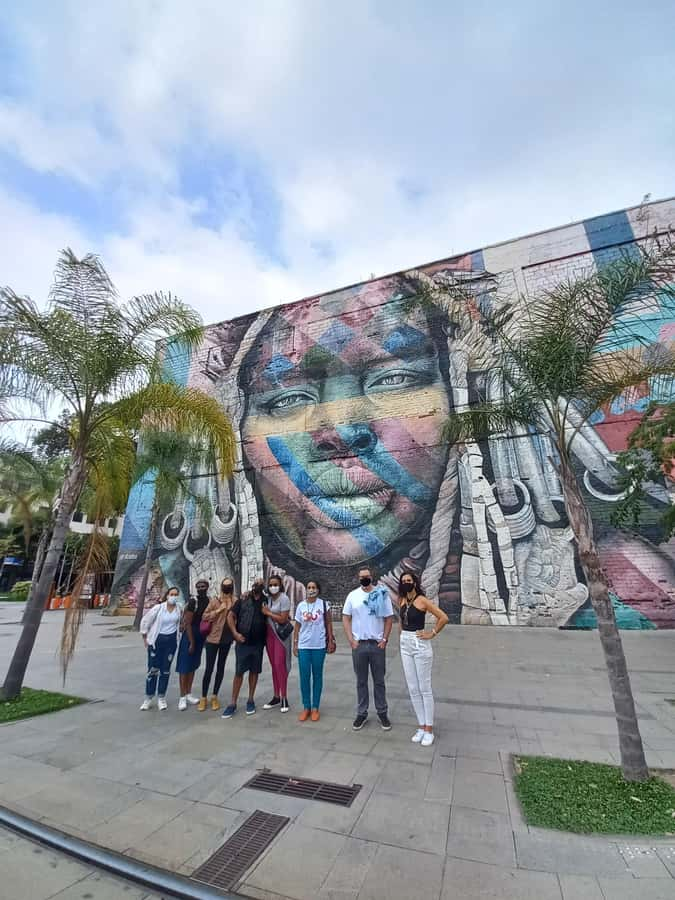
The Jardim Suspenso do Valongo, or Hanging Garden of Valongo, brings you to another part of the port’s difficult past. The garden occupies a place connected to the former Valongo area and offers a quieter setting for the guide to explain what happened here.
This stop works as a transition before the final visit to Cais do Valongo. You move from the neighborhood’s living culture to a place where the physical evidence of the slave trade carries more weight.
The guide’s delivery matters here. The topic calls for care, and the strongest accounts of this tour praise guides who balance seriousness with warmth. Larissa, for example, has been praised for explaining the horrors of slavery while also discussing present-day racial dynamics and inviting thoughtful questions.
You should expect emotional material. This is not a cheerful sightseeing walk with a few historical facts added for decoration. The tour asks you to look at how Brazil was built and to consider who paid the price.
Cais do Valongo, the final and most serious stop
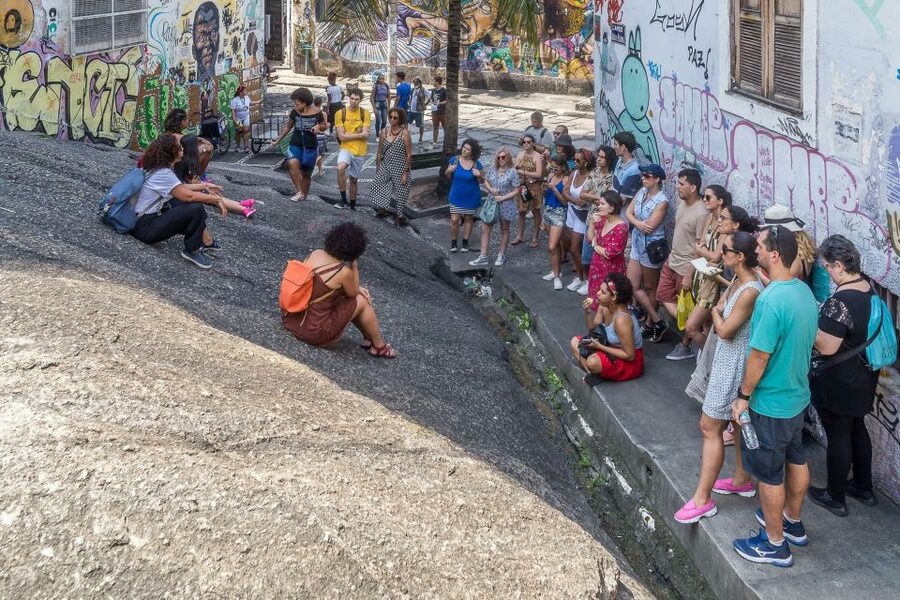
The route ends at Cais do Valongo, the former landing site associated with enslaved Africans brought to Brazil. This is the point where the history becomes hardest to absorb.
A short visit cannot explain every part of Brazil’s slave system, and you should not expect a complete course in national history. What the guide can do is place the site in context and show why it matters to Rio, Brazil, and the African diaspora.
The tour’s strength is its progression. You begin with colonial history, walk through a living neighborhood, see African influence in food and dance, connect the area with samba, and then reach the site tied directly to enslavement. That structure makes the final stop more powerful than it would be as an isolated monument.
After Cais do Valongo, you return to the Rio Art Museum. The route does not include hotel drop-off, so plan your next move in advance. Several guides have helped people arrange a ride or offered suggestions for food and further sightseeing, but you should not count on private assistance as part of the formal service.
The guides make the biggest difference
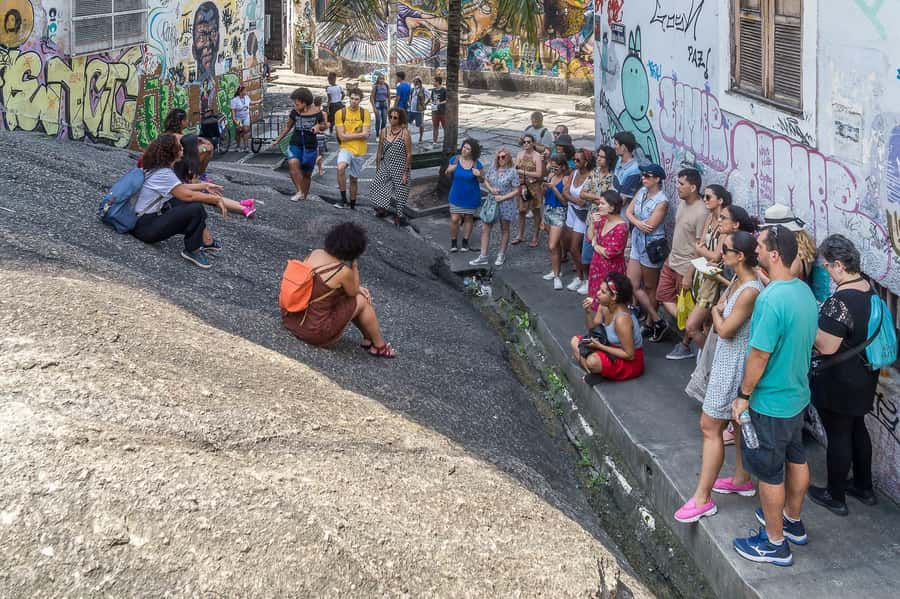
The strongest part of this experience is the guiding. The tour has been led by several people, and the names that come up repeatedly include Luana, Nathalia, Larissa, Ryane, Marina, Eddie, Raquel, and others.
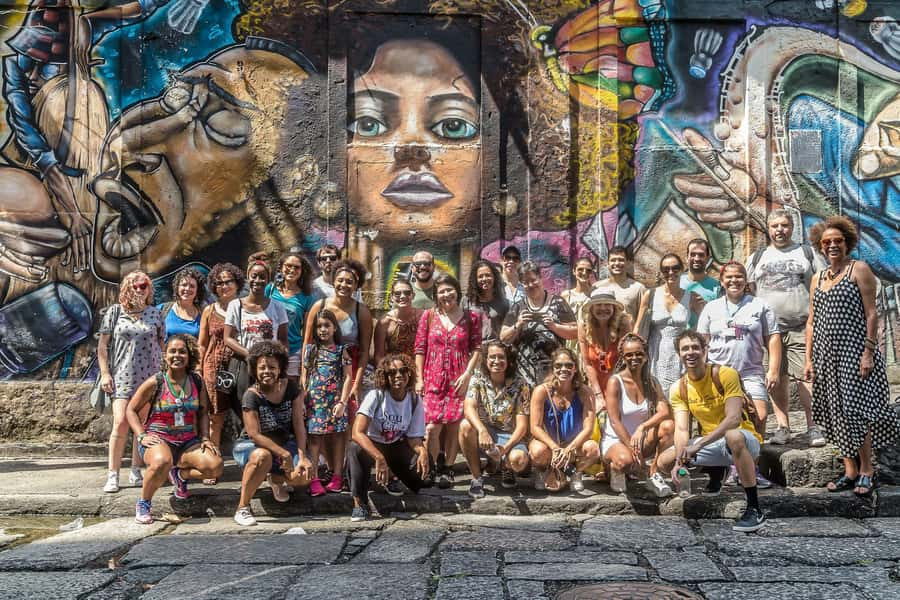
Their shared strengths are clear: strong storytelling, warmth, enthusiasm, and the ability to discuss serious subjects in plain language. One guide used facial expressions and a touch of performance to bring explanations to life. Another asked questions that encouraged the group to reflect rather than simply listen.
Personal background can add another layer. Marina has been described as a Carioca with family experiences connected to the history, as well as formal study in Afro-Brazilian history. Eddie has been praised for his love of his community and family. Ryane has made a strong impression through her energy and passion for telling the story.
Guide assignments can change, so you cannot book the tour expecting one particular person unless the provider confirms it. Still, the consistent praise across different guides suggests that the experience has a strong guiding team rather than relying on one star performer.
Is $40 a fair price?
At $40 per person, this is not the cheapest way to spend a morning in Rio. You are paying for a 150-minute guided walk, not transportation, meals, museum admission, or a full-day excursion.
I think the price is fair if you want focused interpretation. The route covers several meaningful locations, and the guide does more than point at buildings. You get historical context, cultural connections, local recommendations, and a chance to ask questions about difficult subjects.
The value is lower if you prefer to move quickly or only want major sights. The walk includes pauses and explanations, so it rewards curiosity more than checklist sightseeing. It is also less suitable for very young children, as children under five are not accepted and the subject matter may be challenging for older children too.
Flexible booking helps. You can reserve now and pay later, and cancellation is free up to 24 hours before the tour for a full refund. Those policies are useful when Rio’s weather or your daily plans are uncertain.
Practical advice for a comfortable walk
Wear shoes that can handle several city blocks and uneven ground. Bring water, sunscreen, and comfortable clothing, since the tour takes place outdoors and continues in poor weather.
Arrive five minutes early at the museum. The guide waits only 15 minutes, and there is no hotel pickup. The activity is offered in English, with an English-speaking guide, and the supplied information also lists Portuguese among the guide options, so confirm your selected language when booking.
Give yourself extra time after the tour if you want lunch. The route passes places connected with local food, and guides have offered recommendations for restaurants and markets. A few groups continued their day together after the walk, which suggests the tour can be a good social start to exploring the port district, though any meal or extra activity is separate.
Who should book the Little Africa walk?
I would choose this tour if you want to understand Rio beyond its postcard views. It suits first-time visitors who want useful historical context, people interested in the African diaspora, and anyone who prefers a local story told through streets and public places rather than a museum display alone.
It is also a strong choice for visitors who enjoy asking questions. The guides appear comfortable discussing race, slavery, culture, and present-day Brazil, and the best experience will come from listening closely and joining the conversation.
I would think twice if you want shade, air conditioning, a relaxed pace, or a light introduction to Rio. The subject is serious, the walk is outdoors, and rain or heat can make the 150 minutes feel longer.
Should you book it?
Book the Little Africa Heritage Walking Tour if you want one of Rio’s most meaningful history-focused experiences. The route is compact, the guide quality appears consistently strong, and the connections between food, dance, samba, slavery, and modern racial life give you a fuller view of Brazil.
The best plan is to take it early in your visit, wear proper shoes, and leave time for lunch afterward. At $40, it offers good value for a specialist cultural walk, especially if you want context that a standard city tour may skip.
FAQ
Where does the Little Africa Heritage Walking Tour begin?
It begins in front of the Museu de Arte do Rio. You should arrive five minutes before the scheduled start.
How long does the tour last?
The tour lasts 150 minutes, or two and a half hours.
What places does the tour visit?
The route includes the Rio Art Museum, Morro da Conceição, Largo de São Francisco da Prainha, Pedra do Sal, the Jardim Suspenso do Valongo, and Cais do Valongo. It returns to the Rio Art Museum.
Is hotel pickup included?
No. Hotel pickup and drop-off are not included. You meet the guide at the museum and return there after the walk.
What should I bring?
Bring comfortable shoes, sunscreen, water, and comfortable clothing. The tour takes place outdoors and operates rain or shine.
Is the tour available in English?
Yes. The supplied activity information lists a live English-speaking guide and says the tour is offered in English. It also lists Portuguese among the guide language options, so confirm your chosen language when booking.
Just added around the world
- Bern Private Walking Tour with a Local★ 4.5 · 75 reviews
- Berlin Walking Tour★ 4.5 · 378 reviews
- Bern Walking Tour: Explore Top Sights & Hidden Gems★ 5.0 · 108 reviews
- Berlin Street Art Walking Tour – Off The Grid★ 5.0 · 270 reviews
- Berlin Highlights Private Guided Walking Tour★ 4.5 · 89 reviews
- Small Group Walking Tour of East Berlin with a French Guide★ 5.0 · 176 reviews
- Private Walking Tour: World War 2 and Cold War Sites in Berlin★ 5.0 · 230 reviews
- Kreuzberg Berlin: Off the Beaten Track PRIVATE Walking Tour★ 5.0 · 128 reviews
History Walking Tours, compared.
History and Hauntings of Salem Guided Walking Tour
Read our review →
Freedom Trail History Small Group Walking Tour
Read our review →
Historic Charleston Guided Sightseeing Walking Tour
Read our review →
Tapas Walking Tour with Food, Wine, and History
Read our review →
Savannah History and Haunts Candlelit Ghost Walking Tour
Read our review →