
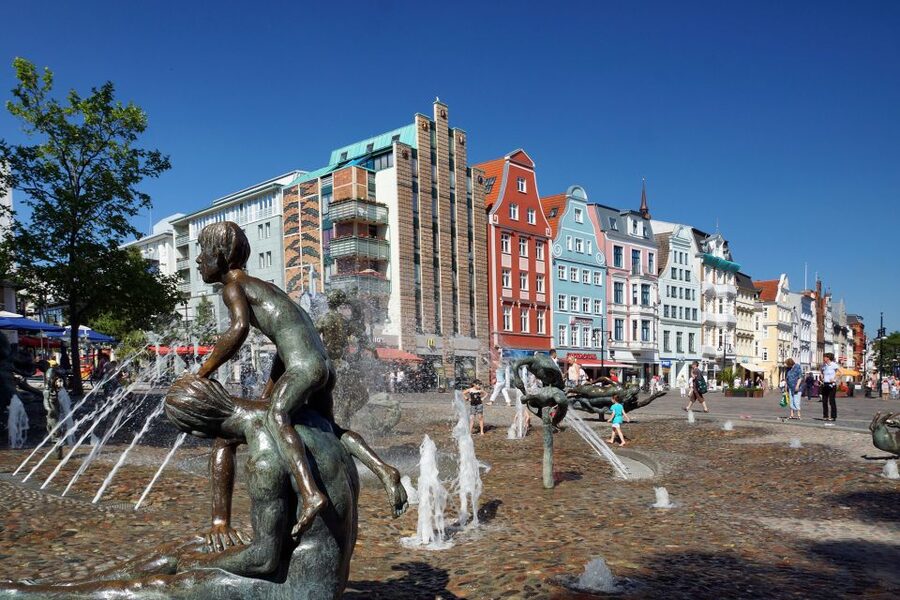
Review · GERMANY WALKING TOURS
Rostock: City Walking Tour
Rostock rewards a closer look. This two-hour private walking tour brings you through the Hanseatic city center, from the Rathaus and Gothic churches to old alleys, harbor views, and the medieval city wall. I like the clear focus on seeing the city rather than sitting through a long lecture, and I like that your guide can answer questions as you walk. The main consideration is language: the live tour is offered in German.
You meet at the main entrance of the Rathaus, beneath the Greif, Rostock’s griffin symbol. From there, the route covers the key sights of the old town and historic harbor area. I also appreciate the small private format, since a group of up to six makes it easier to hear the guide and ask for the background that interests you.
Key points to know before booking
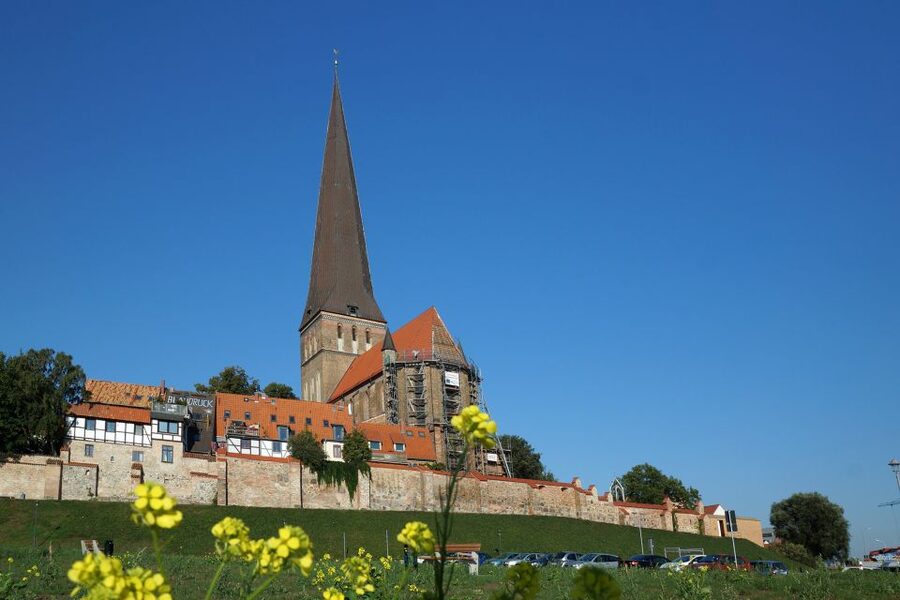
- The tour begins beneath the Rathaus Greif: The meeting point is easy to identify at the town hall’s main entrance.
- You see Rostock on foot in two hours: The route links the old town, harbor area, university square, churches, alleys, and city wall.
- The focus is sightseeing, not a long history lecture: The guide keeps the pace centered on the city itself, with background information added along the way.
- It is a private group for up to six people: You get a more personal outing than a large public walking tour.
- The tour is conducted in German: This is important to confirm before booking.
- Mobility is a real consideration: The activity is not suitable for people with mobility impairments.
Starting under the Greif at Rostock Rathaus
Your introduction to Rostock begins at the Rathaus, the city’s town hall, at the main entrance under the Greif symbol. This is a practical meeting point because it puts you directly in the center of the old town rather than at a remote office or transport stop.
The griffin matters here. It gives you a clear visual marker and ties the meeting place to Rostock’s civic identity. If you are arriving independently, look for the main entrance and the symbol above it. You will not need to search for a guide in a broad square without a fixed landmark.
The tour’s starting point also sets the tone. Rostock is not presented as a collection of disconnected sights. You begin with the civic center, then move outward through streets and public spaces that show how the town developed from its medieval roots into a modern northern German city.
The exact order of stops can vary, but the tour is designed as a connected walk through the old town and historic harbor area. That matters because Rostock is best understood at street level. You can see how the buildings, lanes, waterfront, and public squares relate to each other instead of viewing each one as an isolated photo stop.
A few more walks around Germany worth a look
- Discover Berlin Half-Day Walking Tour
★ 5.0 · 9,624 reviews - Berlin City walk Government District and Places of Democracy
★ 4.7 · 8,467 reviews - Berlin: Third Reich & Cold War Guided Walking Tour
★ 4.9 · 8,378 reviews
Old-town alleys and the medieval city wall
The old-town section gives you the basic shape of historic Rostock. You will walk through older streets and alleys, where the appeal comes from the close-up details: changing building fronts, narrow passages, historic traces, and the way the city opens into larger squares.
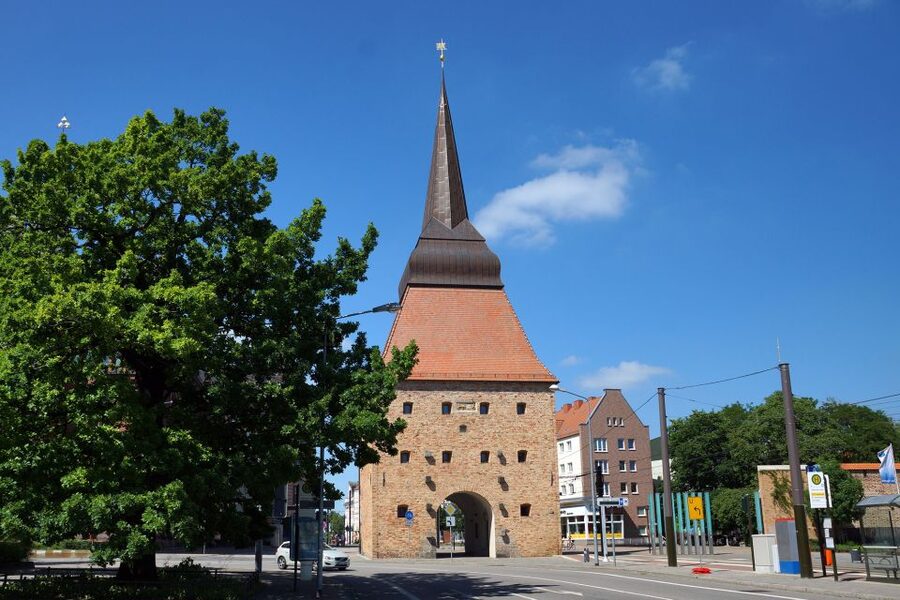
The medieval city wall adds useful context. It is not just another old structure to photograph. It helps you understand the limits of the earlier town and the way Rostock was protected and organized. A guide can point out what remains, explain its place in the city, and help you see the wall as part of a larger urban system.
I like this kind of stop because it turns a casual walk into a readable one. Without explanation, a wall can look like a fragment. With the right context, you begin to see why it was built, how it shaped movement through the city, and what its survival says about Rostock’s past.
You should expect walking on city streets and through historic areas rather than a museum-style visit. That keeps the tour lively, but it also means you need comfortable shoes. Since the activity is specifically listed as unsuitable for people with mobility impairments, the route may not be a good choice if uneven surfaces, extended walking, or historic streets are difficult for you.
Gothic churches and Rostock’s older skyline
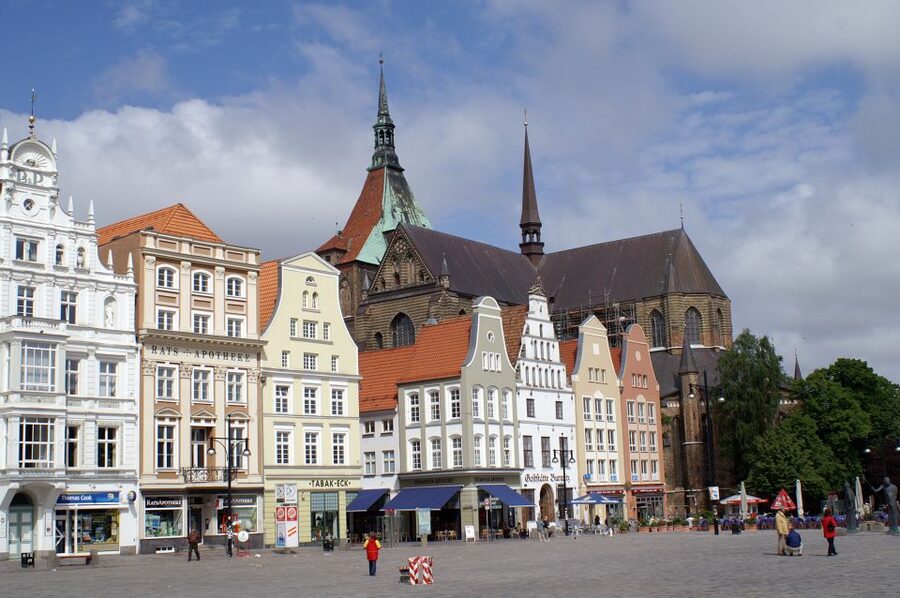
Rostock’s Gothic churches are among the major sights covered on the tour. Their height and scale give you a strong sense of the city’s former importance as a Hanseatic center. You will have a chance to discuss the churches with the guide rather than simply pass them on the way to the next stop.
The value here is the explanation. Gothic architecture can blur together after several days in northern Europe, especially if you are visiting other German towns with large brick churches. A local guide can help you notice what matters in Rostock and connect the buildings to the city’s wider story.
The tour does not promise an extended interior visit or a detailed architectural study. That is worth keeping in mind. The churches are part of a broad city walk, so the emphasis is on seeing important sites in context and asking questions, not on spending a long time inside one building.
This lighter approach suits me when I want orientation first. One particularly useful feature is the balance between information and movement. A July 2025 participant described the tour as informative without too many dates, with explanations that were easy to follow and room to ask questions. That is a good fit if you want substance without memorizing a parade of names and numbers.
Rathaus, university square, and the city’s public life
The Rathaus is both your meeting point and one of the central sights on the walk. It gives you a natural starting place for understanding Rostock’s civic center, while the university square shows another side of the city’s public life.
Together, these locations keep the tour from becoming only a procession of old buildings. The town hall represents municipal power and local administration. The university square points toward education, students, and the continuing role of the city as a place where people live and work, not just a preserved historic center.
I like tours that make room for this kind of contrast. Rostock’s appeal is not limited to medieval architecture. The route is intended to span the city’s development from its older structures into the 20th century. That wider view can help you understand how the city changed without turning the walk into a formal classroom session.
The university square should also give you a pause from the tighter old-town lanes. Public squares help you judge a city’s scale. You can look around, orient yourself, and see how the historic center functions today. The guide’s local knowledge is especially useful here, since the value of a square often lies in how it is used and connected to nearby streets.
Same streets, a different way to see them:
- Munich: Third Reich & WWII Walking Tour
★ 4.6 · 6,181 reviews - Berlin: Discover Berlin Walking Tour
★ 4.9 · 5,998 reviews - Berlin’s Best: 2 Hour Walking Tour Third Reich and the Cold War
★ 5.0 · 5,486 reviews - Berlin: Hidden Backyards Guided Walking Tour
★ 4.8 · 5,360 reviews
The historic harbor and riverside boulevards
The walk also reaches Rostock’s historic harbor area and follows riverside boulevards. This section adds a change of pace after the central streets. Instead of looking mainly at façades, you get a broader view of the city’s relationship with the water.
The harbor connection is central to Rostock’s identity as a Hanseatic city, but the tour’s emphasis appears to be on experiencing the place rather than hearing a long lecture about trade routes. One recent participant specifically liked that the guide focused on walking through the city instead of spending ten minutes talking about the Hanseatic League.
That distinction is important. If you want a detailed economic history of the Hanseatic League, this may feel too light. If you want to understand how Rostock’s public spaces, streets, and waterfront fit together, the approach should work better.
Riverside boulevards also offer a chance to see the city from a more open angle. You might find that the harbor portion becomes one of the most memorable parts of the route because it changes the visual rhythm of the walk. The old town gives you close details; the water offers space and perspective.
A private group means a more flexible conversation
The experience is priced at $147 per group of up to six people, not per person. For a full private group, that works out to $24.50 each. Even with fewer people, you are paying for a private two-hour outing rather than a seat on a large scheduled group walk.
That price makes the most sense for a family, a group of friends, or several couples traveling together. The smaller format lets you stay together, hear the guide more easily, and shape the conversation around your interests. If one person wants more architecture while another wants local city details, you can ask as you go.
The tradeoff is simple: a solo traveler or couple may find the total price less attractive than a shared tour. The value improves when you can divide the cost among several people. You are also paying for the guide’s time and a private experience, not for admission to a museum or a meal. The included service is the expert guide.
The provider is ROSTOCK GUIDE Anne Kirchmann. The most praised quality in the available feedback is the guiding itself. A late October booking described both the city guide and the city tour as excellent and highly recommendable. Another participant praised the way the guide led the group through the city and kept the focus on a pleasant walk rather than a heavy history lesson.
What the German-language format means for you
The live guide is listed as German only. That is the most important practical point to settle before booking. If you understand German, the format should allow for direct conversation, questions, and local explanations. If you do not, you should not assume that English or another language will be available.
The private format does not change the stated language. You get a group of your own, but the guide is still conducting the tour in German. Contact the provider before committing if language is a concern.
The feedback suggests that the style is clear and approachable. The guide explains the sights, avoids loading the walk with too many historical dates, and answers questions during the route. That makes the tour a good choice for someone who wants useful background in a relaxed format.
It is less suitable if you want a highly technical architectural tour, a long academic discussion of the Hanseatic League, or a multilingual experience. This is a city walk first.
Timing, comfort, and practical planning
The tour lasts two hours, which is long enough to get your bearings without taking over an entire day. I see it working well near the start of a Rostock visit, when you want to understand the center before exploring alone.
You could also book it later in your stay, especially if you already know which parts of the city interest you. Since the group is private, you can use the question time to fill gaps in your own sightseeing.
Wear comfortable shoes and plan for a continuous walk through historic streets, alleys, squares, and riverside areas. The activity is not suitable for people with mobility impairments, so think honestly about the walking conditions before you book.
You can cancel for a full refund up to 24 hours in advance, and the reserve-now, pay-later option keeps your plans flexible. Starting times vary, so you need to check availability for the date you want.
Who will get the most from this Rostock walk?
I would choose this tour for a group that wants a clear first look at Rostock, especially if the members understand German. It suits people who prefer a guide to point out the important sites, explain the city’s layout, and leave room for questions.
It is also a good match if you dislike long speeches. The strongest praise centers on the balance: informative, but not overloaded with dates; guided, but still a real walk through the city.
You may want something else if you need an English-language tour, have limited walking ability, or want entry-based visits inside specific churches and museums. The route provides an overview, not a full specialist study of one landmark.
Should you book the Rostock City Walking Tour?
Book it if you want a private, German-language introduction to Rostock that covers the Rathaus, Gothic churches, old-town lanes, university square, medieval wall, and historic harbor in two focused hours. The $147 group price is fair for up to six people, especially when shared among family or friends.
Skip it if the language does not work for you or if walking through historic streets is difficult. For the right group, this is a practical way to see Rostock’s main center, get useful local context, and begin the rest of your visit with a much better sense of direction.
FAQ
Where does the Rostock walking tour meet?
Meet your guide in front of the Rathaus at the main entrance, beneath the symbol of the Greif, or griffin.
How long does the tour last?
The walking tour lasts two hours.
What language is the tour offered in?
The live tour guide conducts the experience in German.
Is this a private tour?
Yes. It is offered as a private group experience for up to six people.
What sights does the tour cover?
The route covers key sites in Rostock’s town center, including the Rathaus, Gothic churches, medieval city wall, old-town alleys, riverside boulevards, historic harbor area, and university square.
Is a guide included?
Yes. An expert guide is included.
Is the tour suitable for people with mobility impairments?
No. The activity is listed as not suitable for people with mobility impairments.
Can I cancel for a refund?
Yes. You can cancel up to 24 hours in advance for a full refund.
Just added around Germany
- Berlin Walking Tour★ 4.5 · 378 reviews
- Small Group Walking Tour of East Berlin with a French Guide★ 5.0 · 176 reviews
- Berlin Street Art Walking Tour – Off The Grid★ 5.0 · 270 reviews
- Berlin Highlights Private Guided Walking Tour★ 4.5 · 89 reviews
- Private Walking Tour: World War 2 and Cold War Sites in Berlin★ 5.0 · 230 reviews
- East Meets West: Berlin Food Culture & Street Art★ 5.0 · 157 reviews
- The History of Berlin: WWII PRIVATE Walking Tour With Locals★ 5.0 · 209 reviews
- Kreuzberg Berlin: Off the Beaten Track PRIVATE Walking Tour★ 5.0 · 128 reviews
Germany Walking Tours, compared.

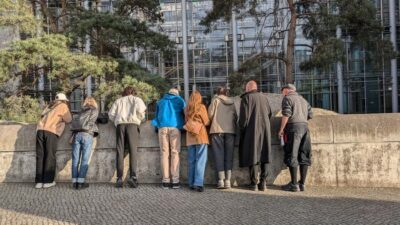
Berlin City walk Government District and Places of Democracy
Read our review →
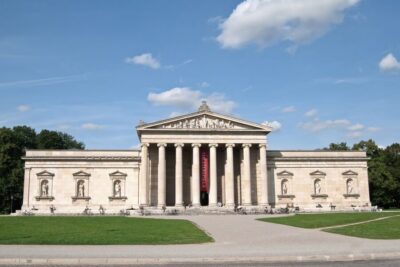


Berlin’s Best: 2 Hour Walking Tour Third Reich and the Cold War
Read our review →

Explore Berlin: See All The Iconic Sights & Some Hidden Gems
Read our review →Browse the lists this tour appears in