Review · OLD TOWN WALKING TOURS
Barcelona: Old Town Private Walking Tour of Past and Present
Barcelona reveals itself one old street at a time. This private walk links the city’s Roman roots, medieval lanes, market stalls, waterfront, and Gaudí façades in one well-planned introduction. I especially like the flexible pace and the chance to see quieter corners of El Born and the Gothic Quarter with a guide rather than simply following a crowded flag.
I also like the stop at La Boqueria, where the tour includes shared tastes of Iberian ham, cheese, and fruit juice. The main consideration is time: two to three hours covers a lot, but it cannot give every major stop more than a brief look. If you want museum interiors or a full visit inside the Sagrada Família, you will need separate tickets and extra time.
For a first day in Barcelona, this is a useful way to get your bearings. Guide Fábio receives especially warm praise for his friendly manner, clear explanations, photos, restaurant advice, and willingness to adjust the walk for families, couples, solo visitors, and small groups.
Key points at a glance
- Roman Barcelona in the Gothic Quarter: See the Temple of Augustus, Plaça del Rei, ancient remains, and the city’s old civic center.
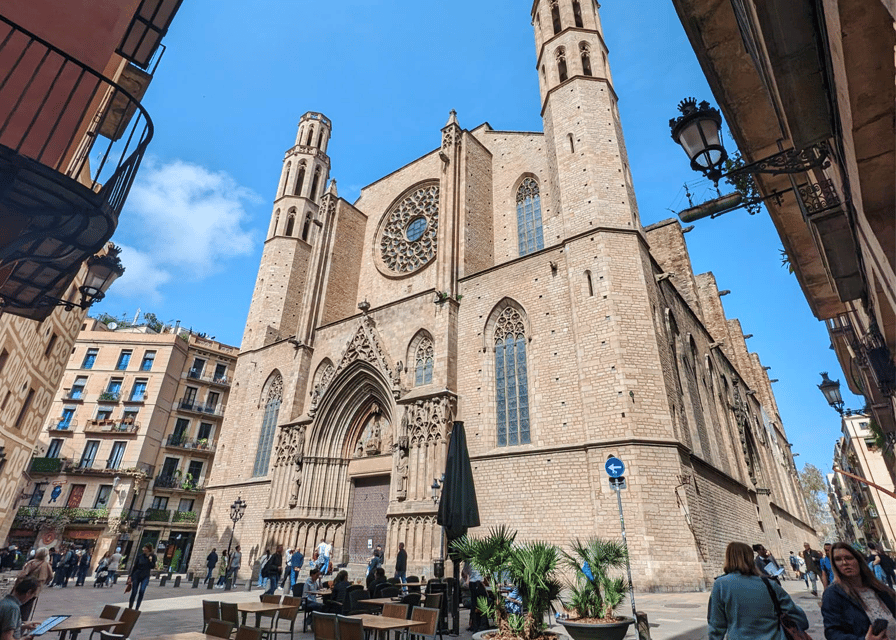
- A private route through El Born and La Ribera: Visit the Cultural Center and, when timing allows, Santa Maria del Mar.
- Food built into the walk: Share local cheese, Iberian ham, and fresh fruit juice at La Boqueria.
- Two possible finishes: Continue toward Port Vell and Barceloneta, or head up through Plaça Catalunya toward Casa Batlló and Casa Milà.
- Small-group flexibility: Groups are capped at eight participants, with children under six free and not counted toward the limit.
- Practical comfort: A small eco-friendly water bottle is provided, and the route is listed as wheelchair accessible and pet-friendly.
Why this private Barcelona walk works so well
Barcelona has several historic centers layered on top of one another. Roman walls sit below medieval churches. Narrow Gothic lanes open onto broad modern avenues. Old fishing districts lead toward a waterfront rebuilt for the 1992 Olympic Games.
This walk makes those changes easier to understand because you move through them in sequence. You begin near Arc de Triomf and Ciutadella Park, enter El Born and La Ribera, continue into the Gothic Quarter, cross Las Ramblas, and then choose a route toward the sea or Gaudí’s modernist boulevard.
I like this structure because it gives you a city overview without trying to pretend that two or three hours can cover everything. You see the major districts, hear the basic story of Barcelona’s growth, and finish with a better sense of where to return on your own.
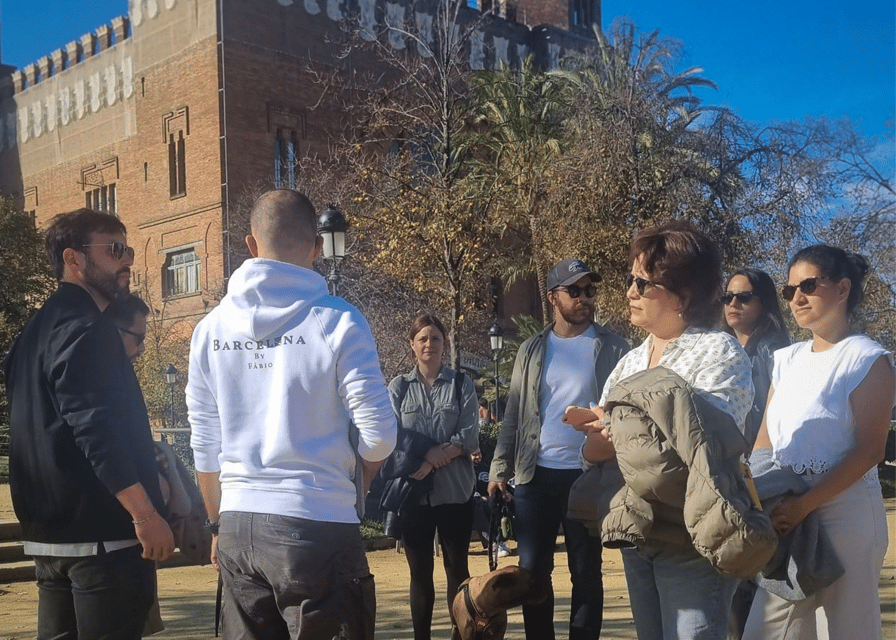
The private format is the biggest advantage. Fábio can slow down for questions, change the emphasis, take photos, point out places to eat, and adjust the route to your interests. Several people praised his calm manner and his ability to make history work for both adults and younger family members.
At $50 per person, the price makes the most sense for a couple, family, or small group that values personal attention. A public walking tour may cost less, but you will usually get a fixed route and less freedom to stop. For four to eight people, the private arrangement can be a sensible way to share the cost while avoiding a large group.
More Old Town Walking Tours in Spain
- Barcelona Helicopter, Sailboat & Old Town Private Walking Tour
★ 5.0 · 1,395 reviews - Barcelona: Old Town and Gothic Quarter Walking Tour
★ 4.8 · 1,393 reviews - Barcelona Old Town & Gothic Quarter Small Group Tour
★ 5.0 · 1,308 reviews
Arc de Triomf and Ciutadella Park set the tone
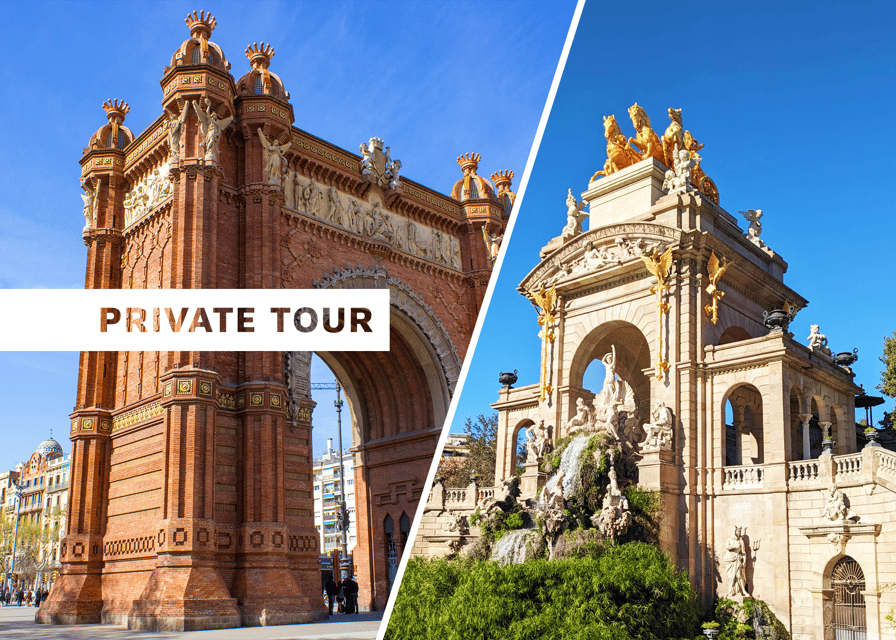
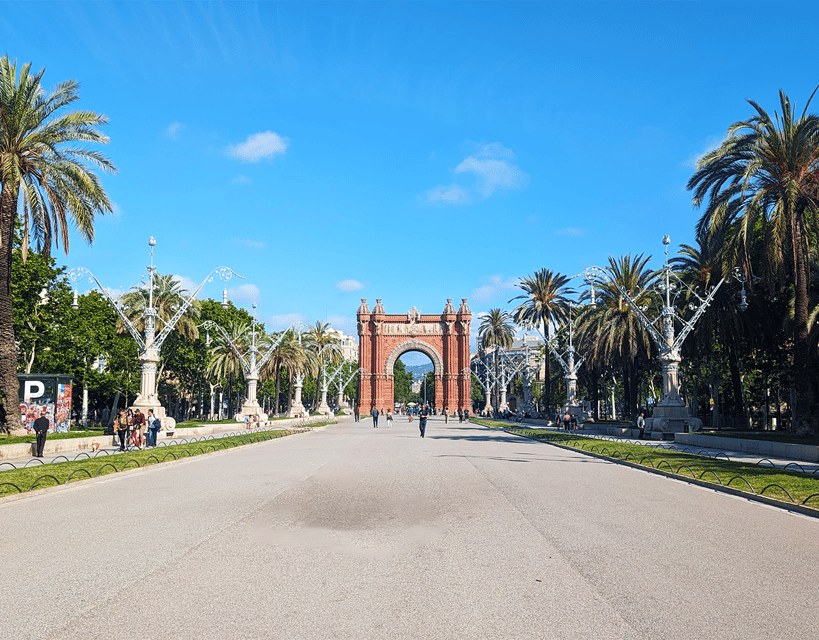
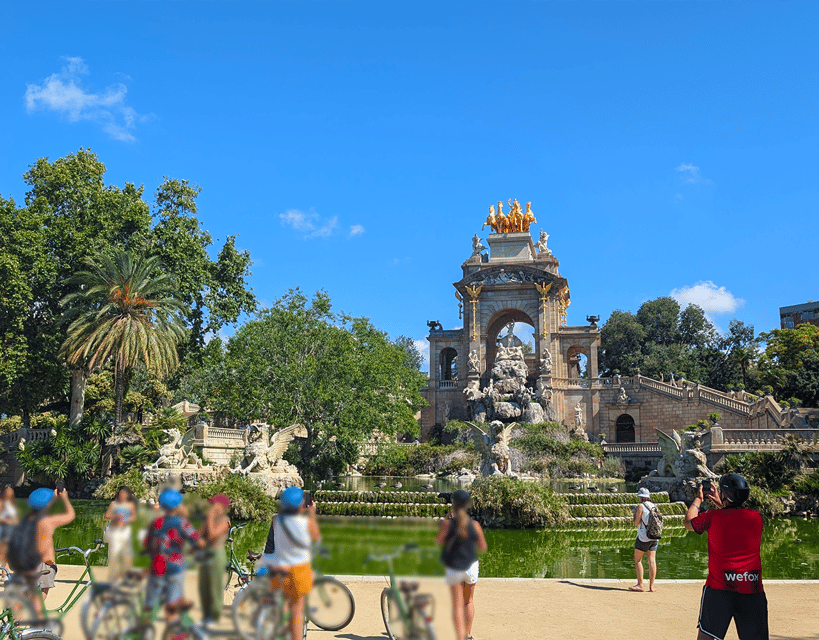
One starting option is Arc de Triomf, an easy landmark to find and a fitting doorway into Barcelona’s past and present. From there, the walk enters Parc de la Ciutadella, a broad city park that gives you a break from stone lanes and traffic.
The park is not just a patch of grass on the way to the old town. It helps explain Barcelona’s later expansion and gives the tour some breathing room at the start. You can expect a guided walk with time for photographs and an introduction to how the city has changed.
This opening is particularly helpful if you arrive tired or jet-lagged. The route begins outdoors and at a measured pace rather than dropping you straight into the tightest lanes of the Gothic Quarter.
The other starting option is Plaça de Sant Jaume. This is more direct if you already want to begin in the Gothic Quarter. Check the meeting point when booking, since it depends on the option selected.
El Born and La Ribera: Barcelona’s old commercial heart
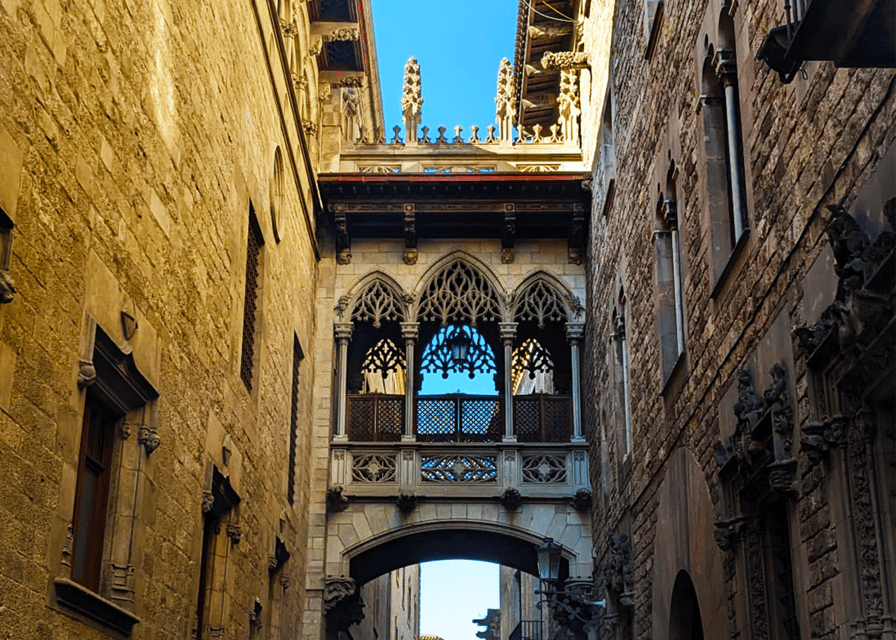
El Born and La Ribera are among the most enjoyable sections of the walk. These districts once formed a major economic center, and their streets still mix medieval buildings, churches, shops, cafés, and busy local life.
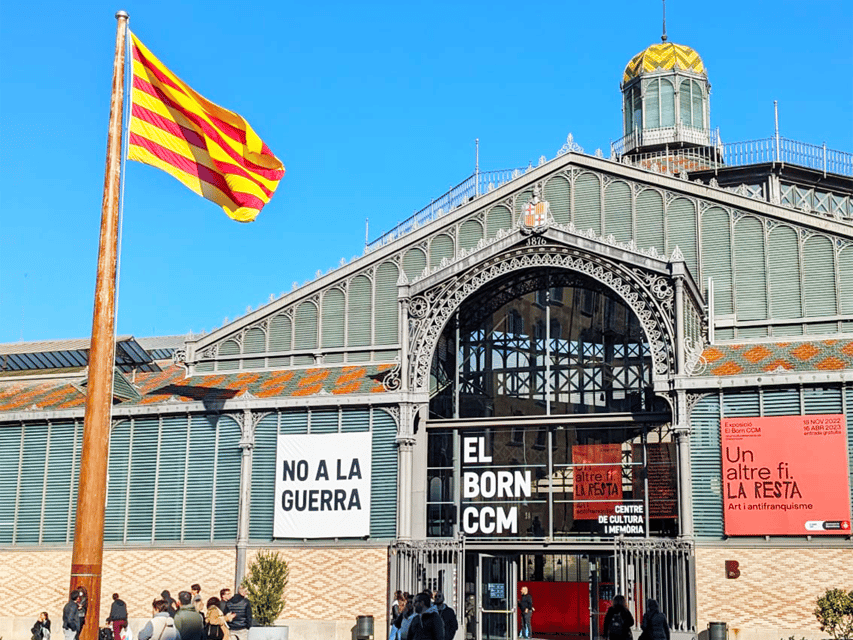
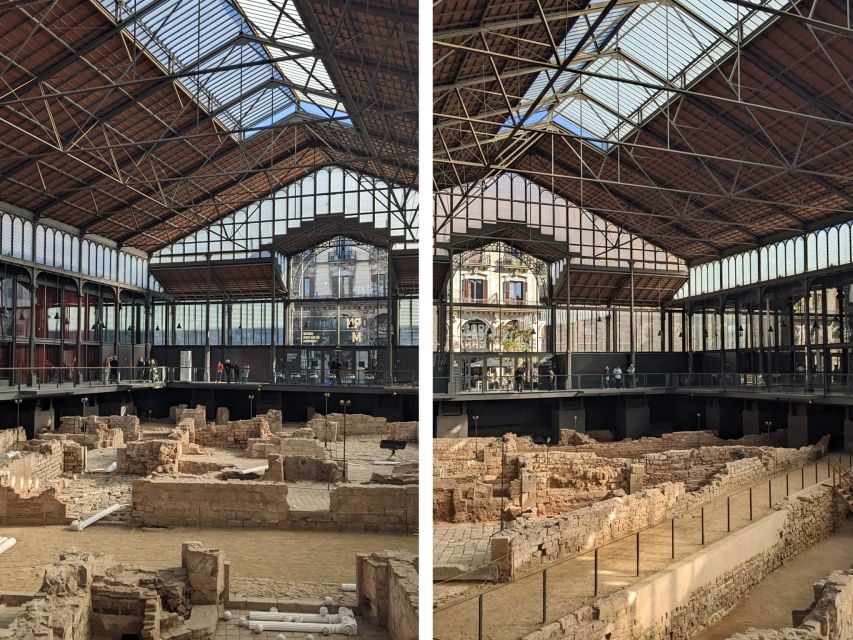
The tour includes a visit to the Cultural Center of El Born. Its setting helps connect the neighborhood’s attractive streets with the events that shaped it. Fábio’s explanations are useful here because it is easy to admire the architecture without understanding why the area mattered.
A possible stop inside Santa Maria del Mar adds another strong moment. The church is known for its connection to La Ribera and its soaring interior. Entry may be possible without charge if time permits, but do not treat this as a guaranteed full church visit. The schedule, opening conditions, and pace of your group may affect it.
This is one place where a private walk beats a rigid sightseeing circuit. You can tell Fábio if you care more about churches, architecture, shopping, food, or local life. He has also been praised for allowing brief shopping stops, a useful touch if you want a souvenir without losing the whole afternoon.
A secret Roman stop and the Gothic Quarter
The Gothic Quarter is the historical center of the tour, but it is not presented as a single old-world postcard. You move from Roman Barcelona to the medieval city, then toward the public squares that still organize civic life.
A less obvious Roman site is included along the way. The exact details of this stop are not specified in advance, which is part of its appeal. You might find it more memorable than another famous façade because the guide can explain what remains and how the ancient city fits beneath modern Barcelona.
The route continues through several important points:
- Plaça del Rei: A former royal setting with a strong connection to medieval Barcelona.
- Plaça de Sant Jaume: The city’s civic heart, where major public buildings face one another.
- Plaça de Sant Felip Neri: A quieter square with a somber past and a very different mood from Las Ramblas.
- Barcelona Cathedral: A major Gothic landmark seen from the outside unless you arrange a separate ticket or entry.
- Temple of Augustus: Roman columns that reveal how much of ancient Barcelona survives in plain sight.
The narrow streets between these places are as important as the named landmarks. Fábio’s role is to point out details you could easily pass without noticing and explain how the city’s layers fit together.
I would not book this walk expecting a museum-style lecture. The strongest part is the conversation between places. You hear legends, history, and present-day advice while moving through the city. That makes the information easier to remember, especially for families and first-time visitors.
More Private Walking Tours in Barcelona
- Barcelona: Sagrada Familia, Park Guell & Tapas Private Tour
★ 5.0 · 903 reviews - Barcelona 1.5h Private Old Town, Gothic & Ramblas Walking Tour
★ 5.0 · 318 reviews - Barcelona: Private Walking Tour with a Local
★ 4.5 · 202 reviews - Semi-Private Montserrat Monastery, Funicular & Scenic Nature Walk
★ 5.0 · 172 reviews
Las Ramblas and La Boqueria bring in the senses
The walk eventually reaches Las Ramblas, Barcelona’s famous central promenade. This is where the tone changes. The street is broad, public, and busy, with a steady flow of people moving between the old town, Plaça Catalunya, and the waterfront.
The included stop at La Boqueria gives you something to do besides look at the crowds. The tasting includes shared portions of local products such as cheese and Iberian ham, plus a refreshing fruit juice.
This is a small tasting rather than a full meal, so plan to eat afterward if you are hungry. Still, it adds real value to a walking tour. Food is one of the quickest ways to understand a city, and the market offers a short, practical introduction to Catalan and Spanish flavors.
You receive a small eco-friendly bottle of water as well. That sounds minor, but it is welcome on a sunny day when the route includes several hours on foot. Bring your own extra water if you tend to drink often, along with sunscreen and comfortable shoes.
La Boqueria can be crowded, and the stop may take longer if your group wants to look around or ask food questions. If you dislike busy markets, let your guide know. The private format makes it easier to keep the stop brief and continue.
Two different endings: Barceloneta or Gaudí
The tour offers a choice near the end, and this is one of its best features. Your group can descend toward the waterfront or head upward toward the modernist architecture along Passeig de Gràcia.
The waterfront route passes the Liceu Theater, Plaça Reial, the Columbus Monument, Port Vell, and La Barceloneta. Plaça Reial is especially pleasant for a pause, with its arcades and lamps associated with Antoni Gaudí’s early work. From there, the walk continues toward the marina and beach.
This route suits you if you want a stronger sense of Barcelona today. The city’s waterfront was reshaped around the 1992 Olympics, and the walk shows how the old center connects with the modern harbor and beach district. It also gives you a clear place to continue your own evening.
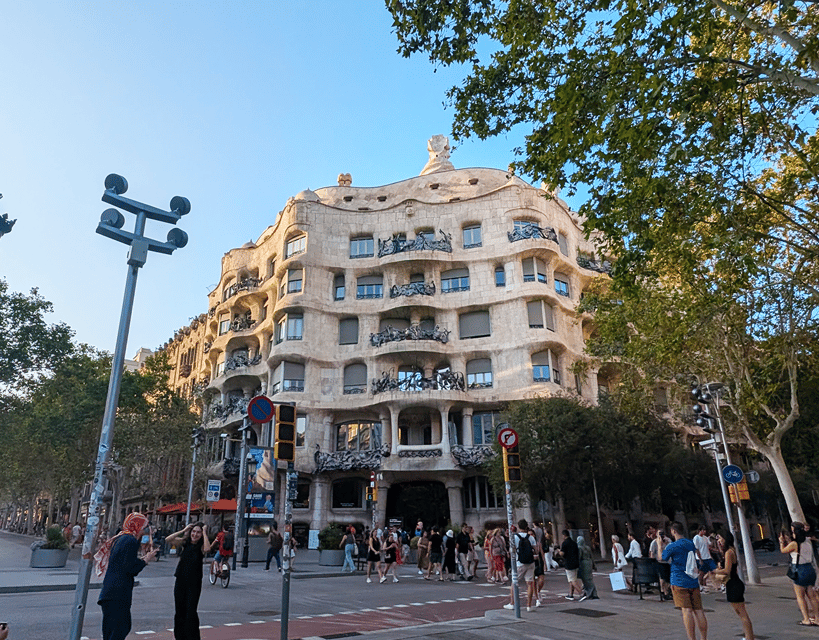
The alternate route heads toward Plaça Catalunya and Passeig de Gràcia. Along the way, you can see Casa Batlló and Casa Milà from outside. Their unusual façades make this a good choice if Gaudí is a priority.
Be clear about what this means. The tour provides exterior views, not full visits inside Casa Batlló, Casa Milà, or the Sagrada Família. Tickets to attractions and monuments are not included. If you want to tour those interiors, plan a separate booking and do not expect to fit it into this walk.
The description also allows for a finish by La Sagrada Família in some arrangements. Since the listed route emphasizes the two choices above, confirm the final route with Fábio before starting if the basilica is your main goal.
The guide makes the difference
Fábio is the name most closely associated with this experience, and his style seems to be a major reason the tour earns such strong praise. He is described as warm, patient, funny, clear, and easy to talk to. Those qualities matter more than a long list of dates on a walking tour.
He also gives practical advice. You can ask about restaurants, evening plans, safe areas, shopping, and what to avoid. Several people found this especially useful on their first day, when a city can feel confusing and every meal choice carries a little risk.
His flexibility is another benefit. He has adjusted the pace for families, teenagers, older adults, solo visitors, and small groups. He has also taken photos for people during the walk, which saves you from asking strangers every time you want a group picture.
The available languages are English, Spanish, French, and Portuguese. That broad choice is helpful for mixed-language families or couples. If you need one language in particular, select it carefully when checking availability.
There is also a mention of another guide named Roger in one experience involving the Sagrada Família. Because the assigned guide may vary, confirm the name and language after booking if that matters to you.
Timing, walking effort, and access
The advertised duration is two to three hours, while the detailed route is described as about two and a half to three hours. That is enough time for a strong introduction, but the number of districts means you will keep moving.
You should be comfortable walking on city streets and standing during explanations. The route includes parks, broad promenades, narrow old-town lanes, market areas, and waterfront streets. Comfortable shoes are essential, and sunscreen is sensible in Barcelona’s strong sun.
The activity is listed as wheelchair accessible. Because old-town streets and individual buildings can vary, share any specific mobility needs when arranging the tour. The private setup makes communication easier, but access to every church, monument, or optional interior is not guaranteed.
Dogs are welcome, which is unusual and useful if you are traveling with a companion animal. Children under six go free and do not count toward the maximum group size of eight.
You can cancel up to 24 hours ahead for a full refund, and you can reserve now and pay later. Those policies are useful if your Barcelona schedule is still moving around, but they should not replace checking the exact meeting point and start time.
Who gets the most from this experience
I would choose this tour for a first visit, especially on the first or second day. You get a practical map of the old center, a little food, a few Roman and medieval landmarks, and advice that can shape the rest of your stay.
It is also a strong choice for:
- Couples who want a private walk without joining a large group.
- Families with older children or teenagers who need a varied route.
- Solo visitors who want local guidance and help getting oriented.
- Small groups who want to split the $50 per-person cost.
- Visitors interested in history, food, architecture, and neighborhood life in one outing.
- People who prefer conversation and flexibility over a fixed script.
I would choose something else if you want long interior visits, a dedicated Gaudí tour, or a slow food tour. The route covers many landmarks, but most are viewed from outside and explained on foot.
Should you book the Barcelona Old Town private walk?
Book it if you want a friendly, flexible introduction rather than a checklist of ticketed attractions. The combination of El Born, Roman remains, the Gothic Quarter, La Boqueria, and your choice of waterfront or Gaudí sights gives you a useful first look at the city.
The $50 price is fair when personal attention, small-group size, water, food tasting, photos, and local recommendations matter to you. I would ask for your preferred ending before the walk begins and tell Fábio what interests your group most.
Skip it if you already know Barcelona well or plan to spend your limited time inside major monuments. For everyone else, especially first-time visitors, this is a sensible way to get your bearings fast while still seeing the city at street level.
FAQ
How long does the private Barcelona walking tour last?
The tour lasts two to three hours, with the detailed experience generally taking about two and a half to three hours.
What neighborhoods and landmarks are included?
The route can include Ciutadella Park, El Born, La Ribera, the Gothic Quarter, Plaça del Rei, Plaça Sant Jaume, Plaça Sant Felip Neri, Barcelona Cathedral, Las Ramblas, La Boqueria, Plaça Catalunya, Port Vell, and La Barceloneta. Exterior views of Casa Batlló and Casa Milà are also included on the route toward Passeig de Gràcia.
Is food included?
Yes. The tour includes shared tastes of local products at La Boqueria, such as cheese, Iberian ham, and fruit juice.
Are attraction and museum tickets included?
No. Tickets for attractions, museums, and monuments are not included. They may be arranged on request.
What languages are available?
The live guide is available in English, Spanish, French, and Portuguese.
Is the tour suitable for children, pets, and wheelchair users?
The activity is listed as wheelchair accessible and pet-friendly. Children under six are free and do not count toward the maximum group size of eight participants.
More Old Town Walking Tours in Barcelona
- Ramblas, Old Town, Gothic and Gaudi Architecture Walking Tour
★ 5.0 · 723 reviews - Barcelona: Ramblas, Old Town & Gaudí Houses Walking Tour
★ 4.9 · 239 reviews - Underground Vaults Walking Tour in Edinburgh Old Town
★ 4.5 · 8,506 reviews - Prague: 3-Hour Walking Tour of Old Town & Prague Castle
★ 4.7 · 5,696 reviews
More Private Walking Tours in Spain
- Barcelona Private Food Tour: Tapas, Paella & 8+ Food Tastings
★ 5.0 · 164 reviews - Private Barcelona Old Town and Gothic Quarter Walking Tour
★ 5.0 · 134 reviews - Treasures of Barcelona: Private Gaudi Walking Tour
★ 5.0 · 128 reviews - Private Tour Spanish Civil War & Franco’s Dictatorship
★ 5.0 · 116 reviews
Just added around Barcelona
- Barcelona Private Food Tour: Tapas, Paella & 8+ Food Tastings★ 5.0 · 164 reviews
- Barcelona Gothic Quarter Walking Tour with Tapas★ 5.0 · 248 reviews
- Barcelona Architecture Walking Tour With Casa Batlló Upgrade★ 5.0 · 137 reviews
- Picasso Museum and Walking Tour Plus Optional Wine & Food Tasting★ 5.0 · 596 reviews
- Private Barcelona Old Town and Gothic Quarter Walking Tour★ 5.0 · 134 reviews
- Montjuïc Walking Tour With Optional Flamenco Show★ 5.0 · 196 reviews
- Semi-Private Montserrat Monastery, Funicular & Scenic Nature Walk★ 5.0 · 172 reviews
- Gothic Quarter Donation-Based Walking Tour in English★ 5.0 · 72 reviews
Old Town Walking Tours, compared.
Underground Vaults Walking Tour in Edinburgh Old Town
Read our review →
3-Hour Walking Tour of Old Town & Prague Castle
Read our review →
Old Town and Jewish Quarter Guided Walking Tour
Read our review →