
Review · SMALL-GROUP WALKING TOURS
Small Group Walking Tour: “Wild Kreuzberg”
Kreuzberg changes block by block. This 2.5-hour walk follows that change from Kottbusser Tor through SO36, Mariannenplatz, Görlitzer Park, Wrangelkiez, and across the Oberbaumbrücke toward the East Side Gallery. I like the way it connects everyday Berlin life with political history, street culture, old railway sites, and former squats. I also like the reasonable $24 price, especially since a live guide leads the walk and rain ponchos are supplied when needed. The main catch is that the tour is conducted in German, so you need solid listening skills to get the most from the stories.
The route covers plenty of ground, and comfortable shoes matter. It also runs in all weather, so a cold or wet day can make the walk harder, though one winter tour became a near-private experience in heavy snow when only two people turned up. That may not be everyone’s idea of sightseeing, but it shows the walk is built for Kreuzberg as it really is, not a polished theme park.
Six things to know before you book
- Kottbusser Tor sets the tone: Turkish markets, Arabic restaurants, cafés, clubs, and the U1 tracks all meet at this noisy Kreuzberg crossroads.
- The tour links old and new Kreuzberg: You pass early twentieth-century apartment blocks, the Sozialpalast, alternative businesses, art spaces, and former squat sites.
- The route ends near major Berlin sights: Görlitzer Bahnhof, the Oberbaumbrücke, and the East Side Gallery make the final stretch especially useful for first-time visitors.
- The guide adds visual context: Older photographs are used to explain how the district changed and how its recent past still shapes daily life.
- The language is German only: This is the key decision point for international visitors.
- You need about two and a half hours on foot: The route is packed with stops, so wear shoes that can handle city pavement and changing weather.
Starting beneath the U1 at Kottbusser Tor
Meet at Skalitzer Straße 137, in front of the Gold Exchange and beside REWE. Kottbusser Tor station is only a short walk away, with access from the Skalitzer Straße exit on the U1 and U8. Look for a guide carrying the operator’s logo.
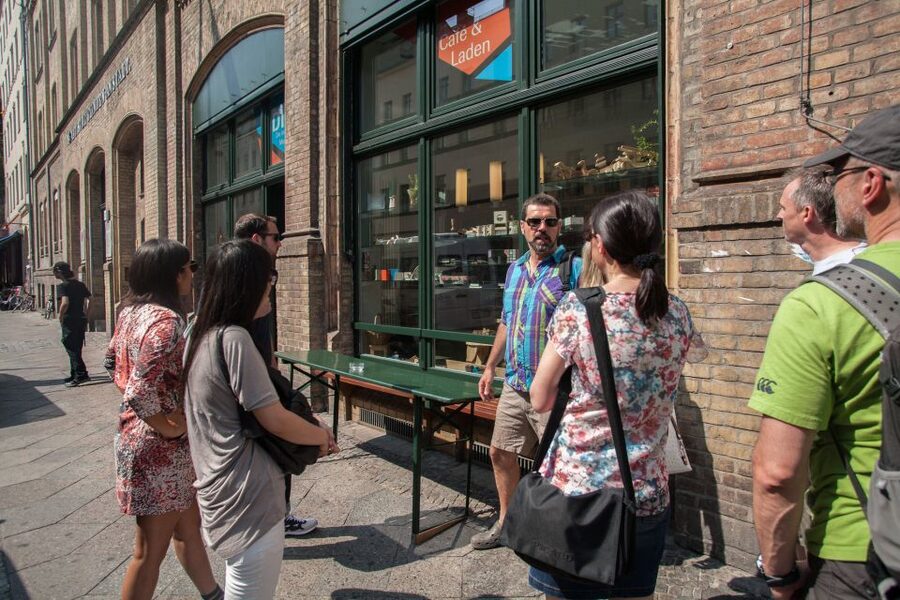
Kottbusser Tor is a strong opening because it gives you Kreuzberg in one glance. The square is split by the famous elevated U1 tracks, with trains rattling overhead while people shop, eat, commute, and head into the district’s night scene. Turkish market stalls, Arabic restaurants, small bistros, stylish cafés, alternative bars, and clubs all crowd around the same busy junction.
I would not expect a quiet introduction here. The noise and traffic are part of the point. Your guide uses the square to explain the mix of migration, local commerce, public transport, and nightlife that defines this part of Berlin.
From here, the walk moves along streets lined with imposing apartment houses from the beginning of the twentieth century. Those buildings help you read Kreuzberg as more than a party district. They show the older residential city behind the posters, cafés, and clubs.
More Small-Group Walking Tours in Berlin:
- Small Group Walking Tour of East Berlin with a French Guide
★ 5.0 · 176 reviews - Amsterdam Anne Frank: Small-Group Walking Tour & Local Guide
★ 4.8 · 12,789 reviews - Boston: Freedom Trail History Small Group Walking Tour
★ 5.0 · 6,450 reviews
From Adalbertstraße to the old SO36 district
The route continues past the Adalbertstraße high-rise buildings and the Sozialpalast. The contrast is useful: monumental housing, dense streets, and modern redevelopment sit close to places associated with punk culture and squatting.
Oranienstraße is the next major stretch. It runs through the old SO36 postal district, a name still tied to Kreuzberg’s punk years. Today, you find restaurants, bars, shops, comic stores, boutiques, and cafés along the street. The appeal is not one famous monument. It is the way ordinary storefronts carry layers of social history.
The guide also points out the Berlin Home for the Blind. This is the sort of stop that gives the walk a local feel. It is not a headline attraction, but it helps show how the neighborhood’s institutions fit into its street life.
A coffee break in the Oranienhöfen offers a welcome pause. Food and drinks are not included, so bring money if you want to sit down with a coffee. I like that this stop breaks up the walking without turning the tour into a formal meal stop. You get a moment to watch the area and catch your breath.
Objects, pharmacies, and the stories behind ordinary places
One unusual stop is the Museum of Objects, devoted to the history of mass production. That focus fits Kreuzberg well. Instead of showing only grand art or famous political events, it asks you to consider the everyday items shaped by factories, consumer culture, and changing design.
The tour also visits the Fontane-Apotheke, a well-known pharmacy in the district. Its inclusion shows how the walk works best: you are not simply ticking off museums. You are looking at businesses, streets, institutions, and buildings as clues to how Kreuzberg developed.
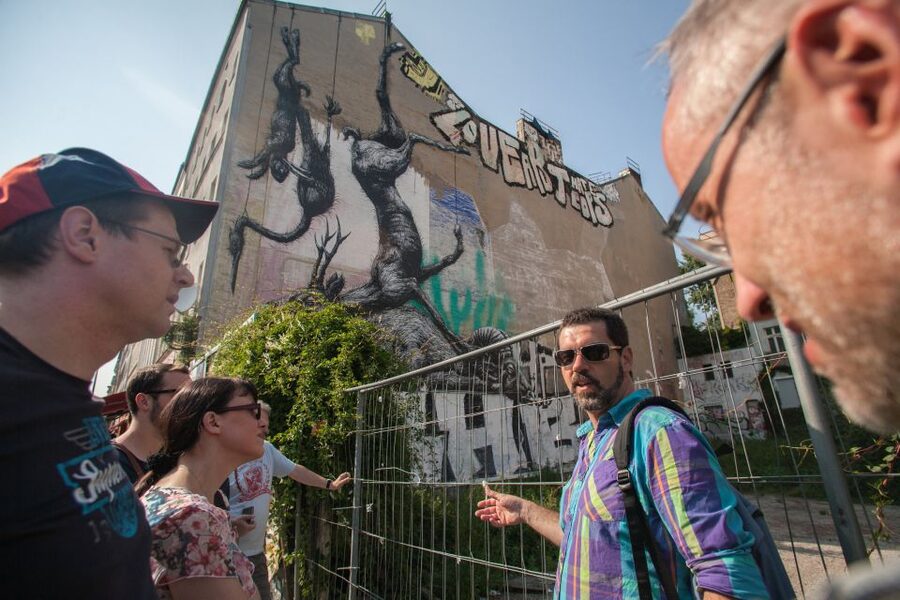
The route includes several additional sightseeing stops that are not fully named in the published schedule. That means the exact emphasis can depend on the guide and the pace of the group. The guide’s style matters here, and Ferenz receives particularly strong praise for making the history clear, interesting, and entertaining.
One guide also uses older photographs to connect present-day streets with earlier versions of the neighborhood. That is valuable in Kreuzberg, where a street may look ordinary until you understand what stood there before, who lived there, and why its reputation changed.
Mariannenplatz, Bethanien, and the squatters’ era
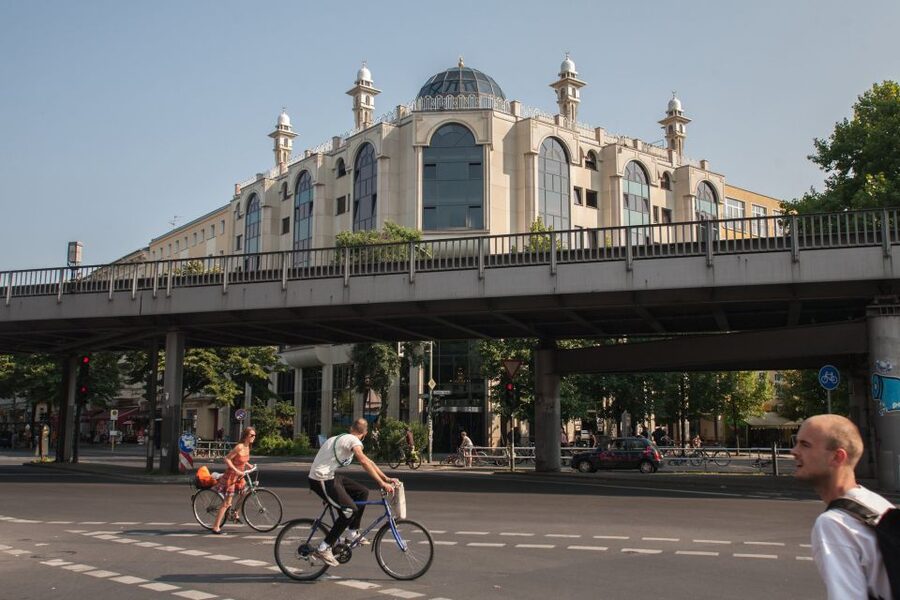
At Heinrichplatz, the route heads toward Mariannenplatz. This large square is home to Bethanien, a former hospital that became an art squat and later an important art and cultural center.
Bethanien is one of the tour’s best stops for understanding Kreuzberg’s alternative side. It represents a period when residents occupied unused buildings and challenged official plans for redevelopment. The building’s former hospital use and later artistic life give you a clear example of how a place can change function without losing its political meaning.
Next door, the Rauchhaus adds another look at squatters’ life. You should not expect a guided interior visit unless the guide specifically says otherwise. The value is in seeing the site and hearing how the movement affected Kreuzberg’s identity.
Mariannenplatz also provides a break from the tighter streets around Oranienstraße. After the apartment blocks, shops, and busy intersections, the open square gives the group more room to pause and listen.
A few more walks around Berlin worth a look
- Discover Berlin Half-Day Walking Tour
★ 5.0 · 9,624 reviews - Berlin City walk Government District and Places of Democracy
★ 4.7 · 8,467 reviews - Berlin: Third Reich & Cold War Guided Walking Tour
★ 4.9 · 8,378 reviews - Berlin: Discover Berlin Walking Tour
★ 4.9 · 5,998 reviews
St. Thomas Church and the route toward Görlitzer Park
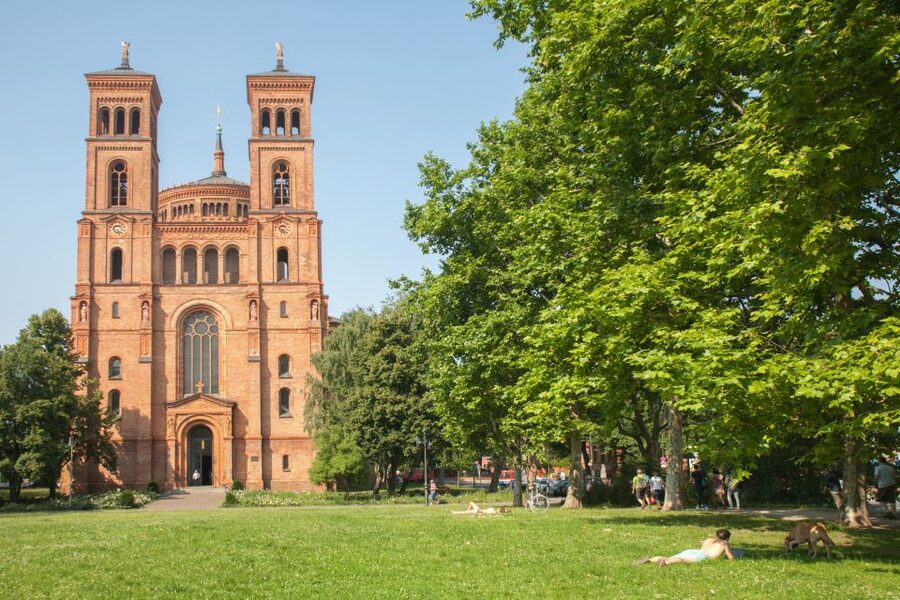
The walk continues through more of Kreuzberg, including St. Thomas Church and the Feuerwehrbrunnen. These stops broaden the story beyond punk culture and nightlife. Churches, public fountains, housing, and transport routes all help explain how the district functions as a lived-in neighborhood.
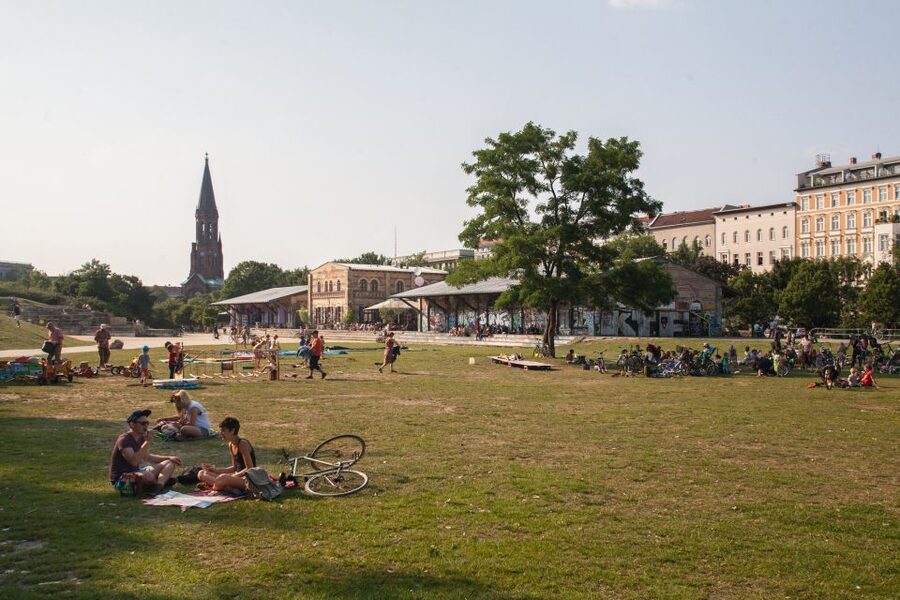
Görlitzer Park is one of the most interesting places on the route because it was once a railway station. The old railway use is central to the park’s identity. The green space you see today replaced a transport site, another example of Kreuzberg turning old infrastructure into a different kind of public place.
The park can feel very different from the formal squares and historic apartment streets earlier in the walk. You are still close to the city center, but the old rail corridor gives the area a looser, more open character. Your guide can connect the park to the district’s later development and its changing public life.
This is also a good point to remember that the tour is not a conventional monument walk. Some stops are famous, while others are valuable because they explain how people use the neighborhood. If you prefer a checklist of grand buildings, this may feel scattered. If you like cities read through their streets, it makes more sense.
Wrangelkiez and the bridge between two Berlins
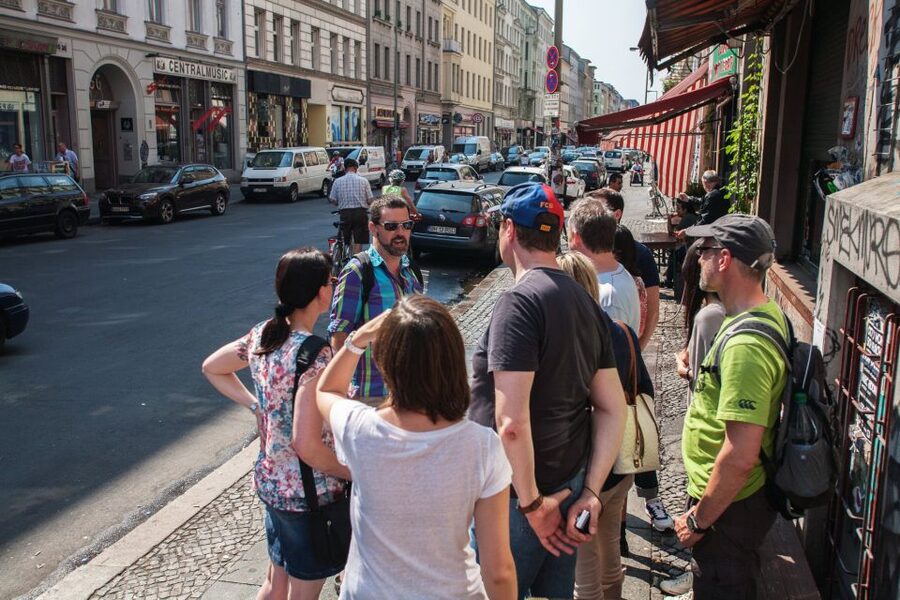
From Görlitzer Park, the walk heads through Wrangelkiez. The word Kiez means a local neighborhood, and this section helps you see Kreuzberg at a smaller scale. Rather than treating the district as one single place, the route shows how different pockets have their own feel and history.
The final major landmark is the Oberbaumbrücke. Its red brick towers and arches make it one of Berlin’s most recognizable bridges, but its importance goes beyond appearance. The bridge symbolically links former East and West Berlin, giving the tour a clear historical finish.
From the bridge, the route continues toward the East Side Gallery. This long section of the Berlin Wall, covered with murals, connects the city’s divided past with its creative present. It is a fitting endpoint after a walk through punk spaces, former squats, old railway land, and changing housing districts.
The official finish is at Görlitzer Bahnhof. That makes the end practical for continuing your day, though you should note the difference between Görlitzer Bahnhof station and Görlitzer Park. The tour ends at the transport stop, not at a railway museum or historic station building.
Why the $24 price works
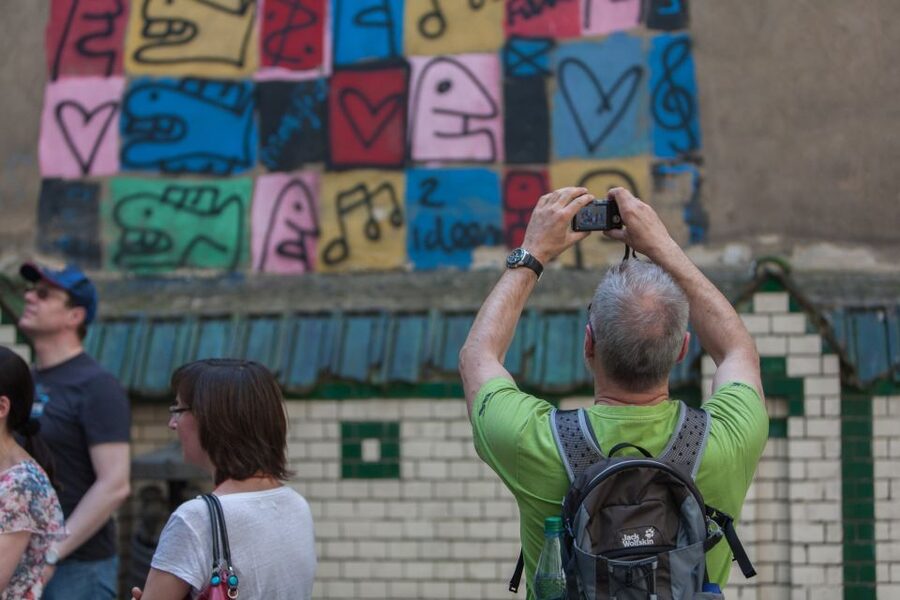
At $24 per person, this is a good-value introduction to Kreuzberg if you want more than a self-guided stroll. The price includes the city guide, tour duties, and a rain poncho if the weather turns wet. It does not include coffee, food, or drinks.
The value depends heavily on the German-language guiding. A good guide can turn a group of streets into a clear story about migration, housing, punk culture, squatting, public transport, and reunification. Without enough German, you may still enjoy the route, but you will miss much of what makes the walk worthwhile.
The duration is also well judged. Two and a half hours gives you time to cross a large section of Kreuzberg without taking up an entire day. The route has enough variety to avoid feeling repetitive, though it is not a relaxed coffee-and-shopping stroll.
A high rating of 4.8 from 199 reviews supports the tour’s strongest qualities: entertaining explanations, useful historical context, and an engaging route. Praise is especially strong for guides who mix current background information with recent history and older photographs.
Weather, walking pace, and group size
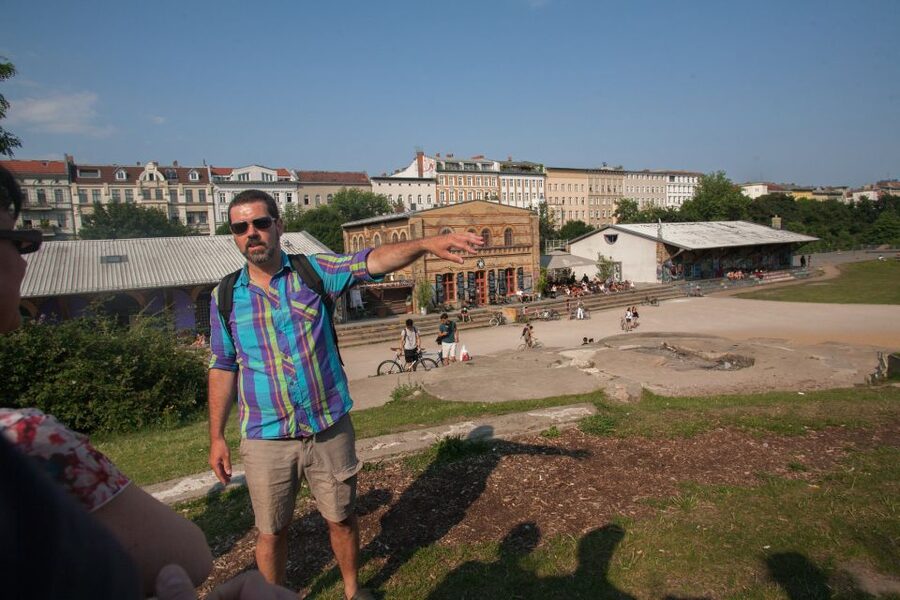
This tour operates in all weather. On rainy days, a poncho is provided, but you should still bring a jacket and shoes with a dependable sole. In winter, the route can be cold and slippery, so dress for standing outside while the guide explains each stop.
The minimum group size is two people. If fewer than two book, the operator can cancel at short notice. That rule is worth knowing if you are planning around a tight schedule.
A small group can make the walk feel personal. One January tour ran almost like a private outing in freezing snow because no one else joined the couple. That is a lucky outcome rather than a guarantee, but it shows how the minimum works in practice.
For groups of three or more, the stated cancellation deadline is three days before the tour. Other bookings allow free cancellation up to 24 hours before departure, so check the terms attached to your reservation if you are booking for a larger party.
Who will enjoy Wild Kreuzberg most?
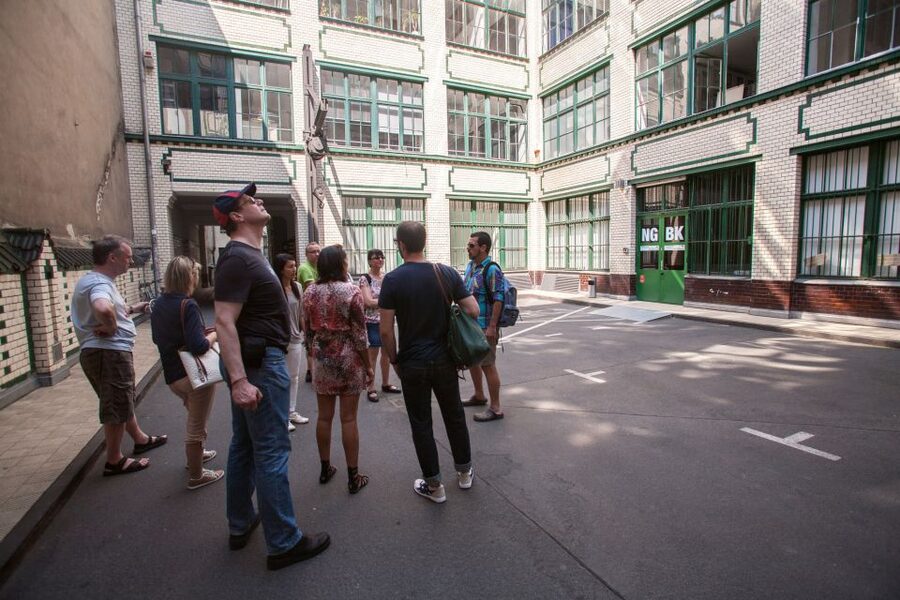
I would recommend this walk to you if you like neighborhoods more than postcard sights. It suits visitors who want to understand why Kreuzberg became associated with migration, punk, political protest, art, and alternative living.
It is also a good choice for anyone who has already seen central Berlin’s grand landmarks and wants a closer look at daily city life. The combination of Kottbusser Tor, Oranienstraße, Bethanien, Görlitzer Park, Wrangelkiez, and the Oberbaumbrücke gives you a useful map of the district.
You should think twice if you need English guiding, dislike long walks, or want to spend time inside museums. The tour passes the Museum of Objects and the Kreuzberg Museum area, but the main experience is outdoors and focused on streets, buildings, public spaces, and stories.
FAQ
Where does the tour meet?
Meet at Skalitzer Straße 137, in front of the Gold Exchange and next to REWE. The nearest U-Bahn station is Kottbusser Tor on the U1 and U8, using the Skalitzer Straße exit.
How long does the walking tour last?
The tour lasts 2.5 hours.
What language is the tour conducted in?
The live tour guide speaks German.
What sights are included?
The route includes Kottbusser Tor, Oranienstraße, SO36, Mariannenplatz, Bethanien, St. Thomas Church, Görlitzer Park, Wrangelkiez, the Oberbaumbrücke, and the East Side Gallery. It finishes at Görlitzer Bahnhof.
Is food or coffee included?
No. Food and drinks are not included. You can stop for a coffee in the Oranienhöfen, but you pay for it yourself.
What should I bring?
Wear comfortable shoes. The tour runs in all weather, and a rain poncho is provided on rainy days.
Should you book this Kreuzberg walk?
Book it if you want a lively, street-level look at Kreuzberg and you understand German well enough to follow a history-focused guide. The strongest parts are the mix of old housing, immigrant culture, punk-era SO36, Bethanien, Görlitzer Park’s railway past, and the East-West symbolism of the Oberbaumbrücke.
Skip it if you want an English tour, indoor museum time, or a gentle route with few stops. For the right audience, $24 is fair value, and the walk gives you context you would be unlikely to pick up by simply wandering from Kottbusser Tor to the East Side Gallery on your own.
Just added around Berlin
- Berlin Walking Tour★ 4.5 · 378 reviews
- Small Group Walking Tour of East Berlin with a French Guide★ 5.0 · 176 reviews
- Berlin Street Art Walking Tour – Off The Grid★ 5.0 · 270 reviews
- Berlin Highlights Private Guided Walking Tour★ 4.5 · 89 reviews
- Private Walking Tour: World War 2 and Cold War Sites in Berlin★ 5.0 · 230 reviews
- East Meets West: Berlin Food Culture & Street Art★ 5.0 · 157 reviews
- Kreuzberg Berlin: Off the Beaten Track PRIVATE Walking Tour★ 5.0 · 128 reviews
- The History of Berlin: WWII PRIVATE Walking Tour With Locals★ 5.0 · 209 reviews
Small-Group Walking Tours, compared.

Amsterdam Anne Frank: Small-Group Walking Tour & Local Guide
Read our review →
Freedom Trail History Small Group Walking Tour
Read our review →
New Orleans Food Walking Tour of the French Quarter with Small-Group Option
Read our review →
Barcelona Tapas and Wine Experience Small-Group Walking Tour
Read our review →
Reykjavík Small group Walking Tour – by CityWalk
Read our review →
Best of Lisbon Small-Group Guided Walking Tour
Read our review →
Small Group Boat Cruise and Guided Walking Tour
Read our review →
Browse the lists this tour appears in