
Review · CASTLE AND PALACE WALKING TOURS
Split: Old Town and Diocletian Palace Walking Tour
Split begins with a Roman emperor. This walking tour makes that story easy to follow, linking Diocletian’s Palace with the lively streets of today’s city. I like the clear route from the Golden Gate through the Peristyle, cathedral, Gregory of Nin’s statue, and the Riva promenade. I also like the local advice, especially the food and sightseeing tips shared by guides such as Mia, Slavko, and Antonia.
The main consideration is pace. A 90-minute option gives you a useful introduction, while longer choices can include food, wine, or a trip to Trogir. Parts of the Old Town have uneven surfaces, and the tour is not suitable for wheelchair users. Still, at $17 per person, the standard walk is a strong value if you want the ruins to make sense rather than simply stroll past them.
Key points to know before booking
- The Golden Gate is both meeting point and finale: You begin and finish at one of the Palace’s most important entrances.
- The Peristyle explains Split’s unusual layout: Roman columns, open courtyards, and later buildings all share the same space.
- Saint Domnius Cathedral links Roman and Croatian history: It is described as the oldest Catholic cathedral still used in its original form.
- Local guides add practical help: Mia, Slavko, Antonia, Ivana, and others are praised for humor, clear explanations, and restaurant suggestions.
- The Riva gives the tour breathing room: You finish beside views toward Marjan Hill and the Adriatic Sea.
- Longer options change the day: Depending on your booking, you may add food, wine, or a visit to Trogir.
Why a guided walk helps in Diocletian’s Palace
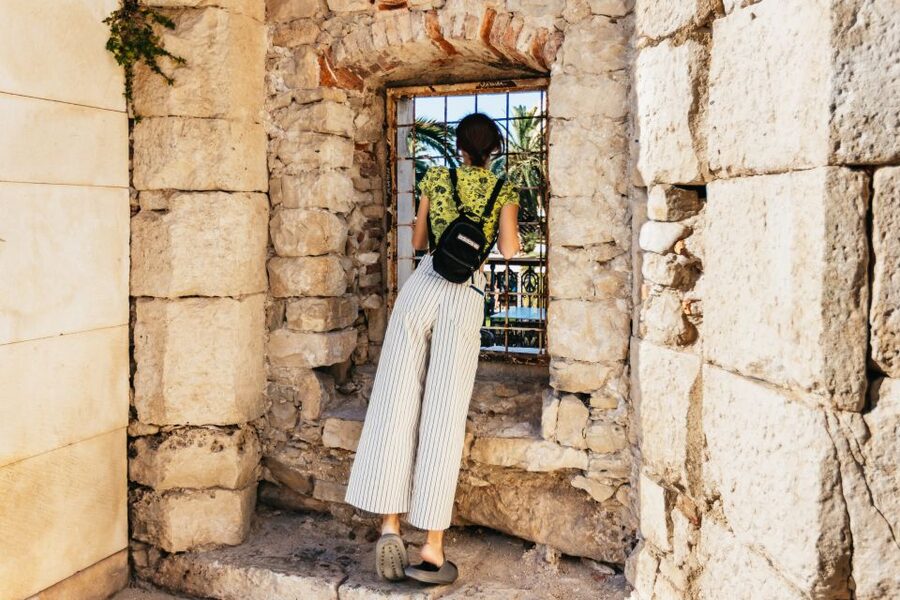
Split’s Old Town can look confusing at first. It is not simply a preserved Roman site with ropes around it. Much of the Old Town occupies the remains of Diocletian’s Palace, built in 305 CE, and modern homes, shops, cafés, churches, and narrow lanes sit inside the ancient structure.
That mixture is the point, but it can be hard to read without help. A guide can show you where the imperial complex ended, explain how later residents adapted it, and connect scattered columns or stone walls to the larger plan. I like this kind of tour because it gives you a framework for exploring alone afterward.
The standard walk lasts 90 minutes. That is long enough to cover the central sights without turning the introduction into a history lecture. The available duration can extend to six hours, depending on the option you choose. Those longer versions may include food or wine tasting, and one praised option combines Split with Trogir.
You should expect a walking tour rather than a formal indoor museum visit. The focus is on streets, courtyards, monuments, and stories told in place. That makes the experience especially useful on your first day, when you want to get your bearings and decide where to return later.
More Old Town Walking Tours in Croatia
- Split: Diocletian Palace & Old Town Guided Walking Tour
★ 4.7 · 882 reviews - Diocletian’s Palace and Old Town SMALL GROUP Walking Tour
★ 5.0 · 502 reviews - SPLIT-PRIVATE Walking Tour of Diocletian’s Palace & Old Town
★ 5.0 · 467 reviews
Starting at the Golden Gate
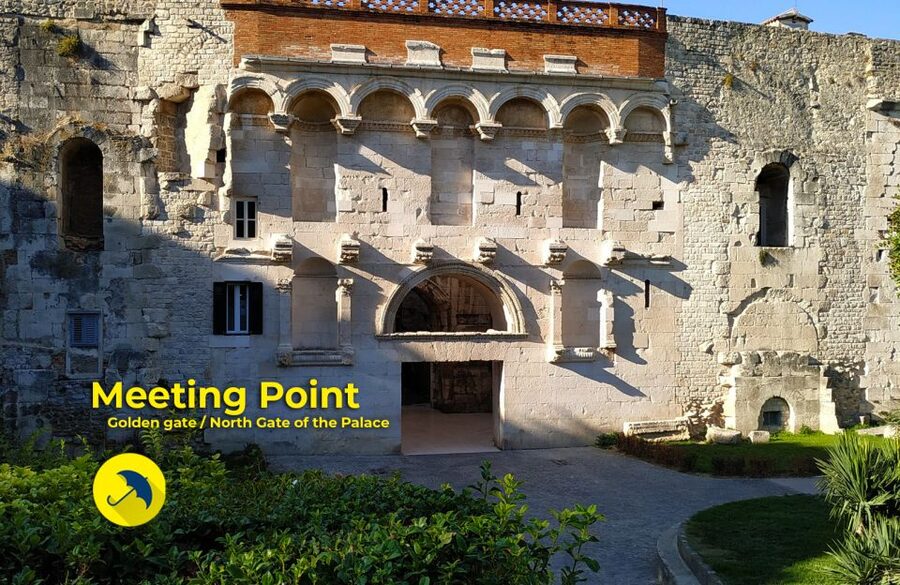
The tour begins at the Golden Gate, one of the main entrances to Diocletian’s Palace. This is a practical starting point because it puts you directly inside the historic center rather than spending time on a long approach from a hotel.
The gate introduces the scale of the Palace. You are not looking at a single building in isolation. You are entering the remains of a large Roman complex that now makes up about half of Split’s Old Town. The city grew into the Palace instead of growing around it.
Meeting instructions can vary by the option booked, so check your confirmation carefully. Hotel pickup is not included. You will need to reach the meeting point yourself, but central Split is compact enough that this usually fits naturally into a day of sightseeing.
The Golden Gate is also where the walk ends. That helps if you want to continue on your own afterward, return to your accommodation, or stop for a meal nearby. It also reduces the risk of finishing somewhere unfamiliar.
Reading the Roman Palace at the Peristyle
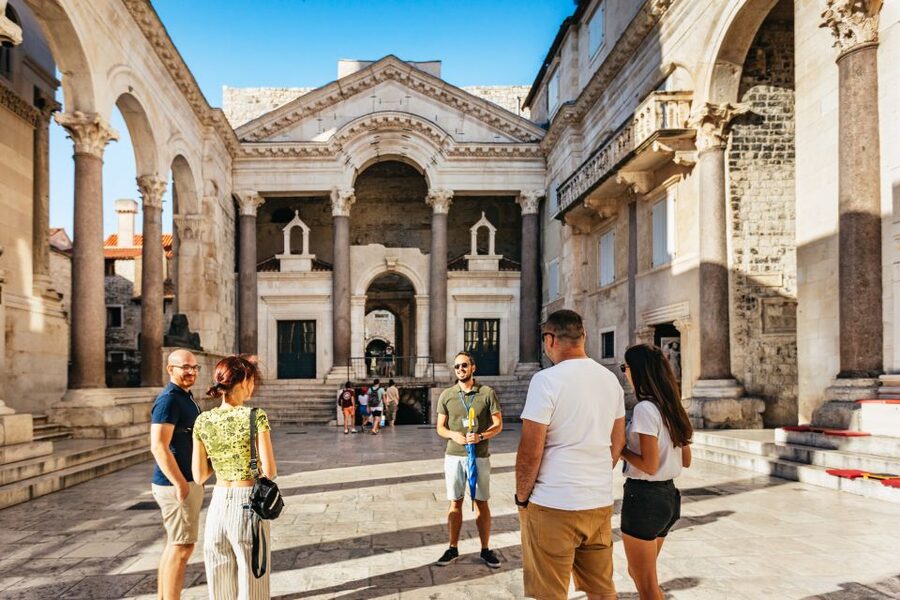
The Peristyle is the visual center of the tour. This open square, lined with columns, gives you the clearest sense of the Palace’s original Roman design. Your guide explains what you are seeing and how the space functioned, rather than leaving you to guess why a collection of stones matters.
The square is also where the past and present collide. Roman architecture shares space with later buildings and ordinary city life. You may see people moving through the area as part of their daily routine, not just as sightseers. That is one reason a guide adds value here: the story is not confined to an archaeological display.
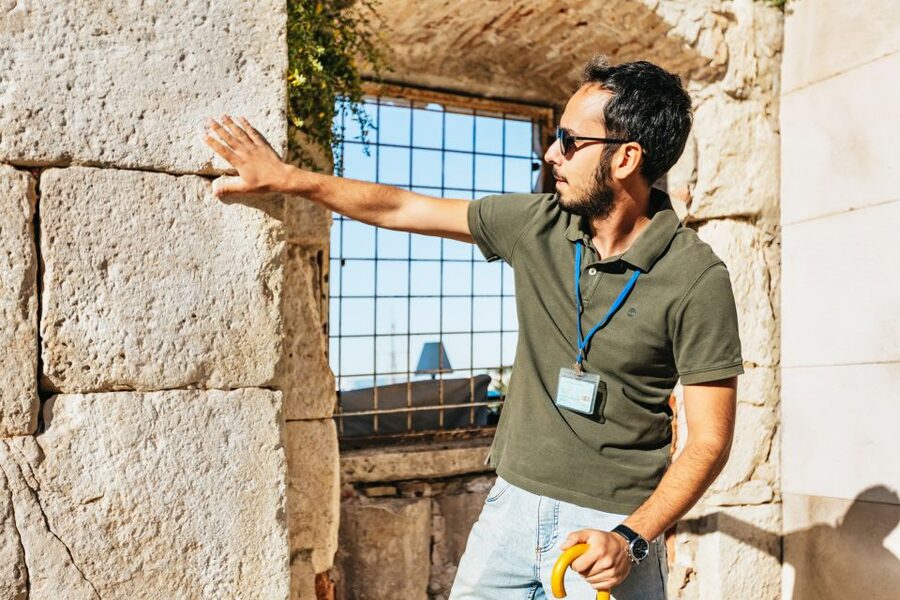
Several guides receive especially strong praise for making the architecture understandable. Slavko is repeatedly described as funny, passionate, and easy to follow, with explanations that reach beyond Diocletian to Croatian and Dalmatian history. Mia is praised for mixing historical detail with dry humor and questions that keep the group involved.
If you prefer a quiet, purely academic presentation, the conversational style may feel informal. For most people, though, the humor helps fix dates and names in your memory. You are more likely to remember a palace detail when it comes with a good story.
Saint Domnius Cathedral and the layers of Split

The route continues to Saint Domnius Cathedral. The building is important for more than its religious role. It is associated with the Roman Palace and is described as the oldest Catholic cathedral in the world that remains in use in its original form.
That claim is best treated as a historical description you will hear on the tour, rather than as a reason to rush through the site. The real value is seeing how one building can carry several eras at once. Roman foundations, later Christian use, and the life of modern Split all meet here.
Your guide can place the cathedral within the Palace plan and explain why it matters. This context is useful because the Old Town often presents history in fragments. A column may belong to one period, a church to another, and a narrow lane to several centuries of adaptation.
The experience may not include a long interior visit, and the supplied information does not promise admission to every monument. If entering the cathedral is important to you, ask the guide what your chosen option includes. The walking tour’s main purpose is interpretation of the historic center.
More Castle and Palace Walks in Split:
- Walking Tour of Split and Diocletian’s Palace
★ 5.0 · 2,588 reviews - Split & Diocletian’s Palace Walking Tour
★ 5.0 · 1,125 reviews - Split: 1.5-Hour Walking Tour and Diocletian’s Palace
★ 4.7 · 256 reviews - Edinburgh Castle: Guided Walking Tour with Entry Ticket
★ 4.7 · 11,699 reviews
Gregory of Nin and a local point of view
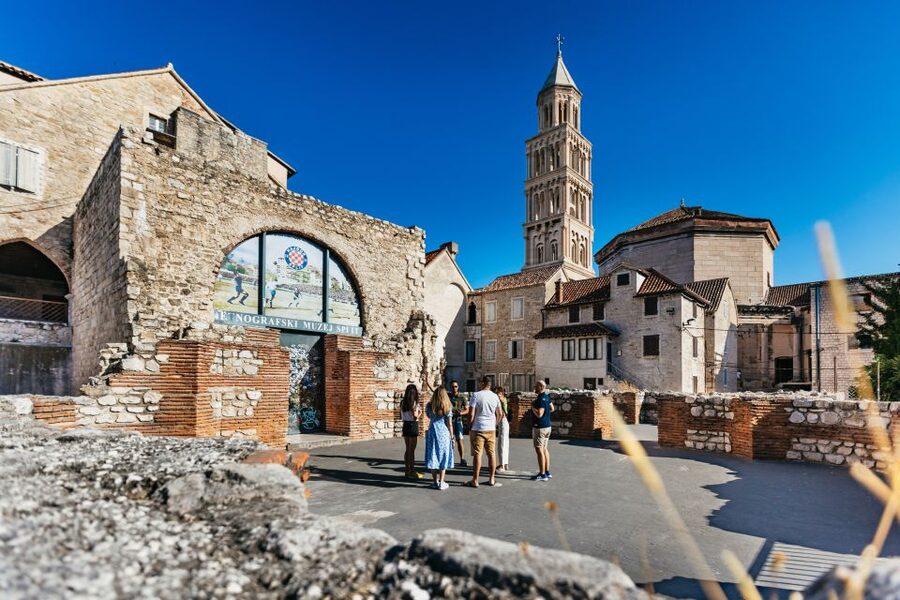
In Giardin Park, the tour pauses at the statue of Gregory of Nin. This stop adds a Croatian figure to a route that could otherwise focus too heavily on Roman emperors and ancient stone.
The story of Gregory of Nin gives the guide a chance to talk about Croatian identity, language, religion, and the people who shaped the country. The statue also breaks up the architecture-heavy portion of the walk. You move from imperial history to a personality connected with Croatia’s medieval past.
This is where the local nature of the tour matters most. Several guides are described as proud residents of Split, and one guide is said to have grown up within Diocletian’s Palace. That kind of personal connection can turn a monument into part of a living city rather than a detached historical object.
You should not expect every guide to tell the same stories in the same way. Names assigned to tours can vary, but the most praised guides include Mia, Slavko, Antonia, Ivana, Ante, Tino, Frane, and Martha. The common thread is clear speech, humor, and a willingness to answer questions.
The Riva, Marjan Hill, and the Adriatic
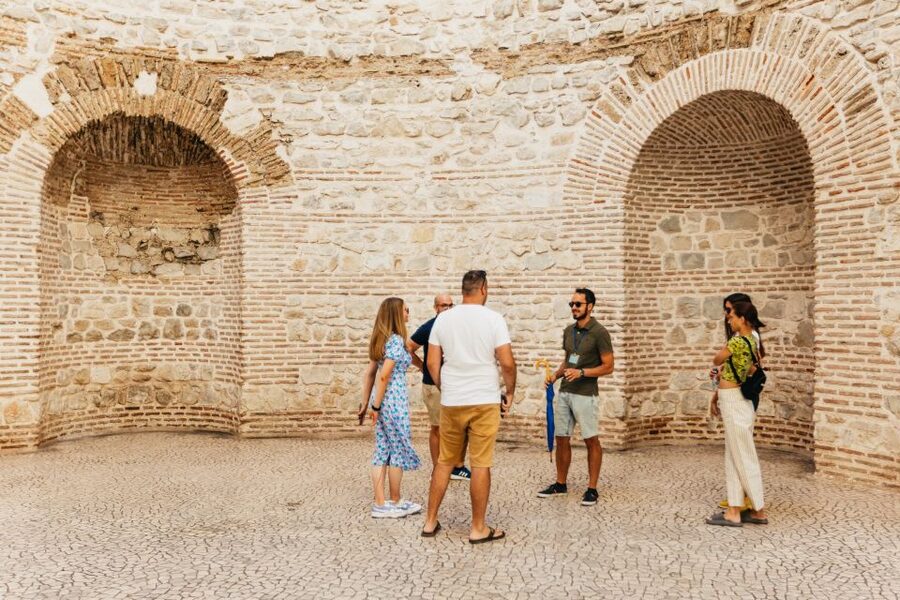
The final major stop is the Riva promenade. After the enclosed lanes and Roman walls, the waterfront gives the tour room to open up. You look toward Marjan Hill and the Adriatic Sea, with a very different view of Split from the one inside the Palace.
I like this ending because it connects the old center to the city’s public life. The Palace is not the whole of Split. The Riva is where you can pause, watch the city move, and decide what to do next.
The time of day may affect the feel of this part of the walk. One guest specifically recommended a sunset option, noting that it was less crowded. That is useful advice if your schedule allows flexibility. Morning can suit people who want an early introduction, while late afternoon may offer softer light and a calmer finish.
Weather does not automatically ruin the tour. A guide named Mia was praised for handling poor weather well and adjusting the route. Still, bring comfortable clothing and dress for walking. The information provided does not promise shelter at every stop.
What the guides add
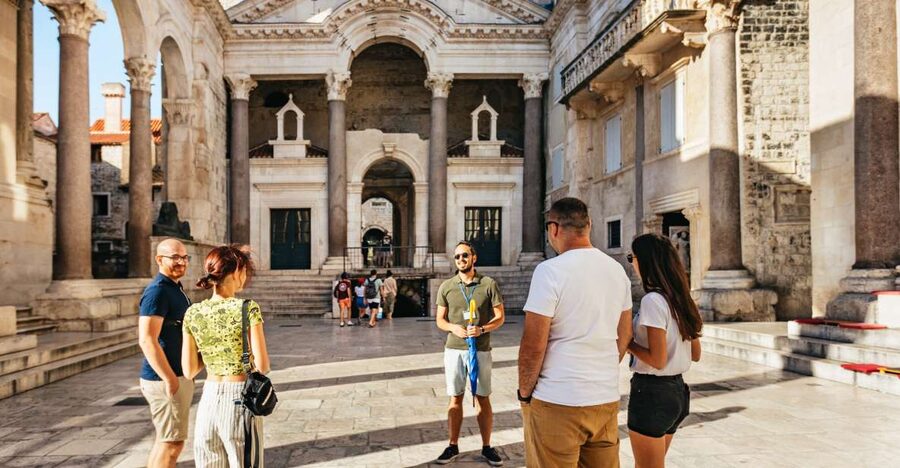
Guide quality is the strongest part of this experience. The praise is unusually consistent across different dates and guide names. The most valued traits are not just historical facts, but clear English, a friendly manner, humor, local pride, and practical suggestions.
Slavko is often singled out for making Palace history entertaining while also discussing wider Dalmatian and Croatian stories. Antonia is praised as a gifted storyteller who offers food and sightseeing recommendations. Mia is described as both funny and well informed, with useful advice on restaurants and places to avoid.
That practical help can save you time after the walk. A guide may point out where to eat, which tourist traps to skip, or how to navigate the Old Town. The exact advice will depend on the person leading your tour, so think of it as an added benefit rather than a guaranteed package.
Private groups are available. This is worth considering if you have a family group, want to ask many questions, or prefer a more personal pace. A small group can also make it easier to hear in busy parts of the Old Town.
The Trogir option and longer versions
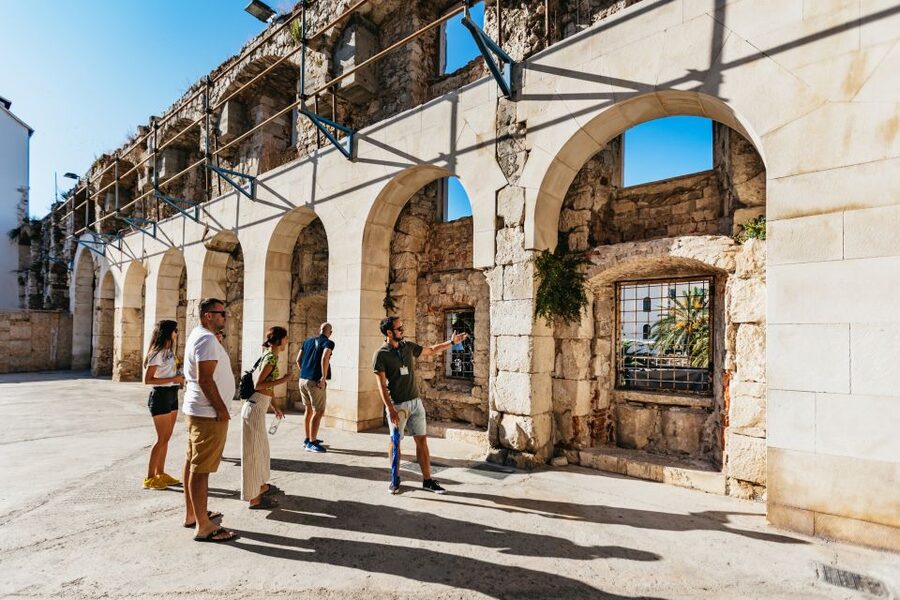
Some choices extend beyond central Split. One account describes an add-on visit to Trogir, reached by a roughly 40-minute drive arranged as part of the tour. The two places have different characters, so the addition makes sense if you want more than a short introduction to Split.
The longer option changes the experience from a basic orientation walk into much of a day. You should check the exact duration and inclusions before booking, since the activity range runs from 90 minutes to six hours. Food tasting and wine tasting are included only if you select those options.
Trogir is not part of every booking, and it should not be assumed that a standard Split walk includes transport. Treat it as a separate choice within the available versions. If your main goal is understanding Diocletian’s Palace, the 90-minute route may be enough. If you want a fuller day with another historic town, the extended version may offer better value.
Price, group size, and practical value
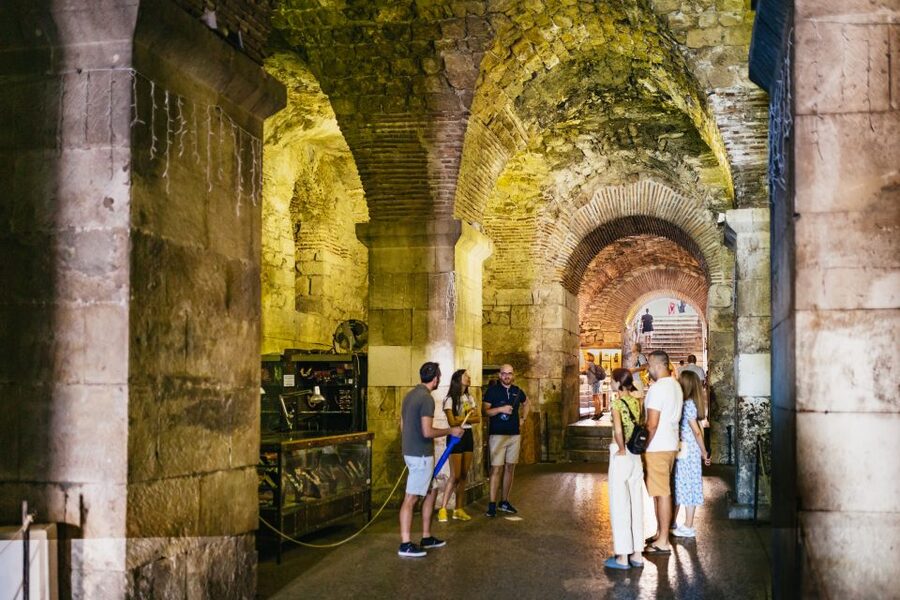
At $17 per person, the standard tour is reasonably priced for a guided introduction to Split’s central sights. You are paying for a local guide, a structured route, and explanations that can make the Palace readable. You are not paying for hotel pickup, and the basic price does not automatically include tasting or a Trogir visit.
That distinction matters. Compare the exact option rather than assuming every advertised feature belongs to the lowest price. The longer versions may cost more because they add food, wine, transport, or extra sightseeing.
The tour is suitable for all ages. It is not suitable for wheelchair users, and comfortable clothes are recommended. Because the walk includes historic streets and ancient surfaces, you should be prepared for ordinary Old Town walking conditions.
The activity offers free cancellation up to 24 hours before the start time, with a full refund, and you can reserve now and pay later. Starting times vary, so availability needs to be checked for your date.
Who should book this Split walking tour?
I would choose this tour if you are visiting Split for the first time, especially if you want an introduction before exploring on your own. It is also a good fit for cruise passengers with limited time, families who want history presented in an approachable way, and anyone who prefers stories to guidebook captions.
History fans will appreciate the Roman planning and the Palace’s later use. Food-minded visitors may like the tasting option and restaurant advice. A private group can suit people who want more control over questions and pacing.
I would hesitate if you dislike guided walks, want long private visits inside every monument, or need step-free access. The tour covers several sights from the outside and in public spaces, and some options may move at a steady pace.
Should you book it?
Yes, if you want Diocletian’s Palace to become a city you can understand rather than a maze of old walls. The $17 standard option offers strong value, and the guides are repeatedly praised for warmth, humor, clear explanations, and useful local advice.
Choose the 90-minute version for a focused first look. Consider a longer option if you want food, wine, or Trogir added to the day. For the best fit, confirm the meeting point, duration, inclusions, and accessibility before paying. If the schedule allows, a sunset departure may give you a quieter finish on the Riva.
FAQ
Where does the Split walking tour begin?
The standard route begins at the Golden Gate of Diocletian’s Palace. The meeting point may vary by the option booked, so check your booking details.
Where does the tour finish?
The route finishes at the Golden Gate, where it began.
How long does the tour last?
Available options range from 90 minutes to six hours. Check the available starting times and duration for your chosen option.
What sights are included?
The route includes the Golden Gate, the remains of Diocletian’s Palace, the Peristyle, Saint Domnius Cathedral, Gregory of Nin’s statue in Giardin Park, and the Riva promenade.
Is hotel pickup included?
No. Hotel pickup is not included.
What languages are available?
Guides are available in English, Italian, Spanish, German, and French.
Is a private group available?
Yes. A private group option is available.
Are food and wine included?
Food tasting and wine tasting are included only if you select an option that specifically includes them.
Is the tour suitable for children and older adults?
The tour is stated to be appropriate for all ages. It is not suitable for wheelchair users.
Can I cancel for a full refund?
Yes. You can cancel up to 24 hours in advance for a full refund. You can also reserve now and pay later.
More Old Town Walking Tours in Split
- Discover The Old Town Split 1.5h walking Small group tour
★ 4.8 · 93 reviews - Underground Vaults Walking Tour in Edinburgh Old Town
★ 4.5 · 8,506 reviews - Prague: 3-Hour Walking Tour of Old Town & Prague Castle
★ 4.7 · 5,696 reviews - Dubrovnik: Old Town Walking Tour
★ 4.8 · 5,174 reviews
Just added around Split
- Split: Food Tasting Walking Tour★ 4.9 · 102 reviews
- Split: Local History and Culture 90-Minute Walking Tour★ 5.0 · 194 reviews
- Split: 1.5-Hour Walking Tour and Diocletian’s Palace★ 4.7 · 256 reviews
- Split: Diocletian Palace & Old Town Guided Walking Tour★ 4.7 · 882 reviews
- Split: Walking tour of Split with a ‘Magister’ of History★ 5.0 · 110 reviews
- From Split: Krka Waterfalls Cruise & Trogir Walking Tour★ 4.7 · 681 reviews
- Split: History and Heritage Walking Tour★ 4.9 · 650 reviews
- Diocletian’s Palace and Old Town SMALL GROUP Walking Tour★ 5.0 · 502 reviews
Castle and Palace Walking Tours, compared.

Edinburgh Castle: Guided Walking Tour with Entry Ticket
Read our review →
Doge’s Palace and St Mark’s Basilica Walking Tour
Read our review →
3-Hour Walking Tour of Old Town & Prague Castle
Read our review →Edinburgh Castle: Guided Walking Tour with Entry Ticket
Read our review →
Edinburgh Castle Guided Walking Tour in English
Read our review →
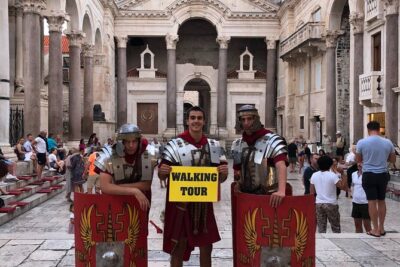
Walking Tour of Split and Diocletian’s Palace
Read our review →
Grand Palace and Wat Phra Kaew Guided Walking Tour
Read our review →Browse the lists this tour appears in