
Review · OLD TOWN WALKING TOURS
Discover The Old Town Split 1.5h walking Small group tour
Roman Split begins at the waterfront. This 90-minute walk gives you a clear introduction to Diocletian’s Palace, the UNESCO-listed Old Town, and the medieval streets built into it. I especially like the local guides, who bring strong historical knowledge and personal feeling for Split, and the way the tour links Roman ruins with everyday cafés, markets, and small shops. The main consideration is that monument entry fees are not included, so some of the most important interiors may require extra payment.
I also like the relaxed pace and the chance to ask questions in a small-group setting. Guides such as Aneka, Ina, Marko, Toni, and Roko have been praised for humor, local tips, and adjusting their explanations to the group. Still, this is a walking tour over old stone streets, and it is not suitable for wheelchair users.
Key points at a glance
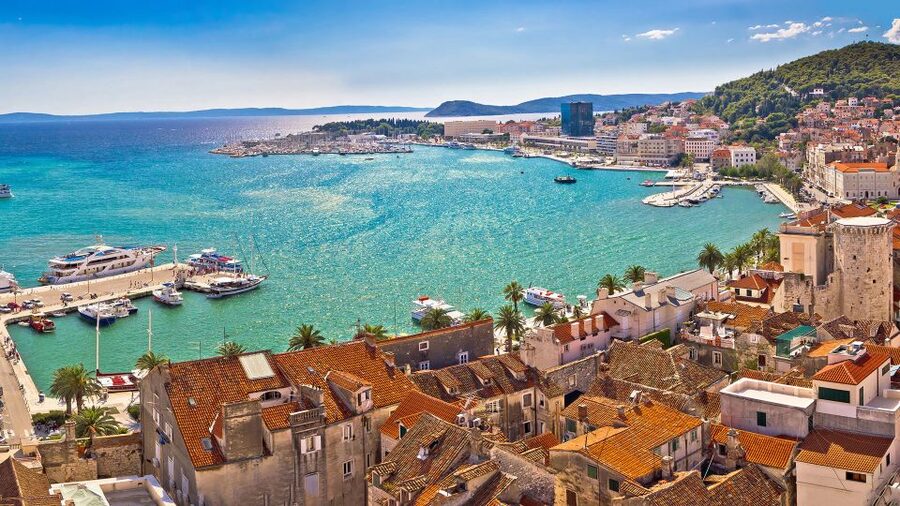
- Diocletian’s Palace is still part of daily life: Roman walls, courtyards, cellars, shops, and cafés are woven into modern Split.
- The Cathedral of St Doimus occupies the emperor’s former mausoleum: It gives the Roman story a striking later chapter.
- Guides make the biggest difference: Aneka, Ina, Marko, Toni, Roko, and others have been praised for humor, local insight, and clear explanations.
- The 90-minute format is useful for first-time visitors: You get your bearings without giving up an entire morning or afternoon.
- The tour stays mostly outdoors: Optional monument admissions cost extra, so budget separately if you want to enter paid sites.
- Come ready to walk: Comfortable shoes are essential, and children must stay with an adult.
Why this short walk works in Split
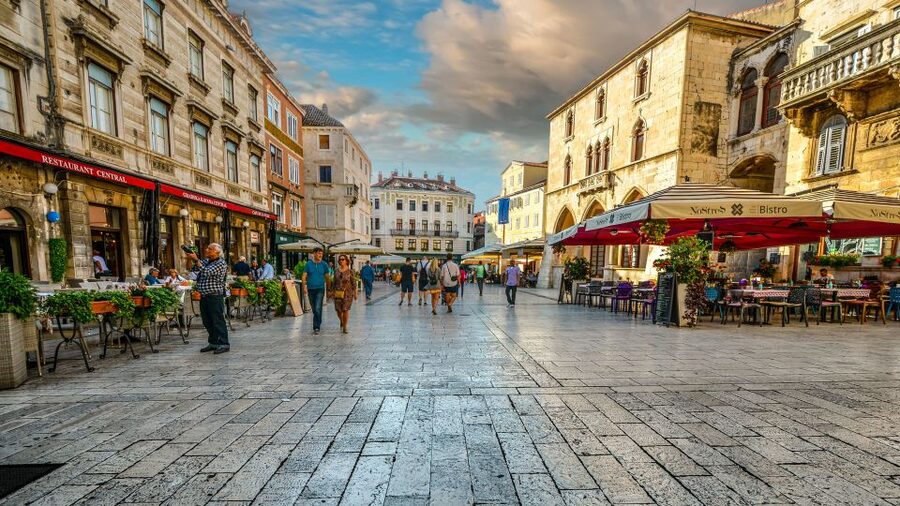
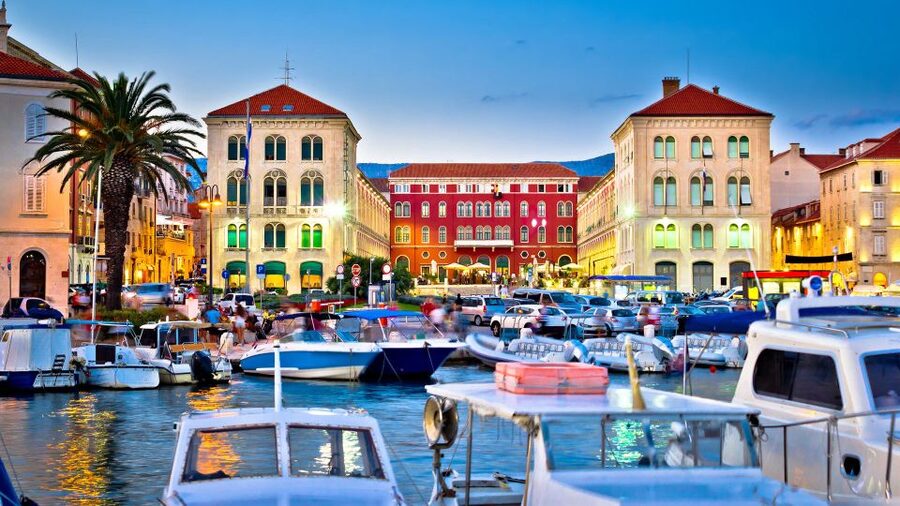
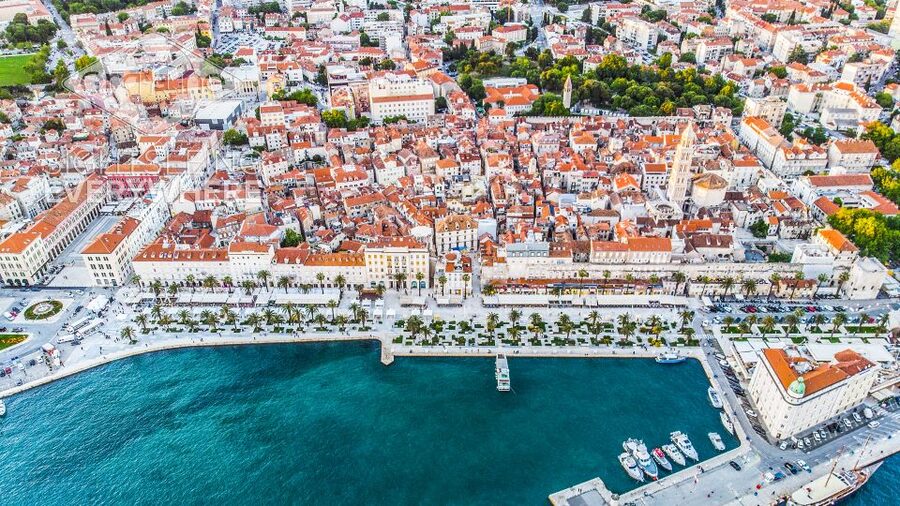
Split can confuse you at first. It looks like a normal Mediterranean city beside the sea, but the center is built around and inside a Roman palace. Ancient walls become apartment buildings. A former imperial courtyard becomes a public meeting place. Medieval lanes run through foundations laid nearly two thousand years ago.
That unusual mix is the reason I think a guided walk is worthwhile. You can certainly wander the Old Town alone, but it is easy to mistake a Roman column for a later addition, or to walk past an important doorway without understanding what it was. A good guide gives the stones a timeline.
This tour lasts 90 minutes, which is enough time to cover the main story without asking too much of your feet. You will not see every corner of Split, and you should not expect a detailed archaeological tour of every monument. Instead, you get a structured introduction that helps you return later and explore with more purpose.
The experience is offered in English with a professional licensed local guide. Its overall rating is 4.8 from 93 ratings, and the strongest praise consistently centers on the guides rather than on a rigid script. That matters in a city where the best moments often come from a question, a local recommendation, or a small detail about how modern Split uses its ancient center.
More Old Town Walking Tours in Croatia
- Split: Old Town and Diocletian Palace Walking Tour
★ 4.9 · 4,727 reviews - Split: Diocletian Palace & Old Town Guided Walking Tour
★ 4.7 · 882 reviews - Diocletian’s Palace and Old Town SMALL GROUP Walking Tour
★ 5.0 · 502 reviews
Meeting on the Riva promenade
The tour begins at the local supplier’s office on Split’s famous Riva promenade, at Obala Hrvatskog narodnog preporoda 21. Look for the supplier’s sign and staff wearing matching T-shirts. You can also find the listed starting locations under the names ATM, Auro Domus, and Visit Split-Grayline.
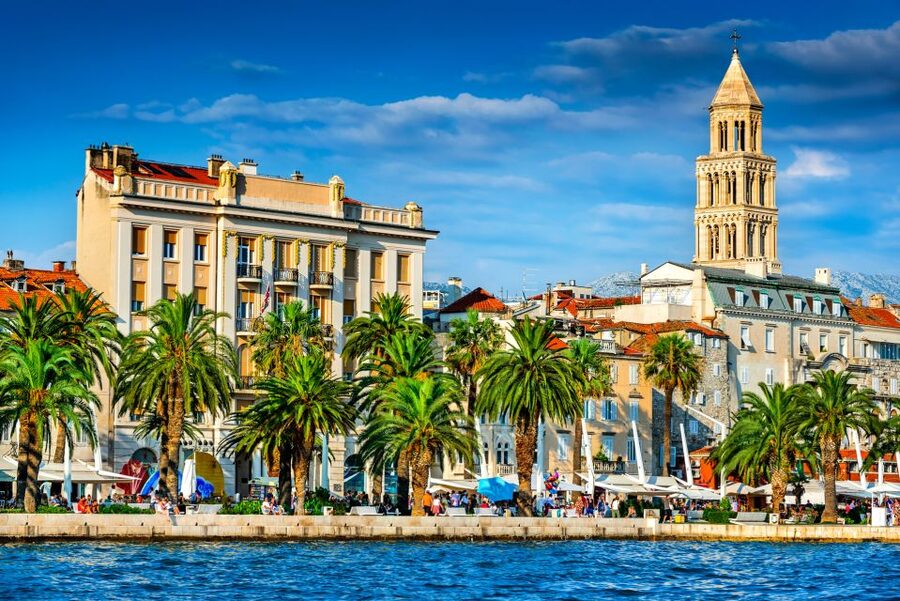
Arrive 15 minutes before departure. That extra time is useful because the Riva can be busy, and you do not want to begin the morning searching for the office. The waterfront is also a practical place to get your bearings. From here, the harbor faces the long front of Diocletian’s Palace, making the Roman connection immediately visible.
Your return point is listed as either Visit Split-Grayline or ATM, Auro Domus. In other words, the tour finishes in the same general Old Town and waterfront area rather than taking you out of central Split. You can continue sightseeing, find a café, or return to a hotel nearby after the walk.
Walking into Diocletian’s Palace
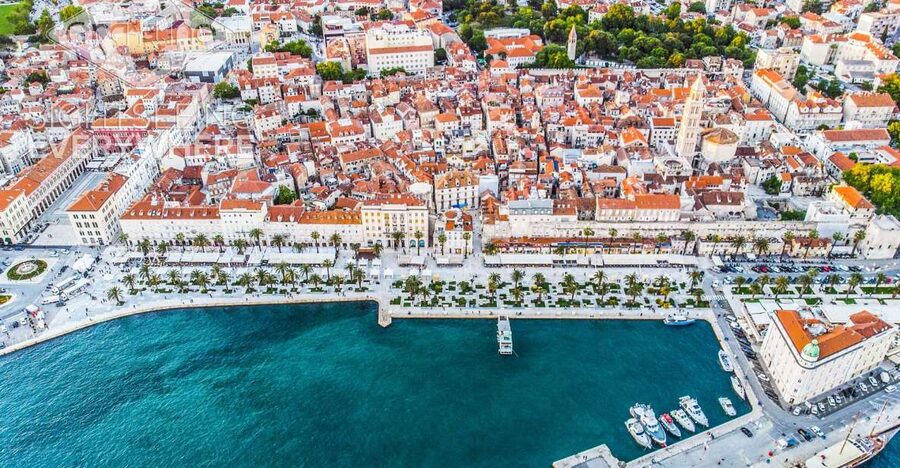
The first major subject is the Palace of the Roman Emperor Diocletian. It is not a preserved complex sitting apart from the city. The palace is part of the city, and that is what makes the visit so memorable.
As you walk, your guide explains how Roman remains survive among later buildings. The narrow lanes, stone walls, and open squares show how Split developed over time. The palace is best understood as a living urban space, not just a single archaeological site with a fence around it.
You will explore the area around the palace and see the peristyle courtyard, one of the central spaces in the Roman complex. This is where the scale of the original design becomes easier to grasp. The courtyard also helps explain why a guide is useful: the architecture is impressive, but its purpose and later changes are not always obvious when you are looking at it alone.
The palace cellars are another key part of the route. They help you picture the structure beneath the imperial residence and show how much of the Roman plan remains beneath present-day Split. Admission to monuments is optional and not included, so confirm with your guide which parts can be seen as part of the walk and which require a separate ticket.
This approach is good value for a first visit. You get the main framework and can decide afterward if an interior deserves more of your time and money.
Seeing the cathedral and former mausoleum
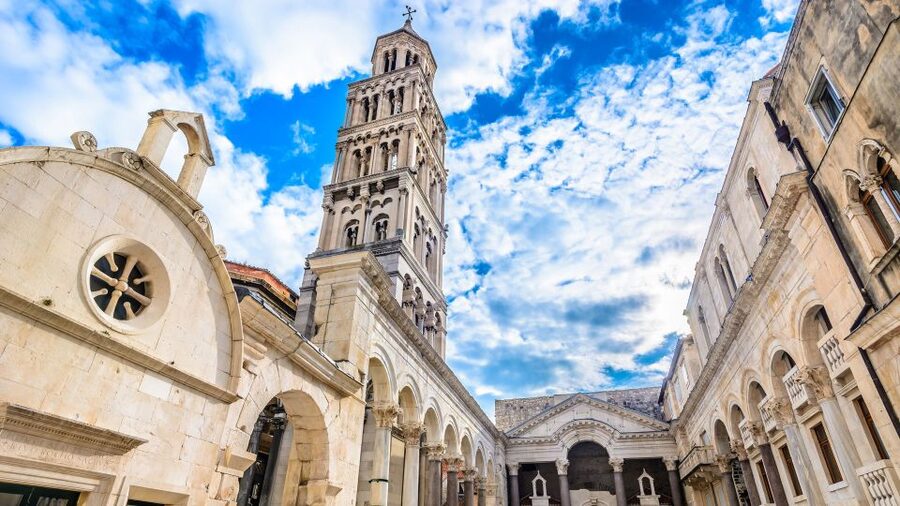
The Cathedral of St Doimus adds one of the most interesting layers to the tour. The cathedral occupies what was originally the mausoleum of Diocletian, giving the site a remarkable change of purpose.
Your guide uses this stop to connect Roman imperial power with the later Christian history of Split. The building is not simply another church on a sightseeing list. Its location shows how the city reused an earlier structure rather than wiping the Roman past away.
If you want to enter paid monuments, expect additional entrance fees. The tour price covers the licensed guide, not admission to monuments. That arrangement keeps the basic price low, but it means you should not assume every interior is part of the 29-dollar cost.
I see this as a sensible setup for many visitors. Some people want a fast outdoor orientation, while others want to pay for more interiors. You can make that choice instead of paying one larger fee for access you may not use.
More Old Town Walking Tours in Split:
- SPLIT-PRIVATE Walking Tour of Diocletian’s Palace & Old Town
★ 5.0 · 467 reviews - Underground Vaults Walking Tour in Edinburgh Old Town
★ 4.5 · 8,506 reviews - Prague: 3-Hour Walking Tour of Old Town & Prague Castle
★ 4.7 · 5,696 reviews - Dubrovnik: Old Town Walking Tour
★ 4.8 · 5,174 reviews
Medieval lanes, shops, and ordinary Split
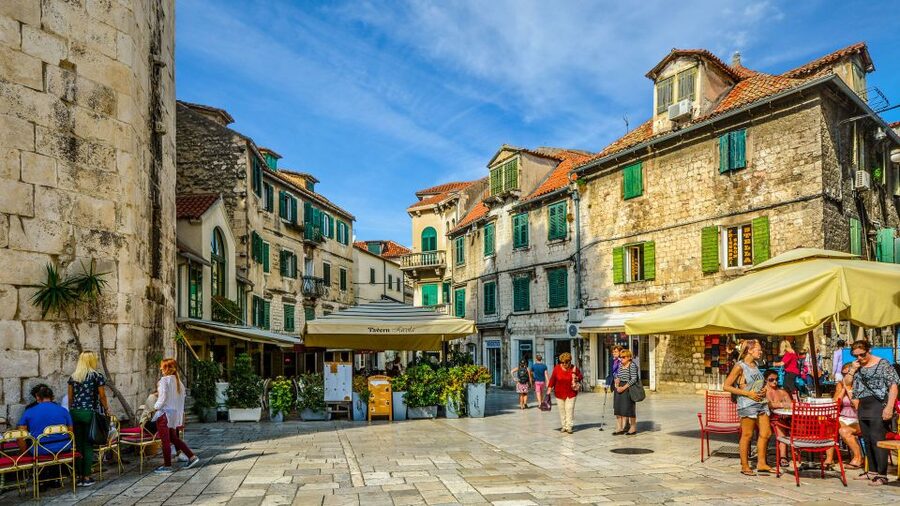
The walk does not stop with Roman history. You also move through the charming medieval part of the Old City, where narrow streets are lined with souvenir shops, cafés, and the signs of modern urban life.
This is where the tour gains a more human scale. The palace was built for an emperor, but its later life belongs to the people who live, work, eat, and shop among the old stones. You are not looking at ruins from a distance. You are moving through a center that still functions as part of Split.
The souvenir stores may not be the most historic feature, but they help you understand the contrast between old masonry and present-day tourism. Your guide can also point out places that are easy to miss, including spots that do not require an admission charge. Toni, for example, was praised for showing visitors interesting places they could see without paying extra.
The route’s narrow streets can feel tight, especially at busy times. They also offer shade in some places, and several guides have made a point of keeping groups out of the strongest heat when possible. That is useful in summer, when stone streets and open squares can become tiring.
The guides are the main reason to book

The tour provider assigns different English-speaking local guides, so you cannot count on a particular person unless the supplier confirms it. Still, the names that receive the warmest praise include Aneka, Anita, Marko, Daniella, Gabrijela Terze, Ina, Ana, Viktoria, Toni, Maja, and Roko.
Aneka was praised for clear communication, humor, and a strong sense of local life. Ina, who was described as an archaeologist, brought extra depth to the Roman and medieval sections. Marko was repeatedly described as personable and entertaining, and one tour with him ran more than two hours because the group had so many questions and he had so much to explain.
Roko was valued for his enthusiasm and for offering a useful restaurant suggestion. Daniella was praised for making the history feel alive and for passing along discounts. Toni mixed past and present, rather than speaking only in dates and building names.
These details suggest that the experience can feel different depending on the guide. That is not necessarily a weakness. A local guide who responds to your questions can be more useful than a fixed speech, especially if you are curious about food, current life, popular culture, or the best way to spend the rest of your day.
One guide even combined a booking with a Game of Thrones tour when only one person had reserved. That visitor received a 20 percent refund. You should not assume this will happen, but it shows that arrangements can sometimes change when group numbers are very low.
Group size and pace
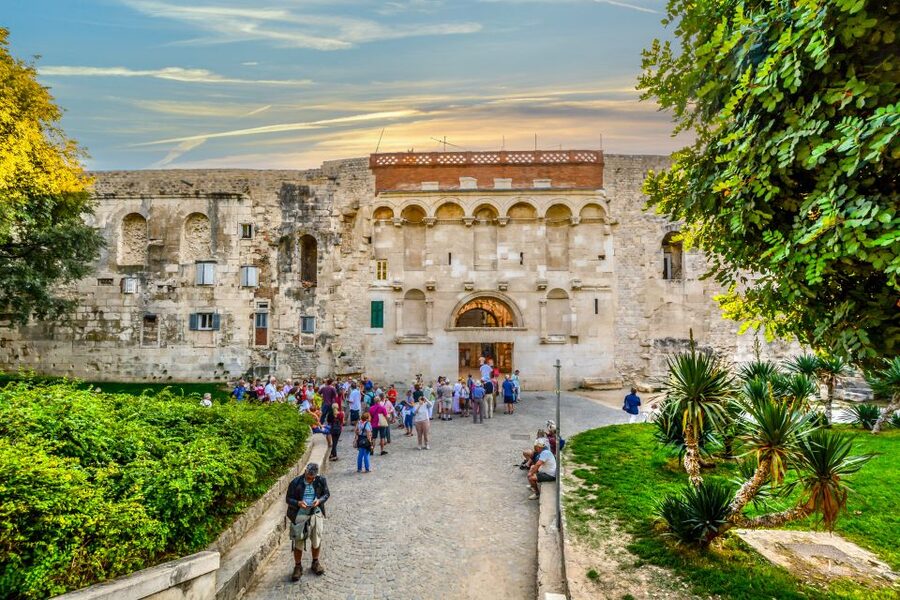
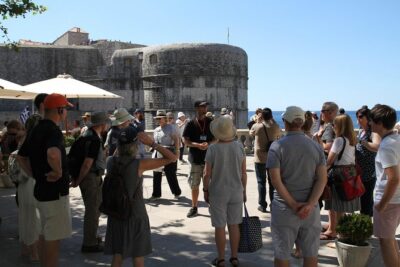
The activity is presented as a small-group tour, but the actual group can vary. One outing had only two couples, while another included 19 people. A group of five was also described as especially pleasant and easy to manage.
A smaller group usually makes it easier to hear the guide, ask questions, and pause for shade. A larger group may feel less personal, particularly in the tight lanes around the palace. If group size matters greatly to you, ask the supplier for the expected number before booking.
The pace is described as relaxing rather than rushed. That suits Split’s Old Town, where a quick march would cause you to miss doorways, stone details, and the way Roman structures have been adapted over time. You will need to walk for the full 90 minutes, though, so wear comfortable shoes.
The route is not wheelchair accessible. Uneven historic streets, narrow passages, and old stone surfaces make this a poor match for wheelchair users. Children are welcome but must be accompanied by an adult. Pets are not allowed.
Is $29 a fair price?
At $29 per person, the tour offers solid value if you want context rather than simply a route map. The price includes a professional licensed local guide, and the 90-minute length is practical for a first afternoon in Split, a port stop, or a morning before another activity.
The value depends on how much you use the guide. If you plan to walk silently and take photographs, you may prefer to explore alone. If you want to understand why the cathedral occupies a Roman mausoleum, how the palace became a city, and which parts are worth returning to, the cost is easier to justify.
The missing admission fees are the main financial point to remember. Optional monument entrances cost extra, so keep some room in your sightseeing budget. The advantage is flexibility: you can take the basic walk, then decide if you want to pay for additional interiors.
The tour also allows you to reserve now and pay later, and cancellation is free up to 24 hours before departure for a full refund. That is helpful if your Split plans depend on a cruise schedule or changing travel arrangements.
Who will enjoy this Split walk most?
I would recommend this tour to first-time visitors who want a quick, well-organized introduction to the Old Town. It also suits people who enjoy history but prefer stories and explanations to a long museum visit.
It is a good choice for couples, families with older children, and solo visitors who want company without committing to a full-day excursion. The short duration leaves room for the market, waterfront, restaurants, and other Split sights afterward.
You should think twice if you dislike walking on old stone streets, want guaranteed private attention, or need wheelchair access. It may also feel too brief if your main goal is to enter every monument in detail. In that case, use this walk as an orientation and plan extra time for paid sites later.
For the best experience, arrive early, bring water, wear shoes with a firm sole, and ask questions. In warm weather, pay attention to the guide’s effort to use shaded places. Guides have shown flexibility before, and you will get more from the hour and a half if you tell them what interests you.
FAQ
How long does the Old Town tour last?
The guided walking tour lasts 90 minutes.
What language is the tour offered in?
The live tour guide speaks English.
Where does the tour meet?
The meeting point is the local supplier’s office on the Riva promenade at Obala Hrvatskog narodnog preporoda 21, 21000 Split, Croatia. Look for the supplier’s sign and staff wearing matching T-shirts.
How early should I arrive?
You should arrive 15 minutes before the scheduled departure time for check-in.
Are entrance fees included?
No. Admission to monuments is optional and entrance fees are not included in the tour price.
Is the tour wheelchair accessible?
No. The tour is not suitable for wheelchair users.
Can children join the tour?
Yes, but children must be accompanied by an adult. Pets are not allowed.
Should you book it?
Book this walk if you want the Roman story of Split explained by a local guide, with enough time left afterward to explore on your own. The strongest reason to choose it is the guide quality, with past tours led by people such as Ina, Marko, Aneka, Toni, and Roko receiving particular praise for humor, local feeling, and clear storytelling.
Skip it if you only want free access to every monument, a private tour, or a step-free route. For most first-time visitors, though, $29 is a reasonable price for a focused introduction to a city where ancient walls and ordinary daily life occupy the same streets.
More Small-Group Walking Tours in Split
- Amsterdam Anne Frank: Small-Group Walking Tour & Local Guide
★ 4.8 · 12,789 reviews - Boston: Freedom Trail History Small Group Walking Tour
★ 5.0 · 6,450 reviews - New Orleans Food Walking Tour of the French Quarter with Small-Group Option
★ 5.0 · 6,118 reviews - Barcelona Tapas and Wine Experience Small-Group Walking Tour
★ 5.0 · 5,804 reviews
Just added around Split
- Split: Food Tasting Walking Tour★ 4.9 · 102 reviews
- Split: Local History and Culture 90-Minute Walking Tour★ 5.0 · 194 reviews
- Split: 1.5-Hour Walking Tour and Diocletian’s Palace★ 4.7 · 256 reviews
- Split: Diocletian Palace & Old Town Guided Walking Tour★ 4.7 · 882 reviews
- Split: Walking tour of Split with a ‘Magister’ of History★ 5.0 · 110 reviews
- From Split: Krka Waterfalls Cruise & Trogir Walking Tour★ 4.7 · 681 reviews
- Split: History and Heritage Walking Tour★ 4.9 · 650 reviews
- Diocletian’s Palace and Old Town SMALL GROUP Walking Tour★ 5.0 · 502 reviews
Old Town Walking Tours, compared.
Underground Vaults Walking Tour in Edinburgh Old Town
Read our review →
3-Hour Walking Tour of Old Town & Prague Castle
Read our review →

Old Town and Jewish Quarter Guided Walking Tour
Read our review →
Cartagena: Historic Center and Getsemaní Shared Walking Tour
Read our review →Browse the lists this tour appears in