
Review · HISTORY WALKING TOURS
Stone Town’s Hidden History: Private Guided Walking Tour
Stone Town rewards slow walking. This private tour brings you through Zanzibar’s limestone lanes, market streets, grand doors, and layered past with a guide who can adjust the route to your interests. I like the personal format and the chance to ask questions as you go. I also like that guides such as Abdalla, Amina, Cosmo, and Issa are praised for clear storytelling and a warm manner.
The main drawback is the heat, especially around midday. Stone Town’s lanes offer shade, but you will still be walking for up to four hours. Entry fees for the Freddie Mercury museum, Anglican Cathedral, and Hamamni Baths are extra, and some visitors may prefer to see fewer sights at a slower pace.
Key points to know before you go
- A genuine private tour: Your guide can reshape the route around history, architecture, food, shopping, or local culture.
- Stone Town in one compact walk: In about 2.5 hours, you can see the Old Fort, Darajani Bazaar, former slave market site, House of Wonders, Hamamni Baths, and more.
- Excellent guide feedback: Abdalla, Cosmo, Amina, Issa, Hashir, and Muhammad are praised for their patience, local knowledge, and friendly approach.
- Best timing: Start early to avoid the strongest heat, or book the 4:30 pm departure for sunset and the night market.
- Good value at $30: The price includes a private local guide, pickup and drop-off, two 500-milliliter bottles of water, a city map, and required taxes.
- Come prepared to walk: Wear comfortable shoes, carry cash and sunglasses, and leave large luggage behind.
Why Stone Town works best with a guide
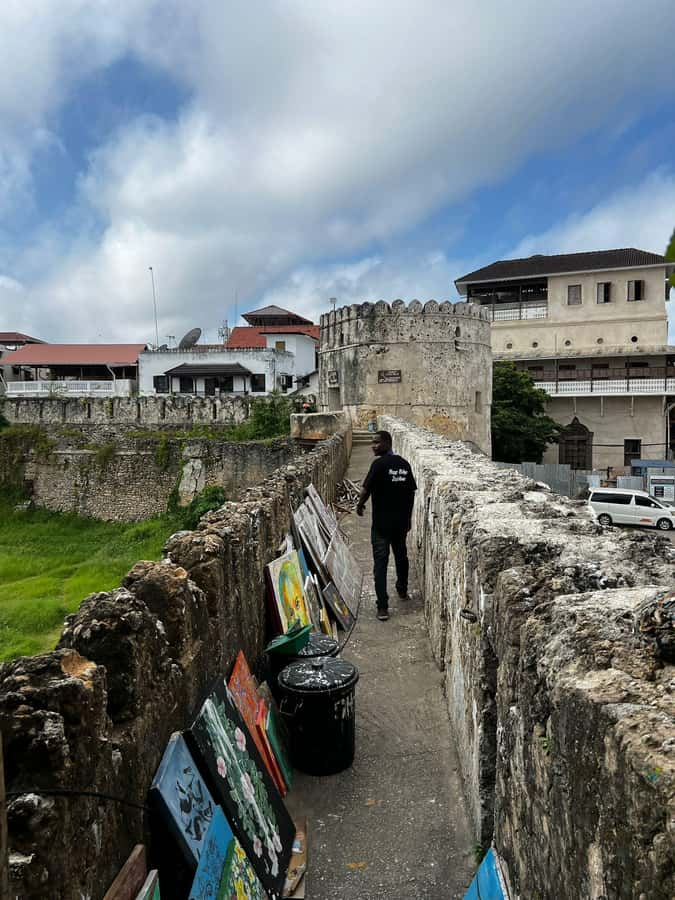
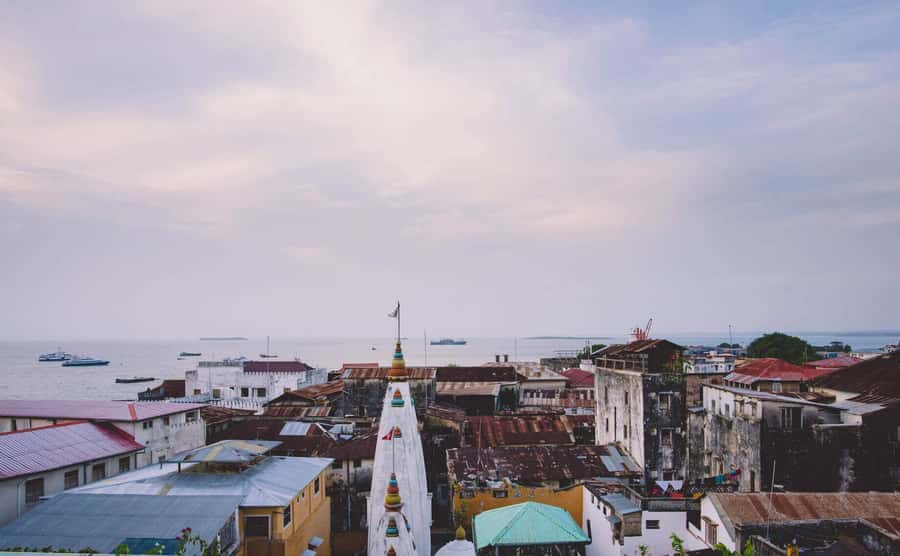
Stone Town is not a tidy open-air museum. It is a working town, with about 18,000 people living among more than 2,000 limestone buildings. The old center covers an area roughly the size of 14 football fields, yet its narrow lanes can make the place feel much larger.
That layout is part of the fun. You turn past a carved doorway, enter a coffee corner, hear market sellers calling out prices, and suddenly find yourself beside a historic fort or an old religious building. Without help, it is easy to admire the details but miss the connections between them.
A local guide gives those details a human scale. You learn how African, Arab, Indian, Persian, and European influences shaped the town. You also get explanations of everyday life, local customs, and the stories behind buildings that might otherwise look like a collection of aging walls.
The private setup matters here. You can ask why a door looks Indian, how the old market functions, or what a particular building was used for. If you care more about architecture than shopping, your guide can focus there. If you want food, local culture, or Zanzibar’s modern personalities, the walk can shift in that direction.
The tour is also a useful first introduction to Stone Town. Several guides are praised for making the experience a good starting point for a longer stay. After a few hours, you should have a better sense of direction and a list of places to revisit on your own.
More History Walking Tours in the world:
- History and Hauntings of Salem Guided Walking Tour
★ 5.0 · 14,564 reviews - Lisbon: History, Stories and Lifestyle Walking Tour
★ 4.8 · 10,902 reviews - Boston: Freedom Trail History Small Group Walking Tour
★ 5.0 · 6,450 reviews
Meeting at the Old Fort near Forodhani Gardens
The regular meeting point is in front of the Old Fort, near Forodhani Gardens. This is a sensible place to begin because it puts you close to the waterfront, historic center, and evening food area.
If you select pickup, wait in your hotel lobby about 10 minutes before the scheduled time. Look for the guide or driver wearing a Happy Bikes shirt, hat, or cap. Pickup and drop-off are included, although the exact starting and ending point depends on the option you choose.
You may finish at one of several central locations, including the Old Fort, Darajani Bazaar, Africa House Hotel, Park Hyatt Zanzibar, Tembo Palace Hotel, the Zanzibar Tourist Information Centre, or selected restaurants and bars. This gives you some flexibility if you want lunch, dinner, or more time in town afterward.
At $30 per person, the cost is strong for a private or small-group walk. You are not paying only for transport between sights. The value comes from having a guide who can explain the setting, answer questions, provide water, and return you safely to your starting point or another agreed location.
The Old Fort and Forodhani Gardens set the scene
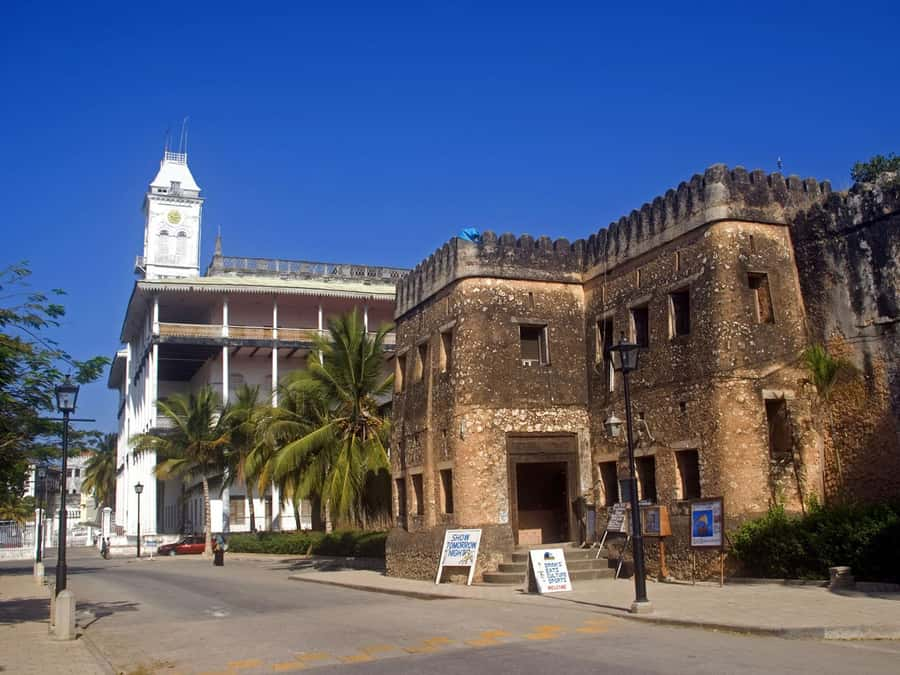
The Old Fort is one of the clearest visual introductions to Stone Town. Its heavy walls and central position show how important this waterfront area was for defense, trade, and public life.
Your guide will use the fort and nearby gardens to explain the town’s geography. This helps you understand how the waterfront connects with the older lanes, market district, hotels, and harbor area.
Forodhani Gardens are also a useful reference point for an evening visit. The area is linked with sunset views and the night market, so a late tour can finish with a livelier atmosphere than a morning walk. The tour specifically recommends a 4:30 pm start if sunset or the night market is a priority.
One practical note: the late option may be more atmospheric, but the streets can feel busier and the heat may linger. Morning is the better choice if you want maximum comfort and more energy for questions.
Darajani Bazaar and the coffee-filled market lanes
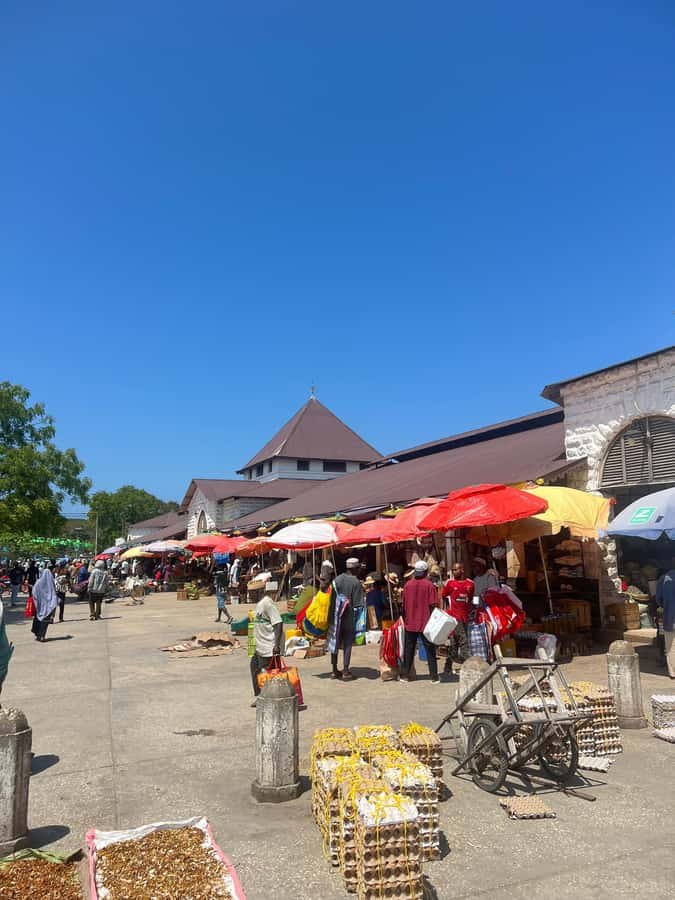
Darajani Bazaar brings you into the everyday side of Stone Town. This is not only a sightseeing stop. It is where local people shop for daily needs, making it one of the best places to see ordinary town life alongside the historic buildings.
Expect a colorful market street and a busy flow of people. The tour also points you toward a coffee-filled bazaar, where people gather and the pace feels social rather than purely commercial.
Your guide can help explain what you are seeing and steer you through the market without reducing it to a photo stop. You may also visit food and arts-and-crafts market areas. Food and soft drinks are not included, so bring cash if you want to buy something.
The market is one reason I would not treat this as an architecture-only tour. Stone Town makes more sense when you see the grand buildings beside working shops, local cafés, and ordinary shopping streets. The contrast is the point.
More Private Walking Tours in the world:
- Private Walking Grand Tour of Copenhagen
★ 5.0 · 3,953 reviews - Private 3 hrs Venice Tour: St Mark’s, Walking tour & Boat tour
★ 4.0 · 3,372 reviews - Private Street Food Evening Walking Tour in Ho Chi Minh City
★ 5.0 · 3,175 reviews - Old Quebec City: Grand Walking Tour with Private Option
★ 4.8 · 2,609 reviews
The former slave market and Anglican Cathedral

The former slave market site is one of the most important stops on the walk. The Anglican Cathedral was built on the site of the old slave market, and the visit gives the tour a serious historical center.
This part can be difficult, but it is necessary. Your guide can explain the role of the slave trade in Zanzibar’s past and how the cathedral came to occupy this location. The site connects international trade, religion, colonial power, and the lives of people who were forced into bondage.
The entry fee is listed as extra for the Anglican Cathedral, although one visitor specifically noted that entry to the former slave market was included during their tour. Because the arrangement may depend on the chosen option, ask your guide what is covered before entering.
Allow yourself time here. It is not simply another historic building to photograph. The site asks you to slow down and listen, and the quality of the explanation will shape how useful the visit feels.
House of Wonders, Palace Museum, and Hamamni Baths

The House of Wonders is one of Stone Town’s best-known landmarks. It is currently under renovation, so you should not assume that a full interior museum visit is available. Even from outside, its size and position make it an important part of the town’s architectural story.
The Palace Museum adds another layer, with a focus on Zanzibar’s former ruling family and royal life. Together, these buildings show the difference between public power, royal residence, religious institutions, and commercial spaces.
Hamamni Baths offer a look at historic bathing culture and town planning. The baths are another optional paid entry, so confirm the current fee and access with your guide.
These sites are most useful when taken together. You are not just collecting famous names. You are seeing how Stone Town once organized public life, government, religion, hygiene, and trade within a compact area.
Zanzibar’s doors, churches, and narrow streets
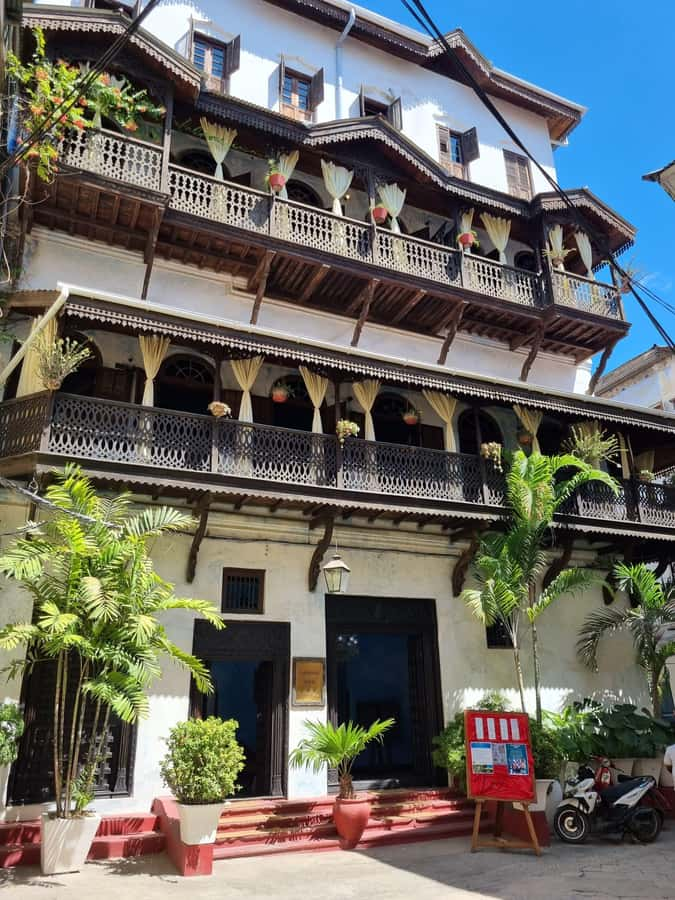
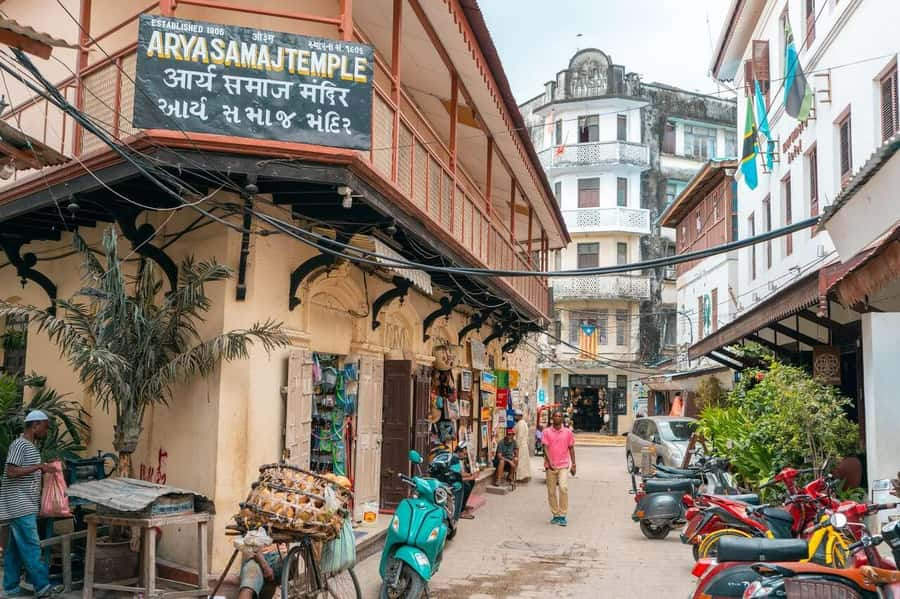
Stone Town’s doors deserve attention. The carved entrances reflect different cultural influences, and your guide can point out details that are easy to miss when you are focused on finding your way through the lanes.
The architecture is one of the strongest reasons to choose a walking tour rather than a vehicle-based overview. You can stop close to the buildings, compare door styles, and look upward at balconies and limestone walls.
The route may include the Catholic Cathedral and the Anglican Cathedral, showing how several religious traditions took root in Zanzibar. You may also pass Hamamni Baths Street and Jaws Corner, a local meeting point known for its coffee culture.
The lanes can be tight, uneven, and crowded. That is part of the character, but it also means this is not a polished promenade. Keep your bag close, watch your footing, and avoid bringing large luggage. Nudity is not allowed, and appropriate clothing is expected in keeping with local culture and traditions.
Freddie Mercury’s house and the modern side of Stone Town
The Freddie Mercury stop gives the tour a more recent and widely recognizable connection. The house associated with the musician is part of Stone Town’s modern cultural story, and the museum offers a separate paid visit.
You can decide how much time to give this stop. If you are a fan, the museum may be worth the extra cost. If your interest is mainly architecture or older history, seeing the exterior and hearing the local context may be enough.
This is where the private format helps. You can tell your guide what matters to you instead of following a fixed script. The walk can give equal attention to Zanzibar’s famous son, market life, old religious sites, and the town’s African, Arab, and Indian influences.
The Secret Garden and the final stretch

The Secret Garden is included among the possible sights and offers a change from the hard stone and crowded lanes. It also fits the tour’s broader purpose: showing different sides of Stone Town rather than only the most photographed monuments.
Depending on timing and your chosen route, the final part may return you toward the Old Fort, Darajani Bazaar, or another central drop-off. Some people will want to stop for food. Others may prefer to continue shopping or head back to a hotel.
The tour duration ranges from two to four hours, with the main guided walk described as about 2.5 hours. A shorter version can work if you have a tight schedule. One guide adjusted a walk from three hours to two while still covering the main sights.
What the guides do well
The strongest part of this experience is the guide service. Abdalla is repeatedly praised for his storytelling, English, patience, and ability to explain both Stone Town and the wider island. Cosmo is described as personable and well informed about local culture. Amina is praised for asking about interests and shaping the route around them.
Issa has helped with hotel collection and offered a friendly introduction to the town. Hashir and Muhammad are also praised for being helpful and attentive. These names matter because a walking tour rises or falls on the person leading it.
Good guides do more than repeat dates. They notice when you need shade, check that you are not exhausted, answer questions, and adjust the pace. One guide was specifically praised for finding shaded spots during the heat and checking on the group throughout the walk.
Still, guide style can vary. The experience is most rewarding if you tell your guide early what you want: architecture, history, markets, food, shopping, or a general introduction. Do not wait until the final 20 minutes to mention your interests.
Timing, clothing, and what to carry
Morning is the safest choice for comfort. Stone Town can become hot, and an early start gives you more energy for the market, cathedral, and historic buildings. Bring comfortable shoes, sunglasses, a camera, and cash.
You receive two 500-milliliter bottles of water, but extra water may still be useful on a hot day. Carrying an umbrella is optional for rainy weather because the tour runs in rain or shine.
Dress respectfully. Zanzibar has strong cultural and religious traditions, and clothing should be appropriate for the places you visit. Avoid large bags and luggage, which are not allowed on the tour.
The activity is listed as unsuitable for pregnant women. If heat, extended walking, or uneven streets may be difficult for you, discuss your needs before booking.
Who should book this Stone Town walk?
I would recommend it to first-time visitors, solo visitors who want a confident introduction, couples, families with older children, and anyone who prefers conversation over a rigid audio guide. It is especially useful if you have only one day in Stone Town.
The tour also suits repeat visitors who want to focus on a particular subject. Ask for architecture and doors, local food, the slave trade, religious buildings, market life, or Zanzibar’s modern culture.
I would be less enthusiastic if you dislike walking in heat, crowded markets, or working urban areas. This is not a quiet museum tour. It is a close look at a living town, with all the noise, uneven surfaces, interruptions, and daily activity that come with it.
Should you book it?
Book this tour if you want a flexible introduction to Stone Town and value a local guide who can explain what you are seeing. At $30 per person, the included guide, water, map, transport option, and private format make it good value.
Choose a morning start for cooler conditions and a 4:30 pm start for sunset and the night market. Before you set off, tell your guide your priorities and confirm which optional entry fees apply. If Abdalla, Amina, Cosmo, Issa, Hashir, or Muhammad is assigned, you can expect the kind of attentive, friendly approach this experience is known for.
FAQ
How long does the Stone Town walking tour last?
The tour lasts between 2 and 4 hours. The main guided walk is described as about 2.5 hours, and a shorter route may be arranged if your schedule is tight.
How much does the tour cost?
The listed price is $30 per person. It includes a private local guide, pickup and drop-off, two 500-milliliter bottles of water, a city map, taxes, and surcharges.
Where do I meet the guide?
The standard meeting point is in front of the Old Fort, near Forodhani Gardens. If you select pickup, wait in your hotel lobby 10 minutes before the scheduled time and look for the Happy Bikes shirt, hat, or cap.
Are museum entry fees included?
Entry fees for the Freddie Mercury museum, Anglican Cathedral, and Hamamni Baths are listed as optional extras. Ask your guide to confirm the current arrangements, as entry to the former slave market site was included for one booking.
What languages are available?
Live guiding is available in English, French, German, Italian, Spanish, and Swahili.
What should I bring and wear?
Bring comfortable shoes, sunglasses, a camera, and cash. Dress appropriately for Zanzibar’s culture and traditions. Do not bring large bags or luggage, and consider carrying an umbrella if rain is expected.
Just added around the world
- Walking Tour of Boston’s Freedom Trail★ 4.5 · 77 reviews
- Downtown Freedom Trail Walking Tour – History & Architecture★ 4.5 · 194 reviews
- Boston Seafood Lovers Food and History Walking Tour★ 5.0 · 208 reviews
- Boston “Death and Dying” Walking Ghost Tour★ 4.5 · 223 reviews
- Boston Food of the North End Private Walking Tour★ 5.0 · 174 reviews
- Boston Movie Mile Walking Tour★ 4.5 · 119 reviews
- 1 If By Land Walking Tours★ 5.0 · 95 reviews
- Boston History and Freedom Trail Private Walking Tour★ 5.0 · 117 reviews
History Walking Tours, compared.

History and Hauntings of Salem Guided Walking Tour
Read our review →

Freedom Trail History Small Group Walking Tour
Read our review →
Historic Charleston Guided Sightseeing Walking Tour
Read our review →
Tapas Walking Tour with Food, Wine, and History
Read our review →
Savannah History and Haunts Candlelit Ghost Walking Tour
Read our review →
A History of Terror – Belfast City Centre Walking Tour
Read our review →Browse the lists this tour appears in