Review · HISTORY WALKING TOURS
Bariloche: German Immigration and History Walking Tour
History takes a turn uphill here. This 90-minute walk connects Bariloche’s German roots with its darker Nazi-era chapter, using real buildings, old photographs, and carefully explained stories rather than vague folklore. I like the clear focus on three waves of German immigration, and I like how the route turns the city center into an open-air classroom. The main caution is simple: parts of the one-kilometer walk are uphill, so comfortable shoes matter.
The guide Diego receives especially strong praise for his English, storytelling, and ability to answer questions without letting the tour drag. The bilingual format can make the walk run longer or leave less time for questions, but it also makes the tour accessible to both English and Spanish speakers. At $41 per person, this is not a bargain city stroll, yet the depth of the material makes it a fair buy for anyone curious about Bariloche beyond chocolate shops and mountain views.
Key points at a glance
- Three immigration waves: Learn how German arrivals came to Argentina and Bariloche at different times, with different motives and different effects.
- A difficult Nazi-era story: Visit the school linked to Erich Priebke’s discovery and see the house where he lived before his extradition in 1994.
- A walk through real city landmarks: The route links the Civic Center, the Andean Club, the National Park administration, Belgrano Square, and the German neighborhood.
- Strong bilingual guiding: Diego is frequently praised for clear English, fluent Spanish, lively delivery, and thoughtful answers.
- Short but not effortless: The route covers about one kilometer in 90 minutes, though some streets are uphill.
- Useful for first-time visitors: The walk gives cultural and historical context to Bariloche’s architecture and identity before you head into the surrounding parks.
Why German history matters in Bariloche
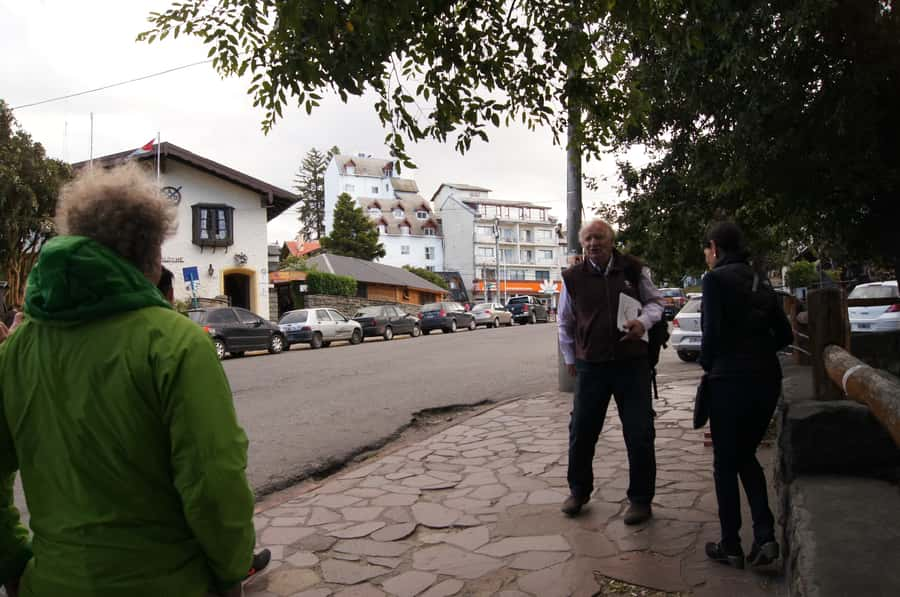
Bariloche is often sold through scenery: the lake, the mountains, the forests, and the outdoor sports. That is fair enough. But the town’s look and public identity also owe much to European immigration, and German influence is one part of that story.
This walk helps you separate fact from easy assumptions. German connections to Argentina did not begin with the Nazi period, and the tour makes that point early. It presents three main waves of German immigration, showing that each arrived in a different political and social setting.
That distinction is important. Without it, visitors can leave Bariloche with a misleading picture in which every German connection is tied to escaped Nazi officers. The tour places that later chapter inside a longer story, then explains why the Nazi presence became so famous and controversial.
I like this structure because it keeps the history from becoming a collection of sensational names. You get a timeline, places to look at, and a way to understand how the town developed.
More History Walking Tours in the world:
- History and Hauntings of Salem Guided Walking Tour
★ 5.0 · 14,564 reviews - Lisbon: History, Stories and Lifestyle Walking Tour
★ 4.8 · 10,902 reviews - Boston: Freedom Trail History Small Group Walking Tour
★ 5.0 · 6,450 reviews
Starting at the Civic Center
Meet your guide in the Bariloche Civic Center square, beside the door of the tourist information office. This is a practical meeting point in the middle of town, and it gives you a quick orientation before the walk begins.
The Civic Center is also an important first stop because it represents the public face of Bariloche. From here, the tour links civic architecture and local institutions to the German presence in the city. You are not simply hearing a lecture in a room. You are seeing the setting where the story unfolded.
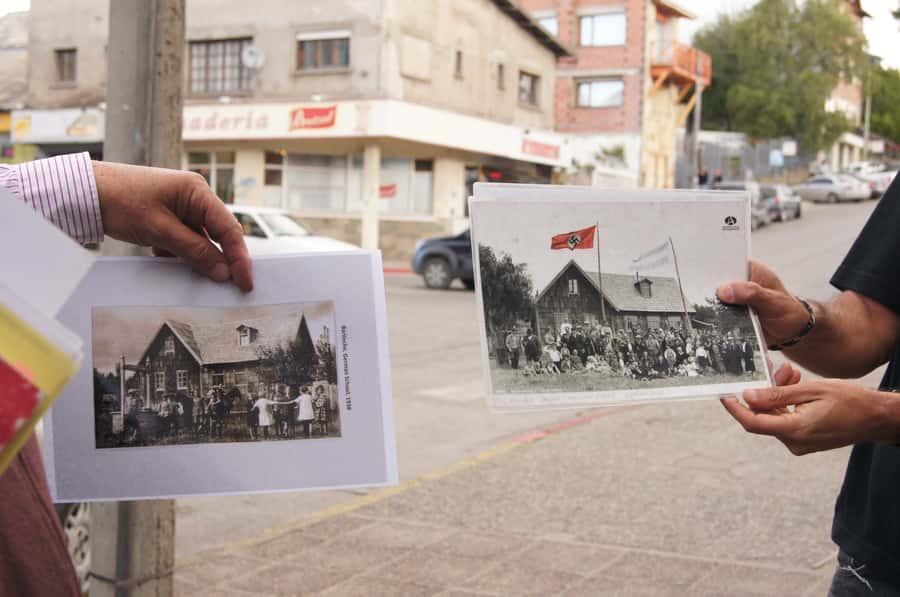
Your guide may use photographs and other visual material to compare earlier Bariloche with the town you see today. That approach was especially useful for people who wanted more than dates and names. Old images help you notice how the city changed and how immigrant communities left their mark.
The first portion can feel like a standard city orientation, but stay with it. The value comes from how the stops connect. Diego is often praised for leaving a question or unresolved detail before moving on, then returning to it later. That keeps the walk moving and gives the history a clear thread.
The Andean Club and National Park administration
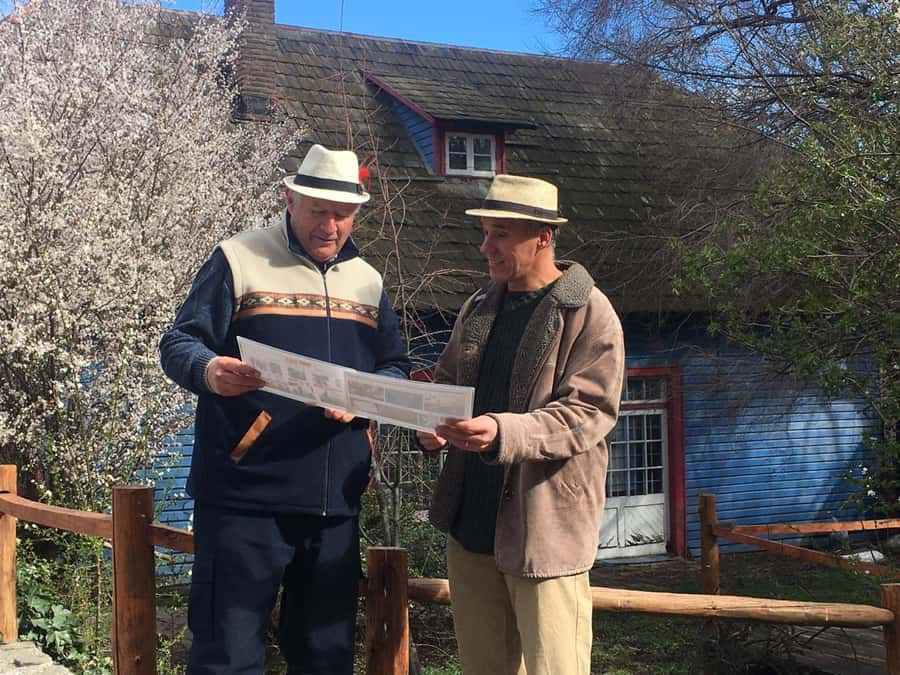
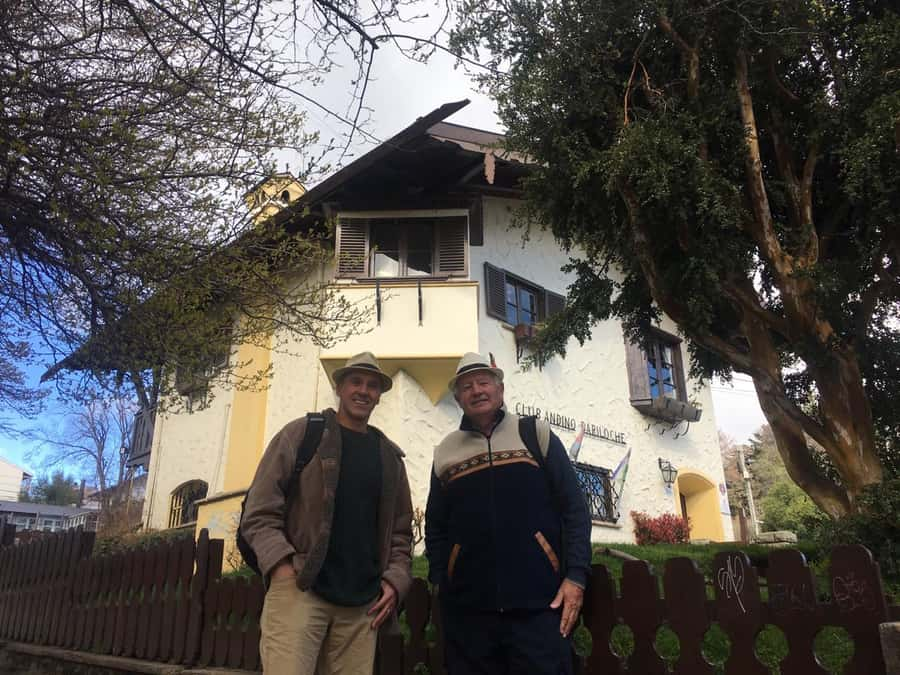
The route continues toward the Bariloche Andean Club and the administration of Nahuel Huapi National Park. These stops help explain how outdoor culture and German influence became connected in the area.
The Andean Club is particularly useful for understanding the social side of Bariloche’s German links. It points to organized activities and institutions rather than focusing only on private homes. The National Park administration adds another layer by showing how the town’s relationship with the surrounding area developed through public bodies and exploration.
The supplied information does not give a detailed script for each stop, so you should not expect a full tour of the buildings themselves. Instead, you will pause at representative sites while the guide explains their place in the larger story.
That format suits this subject. You get enough time at each location to understand its importance, then move on before the talk becomes static. Several people praised the pacing, noting that the frequent changes of location kept the material engaging.
Walking into the German neighborhood
The route covers about one kilometer and takes you from the civic center toward the German neighborhood. You will see houses and streets connected with German origins, along with different architectural styles.
This is one of the tour’s best features. Architecture gives the history a physical form. Instead of hearing that immigrants influenced Bariloche, you can look at the buildings and residential areas linked to that influence.
Do not expect a large, separate district with a clear entrance or a single block of preserved buildings. The experience is a guided walk through the city, with the guide pointing out representative places and explaining their meaning. That makes good use of the town itself, but it also means the tour depends heavily on the guide’s explanation.
The uphill sections deserve attention. One person specifically warned that the area is mostly uphill, while others felt the distance was manageable. The route is short, but the pace includes repeated stops, so you do not need to walk quickly. Still, wear shoes with a decent grip and be ready for slopes.
A few more walks around the world worth a look
- Magical London: Harry Potter Guided Walking Tour
★ 4.7 · 22,044 reviews - Reykjavik Food Walk – Local Foodie Adventure in Iceland
★ 5.0 · 18,952 reviews - New Orleans Premier Ghost, Voodoo and Vampire Walking Tour
★ 4.5 · 12,856 reviews - Amsterdam Anne Frank: Small-Group Walking Tour & Local Guide
★ 4.8 · 12,789 reviews
The German School and the Erich Priebke story
The German School is one of the most significant stops because it connects the town’s German identity with its most uncomfortable chapter. The tour discusses how Erich Priebke was discovered at the school by American journalist Sam Donaldson.
You also visit the house where Priebke lived before he was extradited in 1994. Seeing the building gives the story a disturbing immediacy. This was not an abstract figure from a distant archive. He lived in the city, within an ordinary urban setting, before his presence became public.
The tour does not treat this as a cheap shock story. Its purpose is to explain the reality behind the Nazi presence in Bariloche and to distinguish documented events from the myths that have grown around German activity in Patagonia.
That balance matters. Bariloche’s Nazi connections attract attention because they involve real people and a painful past, but the subject can quickly become exaggerated. A good guide needs to handle the facts carefully, and the strongest comments about Diego focus on his accuracy, calm delivery, and sensitivity.
If this is your main reason for booking, keep your expectations realistic. You are visiting exterior locations on a walking route, not entering a museum or archive. The value lies in the explanation and the connection between the places.
Belgrano Square and the town’s German character
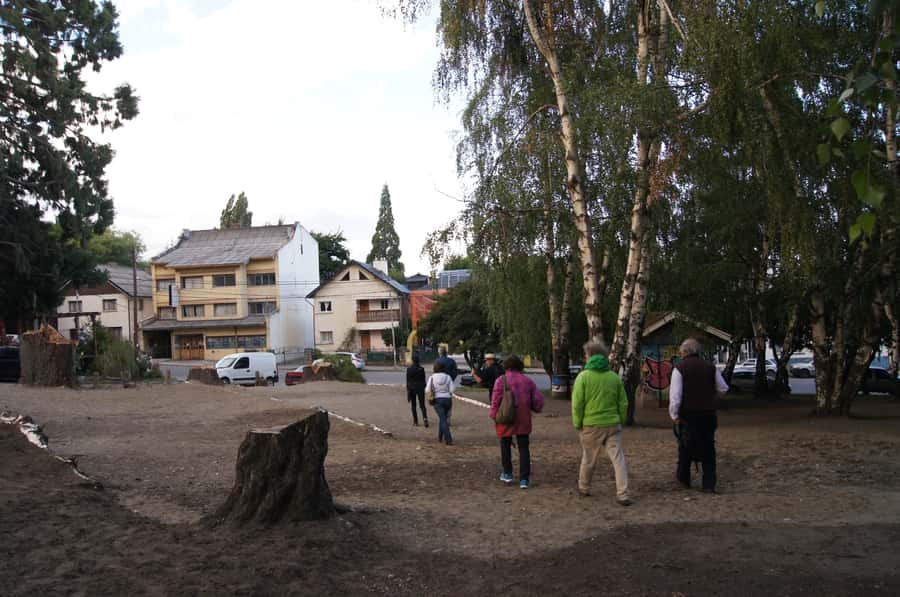
Belgrano Square provides another useful stop along the route. The square and surrounding streets help show how German influence appears in everyday Bariloche, not only in institutions associated with immigration.
The walk uses the area to connect architecture, local identity, and the passage of time. You may find that the details are subtle. This is not a theme park version of Germany, and the town’s identity is not explained by one building or one group alone.
That is a strength. The tour encourages you to look again at central Bariloche after it ends. A street that seemed merely attractive can take on a different meaning once you understand the people and institutions connected to it.
The guide’s photographs are useful here. They provide a visual bridge between past and present and help clarify changes that are difficult to spot from the pavement alone. Several people appreciated the mix of old images, anecdotes, and on-site explanations.
Separating facts from Patagonian myths
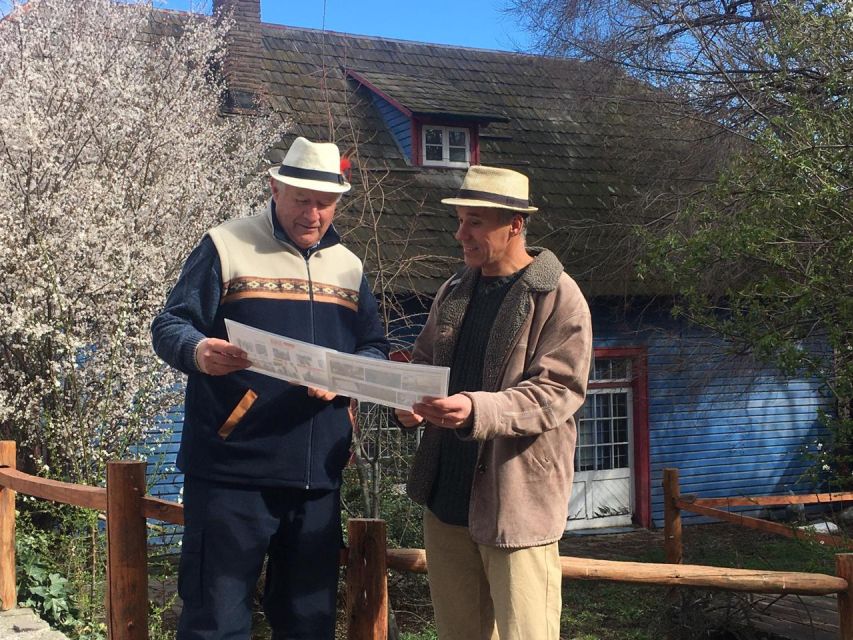
The final part of the tour turns to theories about German activity in Patagonia. This is where the subject can become murky, so the guide’s approach matters.
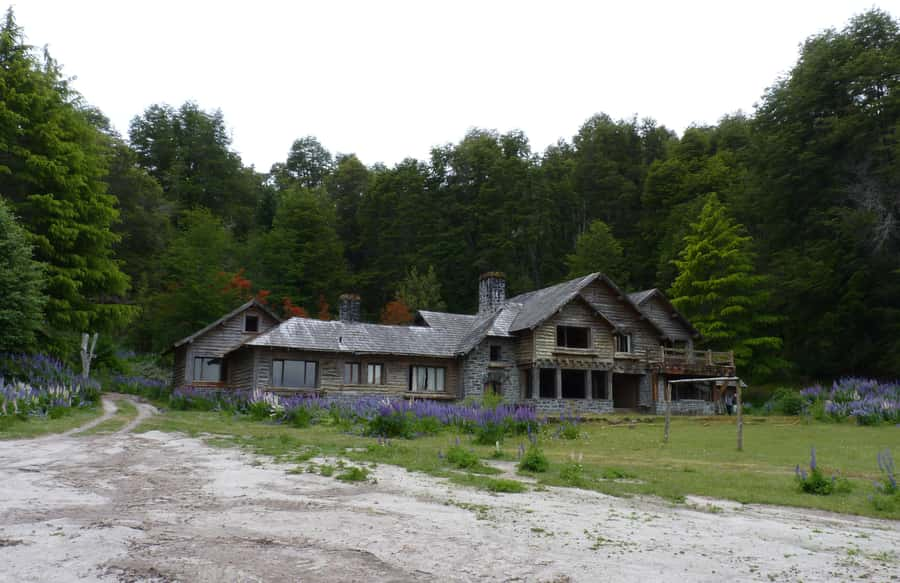
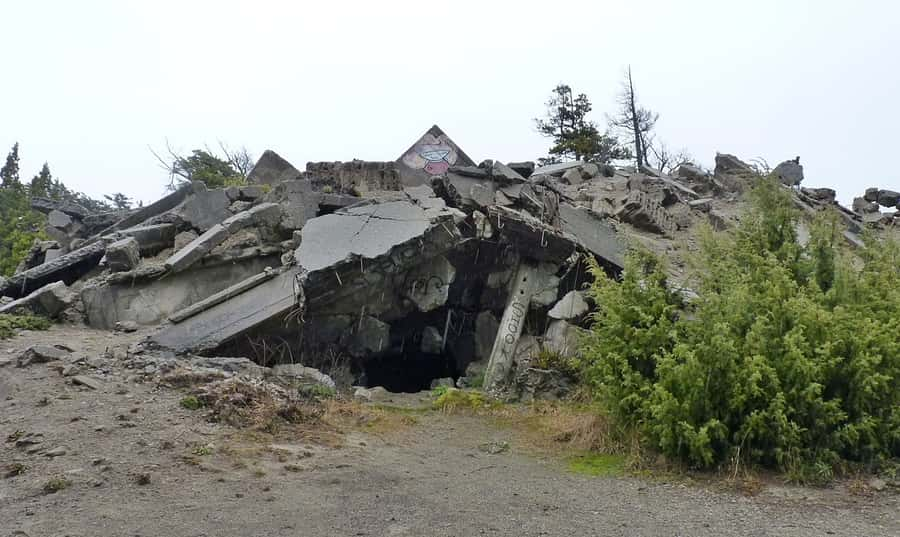
You will hear about the reality of German immigration, the later arrival of Nazi figures, and the stories that have grown around hidden networks and secret activity. The tour’s stated aim is to examine both the facts and the myths, not to present every rumor as true.
I value that distinction. A history walk should leave you better informed, not simply more entertained by conspiracy theories. The tour’s strongest purpose is to give you enough context to ask better questions afterward.
Some people were so interested that they continued researching the Nazi presence in Bariloche after the walk. That is a good sign for a history-focused experience. It raises questions without pretending that every mystery has a neat answer.
How the guiding affects the experience
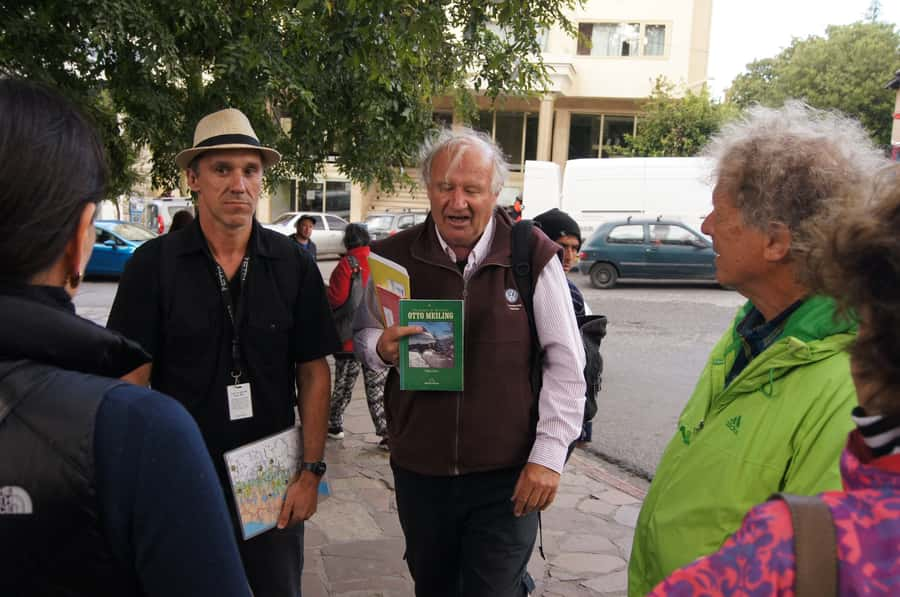
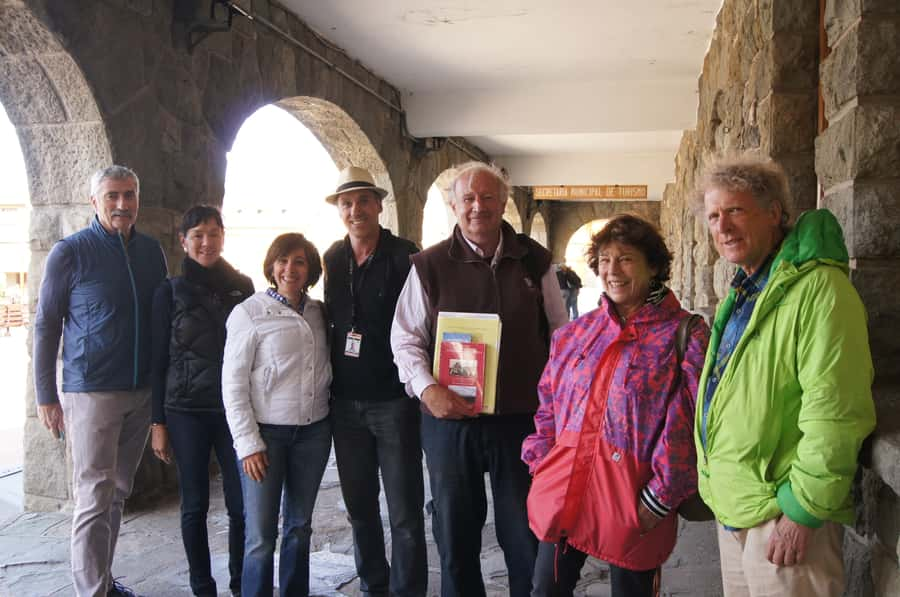
The guide can make or break a walking tour, and this one depends heavily on the person leading it. Diego is the guide most often named, and he receives praise for his English, Spanish, organization, and storytelling.
His approach appears to be conversational rather than purely academic. He explains a subject, changes location, takes questions, and uses suspense to keep the group interested. People also appreciated that he made an effort to include everyone, even with a larger-than-usual group.
The bilingual setup needs a little thought. If the group includes both Spanish and English speakers, the guide may repeat parts of the explanation in both languages. That can extend the tour beyond 90 minutes, as happened on some occasions, but it can also reduce the time available for questions.
If you want a private, English-only history lesson, this may not be the right format. If you are comfortable with a bilingual group and value access to a strong local guide, the arrangement works well.
One review praised a guide for sharing his location when a group was delayed and helping them catch up. That is useful practical evidence of a flexible attitude, though you should still aim to arrive on time at the Civic Center.
Is $41 a fair price?
At $41 per person, this tour costs more than a casual free walk, and one person felt it was slightly expensive. That concern is reasonable, especially because the route is only about one kilometer and lasts 90 minutes.
The price makes more sense if you value interpretation. You are paying for a guide who can connect several sites, explain three immigration waves, handle the Priebke story with care, answer questions, and separate confirmed history from local myths.
You are not paying for transport, food, admission tickets, or a long excursion. The included service is the guide and the walking tour. For that reason, the value depends on your interest in history. If you mainly want photographs of Bariloche’s architecture, you can see much of the route on your own. If you want to understand what you are looking at, the guide adds the real benefit.
For history-minded visitors, I think the price is defensible. For a very short city orientation, it may feel high. Consider it a specialist walking tour rather than a general introduction to Bariloche.
Who should book this walk?
I would recommend it to you if you enjoy local history, immigration stories, architecture, journalism, or the difficult questions surrounding postwar Nazi fugitives in South America.
It also suits anyone who has already planned several outdoor activities around Bariloche and wants a quieter afternoon in town. The walk gives you context that a lake excursion or mountain outing will not provide.
You should think twice if you dislike uphill walking, long explanations, or bilingual tours. The route is not strenuous in distance, but it is not perfectly flat. And although the guide aims to keep things moving, this is a talk-heavy experience built around history rather than physical sightseeing.
The tour is also a good choice early in your stay. Once you understand the town’s German connections and institutional history, you may look at the Civic Center and nearby streets with more attention.
Practical details before you go
The meeting point is the Civic Center square, beside the tourist information office door. The activity lasts 90 minutes, covers roughly one kilometer, and is offered with a live guide in English and Spanish.
Book ahead if you want flexibility, since the activity allows you to reserve now and pay later. You can cancel up to 24 hours before the start time for a full refund, according to the booking terms.
Check the available start times for your date. Wear comfortable shoes, allow a little extra time to find the meeting point, and expect some uphill walking. If you have specific questions about the Nazi period or German immigration, bring them along. The guide’s ability to handle questions is one of the tour’s strongest features.
Should you book the Bariloche German Immigration and History Walking Tour?
Yes, if you want the story behind the town rather than another view of the lake. The tour is short, focused, and unusually specific, with stops tied to real institutions, homes, and public spaces.
I would not book it simply because you have 90 minutes to fill. At $41, the cost needs to match your interests. But if you want a careful account of Bariloche’s three German immigration waves, the German neighborhood, and the facts behind Erich Priebke’s presence, this is a useful and well-led choice.
Diego’s clear English, strong storytelling, and ability to keep a group involved are major reasons to choose it. Just allow for bilingual pacing and uphill streets. For curious visitors who want Bariloche to make more sense, this walk earns its place in the itinerary.
FAQ
Where does the tour begin?
It begins in Bariloche Civic Center square, beside the door of the tourist information office.
How long does the walking tour last?
The scheduled duration is 90 minutes.
How far do you walk?
The route covers approximately one kilometer.
Is the route uphill?
Yes. Parts of the area are uphill, so comfortable walking shoes are a good idea.
Which languages are available?
The live guide operates in English and Spanish.
What places does the tour visit?
The route includes the Civic Center, the Bariloche Andean Club, the Nahuel Huapi National Park administration, the German School, Belgrano Square, the German neighborhood, and the house where Erich Priebke lived.
Does the tour discuss Erich Priebke?
Yes. It explains how he was discovered at the school by American journalist Sam Donaldson and visits the house where he lived before his extradition in 1994.
How much does the tour cost?
The listed price is $41 per person.
Can I cancel or pay later?
You can cancel up to 24 hours in advance for a full refund. The reserve-now, pay-later option lets you book without paying immediately.
Just added around the world
- Walking Tour of Boston’s Freedom Trail★ 4.5 · 77 reviews
- Downtown Freedom Trail Walking Tour – History & Architecture★ 4.5 · 194 reviews
- Boston Seafood Lovers Food and History Walking Tour★ 5.0 · 208 reviews
- Boston “Death and Dying” Walking Ghost Tour★ 4.5 · 223 reviews
- Boston Food of the North End Private Walking Tour★ 5.0 · 174 reviews
- Boston Movie Mile Walking Tour★ 4.5 · 119 reviews
- 1 If By Land Walking Tours★ 5.0 · 95 reviews
- Boston History and Freedom Trail Private Walking Tour★ 5.0 · 117 reviews
History Walking Tours, compared.
History and Hauntings of Salem Guided Walking Tour
Read our review →
Freedom Trail History Small Group Walking Tour
Read our review →
Historic Charleston Guided Sightseeing Walking Tour
Read our review →
Tapas Walking Tour with Food, Wine, and History
Read our review →
Savannah History and Haunts Candlelit Ghost Walking Tour
Read our review →