
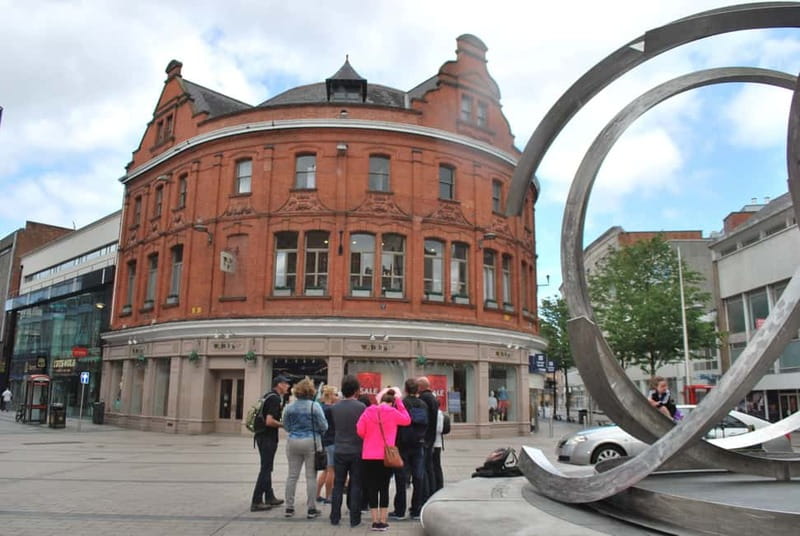
Review · HISTORY WALKING TOURS
Belfast: A History of Terror Walking Tour
History is under your feet. This 2.5-hour Belfast walking tour uses the city centre as its classroom, tracing the long road from political division to The Troubles and the peace process. I especially like the balanced storytelling and the way local guides connect major events to ordinary lives. The route is also practical: it is only 1.5 miles, flat, and supported by audio headsets. The main drawback is that the subject matter can be painful, and the tour is English only, so you need a good grasp of spoken English to get the full value.
The meeting point at Belfast City Hall is easy to find, and the experience stays focused on real places rather than abstract dates. Guides such as James, Mylie, Anne, Chris, Jim, Steve, Roisin, and Rory have brought local knowledge, personal memories, and a fair-minded tone to the tour. At $35 per person, it is not the cheapest way to spend a morning, but I think it offers strong value if you want context rather than a quick look at Belfast’s attractions.
Key points to know before booking
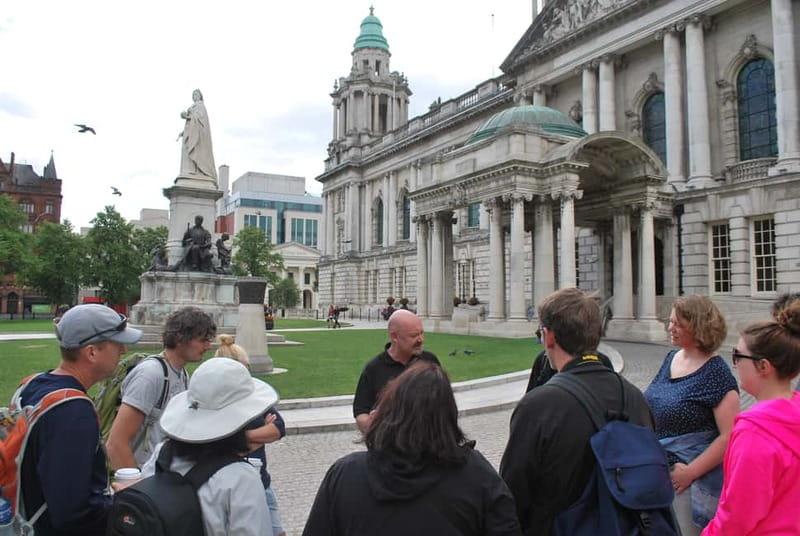
- The city centre becomes the history book: You visit ten locations connected with bombings, attacks, security measures, memorials, and public memory.
- Local guides make the difference: Several guides grew up in Belfast during The Troubles, adding personal insight without turning the tour into a political lecture.
- The tone is serious but human: Expect difficult stories, survivor accounts, and discussion of loss, along with carefully placed humour.
- It is a manageable walk: The route covers about 1.5 miles on flat streets with no hills or steps.
- Audio headsets are included: You can hear the guide clearly while walking and standing in city traffic.
- The final message is not despair: The tour explains how Belfast reached peace and how the city still deals with the past.
Starting at Belfast City Hall
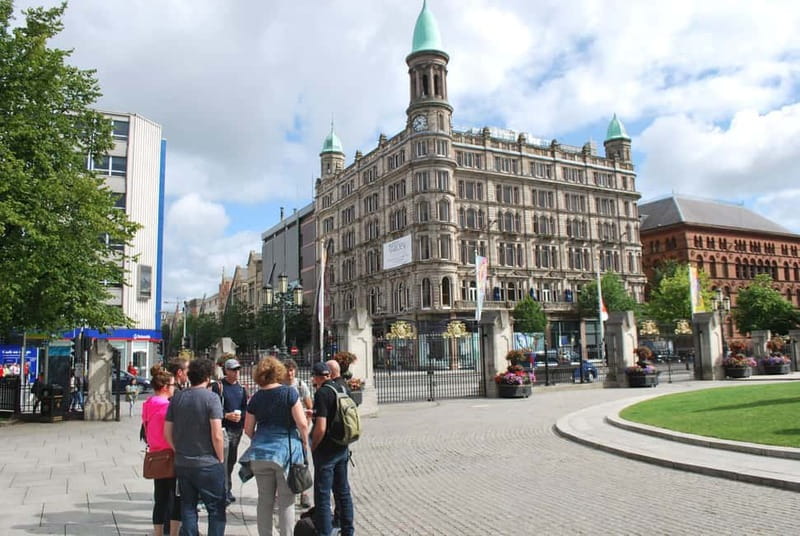
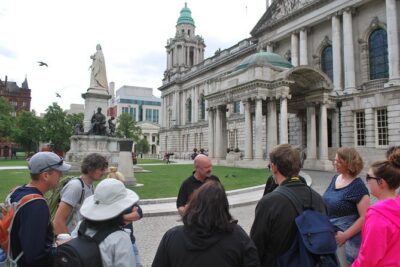
Meet at the front gates of Belfast City Hall on Donegall Square North. Look for a guide wearing a black jacket or T-shirt with the DC Tours logo on the left breast, and arrive about ten minutes early.
This opening location works well because City Hall gives the group a clear central landmark and a natural place to begin the story. The guide sets out the basic political and historical background before the group walks into the city centre. That preparation matters. Without it, the names, labels, and loyalties connected with Northern Ireland can feel like a pile of confusing pieces.
You will hear how around 800 years of history helped create the conditions for the conflict that erupted in the late 1960s. The tour does not treat The Troubles as a sudden burst of violence with no earlier cause. Instead, it explains how political, religious, and social divisions developed over time.
That wider frame is one of the tour’s strongest features. You are not simply shown a site and told that something happened there. You are given enough background to understand why the event mattered and how different communities viewed it.
More History Walking Tours in the UK
- A History of Terror – Belfast City Centre Walking Tour
★ 5.0 · 2,883 reviews - Belfast: Best of Belfast History, Culture & Art Walking Tour
★ 4.9 · 158 reviews - Belfast Walking Tour with a Local – History & Craic
★ 4.9 · 130 reviews
The city centre during The Troubles
The route moves through locations where major Troubles-era events took place. The supplied details do not name every street or building, so you should not expect a museum-style list of exhibits. The point is the connection between the ordinary city you see now and the fear that shaped it in earlier decades.
At sites linked with bombings and attacks, the guide explains what happened, who was affected, and how violence changed daily life. That includes more than the immediate human toll. Businesses, public spaces, transport routes, and the sense of moving safely through town were all affected.
I like this place-based approach because it turns Belfast from a backdrop into evidence. A modern street can look ordinary until you learn that it once carried a security cordon, witnessed an attack, or became associated with a particular loss. The physical surroundings remain part of the lesson.
You should also expect the guide to explain the roles of the British Army, paramilitary groups, and police. The tour aims to present the conflict from more than one political viewpoint. It does not ask you to accept a simple good side and bad side explanation.
That does not mean every issue will feel settled. The Troubles remain a subject with strong emotions and competing memories. A useful tour should help you understand those positions without pretending they are all identical, and this experience is designed to do that.
Security cordons and the practical reality of fear
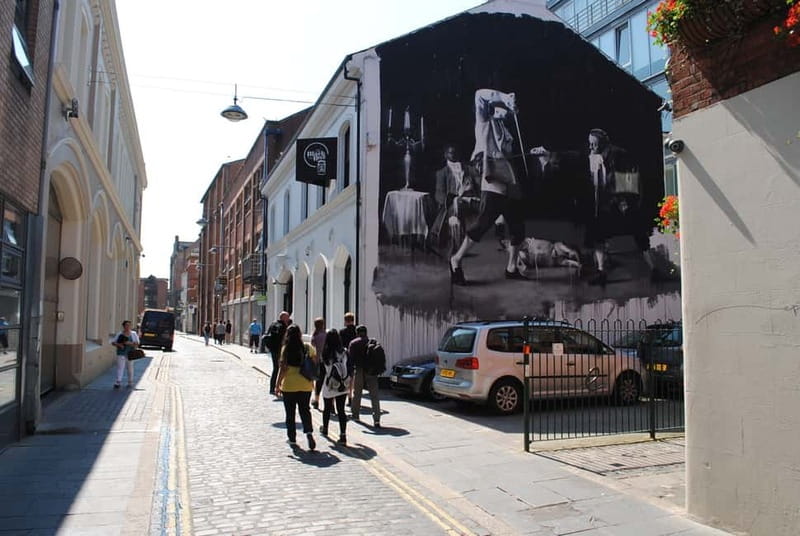
One of the ten stops focuses on former security cordon locations. This is where the tour moves from headline events to the mechanics of everyday life.
Security measures affected how people entered and crossed the city centre. Waiting, checking, rerouting, and living with the possibility of sudden disruption became part of normal life. The guide explains how fear and routine existed side by side, which is much more revealing than a simple timeline of attacks.
Several guides have first-hand experience of growing up in Belfast during The Troubles. Anne, Chris, Jim, James, and Steve have each been praised for explaining what daily life felt like while keeping the account fair and clear. That kind of personal background can make the past easier to picture, but it also requires care.
The best moments are likely to be the ones where personal memory supports the broader history rather than replacing it. You are not just hearing one person’s version of Belfast. You are hearing how individual experience fits into political events and community life.
The audio headsets are useful here. They let you hear the guide without standing shoulder to shoulder around a loud street corner. They are especially helpful if you have some hearing difficulty, as one participant specifically appreciated.
Bomb sites, human stories, and difficult emotions
The tour does not avoid the human cost of violence. You will hear about civilians, local families, damaged businesses, and people whose lives were changed by attacks. At the same time, the guides are expected to avoid sensational treatment.
That distinction matters. A tour about terrorism can easily become a list of shocking facts. This one is more concerned with what violence did to people and how communities carried on. The personal stories may make the experience emotional, particularly when the guide describes local people rather than only naming dates and organisations.
Mylie has been praised for telling these stories with care and compassion. Other guides, including James and Chris, have used appropriate humour to keep the group engaged during a long and heavy subject. You should not mistake that humour for a light treatment of the conflict. It gives the group a little breathing room.
Still, this is not a carefree sightseeing walk. If you want only architecture, shopping streets, and cheerful anecdotes, choose another tour. If you are comfortable with serious modern history and want to understand the city beyond its tourist image, the difficult material is part of the value.
More History Walking Tours in Belfast:
- History and Hauntings of Salem Guided Walking Tour
★ 5.0 · 14,564 reviews - Lisbon: History, Stories and Lifestyle Walking Tour
★ 4.8 · 10,902 reviews - Boston: Freedom Trail History Small Group Walking Tour
★ 5.0 · 6,450 reviews - Historic Charleston Guided Sightseeing Walking Tour
★ 5.0 · 6,216 reviews
Ten stops, one connected story
The route includes ten stops, with the following broad progression:
- Belfast City Hall, for an introduction and historic context
- Locations connected with major bombings and attacks
- Former security cordon sites
- Memorial and reflection points
- The Forgotten Troubles Memorial, with discussion of issues that remain
The exact meaning of the route comes from the links between these places. You learn how the causes of the conflict, the violence itself, the security response, and the peace process fit together.
At each stop, the guide adds explanation rather than rushing through a checklist. James has been praised for checking that people understood before continuing, while also offering practical suggestions for other things to see in Belfast. That makes the walk feel more like a guided conversation than a speech delivered while marching.
The pace is another advantage. The route is long enough to cover serious ground but short enough to remain physically manageable. A 1.5-mile walk over 2.5 hours leaves room for pauses, questions, and explanation.
The possible downside is that the tour may feel slow if you already know the history well. Its goal is not to race from one landmark to another. It is built for people who need the connections explained.
The Forgotten Troubles Memorial
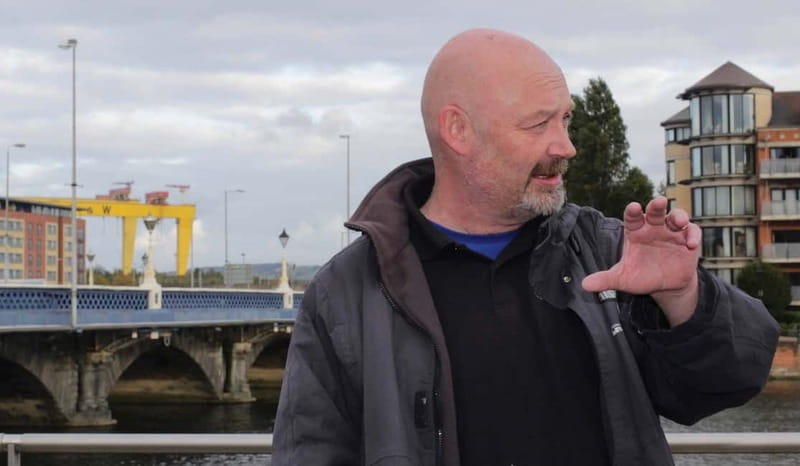
The Forgotten Troubles Memorial offers a quieter moment in the route. It shifts the focus toward remembrance and the people whose experiences may not receive much attention in standard accounts.
The memorial also helps the tour move beyond the main period of violence. You hear about challenges that still face Belfast and the work of dealing with memory, grief, identity, and reconciliation. Peace does not erase the past, and the tour does not suggest that it has.
This is an important distinction for first-time visitors. Belfast may look calm and regenerated, but the legacy of The Troubles remains part of public life. The memorial encourages you to think about whose stories are remembered, whose stories are missed, and why reconciliation takes time.
The stop is not presented as a neat ending. Instead, it leaves you with a more honest view of post-conflict Belfast: hopeful, changed, and still working through difficult questions.
How the tour explains peace and regeneration
The final part of the experience looks at how peace was achieved and how Belfast has changed since the worst years of violence. You will hear about the peace process and the city’s regeneration, but the tour keeps the human side in view.
This closing section gives the walk a needed sense of direction. Without it, the tour could leave you with a series of tragedies and no understanding of what came after. Instead, you see how a city can move toward a more peaceful future while carrying painful memories.
I appreciate that the tone is hopeful without becoming sugary. Belfast is not presented as a place that simply forgot The Troubles. The point is that people have built a different daily reality, even though political and social divisions have not vanished.
That makes the tour useful early in a Belfast visit. It gives you context for later conversations, museums, memorials, and neighbourhood visits. You may also come away with a better understanding of why some subjects need patience and respect.
Guides who make the history accessible
The most praised part of the experience is the guiding. James appears often in the feedback, with people valuing his clear explanations, humour, care, and ability to connect long-term history with everyday life. Mylie is praised for passion, empathy, and strong storytelling.
Anne brings the perspective of someone born and raised in Belfast, while Chris has been described as combining personal experience with a fair and balanced account. Steve, Jim, Rory, Roisin, Paul, Finn, and others have also been singled out for their delivery and subject knowledge.
You should not assume every guide will tell the story in exactly the same way. That is normal for a local walking tour. The shared strengths are the serious preparation, the local connection, and the effort to explain different sides without pushing a party line.
Some guides use humour. Some focus more on personal memories. Some may give more time to political background, while others may focus on civilians and daily life. The consistent aim is clarity and respect.
Price, timing, and practical comfort
The price is $35 per person. For a 2.5-hour city walk with a local expert and audio equipment, I consider that fair, especially because the route provides historical interpretation that you cannot get from simply wandering between landmarks.
Value depends on your interests. If you want a quick introduction to Belfast, this may feel like a large spend for one activity. If you want a serious understanding of The Troubles and do not plan to read extensively before arriving, the cost is easier to justify.
Wear comfortable shoes and dress for rain. The tour runs in all weather, and Belfast weather can change quickly. A waterproof jacket is wise, with warm clothing strongly advised in winter.
The walk is wheelchair accessible and has no hills or steps. The route is flat, but comfortable footwear still matters because you will be outside for 2.5 hours.
The tour is offered in English only. You need a good standard of English to follow the political terms, historical detail, and personal accounts. Children under 12 are not permitted, and the subject matter is better suited to older teens and adults.
You can cancel up to 24 hours before the start for a full refund, and reserve now while paying later. Those policies are useful if Belfast weather or your wider itinerary is uncertain.
Who should book this Belfast walking tour?
I would choose this tour if you want more than a surface-level introduction to the city. It suits adults and older teenagers interested in modern Irish history, conflict, peacebuilding, and the human effects of political violence.
It is also a good choice if you are unsure how to approach The Troubles. The guides explain terms and events in a clear way, while the city centre route gives you something concrete to look at and remember.
You may prefer another activity if you dislike emotionally difficult subjects, need a tour in another language, or want a faster sightseeing walk. The 2.5-hour length is reasonable, but the story is detailed and sometimes heavy.
Should you book A History of Terror?
Yes, if your aim is to understand Belfast rather than simply photograph it. The combination of city-centre sites, local voices, personal stories, audio headsets, and a balanced account gives you a useful foundation for the rest of your visit.
Book it near the start of your stay so later sights have more meaning. Choose sensible clothing, arrive ten minutes early, and be ready for serious material as well as occasional humour.
At $35, this is good value for a thoughtful introduction to The Troubles and Belfast’s road toward peace. It will not answer every question, and it cannot remove the complexity of the subject. It can, however, help you walk through the city with more understanding and respect.
FAQ
Where does the Belfast History of Terror tour meet?
The tour meets at the front gates of Belfast City Hall on Donegall Square North, Belfast.
How long is the walking tour?
The tour lasts 2.5 hours and covers about 1.5 miles.
Is the route difficult to walk?
The route is flat, with no hills or steps. Comfortable shoes are recommended because you will be walking and standing outdoors.
Is the tour wheelchair accessible?
Yes, the tour is wheelchair accessible.
What language is the tour offered in?
The live tour is offered in English only. A good standard of English is needed to follow the historical information fully.
Are audio headsets included?
Yes. Audio headsets are provided so you can hear the guide clearly throughout the walk.
Are children allowed to join?
The tour is not suitable for children under 12 years old.
What should I wear?
Wear comfortable shoes and weather-appropriate clothing. The tour runs in all weather, so a waterproof jacket is recommended, with warm clothing advised during winter.
Just added around Belfast
- The Real Eclectic Belfast City Walking Tour/Experience.★ 5.0 · 152 reviews
- Belfast Political Tour-Conflicting Stories Walking Tour★ 4.5 · 459 reviews
- Belfast Eclectic Walking City Center Experience, The Marti Way★ 5.0 · 348 reviews
- The Real Story of Belfast walking tour with a local guide★ 5.0 · 144 reviews
- Best of Belfast Walking Tour★ 5.0 · 399 reviews
- Belfast Centre Food Tour of 12+ Local Irish Dishes & Drinks★ 5.0 · 266 reviews
- Belfast Troubles Murals Street Art and Peace Wall Walking Tour★ 5.0 · 163 reviews
- Belfast: Best of Belfast History, Culture & Art Walking Tour★ 4.9 · 158 reviews
History Walking Tours, compared.
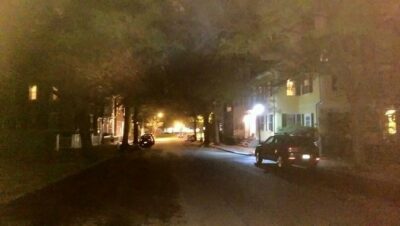
History and Hauntings of Salem Guided Walking Tour
Read our review →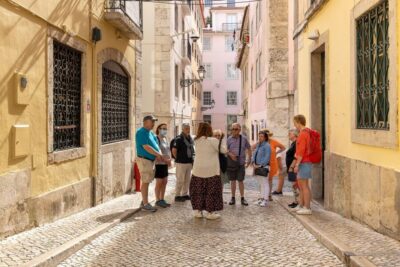
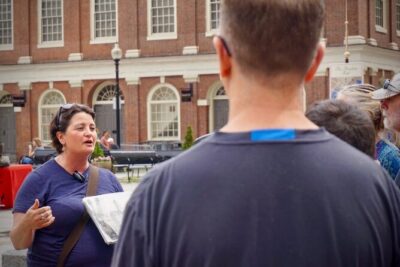
Freedom Trail History Small Group Walking Tour
Read our review →
Historic Charleston Guided Sightseeing Walking Tour
Read our review →
Tapas Walking Tour with Food, Wine, and History
Read our review →
Savannah History and Haunts Candlelit Ghost Walking Tour
Read our review →
A History of Terror – Belfast City Centre Walking Tour
Read our review →Browse the lists this tour appears in