

Review · STREET ART WALKING TOURS
Berlin: City Street Art Guided Walking Tour
Berlin’s walls do more than decorate the city. This three-hour walk lets you see Berlin through the eyes of working street artists, with stops in areas such as Friedrichshain and Kreuzberg. I like the way the tour explains not only what you are looking at, but also the techniques, rules, artists, and social ideas behind it. I also like the East and West Berlin angle, which gives the art a useful connection to the city’s divided past and changing neighborhoods.
The main thing to consider is the walking and public transport. The route can change with the art, so an AB transit ticket may be needed unless you book the option with BVG included. At $23, the tour is a strong value if you want context rather than a quick mural photo, but three hours may feel long if you prefer a short sightseeing stroll.
Key points to know before you book

- Friedrichshain and Kreuzberg often shape the route: These districts offer a broad look at Berlin’s graffiti writing, murals, posters, stencils, tags, and other street work.
- Your guide may be an active artist: Rob, Ben, and Antonio have been praised for sharing personal experience from within the scene.
- The tour teaches you how to look: You learn the difference between graffiti and street art, along with styles, methods, intent, and the unwritten rules of the culture.
- The route can change: Street art is temporary, and guides may make spontaneous adjustments to show current or worthwhile pieces.
- Bring public transport coverage: An AB ticket might be required, depending on the day’s route. You can also select the option with BVG included.
- The price is modest for the time: At $23 for three hours with an English-speaking guide, the cost compares well with many standard city walks.
Why Berlin street art deserves a guided look
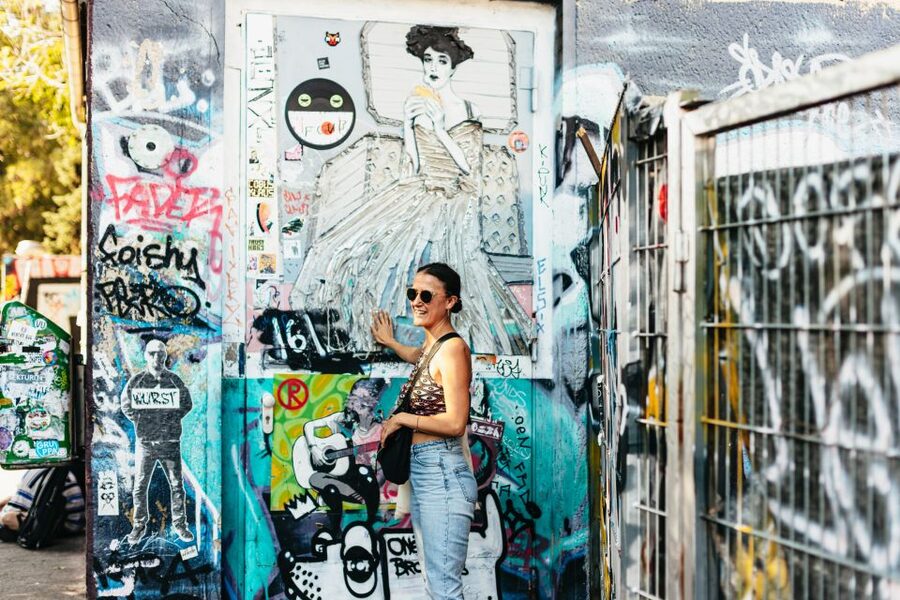
Berlin is easy to visit with your eyes pointed at famous monuments. Street art asks you to look up, turn down side streets, inspect a doorway, and notice how one image sits beside another. Without help, you may see a wall covered in marks and miss the difference between a quick tag, a carefully planned stencil, a political poster, and a large commissioned mural.
This tour gives you a working vocabulary. You learn that graffiti and street art are related but not identical forms. You also hear about the tools, styles, methods, and intentions behind the work.
That distinction matters. A giant mural may be planned and approved, while a small tag can carry meaning within a writing culture that most passersby never notice. The guide’s job is to help you understand both, without treating every mark as the same kind of art.
The best part is the social context. Berlin’s walls carry arguments about politics, identity, economics, belonging, and public space. The tour does not treat the city as a free outdoor gallery with pretty pictures only. It connects the art to the people and communities that give those walls their meaning.
More Street Art Walking Tours in Berlin:
- Berlin Street Art Walking Tour – Off The Grid
★ 5.0 · 270 reviews - East Meets West: Berlin Food Culture & Street Art
★ 5.0 · 157 reviews - Berlin Street Art & Graffiti Walking Tour
★ 5.0 · 109 reviews
Starting near Smack Burger
The meeting point is in front of Smack Burger. That is a simple landmark, but you should still allow enough time to find it and arrive ready for a three-hour walk. Your guide meets the group there, introduces the subject, and sets the tone for an afternoon focused on looking closely rather than rushing from sight to sight.
The tour is conducted in English. Past guides have included Rob, Ben, Antonio, Steven, and Marnie. The strongest comments about the experience focus on the guides’ humor, warmth, and ability to explain difficult ideas in plain language.
Rob is often praised for his energy and personal experience with graffiti writing. Ben is also a street artist and has been noted for linking the art to Berlin’s East-West story. Antonio has been described as an artist with useful insight into techniques and the people making the work.
That range is worth noting. You are not booking a silent walk with a guide who simply points at painted walls. The value depends heavily on the person leading the group, and the available guide can vary. Still, the recurring strengths are clear: strong subject knowledge, easy conversation, a good sense of humor, and a willingness to answer questions.
Friedrichshain: learning to read the walls
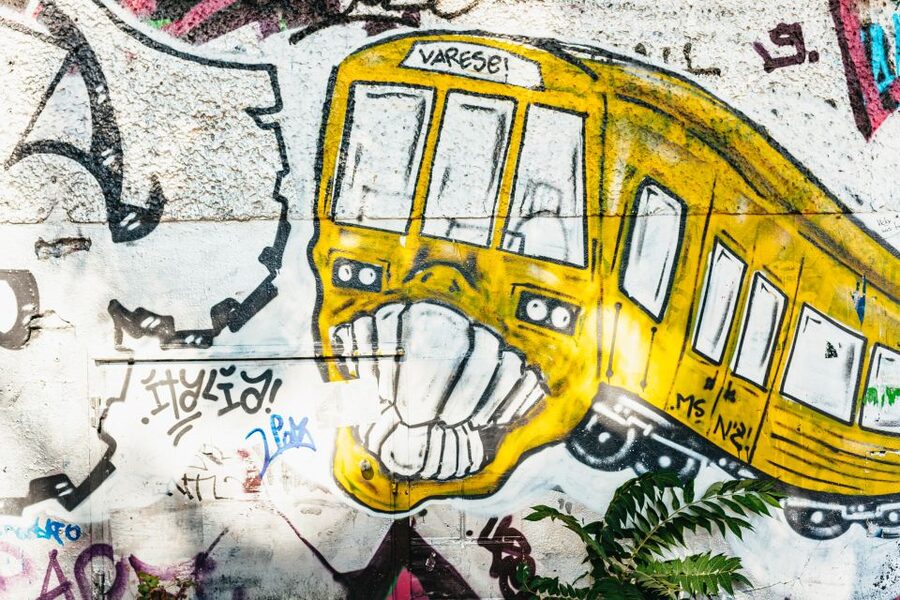
Friedrichshain is commonly part of the route, and it is a good place to begin because the art appears in many forms. You might see large murals, small pieces, tags, posters, stencils, or objects attached to a wall. The point is not just to collect photographs. You learn how to distinguish the marks and why one work may matter to artists even if it looks less polished to you.
The guide can explain how a piece was made, what materials or techniques may have been used, and how it fits into the wider scene. One especially useful detail from the tour experience is that guides encourage you to look above eye level. Street art does not always sit at the height of a normal mural, and the best detail may be high on a facade or tucked into an overlooked corner.
Friedrichshain also helps show how public art changes the feel of a neighborhood. A wall can become a meeting point, a political statement, a record of local concerns, or a target for another artist. The tour presents the city as an ongoing conversation, not a finished display.
The drawback is that outdoor art changes. A piece may be painted over, damaged, removed, or blocked by construction. That uncertainty is part of street art, but it also means you should not expect a fixed checklist of famous works.
Moving toward Kreuzberg and the East-West story
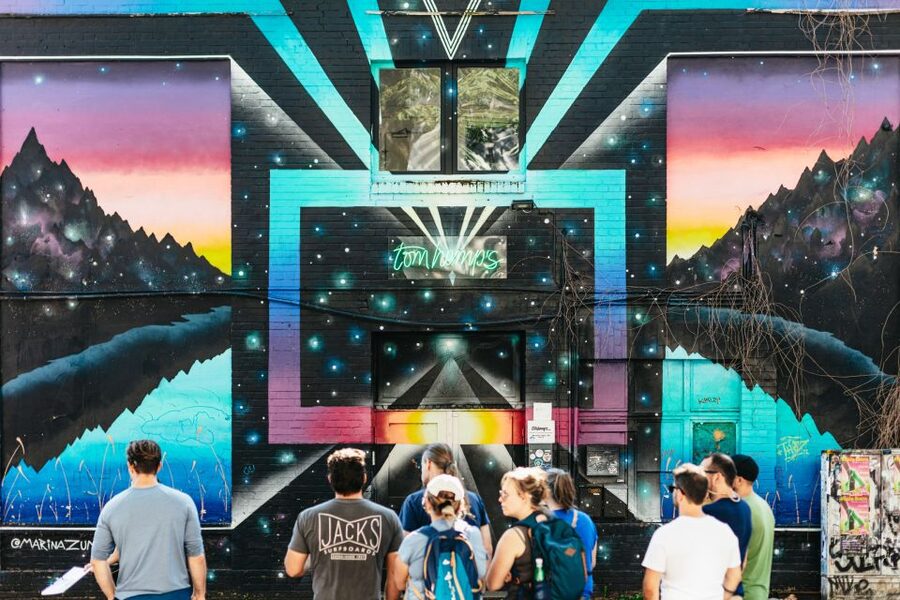
The route may continue toward Kreuzberg, sometimes using public transport between areas. This is where the tour can become more than an art walk. Guides connect the work to Berlin’s division and reunification, then show how the street art scene developed as the city changed.
You will not simply hear a general lecture about Berlin history. Instead, the history is used to explain why particular neighborhoods became important to artists and communities. The walls offer a different way to think about power, ownership, migration, protest, and the right to use public space.
Ben has been praised for making this connection especially clear, linking the art to Berlin’s East-West past and to the way the scene has changed over time. That perspective is useful even if you already know the basic history of the Berlin Wall. Street art can show you how people continue to argue about the city long after the physical division ended.
Kreuzberg also brings variety. A polished mural may sit close to rough graffiti writing or a small pasted poster. You learn why the contrast is not necessarily a problem. Different forms can occupy the same block, and each may speak to a different audience.
Plan for some walking between the main pieces. If the guide changes the route to catch newer or more interesting work, you may spend time moving through ordinary streets as well as art-heavy areas. That is part of the value, but it is not a compact museum visit.
More Guided Walks in Berlin:
- Berlin: Third Reich & Cold War Guided Walking Tour
★ 4.9 · 8,378 reviews - Berlin: Hidden Backyards Guided Walking Tour
★ 4.8 · 5,360 reviews - Berlin: History of the Third Reich Guided Walking Tour
★ 4.7 · 791 reviews - Berlin: Kreuzberg Guided Walking Evening Tour
★ 4.7 · 555 reviews
From large murals to tiny marks
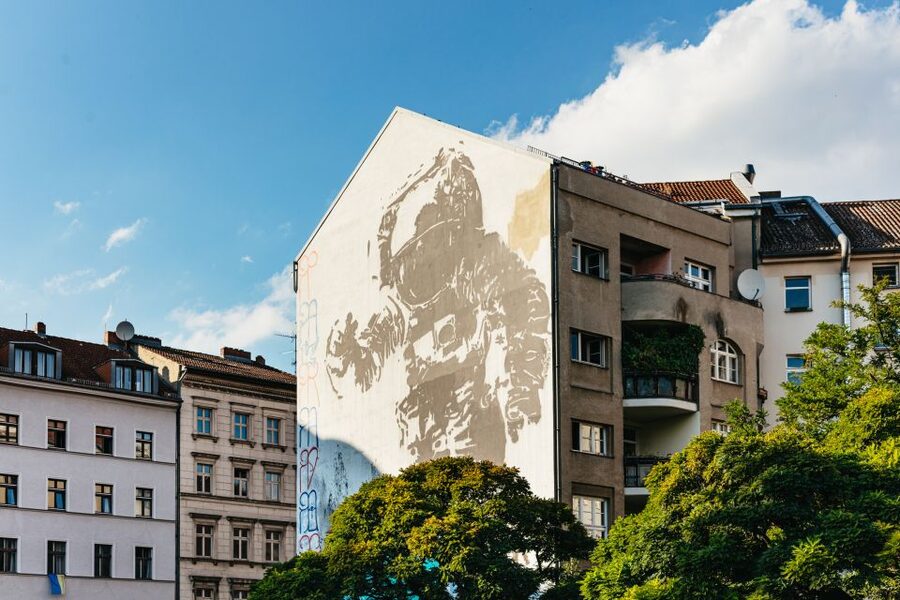
Many visitors first notice the large murals. They are easy to photograph and often carry a clear visual message. The tour goes further by paying attention to smaller work that you might otherwise pass without a glance.
Past tour routes have included tags, stencils, posters, and even small styrofoam sculptures. These examples show how broad the term street art can become. Some pieces are bold and public. Others are quick, personal, cryptic, or designed mainly for people who understand the local code.
You also learn about the artists behind the work and the reasons certain pieces matter. A guide with direct experience can explain details that are hard to get from a plaque or a web search. This is where Rob, Ben, and Antonio appear to add the most value. They do not only identify an artist. They discuss process, technique, reputation, and the culture around the work.
I would pay attention to the explanations of how pieces are made. That practical information changes what you see later in the city. After the tour, a poster is no longer just a poster, and a quick tag may look less random than it did in the morning.
A living gallery, not a museum collection
The tour’s idea of an urban gallery is useful, but you should not expect a tidy exhibition. There are no glass cases, fixed labels, or guaranteed masterpieces at every stop. Instead, the city itself provides the setting, and the guide helps you decide what deserves a closer look.
That setting creates both the pleasure and the uncertainty. You may find an impressive wall in a place you would have walked past. You may also encounter damage, overlapping work, or a piece that is more important within graffiti culture than it is attractive to an untrained eye.
The route’s spontaneous changes are a strength. One guide has been praised for adjusting the walk in response to what was current and worth seeing. This makes the experience feel connected to the present rather than locked to an old route.
It also means the tour is not ideal for someone who wants a precise list of stops in advance. Street art is temporary by nature. If you prefer clear historic sites with fixed opening hours, this will feel loose. If you enjoy discovery and conversation, that looseness works in your favor.
What three hours feels like on foot
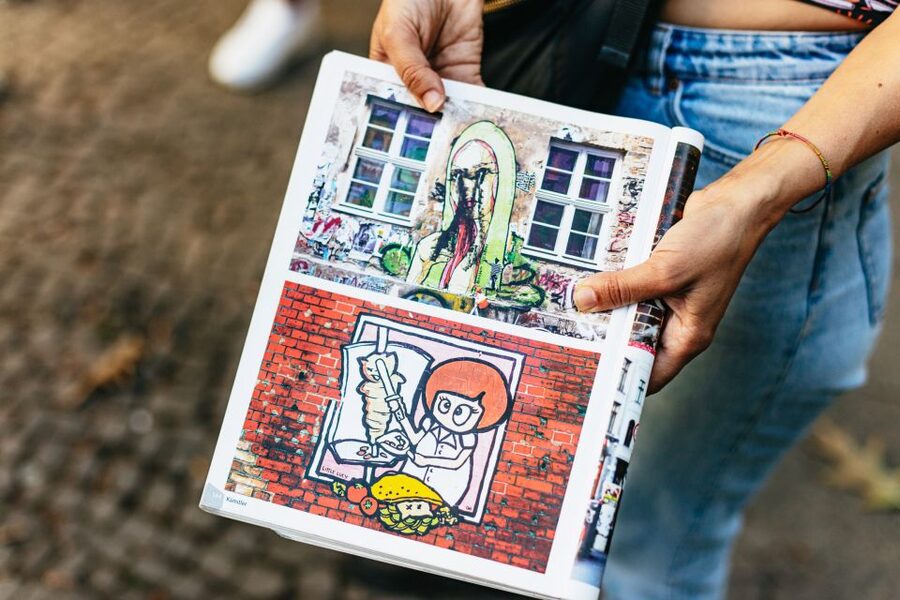
Three hours gives the guide enough time to explain the art rather than point and move on. Several parts of the experience require close looking, questions, and discussion, so the length is justified for anyone with real interest in the subject.
Still, three hours on city streets is a commitment. Wear comfortable shoes and dress for the weather. One tour continued successfully despite rain, and another took place in chilly conditions, but bad weather can make a walking tour less pleasant even when the guide is enthusiastic.
The walk is not described as a strenuous hike, but you should expect to be on your feet and possibly use public transport. Bring an AB ticket if needed. The exact requirement depends on the current route, so check the booking option carefully. If you do not want to arrange transport separately, choose the option with BVG included.
The group format also affects the experience. A lively guide can make a group feel friendly and open, while a quiet group may leave more room for questions. You are joining a shared walk, not booking a private art lesson.
Is $23 good value?
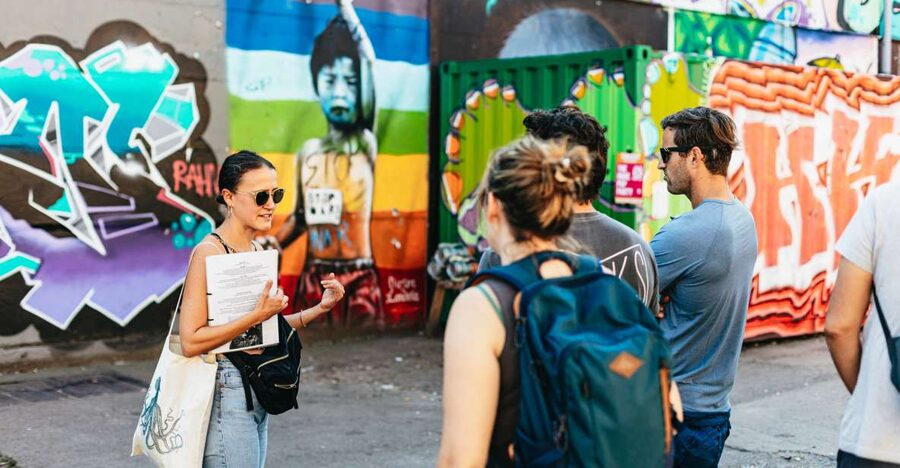
At $23 per person, the tour offers three hours of guiding, local interpretation, and an introduction to parts of Berlin you might not understand on your own. The cost is especially fair if you would otherwise spend part of your trip wandering through Friedrichshain or Kreuzberg without knowing what you were seeing.
The price also covers something difficult to buy separately: access to the guide’s working knowledge of the scene. Online searches can identify famous murals, but they rarely explain the difference between styles, the social role of tags, or the stories behind less obvious pieces.
You should not measure the value by the number of major murals alone. The route can shift, and not every stop will appeal to every person. The real benefit is learning a way of seeing Berlin that stays with you after the walk.
This is a good choice for art fans, photographers, students, repeat visitors, and anyone who wants a different side of the city. It also suits curious first-time visitors. You do not need to know anything about graffiti before arriving. A guide can provide the basic terms and build from there.
Practical tips for getting more from the walk
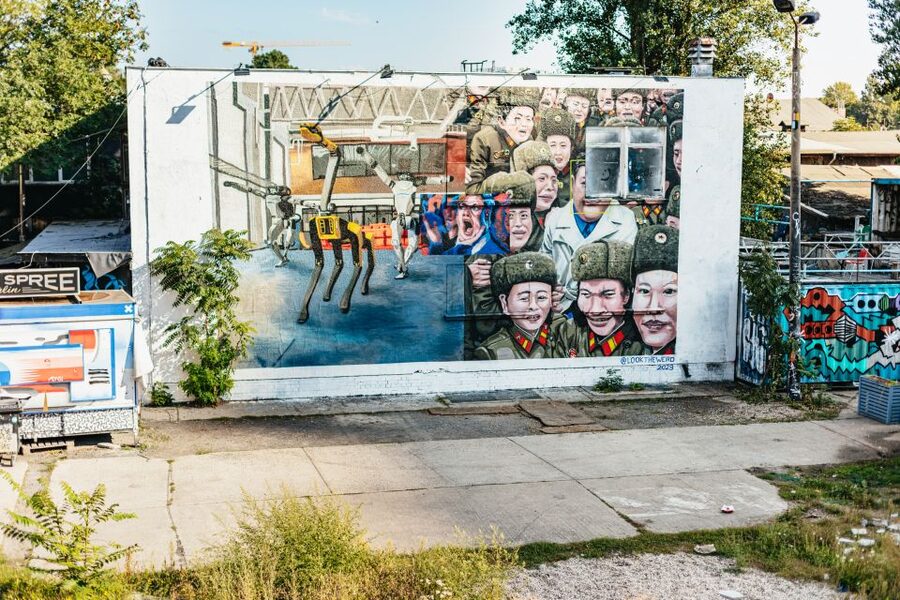
Arrive at Smack Burger with comfortable shoes and enough time to find the meeting point. Bring your phone or camera, but try not to spend the whole walk behind a screen. The tour is strongest when you stop to study small details and listen to why a piece matters.
Keep your schedule flexible afterward. The tour lasts three hours, and the route can include public transport or spontaneous changes. It is better placed on a day when you are not racing to a timed museum entry.
Ask questions. The guides are praised for answering them directly, and personal questions about technique, artists, and the difference between graffiti and street art can turn a good walk into a much better one.
Finally, look up. That sounds simple, but it is one of the most useful habits this tour teaches. Art may be above a shopfront, on a high wall, or in a place you would normally ignore.
Should you book the Berlin street art walk?
Book it if you want Berlin explained through its walls, not just photographed as a backdrop. The strongest reasons are the artist-led perspective, the route through Friedrichshain and Kreuzberg, the connection to East and West Berlin, and the clear explanations of methods and meaning.
Skip it if you dislike long walks, outdoor weather, changing routes, or art that can be rough, political, or difficult to interpret. You should also remember that the guide and exact works may vary.
For most curious visitors, $23 is a sensible spend. You leave with more than a set of mural photographs. You gain a better eye for the city’s tags, posters, stencils, and painted walls, and you may spend the rest of your Berlin visit noticing work you once would have missed.
FAQ
How long is the Berlin street art tour?
The walking tour lasts three hours.
What language is the tour conducted in?
The live tour guide speaks English.
Where does the tour meet?
You meet the guide in front of Smack Burger.
Do I need a public transport ticket?
You may need an AB metro ticket, depending on the current route. You can buy one before the tour or select the option with BVG included.
Which parts of Berlin does the tour visit?
The route can include areas in East and West Berlin, with Friedrichshain and Kreuzberg specifically highlighted.
How much does the tour cost?
The listed price is $23 per person.
Just added around Berlin
- Berlin Walking Tour★ 4.5 · 378 reviews
- Small Group Walking Tour of East Berlin with a French Guide★ 5.0 · 176 reviews
- Berlin Street Art Walking Tour – Off The Grid★ 5.0 · 270 reviews
- Berlin Highlights Private Guided Walking Tour★ 4.5 · 89 reviews
- East Meets West: Berlin Food Culture & Street Art★ 5.0 · 157 reviews
- Private Walking Tour: World War 2 and Cold War Sites in Berlin★ 5.0 · 230 reviews
- Kreuzberg Berlin: Off the Beaten Track PRIVATE Walking Tour★ 5.0 · 128 reviews
- The History of Berlin: WWII PRIVATE Walking Tour With Locals★ 5.0 · 209 reviews
Street Art Walking Tours, compared.
Naples Spanish Quarters Walking Tour Street Art, Folklore & Sweet
Read our review →
NYC: Brooklyn Graffiti & Street Art Walking Tour in Bushwick
Read our review →
Street Art and Underground Movements Walking Tour
Read our review →Browse the lists this tour appears in