
Review · BERLIN WALKING TOURS
Berlin: The Time of National Socialism Walking Tour
Berlin’s past is written into its streets. This two-hour walk links famous landmarks with less obvious traces of the Nazi period, giving you a clear historical route through central Berlin. I like the way it combines major places such as the Brandenburg Gate, Reichstag, and Holocaust Memorial with the Johann Georg Elser Memorial and the former Nazi government district. I also like the small group size, limited to 10 people, which should make it easier to ask questions and follow the guide’s explanations.
The main point to consider is the language. Although the tour description refers to a multilingual guide, the practical details identify German as the tour language. You should confirm that before booking if you need English or another language. You will also be outside for the full walk, and the tour runs in all weather, so warm shoes and a rain layer matter.
Key points before you book
- A compact route through central Berlin: The walk begins at Pariser Platz and ends at the Topography of Terror, connecting several major sites in two hours.
- The guide is the main attraction: Recent tours led by Carlo, also referred to as Carlos in some feedback, earned praise for lively explanations, useful context, and careful attention in cold or icy weather.
- You see more than famous monuments: Along with the Brandenburg Gate and Reichstag, the route includes the Soviet War Memorial, the Elser memorial, and surviving government buildings from the Nazi era.
- The subject is serious but not narrowly focused: The tour covers Nazi power, wartime structures, the Holocaust, and German resistance to dictatorship.
- Small groups help with questions: With no more than 10 participants, you are not dealing with a large crowd around every stop.
- The ending works well for further sightseeing: You finish at the Topography of Terror, where you can continue learning on your own after the guided walk.
Starting at Pariser Platz and the Brandenburg Gate
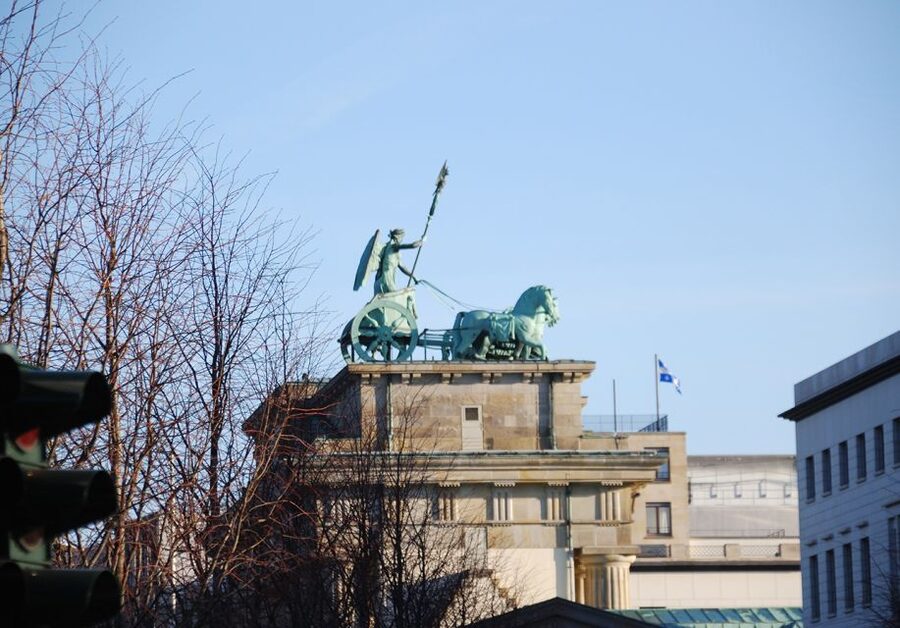
You meet the guide at the exit of S+U Brandenburger Tor station, exit B, in the direction of Pariser Platz and Straße des 17. Juni. Look for the GetYourGuide You in Berlin flag. This is a sensible meeting point because the Brandenburg Gate is one of Berlin’s easiest landmarks to recognize, and the station puts you close to the opening stop.
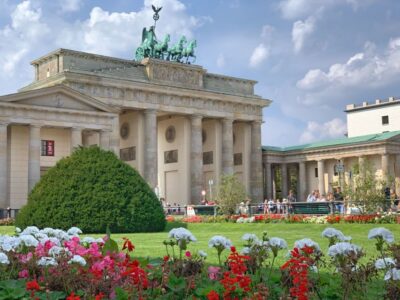
The tour begins at Pariser Platz, the broad square on the eastern side of the gate. Here, your guide sets the political and visual context for the walk. The Brandenburg Gate is often treated as a symbol of reunification and modern Berlin, but during the Nazi period it was also used for propaganda marches. That contrast gives the tour a useful starting idea: a landmark can carry several meanings at once, depending on who controls it and how it is presented.
I like beginning here because you do not start with an isolated museum display. You start in an active public square, then learn how power used familiar places to stage political messages. The guide can also help you separate later myths from what actually happened, a theme that one recent participant singled out as especially useful for understanding Berlin.
The square is open and exposed. In winter, wind and cold can make the first few minutes uncomfortable, so dress for standing still as well as walking. A January group found the streets icy, and Carlo took care to help the group through the conditions. That is a small detail, but it tells you what kind of practical attention can matter on this tour.
A few more walks around Berlin worth a look
- Discover Berlin Half-Day Walking Tour
★ 5.0 · 9,624 reviews - Berlin City walk Government District and Places of Democracy
★ 4.7 · 8,467 reviews - Berlin: Third Reich & Cold War Guided Walking Tour
★ 4.9 · 8,378 reviews
The Reichstag and the Nazi rise to power
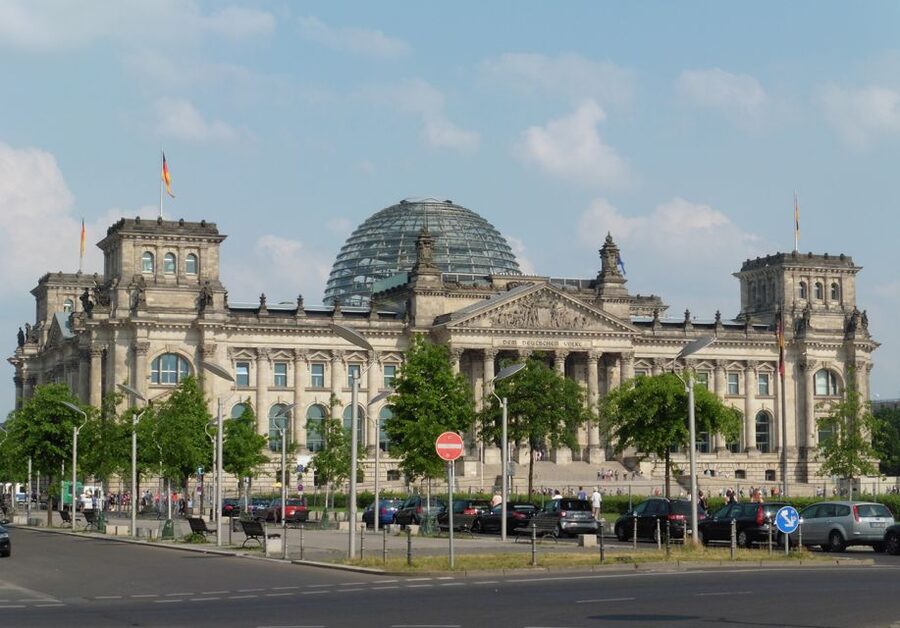
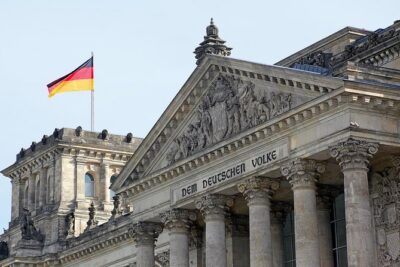
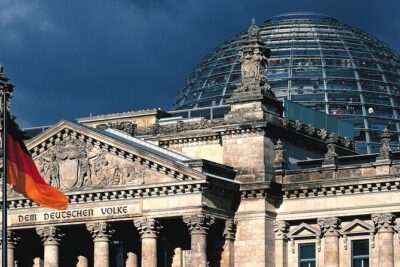
From the gate, you walk toward the Reichstag, now the seat of Germany’s Parliament. The building helps your guide explain Berlin’s political setting in 1933, when the NSDAP and Adolf Hitler came to power.
The Reichstag is an important stop even though this is not a parliamentary building tour. The focus is the historical role of the surrounding government quarter and the collapse of democratic rule. You are looking at the physical center of modern German government while hearing how dictatorship took hold in the same city.
That connection makes this stop more valuable than a quick photograph. I would pay close attention to the guide’s explanation of how buildings, institutions, and public ceremony worked together. The tour’s subject is not only military events. It is also the machinery of government and propaganda.
You should not expect interior access to the Reichstag as part of this experience. The information provided describes sightseeing and walking outside, with the professional guide leading the historical discussion. If you want to visit the Parliament building separately, treat that as another Berlin activity.
Soviet tanks in the Tiergarten
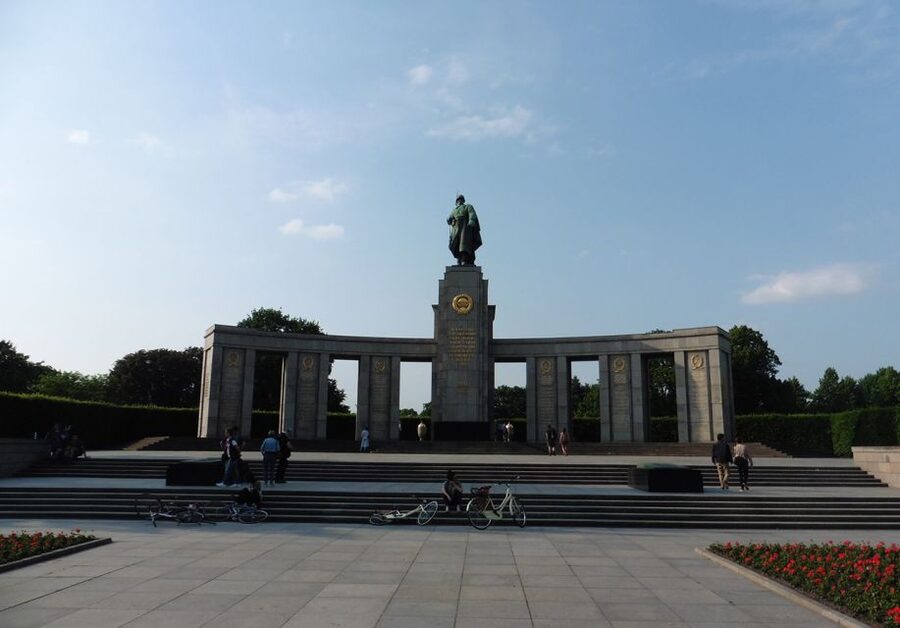
The route continues into the Tiergarten, Berlin’s large inner-city park, for the Soviet War Memorial. Here you see Soviet T-34 tanks and artillery from World War II.
This stop changes the tone of the walk. At the Brandenburg Gate and Reichstag, the discussion centers on political power. In the Tiergarten, the physical remains point more directly to the war and its aftermath. The tanks are large, concrete reminders that the final phase of the conflict was fought in Berlin itself.
I find this kind of stop useful because it makes the dates and military events less abstract. You are not simply hearing about the end of the war from a classroom distance. You are seeing wartime equipment in the middle of the city, close to the former government center.
The memorial also adds a Soviet perspective to a tour otherwise focused heavily on Nazi Germany. That matters. Berlin’s wartime story includes dictatorship, persecution, destruction, defeat, and occupation. Your guide can place the memorial within that wider sequence rather than treating it as a standalone monument.
Because the tour keeps moving, you will not have unlimited time at each place. If the tanks or memorial interest you greatly, make a note to return later. The two-hour format is designed to connect sites and explain their relationship, not to provide long visits at every stop.
The Holocaust Memorial and the human cost
The next major stop is the Memorial to the Murdered Jews of Europe, usually called Berlin’s Holocaust Memorial. The field of concrete blocks is one of the city’s most prominent memorial sites, and its location near the former centers of Nazi power is significant.
This is where the walk’s historical subject becomes most personal and morally direct. Earlier stops show propaganda, government, and military power. The Holocaust Memorial points toward the people destroyed by that system. A guide can help you understand why the memorial was placed here and how it fits into Berlin’s effort to address the crimes of the Nazi period.
I appreciate that the memorial is not treated as a quick photo stop. The tour description places it among the central sites of the walk, alongside the bunker location and former government district. That ordering encourages you to connect policy and place with human consequences.
The information does not specify an interior visit to the memorial’s underground information center. You should therefore expect a guided look at the memorial site itself, not a full museum visit. If you want extra time with the names and biographies presented below the memorial, allow time to return on your own.
The blocks can also be uneven underfoot, and the walk takes place in all weather. Comfortable shoes are not optional here. They are part of making the experience manageable.
Same streets, a different way to see them:
- Berlin: Discover Berlin Walking Tour
★ 4.9 · 5,998 reviews - Berlin’s Best: 2 Hour Walking Tour Third Reich and the Cold War
★ 5.0 · 5,486 reviews - Berlin: Hidden Backyards Guided Walking Tour
★ 4.8 · 5,360 reviews - Explore Berlin: See All The Iconic Sights & Some Hidden Gems
★ 5.0 · 4,429 reviews
Johann Georg Elser and German resistance
The Johann Georg Elser Memorial gives the tour a valuable change of focus. Elser attempted to kill Hitler in 1939 with a bomb at the Bürgerbräukeller in Munich. The memorial honors his resistance, and on this tour it helps broaden the story beyond the image of a society that simply accepted Nazi rule.
The supplied details emphasize stories of German resistance throughout the walk. That is one of the strongest features of the experience. A tour about the Third Reich can become a grim list of institutions and crimes. Including resistance shows that opposition existed, even though it faced enormous danger and often failed.
You should listen for the guide’s treatment of individual choices. The memorial is not presented as proof that resistance was easy or widespread. Its value is that it puts a human decision beside the larger structures of dictatorship. That makes the history more complicated and more honest.
Recent participants praised Carlo or Carlos for answering questions and providing background beyond the basic facts. This is likely the kind of stop where a small group pays off. With up to 10 people, you have a better chance of asking about Elser, other resistance efforts, or how Berlin remembers those who opposed the regime.
Detlev-Rohwedder-Haus and the former government quarter
The walk then reaches the Detlev-Rohwedder-Haus, one of the buildings connected with the former government district. This part of the route is especially useful for readers who want to understand how Nazi power occupied ordinary-looking administrative spaces.
Not every important place from the period looks dramatic today. Some buildings remain in use, have different names, or blend into the modern city. That is why a local guide adds value. You need someone to point out what you are seeing and explain what happened at the site.
The government quarter section also helps connect the Reichstag, the former Reich Chancellery area, and the institutions covered later at the Topography of Terror. You are moving from one building to another, but the real subject is the network of offices that made dictatorship work.
I would not choose this tour only for grand architecture. Much of its appeal comes from seeing how history sits beside present-day Berlin without always announcing itself. If you prefer a fast parade of famous landmarks, parts of this walk may feel quiet. If you want to understand how a regime used a capital city, this section is important.
Hitler’s bunker and the New Reich Chancellery
The route also takes you to the former location of Hitler’s bunker and the New Reich Chancellery. The site is historically powerful but physically understated. You do not visit a preserved bunker interior as part of the tour. Instead, the guide explains where these structures were located and what role they played near the end of the war.
That restraint is appropriate. The bunker has attracted sensational stories and unwanted fascination for decades. A serious tour should place it within the collapse of Nazi Germany rather than turn it into a shrine or a dramatic spectacle.
The former New Reich Chancellery location also helps you picture the scale of the government district that once occupied this part of Berlin. Much of the visible setting has changed, so a guide’s explanation supplies the missing layer. Carlo’s praised habit of offering historical context would be particularly useful here.
You may find this stop less visually rewarding than the Brandenburg Gate or Soviet tanks. That is not a flaw in the history. It is a reminder that war, demolition, rebuilding, and deliberate changes to public memory can erase the physical evidence.
The Topography of Terror and the SS headquarters
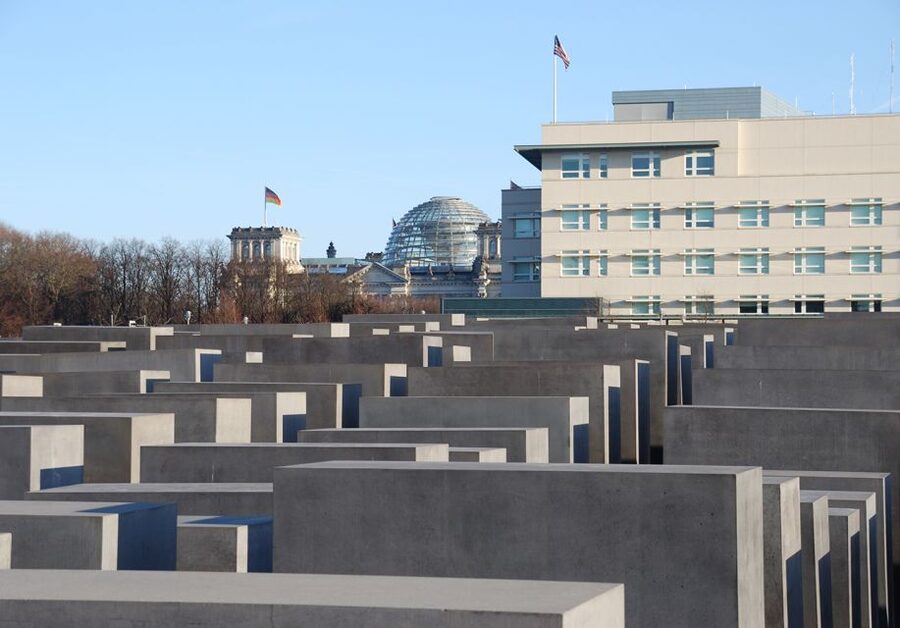
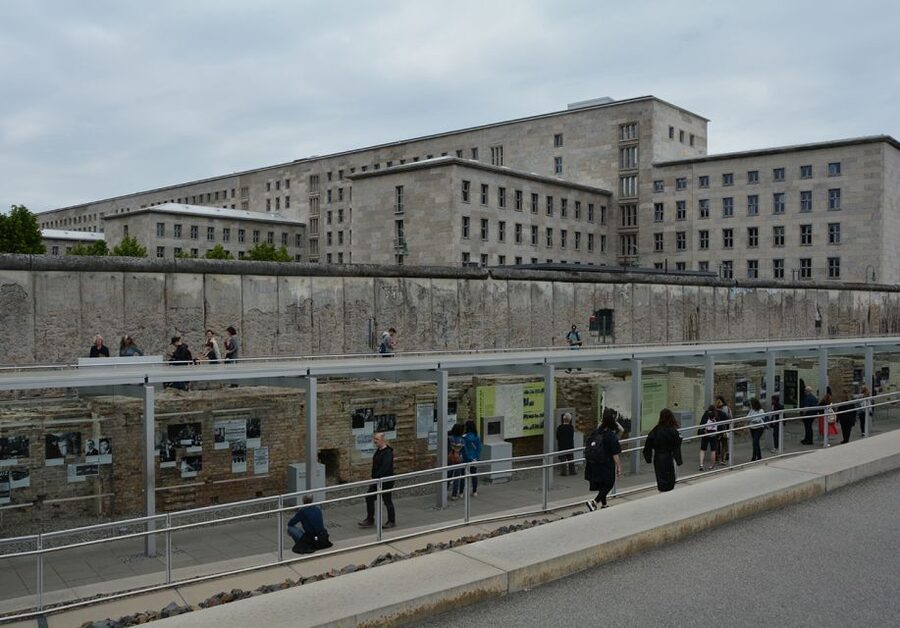
The tour ends at the Topography of Terror Documentation Center, located near the former headquarters of the SS and Secret State Police. The site also relates to the Reich Security Main Office and the Reich Aviation Ministry during World War II.
This is a strong ending because it gathers the tour’s main themes in one place. You have seen propaganda, parliamentary government, military defeat, the Holocaust Memorial, resistance, and the former Nazi government quarter. At the Topography of Terror, the focus turns directly to the institutions of persecution and control.
The tour description says you learn where these offices were located. You should understand that the guided portion is a walk to and through the historical setting, not necessarily a full visit through every exhibit. Still, finishing here gives you a good next step. You can stay and explore the documentation center after the guide’s two-hour walk ends.
I especially like this arrangement for a first visit to Berlin. The route gives you enough structure to understand the city, then leaves you at a place designed for further study. The subject is difficult, but the sequence helps you make sense of it without reducing everything to one monument or one date.
What two hours and $43 really provide
At $43 per person, this is not the cheapest way to walk around central Berlin. You can see the Brandenburg Gate, Reichstag exterior, Holocaust Memorial, and many government buildings without paying an admission fee. The value comes from the guide’s interpretation, the route between sites, and the links among places that you might otherwise see as unrelated.
The two-hour length is a practical compromise. You get a focused introduction without giving up half a day. For a first day in Berlin, I think the timing works well, especially if you want historical orientation before visiting museums or memorial centers on your own.
The small group limit improves the value. A guide speaking to 10 people can usually keep the discussion more responsive than someone addressing a much larger crowd. Recent high ratings repeatedly emphasize the guide’s enthusiasm, clear explanations, and willingness to answer questions. One solo participant effectively received a private tour because nobody else had booked that departure, though you should not count on having the guide to yourself.
The main value depends on language and guide quality. The named guide, Carlo or Carlos, is praised for lively storytelling, strong background knowledge, and practical care in bad weather. Since the listed language is German, confirm the language before paying. That is the most important booking check.
Who will get the most from this walk?
I would recommend this tour if you want a clear introduction to Nazi-era Berlin and prefer learning from places rather than sitting in a museum for two hours. It suits adults, older children, and teenagers who can handle a serious subject. One recent participant specifically felt it would work well for teens and young adults.
It is also a good choice for solo visitors. The group is small, and the guide can answer questions without the walk becoming impersonal. If you are visiting Berlin with family, the route gives you a shared framework for later conversations and museum visits.
You may want a different experience if you need an English-language tour and cannot confirm that option. You may also prefer a museum-based program if you want long periods with documents, photographs, and personal accounts rather than a moving route through the city.
Wear suitable clothes and good walking shoes. The tour operates on public holidays and in all weather. Cold, rain, or icy streets can affect your comfort, even when the guide takes care to help the group. Wheelchair access is listed, but the route remains an outdoor walking tour, so it is sensible to confirm that the exact conditions suit your needs.
Should you book Berlin’s National Socialism walking tour?
Book it if you want a short, serious, well-organized introduction to the physical setting of Nazi Berlin. The route is strong because it combines familiar landmarks with resistance history, wartime remains, former government buildings, and the Topography of Terror.
The $43 price makes sense when you value interpretation and a small group rather than simply seeing the sights. Before booking, confirm that the tour language works for you and prepare for two hours outdoors. If those points fit, this walk should give you a useful historical framework for the rest of your Berlin visit.
FAQ
How long does the tour last?
The walking tour lasts two hours.
What is the tour price?
The listed price is $43 per person.
Where does the tour begin?
Meet at the exit of S+U Brandenburger Tor station, exit B, toward Pariser Platz and Straße des 17. Juni. Look for the GetYourGuide You in Berlin flag.
Where does the tour finish?
The tour finishes at the Topography of Terror.
Which language is available?
The practical tour information lists German as the available language.
Is the tour wheelchair accessible?
Yes, the activity is listed as wheelchair accessible.
How large is the group?
The tour is limited to 10 participants.
Does the tour operate in bad weather?
Yes. The tour takes place in all weather conditions and on public holidays, so you should wear suitable clothing for an outdoor walk.
Just added around Berlin
- Berlin Walking Tour★ 4.5 · 378 reviews
- Small Group Walking Tour of East Berlin with a French Guide★ 5.0 · 176 reviews
- Berlin Street Art Walking Tour – Off The Grid★ 5.0 · 270 reviews
- Berlin Highlights Private Guided Walking Tour★ 4.5 · 89 reviews
- Private Walking Tour: World War 2 and Cold War Sites in Berlin★ 5.0 · 230 reviews
- East Meets West: Berlin Food Culture & Street Art★ 5.0 · 157 reviews
- Kreuzberg Berlin: Off the Beaten Track PRIVATE Walking Tour★ 5.0 · 128 reviews
- The History of Berlin: WWII PRIVATE Walking Tour With Locals★ 5.0 · 209 reviews
Berlin Walking Tours, compared.
Berlin City walk Government District and Places of Democracy
Read our review →
Berlin’s Best: 2 Hour Walking Tour Third Reich and the Cold War
Read our review →
Explore Berlin: See All The Iconic Sights & Some Hidden Gems
Read our review →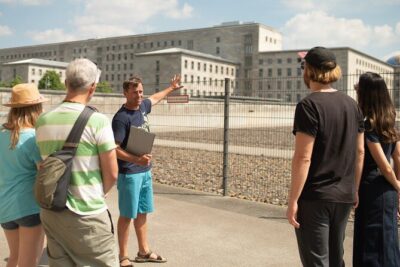
Third Reich Berlin: Hitler and WWII Walking Tour
Read our review →Browse the lists this tour appears in