
Review · BERLIN WALKING TOURS
Berlin: walking tour about Charité
Medicine has a darker side. This two-hour walking tour turns Berlin’s Charité into a story about 300 years of medical progress, famous scientists, Nobel Prize winners, and troubling cooperation with the Nazi regime. I like the focus on real people such as Rudolf Virchow, Robert Koch, Emil von Behring, and Ferdinand Sauerbruch, and I especially like that the tour reaches the Animal Anatomical Theatre, Berlin’s oldest surviving teaching building. The main drawback is clear: you see the Charité Bed House from outside, and group tours cannot enter the hospital grounds.
The tour costs $27 per person, a fair price for a focused history walk led in German. You will not get a general tour of Berlin or a visit to hospital wards. Instead, you get a concentrated look at how medicine shaped the city, how science brought progress, and how doctors also faced serious moral failures.
Key points at a glance

- Three centuries of medicine: Follow Charité’s story from an 18th-century plague house to one of Europe’s major university hospitals.
- Famous medical figures: Hear about Rudolf Virchow, Emil von Behring, Robert Koch, and Ferdinand Sauerbruch.
- A sobering historical angle: The tour also addresses the institution’s cooperation with the Nazi regime.
- The Animal Anatomical Theatre: Enter Berlin’s oldest surviving teaching building, a mysterious former center of medical instruction.
- Mostly an outdoor walk: See the Charité Bed House from the outside and cross the surrounding university area, but do not enter the hospital grounds.
- German-language format: The live guide conducts the tour in German, which matters when deciding if the content will be easy for you to follow.
Why the Charité makes a good Berlin history tour

Berlin has plenty of tours about kings, walls, war, and grand buildings. This one takes a different path. It looks at the city through medicine, disease, research, teaching, and the people who tried to understand the human body.
The Charité began in the 18th century as a plague house. That starting point gives the tour a useful human scale. Before the institution became a major university hospital, it was tied to fear of epidemic disease and the need to isolate the sick. From there, the story moves through scientific advances and changing ideas about treatment.
I like this subject because it connects several parts of Berlin’s past. You hear about science, university life, public health, war, politics, and ethics in one compact walk. The setting is not just a backdrop. The buildings and streets help explain how medical teaching developed in the city.
The tour also avoids presenting medicine as a simple tale of constant progress. It includes the dark period when doctors cooperated with the Nazi regime. That part may be uncomfortable, but it belongs in any honest account of Charité’s past. You should expect a serious tone at times, not a light sightseeing stroll with a few medical anecdotes added on.
The experience has a rating of 4.4 from 537 ratings, which suggests broad satisfaction without implying that it will suit every visitor. The strongest appeal is its specific subject. If you are curious about science, anatomy, public health, or Berlin’s less familiar stories, $27 buys a useful two-hour look at a major institution.
A few more walks around Berlin worth a look
- Discover Berlin Half-Day Walking Tour
★ 5.0 · 9,624 reviews - Berlin City walk Government District and Places of Democracy
★ 4.7 · 8,467 reviews - Berlin: Third Reich & Cold War Guided Walking Tour
★ 4.9 · 8,378 reviews
Meeting the tour at Charité Tower
The tour begins in front of the Charité Tower at the crossroads of Schumannstraße, Charitéplatz, and Charitéstraße. Plan to arrive early. The tour starts on time, so arriving at the meeting point at the scheduled hour could mean missing the opening if you are still finding the crossroads.
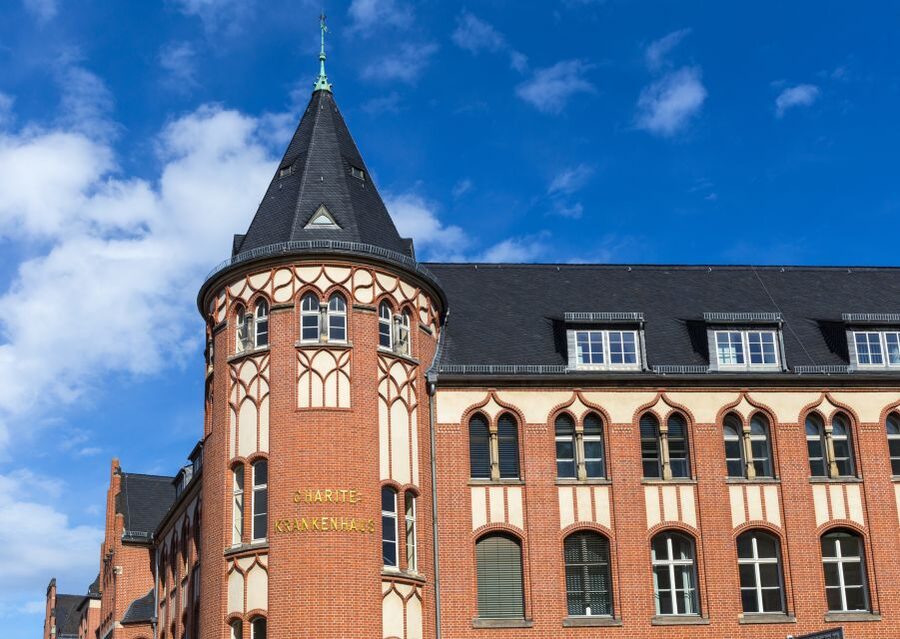
The location puts you directly into the medical district. Your guide begins with the Charité Bed House, one of the key visual references for the institution. You will view it from outside rather than enter it. This is not a minor technical detail. The building is an operating hospital facility, so hygiene and protection rules limit access for a group tour.
If you are expecting a hospital museum, adjust your plans before booking. The focus is the story of the Charité and its people, not a tour through clinical rooms. The outdoor beginning also lets the guide place the hospital in its Berlin setting before moving into the more specialized material.
The meeting point is convenient for an activity that ends where it starts. Since the walk lasts two hours and includes city streets, comfortable shoes are sensible. No special equipment is listed, and the activity is built around listening and walking rather than hands-on demonstrations.
Along Luisenstraße and across the university campus
From the Charité Bed House, the route continues along Luisenstraße and across the university campus. This part gives the tour room to connect the hospital with medical education. Charité is not only a place where patients receive care. It is also a center for teaching and research.
The walk should appeal to you if you like history tied to actual places. Instead of hearing a long list of names in a lecture room, you move through the area where the institution developed. The route helps you picture the relationship between hospital work, university study, and scientific research.
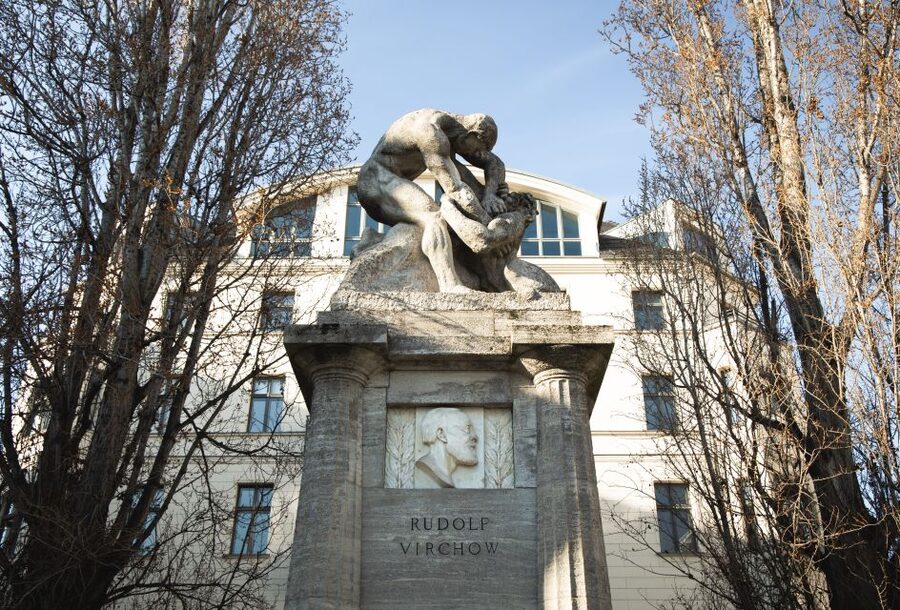
The guide introduces major figures from Berlin medicine during this portion of the tour. Rudolf Virchow is one of the most important names. Emil von Behring and Robert Koch bring the story toward laboratory science and infectious disease research, while Ferdinand Sauerbruch represents another chapter in the development of modern surgery.
The provided information does not give a detailed stop-by-stop script for each physician, so do not book this expecting a full biography of every figure. Instead, think of the doctors as doors into larger themes. Their work helps explain how medical knowledge changed and why Berlin became important in the field.
The route is also a good reminder that famous scientists do not exist apart from their institutions. Research depends on teaching, hospitals, laboratories, funding, and political conditions. That broader view gives the tour more substance than a simple list of Nobel Prize winners.
The famous doctors and Nobel Prize winners
The Charité’s story is carried by its people. The tour introduces doctors and scientists who became associated with major advances in medicine, including Nobel Prize winners. For you, the value is not just recognizing famous names. It is seeing how individual careers fit into the long development of Berlin’s medical world.
Rudolf Virchow is especially important to the Charité story. The tour presents him as one of the key physicians connected with Berlin medicine. Robert Koch, Emil von Behring, and Ferdinand Sauerbruch add different angles to the story, showing the range of work carried out through research, diagnosis, treatment, and teaching.
The tour’s emphasis on these figures should suit anyone who enjoys science history but does not want a technical seminar. You will hear the human stories behind medical change, along with facts about the city’s sometimes obscure links to medicine.
Do keep your expectations realistic. This is a live German-language walking tour, not an English audio guide or a specialist lecture translated on the spot. If you understand German well, the spoken storytelling is likely to be the central strength. If you do not, the experience may be difficult to follow because the supplied tour information lists German as the only language.
Same streets, a different way to see them:
- Berlin: Discover Berlin Walking Tour
★ 4.9 · 5,998 reviews - Berlin’s Best: 2 Hour Walking Tour Third Reich and the Cold War
★ 5.0 · 5,486 reviews - Berlin: Hidden Backyards Guided Walking Tour
★ 4.8 · 5,360 reviews - Explore Berlin: See All The Iconic Sights & Some Hidden Gems
★ 5.0 · 4,429 reviews
The medical temple hidden in a backyard
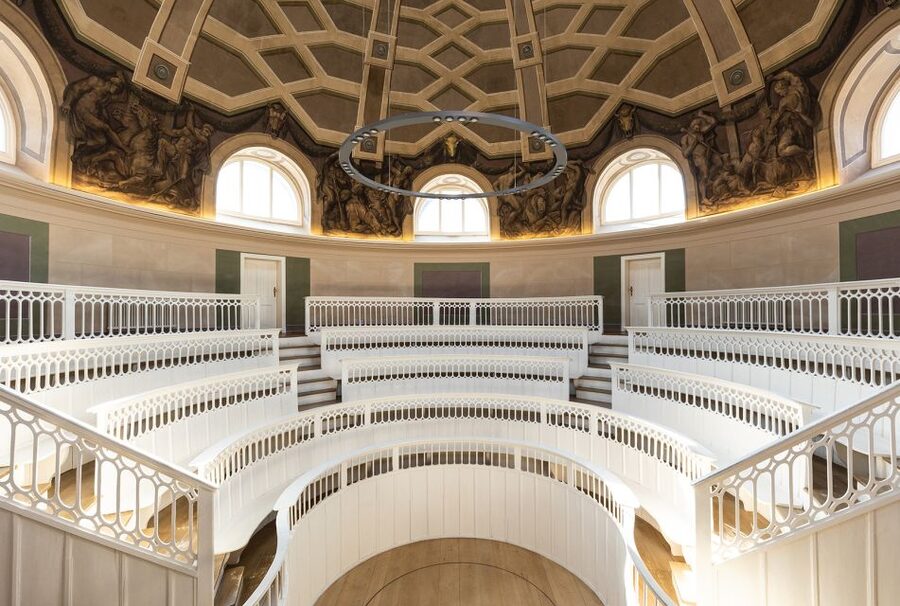
The most unusual stop is the Animal Anatomical Theatre, also described as a mysterious medicine temple. It is Berlin’s oldest surviving teaching building, and you visit it from the inside.
This is the moment that gives the tour its strongest sense of discovery. The building is not presented as a standard hospital corridor or a modern exhibition hall. Its former teaching purpose and unusual setting make it a memorable piece of Berlin’s medical architecture.
The phrase medicine temple suggests a place designed with ceremony and importance, not just practical function. Medical education once needed spaces where anatomy could be taught directly, and this building preserves that connection between scientific instruction and the physical body.
The Animal Anatomical Theatre also adds variety to the walk. Much of the route is outdoors, with views of the hospital area, Luisenstraße, and the university campus. Here you enter a specific historic building and see a place tied directly to teaching.
Opening hours can change at short notice if the theatre is closed for a private event. It is also closed on public holidays. Check the date carefully before booking, especially if your Berlin visit includes a holiday. If the theatre cannot open, one of the tour’s most distinctive stops may not be available.
The difficult chapter: medicine under the Nazi regime
A good medical history tour must discuss more than discoveries and celebrated doctors. This one includes the period when doctors collaborated with the Nazi regime.
That subject changes the tone of the walk. You will hear about the institution’s dark years and the responsibilities of physicians working under dictatorship. The point is not simply to attach a grim footnote to an otherwise heroic story. It raises questions about professional ethics, obedience, research, and the use of medical authority.
I value this part because it prevents the tour from turning Charité into a shrine to scientific achievement. Medical institutions can produce important research and still take part in serious harm. The two facts need to be held together.
You should decide if this tone suits your day. The experience is not described as a memorial tour, and it is not mainly about Nazi Berlin. Still, this chapter forms part of the Charité story and may be emotionally weightier than the famous-doctor sections.
The guide’s job here is to connect the institution’s past to the people who worked within it. That makes the subject more direct than a general discussion of the Nazi period. If you are interested in how institutions behave under political pressure, this is one of the tour’s most valuable elements.
What you actually see, and what you do not
The tour gives you a close look at the Charité from outside, rather than access to active hospital facilities. You begin at the Charité Bed House, walk along Luisenstraße, cross the university campus, and finish inside the Animal Anatomical Theatre.
The Charité Campus Mitte is not open to group tours. That restriction means you should not expect to wander through hospital courtyards, wards, or working medical facilities. The outdoor route is part of the format, not a substitute for a missing indoor visit.
This distinction matters when comparing the tour with a museum ticket. A museum usually gives you display cases, objects, labels, and set opening hours. This experience gives you a guide’s interpretation of places and people, plus entry to the historic teaching building.
The tour ends back at the starting point. That makes it easy to continue with plans in central Berlin, although the exact onward route is not specified. You can treat it as a compact morning or afternoon activity rather than a full-day commitment.
Is $27 a fair price?
At $27 per person, the tour offers reasonable value if the topic genuinely interests you. You pay for two hours with a live guide, a structured route, and entry to the Animal Anatomical Theatre. The content also covers three centuries, several major medical figures, and the institution’s difficult political history.
The price is less attractive if you mainly want to enter the Charité hospital or see active medical facilities. You cannot do that on this group tour. You also need German-language ability to get the full benefit.
For the right audience, the cost compares well with other specialist walking tours because it offers a subject you are unlikely to find in a standard city walk. I would choose it for a second or third day in Berlin, after you have seen the major sights and want a more focused story.
Free cancellation is available up to 24 hours before the start, and you can reserve now and pay later. Those terms help if your schedule is still shifting. They do not change the main value question, which is whether you want a guided look at medicine rather than a general tour of Berlin.
Who should book this experience?
I would recommend the tour to you if you enjoy:
- Medical history and the development of scientific research
- Berlin’s university and hospital institutions
- Famous physicians and Nobel Prize winners
- Architecture connected with teaching and anatomy
- Serious discussion of professional ethics
- Focused walking tours with a clear subject
It may not be right for you if you want a broad overview of Berlin, an English-language experience, or access to the hospital interiors. Families should also consider whether the medical and Nazi-era material will suit younger children. The tour is described as a moving journey through life and death, so it is not purely light entertainment.
You should also check the date if the Animal Anatomical Theatre is important to you. Public holidays and private events can affect its opening hours.
Final verdict: book it for the story, not hospital access
Book this tour if you want a thoughtful, German-language look at Berlin medicine and you appreciate history that includes both achievement and failure. The combination of Charité’s long development, famous physicians, the Animal Anatomical Theatre, and the Nazi-era chapter gives the experience real substance.
Skip it if your main goal is to go inside the Charité Bed House or explore the hospital campus. You will see those areas from outside only. For everyone else, $27 is a sensible price for a distinctive two-hour walk that reveals a less familiar side of Berlin.
FAQ
Where does the Charité walking tour begin?
It begins in front of the Charité Tower, at the crossroads of Schumannstraße, Charitéplatz, and Charitéstraße.
Where does the tour end?
The tour ends back at the meeting point.
How long does the tour last?
The walking tour lasts two hours.
What language is the tour conducted in?
The live tour guide conducts the experience in German.
Can I enter the Charité Bed House?
No. The Charité Bed House is viewed from outside because it is an operating hospital facility with related hygiene and protection rules.
Can group tours enter the Charité Campus Mitte?
No. The hospital grounds at Charité Campus Mitte are not accessible to group tours.
Do I visit a historic medical building?
Yes. The tour visits the Animal Anatomical Theatre, Berlin’s oldest surviving teaching building, from the inside.
Can the Animal Anatomical Theatre be closed?
Yes. The theatre can adjust its opening hours at short notice for closed events, and it is closed on public holidays.
What famous medical figures are discussed?
The tour covers physicians and scientists including Rudolf Virchow, Emil von Behring, Robert Koch, and Ferdinand Sauerbruch.
How much does the tour cost?
The listed price is $27 per person.
Just added around Berlin
- Berlin Walking Tour★ 4.5 · 378 reviews
- Small Group Walking Tour of East Berlin with a French Guide★ 5.0 · 176 reviews
- Berlin Street Art Walking Tour – Off The Grid★ 5.0 · 270 reviews
- Berlin Highlights Private Guided Walking Tour★ 4.5 · 89 reviews
- Private Walking Tour: World War 2 and Cold War Sites in Berlin★ 5.0 · 230 reviews
- East Meets West: Berlin Food Culture & Street Art★ 5.0 · 157 reviews
- Kreuzberg Berlin: Off the Beaten Track PRIVATE Walking Tour★ 5.0 · 128 reviews
- The History of Berlin: WWII PRIVATE Walking Tour With Locals★ 5.0 · 209 reviews
Berlin Walking Tours, compared.


Berlin City walk Government District and Places of Democracy
Read our review →


Berlin’s Best: 2 Hour Walking Tour Third Reich and the Cold War
Read our review →

Explore Berlin: See All The Iconic Sights & Some Hidden Gems
Read our review →
Third Reich Berlin: Hitler and WWII Walking Tour
Read our review →Browse the lists this tour appears in