
Review · HISTORY WALKING TOURS
Dubrovnik: Ancient City Walls & Wars Walking Tour
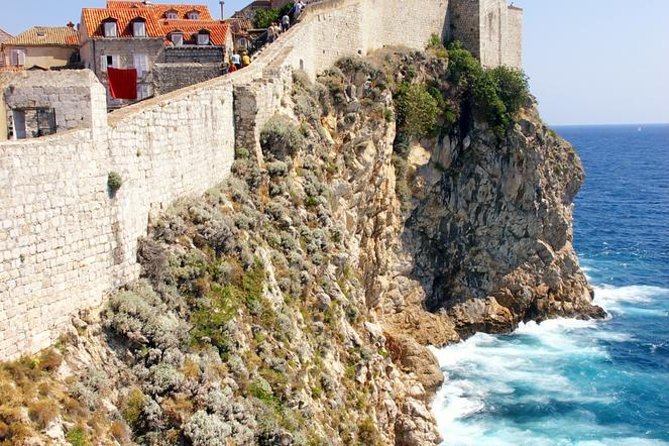
Dubrovnik’s walls tell the city’s story from above. This two-hour walk combines Old Town history with sweeping Adriatic views, then adds the human side of sieges, diplomacy, and the 1990s war. I especially like the chance to see Dubrovnik from the wall’s high stone path, and I like that guides such as Davor, Goran, Andrea, and Mara bring local detail rather than simply pointing at monuments. The main drawback is clear: the walk includes many stairs, and the wall entrance fee is extra.
At $30.23 per person, the tour can be good value if you want context instead of just photographs. You are paying for an English-speaking local guide, not admission to the walls. Add the required entry fee, prepare for summer heat, and this becomes a serious walking tour rather than a quick stroll.
Key points to know before you book

- The wall walk covers about 1.2 miles, or 2 kilometers, with repeated climbs and descents.
- The City Walls ticket is not included, with supplied prices listing €40 per adult and €15 for children aged 7 to 18. Another tour note lists €35 for adults, so confirm the current amount before arrival.
- The history reaches beyond medieval Dubrovnik, covering the autonomous republic, Ottoman and Venetian pressure, defensive forts, and the modern war.
- The finest views come from the elevated wall path, including the Old Town roofs, port, Adriatic Sea, Fort Revelin, Minceta Tower, and Fort Lovrijenac.
- The meeting point is under an orange Dubrovnik Walks umbrella near Pile Gate, at Brsalje ul. 8.
- Summer conditions matter: shade is limited, there are many stairs, and there are no guaranteed restroom stops.
Meeting at Pile Gate and finding your guide
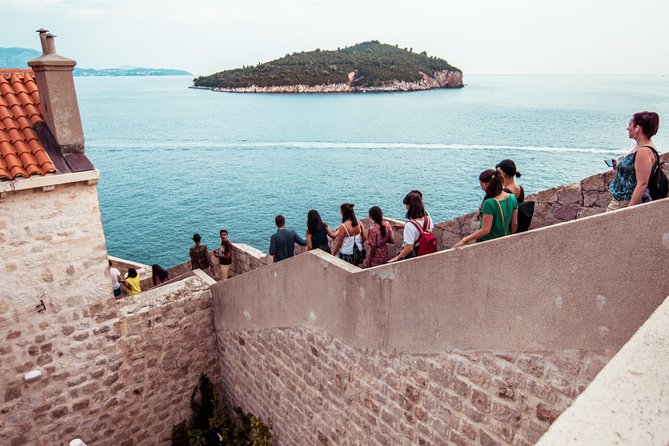
The tour begins near Pile Gate, one of the easiest places to locate on the edge of Dubrovnik’s Old Town. Look for the orange Dubrovnik Walks umbrella at Brsalje ul. 8. A licensed local guide meets the group there and leads everyone into Stari Grad.
This is a useful starting point because Pile Gate is both a major entrance and a natural place to get your bearings. You do not need to puzzle over the maze of limestone streets alone. The guide takes charge from the first few minutes, which helps when the area is crowded or when you are visiting for only a short time.
The tour is offered in English. Groups of four or more use audio headsets, though one person found the signal weak when the guide moved too far ahead. Stay close enough to keep the audio clear. The maximum group size is 35, so the experience may feel intimate with a small group but less personal when fully booked.
The tour requires at least four people to operate. It is commonly booked well ahead, with an average booking time of 27 days in advance, so an early reservation makes sense during the busy season.
More History Walking Tours in Croatia
- Dubrovnik Old Town History Walking Tour
★ 5.0 · 1,684 reviews - Dubrovnik: Old Town History Walking Tour
★ 4.9 · 474 reviews - Zagreb: City & History Walking Tour & WW2 Tunnels
★ 4.9 · 1,202 reviews
Crossing Stari Grad before the walls
After meeting near Pile Gate, you enter Dubrovnik’s Old Town and walk toward the entrance to the City Walls. This opening section gives the guide room to explain how the town developed, including the old sea channel that once separated the settlement from the mainland.
That detail helps you read the city properly. The present-day Old Town was shaped when the channel was filled during the 11th century, allowing a single defensive wall to enclose the settlement. The polished limestone streets, churches, monasteries, and palaces then become part of a larger story about trade, defense, and political survival.
I like this short approach because it keeps the wall walk from feeling like an isolated attraction. You first see Dubrovnik at street level, then climb above it and understand how the town’s buildings fit inside its defenses.
The guide also provides background on Dubrovnik as an autonomous republic. The city had to protect its independence while dealing with the Ottoman Empire and Venice, two powerful neighbors with competing interests. Its survival depended on fortifications, careful diplomacy, and control of valuable trade.
Walking the 2-kilometer City Walls
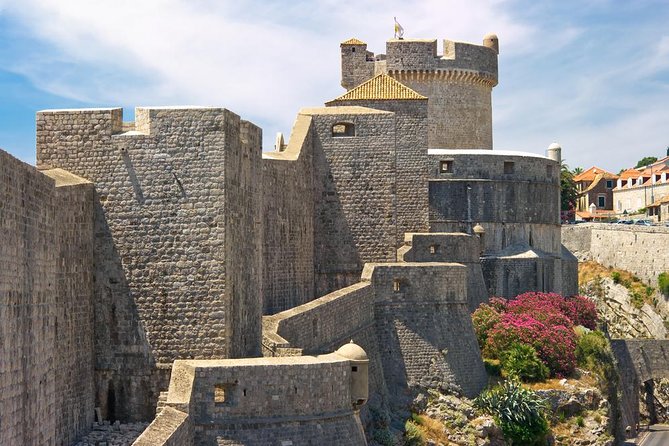
The central part of the experience is the walk around the ancient walls. The route is about 1.2 miles, or 2 kilometers, and includes steep sections and many stairs. You should be comfortable walking for two hours and climbing repeatedly without assuming the path will be flat.
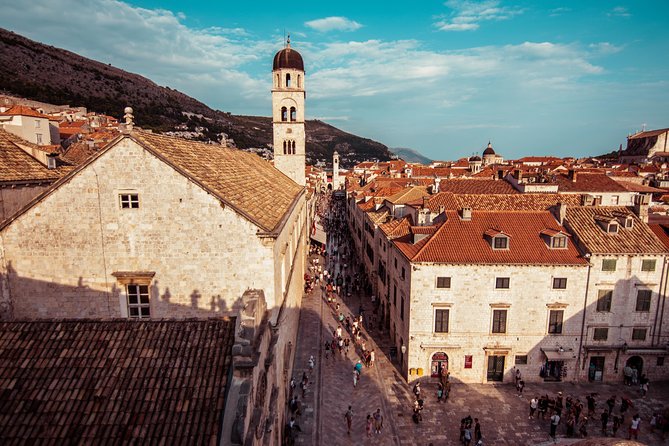
The reward is the view. From the walls, you look across the terracotta roofs of the Old Town toward the blue Adriatic, the port, and the surrounding coast. The angle is far better than street level for understanding Dubrovnik’s compact shape and defensive design.
The walls were first built in the 12th century and developed into the larger defensive system seen today, including major additions from the 14th century. They have been restored several times, so what you walk today is a maintained version of the original structure rather than an untouched ruin.
Your guide explains why the walls were built as they were and how Dubrovnik faced threats from rival powers and invading forces. The political story is as important as the stonework. Fortifications helped, but diplomacy was the city’s other great weapon.
Allow time for photographs, but do not treat the route as a photo stop with a few facts added on. The best part of the tour is the connection between the view and the explanation. You see the harbor, towers, and walls while hearing why each mattered.
Fort Revelin, Minceta Tower, and Lovrijenac
Fort Revelin and Minceta Tower are key points along the route. Your guide explains their strategic purpose and their place in Dubrovnik’s defense. Minceta Tower is especially important to the wall system, while Revelin helps show how the city strengthened vulnerable approaches.
You also see Fort Lovrijenac in the distance. It belongs to Dubrovnik’s wider wall defenses but is physically separate from the main circuit. That separation is worth noting because it reveals how the city used nearby high ground and detached positions to protect the harbor and Old Town.
The tour does not include admission to Fort Lovrijenac. The focus remains on the walls and the history visible from them. You can consider visiting the fort separately if you want to continue exploring after the walk, but the supplied details do not include its ticket price or opening arrangements.
This section is also where the tour’s title earns its place. The walls are not simply a medieval backdrop. They are evidence of the city’s repeated effort to remain independent, and the guide connects the architecture to wars, rivalries, and later attacks.
More History Walking Tours in Dubrovnik:
- History and Hauntings of Salem Guided Walking Tour
★ 5.0 · 14,564 reviews - Lisbon: History, Stories and Lifestyle Walking Tour
★ 4.8 · 10,902 reviews - Boston: Freedom Trail History Small Group Walking Tour
★ 5.0 · 6,450 reviews - Historic Charleston Guided Sightseeing Walking Tour
★ 5.0 · 6,216 reviews
The war stories and modern Dubrovnik
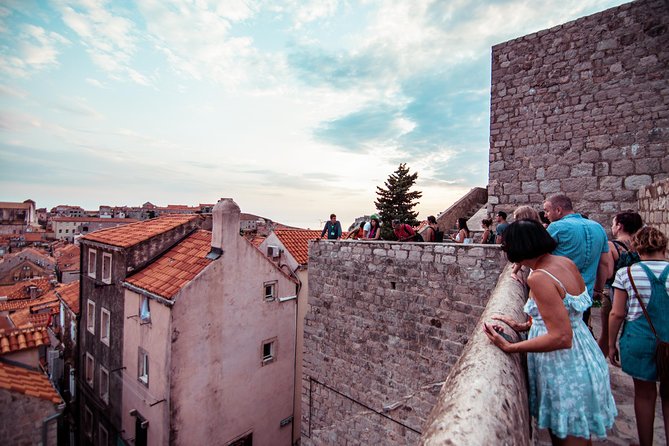
The wartime discussion reaches into Croatia’s recent past. Several guides are praised for explaining the 1990s war and its effect on Dubrovnik, sometimes adding personal experience as survivors. That perspective can make the history more direct and emotional than a standard monument talk.
One guide, Goran, was especially valued for sharing his own experience, though one person felt this section lasted too long. That is a fair consideration. If you want a strictly medieval architecture tour, the modern war material may feel heavier than expected. If you want to understand what Dubrovnik endured in living memory, it adds important depth.
The tour can also include popular culture references, including Game of Thrones. One person felt those comments distracted from the war and city history. If you have no interest in the show, you may prefer a tour that keeps its focus tightly on the city’s past and recent conflict.
The strongest approach is to see this section as a human story rather than a list of dates. The walls protected a republic long before modern Croatia existed, and they remained part of Dubrovnik’s identity during more recent violence. That long timeline gives the walk emotional weight.
Heat, stairs, and the best time to go
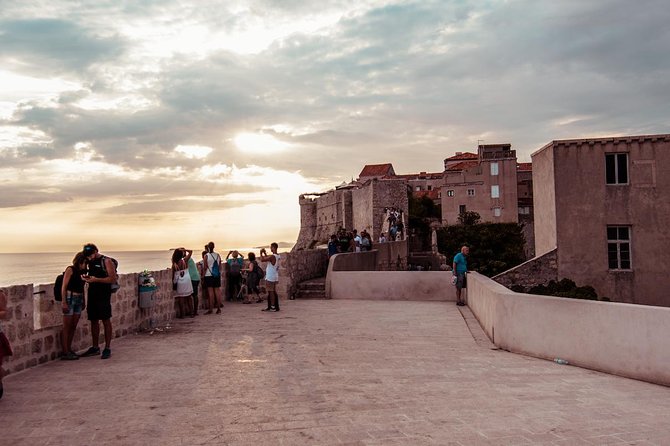
The physical demands are the main issue. There are many stairs, some steep climbs, and limited shade because of the way the walls are built. The tour is not recommended for anyone who dislikes stairs or struggles with prolonged walking.
Summer heat can make the route much harder. The tour details warn that shade is limited, and several people found early morning or evening especially comfortable. A 9 a.m. start can reduce the strongest heat, while a 6 p.m. departure may bring cooler air and a sunset over the city.
You should bring water and wear sensible shoes. Drinks may be available for purchase along the wall, but you should not depend on that. The formal information says there are no restroom stops, so use facilities before meeting the guide.
The pace appears manageable for people in moderate physical condition. Guides have been praised for stopping in shade when possible and allowing breaks, but the route still requires steady effort. Service animals are allowed, and the tour is near public transportation.
What the $30.23 price really buys you
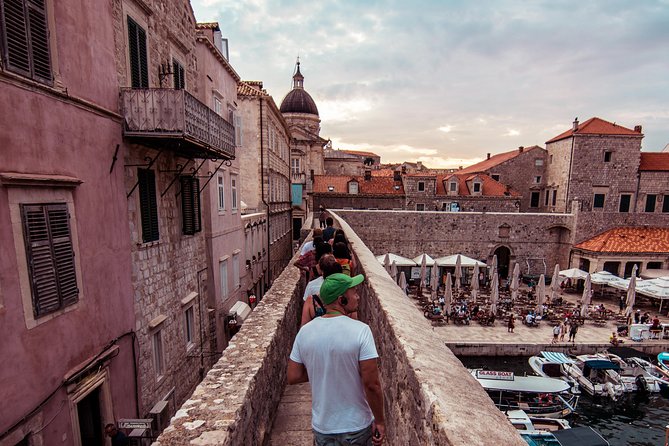
The listed price is $30.23 per person, which covers the local expert guide and the English-language tour. It does not cover the mandatory City Walls admission.
The supplied information gives two adult admission figures: €40 in the inclusion section and €35 in the additional details. Children aged 7 to 18 are listed at €15. Because the figures do not match, check the current wall ticket price before you go. You can buy the ticket on the spot or use a Dubrovnik Pass, but the pass must be bought and collected in advance.
That extra cost changes the value calculation. If you only want the view, you can walk the walls independently and skip the guide fee. If you want the political background, military explanations, and local stories, the guide adds real value. Several people felt the wall walk was much better with someone explaining what they were seeing.
A small group can make the price feel particularly fair because you have more chances to ask questions. A group of up to 35 may offer less direct contact, though headsets help you hear the guide.
Where the tour ends
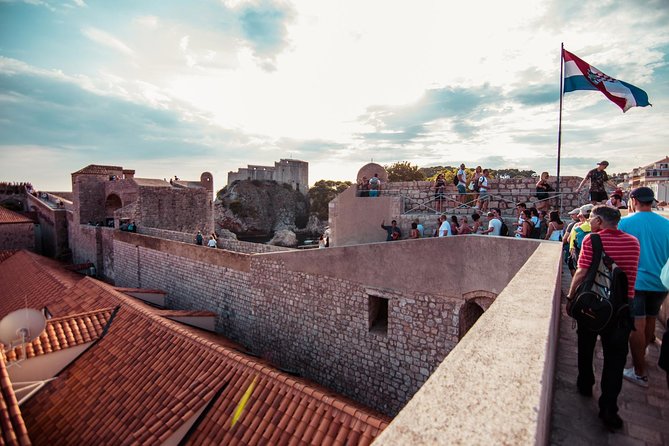
The walk finishes near Dubrovnik’s old port, known as Porat. This matters for your afternoon plans because the end point is not the same as the starting point near Pile Gate.
The booking map may continue to display the meeting point, so do not assume you will return to the orange umbrella. Plan your next stop from the port area. The tour description also lists the meeting point again under the end information, but clearly says the tour ends near the old town port. Follow the guide’s instructions on the day.
The port is a useful finish if you want to continue around the waterfront or remain in the Old Town. It is less convenient if you have left belongings near Pile Gate and expect a circular route.
Who will enjoy this tour most
I would choose this tour if you like architecture, military history, political stories, and wide views. It also suits anyone visiting Dubrovnik for a short time who wants a strong introduction to the city rather than a list of disconnected sights.
Families can join, and children aged 0 to 11 are welcome free on the tour. Children aged 0 to 6 also receive free wall admission, while children aged 7 to 11 do not receive free wall admission. The climbs may still be tiring for younger children, so consider your group’s stamina rather than relying only on the age policy.
This is not the right pick if you dislike stairs, have trouble with heights, or cannot manage hot weather. It is also not ideal if you want a slow indoor history talk with frequent restrooms and long shaded pauses.
The guides receive especially strong praise for clear English, humor, personal stories, and willingness to answer questions. Davor is repeatedly singled out for making the history interesting and easy to follow. Goran is praised for his historical depth and wartime perspective, while Andrea and Mara are also described as engaging and capable.
Should you book the Dubrovnik walls and wars tour?
Book it if you want the city walls to make sense, not simply look beautiful. The views alone are excellent, but the stories about Dubrovnik’s republic, defenses, sieges, diplomacy, and modern war give the stones a human meaning.
Before paying, check the current adult wall fee, choose a morning or evening departure in hot weather, and make sure everyone in your group can handle many stairs. Stay close to the guide when using the headset, bring water, and remember that the walk ends near the port rather than back at Pile Gate.
For a fit visitor who enjoys history, I think the guided option is worth the added cost. For someone seeking only photographs or an easy stroll, buy your ticket independently and skip this demanding two-hour route.
FAQ
How long does the Dubrovnik Ancient City Walls and Wars tour last?
The tour lasts approximately two hours.
Where does the tour begin?
It begins near Pile Gate at the Dubrovnik Walks orange umbrella, Brsalje ul. 8, Dubrovnik.
Where does the tour finish?
The walk finishes near Dubrovnik’s old town port, in the Porat area. The map may still show the starting point, so do not assume the tour returns to Pile Gate.
Is the City Walls admission included?
No. City Walls admission is mandatory and must be paid separately. The supplied details list €40 per adult in one section and €35 per adult in another, so confirm the current price before arrival.
How much is admission for children?
The supplied information lists €15 for children aged 7 to 18. Children aged 0 to 6 are eligible for free wall admission, while children aged 7 to 11 are not.
Is the tour suitable for people who do not like stairs?
No. The route includes many stairs and some steep climbs, and it is not recommended for people who dislike stairs.
What language is the tour offered in?
The tour is offered in English. Audio headsets are used for groups of four or more.
Can I cancel for a full refund?
Yes, if you cancel at least 24 hours before the experience start time. Changes or cancellations made less than 24 hours in advance are not accepted for a refund. If poor weather or the minimum group requirement causes cancellation, you are offered another date or a full refund.
Just added around Dubrovnik
- Dubrovnik: Explore Dubrovnik Old Town Walking Tour★ 4.9 · 96 reviews
- Dubrovnik: Walls and Wars Walking Tour★ 4.8 · 501 reviews
- Dubrovnik: Game of Thrones And Iron Throne Walking Tour★ 4.8 · 505 reviews
- Dubrovnik: Old Town Walking Tour★ 4.9 · 792 reviews
- Dubrovnik: Panoramic Ride and Old Town Guided Walking Tour★ 4.7 · 261 reviews
- Dubrovnik: Karaka – Game of Thrones Cruise & Walking Tour★ 4.8 · 613 reviews
- Dubrovnik By Night Walking Tour★ 4.8 · 208 reviews
- Dubrovnik: Early Bird Walking Tour★ 4.9 · 123 reviews
History Walking Tours, compared.

History and Hauntings of Salem Guided Walking Tour
Read our review →

Freedom Trail History Small Group Walking Tour
Read our review →
Historic Charleston Guided Sightseeing Walking Tour
Read our review →
Tapas Walking Tour with Food, Wine, and History
Read our review →
Savannah History and Haunts Candlelit Ghost Walking Tour
Read our review →

A History of Terror – Belfast City Centre Walking Tour
Read our review →Browse the lists this tour appears in