

Review · BOSTON WALKING TOURS
Boston’s Freedom Trail: A Revolutionary Walking Tour
History comes alive under your feet. This 2.5-hour walk follows Boston’s full Freedom Trail, linking churches, burial grounds, meeting halls, Revolutionary sites, and the harborfront USS Constitution. I like that you see all 16 official sites in one outing, and I like the way the tour adds stories about women, African Americans, immigrants, abolition, and education alongside the familiar names of Paul Revere and John Hancock.
The strongest part is the guiding. Rob, Kenneth, Charlie R, Matthew, Alissa, and several other guides receive praise for mixing clear historical detail with humor and useful Boston suggestions. The main consideration is the pace and distance: you cover a lot of ground in 2.5 hours, and even though the activity is listed as wheelchair accessible, it is also marked as unsuitable for people with mobility impairments. Check your comfort with extended walking before booking.
Key points to know before you go
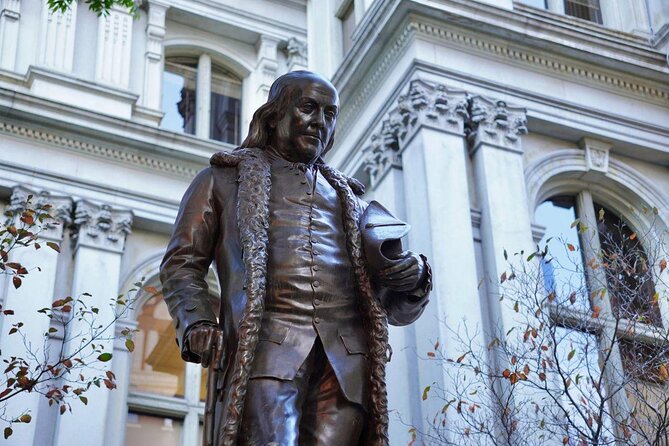
- All 16 official Freedom Trail sites in one walk: You see Boston Common landmarks, churches, graveyards, meeting halls, Revolutionary locations, and the USS Constitution in a single route.
- Meeting point at The Embrace: Find the guide beside the Boston Common Visitor’s Center at 139 Tremont Street. Look for a Boston History Company flag, not a period costume.
- Strong storytelling is the main value: Guides such as Rob, Kenneth, Charlie R, Matthew, Alissa, and Stewart are praised for humor, energy, and clear explanations.
- A broad view of Boston’s past: The tour goes beyond famous white male patriots to discuss abolition, immigration, education, women, African Americans, and lesser-known patriots.
- A walking tour, not an admission tour: Entry tickets are not included, so you see the sites from the route rather than receiving admission to every building.
- Good value at $31: You get a live English-speaking guide for 2.5 hours, with free cancellation up to 24 hours before the tour and a reserve-now, pay-later option.
Starting at The Embrace in Boston Common
Your tour begins beside The Embrace statue, next to the Boston Common Visitor’s Center at 139 Tremont Street. The address is also listed as 130 Tremont Street in the general meeting information, so use The Embrace and the Visitor’s Center as your visual markers rather than relying only on the number.
Your guide will not be dressed as Paul Revere or a British soldier. Instead, look for a flag bearing the Boston History Company name. That is useful in a busy public park, especially if several walking groups are gathering nearby.
Beginning in Boston Common gives the tour a sensible opening. You are near the heart of modern Boston, but only a few steps from the events and people that shaped colonial Massachusetts. The setting also helps you get oriented before the route moves through crowded streets and narrow historic areas.
The guide introduces Boston’s role in the American Revolution, then widens the story. You hear about rebels, gangs, Midnight Riders, the Boston Tea Party, and the Boston Massacre. The guide also places those events beside Boston’s later roles in abolition, education, and immigration.
That wider frame is important. The Freedom Trail can easily become a parade of statues and old brick buildings. A good guide turns it into a story about conflict, power, trade, protest, race, religion, and the changing meaning of American freedom.
A few more walks around Boston worth a look
- Boston: Freedom Trail History Small Group Walking Tour
★ 5.0 · 6,450 reviews - Harvard University Campus Guided Walking Tour
★ 4.5 · 3,632 reviews - Boston Freedom Trail Walking Tour with Costumed Guide
★ 4.5 · 2,531 reviews
Park Street Church and the Granary Burying Ground
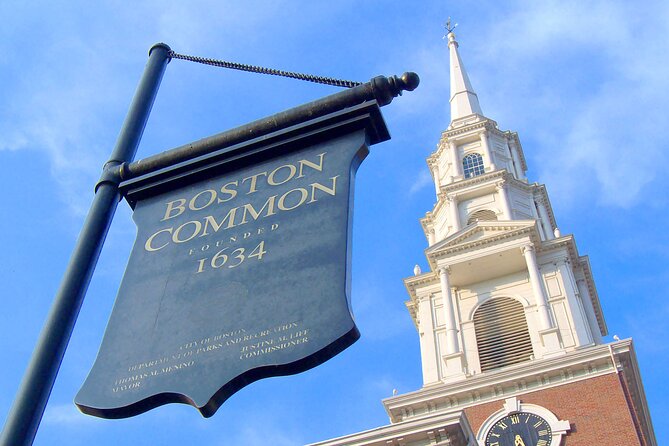
Park Street Church is one of the first notable stops. The church’s steeple is linked with the famous lantern signal connected to Paul Revere’s warning system. You learn where the two lanterns were hung and why that small signal became part of the story of the Revolutionary War.
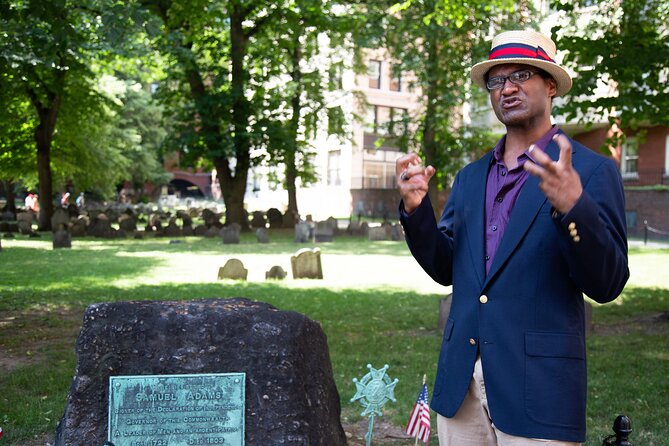
The tour then reaches Granary Burying Ground, where several major figures are buried. John Hancock, Paul Revere, and Samuel Adams are among the names connected with this graveyard, giving you a direct link to the people often presented as symbols of the Revolution.
The stop is more than a chance to take photographs. Burial grounds show how close daily life and public memory were in early Boston. You are looking at final resting places while standing in the middle of a modern city, with traffic, offices, and pedestrians nearby.
Your guide helps separate familiar legend from the human story. The tour promises tales of famous Americans as well as less familiar women, African Americans, immigrant patriots, and pioneers. That makes the cemetery stop more useful than simply reading names from a map.
King’s Chapel and the Benjamin Franklin statue
King’s Chapel adds a religious and civic layer to the route. Boston’s early public life was shaped by churches, congregations, disputes, and social rank, so this stop helps explain the city behind the military events.
The Benjamin Franklin Statue follows, along with the site of the first public school in Boston. The Franklin connection gives the guide a natural way to talk about education, public life, and the city’s influence on American ideas.
You should expect the guide to keep the pace moving rather than pause for a long interior visit. Entry tickets are not included, and the format is built around viewing all 16 official sites from the route. If you want to explore a church or museum inside, plan a separate visit after the walk.
The Old Corner Bookstore is another stop along this section. Its place on the route connects Boston’s historic buildings with publishing, books, and public debate. It is a reminder that the city’s influence did not come only from battlefields and political speeches.
Old South Meeting House, the Old State House, and the Boston Massacre Site
At the Old South Meeting House, the tour returns to the events that led toward the American Revolution. This is where the Boston Tea Party story gains context. The building is tied to public meetings and protest, so the guide can explain how political arguments moved from private frustration into organized resistance.
The Old State House shifts the focus toward government and authority. Its location makes the conflict between colonial residents and British power easier to picture. You are walking through the same central district where public decisions, arguments, commerce, and street protests all collided.
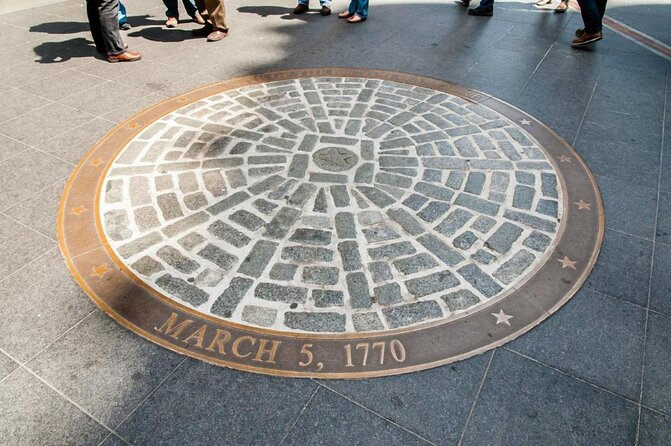
The Boston Massacre Site is one of the most important stops. The tour explains what happened at the spot commonly linked with the Bloody Massacre, and why the event became such a powerful piece of Revolutionary propaganda.
This is a good place to listen closely. The story is often reduced to a simple slogan, but the guide’s job is to explain the people, tensions, and political uses surrounding the event. The quality of the tour depends heavily on how clearly this part is handled.
The route also brings you near Faneuil Hall. Known for public debate and civic gatherings, it fits the tour’s larger theme: Boston’s Revolution was not only fought with weapons. Speeches, meetings, pamphlets, boycotts, and street action helped move the city toward rebellion.
Same streets, a different way to see them:
- The Full Revolutionary Story Epic Small Group Boston Walking Tour
★ 5.0 · 2,356 reviews - Boston: Freedom Trail History Small Group Walking Tour
★ 4.9 · 1,590 reviews - Boston North End Food Tour of 6+ Tastings, Cannoli, Lobster Roll
★ 5.0 · 1,404 reviews - Boston’s Freedom Trail: A Revolutionary Walking Tour
★ 5.0 · 1,343 reviews
Paul Revere House and Old North Church
The Paul Revere House offers a more personal look at the Revolution. Instead of seeing Revere only as the rider from a famous poem, you get a sense of the person behind the name and the neighborhood in which he lived.
The tour continues to Old North Church, the site associated with the two lantern signal. This is one of the most recognizable moments on the Freedom Trail, and the guide explains how the church steeple fitted into the warning system before Revere’s ride.
The church stop works best when the guide connects the physical building with the uncertainty of the night itself. The lanterns were a signal, not a complete explanation of what would happen next. That small detail helps the story feel less like a polished legend and more like a risky act carried out with limited information.
You might want to visit the Paul Revere House or Old North Church interiors separately. Since admission is not part of the $31 tour, the walking route gives you the outside setting and historical explanation, while an additional ticket would be needed for an interior visit.
Copp’s Hill and the route toward the USS Constitution
Copp’s Hill Burying Ground continues the cemetery theme, but the story here expands beyond the best-known patriots. The guide discusses Boston’s communities and the people who lived, worked, worshipped, and died in this part of the city.
This section also shows why comfortable shoes matter. The tour covers a large section of Boston, and the route includes several stops across different neighborhoods. You are not sitting in a coach while landmarks pass by. You are walking between them, stopping to listen, then moving on.
The USS Constitution brings the route toward Boston’s maritime and military past. You view the historic ship as part of the Freedom Trail experience, alongside the city’s churches, meeting houses, burial grounds, and government buildings.
The variety is one of the tour’s best features. You do not spend the entire morning looking at one kind of landmark. The route moves from public parks to graveyards, churches, political buildings, streets, and a naval vessel.
Bunker Hill Monument and the final stretch

The final portion includes Bunker Hill Monument, one of the clearest physical reminders of the Revolutionary conflict. The monument marks the Battle of Bunker Hill, a major early clash that showed the seriousness of the colonial resistance.
The tour covers the site as part of the full Freedom Trail route, but entry tickets to attractions are not included. The itinerary is designed to show you all 16 official sites in one guided walk, not to provide a long interior visit at every stop.
The activity information says the tour ends back at the meeting point. That is helpful if you need to return to Boston Common, but the route still covers substantial ground before you get there. If you are planning around a train, flight, dinner, or a short Boston layover, leave extra time after the stated 2.5 hours.
One useful detail comes from the guide feedback: a participant used a Boston layover to join the walk and found the time worthwhile. That can work if your schedule has a generous buffer. Do not treat the listed duration as the exact time you will be free to leave the area.
How the guides shape the experience

The tour’s biggest variable is the individual guide. That is true of any history walk, but it matters even more here because the route contains a lot of facts and sites in a short period.
Rob is praised for strong historical knowledge, humor, and an engaging manner. Kenneth is described as personable and able to answer questions, including questions about restaurants, bars, and other places in Boston. Charlie R is praised for detailed explanations and an engaging presentation.
Matthew receives praise for weaving stories into the places on the route. One practical caution is that he can speak quickly, which may be difficult if English is not your first language. Alissa is described as entertaining and good at keeping a group interested for the full 2.5 hours.
Stewart, Noah, Malcolm, Jim, Sam, Jules, Megan, Julia, and other guides are also praised for energy, humor, passion, and clear delivery. You cannot choose a particular guide from the information provided, so book this as a strong guide-led format rather than a guaranteed personal performance.
Expect a few dad jokes. That will appeal to many families and casual visitors, though anyone seeking a quiet academic lecture may find the tone lighter than expected.
Is $31 a fair price?
At $31 per person, the tour offers solid value if you want a guided introduction to Boston rather than a self-guided walk. You receive 2.5 hours with a live English-speaking guide and see the complete official trail in one outing.
The value comes from interpretation, not admission. You are paying for the route, the stories, the ability to ask questions, and the time saved planning how the sites fit together. Entry tickets are not included, so budget separately if you want to go inside attractions.
I especially like the reserve-now, pay-later option for a changing itinerary. You can hold a place without paying immediately, and cancellation is free up to 24 hours before the start time. Check availability for the actual departure times, since the schedule is not fixed in the basic activity details.
Comfort, accessibility, and practical planning
Wear comfortable shoes and bring water. The route is long enough that footwear can affect your enjoyment, especially as you move between central Boston, the North End, and the USS Constitution and Bunker Hill area.
The activity is listed as wheelchair accessible, but it is also marked as not suitable for people with mobility impairments. Treat that as a reason to ask for current route details before booking. A 2.5-hour urban walk can involve distance, standing, street crossings, and historic areas that may not be easy for every participant.
The tour is offered in English only. Video recording is not allowed, so plan to listen and take brief notes or still photographs if permitted by the guide and site rules.
This is best taken early in your Boston visit. You will gain a useful map of the central historic district, and guides may offer suggestions for restaurants, bars, and other parts of the city. If you already know the Freedom Trail well, the value depends on how much you want fresh stories and a guided interpretation.
Who should book this walking tour?
You should book it if this is your first Boston visit, you want the full Freedom Trail in one morning or afternoon, or you prefer stories to reading plaques on your own. It also suits families and casual history fans who enjoy humor mixed with solid information.
It is a good choice for a short stay because the route covers many major landmarks without requiring you to organize separate visits. It can also fit a long layover, provided you leave a generous time cushion.
You may want another option if you have limited walking ability, need a slower pace, want interior access at every site, or prefer a tour in a language other than English. The format is efficient, but efficiency means you will not linger equally at every stop.
Final verdict: book it for the full story
I would book Boston’s Freedom Trail: A Revolutionary Walking Tour for a first visit, especially at $31. Seeing all 16 official sites with a lively guide gives you a strong foundation, and the best guides bring more than the usual Paul Revere and Boston Tea Party script.
Choose it for the human stories, the connections between sites, and the chance to ask questions as you walk. Just wear good shoes, confirm the accessibility details, and remember that attraction entry is separate. If you accept those limits, this is a practical and well-priced way to understand why Boston became such an important stage in the American Revolution.
FAQ
Where does the Boston Freedom Trail tour begin?
It begins at The Embrace statue beside the Visitor’s Center on Boston Common, at 139 Tremont Street. Look for a guide holding a Boston History Company flag.
Where does the tour end?
The activity information says the tour ends back at the meeting point.
How long does the tour last?
The walking tour lasts 2.5 hours.
How much does the tour cost?
The listed price is $31 per person.
Does the price include attraction entry tickets?
No. Entry tickets to attractions are not included.
Is a live guide included?
Yes. The tour includes a live English-speaking guide.
Does the tour visit all 16 official Freedom Trail sites?
Yes. The experience is designed to cover all 16 official Freedom Trail sites in one tour.
Is the tour available in languages other than English?
No other language is listed. The tour is offered in English.
What should I bring?
Bring comfortable shoes, water, and comfortable clothing.
Can I cancel for a refund?
Yes. You can cancel up to 24 hours in advance for a full refund. You can also reserve now and pay later.
Just added around Boston
- Cambridge, Massachusetts: MIT and Harvard Walking Tour★ 4.7 · 486 reviews
- Boston: Full Revolution Story Epic Small Group Walking Tour★ 4.9 · 132 reviews
- Boston: Freedom Trail Guided Walking Tour in French★ 4.9 · 106 reviews
- Boston: Salem by Boat – Witch Trials & Walking Tour★ 4.3 · 263 reviews
- Boston: 2-Hour Historic Walking Tour★ 4.7 · 88 reviews
- Boston: North End Pizza Walking Tour with 3 Slices & Cannoli★ 4.8 · 162 reviews
- Self Guided Classic Freedom Trail Location Aware (GPS) Walking Audio Tour★ 4.5 · 258 reviews
- Boston History Tour: Scenic Walk Through Time & Landmarks★ 5.0 · 627 reviews
Boston Walking Tours, compared.
Freedom Trail History Small Group Walking Tour
Read our review →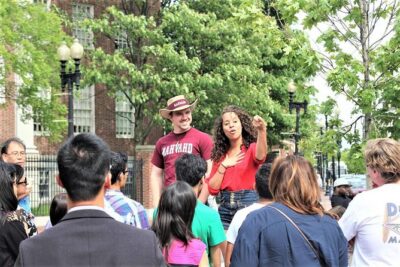
Harvard University Campus Guided Walking Tour
Read our review →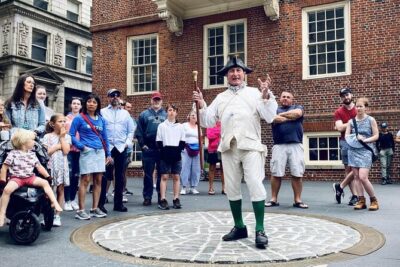
Boston Freedom Trail Walking Tour with Costumed Guide
Read our review →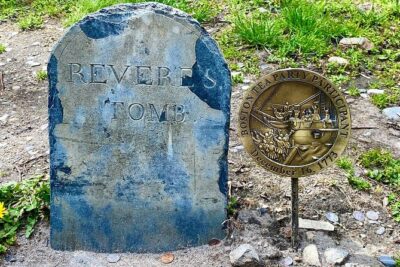
The Full Revolutionary Story Epic Small Group Boston Walking Tour
Read our review →Freedom Trail History Small Group Walking Tour
Read our review →
Boston North End Food Tour of 6+ Tastings, Cannoli, Lobster Roll
Read our review →
Boston’s Freedom Trail: A Revolutionary Walking Tour
Read our review →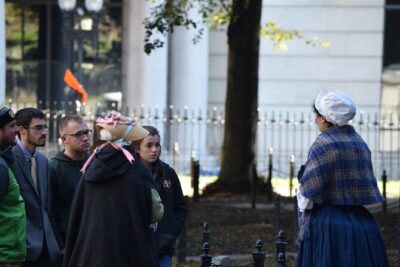
Browse the lists this tour appears in