Review · HISTORY WALKING TOURS
Bridgetown: A Guided Walking Tour of The History of a City
Bridgetown tells its story one street at a time. This two-hour walking tour links the city’s bridges, Parliament Buildings, wharf, churches, commercial lanes, and memorials into one easy-to-follow route. I like the use of headsets, which help you hear the guide above town noise, and the welcome pack with water and a light snack. The main drawback is the heat, since much of the experience takes place outdoors and shade is not guaranteed at every stop.
I also like the way the tour connects grand public buildings with harder stories, including the unceremonious burial ground associated with enslaved people arriving on the island. You get more than a quick look at Bridgetown’s façades. The guide explains how the city got its name, how rum began, and how Barbados reached independence 50 years ago. Bring comfortable shoes and expect the route to be affected by bad weather.
Key points about this Bridgetown walking tour
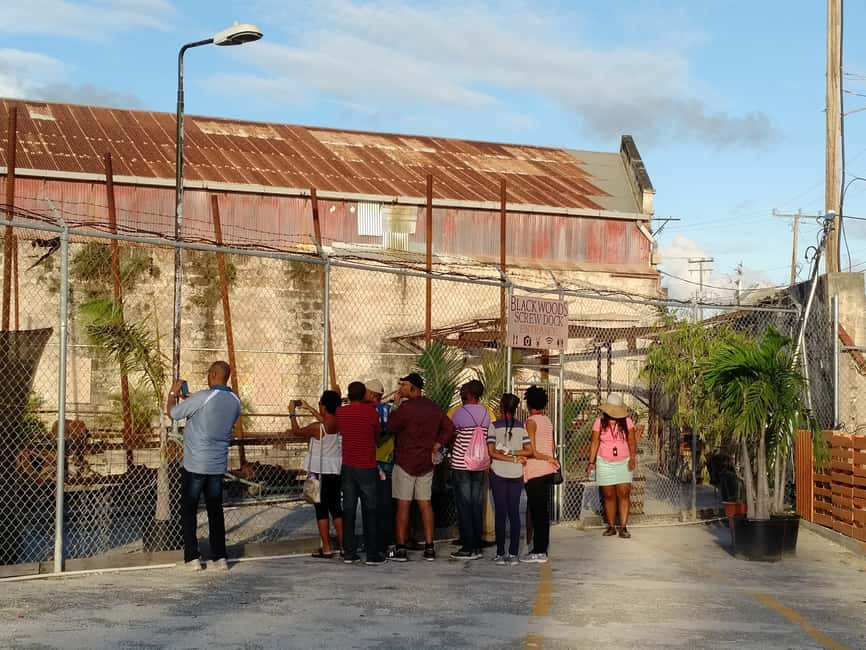
- The Blackwood Screw Dock: See the only remaining screw dock of its kind in the world and learn how it served Bridgetown’s maritime trade.
- A city built around bridges: Follow the story behind Bridgetown’s name while visiting one of the city’s historic bridges.
- Parliament and independence: Hear about one of the Commonwealth’s oldest continuing parliamentary institutions and finish with Barbados’s independence story.
- Rum’s beginnings: Visit the place linked with the birth of rum and hear how this famous drink entered Barbadian life.
- Headsets and a gentle pace: Audio equipment makes the guide easier to follow in noisy streets, while the walk is manageable for many ages.
- A useful welcome pack: Water, snacks, and a small drawstring bag add practical value, though the snack includes nut products.
Start at Independence Square with Bridgetown’s origin story
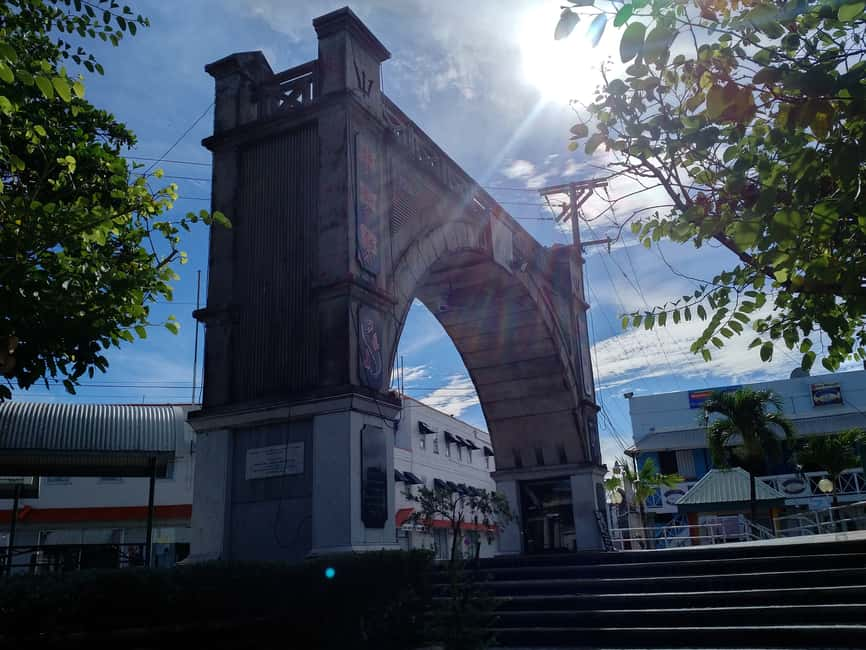
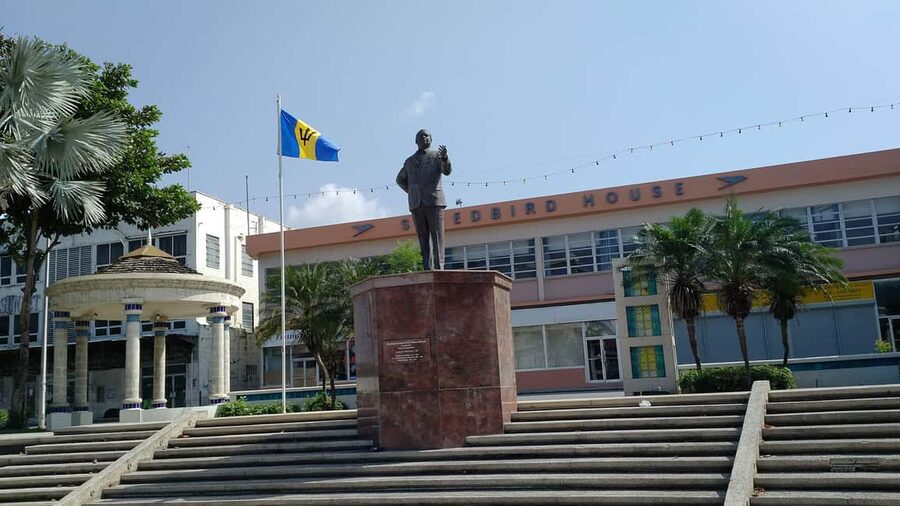
Meet at the Errol Barrow Statue in Independence Square, Bridgetown, St Michael. The listed coordinates are 13.0957448, -59.6134232. This is a sensible starting point because the square lets the guide begin with the city’s physical setting before moving into its layered past.
The tour first paints a picture of what this space once represented. From there, the guide explains how Bridgetown got its name as you pass through the city’s historic arch and learn about the waterways and crossings that shaped its growth.
That opening matters. Instead of treating Bridgetown as a string of unrelated sights, the guide gives you a thread to follow. The city’s name, bridges, trade, government, religion, and independence all connect.
The Errol Barrow reference is also significant for understanding modern Barbados. Barrow was a major figure in the country’s move toward independence, and the tour returns to that political story at the end. You get a beginning and an ending, rather than a collection of disconnected facts.
More History Walking Tours in the world:
- History and Hauntings of Salem Guided Walking Tour
★ 5.0 · 14,564 reviews - Lisbon: History, Stories and Lifestyle Walking Tour
★ 4.8 · 10,902 reviews - Boston: Freedom Trail History Small Group Walking Tour
★ 5.0 · 6,450 reviews
Facing a difficult past at the burial ground
One of the most serious early stops concerns the unceremonious burial ground associated with enslaved people who arrived on Barbados. The tour does not skip over the suffering behind the island’s wealth and development.
This part may feel heavier than the architecture and street stories that follow, but it gives the rest of the walk needed context. Bridgetown grew through commerce, shipping, government, and plantation-era wealth. Those forces also depended on the labor and suffering of enslaved people.
I appreciate that the route places this subject near the start. You are not asked to view the city only as a pretty Caribbean capital. The guide brings attention to the people whose lives were often left out of official stories, then carries that awareness into the rest of the walk.
The tour’s subject matter is broad, but the guide has room to answer questions. Several guides, including Evan, Zachary, Deborah, Christian, Christen, Kristin, and Ewen, have been praised for explaining difficult material clearly and respectfully. Guide assignments can change, so you should not book expecting one particular person, but the repeated praise for calm, friendly delivery is encouraging.
The Blackwood Screw Dock and Bridgetown’s working waterfront
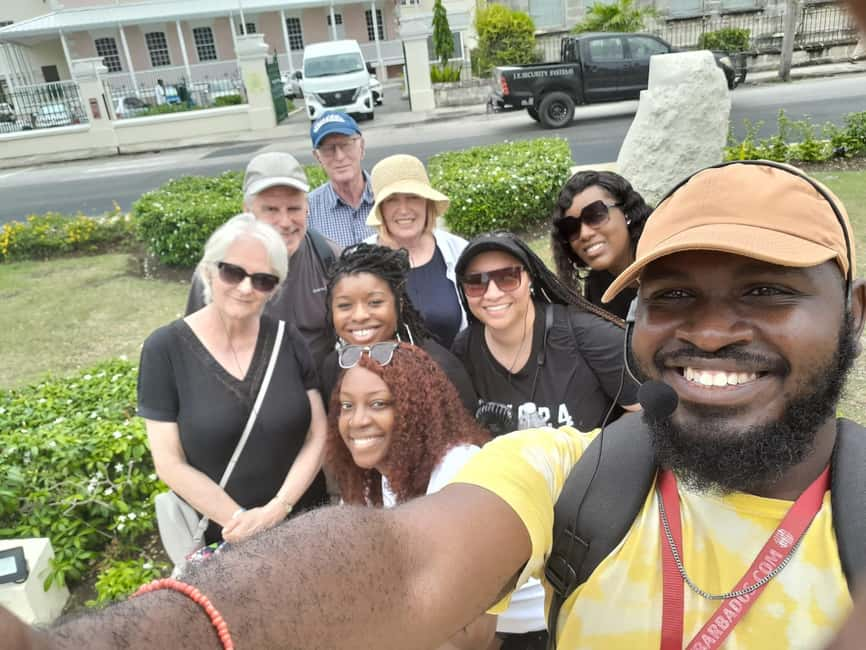
The Blackwood Screw Dock is one of the tour’s most unusual sights. It is described as the only remaining screw dock of its kind in the world, giving this stop a special appeal even if you are not an engineering enthusiast.
A screw dock allowed a ship to be raised out of the water for repairs. That simple function tells you a lot about Bridgetown’s role as a port. Ships needed maintenance, workers needed jobs, merchants needed reliable routes, and the town needed facilities that could support all of it.
This stop also helps balance the tour. Bridgetown is not presented only through political buildings and memorials. You see the machinery of trade and the practical work that kept the port operating.
Take a moment here rather than rushing to the next landmark. The screw dock is the kind of place that can be easy to overlook if you walk through the city on your own. A guide turns an unusual structure into a clear piece of the city’s working story.
Bridges, running water, and the men remembered at the Cenotaph
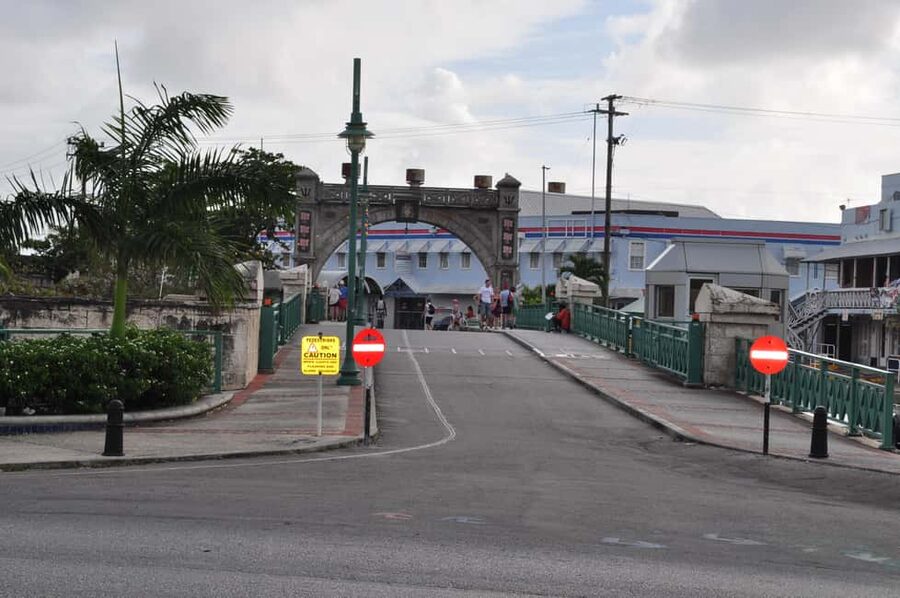
After the screw dock, the walk heads toward one of two bridges in the city. This is where the name Bridgetown becomes more than a piece of trivia. The bridges are part of the city’s identity and help explain why this location became important.
The route also includes the fountain, where the guide discusses the achievement of bringing running water into the city. That may sound less dramatic than a grand monument, but it is exactly the sort of civic detail that makes urban history understandable.
Running water changes daily life. It affects public health, household work, business, and the pace of city growth. The fountain gives the guide a chance to explain how Bridgetown developed through practical improvements, not just famous events.
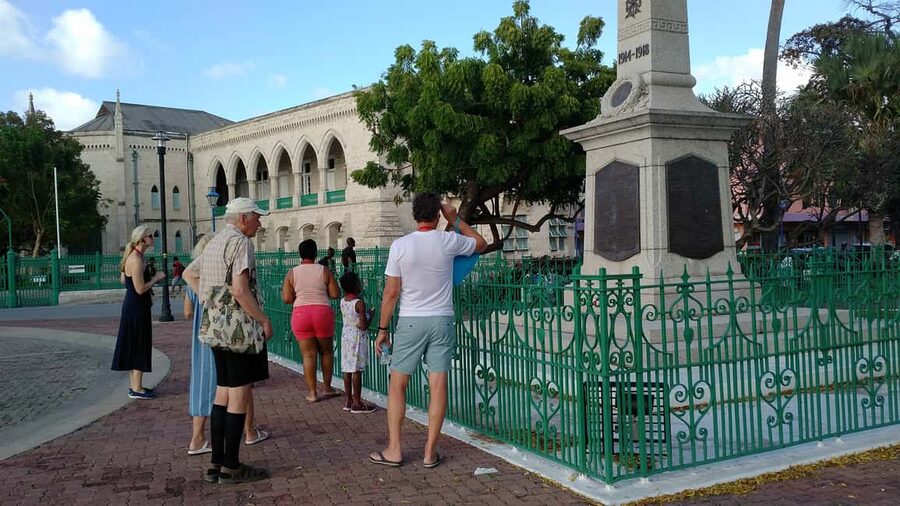
At the Cenotaph, the tone shifts again. Here the tour recognizes the sacrifices of Barbadian men who served in the two world wars. You get a reminder that a small island has long been linked to events far beyond the Caribbean.
The route moves at a relaxed pace, with time for questions and photos. That is useful at memorials, where a quick stop and a date can feel thin. The guide can explain why the monument matters to Barbados and how local lives were tied to global conflicts.
More Guided Walks in the world:
- Magical London: Harry Potter Guided Walking Tour
★ 4.7 · 22,044 reviews - Amsterdam Anne Frank: Small-Group Walking Tour & Local Guide
★ 4.8 · 12,789 reviews - Edinburgh: Harry Potter Magical Guided Walking Tour
★ 4.8 · 11,944 reviews - Edinburgh Castle: Guided Walking Tour with Entry Ticket
★ 4.7 · 11,699 reviews
Parliament Buildings and the story of public power
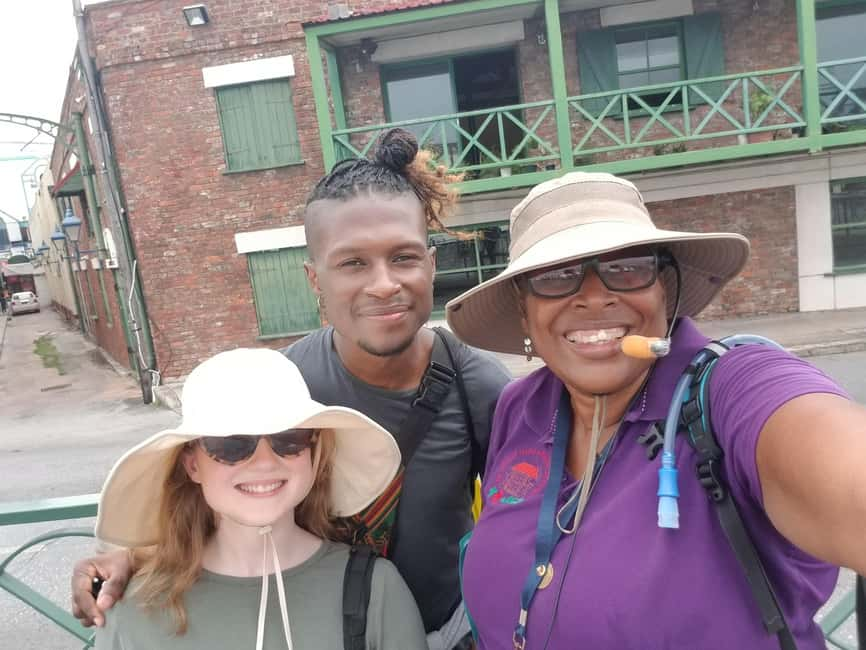
The Parliament Buildings are among the tour’s major visual moments. Their Gothic Revival architecture gives the route a formal center, but the story matters more than the photograph.
You learn about one of the oldest continuing parliamentary institutions in the Commonwealth. The guide places Barbados’s government in a longer British and Caribbean political story, then connects that history to the country’s later independence.
This is one of the better examples of the tour’s value. You can admire the building on your own, but a guide can explain what its presence says about Barbados’s political development. The building is not just an attractive stop. It represents debate, lawmaking, colonial rule, local leadership, and the gradual move toward self-government.
The route does not appear to be a formal interior tour of Parliament. Expect to hear the story from outside rather than count on entering the building. That distinction matters if you are hoping for an indoor visit.
Where rum began, and why the story matters
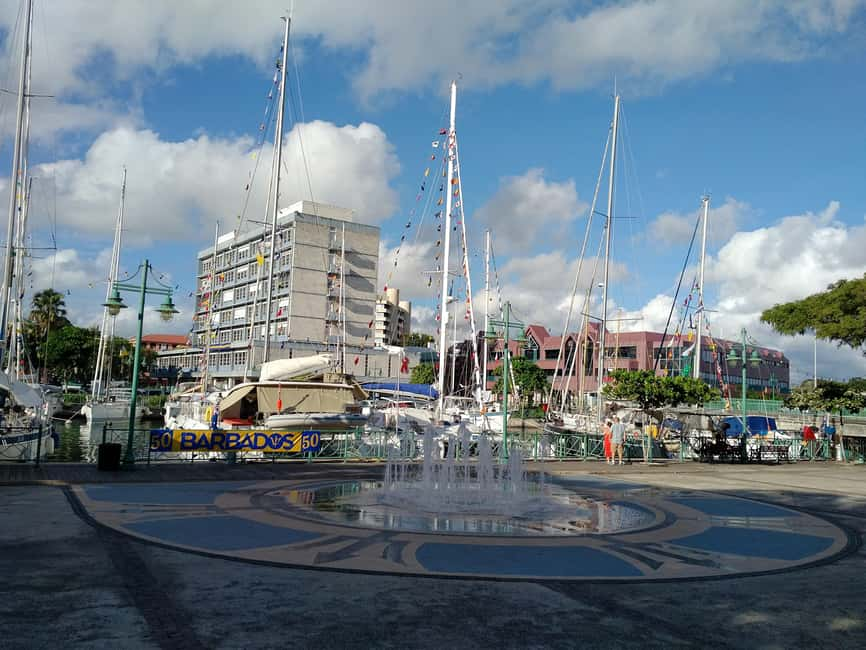
Next comes one of the most appealing subjects for many visitors: the birth of rum. Barbados is closely linked with the early development of rum, and this stop explains how the drink entered the island’s story.
The tour treats rum as more than a tasting opportunity. You hear about its beginnings and its place in Barbados’s commercial and social life. The subject connects agriculture, trade, labor, and the island’s international reputation.
Do not expect this experience to be a rum distillery visit or a tasting tour. The supplied details describe a historical stop and explanation, not a separate sampling session. If you want a full rum production experience, you would need another activity.
Still, this section should please anyone who wants more than a postcard view of Bridgetown. Rum is one of the easiest ways to connect the island’s past with its present, and the guide makes that link on the street where the story unfolds.
Jewish heritage, Swan Street, and the oldest church
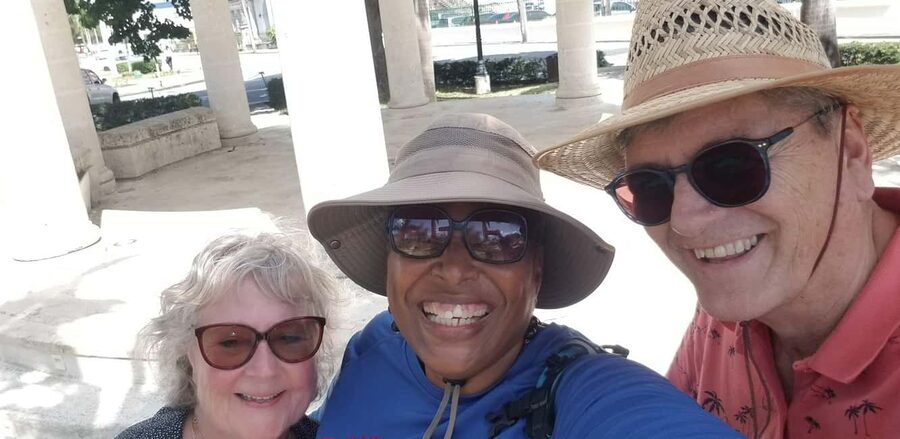
The walk then recognizes Bridgetown’s Jewish ancestors. This is an important inclusion because it broadens the story beyond the most familiar colonial and plantation themes.
Jewish communities played a part in the commercial life of Barbados, and this stop helps show how different groups shaped the city. You get a sense of Bridgetown as a meeting point for people, faiths, businesses, and traditions.
Swan Street brings the tour into the city’s commercial heart. It is described as Bridgetown’s oldest street, and the guide shares its role in local trade. This part may feel more ordinary at first because it is still a working street, but that is part of its value.
You are not looking only at preserved monuments. You are seeing where business and daily movement continue. The guide explains why this street mattered, and the ordinary details become easier to read.
The route then visits the oldest church and the Town Hall. These stops add religious and civic history to the walk. The church speaks to the beliefs and institutions that shaped early Bridgetown, while the Town Hall brings attention back to local government and public life.
Expect a fairly quick look rather than a long indoor visit. The tour covers many subjects in two hours, so the goal is to understand each place’s role, not spend half an hour inside every building.
The Mutual Building and another important commercial street
The Mutual Building receives special attention on the route. Its architecture and history give the guide another chance to discuss Bridgetown’s commercial growth and the institutions that helped finance it.
The building is described as waiting patiently to share its stories, which hints at a stop built around close observation and explanation. Look up as you walk. Historic city buildings often reveal their purpose through façades, windows, entrances, and scale, details that are easy to miss without guidance.
After the Mutual Building, the tour turns to another street of commercial importance. This keeps the focus on how the city worked, not only on its monuments. Bridgetown’s identity formed through trade, shops, shipping, public services, and the movement of people along its streets.
I like this middle section because it should appeal to visitors who want a sense of place. You are not being moved from landmark to landmark by vehicle. You are walking through the spaces that connected them.
The wharf, the Spirit Bond, and the return along the boardwalk
Near the end, the route reaches the wharf and the Spirit Bond. These stops return the story to commerce, shipping, and the goods that passed through Bridgetown.
The name Spirit Bond points to the storage and movement of spirits, tying neatly back to the earlier rum story. This creates a useful link between the city’s waterfront and its famous drink. You can see how rum was not an isolated product, but part of a larger network of trade.
The final stroll along the boardwalk takes you back toward the starting area. Boardwalk walking offers a change of pace after the streets and buildings, and it gives the tour a clear physical finish.
The last subject is independence. Barbados became independent 50 years ago, and the guide brings the city’s story forward to that point. Starting with Bridgetown’s name and ending with independence gives the two hours a strong shape.
Some outings end with a rushed return to the meeting point. Here, the walk itself helps close the story. You finish not only near where you began, but also with a better sense of how the city changed over time.
How the guide, headsets, and pace affect the experience
The strongest feature is the guide-led format. The tour depends on explanation, and guide quality matters. Evan has been praised for his clear delivery, patience, local tips, and ability to answer questions. Zachary has also been noted for his friendly manner, punctuality, and habit of checking whether everyone wanted to ask something.
Deborah has been praised for keeping people engaged and finding shade during a hot walk. Christian and Christen have received similar praise for detailed explanations and professional presentation. Again, names and assignments may vary, but the pattern suggests a tour built around personal attention.
The headsets are a real advantage. Bridgetown has traffic, voices, and street noise, and you do not want to miss the explanation of a major landmark because you are standing several steps away. The audio equipment lets you look around while still following the story.
The pace is not meant to be strenuous. One guide-led outing lasted about 90 minutes of walking, with conversation stretching the overall time to roughly two hours. Another account specifically noted that people in their 80s managed the route with ease.
That does not mean the walk is effortless. Barbados can be hot, and shade varies from stop to stop. Wear comfortable shoes, carry any personal sun protection you need, and be ready to pause when the guide allows it.
The snack pack is a thoughtful extra. It may include water, peanuts, mints, and other light snacks, sometimes in a drawstring bag you can keep. Because nut products are included, anyone with a nut allergy should take that detail seriously and ask before accepting the food.
Is $25 a fair price for two hours?
At $25 per person, this is a strong-value introduction to Bridgetown. You are paying for a live English-speaking guide, audio equipment, roughly two hours of walking, and a light snack with water.
The value is greatest if you are new to Barbados or have only a short time in Bridgetown. A self-guided walk costs less, but you would need to research the sites, connect the history, and find the right route yourself. You might also miss the screw dock, burial ground, commercial streets, or the links between Parliament, rum, and independence.
The price is less compelling if you want a long, specialized visit to one subject. This is not a rum tasting, a full architectural tour, or an indoor Parliament visit. It is a broad city introduction.
Transportation to the meeting point is not included. Plan your own way to Independence Square, and allow enough time to find the Errol Barrow Statue. The activity offers free cancellation up to 24 hours before the start and a reserve-now, pay-later option, which can help if your plans are still changing.
Who should book this walk?
I would choose this tour if you want historical context before exploring Bridgetown on your own. It suits first-time visitors, cruise passengers with time in the city, curious walkers, and anyone who wants a manageable introduction instead of a full-day outing.
It is also a good fit for mixed-age groups. The relaxed pace, audio equipment, water, and frequent opportunities for questions make the route easier to follow. Still, outdoor heat may be tiring, so an early or cooler start time would likely be more comfortable if available.
You may want something else if you dislike guided sightseeing, need a fully indoor activity, or want extensive time inside each church and public building. Bad weather can affect the tour, with rescheduling offered where possible.
Should you book the Bridgetown History Walking Tour?
Book it if you want Bridgetown to make sense. For $25, you get a well-shaped city walk that covers the difficult past, the port, Parliament, Jewish heritage, rum, commerce, and independence without demanding a full day.
I especially like the screw dock, the waterfront finish, and the way the guide connects small details such as running water and Swan Street to larger changes in city life. Add the headsets and welcome pack, and the experience gives you practical comfort as well as useful context.
Skip it only if you want a narrowly focused attraction or a private indoor tour. For most visitors who want to understand Bridgetown before wandering farther, this is a sensible first step.
FAQ
Where does the Bridgetown walking tour meet?
It meets at the Errol Barrow Statue in Independence Square, Bridgetown, St Michael. The listed coordinates are 13.0957448, -59.6134232.
How long does the walking tour last?
The scheduled duration is two hours. The walking portion may sometimes take about 90 minutes, with questions and conversation bringing the full experience close to two hours.
What language is the tour conducted in?
The live tour guide and included audio guide are in English.
Is water or food included?
Yes. A light snack and water are included. The snack may contain nut products, so take care if you have a nut allergy.
What should I bring?
Bring comfortable shoes. The tour takes place outdoors and can be affected by hot weather.
What happens if it rains?
Inclement weather may affect the tour. Rescheduling is offered where possible. You can cancel up to 24 hours in advance for a full refund.
Just added around the world
- Walking Tour of Boston’s Freedom Trail★ 4.5 · 77 reviews
- Downtown Freedom Trail Walking Tour – History & Architecture★ 4.5 · 194 reviews
- Boston Seafood Lovers Food and History Walking Tour★ 5.0 · 208 reviews
- Boston “Death and Dying” Walking Ghost Tour★ 4.5 · 223 reviews
- Boston Food of the North End Private Walking Tour★ 5.0 · 174 reviews
- Boston Movie Mile Walking Tour★ 4.5 · 119 reviews
- 1 If By Land Walking Tours★ 5.0 · 95 reviews
- Boston History and Freedom Trail Private Walking Tour★ 5.0 · 117 reviews
History Walking Tours, compared.
History and Hauntings of Salem Guided Walking Tour
Read our review →
Freedom Trail History Small Group Walking Tour
Read our review →
Historic Charleston Guided Sightseeing Walking Tour
Read our review →
Tapas Walking Tour with Food, Wine, and History
Read our review →
Savannah History and Haunts Candlelit Ghost Walking Tour
Read our review →