
Review · LISBON WALKING TOURS
Age of Discoveries Walking Tour in Belém
Belém tells Portugal’s biggest stories on foot. This 2.5-hour walk links grand monuments, riverside views, imperial history, and a stop at the bakery that created the famous pastel de Belém. I like the tiny upfront price, which makes this one of Lisbon’s best-value introductions to the district. I also like the clear route from Afonso de Albuquerque Square to Belém Tower, so you finish beside one of Lisbon’s essential sights.
The trade-off is pace. The walk covers a lot of ground, and the guide’s style can shape the experience. Some guides, including Fernanda, Katerina, João, Claudia, and Elena, have been praised for warmth and strong storytelling, while one less successful outing felt rushed and quiet. You should also plan to pay for your own pastries and tip the guide.
Key points before you book
- The walk ends at Belém Tower, making it easy to continue sightseeing there afterward.
- The pastel de Belém stop is a highlight, with the chance to visit the bakery linked to the original recipe.
- You see the major outdoor sights, including Jerónimos Monastery, the Monument to the Discoveries, and the Compass Rose.
- The price is a reservation fee, not a full tour charge, so a tip is expected if you enjoy the walk.
- The English tour lasts about two and a half hours and accepts a maximum of 25 people.
- The interiors are limited, with no entry into Belém Tower, the Monument to the Discoveries, or the monastery complex beyond the church.
Why Belém makes a good walking tour
Belém is spread along the Tagus River, west of central Lisbon. Its monuments are too far apart for a quick old-town stroll, yet close enough to connect on foot if you have a guide and a little time.
This is the part of Lisbon where Portugal’s seafaring ambition becomes visible in stone and pavement. Churches, gardens, monuments, and river views all point back to the voyages that carried Portuguese ships around Africa, into Asia, and across the Atlantic.
I like this tour because it gives you a useful map of the district before you decide where to spend more time. You see the major sights from outside, hear the basic story behind them, and finish at Belém Tower. That is a smart arrangement if you want a guided orientation without committing to an expensive private excursion.
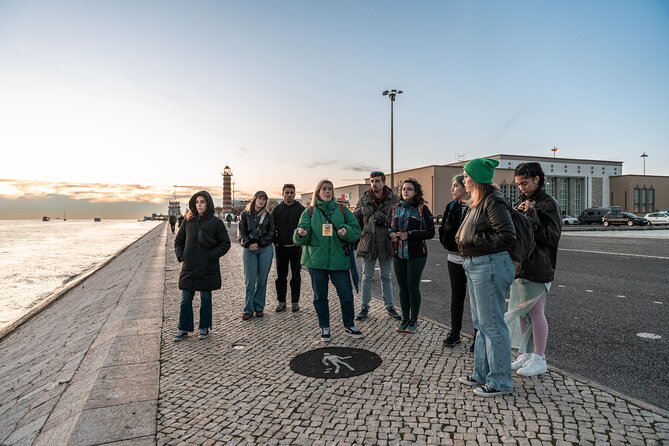
The group can include up to 25 people. That is still manageable, but you should stay close to the guide, especially near busy roads, open plazas, and the riverside. One practical concern is sound. A guide may be excellent yet hard to hear when groups gather nearby, so standing near the front is a good idea.
A few more walks around Lisbon worth a look
- Lisbon: History, Stories and Lifestyle Walking Tour
★ 4.8 · 10,902 reviews - Best of Lisbon Small-Group Guided Walking Tour
★ 5.0 · 4,869 reviews - Lisbon: Food and Wine Small Group Walking Tour
★ 4.9 · 4,082 reviews
Starting with Albuquerque and Portugal’s overseas empire
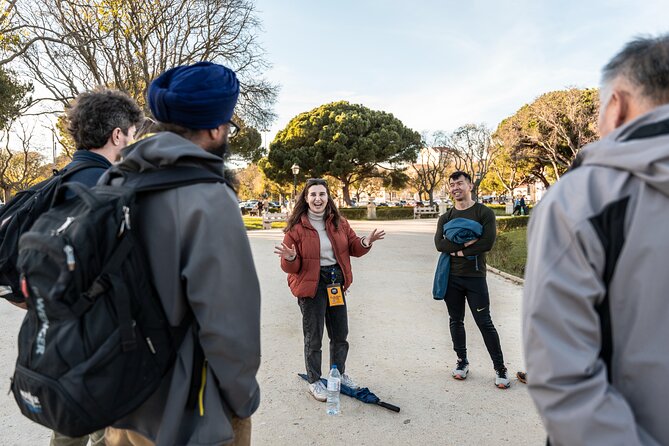
The meeting point is the Garden of Afonso de Albuquerque in Praça Afonso de Albuquerque. This is a pleasant place to begin, with open space, trees, and a monument to Afonso de Albuquerque, the Portuguese viceroy associated with the expansion of Portugal’s eastern empire.
The guide uses the square to introduce the political and commercial side of the Age of Discovery. That context matters. Portugal’s voyages were not just daring journeys by sailors. They were tied to trade, military power, royal ambition, and control of ports far from Europe.
You should expect about 15 minutes here. The stop is outdoors and free, so there is no ticket issue at the start. It is mainly a storytelling point, not a major monument interior.
From here, the route moves toward the Thai Pavilion. This small structure represents Portugal’s connections with Asia and the long trade routes linking India, Thailand, Sri Lanka, and Europe. The stop lasts about 10 minutes.
The story about tea and Lady Catarina of Bragança adds a human detail to an otherwise large subject. It helps show how goods and customs moved between countries. The pavilion itself is a short stop, so do not expect a long architectural visit. Its value comes from the explanation.
Pastéis de Belém, the sweetest stop
The pastry stop is likely to be the most popular part of the walk. Pastéis de Belém is linked to the original custard tart recipe associated with the monks of Jerónimos Monastery.
You get time to stop at the bakery and buy the famous pastries. The tour price does not cover food, so bring money or a payment card for your order. One guide, Katerina, was praised for helping the group avoid some of the waiting lines, though you should not treat that as guaranteed. Conditions can change, and the bakery may be busy.
This is not simply a snack break. The pastries connect directly to the neighborhood’s religious and economic past. After the monasteries closed, recipes and baking traditions helped carry part of that story into modern Lisbon.
I would use this pause to reset your pace. Two and a half hours on foot can feel long, especially in warm weather. Have water with you, and do not spend so much time inside the bakery that you lose the group.
Chão Salgado and the difficult side of Lisbon’s past

The next stop, around Chão Salgado Alley and its memorial, shifts the subject away from exploration. The guide discusses the Marquis of Pombal, a powerful figure in 18th-century Portugal.
Pombal is connected with Lisbon’s modernization and rebuilding, but also with harsh political action, including the Távoras Massacre. This portion can give the tour more balance. Portugal’s imperial story is impressive, but it also involved authority, punishment, and unequal power.
The stop lasts around 10 minutes. Do not expect a grand attraction here. The interest comes from the historical contrast and from the guide’s ability to explain how one ruler could be linked both to urban progress and ruthless control.
This is one reason guide quality matters. Claudia, for example, was praised for bringing a strong point of view and challenging familiar versions of the past. If you prefer history with some debate rather than a list of dates, this part may be especially useful.
Same streets, a different way to see them:
- Best of Lisbon Walking Tour: Rossio, Chiado & Alfama
★ 4.9 · 2,700 reviews - Lisbon Food Tour with 10+ Tastings of Local Delicacies & Wines
★ 5.0 · 1,339 reviews - Sintra & Cascais Day Tour with Pena Palace Entry and Gardens Walk
★ 5.0 · 962 reviews - Lisbon Roots – Small group Food & Culture Walking Tour w/tastings
★ 5.0 · 910 reviews
Jerónimos Monastery and the church visit
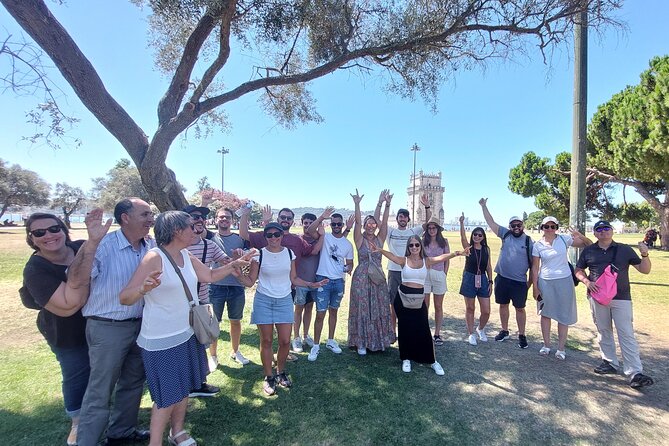
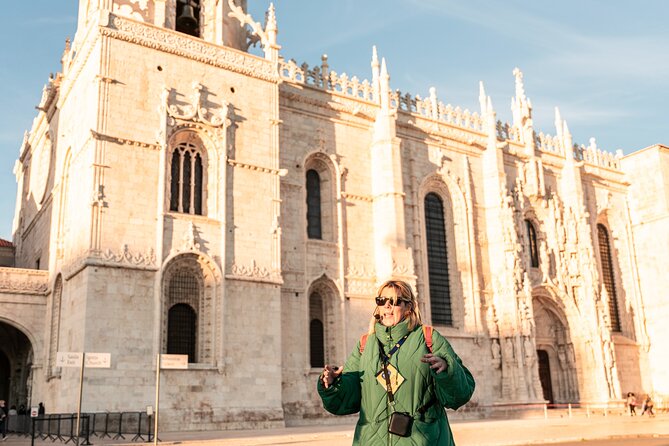
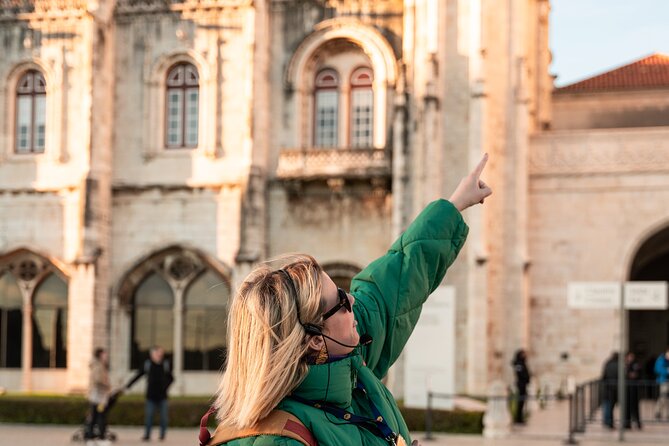
Jerónimos Monastery is the architectural centerpiece of the route. Its ornate Manueline style combines Christian images with ropes, plants, sea forms, and other details tied to Portugal’s maritime age.
The building was connected with the voyages of Portuguese explorers and with Prince Henry the Navigator. It is best understood as a public statement of faith, wealth, and national ambition. The stonework tells you that exploration was not a side project. It was central to how Portugal wanted to present itself.
The tour allows about 20 minutes here. You do not tour the full monastery complex, although the church is included. The cloisters and other areas require a separate visit, and many people choose to return afterward.
That limitation is important. If Jerónimos Monastery is your main reason for visiting Belém, this walking tour will only be an introduction. Check the opening arrangements separately and allow extra time after the tour if you want the full interior experience.
The church can also be busy. Stay near the guide and listen for the meeting instructions before looking around on your own.
Praça do Império and the 1940 exhibition
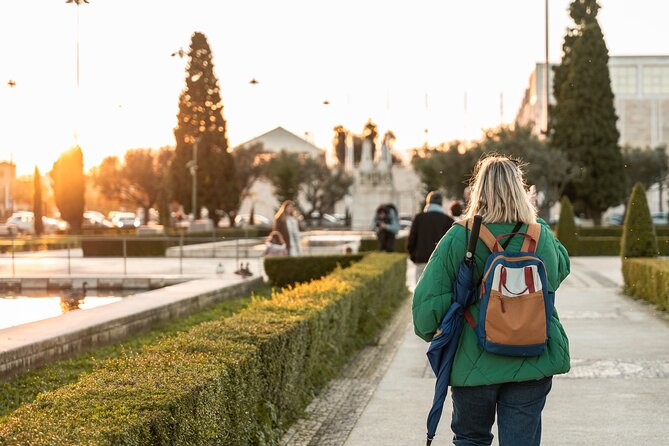
After the monastery, the walk reaches the broad gardens of Praça do Império. The plaza was used for Portugal’s 1940 New State World exhibition, which celebrated the country’s long national story and its return to independence after Spanish rule.
The setting gives the guide room to discuss the way governments use monuments, gardens, and public events to shape national identity. That makes this more than a photo stop. You are looking at a place designed to present a particular image of Portugal.
The stop lasts about 15 minutes. The fountain and formal gardens offer a welcome open-air pause, though the broad space can feel exposed in strong sun. A hat and water are sensible additions, especially during warmer months.
The Compass Rose and map of Portuguese voyages
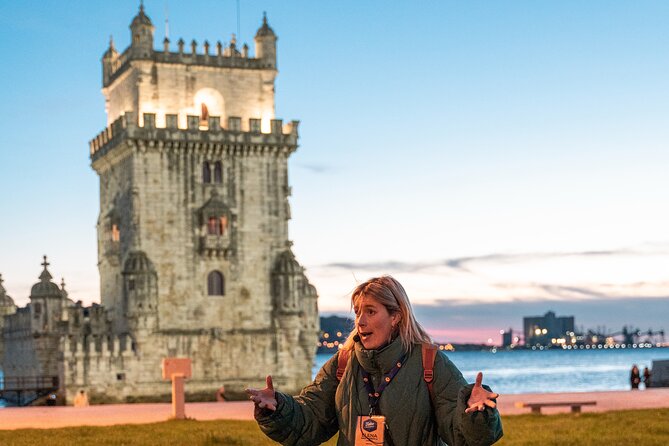
The Rosa dos Ventos, or Compass Rose, is one of the most visual parts of the tour. The large pavement mosaic includes a world map and marks routes linked to Portuguese exploration.
At roughly 50 meters across, it gives you a physical sense of scale. Instead of hearing a list of destinations, you can look down and trace the reach of the voyages across oceans and continents.
The guide usually uses this point to explain navigation and the movement of ships beyond Europe. The stop lasts about 10 minutes, which is enough for an overview and photographs. If you want to study every route on the map, plan to return later.
I like this stop because it makes an abstract subject easy to grasp. It also gives you a clean view of how Portugal’s national story is presented in public art.
The Monument to the Discoveries
The Padrão dos Descobrimentos rises beside the river in the shape of a ship’s prow. Statues of major Portuguese figures line the monument, with explorers and other personalities facing toward the water.
The design presents the Age of Discovery as bold, united, and forward-looking. A good guide will also help you consider what is left out of that heroic image. The monument is powerful, but it reflects a national viewpoint rather than a complete account of the effects of empire.
You spend about 15 minutes here. Entry is not included, and the tour does not go inside. If you want the elevated view from the monument, you will need to visit separately after the walk.
This is one of the best photo stops on the route. The river, monument, and open sky give the tour a strong visual center, and the guide’s explanation helps turn the photograph into something more meaningful.
The Tagus riverfront and the road to Belém Tower
The route then follows the Tagus waterfront. These waters carried the caravels that Portugal sent toward distant ports, and the river remains the key to understanding why Belém mattered.
You may see the 25 de Abril Bridge and the Christ the King statue across the water. The guide also discusses Gago Coutinho, an aviation pioneer connected with an early transatlantic flight. That detail broadens the story beyond wooden ships and medieval navigation.
This section takes about 10 minutes. It is less about a single monument and more about connecting the district to the river. Keep an eye on the group, since the open waterfront encourages people to stop for photographs.
The walk continues through the gardens around Belém Tower. The lawns frame the tower and offer a calmer approach to the final major sight. This 15-minute garden stop gives you room to appreciate the tower from the outside before the guide explains its role.
Belém Tower, the finish line
Belém Tower is where the tour ends. Built at the mouth of the Tagus, the tower helped guard Lisbon’s river entrance and became one of the best-known symbols of Portugal’s maritime period.
Its Manueline details, battlements, and position beside the water make it a rewarding final stop. You get time to hear the main story and take photographs, but you do not go inside as part of the tour.
That is both a strength and a limitation. Ending here is convenient because you can continue with your own visit instead of returning to the starting point. At the same time, anyone wanting to climb the tower must arrange a separate entry.
The official route allows about 20 minutes at the tower. In practice, you may want longer, especially if the light is good or the queue for entry is manageable. The tour itself ends next to the tower, so confirm the final meeting point before wandering off.
What the small price really means
At about $3.62 per person, this is not a conventional paid sightseeing tour. The amount functions as a reservation fee, while the guide works on the expectation of a tip.
That makes the value unusually strong if you want orientation, stories, and company for very little money. You still need to budget for a guide tip, pastries, and any separate entry tickets you choose to buy.
The low price also means you should set realistic expectations. You are not paying for private transport, reserved admission to every monument, or a fully customized schedule. The tour is a shared walk with an English-speaking guide, not a personal driver or private historian.
Guides such as Fernanda and João have been praised for explaining Portugal’s past with warmth and enthusiasm. Elena has also been singled out for her friendly delivery, while Katerina earned praise for making the pastry stop work well. The experience can be excellent when the guide speaks clearly and keeps the group engaged.
There have also been weaker outings. One guide was described as quiet, rushed, and less engaging, while another person wished the guide had spoken louder around crowds. That is a fair warning for any low-cost walking tour. Group size, weather, and the individual guide all affect the result.
Timing, transport, and who should book
The tour is offered in English, lasts about two hours and 30 minutes, and starts at Afonso de Albuquerque Garden. It finishes at Belém Tower, so you do not need to return to the starting point.
Private transportation is not included. The meeting area is near public transportation, and you should plan your route to Belém before the start. One useful tip from the tour experience is to avoid relying on parking, since the district can be easier to reach by public transport than by car.
The walk suits first-time Lisbon visitors who want a clear introduction to Belém. It also works well for budget-minded people, solo visitors who prefer a group, and anyone who wants historical context before touring the interiors alone.
You may want something else if your family dislikes long walks, if you want extensive museum time, or if you prefer to move through Belém in under an hour. One family found the two-hour pace slower than they wanted. That is not a flaw for every person, but it is worth considering.
The tour requires decent weather. If poor conditions cancel it, you are offered another date or a full refund. You can cancel for a full refund up to 24 hours before the start time, but cancellations or changes inside that window are not refunded.
Should you book the Belém walking tour?
I would book it if you want the main Belém sights explained in one steady route and you are comfortable with a tip-based format. The tiny booking fee gives you a useful introduction to the monastery, monuments, gardens, riverfront, and tower without paying for entry to places you may not want to visit.
Book with the right expectations: you will walk for about two and a half hours, buy your own pastry, and visit most major sights from outside. Stand near the guide, wear comfortable shoes, and save extra time afterward for Jerónimos Monastery, the Monument to the Discoveries, or Belém Tower.
For the best experience, choose the tour when the weather is pleasant and keep your afternoon flexible. If you want an affordable historical overview with a famous tart along the way, this is a sensible pick.
FAQ
How much does the Age of Discoveries Walking Tour cost?
The reservation fee is about $3.62 per person. The format is based on tipping the guide, so the tour price does not represent the full amount you may choose to spend.
How long does the tour last?
The walk lasts approximately two hours and 30 minutes.
What language is the tour offered in?
The tour is offered in English.
Where does the tour begin?
It begins at the Garden of Afonso de Albuquerque, Praça Afonso de Albuquerque, 1300-004 Lisbon, Portugal.
Where does the tour end?
It ends next to Belém Tower on Avenida Brasília.
Is transportation included?
No. Private transportation is not included, although the meeting point is near public transportation.
Does the tour enter Belém Tower?
No. The tour visits Belém Tower from the outside. You can choose to visit the interior separately after the walk.
Does the tour enter Jerónimos Monastery?
The tour includes the church but does not tour the full monastery complex. You can visit the other areas separately.
Can I cancel for a refund?
Yes. You can cancel at least 24 hours before the start time for a full refund. Cancellations or changes made less than 24 hours before the start time are not refunded.
Just added around Lisbon
- Small Group Walking Tour of Belém★ 4.9 · 80 reviews
- Lisbon Tram No. 28 Ride & Walking Tour★ 4.1 · 766 reviews
- Lisbon: Walking Tour in the Center (Max 12 Participants)★ 5.0 · 741 reviews
- Lisbon Through the Eyes of a Local – Food and Walking Tour★ 4.9 · 141 reviews
- Lisbon: Private Boat Trip, Guided Walking Tour, Bike & Tram★ 4.8 · 116 reviews
- Lisbon: Kickstart Street Art Walking Tour★ 4.9 · 717 reviews
- Lisbon: Food & Wine Walking Tour Through Baixa★ 4.9 · 287 reviews
- Lisbon: Helicopter Ride, Boat Trip, & Old Town Walking Tour★ 4.7 · 480 reviews
Lisbon Walking Tours, compared.
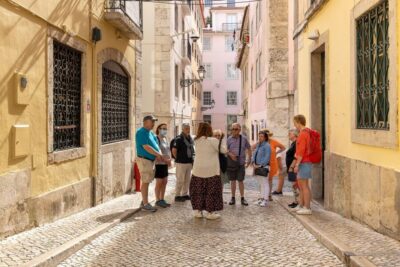

Best of Lisbon Small-Group Guided Walking Tour
Read our review →

Best of Lisbon Walking Tour: Rossio, Chiado & Alfama
Read our review →
Lisbon Food Tour with 10+ Tastings of Local Delicacies & Wines
Read our review →
Sintra & Cascais Day Tour with Pena Palace Entry and Gardens Walk
Read our review →
Lisbon Roots – Small group Food & Culture Walking Tour w/tastings
Read our review →
Lisbon Private Food Tour – Taste 10+ Local Dishes & Wines
Read our review →Browse the lists this tour appears in