
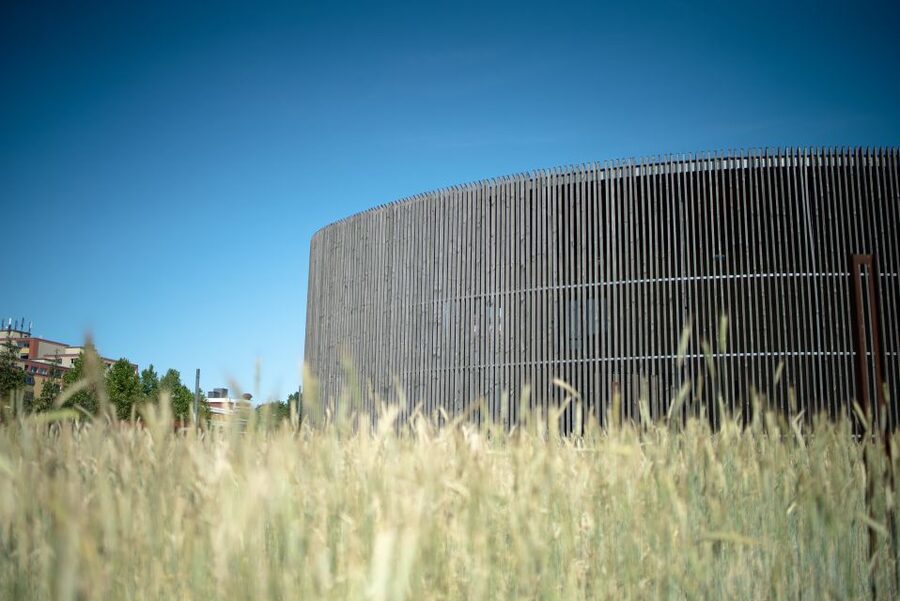
Review · BERLIN WALKING TOURS
Cold War, Berlin Wall, Spies and the East Side Gallery
Concrete still tells Berlin’s story. This three-hour walk and public transport tour connects the Palace of Tears, Alexanderplatz, Karl-Marx-Allee, the former death strip, and the East Side Gallery. I like the way it links big political events with ordinary lives, and I like the guides’ use of personal stories, photographs, and small details that are easy to miss alone.
The $18 price is excellent for a live English or German guide, especially if you want a clear introduction to divided Berlin. My main caution is pace: you cover several districts in three hours, and you must also buy an AB public transport day pass. This is a brisk history tour, not a slow museum visit.
Key points to know before you go
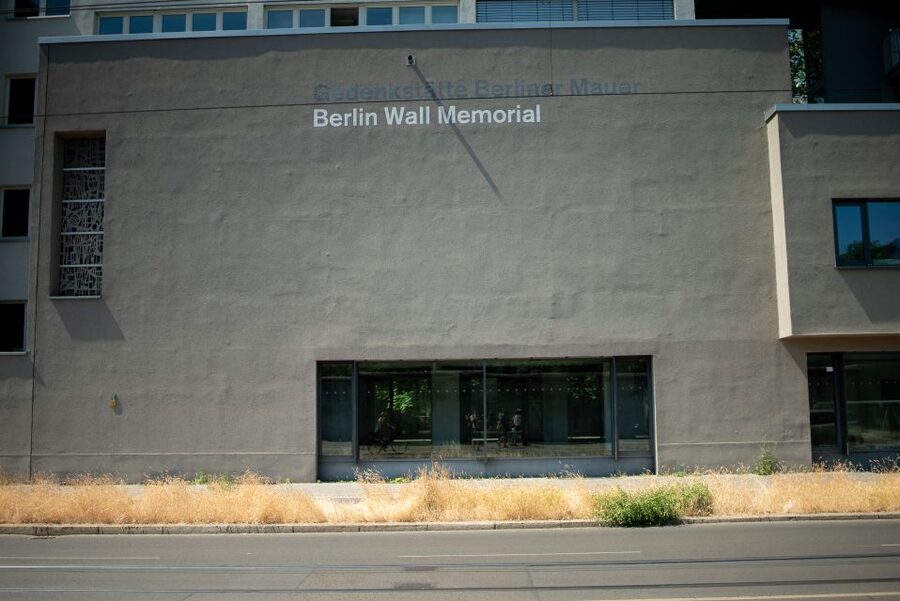
- Begin at the Palace of Tears: The former border crossing beside Friedrichstrasse station introduces the human cost of a divided city.
- See socialist Berlin in scale: Karl-Marx-Allee shows how architecture served both housing needs and political propaganda.
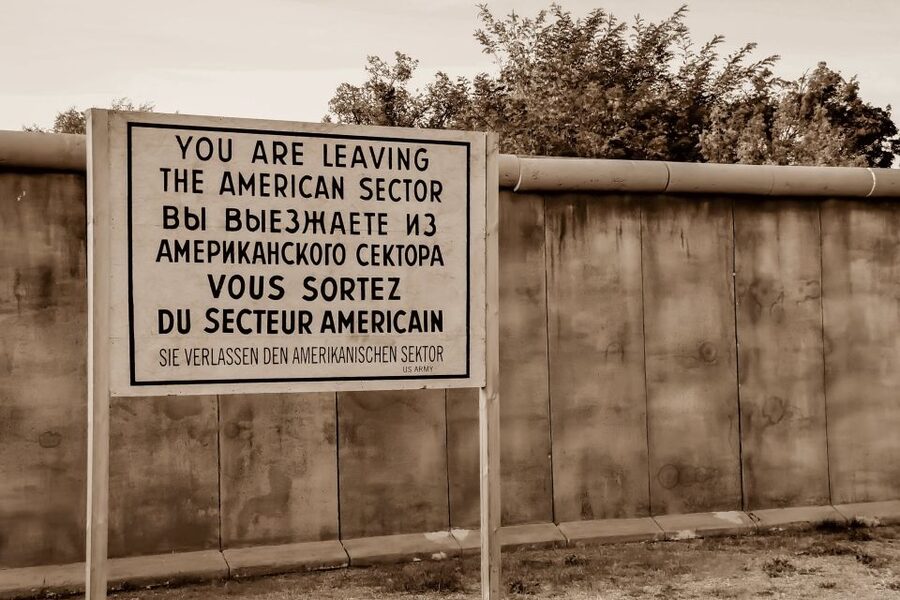
- Follow the Wall beyond a single monument: The route explains escape attempts, surveillance, death strips, and the 1953 workers’ uprising.
- Use Berlin’s trains as part of the tour: Short rides connect the central sites, so comfortable shoes and a valid AB day pass matter.
- Finish at the East Side Gallery: The surviving Wall becomes a long outdoor art display, changing the mood from fear to public expression.
- Expect strong storytelling: Guides including Paul, Xavier, Tina, Klaus, Maria, Jim, Nikolai, and Eran have been praised for clear explanations, humor, personal stories, and careful attention to group members.
Why this Cold War tour works
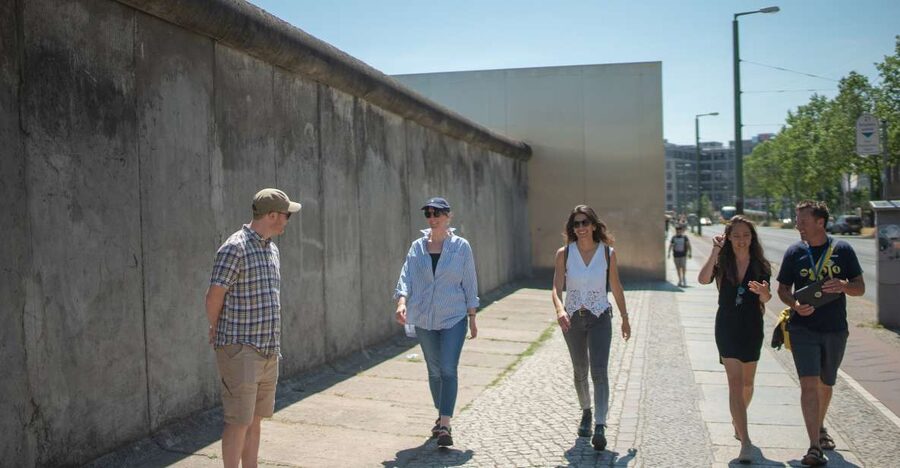
Berlin’s Cold War story can feel scattered. One memorial sits in Mitte, another piece of Wall appears beside a modern apartment block, and a grand socialist boulevard looks like a normal city street until someone explains what happened there. This tour gives those places a common thread.
You move from border control to political power, then toward the Wall and its later life as public art. That order helps you understand more than the dates. You see how the German Democratic Republic tried to control movement, shape public space, and present an image of a successful socialist society.
I especially like the human scale of the storytelling. The focus is not only on presidents, generals, and treaties. You hear about families separated by the Wall, informants, escape attempts, and people who risked prison or death to leave East Berlin. Guides have also used personal memories and old photographs to show what daily life felt like behind the Iron Curtain.
That approach suits both beginners and history fans. If your Cold War knowledge is limited, the guide builds the story in plain language. If you already know the main events, the smaller stories and street-level details can give familiar places new meaning.
More Museum Visits in Berlin:
- Berlin: Berlin Wall & East Side Gallery Walking Tour
★ 4.9 · 264 reviews - Acropolis monuments & Parthenon Walking Tour with Optional Acropolis Museum
★ 5.0 · 2,678 reviews - Frida Kahlo VIP [Museum Tickets Included] Walk, Markets & Churros
★ 5.0 · 982 reviews
Starting beside the Palace of Tears
The usual meeting point is outside Friedrichstrasse station, on the square beside the Tränenpalast, or Palace of Tears. Look for the guide with a yellow name badge and yellow umbrella. The location is easy to connect with Berlin’s public transport network, but give yourself time to find the correct side of the station.
The Palace of Tears was a border crossing for people moving between East and West Berlin. Its name comes from the farewells that took place there, since many families could meet only briefly before one person returned to East Berlin or left the country.
You spend about 20 minutes here. That is enough for an introduction and a clear explanation of why an ordinary-looking transport building carried so much emotional weight. The stop works well because the tour starts with people, not just concrete.
It is worth arriving with your first questions ready. Guides such as Xavier and Nikolai have been praised for encouraging questions and explaining difficult subjects without making the tour feel like a lecture. The best guides also help you place later stops in context, so listen closely here.
Alexanderplatz and the public face of East Berlin
A short train ride, listed at about five minutes, takes you toward Alexanderplatz. The square was a major public center in East Berlin and remains one of the clearest places to see the former GDR’s civic style mixed with post reunification Berlin.
You spend about 20 minutes walking and listening. Expect discussion of the surrounding architecture, public life, and the way the square functioned under communist rule. The contrast is useful: Alexanderplatz is open and busy today, but its design once carried a strong political message.
This stop also helps explain how propaganda worked without needing a poster on every wall. Monumental buildings, broad spaces, and carefully planned public areas could suggest order, strength, and collective purpose. Your guide may point out details you would likely pass without noticing.
Alexanderplatz is not a preserved Cold War set. Much has changed, and modern shops and transport links share the space with GDR-era structures. That is part of its value. You are seeing a city where old political messages survive beside new commercial life.
Karl-Marx-Allee and the 1953 uprising
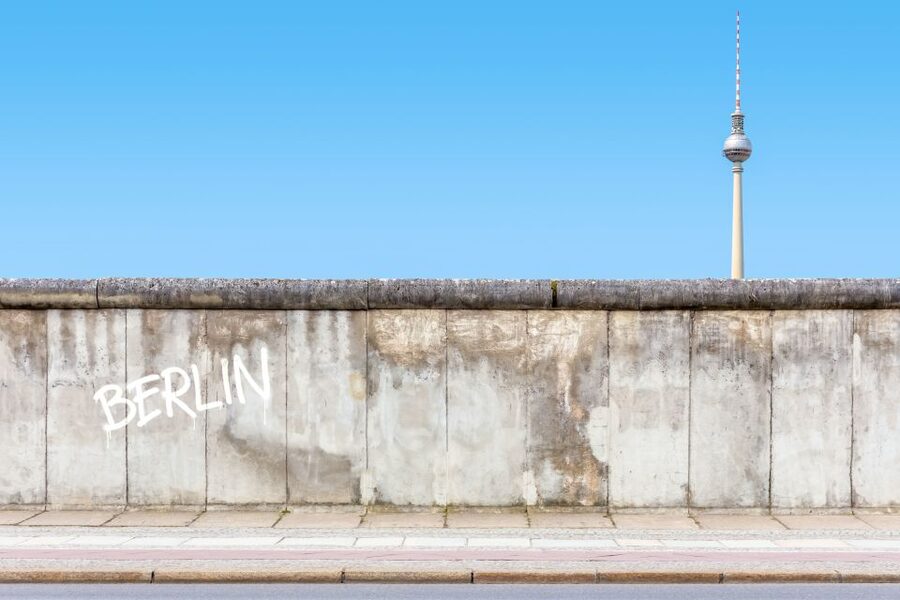
From Alexanderplatz, the tour continues along Karl-Marx-Allee. The boulevard is one of the most striking parts of the route. Its huge scale and monumental apartment blocks were designed to present East Berlin as a model socialist city.
Allow around 20 minutes here. The guide explains how the architecture projected state power while also providing substantial housing. You learn to read the broad avenue, grand facades, and repeated design elements as political theater as well as urban planning.
The boulevard is especially useful for understanding the difference between an official image and everyday reality. The GDR wanted people to see prosperity, discipline, and a shared future. Yet the same street became the starting point for the workers’ uprising of June 1953.
Construction workers protested against increased work demands, and the unrest spread. The uprising shook the communist government and was put down with Soviet force. A street built to display socialist confidence therefore became linked to one of the regime’s earliest major crises.
This is one of the tour’s strongest historical connections. You are not simply admiring architecture. You are standing in a place where workers challenged the system the boulevard was built to celebrate.
Same streets, a different way to see them:
- Discover Berlin Half-Day Walking Tour
★ 5.0 · 9,624 reviews - Berlin City walk Government District and Places of Democracy
★ 4.7 · 8,467 reviews - Berlin: Third Reich & Cold War Guided Walking Tour
★ 4.9 · 8,378 reviews - Berlin: Discover Berlin Walking Tour
★ 4.9 · 5,998 reviews
Friedrichshain, the Wall, and the death strip
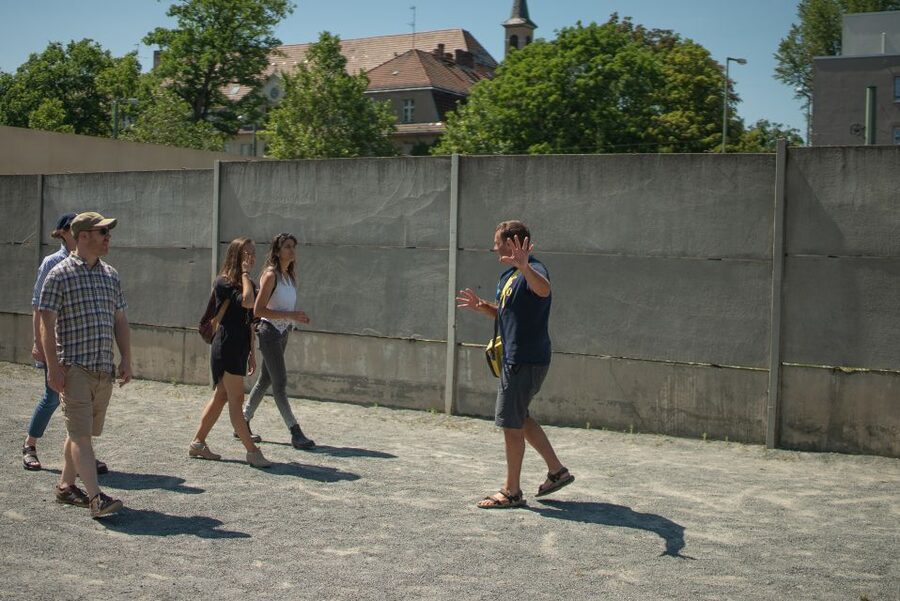
After another short train ride, listed at about six minutes, the route reaches Friedrichshain and then a surviving section of the Berlin Wall. The walking portion here focuses on the border system, escape attempts, and the surveillance state.
The Wall was not just one concrete barrier. The border zone included fences, patrol routes, watchtowers, open areas, and other obstacles designed to stop people crossing from East to West. The former death strip made escape attempts dangerous even before a person reached the main Wall.
This is where the guide’s stories matter most. You hear about people trying to flee through tunnels, over rooftops, or across guarded areas. You also hear about the Stasi, East Germany’s secret police, and the network of informants that made private life feel exposed.
The surviving Wall can look smaller than expected. That is normal. Photographs often show the Wall as a vast, solid barrier, but the full border system extended beyond the concrete itself. A good explanation helps you picture the missing structures and understand why crossing was so difficult.
Allow roughly 16 to 20 minutes for the Wall section. That may seem short, but the tour has several locations to cover. If you want a detailed study of escape tunnels, border engineering, or individual escape cases, you may want to add a separate museum or memorial visit later.
The East Side Gallery changes the tone
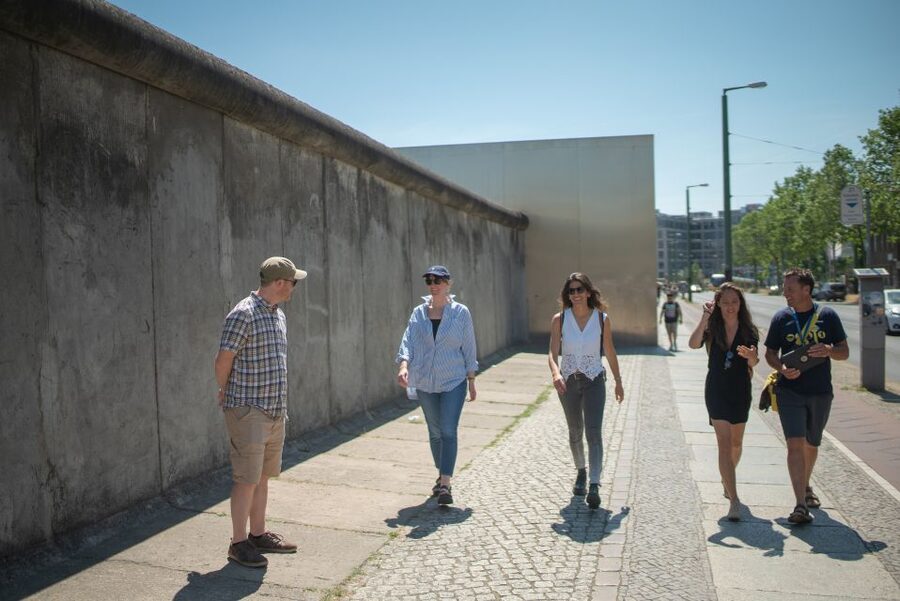
The final major stop is the East Side Gallery, where a long surviving section of the Wall carries murals by artists from around the world. You walk along the gallery for about 20 minutes.
This is not the same experience as viewing the Wall’s former death strip. Here, the concrete has become a public canvas. The art often deals with freedom, peace, division, and political change, so the gallery gives the tour a very different emotional ending.
I like the way this stop shows that the Wall has had more than one life. It began as a tool of control, became a hated symbol of division, and later turned into an outdoor art site. The paintings do not erase the suffering connected with the Wall, but they show how Berlin has used public space to face its past.
The East Side Gallery is outdoors, so weather matters. The tour runs in rain or shine. Wear shoes you can walk in and bring weather-appropriate clothing. A camera is useful, but keep some attention on the guide rather than photographing every mural.
The tour information gives Bernauer Straße as a drop-off location, while some pickup options include accommodation pickup and a finish near the Brandenburg Gate Tourist Information office. Check the option you select carefully, since the start and end arrangements can differ.
How the transport and timing affect your day
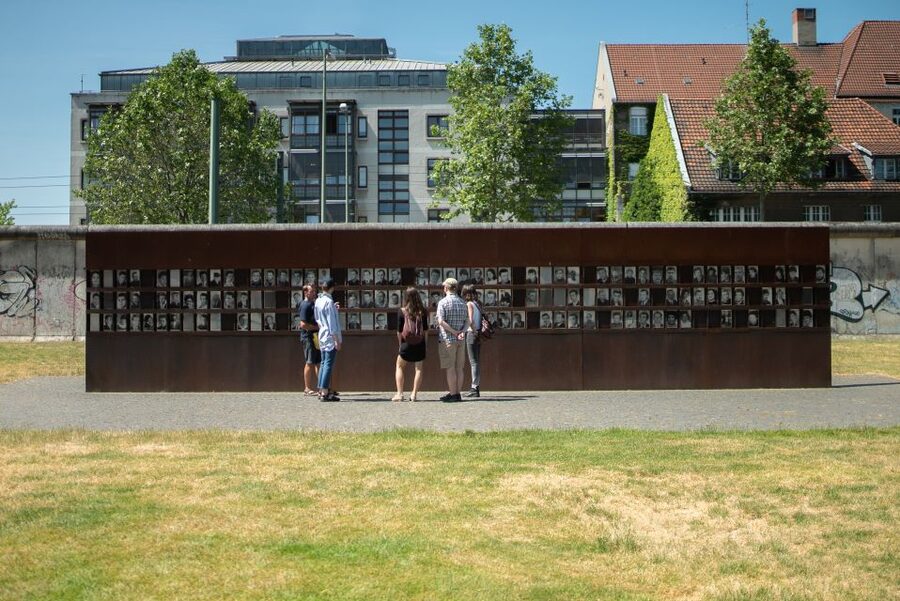
This is a walking tour with short public transport connections, not a private coach outing. You need an AB public transport day pass, which is not included in the $18 price. Staff can help you buy one on the day, but I would budget for it before calculating the total cost.
The trains are useful because the sites are spread across central and eastern Berlin. They also make the tour feel connected to the city rather than sealed away in a sightseeing vehicle. You change scenery quickly, moving from a central station to a ceremonial square, a socialist boulevard, and the former Wall zone.
Three hours goes quickly. The listed sightseeing periods add up to a brisk schedule, and you will spend much of the time listening while standing or walking. Comfortable shoes are essential. If you have mobility concerns, the activity is described as wheelchair accessible, but it is still sensible to confirm the exact transport and group arrangement when booking.
Group size can vary, with private and small-group options available. A small group should make it easier to ask questions and hear the guide. A larger group may feel less personal, and one past visitor noted that a guide had to speak loudly when numbers grew. If personal discussion matters to you, select a small-group or private option when available.
The guides make the history easier to grasp
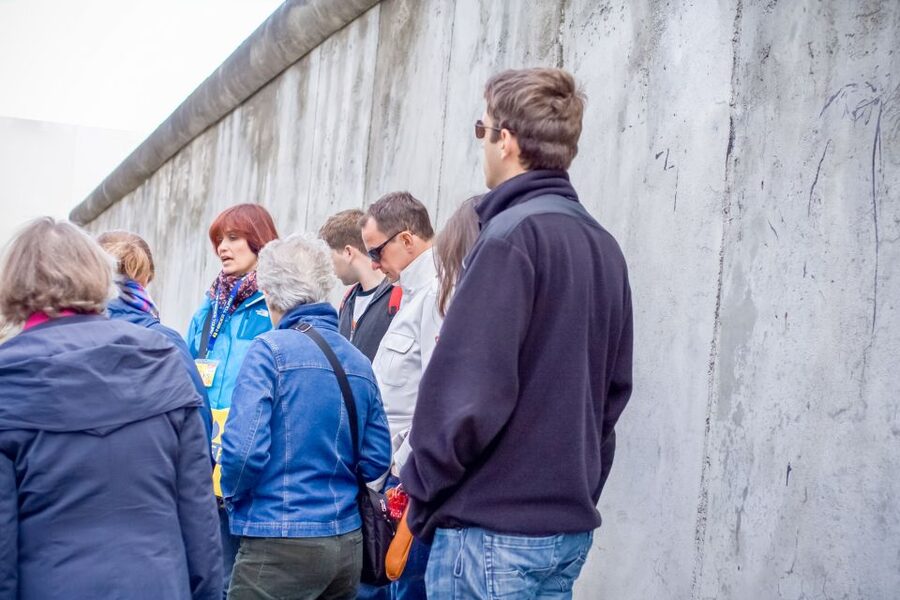
The strongest praise is aimed at the guides’ storytelling. Paul was described as a strong storyteller who helped a newcomer understand how and why events unfolded. Xavier was praised for combining facts, photographs, humor, and care for the group, even when rain arrived.
Klaus, Tina, Maria, Jim, Nikolai, Eran, Jamie, and others have also been praised for clear explanations and a willingness to answer many questions. Some guides have lived in or near the former East Germany, adding personal memories to the wider political story.
That personal element can be powerful, but you should still expect interpretation rather than a complete academic history of the Cold War. One person who wanted more war and political history found the tour more focused on the Wall. That is a fair warning. The experience is strongest when you want Berlin’s division explained through places and human stories.
The guide’s style may vary by departure. Some are lively and humorous, while others may take a more reflective approach. The consistent strengths are reported to be preparation, enthusiasm, and the ability to connect facts with the streets around you.
Is $18 good value?
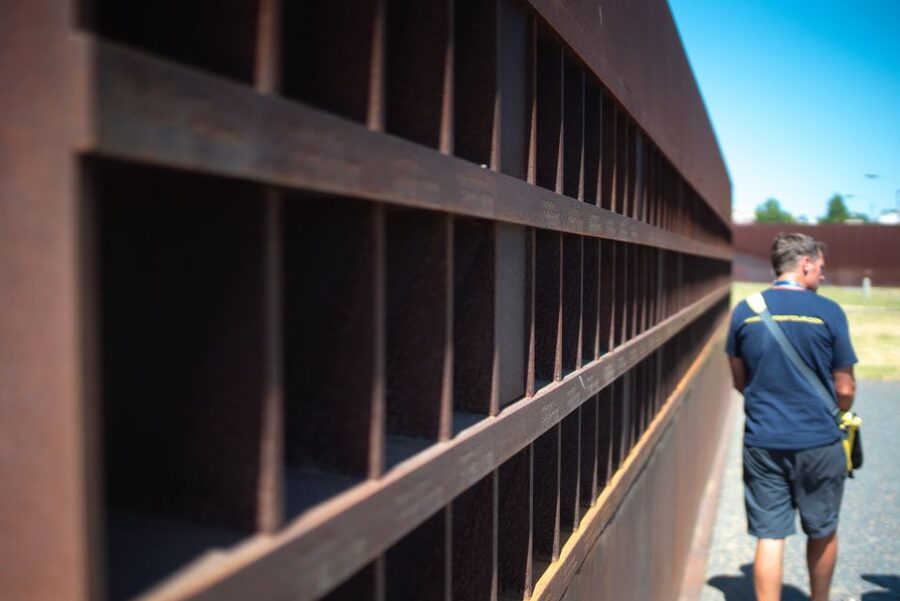
At $18 per person, the tour offers strong value if you want a structured introduction to Cold War Berlin. You get three hours with a live English or German guide, several districts, public transport between sites, and a route that would take effort to organize alone.
The public transport pass is an extra cost, and food and drinks are not included. There is no standard hotel pickup or drop-off, though optional pickup arrangements may be available with selected bookings. Even after adding transport, the price remains modest for a guided experience of this length.
The real value is the interpretation. You can see the East Side Gallery and Alexanderplatz on your own, but a guide can explain why Karl-Marx-Allee mattered, what the death strip involved, and how the Palace of Tears affected families. If you already know Berlin’s Cold War sites well, the tour may repeat familiar ground.
Free cancellation up to 24 hours before the start and reserve now, pay later terms make it easier to fit into a changeable schedule. Those policies are useful, but the main buying decision is simple: do you want a fast, connected overview or a slower, more specialized visit?
Who should book this experience?
I would choose this tour for a first visit to Berlin, especially if you want the Wall to make sense within the city’s wider political story. It suits history fans, families with older children, and anyone who prefers explanations over simply taking photographs at famous sites.
It also works well for people who know very little about the Cold War. Several guides have been praised for making the subject understandable without assuming prior study. The personal stories should help the events feel real rather than distant.
I would be more cautious if you dislike walking, changing trains, or listening outdoors in uncertain weather. You also should not expect long indoor visits at museums. The Palace of Tears is the main named indoor historical stop, while much of the tour takes place in public streets and open areas.
FAQ
How long does the Cold War, Berlin Wall, Spies and the East Side Gallery tour last?
The tour lasts three hours.
What language is the tour offered in?
The live guide is available in English or German.
Where does the tour begin?
The standard meeting point is outside Friedrichstrasse train station, on the square beside the Palace of Tears. Look for a guide with a yellow name badge and yellow umbrella.
Is public transportation included?
No. You need an AB public transport day pass, which can be purchased on the day with help from on-site staff.
Is the tour wheelchair accessible?
The activity is described as wheelchair accessible.
What should I bring?
Bring comfortable shoes, comfortable clothing, weather-appropriate layers, and a camera. The tour operates in all weather.
Should you book it?
Book this tour if you want Berlin’s Cold War story tied together in one brisk route. The combination of the Palace of Tears, Alexanderplatz, Karl-Marx-Allee, the former death strip, and East Side Gallery gives you a useful framework for exploring the city afterward.
I would especially recommend it at the start of a Berlin visit. Guides such as Paul, Xavier, Tina, Klaus, and Nikolai have been praised for turning complex events into clear, memorable stories. Just allow extra money for the AB pass, wear good shoes, and expect a fast outdoor tour rather than a museum-heavy afternoon.
Just added around Berlin
- Berlin Walking Tour★ 4.5 · 378 reviews
- Small Group Walking Tour of East Berlin with a French Guide★ 5.0 · 176 reviews
- Berlin Street Art Walking Tour – Off The Grid★ 5.0 · 270 reviews
- Berlin Highlights Private Guided Walking Tour★ 4.5 · 89 reviews
- Private Walking Tour: World War 2 and Cold War Sites in Berlin★ 5.0 · 230 reviews
- East Meets West: Berlin Food Culture & Street Art★ 5.0 · 157 reviews
- Kreuzberg Berlin: Off the Beaten Track PRIVATE Walking Tour★ 5.0 · 128 reviews
- The History of Berlin: WWII PRIVATE Walking Tour With Locals★ 5.0 · 209 reviews
Berlin Walking Tours, compared.
Berlin City walk Government District and Places of Democracy
Read our review →
Berlin’s Best: 2 Hour Walking Tour Third Reich and the Cold War
Read our review →
Explore Berlin: See All The Iconic Sights & Some Hidden Gems
Read our review →
Third Reich Berlin: Hitler and WWII Walking Tour
Read our review →Browse the lists this tour appears in