
Review · FOOD WALKING TOURS
Shinjuku: Food Tour – 15 Dishes at 4 Eateries
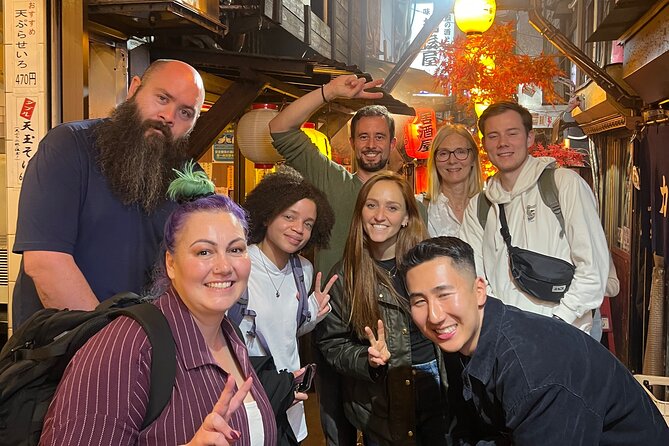
Four stops can reveal a lot about Shinjuku. This three-hour food walk takes you through Kabukicho, Omoide Yokocho, and Nishishinjuku, pairing about 15 dishes with drinks, neighborhood stories, and a look at Tokyo’s nightlife districts. I like the small group limit of 10 and the chance to eat in local spots that are easy to miss on your own.
I also like the range of food, from sashimi and tonkatsu to Okinawan specialties and sake-based drinks. Guides such as Dai, Naruto, Alma, Lisa, Haydn, and Yota have been praised for making the history and customs easy to understand. The main caution is pace: one account describes fast walking, and another found the food uneven at some stops.
Key points to know before booking
- About 15 dishes at four eateries: You get enough food to make this a substantial meal, not just a few samples.
- Kabukicho beyond the neon: The walk adds context about entertainment, nightlife, and the district’s complicated past.
- Omoide Yokocho in the route: You pass the narrow lane of old izakayas dating back to the 1950s.
- Okinawan food may appear: Several guides have included distinctive dishes from Japan’s southern islands.
- Small group of up to 10: This makes it easier to ask questions and share tables.
- Price of $77.60: The value is strongest if you want dinner, drinks, and a guided orientation in one evening.
Why this Shinjuku food tour works well as an introduction
Shinjuku can be a noisy puzzle at first. The station is among the world’s busiest, and the district contains more than 10,000 restaurants. That abundance sounds wonderful until you are standing under glowing signs, trying to decide which small doorway leads to a good meal.
This tour solves that problem with a guide, a planned route, and food already included. I like the basic idea because you can spend your energy tasting and asking questions instead of sorting through menus or guessing which places welcome first-time visitors.
The experience combines food with a walking tour of Shinjuku’s social and historical side. You move through a famous entertainment district, pass old-style drinking alleys, and reach Nishishinjuku, an area that many visitors skip. That mix gives the tour more substance than a restaurant crawl.
The strongest part is the human element. Guides including Dai, Naruto, Mak, Alma, Haydn, and Naoya have been praised for adding stories about customs, neighborhoods, and Japanese food. Several accounts describe the guides as friendly, enthusiastic, and easy to talk with. Naruto, in particular, has been noted for his excellent English and broad cultural experience, while Yota received praise for explaining both food and drinks in detail.
Still, your experience depends partly on the guide assigned that day. The high overall rating of 4.9 from 493 ratings is encouraging, but it does not mean every dish or route will suit every palate.
More Food Walking Tours in Japan
- Tokyo Tsukiji Fish Market Food and Culture Walking Tour
★ 5.0 · 3,184 reviews - Tokyo: Tsukiji Fish Market Food and Walking tour
★ 5.0 · 1,724 reviews - Tsukiji Fish Market Small-Group Food Walking Tour
★ 5.0 · 621 reviews
Starting near Nishishinjuku Station
The meeting point is AOKI Shinjukunishiguchi Honten at 1-chome-8-5 Nishishinjuku, Shinjuku City. The tour ends back at the same meeting point, which is useful if you want to continue exploring afterward without arranging a separate ride home.
The activity lasts about three hours. That is a practical length for an evening in Tokyo. You get a proper food experience, but you still have time afterward for a bar, a late view of the city, or a train back to your hotel.
The group can include no more than 10 people. I consider that a meaningful advantage in Shinjuku, where narrow lanes and compact restaurants can make a large group awkward. A small group also gives you a better chance to hear the guide and ask about unfamiliar dishes.
You should wear comfortable shoes. The walk links several parts of Shinjuku, and one four-star account specifically found the distance between dining stops longer than expected. The tour is near public transportation, and most people can take part, but it is still a walking experience rather than a sit-down tasting.
Kabukicho: food in Tokyo’s famous entertainment district
The first major stop is Kabukicho, one of Tokyo’s best-known entertainment areas. Its signs, side streets, restaurants, bars, and nightlife give you a very different view of Tokyo than the calm lanes around a temple.
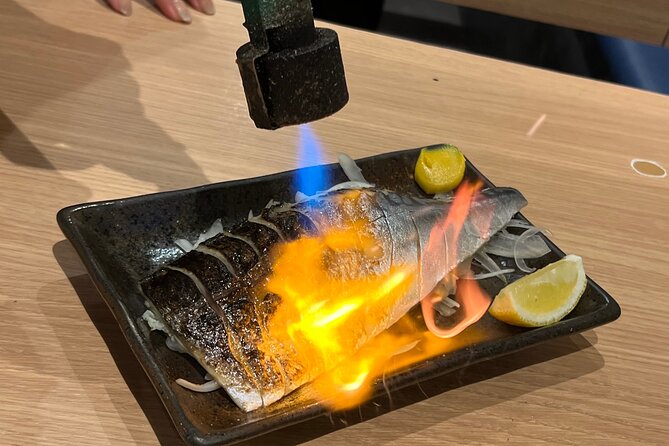
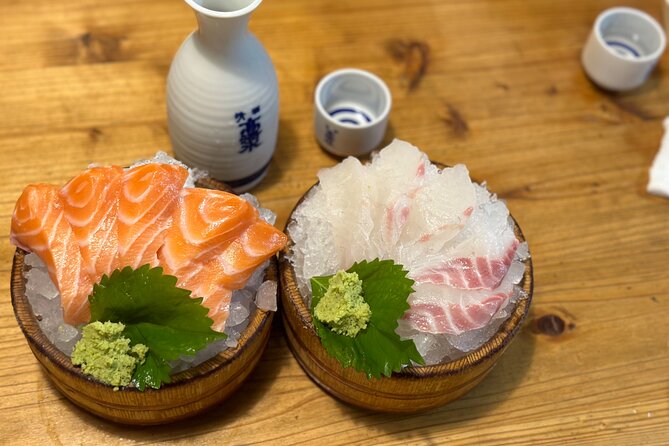
The tour includes a local restaurant in this area. The exact dishes can vary, but the food accounts describe a broad selection, including seafood, sashimi, drinks, and specialties from Okinawa. One particularly enthusiastic account praised about seven varieties of sashimi and found the portion both fresh and filling.
This is also where the tour’s cultural explanation matters. Kabukicho has a reputation shaped by nightlife, red-light businesses, and organized crime stories. Guides have discussed the district’s social past, including streets once associated with the yakuza. That material may interest you, but it can also dominate the experience if your main goal is a quiet, food-focused dinner.
One less positive account felt the talk about the red-light district and mafia took too much space compared with the food. I would keep that in mind if you prefer culinary detail over urban folklore. The balance will depend on your guide and the questions your group asks.
The Godzilla Head is another notable sight in this part of the route. The giant head rises above Kabukicho and gives the neighborhood a playful movie-city landmark. It is a quick photo opportunity and helps you place the surrounding streets in context.
Omoide Yokocho and the small-restaurant atmosphere
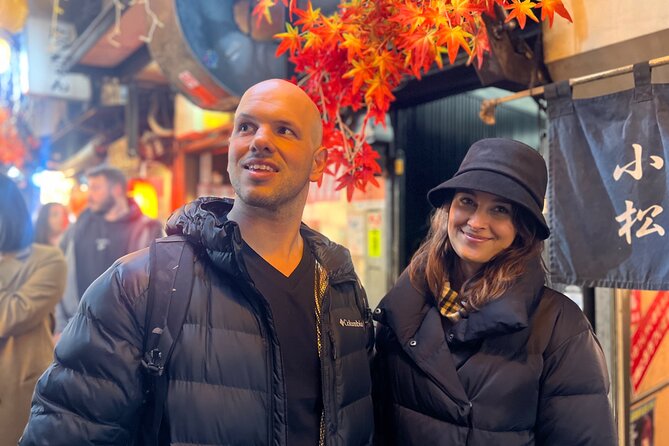
The tour then passes Omoide Yokocho, often translated as Memory Lane. This narrow street is lined with old izakayas and small restaurants dating from the 1950s.
The stated stop here lasts around 15 minutes, so you should not expect a long meal in every place along the lane. Instead, this section gives you a look at a style of Tokyo dining built around compact counters, grilled food, drinks, and close quarters.
I find this kind of stop valuable because it shows the contrast between Shinjuku’s giant station and its tiny food streets. The district is not only department stores and electronic signs. It also has old lanes where restaurants operate on a much smaller scale.
Omoide Yokocho can be crowded, and the space is tight. That is part of its character, but it may not suit you if you want a relaxed meal with plenty of room. Treat this section as a visual and cultural pause between larger food stops.
Same streets, a different way to see them:
- Tokyo: Imperial Palace and Shogun Historical Walking Tour
★ 5.0 · 2,251 reviews - Tokyo: Shinjuku Local Bar and Izakaya Guided Walking Tour
★ 4.9 · 1,794 reviews - Tokyo: Asakusa Walking Tour with Sensoji Temple Visit
★ 4.8 · 1,583 reviews - Tokyo: Tsukiji Fish Market Guided Walking Tour
★ 4.9 · 1,397 reviews
Nishishinjuku: a quieter side of the district
The route continues into Nishishinjuku, an area described as full of local restaurants that many tourists miss. Here, the tour visits another restaurant considered a local favorite.
This change of setting is one of the better reasons to book the walk. You see more than the famous neon center, and you get a sense of how dining changes from one part of Shinjuku to another. The guide can explain what you are seeing while you move between meals, rather than leaving you to discover the contrast by accident.
Several positive accounts praised the food at this stage and across the tour. Dai was repeatedly singled out for mixing good restaurant choices with stories about neighborhoods, culture, and history. Alma received praise for both the variety and quantity of food. Lisa was noted for taking the group to places that would have been difficult to find alone.
The food quality is not guaranteed to impress everyone. One account praised the tonkatsu but found several other items merely average. Another person felt only the first of the four eateries was worth the visit and left early because the food and atmosphere did not meet expectations.
That mixed response is useful. This is not a high-end tasting menu. It is a social neighborhood tour where the value comes from variety, access, and guidance. If you judge every bite against Tokyo’s best specialist restaurants, you may find the meal uneven. If you want to sample several categories without planning each stop, the format makes more sense.
What you may eat and drink
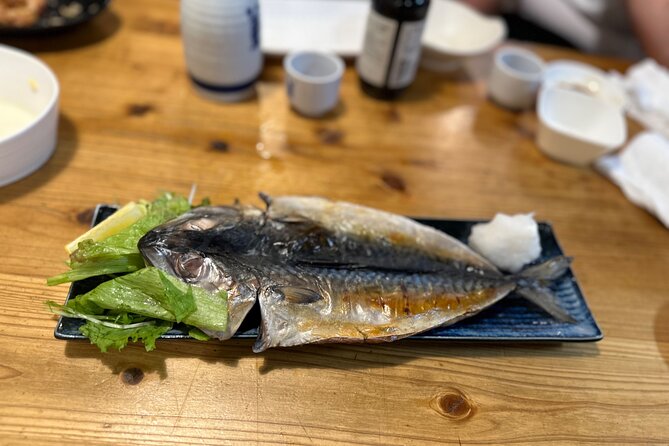
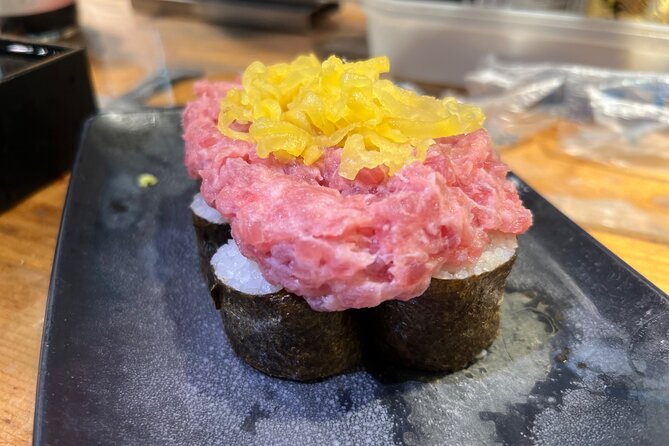
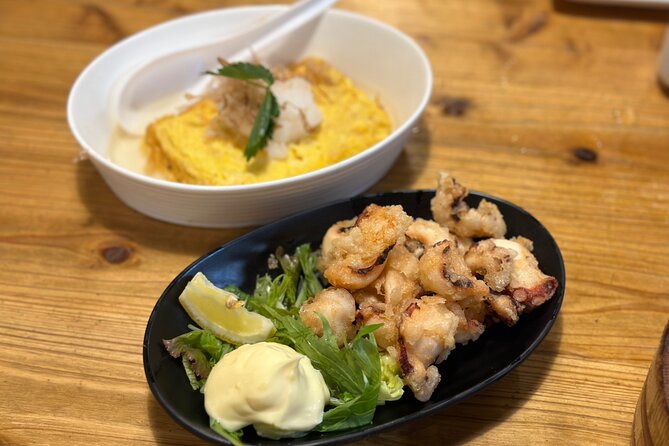
The advertised total is 15 dishes, accompanied by food and drinks. The descriptions point to a broad selection rather than one narrow theme. Possible highlights include seafood, sashimi, tonkatsu, Okinawan food, and Japanese drinks.
The Okinawan dishes are an especially interesting feature. They give you a taste of regional Japanese cooking without leaving Tokyo. One account described the Okinawan food as unique, while another praised the tour for helping participants try dishes they would not have found alone.
Drinks are included at the stops, and accounts mention sake sours and beverage choices at two restaurants. If you do not drink alcohol, one person who avoided it still found the food plentiful, but the exact nonalcoholic arrangements are not specified. You should ask the guide directly if that matters to you.
The quantity appears to be generous. Multiple accounts describe the food as plentiful, filling, and enough to avoid needing another dinner. That supports the price, especially in central Tokyo, where buying several separate dishes and drinks can add up quickly.
The quality is best described as generally well received, but not uniform. Most of the praise focuses on the overall combination of food, company, and guidance rather than every single plate. Keep your expectations at the level of a lively sampling meal, not a formal restaurant review.
The guides make or break the evening
The guide is central to this experience. You are not simply being led from restaurant to restaurant. The best guides explain how dishes fit into Japanese food culture and why each neighborhood looks and feels different.
Dai received strong praise for being friendly, punctual, helpful, and informative. He was also credited with sharing local history between restaurants instead of filling every minute with food talk. Naruto was praised for his English, cultural awareness, and explanations of Shinjuku’s past.
Other names appearing in positive accounts include Izzy, Fu, Akia, Kaira, Mak, Peter, Hadyn, Lloyd, Noah, Yota, and Naoya. The recurring strengths are enthusiasm, clear communication, humor, and a willingness to explain customs.
That also explains why the tour can feel different from one date to another. A guide who loves neighborhood history may spend more time on Kabukicho’s darker stories. Another may focus on ingredients, restaurant etiquette, or regional food.
If you enjoy asking questions, you can get more from the experience. Ask about the origin of a dish, how locals order it, or which foods are regional. The small group helps here, though one negative account reported that a fast-moving guide spoke mainly to the people closest to him. Stay near the guide and speak up if the group begins to spread out.
Is $77.60 good value?
At $77.60 per person, this is not the cheapest way to eat in Tokyo. You can certainly spend less by choosing one casual restaurant and ordering a few dishes.
The comparison changes when you count what is included: about 15 food items, drinks, a professional guide, neighborhood walks, cultural background, and visits to four eateries. You are paying for access and decision-making help, not just calories.
I think the price is fair for a first evening in Shinjuku, especially if you want a full meal and do not speak Japanese. The experience can also save you from spending time choosing restaurants in a district with thousands of options.
The value is weaker if you already know Shinjuku well or prefer to choose every dish yourself. It may also disappoint if you expect every restaurant to have a special atmosphere or every plate to be excellent. The best reason to book is the combination of variety and orientation.
Who should book this experience?
I would recommend it to first-time visitors who want an easy introduction to Tokyo food and nightlife. It is also a good fit for solo visitors or couples who would enjoy sharing dishes with a small international group.
Food-curious people will get the most from it. You can try sashimi, tonkatsu, Okinawan dishes, and Japanese drinks in one outing, then use what you learn to shape later meals.
It may be less suitable for you if you have serious mobility limits, since the route involves walking between areas. It is also not the right choice if you want a quiet, refined dinner or have strict dietary needs that have not been confirmed with the provider.
Book it early in your Tokyo stay if you want help finding your bearings. One useful approach is to schedule it near the beginning of your visit, then return to the dishes and neighborhoods you liked best on later evenings.
Should you book the Shinjuku 15-dish tour?
I would book this tour if you want a filling, social introduction to Shinjuku food, especially at the start of your Tokyo visit. The strongest features are the 10-person group limit, the four-eatery format, the generous amount of food, and guides who can explain more than what is on your plate.
Go in expecting variety rather than fine dining. Allow extra energy for walking, stay close to the guide, and remember that restaurant quality may vary. With those expectations, the $77.60 price offers a useful shortcut into Shinjuku’s food streets and a lively first look at one of Tokyo’s most complicated districts.
FAQ
How long does the Shinjuku food tour last?
The tour lasts approximately three hours.
How many dishes are included?
The experience includes about 15 dishes served across four eateries.
How many people can join the tour?
The group has a maximum of 10 participants.
What neighborhoods does the tour visit?
The route includes Kabukicho, Omoide Yokocho, and Nishishinjuku.
Are food and drinks included?
Yes. Food and drinks are included in the tour price.
Where does the tour start?
The meeting point is AOKI Shinjukunishiguchi Honten at 1-chome-8-5 Nishishinjuku, Shinjuku City, Tokyo 160-0023, Japan.
Where does the tour end?
The activity ends back at the meeting point.
Can I cancel for a full refund?
Yes. You can cancel at least 24 hours before the local start time for a full refund. Changes or cancellations made less than 24 hours before the start time are not accepted for a refund.
More Food Walking Tours in Tokyo
- Reykjavik Food Walk – Local Foodie Adventure in Iceland
★ 5.0 · 18,952 reviews - Little Havana Food and Walking Tour in Miami
★ 5.0 · 8,882 reviews - New Orleans Food Walking Tour of the French Quarter with Small-Group Option
★ 5.0 · 6,118 reviews - Naples: Street Food Walking Tour with Local Guide
★ 4.9 · 4,976 reviews
Just added around Tokyo
- Tokyo: Tsukiji Market Walking Tour & Sushi Cooking Class★ 4.6 · 122 reviews
- Tokyo: Dark Side of Tokyo Shinjuku Red Light Walking Tour★ 4.7 · 862 reviews
- Tokyo: Shinjuku Nightlife & Secret Backstreets Walking Tour★ 4.8 · 229 reviews
- Tokyo: Shibuya Highlights Walking Tour★ 4.8 · 601 reviews
- Tokyo: Shibuya Highlights Walking Tour & Secret View Spot★ 4.9 · 196 reviews
- Tokyo: Shinjuku Bar Hopping & Night Walking Tour★ 4.6 · 137 reviews
- Tokyo: Shibuya Crossing & Hidden Streets Walking Tour★ 4.8 · 128 reviews
- Tokyo: Private Custom Walking Tour with Local Guide★ 4.9 · 350 reviews
Food Walking Tours, compared.
Reykjavik Food Walk – Local Foodie Adventure in Iceland
Read our review →

New Orleans Food Walking Tour of the French Quarter with Small-Group Option
Read our review →

Authentic Parisian Gourmet Food Tour with 10 Local Dishes & Wines
Read our review →
Tapas Walking Tour with Food, Wine, and History
Read our review →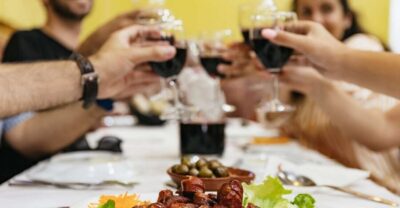
Browse the lists this tour appears in