
Review · OLD TOWN WALKING TOURS
Weimar: Old Town Guided Walking Tour
Weimar rewards slow steps. This $11 walking tour gives you a clear route through the city’s major historic places, from the Neptune Fountain and Market Square to Theaterplatz. I like the way it links three very different chapters of Weimar: the age of Goethe and Schiller, the birth of Bauhaus, and the political story of the Weimar Republic.
I also like the mix of solid facts and small stories. One recent participant praised guide Frau Hose for combining necessary information with amusing anecdotes, and that sounds like the right approach for a city where dates and famous names can quickly blur together. The main drawback is that the tour is offered in German only, and its route is not suitable for people with mobility impairments, wheelchair users, or visually impaired people.
Key points before you book
- A compact route through central Weimar: The walk runs from the Neptune Fountain to Market Square, Democracy Square, Schillerstraße, and Theaterplatz.
- Three major themes in one tour: You hear about Weimar Classicism, the city’s role as the cradle of Bauhaus, and the Weimar Republic.
- A low-cost introduction: At $11 per person, it is an inexpensive way to get your bearings before exploring Weimar on your own.
- German-speaking guide: The tour is conducted in German, so a working understanding of the language will make a major difference.
- About one to two hours on foot: Wear comfortable shoes and dress for the weather, since the walk goes ahead in rain or shine.
- A well-regarded public tour: The experience has a 4.7 rating from 1,080 reviews, with special praise for its useful historical information and entertaining delivery.
Why Weimar is best introduced on foot
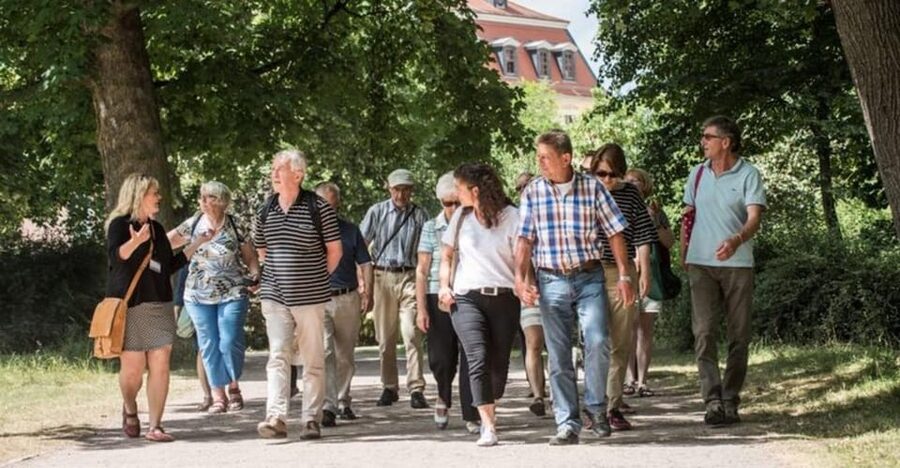
Weimar is not a city you need to rush through. Its key sights sit close enough together for a walking tour, and the short distances let you see how the city’s political, artistic, and literary stories overlap.
A guide also helps you connect places that might otherwise seem unrelated. Goethe’s residence is not simply another grand building. Schillerstraße is not just a pretty shopping street. Theaterplatz is more than an attractive square with a famous statue. Each stop adds another part of Weimar’s identity.
The route is especially useful if you are new to the city. Instead of trying to arrange the center yourself, you follow a simple line through the old town and finish at one of Weimar’s best-known public spaces. Afterward, you can return to the places that caught your attention.
The tour lasts one to two hours. That flexible timing suggests that the exact length may depend on the pace of the group, the amount of explanation, and how long the guide spends at each stop. Plan for a proper walk rather than a quick orientation lasting only 45 minutes.
More Old Town Walking Tours in Germany
- Nuremberg: Old Town Guided Walking Tour
★ 4.6 · 2,416 reviews - Munich: Old Town & Viktualienmarkt City Walk in German
★ 4.7 · 2,304 reviews - Heidelberg: Walking Tour of the Old Town
★ 4.6 · 1,742 reviews
Starting at the Neptune Fountain
The meeting point is the Neptune Fountain, or Neptun Brunnen. This gives the group a central starting place and puts you into the old town from the first minute.
Fountains often make useful meeting points because they are easy to identify, but you should still arrive with a little time to spare. The tour does not include hotel pickup, so you need to make your own way to the starting point.
From here, the guide begins setting the scene for Weimar. The city is known for its connection to writers, artists, political change, and modern design. A good opening explanation matters because it gives you a framework for the rest of the walk instead of presenting each building as an isolated stop.
This is also where you should get ready for the practical side of the tour. You will be outdoors for the entire experience. Wear shoes that can handle old-town pavement, and bring clothing suited to the forecast. The walk runs in rain or shine.
Market Square and the city’s public face
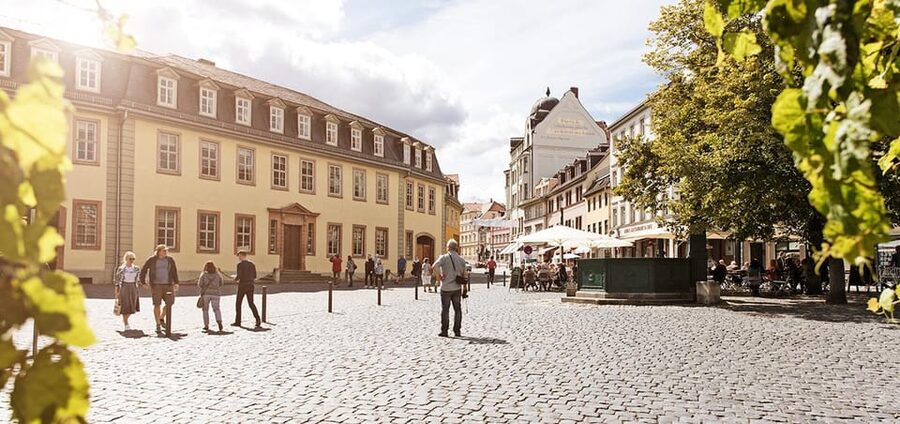
The first named stop is Market Square, or Marktplatz. A market square is often the clearest place to read a city’s public life, and in Weimar it provides a natural setting for the guide to explain the old town’s importance.
Expect a photo stop, a guided explanation, and time to look around. The square is likely to be one of the more visually appealing parts of the route, but its greater value is how it places Weimar’s civic story in a central location.
This is a good point to listen for the difference between Weimar as a courtly and cultural center and Weimar as a modern German city. The tour’s themes move across centuries, so you are not hearing only about poets or only about buildings. You are being shown how the city’s public spaces carried different meanings over time.
I would pay attention to the anecdotes here. The strongest part of a short city walk is often not a long list of dates. It is the small detail that helps you remember why a place mattered.
Democracy Square and the political side of Weimar
The route continues to Democracy Square, or Platz der Demokratie. This stop brings the tour closer to Weimar’s political story and helps explain the connection with the Weimar Republic.
The phrase Weimar Republic refers to Germany’s democratic government between the First and Second World Wars. A short walk cannot cover every political event from that period, but the guide can show you how Weimar became linked with a major chapter in German history.
That context gives the tour more range than a standard literary walk. You are not only following Goethe and Schiller. You are also considering the city’s place in Germany’s experiments with democracy and its changing public identity.
Democracy Square is another photo stop, but the explanation is more important than the picture. If you are interested in modern European history, this part may be one of the most useful sections of the tour. If your main interest is art or literature, it still helps you see Weimar as more than a preserved writers’ town.
The exact depth of the political discussion will depend on the guide and the group. The activity promises interesting facts about the Weimar Republic, but it is not presented as a specialist political history seminar.
Same streets, a different way to see them:
- Discover Berlin Half-Day Walking Tour
★ 5.0 · 9,624 reviews - Berlin City walk Government District and Places of Democracy
★ 4.7 · 8,467 reviews - Berlin: Third Reich & Cold War Guided Walking Tour
★ 4.9 · 8,378 reviews - Munich: Third Reich & WWII Walking Tour
★ 4.6 · 6,181 reviews
Weimar Classicism and Goethe’s residence
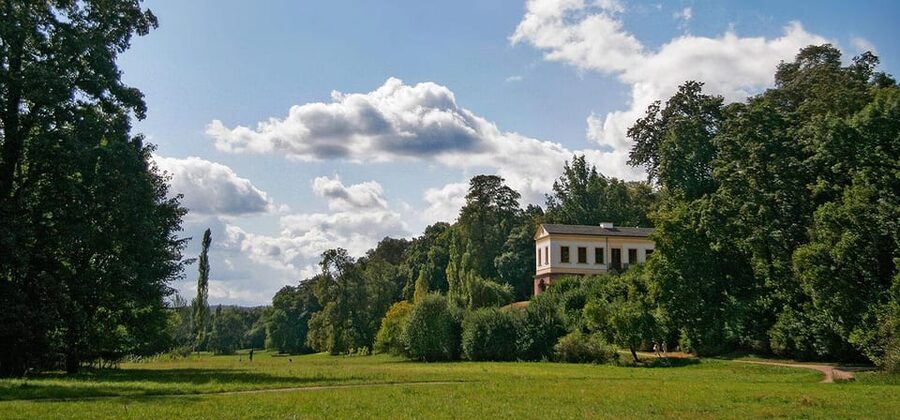
From Democracy Square, the route passes through the park toward Goethe’s residence. This is the literary heart of the walk.
Weimar Classicism is closely tied to the cultural life associated with Johann Wolfgang von Goethe and Friedrich Schiller. The tour follows in their footsteps and shows you the setting in which Weimar gained its reputation as a center of German letters and culture.
The route through the park should give the walk a welcome change of pace. After civic squares and urban streets, greenery creates a calmer transition toward Goethe’s home. The supplied information does not promise entry into the residence, so you should understand this as an exterior stop and guided explanation rather than a house tour.
That distinction matters. At $11, the experience is priced as a city walk, not as an admission ticket to several museums or historic interiors. You are paying for the guide’s interpretation and route. If you want to see inside Goethe’s residence, you would need to check separately for admission and opening details.
This section is likely to appeal most to readers who enjoy literary history. Even if you have not read Goethe or Schiller, the guide’s anecdotes can make the names easier to place. A well-told story turns a famous figure into a person connected to a real street, home, or square.
Schillerstraße and the character of the old town
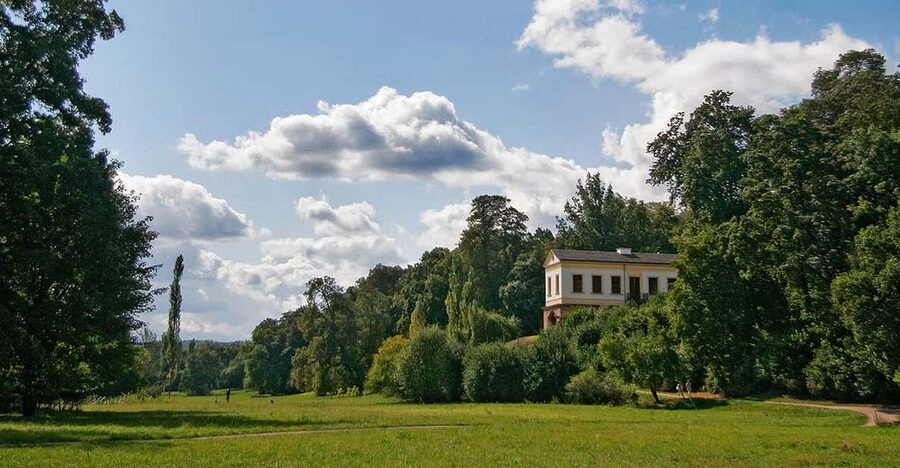
The walk then heads down Schillerstraße. This street connects the literary story with the everyday look and feel of central Weimar.
The stop includes sightseeing, a photo opportunity, and more explanation from the guide. You can expect the guide to use the street as part of the larger story of Weimar Classicism, rather than treating it as a simple passage between attractions.
Schillerstraße also helps break up the tour. The route is not a series of formal squares only. You move through a recognizable city street, which gives you a better sense of how Weimar’s famous past fits into its present-day center.
The practical advantage is that the route remains focused. You are not being taken far outside the center or asked to spend the afternoon on transport. The limitation is that you may not have much free time to browse or stop independently while the group is moving. Save your shopping, café stop, or detailed photography for after the tour.
Theaterplatz and the Goethe and Schiller monument
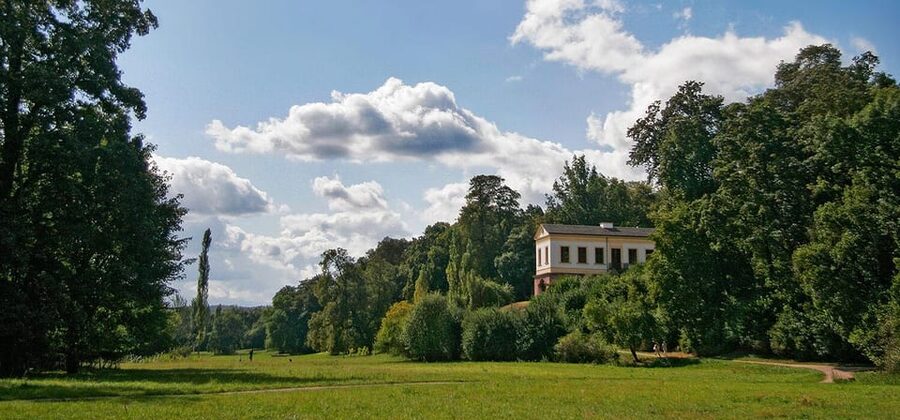
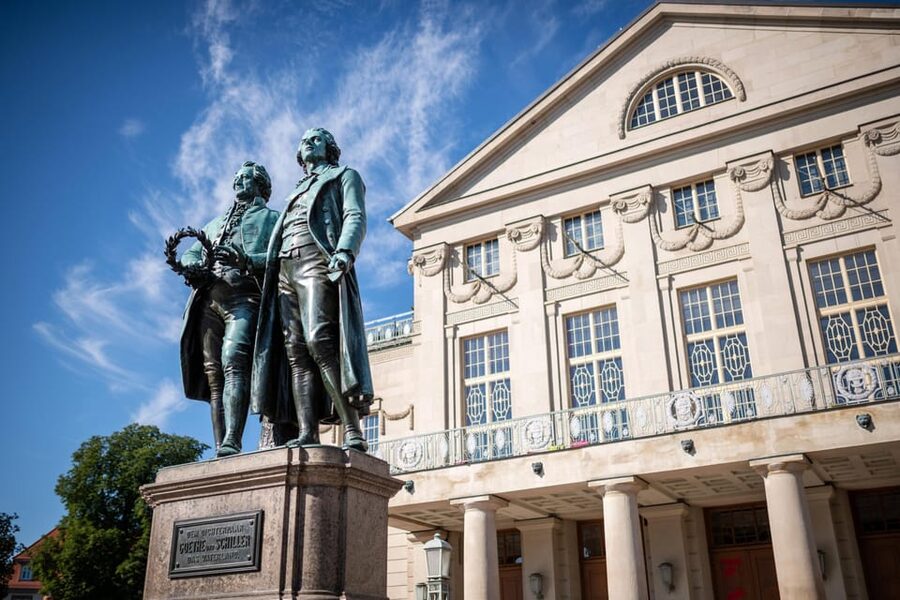
The walk finishes at Theaterplatz, one of the most memorable points on the route. The square is home to the well-known monument of Goethe and Schiller, the poet duo most strongly associated with Weimar Classicism.
This is a satisfying ending because the tour’s literary thread comes together in one place. After hearing about the writers and walking through parts of the city connected with them, you finish beside their public memorial.
The monument is also a useful final image of Weimar. It presents the city’s cultural identity in a very direct way, but the tour has already added other layers: Bauhaus, democracy, public squares, and political change.
The ending is practical, too. Since the tour finishes at Theaterplatz rather than returning to the Neptune Fountain, you can continue exploring from there. The information supplied does not give a hotel return or transport back to the starting point, so plan to make your own onward arrangements.
The Bauhaus connection adds a modern edge
Weimar is often introduced through Goethe and Schiller, but this tour also points to the city as the cradle of Bauhaus. That is an important reason to choose this walk over a purely literary route.
Bauhaus changed modern design, architecture, furniture, and visual culture. The tour does not promise a dedicated Bauhaus museum visit or a detailed design lecture, so you should not book it expecting a specialist art course. Still, learning that Weimar played a founding role gives the old town a modern edge.
This theme also broadens your understanding of the city. Weimar is not frozen in the age of poets and grand residences. Its story includes a movement that helped shape the way people think about functional design and modern buildings.
If Bauhaus is your main reason for visiting Weimar, use this tour as an introduction. You may want a separate visit focused specifically on Bauhaus afterward. The walking tour gives you useful context, but its main purpose is to connect several parts of the city in one compact outing.
How the guide’s style affects the experience
The tour is led live in German. That is the most important factor in deciding if it suits you.
One recent participant specifically praised Frau Hose for combining necessary facts with entertaining stories. That comment points to the ideal style for this kind of walk: enough dates and names to make the city meaningful, but not so many that the experience becomes a lecture.
Another participant described the tour as informative and entertaining, while a further comment praised the extensive historical information. These points match the tour’s strongest appeal. You get substance, but the format remains light enough for a one to two hour walk.
You should be comfortable asking yourself how much German you can follow outdoors. City streets bring background noise, and a guide may speak at a natural pace. If you understand only a few basic German phrases, the tour may be difficult to enjoy fully. The supplied information does not list an English option.
Is $11 good value?
At $11 per person, this is a strong value for a guided introduction to central Weimar. The price is low enough that you are not taking a major financial risk, yet the route covers several important parts of the city and brings together literary, political, and design history.
The value comes from the structure. You could walk past Market Square, Democracy Square, Schillerstraße, and Theaterplatz on your own, but you would not automatically understand how they connect. The guide turns a simple stroll into a coherent story.
There are limits. Hotel pickup is not included. Museum entry is not listed. The tour is conducted only in German, and access needs are restricted. You are buying a guided outdoor walk, not a full sightseeing package.
The high 4.7 rating from 1,080 reviews supports the idea that the experience delivers what it promises. The most praised elements are the amount of historical information and the lively delivery. I would consider it especially good value at the start of a Weimar visit, when context can improve everything you see afterward.
Who should book this Weimar walk?
I would recommend it to you if you want a short introduction before exploring Weimar independently. It suits people interested in Goethe, Schiller, the Weimar Republic, Bauhaus, architecture, or German civic history.
It also works well for anyone who prefers a guide to provide the basic structure. You do not need to plan a complicated route, research each square in advance, or work out how the city’s major themes fit together.
You should think twice if you need an English-speaking guide, cannot comfortably walk for up to two hours, or require step-free access and support for visual impairment. The tour data specifically says it is not suitable for people with mobility impairments, wheelchair users, or visually impaired people.
Bring comfortable shoes and weather-appropriate clothing. The tour continues in poor weather, so rain gear can make the difference between an enjoyable walk and a damp memory.
Should you book it?
Book this tour if you want an inexpensive, focused introduction to Weimar with strong historical content and a few good stories along the way. Its route is well chosen, and the finish at Theaterplatz gives the walk a clear sense of purpose.
Skip it if you need English, want museum interiors, or prefer to explore at your own pace. For German speakers who enjoy a lively explanation of Weimar’s literary, political, and artistic past, $11 is a sensible price for the orientation you receive.
FAQ
Where does the Weimar walking tour start?
The tour starts at the Neptune Fountain, known in German as Neptun Brunnen.
Where does the tour finish?
The walk finishes at Theaterplatz, home to the famous monument of Goethe and Schiller.
How long does the tour last?
The tour lasts approximately one to two hours. Starting times depend on availability.
What language is the tour conducted in?
The live tour guide speaks German. No other language is listed.
Is hotel pickup included?
No. Hotel pickup and drop-off are not included, so you need to reach the Neptune Fountain yourself and arrange your own onward transport after the walk.
What should I bring, and does the tour run in bad weather?
Bring comfortable shoes and weather-appropriate clothing. The tour takes place rain or shine.
Just added around Germany
- Berlin Walking Tour★ 4.5 · 378 reviews
- Small Group Walking Tour of East Berlin with a French Guide★ 5.0 · 176 reviews
- Berlin Street Art Walking Tour – Off The Grid★ 5.0 · 270 reviews
- Berlin Highlights Private Guided Walking Tour★ 4.5 · 89 reviews
- Private Walking Tour: World War 2 and Cold War Sites in Berlin★ 5.0 · 230 reviews
- East Meets West: Berlin Food Culture & Street Art★ 5.0 · 157 reviews
- Kreuzberg Berlin: Off the Beaten Track PRIVATE Walking Tour★ 5.0 · 128 reviews
- The History of Berlin: WWII PRIVATE Walking Tour With Locals★ 5.0 · 209 reviews
Old Town Walking Tours, compared.
Underground Vaults Walking Tour in Edinburgh Old Town
Read our review →
3-Hour Walking Tour of Old Town & Prague Castle
Read our review →
Old Town and Jewish Quarter Guided Walking Tour
Read our review →
Cartagena: Historic Center and Getsemaní Shared Walking Tour
Read our review →Browse the lists this tour appears in