
Review · GERMANY WALKING TOURS
Dresden: Complete Walking Tour with Frauenkirche Visit
Dresden rewards a good walking tour. This two-hour outing brings the old town together, from the rebuilt Frauenkirche to the grand Zwinger, while a local guide explains how Saxony’s court, churches, wars, and modern city life fit together. I like the small group of up to 10 people and the supplied headsets, which make it easier to follow without standing shoulder to shoulder around the guide.
I also like the price: at $16 per person, you get a personal guide, clear audio, and a postcard souvenir while covering many of Dresden’s central sights. Guide Dagmar Renger has earned special praise for her humor, warmth, and ability to answer questions. The main consideration is that entry to the Royal Palace museums, Zwinger museums, and Semper Opera is not included, and the Frauenkirche visit can occasionally be disrupted by church preparations or events.
Key points to know before you book
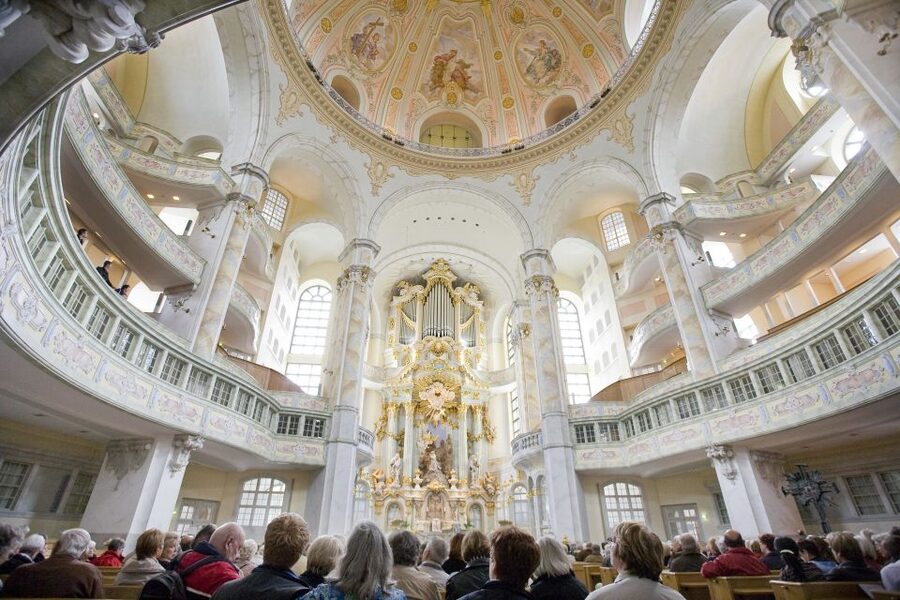
- The Frauenkirche is the tour’s emotional center, with time to see its altar, murals, crypt, unusual nave, and lower church.
- You cover Dresden’s major old-town sights in two hours, including Fürstenzug, Stallhof, Theaterplatz, Brühlsche Terrasse, and the Zwinger.
- Headsets make the guide easy to hear, a useful touch in open squares and around large buildings.
- The group is limited to 10 people, giving you a better chance to ask questions than on a large city tour.
- The $16 price covers a guided walk, not museum admission, so plan separate visits if you want to go inside the palace, Zwinger museums, or Semper Opera.
- The tour is conducted in German, with a live guide and German audio support.
Why this Dresden walking tour works well
Dresden can feel like a collection of grand buildings until someone explains how they connect. This tour gives you that framework in a compact route through the historic center. You move from royal architecture to church art, from river views to courtly Baroque sculpture, without spending the morning on a bus.
I see the strongest value in the guide’s storytelling. The tour covers famous monuments, but the aim is not simply to point at them and name them. You hear about Dresden’s prosperous court period, the role of Augustus the Strong, the purpose of the sculptures, and the way the city uses these spaces today. The tone is described as entertaining and humorous, which matters when you are taking in a lot of dates and buildings at once.
The small group also changes the feel. With no more than 10 participants, you are less likely to lose the guide in a crowd. You can ask about details that catch your eye, and a guide such as Dagmar Renger can adapt the explanation when questions come up. Her recent tours were praised for being both lively and informative, with particular appreciation for her enthusiasm for Dresden.
The main limit is the two-hour schedule. You will see a lot, but you will not have time for a full museum visit or a slow look at every monument. Think of this as an introduction and orientation walk, not a complete day devoted to Dresden’s art collections.
A few more walks around Germany worth a look
- Discover Berlin Half-Day Walking Tour
★ 5.0 · 9,624 reviews - Berlin City walk Government District and Places of Democracy
★ 4.7 · 8,467 reviews - Berlin: Third Reich & Cold War Guided Walking Tour
★ 4.9 · 8,378 reviews
Meeting at Neumarkt and getting started
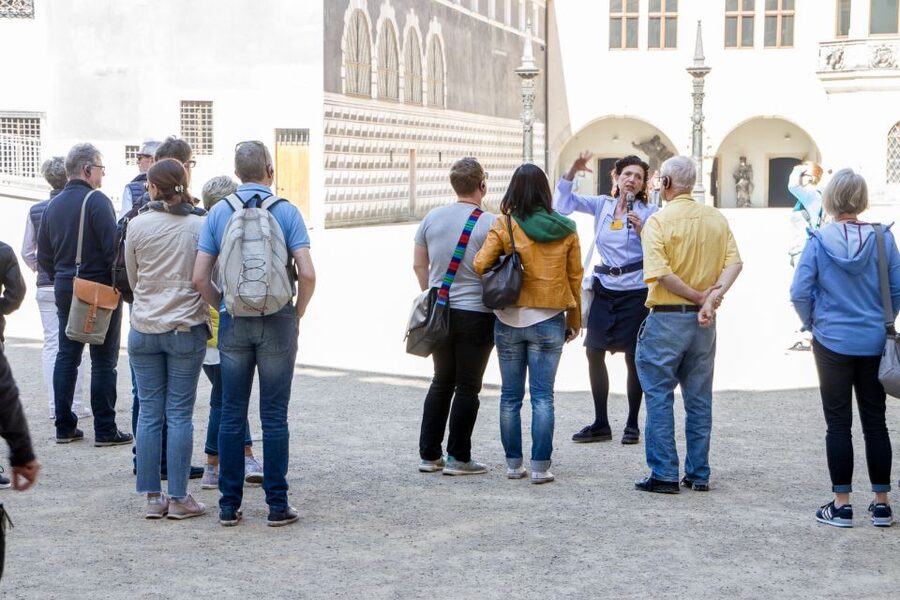
The meeting point is Neumarkt 2, in front of the tourist information office on the sub-level floor of the QF Passage. The guide carries a sign marked Glanzlichter Dresdens. Arrive five to 10 minutes early, since the group needs to meet, check in, and receive the headsets before setting off.
Neumarkt is a sensible place to begin. It puts you close to the Frauenkirche and several of Dresden’s most important central sights. Starting here also means you get your bearings in the old town before moving toward the palace quarter and the Elbe.
The headsets are more useful than they may sound. Dresden’s broad squares and stone facades can make a guide difficult to hear, especially when other groups are nearby. You can look at the building in front of you instead of standing directly beside the guide and still follow the explanation.
The tour is listed as wheelchair accessible. Since this is a walking route through historic areas, you may still want to ask the provider about the exact route if you have specific mobility needs, but the activity itself is marked as accessible.
Stallhof and Fürstenzug: Dresden’s royal story in stone
The first section takes you through the historic old town, including Stallhof and Fürstenzug. Stallhof, the former stable courtyard, helps show how closely court life and public ceremony were tied together. It is not just another ornate courtyard. It gives you a glimpse of the working and ceremonial world around Dresden’s rulers.
Nearby, Fürstenzug presents a long procession of Saxon rulers in a monumental wall image made from porcelain tiles. The route lets your guide explain who the figures are and why this unusual artwork matters. It is one of the places where a short explanation adds real value, because the names, clothing, and sequence can otherwise pass by as decoration.
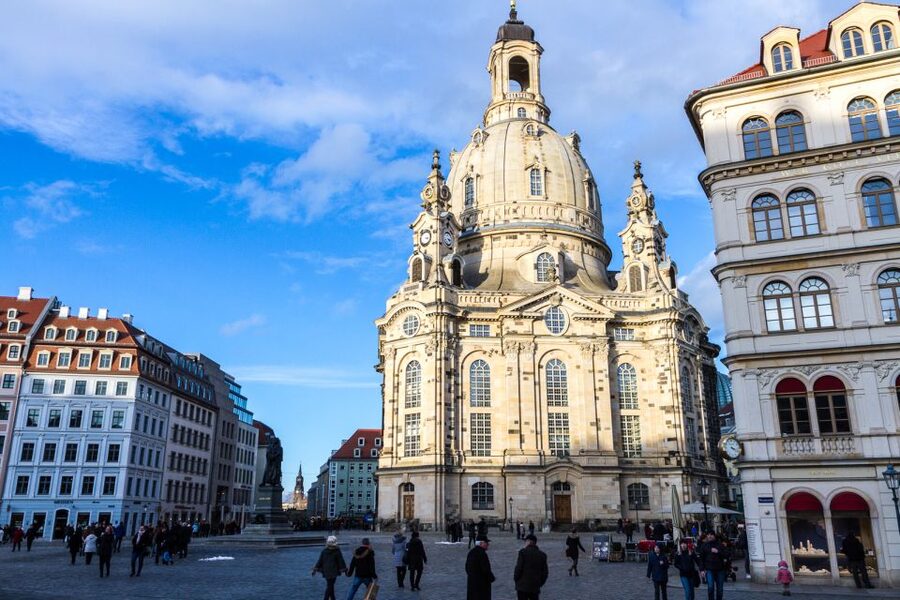
You will also visit historic Neumarkt, the square anchored by the Frauenkirche. Its appearance is closely tied to Dresden’s rebuilding and the effort to restore the character of the old center. A guide can help you read the square as more than a postcard setting, pointing out how the buildings and open space work together.
Entering the Frauenkirche
The Frauenkirche is the key interior visit. Inside, you can see the altar, painted murals, historic crypt, unusual nave, and lower church. The building’s Baroque design is especially striking because the interior does not feel like a simple long hall. Its arrangement encourages you to look upward and around, taking in the layered decoration and curved forms.
The crypt adds a quieter, more serious part to the visit. It connects the church’s grand public interior with the people and events tied to its past. The guide’s explanation is important here, since the church’s meaning is not limited to its architecture.
You should also keep expectations practical. The tour description promises a visit inside the church, but access can occasionally be affected by preparations or special events. One recent participant found that the Frauenkirche could not be visited because of preparations connected with a television production and wished for advance notice. That is a fair concern. If entering the church is the main reason you are booking, check for any access update close to your tour date.
Even with that possibility, the Frauenkirche remains an important part of the route. If the interior is open, it gives you the tour’s clearest look at Dresden’s religious art and Baroque design. If access changes, the outdoor explanation still places the church at the center of Dresden’s story, but the experience is understandably less complete.
Same streets, a different way to see them:
- Munich: Third Reich & WWII Walking Tour
★ 4.6 · 6,181 reviews - Berlin: Discover Berlin Walking Tour
★ 4.9 · 5,998 reviews - Berlin’s Best: 2 Hour Walking Tour Third Reich and the Cold War
★ 5.0 · 5,486 reviews - Berlin: Hidden Backyards Guided Walking Tour
★ 4.8 · 5,360 reviews
Schlossplatz and the Catholic Hofkirche
From the Frauenkirche, the route continues through Schlossplatz and past the Catholic Hofkirche. These sights show the mixture of religious and royal power that shaped central Dresden.
Schlossplatz links the old town’s major buildings and provides a natural transition from church architecture to the former royal quarter. The Catholic Hofkirche adds another layer to the city’s story, especially in a region where court politics and religious identity mattered greatly.
This is where the guide’s historical context becomes useful. Rather than treating each building as a separate stop, the walk shows you how the church, palace, squares, and ceremonial routes belonged to one royal center. You begin to understand why Dresden is often associated with Saxon court culture and Baroque display.
Theaterplatz and the Semper Opera
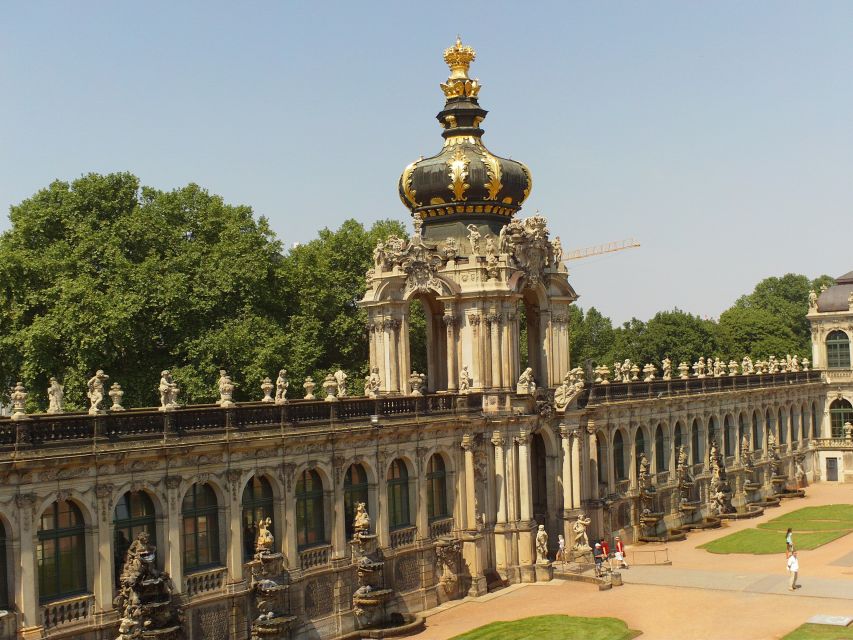
The tour then reaches Theaterplatz, one of Dresden’s most impressive architectural settings. The Royal Palace and Semper Opera frame the square, giving you a concentrated view of the city’s cultural and political ambitions.
The Semper Opera is included as an exterior sight, not an interior performance or museum visit. You can admire its architecture and hear about its place in Dresden’s cultural life, but admission is not part of the $16 tour. The same applies to the Royal Palace museums.
That distinction is important for planning. The walking tour gives you the context needed to decide which buildings deserve a separate visit. If you want to see collections inside the palace or attend a performance at the opera, treat this tour as the first step rather than the complete experience.
The square also makes a good comparison point. The Frauenkirche shows Dresden’s religious and civic identity, while Theaterplatz presents the city as a center of court culture, music, and the arts. In a short distance, the tour moves between several different versions of Dresden.
Brühlsche Terrasse and the Elbe view
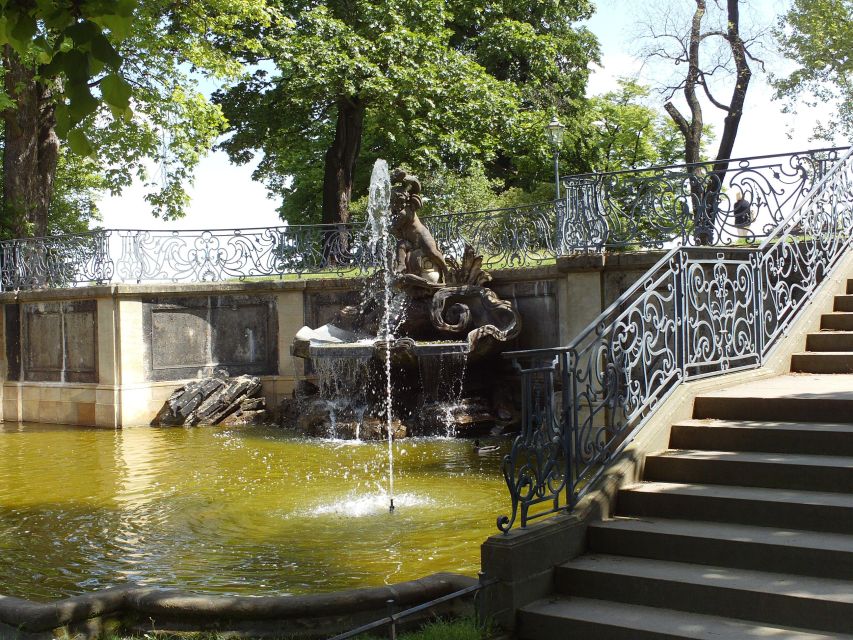
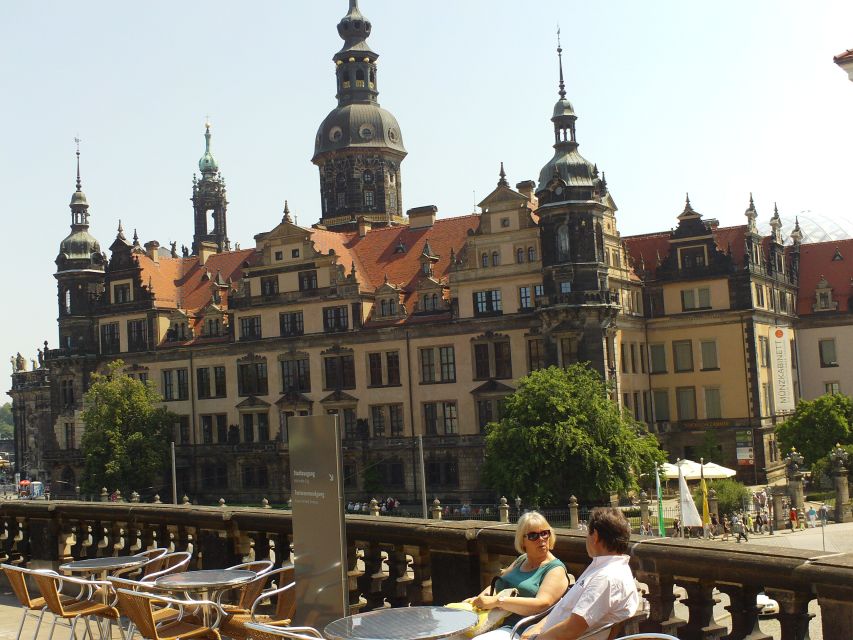
A walk along Brühlsche Terrasse adds breathing room to the route. From here, you get views toward the Elbe and a different perspective on the city center. After several grand facades and enclosed courtyards, the open river setting helps you see Dresden’s position along the water.
The view is part of the value, but the timing matters. This is not a long riverside walk with time for a café stop or extended photography. It is a short section within a larger itinerary. You will have enough time to appreciate the setting and hear the guide’s explanation, but you should save a leisurely return visit for later if the riverfront interests you.
I like this section because it breaks up the architectural sequence. Dresden can become visually dense, with one ornate building following another. Brühlsche Terrasse gives you space to pause and look outward before the tour turns back toward the Zwinger District.
Saxon Baroque in the Zwinger District
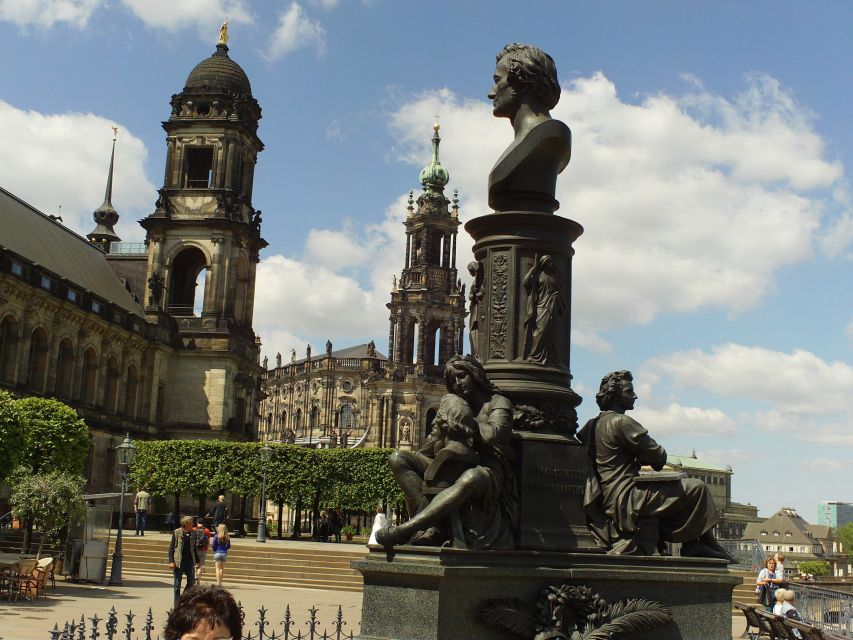
The final major part of the route is the Zwinger District, where Dresden’s Baroque style reaches full volume. The sandstone sculptures are close enough to examine, and the guide explains their former function, their connection to Augustus the Strong’s court festivals, and the site’s current role as a museum complex.
That context helps you understand why the Zwinger is more than an attractive courtyard. Its sculptures and spaces were made for display, ceremony, and court entertainment. The building expressed power through decoration, scale, and carefully planned public spectacle.
You will see the museum buildings and sculpture work from the outside, but museum entry is not included. This is one of the tour’s useful practical features: after hearing how the complex works and what it once represented, you can decide if the collections deserve another part of your Dresden visit.
If you enjoy architecture and public art, the Zwinger may be the strongest visual finish. If you prefer long interior visits, you may find the final stop frustrating because the tour only introduces the museums rather than taking you inside. The distinction comes down to how you like to spend your time.
How much do you get for $16?
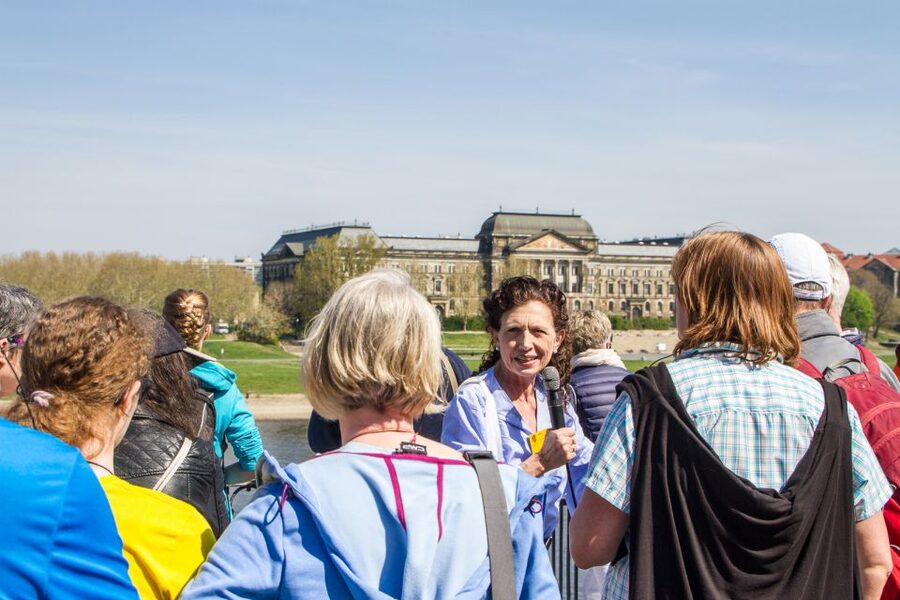
At $16 per person, this is a strong-value orientation tour. In two hours, you get a personal guide, headsets, a small group, the Frauenkirche visit when access allows, and a postcard souvenir. You also cover a large portion of Dresden’s central sightseeing area without needing public transportation between stops.
The price does not include admission to the museums in the Royal Palace or Zwinger, nor to the Semper Opera. That keeps the basic tour affordable, but you should budget extra if those interiors are on your list.
For me, the value depends most on the guide. A rushed walk through the same streets would be less useful. The positive comments about Dagmar Renger point to the advantage of booking a tour where the guide adds humor, local pride, and answers to questions. Her enthusiasm for Dresden appears to be a major part of the experience.
The tour also offers free cancellation up to 24 hours before the start and allows you to reserve now and pay later. Those options are useful if your Dresden schedule is still shifting.
Who should book this tour?
I would recommend it to first-time visitors who want a clear introduction to Dresden’s old town. It suits you especially well if you like history explained through buildings, prefer a small group, and want to see major sights before choosing which museums deserve more time.
It is also a good fit for visitors with only a short stay. The route gives you a practical map of the center in two hours, so you can return later to the Frauenkirche, palace, Zwinger, or riverfront with a better sense of where everything sits.
German speakers should get the most from the tour, since the live guide and audio support are in German. If you need an English-language experience, this is not the right choice based on the stated language information.
You may want to skip it if you dislike guided walks, need long periods inside museums, or are booking solely for guaranteed access to the Frauenkirche. Church access can change, and the tour does not include the major museum interiors.
Should you book the Dresden walking tour?
Book it if you want a lively, affordable introduction to Dresden’s historic center, especially with German-language guiding. The small group, headsets, broad route, and strong guide feedback make the $16 price easy to justify.
Before booking, confirm that the Frauenkirche is expected to be open and remember that the Zwinger, Royal Palace museums, and Semper Opera require separate admission. If those limits work for you, this tour gives you the right mix of major sights, local stories, and useful orientation without taking up your whole day.
FAQ
Where does the Dresden walking tour meet?
The meeting point is Neumarkt 2, 01067 Dresden, in front of the tourist information office on the sub-level floor of the QF Passage.
What sign will the guide carry?
The guide carries a sign marked Glanzlichter Dresdens.
What time should I arrive?
You should arrive five to 10 minutes before the tour starts. The listed meeting time is 10:30 AM.
How long does the tour last?
The walking tour lasts two hours.
Is the Frauenkirche included?
Yes. The route includes a visit inside the Frauenkirche, including its altar, murals, historic crypt, nave, and lower church, provided access is available at the time of the tour.
Are museum tickets included?
No. Admission to the museums in the Royal Palace and Zwinger, as well as the Semper Opera, is not included.
What language is the tour in?
The live tour guide and audio support are in German.
Are headsets provided?
Yes. Headsets are included so you can hear the guide clearly during the walk.
Is the tour wheelchair accessible?
Yes. The activity is listed as wheelchair accessible.
Just added around Germany
- Berlin Walking Tour★ 4.5 · 378 reviews
- Small Group Walking Tour of East Berlin with a French Guide★ 5.0 · 176 reviews
- Berlin Street Art Walking Tour – Off The Grid★ 5.0 · 270 reviews
- Berlin Highlights Private Guided Walking Tour★ 4.5 · 89 reviews
- Private Walking Tour: World War 2 and Cold War Sites in Berlin★ 5.0 · 230 reviews
- East Meets West: Berlin Food Culture & Street Art★ 5.0 · 157 reviews
- Kreuzberg Berlin: Off the Beaten Track PRIVATE Walking Tour★ 5.0 · 128 reviews
- The History of Berlin: WWII PRIVATE Walking Tour With Locals★ 5.0 · 209 reviews
Germany Walking Tours, compared.


Berlin City walk Government District and Places of Democracy
Read our review →
Berlin’s Best: 2 Hour Walking Tour Third Reich and the Cold War
Read our review →

Explore Berlin: See All The Iconic Sights & Some Hidden Gems
Read our review →Browse the lists this tour appears in