
Review · BERLIN WALKING TOURS
East Berlin and the Wall: Walking Tour
The Wall still cuts through Berlin’s story. This tour makes that story easy to follow, taking you from Potsdamer Platz to the Bernauer Strasse Wall Memorial, Alexanderplatz, and the East Side Gallery. I like the clear route and the small group size, which allows room for questions. I also like the focus on ordinary life in East Berlin, not just Cold War dates and famous buildings.
The main thing to consider is the pace. You cover several districts in three to three and a half hours, using the S-Bahn and subway along the way. You also need to buy your own Berlin AB transit ticket, and the $351 price is for a group of up to six, so it makes far more sense for a full group than for one or two people.
Key points to know before you book
- The Bernauer Strasse Memorial is the emotional center: You see original Wall sections, the former death strip, and evidence of escape attempts.
- The route links several parts of East Berlin: Potsdamer Platz, Nordbahnhof, Alexanderplatz, the TV Tower, and East Side Gallery each show a different part of the city’s divided past.
- Your guide shapes the experience: Italian, French, English, Spanish, and German tours are available, with guides such as Paolo, Elisa, Claudia, and Catherine praised for warm, engaging explanations.
- Public transport is part of the tour: The short train and subway rides are useful for connecting the sites, but your AB ticket is not included.
- It works best for a small private party: The cost covers up to six people, and private groups and optional hotel pickup are available.
- Personal stories can add weight: Catherine has included her own family testimony, while other guides have used anecdotes to make East Berlin’s daily reality easier to understand.
Why this East Berlin walk is worth your time
Berlin can make the Cold War feel scattered. A Wall fragment here, a watchtower there, a museum somewhere else. This route gives those pieces a sensible order.
You begin at Potsdamer Platz, a place that reflects Berlin’s dramatic postwar change. From there, the tour moves by public transport toward Nordbahnhof and Bernauer Strasse, then continues through East Berlin’s political center before finishing at the East Side Gallery. The route is not just a walk beside old concrete. It connects the Wall to transportation, housing, protest, surveillance, and the daily choices people made under the GDR.
I especially like that the experience includes both major symbols and less obvious details. The East Side Gallery is the colorful finale, but Bernauer Strasse carries the heaviest emotional weight. Alexanderplatz shows how public protest helped bring down the system. Nordbahnhof reveals how even a railway station could become part of the machinery of division.
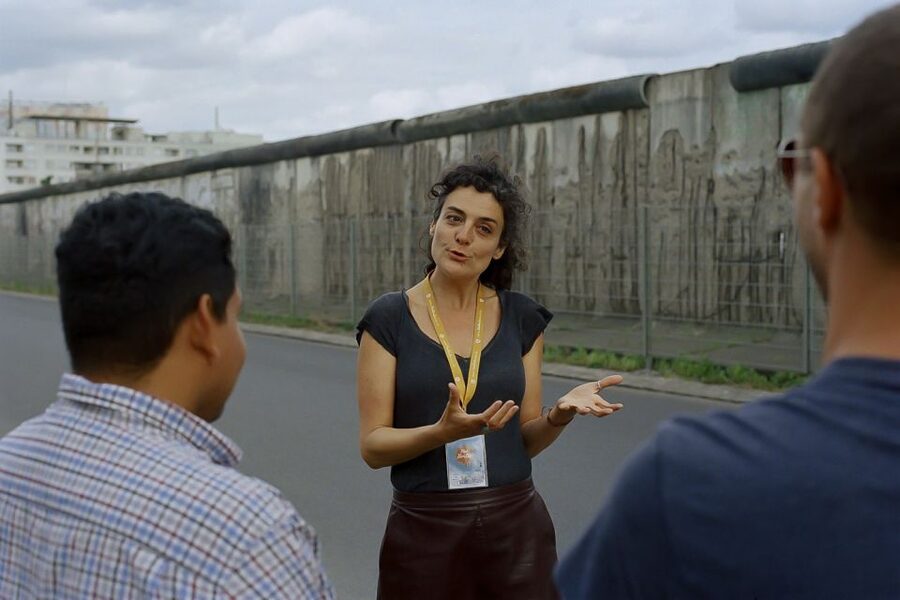
The guides are an important part of the value. The strongest praise centers on people who explain difficult history in plain language and keep the group involved. Paolo is described as especially engaging, while Elisa is praised for a clear route and a warm, lively presentation. Claudia is noted for keeping attention alive with interesting anecdotes, and Catherine has added personal testimony to the visit.
That range matters. Berlin’s divided past can quickly become a lecture full of dates. A good guide helps you understand what those dates meant for people who lived with restricted travel, political pressure, and a city split by barriers.
A few more walks around Berlin worth a look
- Discover Berlin Half-Day Walking Tour
★ 5.0 · 9,624 reviews - Berlin City walk Government District and Places of Democracy
★ 4.7 · 8,467 reviews - Berlin: Third Reich & Cold War Guided Walking Tour
★ 4.9 · 8,378 reviews
Starting at Potsdamer Platz, where Berlin was cut apart
The exact meeting point depends on the option you select, so check it carefully before the day. If you choose hotel pickup, wait in the lobby 10 minutes before the agreed time and provide the hotel name and address when booking. Pickup details should be confirmed with the provider in advance.
Potsdamer Platz is a useful starting point because it shows how Berlin changed after the war and after reunification. The tour uses it as the opening frame for a city once divided by rival political and economic systems.
You will hear about the Wall’s construction in 1961 and the sharp difference between the two sides. West Berlin was tied to a capitalist system, while East Berlin was the capital of the German Democratic Republic, or GDR, with a socialist political structure and strict state control.
The value here is orientation. You are not simply told that Berlin was divided. You begin to picture how the division affected movement through the city and how quickly familiar streets could become border zones.
The eight-minute train ride to Nordbahnhof
From the opening stop, you take an S-Bahn ride of about eight minutes to Nordbahnhof. Your AB public transport ticket must be valid for this part of the route and the later subway rides.
Nordbahnhof was once a ghost station. After the Wall was built, trains running through certain stations in East Berlin passed without stopping. These stations remained closed for almost three decades, watched and controlled because they sat near the border between East and West Berlin.
The short train ride is practical, but it also reinforces the subject of the tour. Berlin’s transport system was not just a way to get across town. During the division, rail lines and stations reflected the political split. A station could remain visible yet unusable, part of the city but cut off from normal life.
The guide spends about 15 minutes around this part of the route. Do not expect a long museum visit here. The stop works best as a quick introduction to the way the Wall changed everyday travel.
Bernauer Strasse, where the Wall became a human tragedy
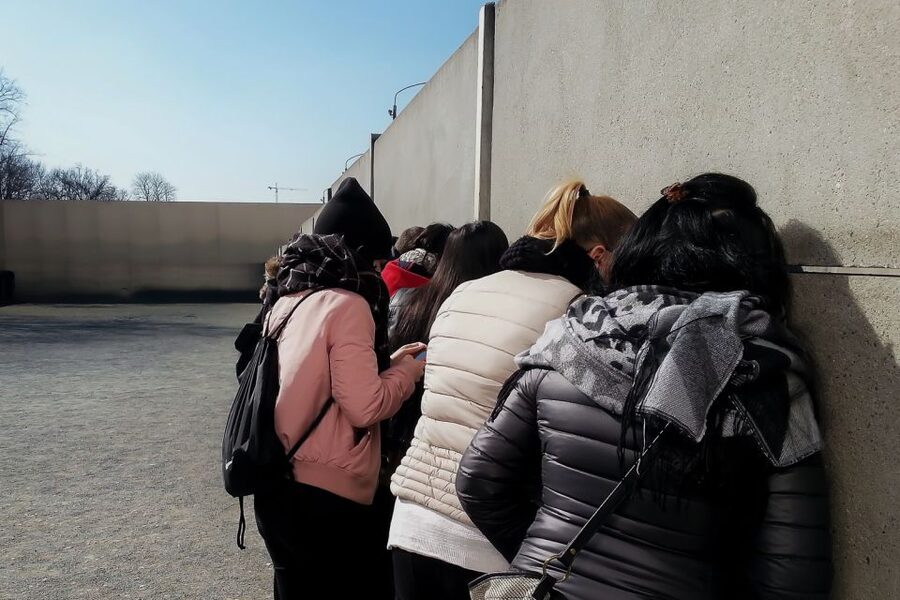
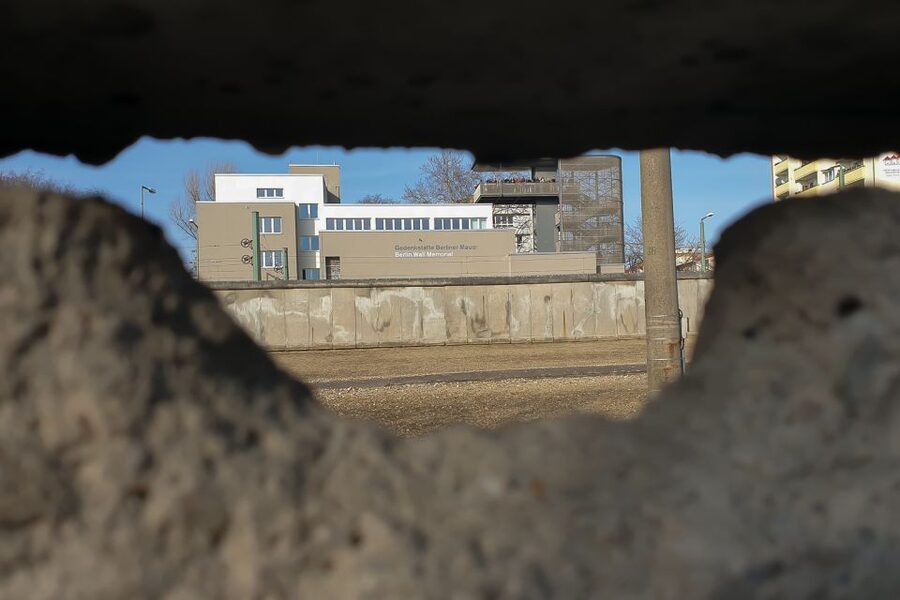
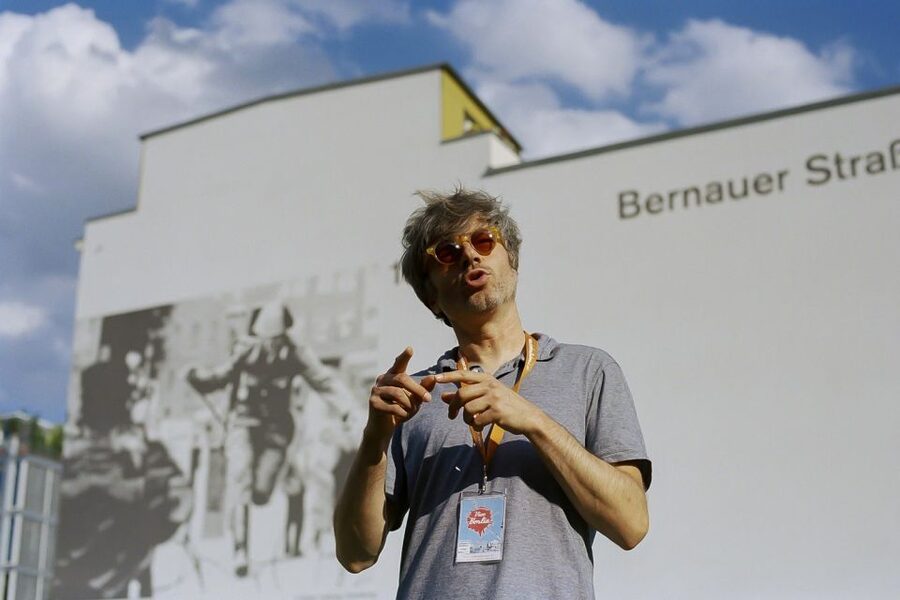
The Berlin Wall Memorial on Bernauer Strasse receives about 50 minutes, the longest stop on the route. That is appropriate. This is the place where the physical remains and the human cost come together most clearly.
You see original portions of the Wall and the former death strip. The memorial also explains escape attempts and the people who died trying to cross. The phrase death strip can sound abstract in a textbook, but here the layout helps you understand the layers of the border system and the danger faced by anyone attempting to get through.
Bernauer Strasse is also closely tied to stories of separation. Families, neighbors, and friends could find themselves on opposite sides of a barrier that appeared with little warning. The memorial preserves more than concrete. It records the damage done to streets, homes, churches, and personal relationships.
I would give this stop your full attention. It is not a quick photo opportunity, and the guide’s explanation matters more than the chance to pose beside a Wall fragment. Comfortable shoes are important because this is a walking tour, and the route keeps moving between sites rather than remaining inside one building.
This is likely the most moving part of the experience. It can also be the most difficult for children or anyone who prefers a lighter introduction to Berlin. The tour deals with failed escapes, deaths, political control, and separation in direct terms.
Same streets, a different way to see them:
- Berlin: Discover Berlin Walking Tour
★ 4.9 · 5,998 reviews - Berlin’s Best: 2 Hour Walking Tour Third Reich and the Cold War
★ 5.0 · 5,486 reviews - Berlin: Hidden Backyards Guided Walking Tour
★ 4.8 · 5,360 reviews - Explore Berlin: See All The Iconic Sights & Some Hidden Gems
★ 5.0 · 4,429 reviews
Alexanderplatz and the pressure behind the protests
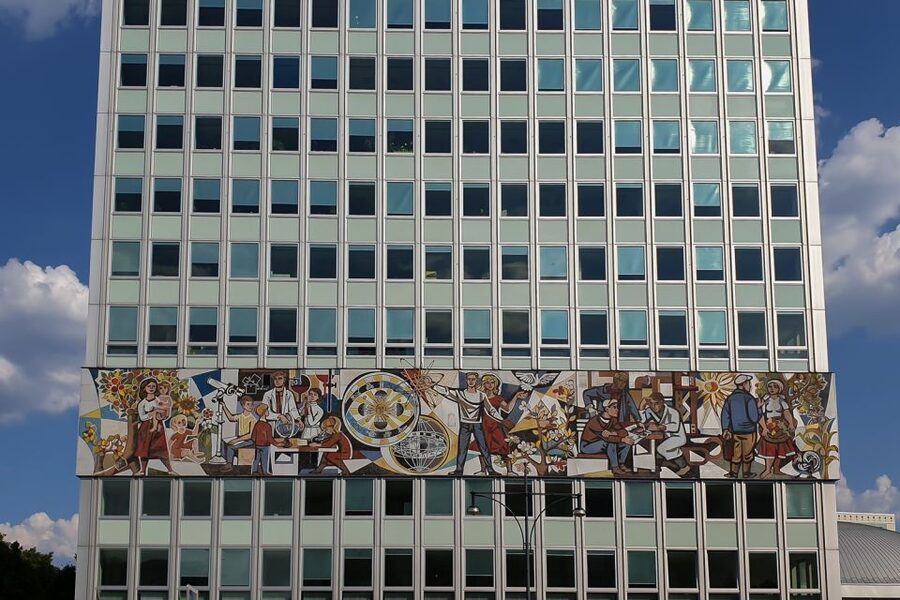
After Bernauer Strasse, you take the subway for roughly 10 minutes to Alexanderplatz. The tour spends about 10 minutes here, using the square to explain the final years of East Germany and the peaceful demonstrations that challenged the regime.
Alexanderplatz is closely linked with the public face of East Berlin. Its large socialist-era buildings and broad open spaces reflect the planning style of the GDR. The square also became an important setting for protest when people began to challenge political repression and the power of the STASI, East Germany’s secret police.
This stop helps you understand that the Wall did not fall because of one dramatic event alone. Pressure built through public demonstrations, political change, and growing resistance to the system. The peaceful protests helped create the conditions for the Wall’s collapse in 1989 and the wider breakup of the Soviet bloc.
The stop is short, so it serves as a guide-led explanation rather than a long architectural study. If you want detailed information about every building around Alexanderplatz, you will need more time elsewhere. On this tour, the square is mainly about the political mood that helped end East Germany.
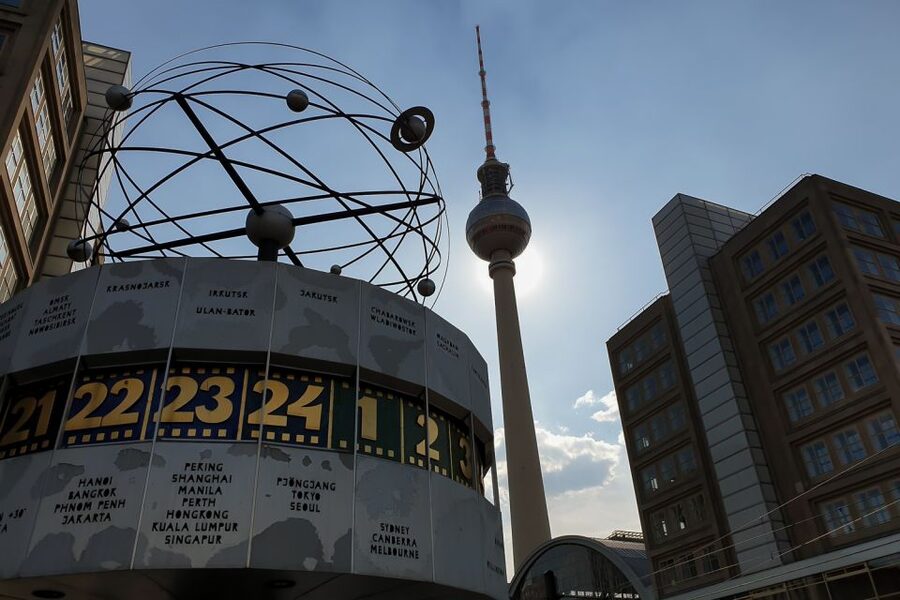
The TV Tower and the symbols of socialist Berlin
The route continues to the Berlin TV Tower for another 10-minute guided stop. The tower is one of the clearest visual symbols of East Berlin and its government.
Built during the GDR period, the tower helped project a modern, confident image of the socialist state. Its height and scale were meant to show technological ability and political ambition. At the same time, it became a useful reminder of how governments use grand public projects to shape identity.
The tour does not include a visit to the tower’s observation deck. Instead, you learn about its place in East Berlin’s story from ground level. That keeps the tour moving, but it also means you should not book this experience expecting city views from above.
This is one of the stops where the guide’s interpretation adds the most value. The building is easy to recognize, but its political meaning is less obvious. A guide can connect the tower to the GDR’s public image and to the wider socialist architecture around Alexanderplatz.
East Side Gallery and the Wall’s unexpected afterlife
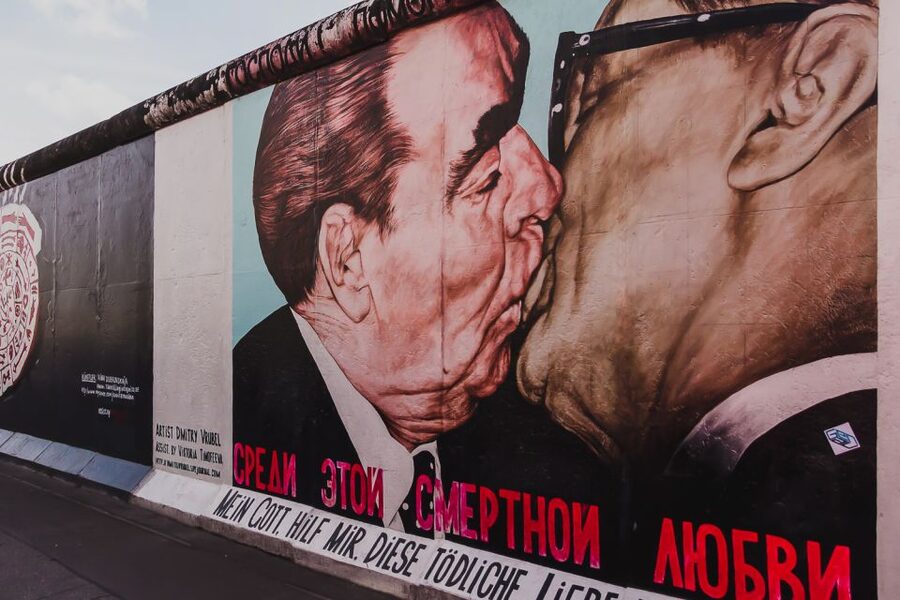
Another subway ride, about 10 minutes, brings you to the East Side Gallery. The final guided portion lasts around 15 minutes.
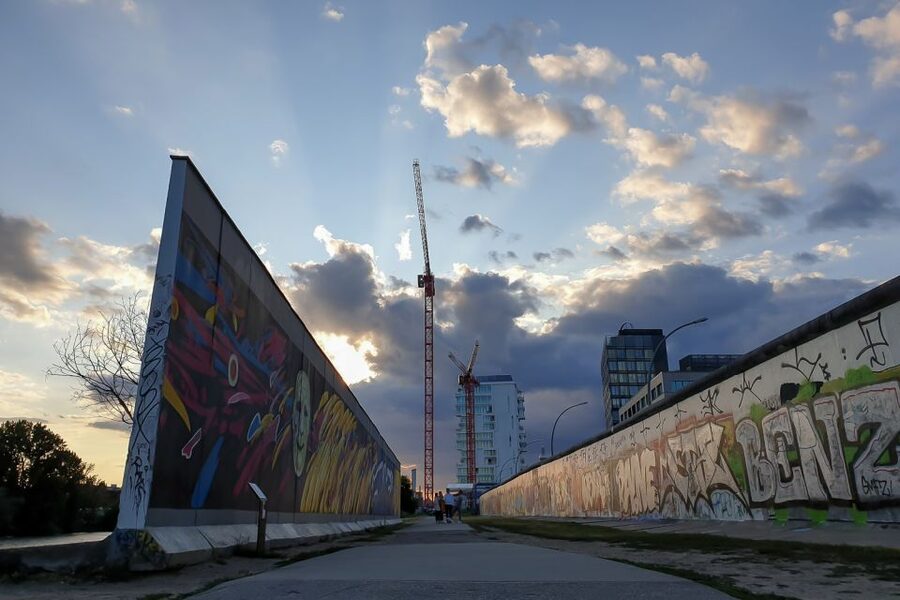
The gallery covers a long surviving section of the Wall with 104 murals. The best-known image is the kiss between Soviet leader Leonid Brezhnev and East German leader Erich Honecker. It is an unusual ending to a tour that begins with border control, escape attempts, and deaths. Here, the Wall becomes an open-air artwork and a place where artists turned a former instrument of division into a public statement.
You will want time for photographs, but keep in mind that the formal guided section is short. The East Side Gallery is a long stretch, and 15 minutes gives you an introduction rather than a detailed look at every mural.
The gallery also raises a useful question: what should happen to objects tied to painful history? Some parts of the Wall were removed, while this section was preserved and repainted. The result is not a perfect historical display, but it gives the city a visible place to discuss memory, politics, and reunification.
As a final stop, it offers a lighter visual note without erasing the darker material earlier in the day.
How the timing and transport affect the experience
The tour lasts three to three and a half hours, with walking, two subway trips, and one S-Bahn ride. The listed transit sections take about 28 minutes in total, not counting waiting or transfers.
That structure lets you see more than one neighborhood without spending the whole day walking. It also means you should be ready to move on schedule. If you like slow stops with plenty of time for photographs, this route may feel brisk, especially at Alexanderplatz, the TV Tower, and East Side Gallery.
You need a valid Berlin AB ticket for the day. It is not included in the tour price, so arrange that before you meet the guide. The provider does not supply food or drinks, and there is no meal break built into the route. Have water with you and wear shoes suited to several hours on city streets.
Language choice is a real advantage. Guides are available in English, German, Italian, French, and Spanish. For Italian-speaking groups, Paolo, Elisa, and Claudia have been singled out for clear, friendly, lively presentations. French-speaking groups may appreciate Catherine’s personal connection and testimony. The available guide depends on scheduling, so do not assume a particular person unless the provider confirms it.
Is $351 good value for your group?
The cost is $351 per group of up to six people. That makes the price easier to justify for four to six people than for a couple, since the cost per person drops sharply as your group grows.
You are paying for a private or small-group format, a live guide, and a route that joins several parts of Berlin. The guide’s role is central. You are not just paying to be led from one Wall fragment to another. You are paying for explanations of East German life, escape attempts, political repression, socialist planning, and the peaceful movement that helped end the regime.
For one or two people, the price is high compared with a standard group walking tour. For a family or group of friends, the ability to ask questions and choose a suitable language can make the cost more reasonable. Optional hotel pickup adds convenience, especially if you are unfamiliar with Berlin’s transport system, but confirm the arrangement before the day.
Free cancellation is available up to 24 hours in advance, and you can reserve now and pay later. A private tour cannot be organized with less than 72 hours of notice, so leave a few days between booking and your visit.
Who should book this East Berlin tour?
I would choose this tour if you want a guided introduction to Berlin’s Cold War story and prefer a route with strong historical structure. It suits first-time visitors who want to understand how the Wall affected daily life, not just see famous remnants.
It is also a good fit if your group needs an Italian, French, Spanish, English, or German guide. The repeated praise for guides such as Paolo, Elisa, Claudia, and Catherine points to the importance of a warm, engaging presentation style. Their use of anecdotes and personal testimony can make the subject easier to connect with.
You may want something else if you prefer a very slow walking tour, a museum-heavy experience, or a full day focused only on the Wall. This route covers a lot of ground and uses public transportation. Its strength is the broad story, not a long stay at any single site.
Families can benefit from the clear sequence of places, though the subject matter is serious. Anyone with limited stamina should note the walking and transfers. The tour does not advertise a separate accessibility plan, so contact the provider before booking if you have specific mobility needs.
Should you book it?
Book this tour if you want a clear, human account of East Berlin and have a group large enough to share the $351 cost. Bernauer Strasse gives the tour its emotional force, Alexanderplatz explains the political change, and East Side Gallery shows how Berlin later reshaped the Wall’s meaning.
Skip it if you only want colorful murals or a relaxed stroll. For history-minded visitors, though, the route offers a strong three-hour introduction, especially when matched with a guide who uses personal stories and sharp local context.
FAQ
How long does the East Berlin and Wall walking tour last?
The tour lasts approximately three to three and a half hours.
What places does the tour visit?
The route includes Potsdamer Platz, Nordbahnhof, the Berlin Wall Memorial on Bernauer Strasse, Alexanderplatz, the Berlin TV Tower area, and the East Side Gallery.
Is public transportation included?
No. You need a valid Berlin AB public transport ticket, and that ticket is not included in the tour price.
How much does the tour cost?
The price is $351 for a group of up to six people.
Which languages are available?
Live guides are available in Italian, French, English, Spanish, and German.
Can I book a private group?
Yes. A private group option is available.
Is hotel pickup offered?
Optional hotel pickup is available. You should wait in the hotel lobby 10 minutes before the scheduled pickup and provide your hotel name and address when booking. Confirm the pickup details with the provider in advance.
Can I cancel the tour for a refund?
Yes. You can cancel up to 24 hours in advance for a full refund.
Just added around Berlin
- Berlin Walking Tour★ 4.5 · 378 reviews
- Small Group Walking Tour of East Berlin with a French Guide★ 5.0 · 176 reviews
- Berlin Street Art Walking Tour – Off The Grid★ 5.0 · 270 reviews
- Berlin Highlights Private Guided Walking Tour★ 4.5 · 89 reviews
- Private Walking Tour: World War 2 and Cold War Sites in Berlin★ 5.0 · 230 reviews
- East Meets West: Berlin Food Culture & Street Art★ 5.0 · 157 reviews
- Kreuzberg Berlin: Off the Beaten Track PRIVATE Walking Tour★ 5.0 · 128 reviews
- The History of Berlin: WWII PRIVATE Walking Tour With Locals★ 5.0 · 209 reviews
Berlin Walking Tours, compared.
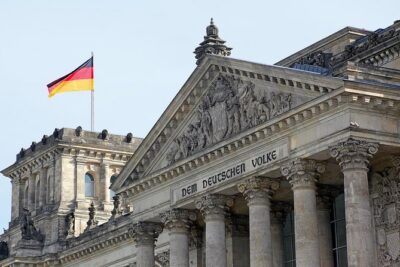
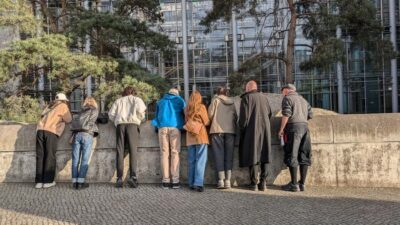
Berlin City walk Government District and Places of Democracy
Read our review →
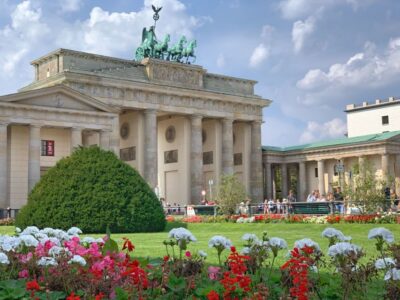
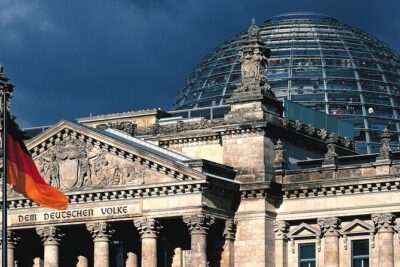
Berlin’s Best: 2 Hour Walking Tour Third Reich and the Cold War
Read our review →
Explore Berlin: See All The Iconic Sights & Some Hidden Gems
Read our review →
Third Reich Berlin: Hitler and WWII Walking Tour
Read our review →Browse the lists this tour appears in