
Review · HISTORY WALKING TOURS
A Walk Through Time: History of Liverpool Walking Tour
Liverpool’s docks tell a bigger story. This walking tour links the city’s medieval beginnings with the port, cotton trade, Atlantic commerce, and modern Liverpool. I like the way it uses real places, not just museum displays, and I like the strong local voice of guides such as John and Julio. The main drawback is its brisk pace, especially when wind, traffic, or a fast-speaking guide makes it harder to catch every detail.
For $27.74, you get a useful first look at central Liverpool in about 1 hour and 50 minutes. The focus is commerce and maritime history, including the city’s role in the transatlantic slave trade. You also get a clear orientation to major sights, though this is more about explanation than entering buildings or seeing elaborate interiors.
If you enjoy history with plenty of facts, this is a good way to begin a Liverpool visit. Wear warm clothes and comfortable shoes, and arrive ready to listen closely. The route covers a lot of ground and packs several centuries into one walk.
Five things to know before you book
- The route connects ten major sites, from the Royal Liver Building to the Old Dock and Royal Albert Dock.
- The strongest subject is Liverpool as a port, with special attention to trade, cotton, docks, and the city’s difficult Atlantic past.
- Local guides John and Julio receive especially warm praise for clear explanations, humor, and enthusiasm.
- The walk is good value at $27.74, particularly if you want a broad introduction before exploring on your own.
- The tour can feel fast, and the open waterfront may be cold, windy, or difficult for some people to hear in.
- The published meeting details need checking, since the route description finishes at the Three Graces while the stated end point is the Queen Victoria Monument.
Why Liverpool’s waterfront is the right starting point
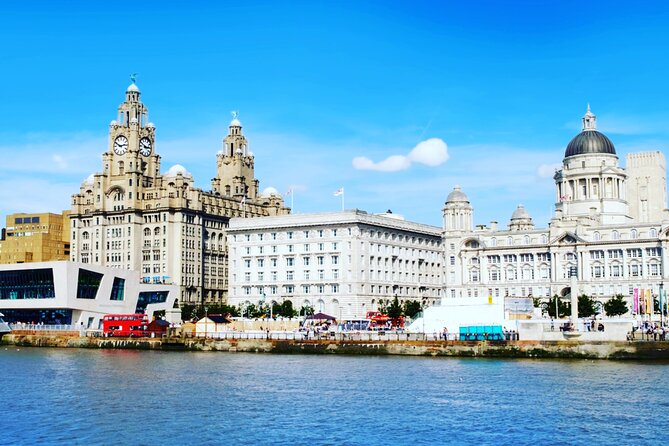
The walk begins at the Royal Liver Building on the Pier Head, part of Liverpool’s famous Three Graces. This is a smart place to start because you immediately see the city’s grand waterfront and get a sense of the ambition behind its port.
The opening talk lasts about ten minutes. Your guide introduces the Three Graces and explains how the waterfront came to represent Liverpool’s links with the wider world. It is a scene that makes more sense once you know what you are looking at: grand commercial buildings, open river views, and a city shaped by ships, cargo, migration, and trade.
The Royal Liver Building is not simply a photo stop here. It sets up the central idea of the walk. Liverpool’s story is not only about the Beatles, football, or nightlife. It is also about work, money, shipping, warehouses, and the often uncomfortable forces that made the city prosperous.
There is no admission included at this first stop. You see and discuss the building from the walking route rather than taking a ticketed interior tour.
More History Walking Tours in the UK
- A History of Terror – Belfast City Centre Walking Tour
★ 5.0 · 2,883 reviews - Edinburgh: Old Town History and Tales Walking Tour
★ 4.8 · 2,361 reviews - Old Town Walking Tour History and Tales in Edinburgh
★ 5.0 · 2,168 reviews
Medieval Liverpool at Liverpool Parish Church Gardens
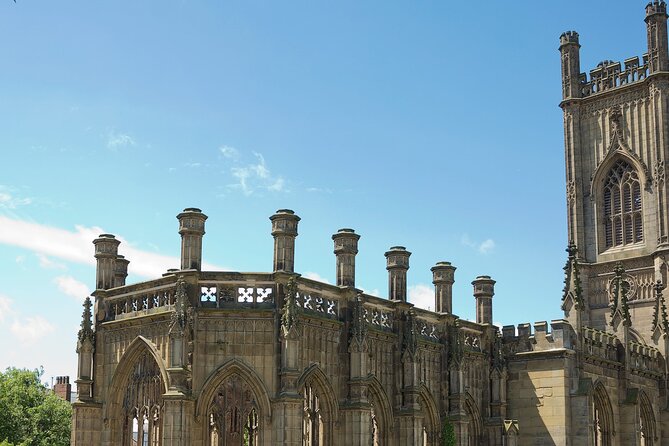
From the waterfront, you cross the Strand to Liverpool Parish Church Gardens. This stop moves the story back to the city’s medieval beginnings, with attention to the site once known as St. Nicholas’ Church.
The church was named for Saint Nicholas, the patron saint of sailors. That connection gives the stop extra meaning, since the sea has shaped Liverpool for centuries. Here, you learn about Liverpool’s creation in 1207 and the evidence that remains in the area.
This is one of the more useful parts of the walk because it gives you a timeline. Without it, Liverpool’s grand dock buildings can seem to have appeared fully formed. The medieval stop shows that the port grew from an older settlement and developed over many stages.
The visit lasts about fifteen minutes, and admission is free. Expect an outdoor explanation rather than a long church visit. If you want to study plaques, stones, or architectural details closely, you may need to do that later at your own pace.
Old Hall Street and the business of empire
Old Hall Street brings the walk into Liverpool’s commercial past. The road dates to the 13th century, and the route discusses the old town hall, Grade I listed buildings, and the Cotton Exchange.
This is where the tour’s economic story becomes more direct. Liverpool grew into a global port because goods moved through its docks and businesses handled trade from many parts of the world. Cotton became especially important, and by the late 18th century Liverpool had overtaken London in the cotton trade.
Your guide also addresses Liverpool’s role in Atlantic trade and the transatlantic slave trade. That subject is essential, not optional, if you want an honest picture of how the city developed. The tour does not present Liverpool’s prosperity as a simple success story. It connects wealth and architecture with exploitation, forced labor, and the wider Atlantic economy.
The stop takes around ten minutes and is free. The main challenge is concentration. Old Hall Street is part of the working city, so traffic and street noise can compete with the guide. One guide, John, is praised for speaking clearly even in noisy places, but another person may speak quickly. Stay near the guide and ask questions if you miss a point.
Liverpool Town Hall and Georgian power
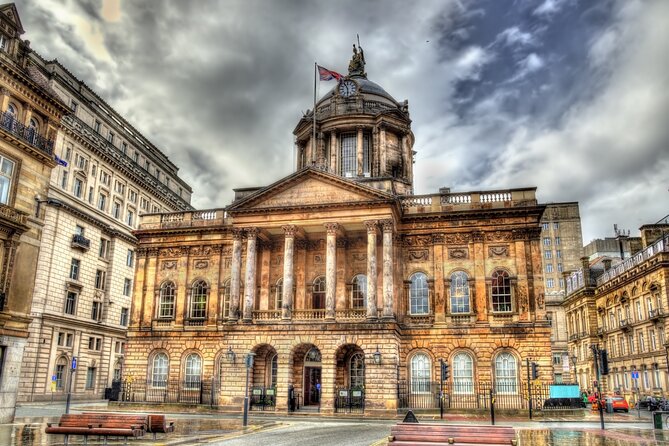
Liverpool Town Hall is another short stop, lasting about ten minutes. Built in 1749, it is presented as one of Britain’s finest surviving Georgian buildings.
The value here is not only the architecture. The building helps explain Liverpool’s rise as a center of commerce and civic power. As trade expanded, the city needed institutions that could manage money, shipping, public business, and the interests of merchants.
Admission to the town hall is not included. You should expect an exterior explanation rather than an interior visit. If the building interests you, note it as a place to return to after the walk.
This section works well for visitors who want to understand how commercial success changed the shape of the city. The guide links a physical building with the people and systems behind Liverpool’s growth, which makes the stop more useful than a quick photograph.
Same streets, a different way to see them:
- Magical London: Harry Potter Guided Walking Tour
★ 4.7 · 22,044 reviews - Edinburgh: Harry Potter Magical Guided Walking Tour
★ 4.8 · 11,944 reviews - Edinburgh Castle: Guided Walking Tour with Entry Ticket
★ 4.7 · 11,699 reviews - Underground Vaults Walking Tour in Edinburgh Old Town
★ 4.5 · 8,506 reviews
Castle Street and the lost medieval castle
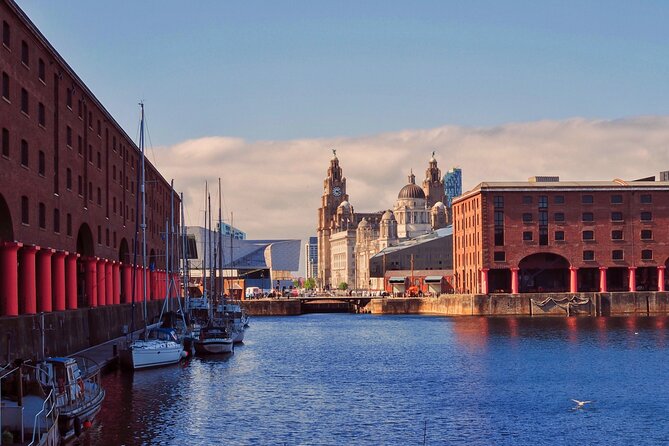
Castle Street offers one of the clearest examples of Liverpool changing through time. The architecture shows different periods layered along one route, and the guide explains the street’s connection with Liverpool Castle.
The castle itself no longer survives as a complete structure, so this stop depends on explanation and imagination. You are not walking through intact medieval walls. Instead, you learn why the castle mattered and how the surrounding area developed.
The walk down Castle Street lasts about fifteen minutes. It is a good place to notice how Liverpool’s old routes relate to its later commercial center. The street also gives you a break from a single subject, since the guide moves from medieval defense to later civic and business growth.
At the Queen Victoria Monument, the tour returns to the story of Liverpool’s development as a major world port. The guide connects the castle site, the growth of the city, and Liverpool’s position in global trade by 1800.
The route description places the monument as a stop near the end. The meeting information also identifies the Queen Victoria Monument at One Derby Square as the stated end point, so check the exact arrangement when booking. The supplied tour details describe a final return to the Three Graces as well, creating a small inconsistency in the route information.
Liverpool ONE and the modern city
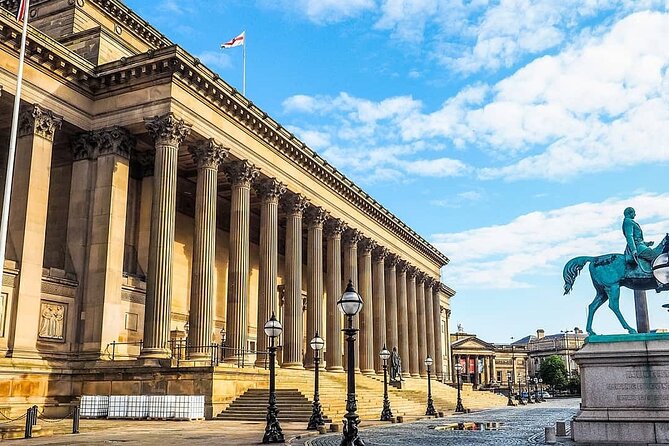
Liverpool ONE is the tour’s modern contrast. After medieval streets, Georgian buildings, and commercial history, you walk through a major shopping and entertainment district.
The guide discusses Liverpool ONE, its shops, and its attractions for about ten minutes. This part is less about old architecture and more about how the city uses central land today. It gives you a quick sense of modern Liverpool and helps connect the historic core with the places you may visit later.
Some people may find this stop less compelling than the docks or old buildings. That is fair. Its value is mainly as a transition between the historic city and the former dock area. If you want a tour devoted only to old Liverpool, this section may feel like a detour. If you want a broad introduction, it helps show that the city is still changing.
The Old Dock and Liverpool’s commercial breakthrough
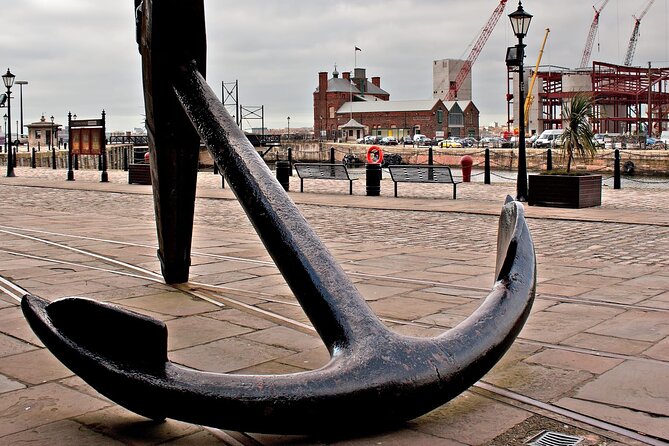
The Old Dock is one of the key stops. Built in 1715, it is described as the first commercial wet dock on the planet.
This site explains why Liverpool could handle ships and cargo more efficiently. A wet dock allowed ships to remain afloat as the tide changed, giving merchants and port workers more control over loading and unloading. That practical improvement helped Liverpool compete as a port.
The guide presents the Old Dock as the turning point that helped Liverpool become one of the world’s most efficient ports. You do not need a specialist background to follow the explanation. The important idea is simple: new dock technology changed the scale and speed of trade.
The stop lasts about ten minutes and is free. It may be easy to miss the importance of the location if you pass through alone, since much of the original dock is not presented like a large open historic site. That is why the guide’s explanation matters here.
Royal Albert Dock and Liverpool’s 19th-century reach
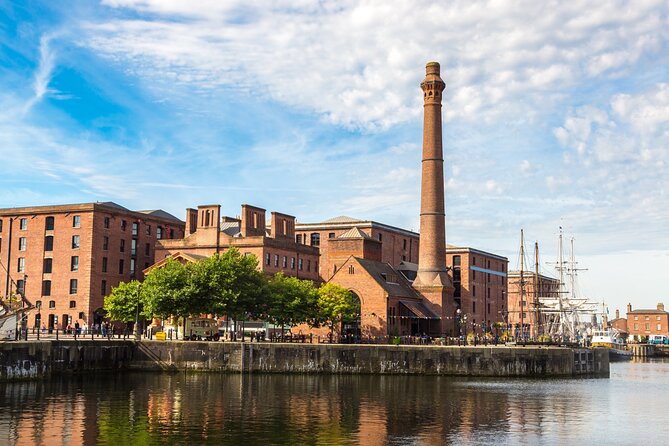
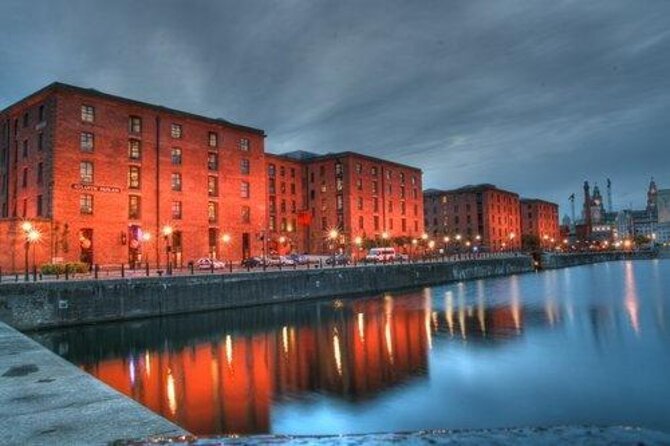
Royal Albert Dock takes you into the 1800s. Built in 1846, it became a major center of Liverpool’s commerce and remains one of the city’s best-known waterfront areas.
This is one of the more visually rewarding portions of the walk. You get the large brick dock buildings, open water, and a setting that makes Liverpool’s commercial age easier to picture. The guide also discusses Liverpool’s involvement in the First and Second World Wars, adding a later chapter to the port story.
The stop lasts about ten minutes and does not require an admission ticket. You may want to return here after the tour, since the walk only gives you a short introduction. Royal Albert Dock includes several attractions, but this tour does not function as a museum visit and does not provide entry to them.
What the guides do well
The guide is the heart of this experience. John receives especially strong praise for his passion for Liverpool, his ability to answer questions, and his skill at making complicated subjects understandable. He also adds local humor, which helps keep a serious subject from becoming heavy.
Julio is also praised for being engaging and well informed. The guide names matter because the experience depends heavily on who leads it. A strong guide can connect a churchyard, a street, and a dock into one understandable story. A less polished delivery may leave you trying to keep up with dates and names.
Several comments describe the walk as packed with information. That is a benefit if you like history, but it also explains the main warning: the tour can be fast-paced. One person found the guide spoke too quickly, while others praised clear delivery even with traffic noise.
You can improve your experience by staying close, listening for the main timeline, and asking questions when the guide pauses. Do not worry about remembering every date. Try to follow the larger pattern: medieval settlement, maritime trade, dock innovation, global commerce, war, and modern redevelopment.
Price, group size, and practical comfort
At $27.74 per person, the price is reasonable for a nearly two-hour guided orientation in central Liverpool. You are paying for a guide’s interpretation across ten locations, not for admission to attractions. If you plan to visit the Royal Liver Building, Town Hall, or Royal Albert Dock attractions separately, budget for those costs.
The group can include up to 40 people. That is a fairly large walking group, so the guide may need to speak loudly and gather everyone at busy crossings. Smaller groups are possible, and one account specifically praised the more personal feel of a small group, but you should not assume that every departure will be small.
The tour is offered in English and uses a mobile ticket. Service animals are allowed, public transport is nearby, and most people can take part. The route is outdoors, so comfortable shoes matter more than dressy clothes.
Liverpool’s waterfront can be cold and windy. One person specifically advised bringing a warm coat or jacket, and that is sensible even when the calendar suggests mild weather. The tour requires good weather. If poor weather causes cancellation, you are offered another date or a full refund.
You can cancel for a full refund up to 24 hours before the start time. Late cancellations and late changes are not refundable under the stated policy.
Who will get the most from this walk?
I would choose this tour for a first visit to Liverpool, especially if you want the city to make sense before you explore on your own. It suits anyone interested in ports, trade, architecture, medieval origins, or the social cost of commercial growth.
It also works well for people who know Liverpool mainly through music. The walk gives you a different frame for the city and shows why Liverpool mattered long before the Beatles.
Local residents can enjoy it too. One local who had lived in Liverpool for more than 50 years said the walk revealed facts they had never learned. That is a good sign for the depth of the material.
I would be more cautious if you dislike standing outdoors, need a slow pace, or want to enter several historic buildings. This is a spoken history walk with exterior stops. It is not designed as a museum tour, a Beatles tour, or a relaxed photo stroll.
Should you book A Walk Through Time?
Book it if you want a strong first orientation to Liverpool and enjoy a guide who fills the streets with dates, stories, and hard questions about trade. The best parts are the medieval origins, the Old Dock, the cotton economy, and the clear link between Liverpool’s wealth and Atlantic commerce.
Skip it if you want a quiet walk, a small group guaranteed at every departure, or extensive time inside buildings. If you book, wear warm layers, comfortable shoes, and keep your schedule flexible enough to confirm the precise finishing point. For a modest price, this is a useful way to understand why Liverpool became such an important port and how that past still shapes the city you see today.
FAQ
Where does the tour begin?
It begins at the Liver Building, Pier Head, Liverpool L3 1HU, UK.
Where does the tour finish?
The stated end point is the Queen Victoria Monument at One Derby Square, James Street, Liverpool L2 1AB. The route description also refers to a final stop at the Three Graces, so confirm the finishing arrangement when booking.
How long does the walking tour last?
The tour lasts approximately 1 hour and 50 minutes.
What language is the tour offered in?
The experience is offered in English.
How much does the tour cost?
The listed price is $27.74 per person.
Are attraction admission fees included?
Admission is not included for the Royal Liver Building or Liverpool Town Hall. The other listed stops show free admission.
How large can the group be?
The maximum group size is 40 people.
Is the tour suitable for most people?
Most people can participate, and service animals are allowed. The experience takes place outdoors and involves walking between several central Liverpool sites.
What happens if the weather is poor?
The tour requires good weather. If it is canceled because of poor weather, you are offered a different date or a full refund.
Just added around the UK
- Belfast Political Tour-Conflicting Stories Walking Tour★ 4.5 · 459 reviews
- Belfast Eclectic Walking City Center Experience, The Marti Way★ 5.0 · 348 reviews
- The Real Eclectic Belfast City Walking Tour/Experience.★ 5.0 · 152 reviews
- The Real Story of Belfast walking tour with a local guide★ 5.0 · 144 reviews
- Best of Belfast Walking Tour★ 5.0 · 399 reviews
- Belfast Centre Food Tour of 12+ Local Irish Dishes & Drinks★ 5.0 · 266 reviews
- Belfast Troubles Murals Street Art and Peace Wall Walking Tour★ 5.0 · 163 reviews
- BATH: 2-Hour Bath Walking Tour of Bridgerton Filming Locations★ 5.0 · 99 reviews
History Walking Tours, compared.
History and Hauntings of Salem Guided Walking Tour
Read our review →
Freedom Trail History Small Group Walking Tour
Read our review →
Historic Charleston Guided Sightseeing Walking Tour
Read our review →
Tapas Walking Tour with Food, Wine, and History
Read our review →
Savannah History and Haunts Candlelit Ghost Walking Tour
Read our review →
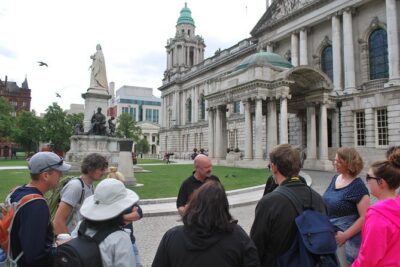
A History of Terror – Belfast City Centre Walking Tour
Read our review →Browse the lists this tour appears in