
Review · HISTORY WALKING TOURS
Berlin: Charité Hospital Walking Tour of Medical History
Medicine gets personal here. This two-hour Charité walking tour links Berlin’s oldest hospital stories with the people, politics, and ethical failures that shaped modern medicine. You begin at Robert-Koch-Platz and finish near Berlin Central Station, making it easy to add to a day of sightseeing.
I like the visit to the Veterinary Anatomy Theatre, a rare surviving 18th-century building, and I like the tour’s honest treatment of both medical progress and institutional wrongdoing. The main drawback is simple: most of the experience takes place outside, so cold or wet weather can make the two hours feel long.
The tour costs $29 per person and includes an expert local guide plus admission to the Veterinary Anatomy Theatre. It is best for adults and older teenagers who enjoy serious history, medical stories, and the less polished side of Berlin. Recent ratings put it at 4.9 out of 5 from 276 bookings, with special praise for its clear explanations, lively pacing, and guides such as Martina.
Key points to know before you book

- The story begins in 1710: Charité started as a plague house, built to protect Berlin from an approaching epidemic.
- The Veterinary Anatomy Theatre is the visual highlight: You step into Berlin’s oldest surviving academic building and see how animal ailments were studied in the 18th century.
- Famous names appear in context: Robert Koch and Rudolf Virchow are part of a wider story about research, medicine, and social change.
- The tour does not avoid difficult subjects: Nazi racial hygiene, psychiatric patient murders, and the political pressures of East Germany receive direct attention.
- Rachel Hirsch adds an important social chapter: Her appointment in 1913 made her the first woman to hold a medical professorship in Prussia.
- Cold-weather clothing matters: You walk and stand outdoors for much of the two hours, even though the theatre provides an indoor break.
Starting at Robert-Koch-Platz and meeting medical history
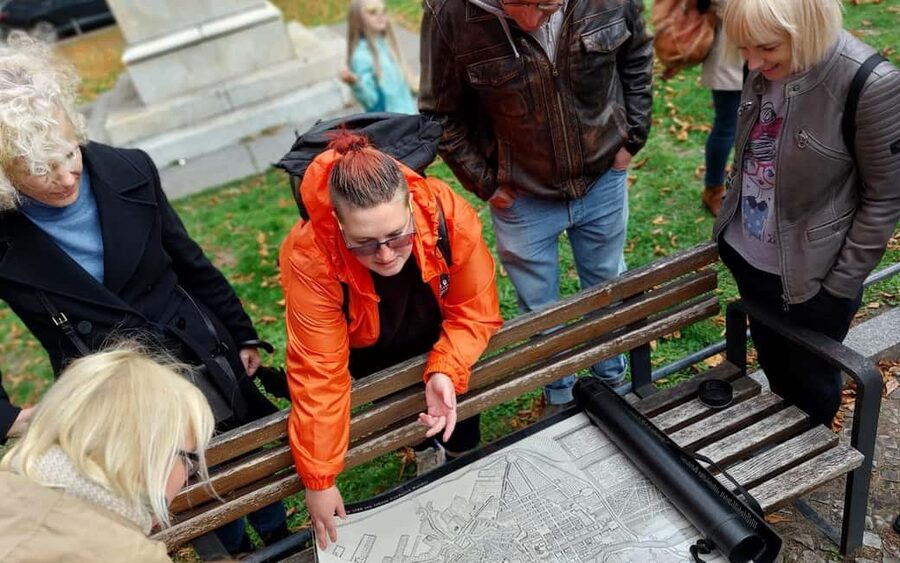
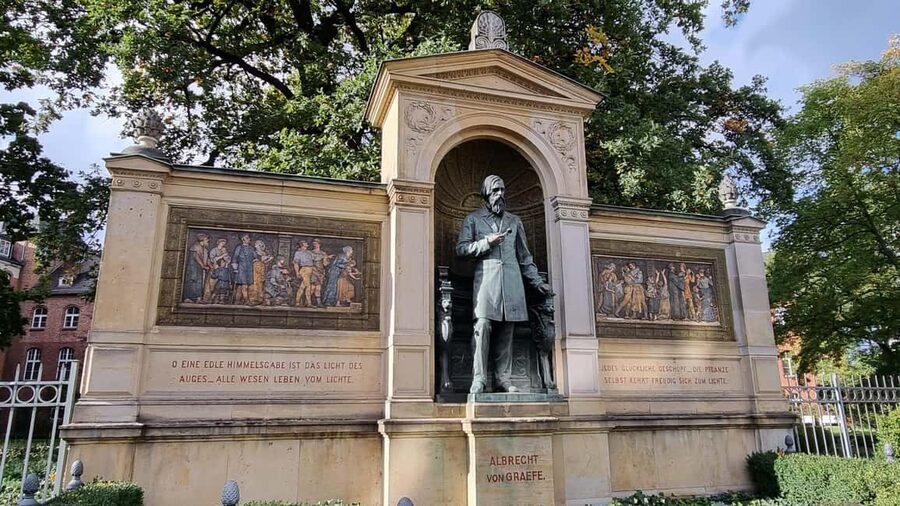
Your meeting point is Robert-Koch-Platz, by the statue of Robert Koch. Look for a guide with an orange umbrella. That small marker matters in a city where several streets and squares can look alike, and the statue gives you a clear place to get your bearings.
The opening story takes you back to 1710, when Charité began as a basic plague house. It was not yet the grand medical institution associated with Berlin today. Its first purpose was public protection during a health crisis, a reminder that hospitals have often developed from urgent civic needs rather than polished plans.
That beginning also sets the tone. You will not get a spotless parade of medical triumphs. Early treatment included bloodletting, mercury, and amputations. Some of those methods now sound alarming, but they help show how uncertain medical care once was. The tour asks you to look at old medicine in its own setting, without pretending it was more advanced than it was.
I find this a useful way to begin because it gives the later achievements real weight. When you hear about scientific discoveries at Charité, you understand the distance between the plague house of 1710 and the research hospital that followed.
The guide’s role is important here. Recent ratings give particular credit to guides who make complicated material easy to follow without turning it into a lecture. Martina, in particular, is praised for presenting the campus story with energy and clarity. The best version of this tour should feel like a conversation with a sharp local guide, not a list of dates.
More History Walking Tours in Berlin
- Berlin: History of the Third Reich Guided Walking Tour
★ 4.7 · 791 reviews - Berlin Historical Highlights Walking Tour
★ 4.9 · 657 reviews - Berlin Private Complete History All Day Walking Tour
★ 5.0 · 474 reviews
The Veterinary Anatomy Theatre and its 18th-century purpose
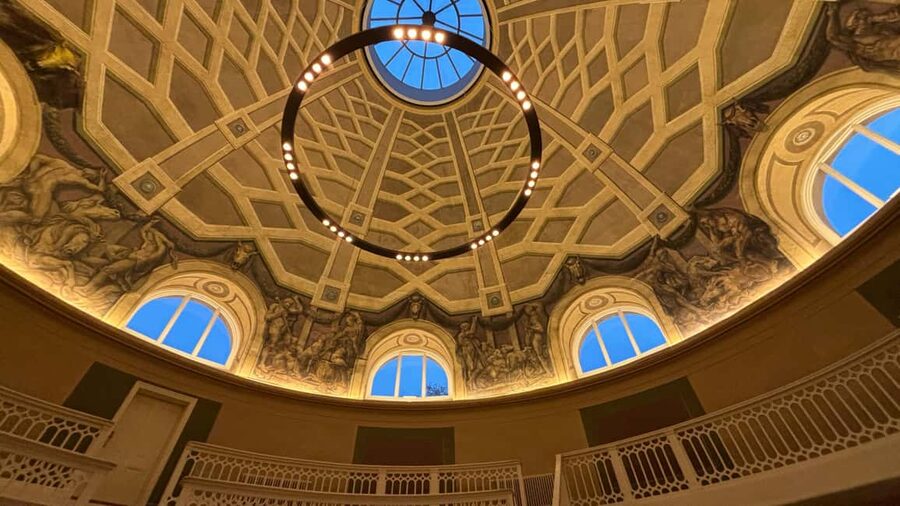
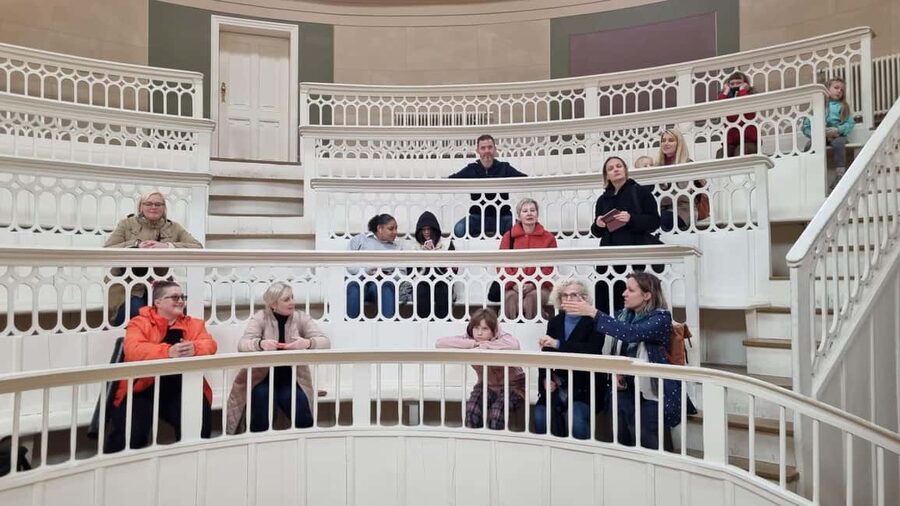
The visit to the Veterinary Anatomy Theatre lasts about 15 minutes, but it is one of the tour’s most distinctive stops. This is the oldest academic building still in existence in Berlin, and its purpose was practical: doctors and scholars examined the illnesses of livestock and cavalry horses.
That focus tells you something about 18th-century Berlin. Animal health was tied to food supplies, farming, transport, and military power. Studying a sick horse was not a side project. It could affect the city’s economy and the army’s ability to move.
The building also gives the tour a welcome change of pace. Much of the Charité campus is viewed from outside, while the theatre gives you an interior setting with a direct link to older teaching methods. You can better picture how anatomy was taught before modern laboratories and imaging technology.
Do not expect a long museum visit. The stop is brief, and the theatre can occasionally close for internal events or public holidays. If it is unavailable, the tour still covers the surrounding campus and its main stories, but this is the one part of the experience you will most want to confirm if it is central to your plans.
The tour description lists the theatre visit as free admission, included with the $29 price. That helps the value. You are not paying a separate museum fee on top of the guided walk.
Walking the neo-Gothic Charité campus

After the theatre, the route circles the historic neo-Gothic campus. The architecture gives the medical stories a strong setting, with old walls and institutional buildings that make the hospital feel like a small historical district rather than a single attraction.
The tour includes several guided sections of about 15 minutes each. The timing suggests a steady walk with stops for explanation, rather than a long visit inside one building. Since hospital and university work continue here, you should not expect access to every doorway or interior room.
That limitation is worth understanding before you book. You are seeing a working medical campus, not a fully preserved museum. Some areas are restricted for guided visits, and entry to buildings where hospital or university activities take place is not included. You can explore some permitted areas independently after the tour, but the guided portion remains mainly outdoors.
For me, that trade-off makes sense. The outdoor route lets you connect the campus to the city around it, while the limits protect the people who use the hospital today. Just bring comfortable shoes and water. You will walk and stand for roughly two hours.
Robert Koch, Rudolf Virchow, and the making of modern medicine
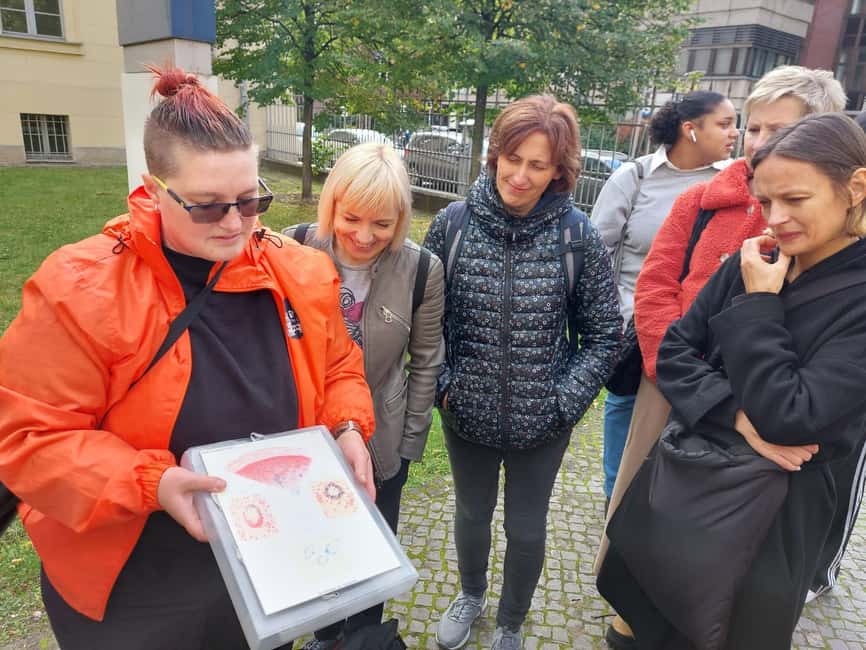
Charité is closely linked with Robert Koch and Rudolf Virchow, two of the major names in medical history. The value of hearing about them here, rather than in an abstract textbook, is that the buildings and institution give their work a physical setting.
The tour uses these figures to explain how medicine moved toward research, diagnosis, and public health. It also avoids making famous doctors into marble statues. The strongest part of the experience is the connection between personal careers, institutional politics, and the social attitudes of the time.
That approach received repeated praise for presenting medical figures with context. You hear about the development of their careers and about how their reputations look when considered alongside the political conditions around them. This is more useful than simply memorizing who discovered what.
You may also recognize stories connected to the television series Charité. The tour explains the real people and events behind the show, which adds interest if you have watched it. You do not need to know the series in advance, though. The historical material is designed to work on its own.
The tour is offered in English and German. If you want medical history without technical language taking over, the guide’s explanations matter more than the language choice itself. The strongest recent comments praise competent guides and an engaging pace, even in chilly weather.
More History Walking Tours in Germany
- Berlin Private Half-Day Walking Tour: Discover the German Capital’s History
★ 5.0 · 244 reviews - Berlin History Walking Tour with a French-Speaking Guide
★ 5.0 · 240 reviews - The History of Berlin: WWII PRIVATE Walking Tour With Locals
★ 5.0 · 209 reviews - East Berlin Food & History Tour with Eating Europe
★ 5.0 · 204 reviews
Rachel Hirsch and a major step for women in medicine
One of the most valuable stories is Rachel Hirsch’s. In 1913, she became the first woman to hold a medical professorship in Prussia.
That appointment was a major step, but the story is not presented as a smooth victory. Hirsch faced resistance within the institution, showing how professional recognition could arrive alongside daily barriers. Her career adds a social dimension to the tour that balances the better-known stories of male scientists.
I especially like this part because it expands the meaning of medical history. Progress was not only about new theories, microscopes, or treatments. It also involved deciding who could study, teach, lead, and be taken seriously.
If you are interested in women’s history, education, or changing social attitudes, Rachel Hirsch’s story may be one of the strongest reasons to choose this tour. It is also a useful reminder that institutions can advance medicine while resisting social change at the same time.
Charité under the Nazi regime

The tour’s Nazi-era section is difficult, and it should be. Medical ethics were cast aside as racial hygiene was imposed through the health system. Some doctors remained silent, while others helped organize the murder of psychiatric patients.
This is not a light sightseeing stop. The material asks you to consider how trained medical professionals became involved in state violence. The setting makes that question especially sharp because Charité was a major medical institution, not an isolated laboratory.
The guide’s handling of this subject is crucial. The strongest feedback about the experience points to a differentiated presentation, meaning the discussion considers both the period and the people who worked within it. That does not excuse wrongdoing. It helps you understand how professional institutions can be shaped by ideology, fear, ambition, and obedience.
I would not choose this walk if you want only attractive buildings and famous discoveries. The Nazi material is part of the core story, not a brief footnote. It gives the tour moral seriousness and helps explain why medical history cannot be separated from politics.
East Germany, the Wall, and windows facing the West

The later story moves into the socialist period. East Germany took pride in Charité’s achievements, presenting the hospital as proof of its own scientific and social success.
At the same time, some windows facing the capitalist West were bricked up. It is an unusually concrete detail about the Cold War. Instead of discussing political division only through speeches and borders, the tour shows how ideology could alter the everyday appearance of a hospital.
This section adds another layer to Charité’s identity. The institution survived different political systems, and each system used medicine for its own purposes. The campus became a place of treatment and research, but also a place where official ideas shaped what could be seen, said, and celebrated.
For anyone trying to understand Berlin beyond the usual Wall sites, this is a useful connection. You get the Cold War through a medical institution, with architecture and professional life serving as evidence.
What the $29 price delivers
At $29, this is a good-value specialist tour if you want more than a general city walk. The price covers a two-hour guided experience, a local guide, and admission to the Veterinary Anatomy Theatre.
You are paying mainly for interpretation. The campus itself is not presented as a collection of rooms with signs beside them. The guide connects the plague house, early treatment, scientific breakthroughs, women’s professional progress, Nazi crimes, and East German politics into one usable story.
That value depends on your interests. If you want access to hospital interiors or a long museum visit, the price will feel less attractive because those areas are not included. If you enjoy architecture but do not care about medical or political history, the heavy subject matter may also feel like more than you wanted.
The 4.9 out of 5 rating from 276 bookings supports the tour’s strengths, especially its informative style and lively pacing. Still, the score should not hide the basic fact that this is a serious outdoor walk. Bring warm layers in cold weather, and choose shoes that remain comfortable while standing.
Who should book this Charité walk?
I would recommend it to adults, older teenagers, history students, medical professionals, and anyone who likes Berlin’s less obvious stories. The suggested age is 14 and up because the content includes medical suffering, Nazi crimes, and psychiatric patient murders. Minors must be accompanied by an adult.
It also suits you if you have already seen Berlin’s major landmarks and want a more focused subject. The finish at Alexanderufer, near Central Station, makes it easy to continue with another part of the city afterward.
The tour is listed as wheelchair accessible, but the route still involves walking and standing for about two hours, mostly outdoors. If you have mobility concerns, check the conditions for the date you want and be prepared for a campus walk rather than a seated museum program.
The language options are English and German. Free cancellation up to 24 hours before the start, plus reserve-now-and-pay-later booking, gives you some practical flexibility.
Final verdict: A strong choice for serious Berlin history
Book this tour if you want a thoughtful look at how medicine, politics, and social change met inside one Berlin institution. The Veterinary Anatomy Theatre gives the walk a memorable physical stop, while the stories of Robert Koch, Rudolf Virchow, Rachel Hirsch, Nazi medical crimes, and East German control give it real substance.
Skip it if you want a short, cheerful attraction with lots of indoor time. The weather can be unpleasant, access to hospital buildings is limited, and the subject matter is often grim.
For the right audience, $29 is fair. You get a compact route, a distinctive old building, and a guide-led explanation of Charité’s triumphs and failures. Wear warm clothes, meet the orange umbrella at Robert-Koch-Platz, and arrive ready to think as well as look.
FAQ
How long does the Charité Hospital walking tour last?
The tour lasts two hours.
How much does the tour cost?
The price is $29 per person.
Where does the tour begin?
It begins at Robert-Koch-Platz by the Robert Koch statue. Look for the guide holding an orange umbrella.
Where does the tour finish?
The tour finishes at Alexanderufer, 10117 Berlin, near Berlin Central Station.
Is admission to the Veterinary Anatomy Theatre included?
Yes. Admission to the Veterinary Anatomy Theatre is included at no additional cost.
Can I enter the Charité hospital buildings?
Entry to buildings where hospital or university activities take place is not included. Some areas of the campus are restricted for guided tours, though you can explore certain permitted areas independently after the tour.
What languages are available?
The tour is offered in English and German.
Is the tour suitable for children?
The experience is recommended for ages 14 and up because of its historical content. All minors must be accompanied by an adult.
What should I bring?
Bring comfortable shoes and water. Dress warmly in cold weather because most of the tour takes place outside.
Can the Veterinary Anatomy Theatre be closed?
Yes. It can occasionally close because of internal events or public holidays.
Is the tour wheelchair accessible?
Yes, the activity is listed as wheelchair accessible. It still involves walking and standing for approximately two hours.
Just added around Berlin
- Berlin Walking Tour★ 4.5 · 378 reviews
- Small Group Walking Tour of East Berlin with a French Guide★ 5.0 · 176 reviews
- Berlin Street Art Walking Tour – Off The Grid★ 5.0 · 270 reviews
- Berlin Highlights Private Guided Walking Tour★ 4.5 · 89 reviews
- Private Walking Tour: World War 2 and Cold War Sites in Berlin★ 5.0 · 230 reviews
- East Meets West: Berlin Food Culture & Street Art★ 5.0 · 157 reviews
- The History of Berlin: WWII PRIVATE Walking Tour With Locals★ 5.0 · 209 reviews
- Kreuzberg Berlin: Off the Beaten Track PRIVATE Walking Tour★ 5.0 · 128 reviews
History Walking Tours, compared.

History and Hauntings of Salem Guided Walking Tour
Read our review →

Freedom Trail History Small Group Walking Tour
Read our review →
Historic Charleston Guided Sightseeing Walking Tour
Read our review →
Tapas Walking Tour with Food, Wine, and History
Read our review →
Savannah History and Haunts Candlelit Ghost Walking Tour
Read our review →
A History of Terror – Belfast City Centre Walking Tour
Read our review →Browse the lists this tour appears in