
Review · BERLIN WALKING TOURS
Berlin: Hitler’s Berlin The Rise & Fall Guided Walking Tour
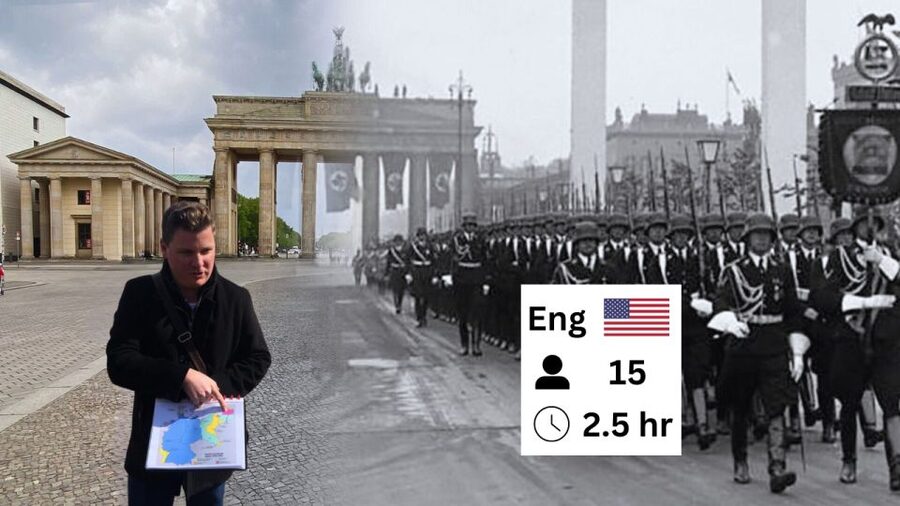
Berlin keeps its darkest history in plain sight. This 150-minute walking tour links the places where democracy was dismantled, terror was organized, and Nazi Germany finally collapsed. I like its clear timeline and its focus on real sites rather than grand speeches. The main drawback is simple: you will walk a considerable distance outdoors, so bad weather can change the mood fast.
I also like the use of historic maps and Then & Now photographs, which help you picture streets that were damaged, rebuilt, or altered beyond recognition. Guides such as Scott, Hannah, Matt, and Mark have been praised for making difficult material understandable and welcoming questions. Still, this is a serious tour, not light sightseeing, and some stops can be emotionally heavy.
Key points to know before you book
- A full Nazi-era timeline: The tour follows the rise of Hitler’s regime, its system of repression, and the collapse of Berlin in 1945.
- Major sites in one walk: You visit the Reichstag, Hitler’s bunker site, the Holocaust Memorial, the former Gestapo and SS headquarters, and the Soviet War Memorial.
- Outdoor history only: Indoor museum exhibitions are not included, so plan a separate visit to the Topography of Terror if you want to see its exhibits.
- Strong guide-led interpretation: Scott, Hannah, Matt, Mark, Jörg, Ben, and other guides have been praised for clear explanations, warmth, and thoughtful answers.
- Good value for serious history: At $47 per person, the price pays for a specialist guide and a structured explanation of sites that can otherwise feel disconnected.
- Weather matters: Wear comfortable shoes, bring water, and carry your own umbrella or walking aid if needed.
Why this Berlin history walk works
Berlin is full of memorials, government buildings, empty sites, and fragments of the past. Without context, you can walk from one to the next and miss the connections. This tour gives you a sequence: how the Nazis gained power, how they controlled the country, how persecution became mass murder, and how the regime ended in military ruin.
That structure is the tour’s greatest strength. You are not simply shown a bunker, a memorial, and a government building. You are told why each place matters and how it fits into the larger story.
The focus is the period from 1933 to 1945, with attention to politics, ideology, military events, propaganda, repression, and daily life. The subject is difficult, but the stated approach is direct and accessible rather than theatrical. There are no gimmicks, costumes, or attempts to make Nazi history into entertainment.
The guides also seem comfortable with different levels of prior knowledge. If you already know the broad story of the Second World War, you can ask more detailed questions. If the subject is new to you, the explanations are designed to make the basic sequence easier to follow.
More Guided Walks in Berlin:
- Berlin: Third Reich & Cold War Guided Walking Tour
★ 4.9 · 8,378 reviews - Berlin: Hidden Backyards Guided Walking Tour
★ 4.8 · 5,360 reviews - Berlin: City Street Art Guided Walking Tour
★ 4.8 · 1,051 reviews
Beginning at Brandenburg Gate
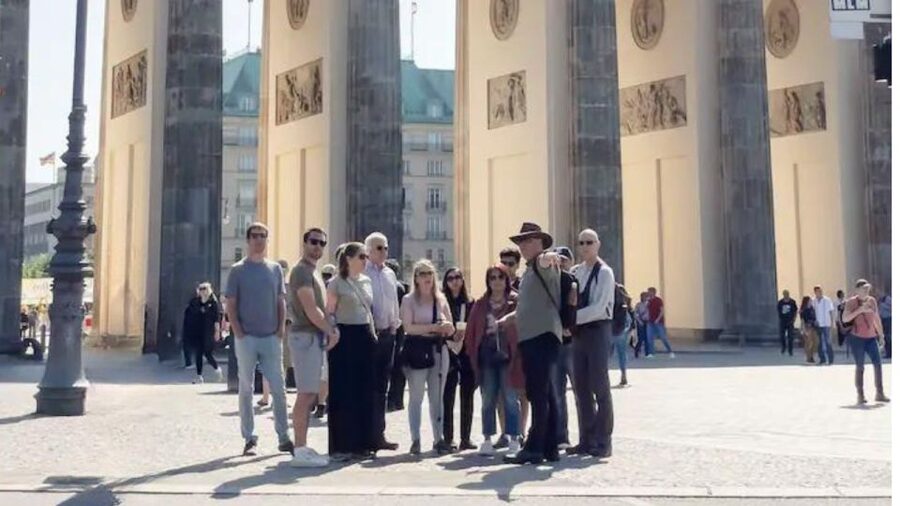
You meet at the Tourist Office near Brandenburg Gate and look for the blue umbrella. This is a practical meeting point in central Berlin, but it can be busy, so arrive with enough time to locate the guide rather than cutting it close.
The gate is a useful place to begin because it connects several chapters of German history. On this walk, it helps frame Berlin as a capital where democracy, dictatorship, war, division, and reunification have all left their mark.
You spend about 10 minutes here for a visit, photographs, and an introduction to the route. That may not sound long, but the value comes from the guide’s explanation rather than from simply looking at the monument.
The tour then moves to the Memorial to the Sinti and Roma Victims of National Socialism. This stop broadens the story beyond the persecution of German and European Jews. You are reminded that Nazi racial policy targeted several groups, including Sinti and Roma people.
Allow yourself a quiet moment here. The tour is designed to explain, but not every stop needs constant talking. Some memorials are best understood with a little space for thought.
The Reichstag and the destruction of democracy
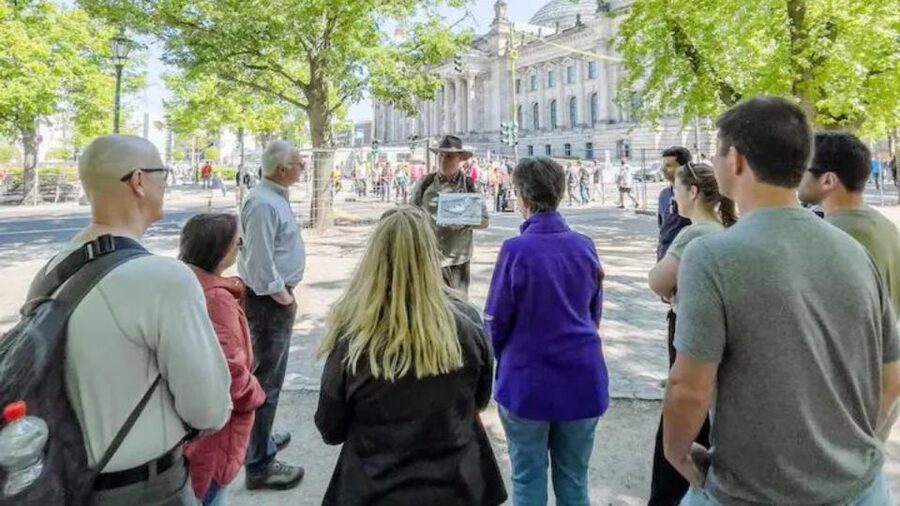
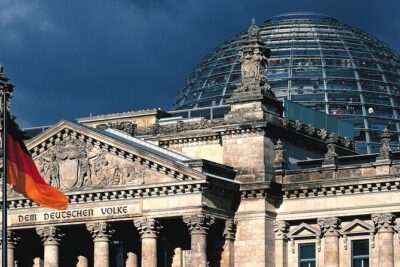
The Reichstag receives around 20 minutes. You visit the exterior area and hear how the building came to symbolize German democracy, dictatorship, and later unity.
This is one of the most useful stops for understanding the beginning of Nazi rule. Hitler did not simply arrive in Berlin and take total control overnight. The process involved elections, political maneuvering, emergency powers, intimidation, and the steady removal of democratic safeguards.
A guide can make those steps easier to grasp. The Reichstag is not only a grand building to photograph. It helps you ask how a democratic system can be weakened from within and how political fear can change public behavior.
Do not expect an indoor parliament tour or access to the Reichstag dome as part of this experience. The emphasis is on the historical setting and the story explained outdoors.
The Soviet War Memorial in Tiergarten
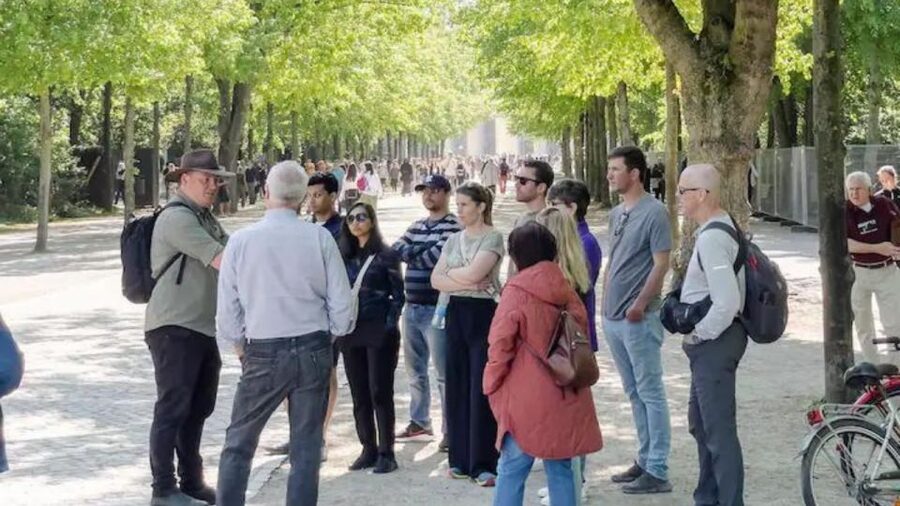
The route continues to the Soviet War Memorial in Tiergarten, where the stop lasts about 20 minutes. This memorial recalls the Soviet dead of the Battle of Berlin and the final military defeat of Nazi Germany.
It is also a reminder that the end of the war in Berlin was brutal. The city was not merely liberated in a neat final scene. Fighting took place across streets and neighborhoods, leaving enormous destruction and civilian suffering.
The memorial adds an important military chapter to a tour that otherwise concentrates heavily on political persecution and state terror. You can also see how postwar memory was shaped by the Soviet presence in Berlin.
This is one place where the guide’s use of historic maps can be especially helpful. Berlin today is orderly and rebuilt in many areas. Maps and older images help you understand how the final battle affected the city and why certain memorials were placed where they are.
A few more walks around Berlin worth a look
- Discover Berlin Half-Day Walking Tour
★ 5.0 · 9,624 reviews - Berlin City walk Government District and Places of Democracy
★ 4.7 · 8,467 reviews - Berlin: Discover Berlin Walking Tour
★ 4.9 · 5,998 reviews - Berlin’s Best: 2 Hour Walking Tour Third Reich and the Cold War
★ 5.0 · 5,486 reviews
The Holocaust Memorial and the question of memory
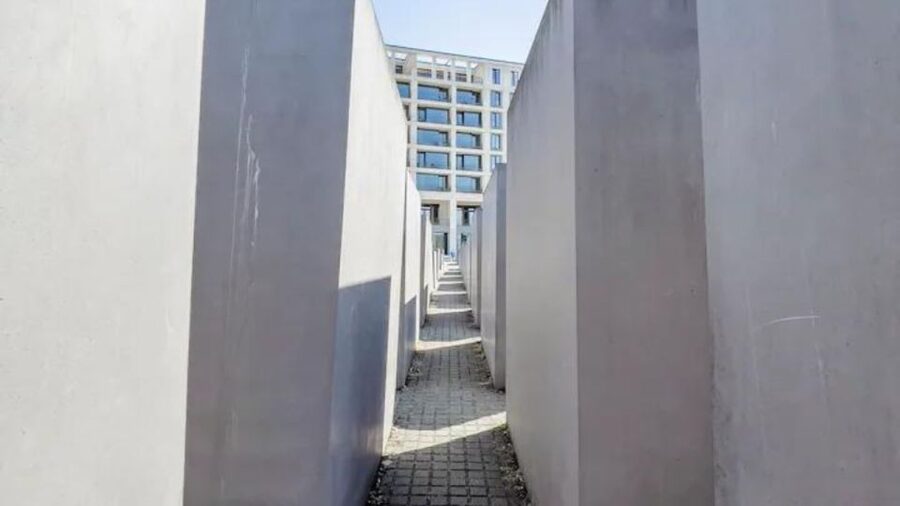
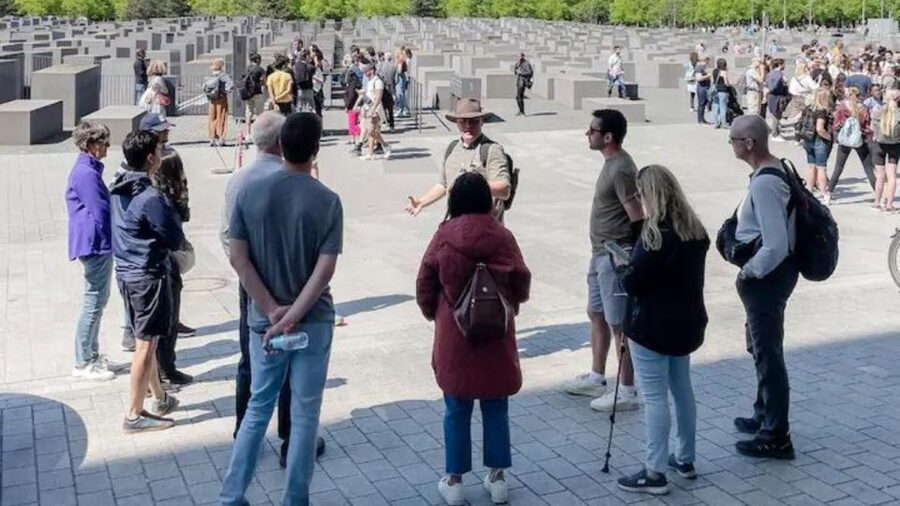
The Memorial to the Murdered Jews of Europe is given about 20 minutes. Its field of concrete blocks is visually simple but physically disorienting as you walk through it. The changing height and narrow paths create an experience that words alone cannot provide.
Your guide explains the memorial and places it within the story of systematic persecution and murder. This is not just a stop about the Holocaust as an event in the past. It also raises questions about how a modern city remembers crimes committed by its government and society.
The memorial can be busy, and people do not always behave with the seriousness the site deserves. A guide helps keep the focus on its purpose and gives you historical grounding before you walk among the blocks.
This section may be emotionally demanding. If you need a quiet pause, take it. The 150-minute schedule includes walking and discussion, but the subject deserves more than a rushed checklist.
Hitler’s bunker site and the final days
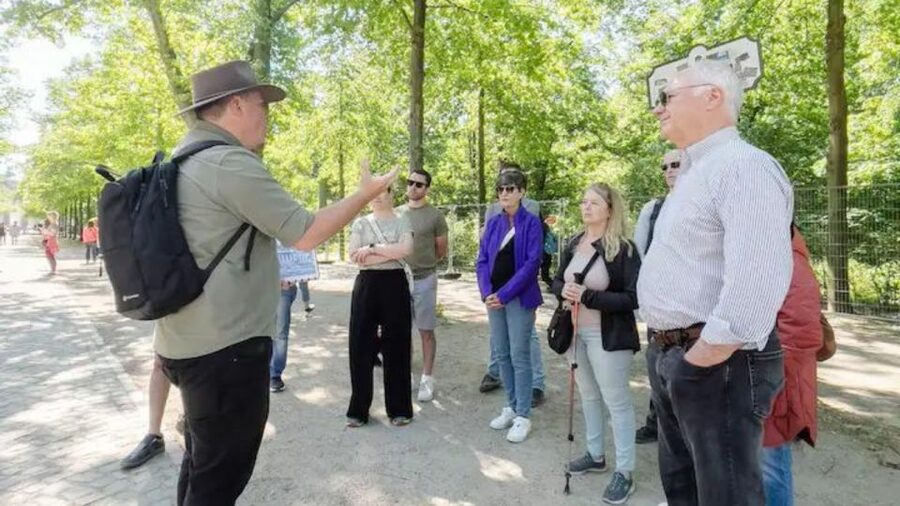
The former Führerbunker site receives about 15 minutes. There is no grand underground attraction to visit here. The bunker itself is gone, and the location is marked in a low-key way rather than turned into a shrine.
That restraint matters. The site is important because the war in Europe ended here in the final days of Hitler’s regime, but there is no need to glorify the dictator or turn the location into a spectacle.
This stop works best with a guide. Without explanation, you may see an ordinary urban area and wonder why it appears on a history walk. With the wider story, the site becomes a place to discuss the regime’s last days, the destruction around the government quarter, and the collapse of Nazi power.
It is also a useful point for separating fact from popular myths. A good guide can explain what is firmly established and place the bunker within the final military and political breakdown.
Johann Georg Elser and resistance from within Germany
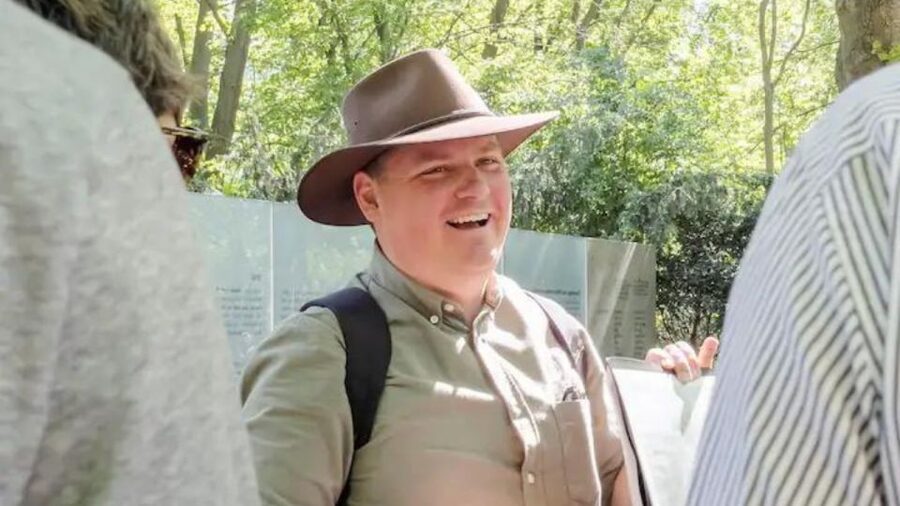
The Johann Georg Elser Memorial offers a different angle on Nazi Germany. Elser attempted to kill Hitler with a bomb in 1939, before the war had reached its later scale.
This brief 10-minute stop reminds you that opposition existed, even under a system built on surveillance and fear. Resistance was dangerous and often isolated, and it should not be used to soften the responsibility of the wider regime. Still, understanding individual acts of opposition gives a fuller picture of German society under Hitler.
The memorial helps move the story beyond leaders, armies, and official buildings. You are encouraged to think about personal decisions, moral courage, and the risks faced by people who acted against the dictatorship.
The German Finance Ministry and the machinery of power
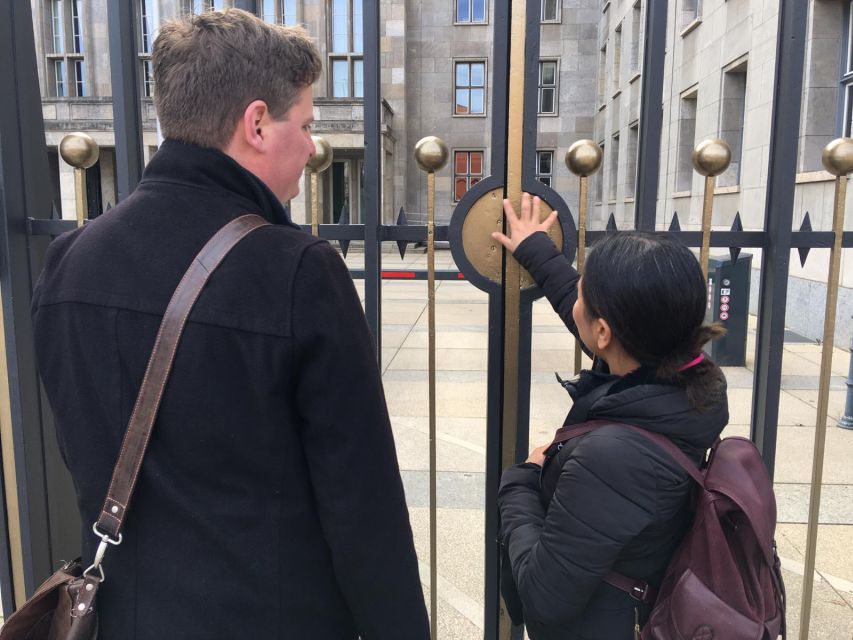
The German Finance Ministry is a short stop, about five minutes, but it has a useful role in the route. Government is not maintained by speeches alone. A dictatorship also needs offices, officials, laws, money, records, and systems of administration.
This stop helps show how Nazi rule operated through ordinary institutions as well as police organizations. The building also links the tour’s political story to the practical business of running a state at war.
Five minutes will not cover every detail. Think of it as a connective stop between the personal story of resistance and the larger machinery of repression.
The former Gestapo and SS headquarters
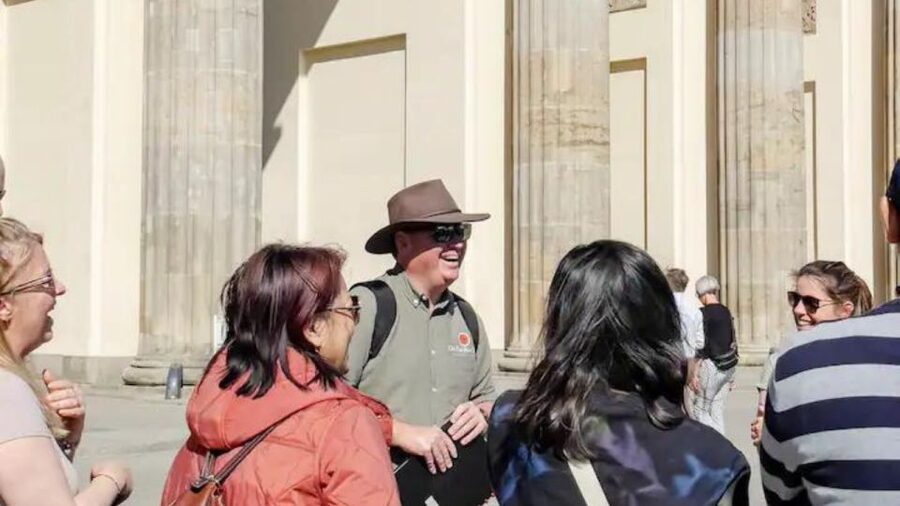
The walk finishes at the Topography of Terror, on the site of the former Gestapo and SS headquarters. You spend about 15 minutes with the guide outside.
This was a nerve center of Nazi terror. The Gestapo and SS were central to surveillance, arrests, interrogation, persecution, and mass violence. Standing at the site gives the political story a physical address. Terror was not an abstract force. It was planned and administered through offices in Berlin.
The exterior portion is included in the walk, but indoor museum exhibitions are not. That is an important distinction. If you want to spend time with documents, photographs, and displays at the Topography of Terror, plan a separate visit after the tour.
Ending here makes sense. The route begins with the visible symbols of government and democracy and concludes with the institutions that enforced dictatorship. You finish with a clearer idea of how Nazi power functioned, not just how it ended.
What the guides add
The guide is the heart of this experience. The company describes its guides as historians with academic backgrounds in Second World War history, and the strongest feedback has focused on clear teaching, enthusiasm, and the ability to answer questions in detail.
Scott has been praised for his calm, friendly delivery and strong command of the material. Hannah is noted for combining historical explanation with personal stories and a thoughtful sense of perspective. Matt has been singled out for making complex subjects easy to remember and for giving detailed answers without making people feel uncomfortable asking questions.
Other guides, including Mark, Jörg, Ben, and Matthew, have also been praised for warmth and enthusiasm. One particularly useful quality is the willingness of some guides to spend extra time when the group needs it. That cannot be guaranteed, but it suggests a teaching style rather than a rushed march from point to point.
The best part of a live tour is the question period. You can ask about political events, military decisions, ordinary life, resistance, memorial design, or the postwar rebuilding of Berlin. A guide can also clarify where popular stories are exaggerated or incomplete.
The walking, pace, and weather
The tour lasts 150 minutes and covers many central locations. You should expect a considerable amount of walking, with pauses for explanation and photographs.
Wear comfortable shoes. Bring water, especially in warmer weather. The route is outdoors, so a waterproof layer is sensible even when the forecast looks promising. You need to bring your own umbrella or walking stick if required.
Weather can affect the experience. A downpour may make it harder to hear and less pleasant to stand at memorials, although guides have been praised for keeping the group engaged and, in some cases, helping with umbrellas. That is a bonus, not something to rely on.
The tour is listed as wheelchair accessible, but the amount of outdoor walking still makes it wise to consider your own comfort and mobility needs. If you use a wheelchair, ask the operator for current route details before booking.
There is no hotel pickup, public transport, food, or drink included. That keeps the price focused on the guide, but you should arrive prepared and know how you will reach the starting point.
Is $47 a fair price?
At $47 per person, this is not the cheapest way to walk around central Berlin. You can visit many of these locations on your own for free.
The value comes from the connections. A self-guided walk may show you the Reichstag, the Holocaust Memorial, and the bunker site, but it is harder to understand the order of events and the links between them. A specialist guide also gives you the chance to ask questions on the spot.
The small-group format is another advantage. It allows more interaction than a large group with a guide speaking through a microphone. The exact group size is not provided, so do not assume it will feel private, but the experience is intended to be more personal.
I consider the price fair for visitors who want a serious introduction to Nazi Berlin and do not want to spend hours building their own route and reading background material. It is less useful for anyone seeking a general city tour or a mostly visual sightseeing walk.
Who should book this tour?
This tour suits you if you want a clear account of Nazi Germany in Berlin, prefer a live guide to an audio app, and are willing to spend two and a half hours with difficult subject matter.
It is also a good choice if your knowledge is uneven. You do not need to be a Second World War expert, and you can ask for more detail if you already know the basics. Families with older teenagers may find the walk worthwhile, though parents should judge whether the subject is suitable for their children.
You may want to choose another activity if you dislike walking, need frequent indoor breaks, or mainly want to see museum collections. This experience does not include the indoor exhibitions at the Topography of Terror, and it cannot replace a longer museum visit.
The route is also not designed to cover all of Berlin’s twentieth-century story. The emphasis is Hitler’s rise and fall, Nazi repression, the Holocaust, the final battle, and selected examples of memory and resistance. For the Cold War, the Berlin Wall, or Jewish life before 1933, you will need other tours or museums.
Should you book Hitler’s Berlin?
I would book this tour if you want history explained in a logical order and prefer meaningful sites over a long list of photo stops. The Reichstag, Holocaust Memorial, bunker site, Soviet War Memorial, and Topography of Terror form a strong route, and the guides appear to be the main reason the experience works so well.
Book it early in your Berlin stay if possible. The walk can give you useful context for later visits to museums and memorials. Bring good shoes, water, and weather protection, then leave room afterward for a quiet break or a visit inside the Topography of Terror.
At $47, it offers good value for a specialist history walk. Just know what you are buying: not a cheerful overview of Berlin, but a serious, carefully explained route through the places where democracy failed, terror was organized, and the Nazi regime ended in destruction.
FAQ
Where does the tour begin?
Meet at the Tourist Office near Brandenburg Gate. Look for the guide holding a blue umbrella.
Where does the tour finish?
The walk finishes at the Topography of Terror.
How long does the tour last?
The tour lasts 150 minutes, or two and a half hours.
What language is the tour offered in?
The live guided tour is offered in English.
Is the tour indoors or outdoors?
The tour takes place outdoors. Indoor museum exhibitions are not included.
Does the tour include entry to the Topography of Terror exhibitions?
No. The tour visits the site, but access to the indoor exhibitions is not included.
Is the tour wheelchair accessible?
Yes, the activity is listed as wheelchair accessible. It also involves considerable outdoor walking, so consider your personal mobility needs before booking.
What should I bring?
Wear comfortable shoes and dress for the weather. Bring water, and bring your own umbrella or walking stick if you need one.
Just added around Berlin
- Berlin Walking Tour★ 4.5 · 378 reviews
- Small Group Walking Tour of East Berlin with a French Guide★ 5.0 · 176 reviews
- Berlin Street Art Walking Tour – Off The Grid★ 5.0 · 270 reviews
- Berlin Highlights Private Guided Walking Tour★ 4.5 · 89 reviews
- Private Walking Tour: World War 2 and Cold War Sites in Berlin★ 5.0 · 230 reviews
- East Meets West: Berlin Food Culture & Street Art★ 5.0 · 157 reviews
- Kreuzberg Berlin: Off the Beaten Track PRIVATE Walking Tour★ 5.0 · 128 reviews
- The History of Berlin: WWII PRIVATE Walking Tour With Locals★ 5.0 · 209 reviews
Berlin Walking Tours, compared.

Berlin City walk Government District and Places of Democracy
Read our review →
Berlin’s Best: 2 Hour Walking Tour Third Reich and the Cold War
Read our review →

Explore Berlin: See All The Iconic Sights & Some Hidden Gems
Read our review →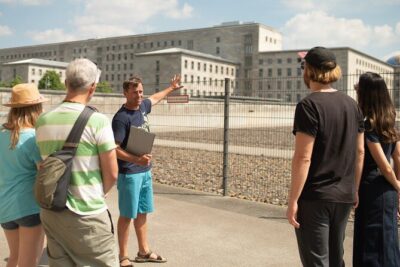
Third Reich Berlin: Hitler and WWII Walking Tour
Read our review →Browse the lists this tour appears in