
Review · GERMANY WALKING TOURS
Bremen: City Center Guided Walking Tour
Bremen rewards slow looking. This two-hour walking tour links the city’s grandest sights with its oldest lanes, giving you a useful first picture of Bremen without draining your day. I like the strong route, which covers the market square, Böttcherstraße, and Schnoor, and I like the guides’ mix of history, jokes, and local stories. The main drawback is the uneven footing, including cobblestones and tram tracks, so wear sensible shoes.
At $14 per person, this is an easy tour to fit into a Bremen visit. Guides such as Pierre, Rima, Guido, Hans, and Viveka have been praised for clear English, good pacing, and real enthusiasm for the city. Still, two hours goes quickly, and some stops may feel brief if you want long museum visits or detailed architectural study.
Key points to know before you go
- Three essential districts in two hours: The route connects the market square, Böttcherstraße, and the Schnoor quarter.
- A strong introduction to Bremen: The guide explains how the city’s past shaped its buildings, customs, and local culture.
- A lively meeting point: Start beside the Tourist Information at the Glockenspiel House, Böttcherstraße 4.
- A mostly easy urban walk: The route covers about 2 kilometers, but expect cobblestones, uneven ground, and tram tracks.
- Guides make the difference: Pierre, Guido, Rima, Hans, and others have been praised for humor, clear English, and energetic storytelling.
- Good value for a short visit: At $14, the tour is especially useful if you have only a day in Bremen.
Starting beside the Glockenspiel House
The meeting point is on the right side in front of the Tourist Information at the Glockenspiel House, Böttcherstraße 4. This is a practical place to begin because Böttcherstraße itself becomes one of the tour’s main sights.
I suggest arriving with a few minutes to spare. The route passes through busy public spaces, and the guide may need to gather the group before beginning. One guide was praised for waiting until everyone had arrived at each stop before speaking, a small habit that makes a big difference when streets are crowded.
The tour is offered with an English-speaking guide, with German listed for certain options. The English guides have been praised for being easy to understand, and several have handled questions well. Guido even led a bilingual tour in English and German, showing how the experience can work for mixed-language groups when that option is available.
The walk covers about 2 kilometers. That is not a demanding distance for most people, but the ground is not always smooth. You will cross cobblestones and may encounter tram tracks, so flat, comfortable shoes are a better choice than anything delicate or slippery.
More Guided Walks in Germany:
- Berlin: Third Reich & Cold War Guided Walking Tour
★ 4.9 · 8,378 reviews - Berlin: Hidden Backyards Guided Walking Tour
★ 4.8 · 5,360 reviews - Bamberg: Guided Walking Tour
★ 4.6 · 3,202 reviews
Bremen’s market square, the city’s grand stage
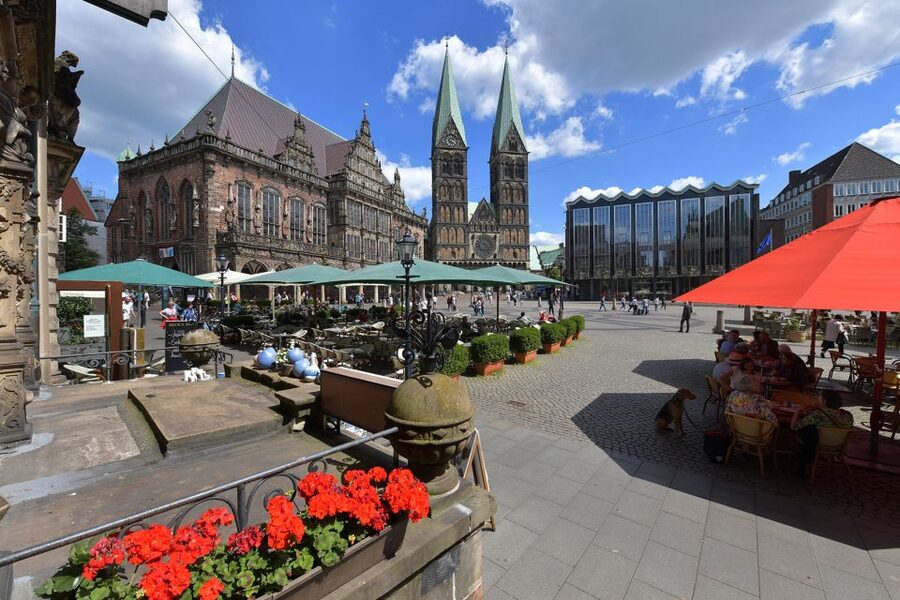
The market square is the natural opening chapter. It is the heart of Bremen and one of the prettiest squares in Germany, with a striking mix of civic buildings, religious architecture, public art, and old merchant-city character.
The UNESCO World Heritage listed town hall is the main architectural prize. Your guide can help you read the building rather than simply photograph it. Look closely at its formal front, decorative details, and position beside the cathedral. The square works best when you understand that these buildings were designed to project civic power and pride.
Nearby, the stone statue of Roland adds another layer. Roland is not simply a medieval figure placed in a convenient spot. He represents the city’s rights and independence, and his presence helps explain why this square mattered so much to Bremen’s people and rulers.
The St. Petri Cathedral gives the square a strong vertical focus. You will see it from outside, and guides may sometimes arrange access inside buildings depending on conditions and opening arrangements. A cold, rainy-day tour once included time in the cathedral and part of the parliament, which shows how a good guide can adjust the route when weather or access allows. These extra stops should not be treated as guaranteed features, but they can make a difficult day more comfortable.
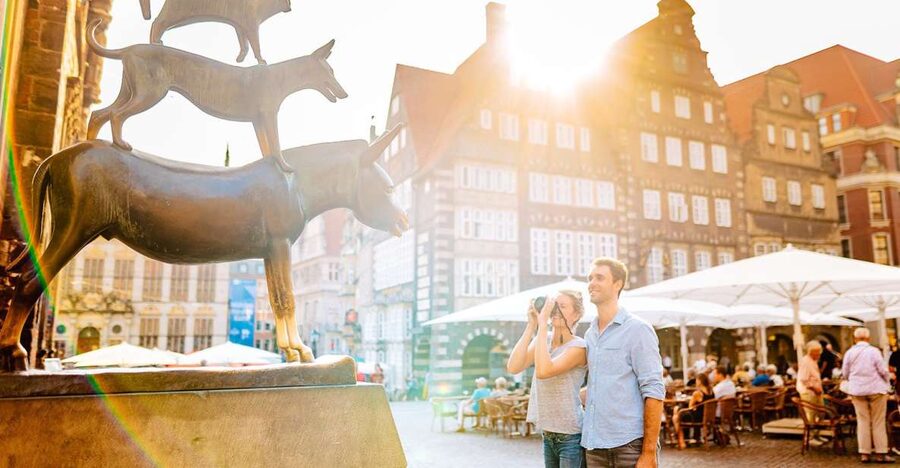
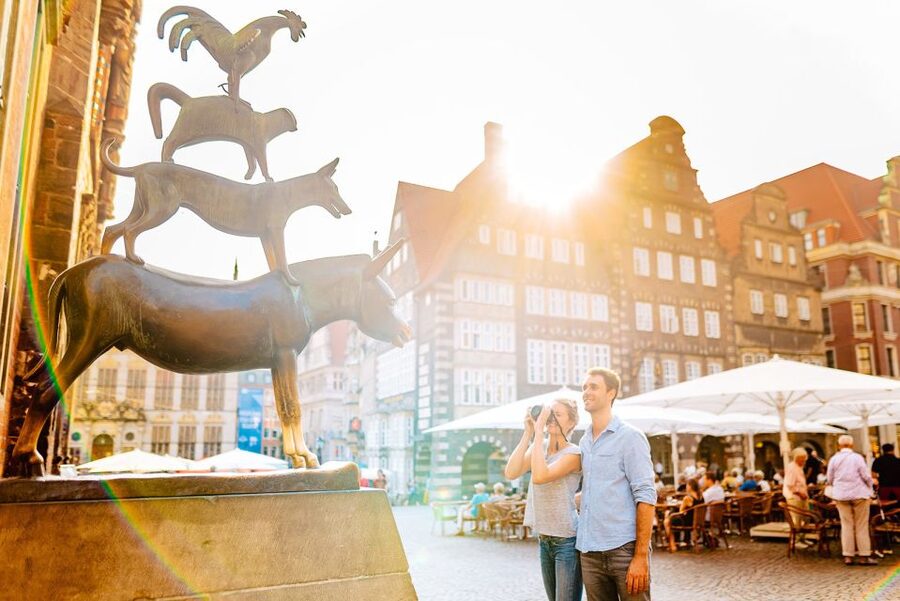
The most playful sight here is the sculpture of the Bremen Town Musicians. The animal group comes from the Brothers Grimm fairytale, and it is one of the city’s best-known symbols. Your guide will likely explain the story and the local custom of touching parts of the statue for luck.
This is a good place to pause and take photographs, but remember that the square is also a working public space. Events can cause short-term route changes, and the guide may need to move the group to one side before explaining the sights.
Böttcherstraße, where old trade meets Expressionism
From the market square, the tour moves through Böttcherstraße. The street once belonged to the cooper trade, where böttcher made wooden barrels. Today, it is a compact architectural experience that feels unlike the broader market square.
The red-brick buildings give the street a strong northern German identity. Their dark, textured surfaces are easy to admire at street level, but the most interesting feature is the way traditional brickwork meets modern Expressionist design. Old trade, civic pride, and twentieth-century artistic ideas all share this narrow pedestrian passage.
I like this part of the tour because it gives you something more than a list of dates. The guide can explain how a street built around practical work became one of Bremen’s most famous attractions. You can look at the shapes, arches, brick patterns, and changing building fronts while hearing how the street developed.
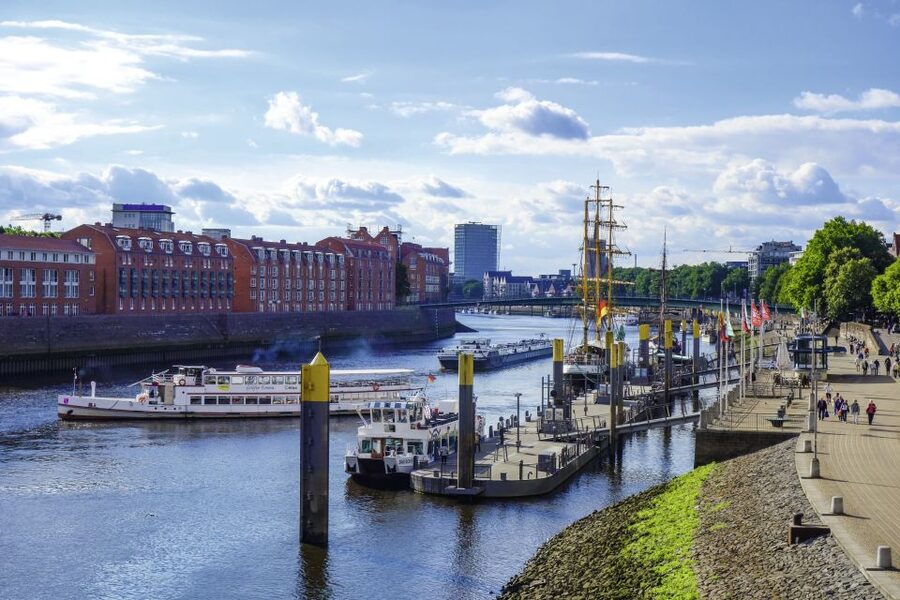
Böttcherstraße leads down toward the Weser River, and its compact layout keeps the walking easy. It is also the kind of place that can look different on the return visit. The first time, you notice the overall drama. After the guide points out details, you start seeing the brickwork and Expressionist forms separately.
Some tours have included small tastings from local shops, along with beer or other local delicacies. These extras appear to depend on the guide and the day, so do not book the tour expecting a formal food program. If a tasting happens, it adds a pleasant local touch, but the main value here remains the architecture and the story behind the street.
Schnoor quarter, Bremen’s oldest lanes
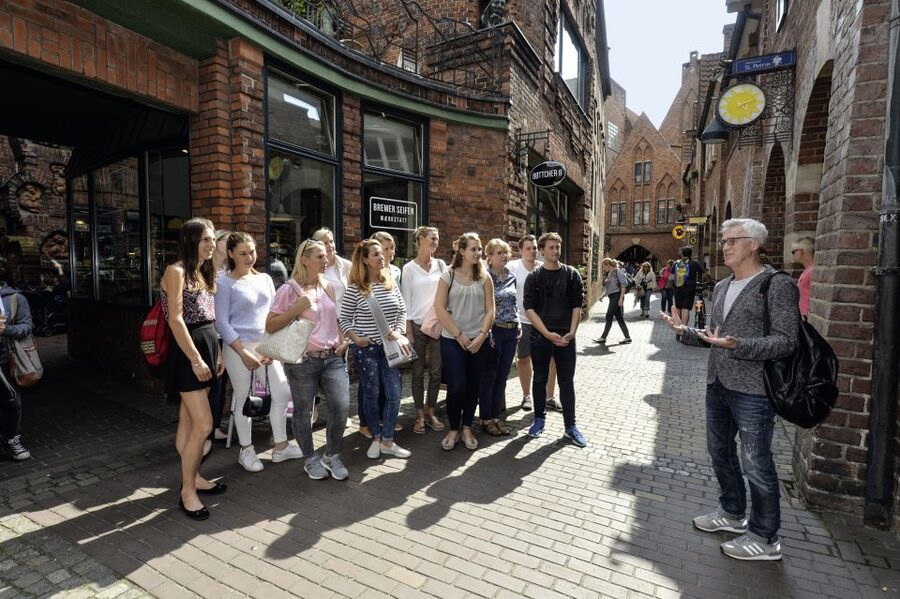
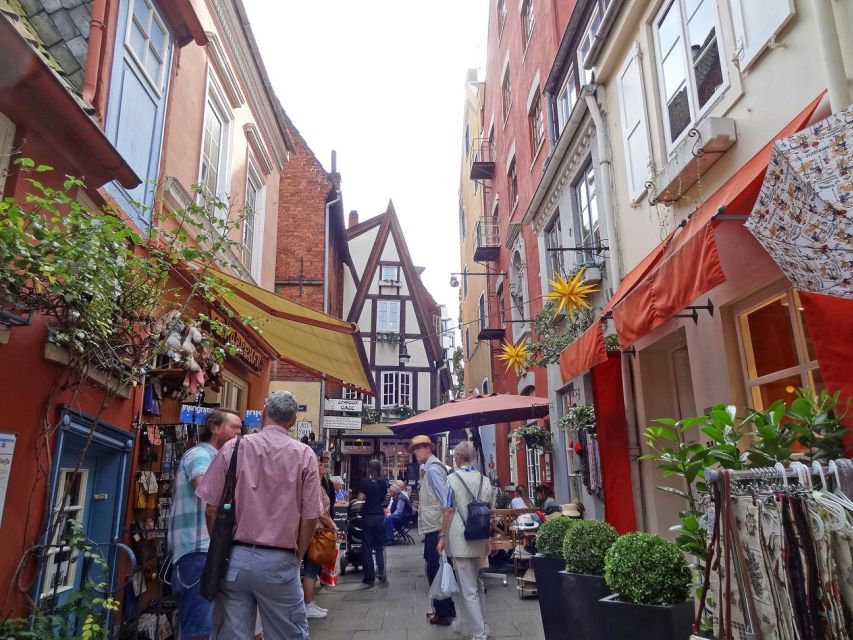
The Schnoor quarter is often the emotional high point of the walk. It is the oldest part of Bremen, a compact district of narrow, winding lanes where fishermen, artisans, and sailors once lived.
The scale changes quickly. After the large market square and the carefully composed Böttcherstraße, Schnoor feels intimate and slightly tangled. Its lanes invite you to slow down, look up, and notice how close the buildings sit to one another.
Your guide can give meaning to the small streets by explaining the people who once lived and worked here. Without that context, you might simply see attractive old buildings. With it, the quarter becomes a picture of working Bremen, shaped by trade, the river, craft, and daily life.
Today, Schnoor has cafés, restaurants, handicraft shops, and other small businesses. That makes it pleasant to explore after the tour, but it also means the quarter is not a preserved time capsule. The modern shops are part of its current character, while the narrow lanes and old building forms keep its earlier identity visible.
Several guides have been praised for saving the best for last, and Schnoor explains why. It is a rewarding final district because it feels personal and atmospheric rather than monumental. You will likely want extra time here after the guided walk ends, especially if you enjoy browsing small shops or stopping for a meal.
The narrow streets can become crowded, and the uneven ground is more noticeable here. Stay close enough to hear the guide, especially when the group turns into a side lane or gathers near a shopfront.
A few more walks around Germany worth a look
- Discover Berlin Half-Day Walking Tour
★ 5.0 · 9,624 reviews - Berlin City walk Government District and Places of Democracy
★ 4.7 · 8,467 reviews - Munich: Third Reich & WWII Walking Tour
★ 4.6 · 6,181 reviews - Berlin: Discover Berlin Walking Tour
★ 4.9 · 5,998 reviews
Guides who add life to the buildings
The route matters, but the guide is what turns this from a map-following exercise into a proper introduction to Bremen. The strongest praise has gone to guides who combine facts with stories, humor, and a clear affection for the city.
Pierre has been singled out for his energy and entertainment, as well as his command of Bremen’s past. Rima has been praised for excellent English, a good walking pace, and detailed answers to questions. Guido brought bilingual skill, patience, and Hanseatic humor to his tour.
Other praised guides include Hans, Viveka, Ewa, Herman, Eric, Anika, Sonya, and Patricia. The names matter less than the pattern: the best guides make the city easy to follow and connect architecture with local life.
You should expect differences in style. One guide may lean into jokes and lively anecdotes, while another may focus more on civic history or architecture. That variety is normal for a live walking tour. What remains consistent is the route and the chance to ask questions as you go.
The guides also appear to manage groups thoughtfully. One guide kept people moving at a steady pace, while another made sure nobody was left behind before beginning each explanation. That is particularly helpful in the market square and Schnoor, where it is easy for a group to spread out.
Is two hours enough for Bremen?
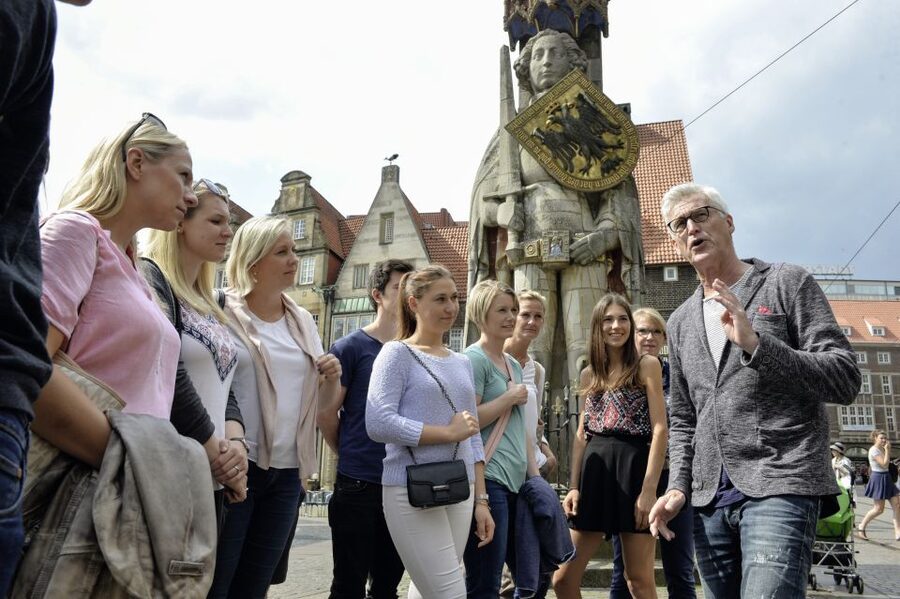
Two hours is enough for a strong orientation, not a full study of the city. You will see the major central sights and understand how they relate to one another, but you will not have time for long interior visits at every stop.
Some reports describe a route lasting about 1 hour and 45 minutes, while the advertised duration is two hours. That small difference is unlikely to matter for most visitors, but you should avoid scheduling an immediate train, meal, or museum appointment at the exact finishing time.
The quick pace can be a benefit. You cover a lot without giving up the rest of your day, and the route suits a first afternoon in Bremen. The downside is that architecture fans may want more time at the town hall, cathedral, and Böttcherstraße than the tour allows.
I would use this tour as a framework. Afterward, return to the market square for closer photographs, spend extra time in Schnoor, or explore any building that caught your attention. A guided walk works best when it gives you better questions for the rest of your visit.
Value, weather, and practical comfort
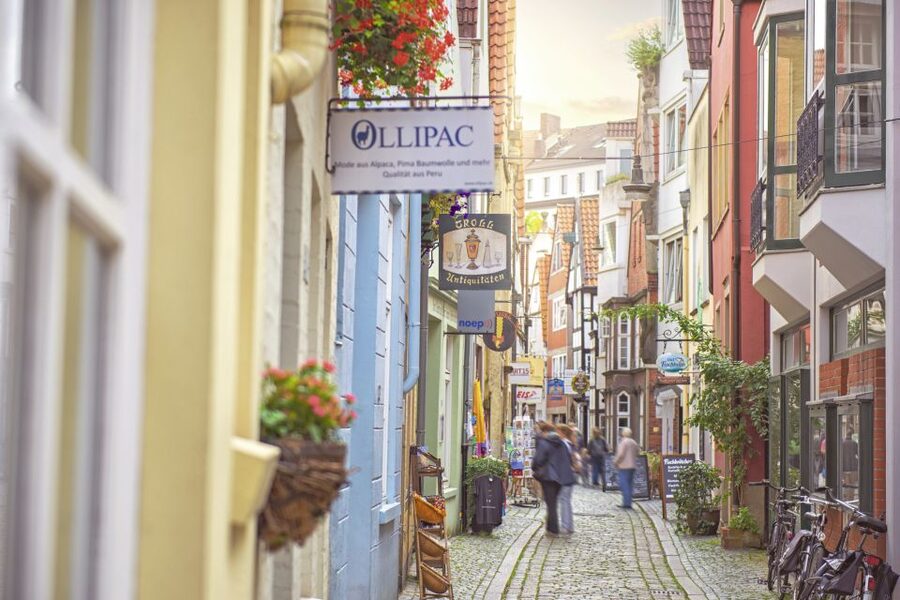
At $14, the price is low for a live two-hour introduction to three of Bremen’s most important central areas. You are paying for route planning, local explanation, and the ability to ask questions, not for entry to a series of museums.
That matters because Bremen’s center is easy to walk through but harder to understand at a glance. The guide points out why the town hall and Roland matter, gives Böttcherstraße a trade and architectural backstory, and turns Schnoor from a pretty quarter into a place connected to working people.
Bring weather protection. Bremen can be drizzly, windy, and chilly, and one winter group completed its walk in particularly unpleasant conditions. The guides can make bad weather more bearable with humor and indoor pauses when possible, but clothing still matters.
The walk is listed as wheelchair accessible, though uneven ground, cobblestones, and tram tracks may affect comfort. If you use a wheelchair or have limited mobility, check the route conditions for your chosen date and be prepared for possible changes during city events.
Who should book this Bremen walking tour?
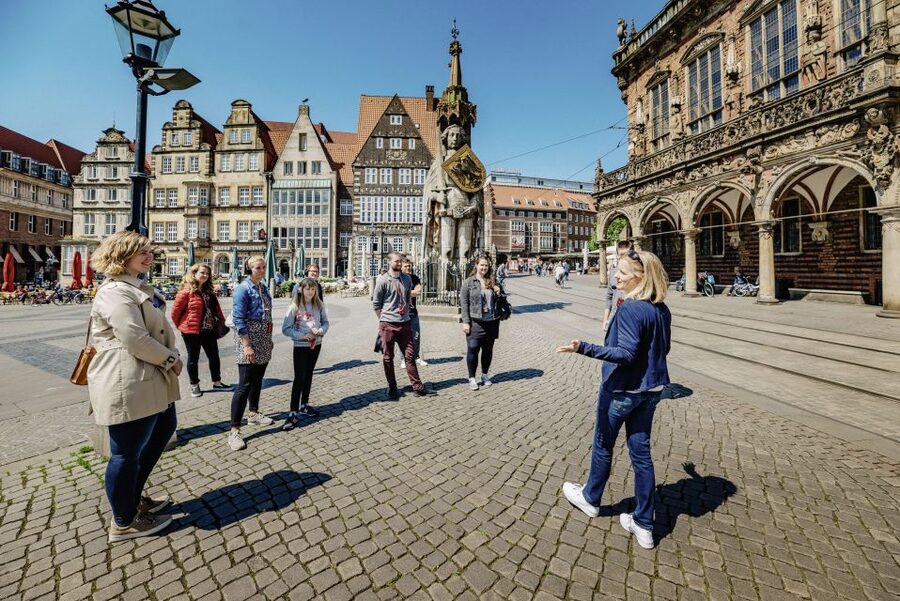
I would recommend it most strongly for first-time visitors, short-stay guests, cruise passengers with limited time, and anyone who likes learning the story behind a place. It also suits independent explorers who want a useful orientation before setting off on their own.
Families may appreciate the short route and the Bremen Town Musicians, though the cobblestones and narrow lanes require care. Architecture fans will enjoy the contrast between the Gothic and civic setting around the market square, the traditional red brick of Böttcherstraße, and the Expressionist details along the same street.
You may want a different experience if you dislike group walks, need long stops for photography, or prefer museum interiors to street history. This is an overview on foot, not a private architectural seminar.
Should you book it?
Book this tour if you want to understand Bremen quickly and see the city’s central highlights with a human guide beside you. The $14 price is hard to fault, and the strongest feature is the combination of a smart route with guides who bring humor, local pride, and clear explanations.
For the best experience, wear shoes with a firm sole, allow a little flexibility around the two-hour finish, and save extra time afterward for Schnoor. If you have only one day in Bremen, this is a sensible first activity. If you already know the center well, choose it only if you want fresh stories, architectural details, or the chance to hear the city explained by someone who truly enjoys it.
FAQ
How long is the Bremen city center walking tour?
The tour lasts two hours. Some tours may finish slightly earlier, with one reported route lasting about 1 hour and 45 minutes.
How much does the tour cost?
The price is $14 per person.
What language is the tour offered in?
An English-speaking live guide is available. German is also listed for certain options.
Where does the tour meet?
Meet on the right side in front of the Tourist Information at the Glockenspiel House, Böttcherstraße 4.
What places does the tour visit?
The route includes Bremen’s market square, the town hall, Roland statue, St. Petri Cathedral, the Bremen Town Musicians sculpture, Böttcherstraße, and the Schnoor quarter.
How far does the tour walk?
The route is approximately 2 kilometers long.
Is the tour wheelchair accessible?
The activity is listed as wheelchair accessible. Some parts of the route have uneven ground, cobblestones, and tram tracks, so conditions may affect comfort.
Can the route change?
Yes. Short-term changes are possible when events affect the city center.
Can I cancel the tour?
You can cancel up to 24 hours in advance for a full refund. A reserve-now, pay-later option is also available.
Just added around Germany
- Berlin Walking Tour★ 4.5 · 378 reviews
- Small Group Walking Tour of East Berlin with a French Guide★ 5.0 · 176 reviews
- Berlin Street Art Walking Tour – Off The Grid★ 5.0 · 270 reviews
- Berlin Highlights Private Guided Walking Tour★ 4.5 · 89 reviews
- Private Walking Tour: World War 2 and Cold War Sites in Berlin★ 5.0 · 230 reviews
- East Meets West: Berlin Food Culture & Street Art★ 5.0 · 157 reviews
- Kreuzberg Berlin: Off the Beaten Track PRIVATE Walking Tour★ 5.0 · 128 reviews
- The History of Berlin: WWII PRIVATE Walking Tour With Locals★ 5.0 · 209 reviews
Germany Walking Tours, compared.

Berlin City walk Government District and Places of Democracy
Read our review →

Berlin’s Best: 2 Hour Walking Tour Third Reich and the Cold War
Read our review →

Explore Berlin: See All The Iconic Sights & Some Hidden Gems
Read our review →Browse the lists this tour appears in