
Review · HISTORY WALKING TOURS
Bucharest: Communism and History Guided City Walking Tour
Bucharest’s past is written into its streets. This three-hour walk connects the Patriarchal Cathedral, Antim Monastery, the huge Parliament building, Calea Victoriei, and Revolution Square to explain how communism changed Romania and everyday life. I especially like the use of real places rather than a classroom-style lecture, and the personal stories that guides such as Andreea, Daniela, Mihai, and Octavian bring to the route.
The tour also handles the less visible side of the period: food shortages, nationalisation, surveillance, forced demolition, and the fear created by the Secret Police. The main drawback is that it is entirely outdoors, takes place rain or shine, and includes enough walking that comfortable shoes are essential.
Key points to know before booking
- Three hours on foot: The route covers around 15 places between the Patriarchal Cathedral and Revolution Square.
- Parliament is viewed from outside: You get a clear explanation of the House of the People, but this experience does not include an interior visit.
- Personal stories add weight: Guides often use family memories, photographs, and everyday examples to explain what life was like under Nicolae Ceaușescu.
- The route covers more than famous buildings: You will hear about religion, nationalisation, food supplies, secret police activity, forced demolitions, and the 1989 Revolution.
- A short café break is included: You pay for anything you order, while a communist-era style snack is provided during the tour.
- Best for first-time visitors: The walk gives you a useful framework for understanding Bucharest before exploring more of the city on your own.
Why this Bucharest history walk matters

Bucharest can be hard to read at street level. A grand boulevard may hide a demolished neighbourhood. A church may have survived only because it was moved. A plain apartment block may tell you more about nationalisation than a polished museum display.
That is the strength of this tour. You are not simply shown monuments. You are given a timeline and then asked to notice how political decisions changed the city around you.
The focus is Romania under communist rule, especially the years connected with Nicolae Ceaușescu. You will also hear how the regime began, how it controlled public and private life, and how it ended in December 1989. The story continues into the present because the guides explain how that period still affects Romanian society.
The tour has earned a very strong 4.9 rating from 918 ratings, and the praise is remarkably consistent. The most valued qualities are the guides’ clear English, personal examples, patience with questions, and ability to make recent history understandable without turning the walk into a dry list of dates.
More History Walking Tours in the world:
- History and Hauntings of Salem Guided Walking Tour
★ 5.0 · 14,564 reviews - Lisbon: History, Stories and Lifestyle Walking Tour
★ 4.8 · 10,902 reviews - Boston: Freedom Trail History Small Group Walking Tour
★ 5.0 · 6,450 reviews
Starting at the Patriarchal Cathedral
Meet in front of the Patriarchal Cathedral, reached from Piata Unirii, also called Union Square. You will need to walk uphill from the metro area to the cathedral, so allow a little extra time and wear shoes with a firm grip.
This first stop does more work than you might expect. The cathedral introduces the place of religion in communist Romania, while also setting up the political events that led to the communist takeover. It helps you understand that the story did not begin with Ceaușescu’s grand buildings. It began with a major change in power and the reshaping of Romanian public life.
Starting here also gives the walk a useful human scale. You begin with a religious building and questions about belief, authority, and survival before moving toward the monumental projects of the dictatorship.
The meeting point is easy to identify, but the uphill approach from Piata Unirii may be tiring for anyone with mobility problems. The tour provider specifically says it is not suitable for wheelchair users or people with back problems.
Nationalisation and the ordinary Bucharest neighbourhood
From the cathedral, the group moves through a nearby neighbourhood where the guide explains nationalisation. This part of the walk is valuable because it shifts attention away from politicians and toward homes.
Nationalisation meant that private property could be taken by the state. On a street of ordinary buildings, the subject becomes much easier to grasp. You can connect policy with the people who lost homes, businesses, or control over their own property.
The guides use this area to explain how communist decisions affected families and communities. Details will vary with the guide, but the goal is clear: to show how large political ideas reached directly into private life.
This is also one reason to take the tour early in your Bucharest visit. Once you understand what nationalisation meant, you may look at older buildings and mixed neighbourhoods with a sharper eye. The city begins to feel less like a collection of unrelated sights.
Facing the House of the People
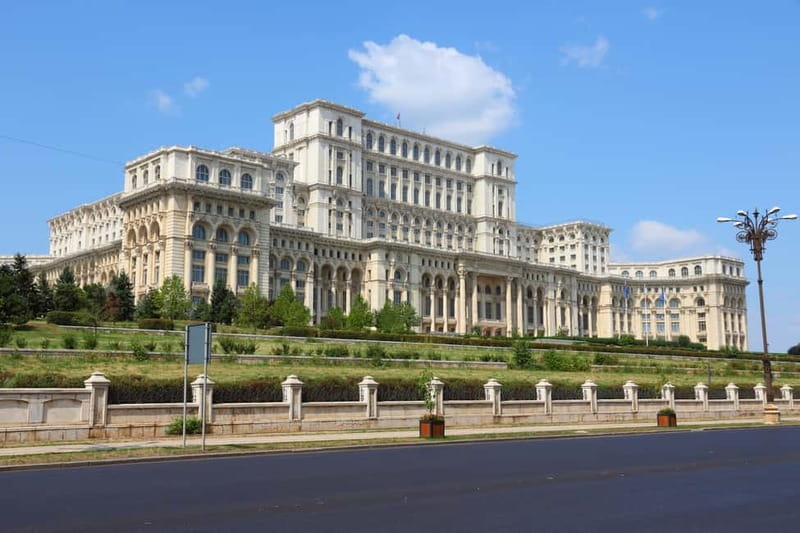
The Parliament building, once called the House of the People, is the most dramatic visual stop. You will see it from outside and hear how its construction became a symbol of Ceaușescu’s megalomania and the communist state.
The scale of the building is the point. It was not designed as a modest government office. Its size, position, and construction carried a message about state power. The guide explains the decisions behind the project and the destruction required to make room for it.
Do not book this tour expecting an inside visit. The Parliament is an exterior stop only, with time for photographs and explanation. That limitation matters if you want to tour the building’s interior, since you would need to arrange that separately.
Still, the outside view works well in the context of this walk. You do not just see a massive structure. You learn what it represented, what changed around it, and why Bucharest is often described as having suffered one of the largest peacetime destructions of a European city.
The building is one of the places where the tour’s central idea becomes clear: architecture can be political, and urban change can carry a heavy human cost.
More Guided Walks in the world:
- Magical London: Harry Potter Guided Walking Tour
★ 4.7 · 22,044 reviews - Amsterdam Anne Frank: Small-Group Walking Tour & Local Guide
★ 4.8 · 12,789 reviews - Edinburgh: Harry Potter Magical Guided Walking Tour
★ 4.8 · 11,944 reviews - Edinburgh Castle: Guided Walking Tour with Entry Ticket
★ 4.7 · 11,699 reviews
Antim Monastery and buildings that survived
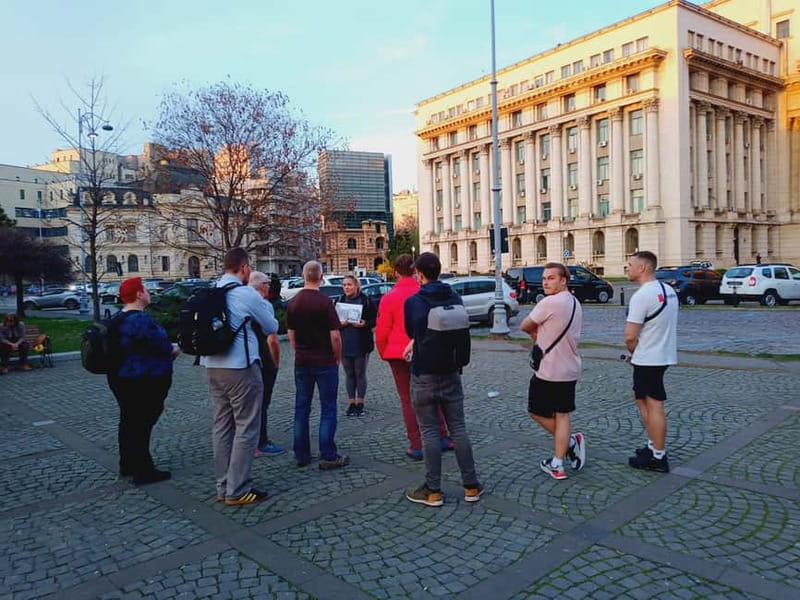
The walk continues to buildings that were moved or otherwise saved from demolition. Antim Monastery is an especially important stop because it shows that the communist redevelopment plan was not simply about adding new buildings. It also threatened older religious and historic places.
Seeing Antim Monastery in this setting gives you a useful contrast with the Parliament area. One represents an older Bucharest shaped by religion and earlier traditions. The other represents a dictatorship determined to remake the capital according to its own image.
The guide explains how some buildings were physically moved to protect them from destruction. This is one of the route’s most memorable ideas because it makes the scale of the redevelopment easier to picture. Preservation was not always a matter of placing a building behind a barrier. In some cases, survival meant relocating the structure itself.
The stop is brief, around 20 minutes, but it has a clear purpose. It helps you see that Bucharest’s communist story includes both destruction and determined efforts to save what could be saved.
A coffee break and a taste of daily life
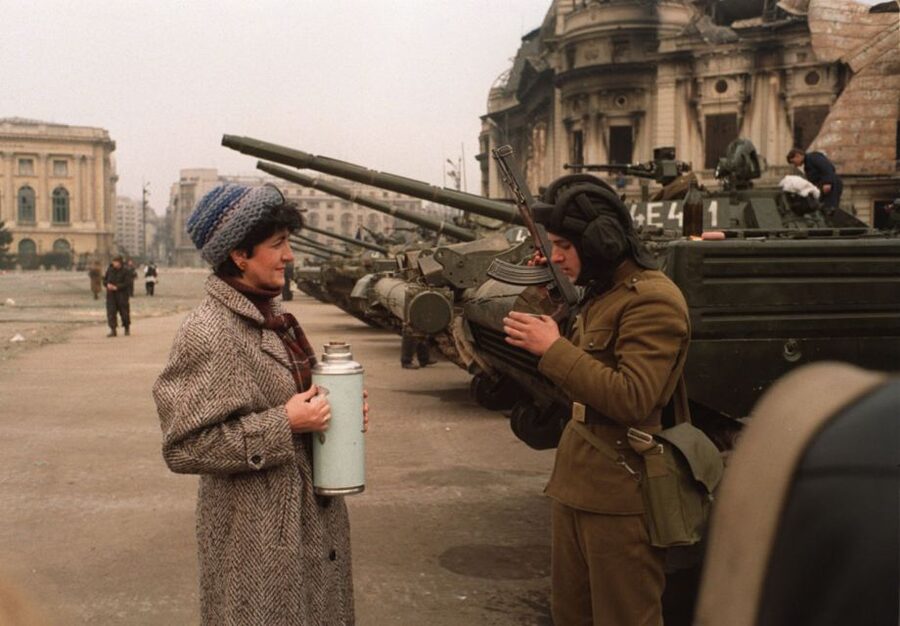
About halfway through the walk, you get a short break at a local café. You pay for your own drink or food, and the break provides time to sit, use the bathroom, and let the earlier information settle.
A small communist-style snack is included. One guide has used a rum-flavoured biscuit associated with that period to give the group a sensory link with the past. That detail may sound minor, but food is an effective way to discuss shortages, rationing, and the practical struggle of feeding a family.
The next stop at an old Alimentara, or grocery store, builds on this theme. Here, the guide explains the well-being of ordinary people and the realities of shopping during communism. The focus is not only on official policy but also on what people could find, what they had to wait for, and how daily routines changed.
This section is among the tour’s strongest because it makes history personal without relying only on dramatic political events. You may remember the grocery store more clearly than another grand building because it connects directly with ordinary needs.
Calea Victoriei and the power of surveillance
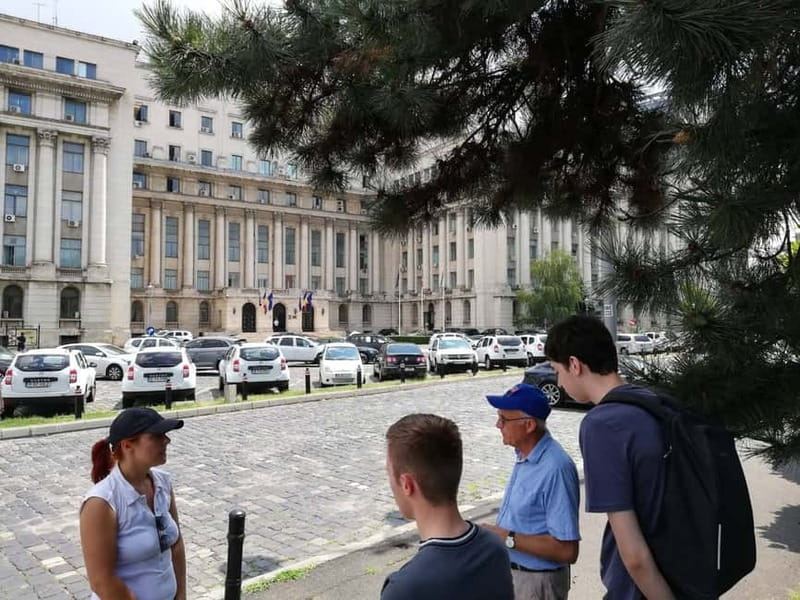
After the break, the walking pace becomes more relaxed as the group reaches Calea Victoriei, one of Bucharest’s most attractive streets. The boulevard provides a change of mood and lets you see how older city architecture sits alongside reminders of the communist period.
The guide points out communist symbols and a former Secret Police centre associated with torture. This is a darker part of the route, handled through explanation rather than spectacle. The purpose is to show how surveillance and fear helped the regime control people.
For many people, the Secret Police is an abstract term until it is connected with a real building in a real street. That physical connection gives the subject more force. You begin to understand that intimidation was not distant or theoretical. It was part of the city’s daily atmosphere.
The walk along Calea Victoriei also brings variety to the route. You are not looking at communist architecture for three straight hours. You move through one of Bucharest’s major streets while learning how power operated behind ordinary façades.
Caru’ cu bere and the city between eras
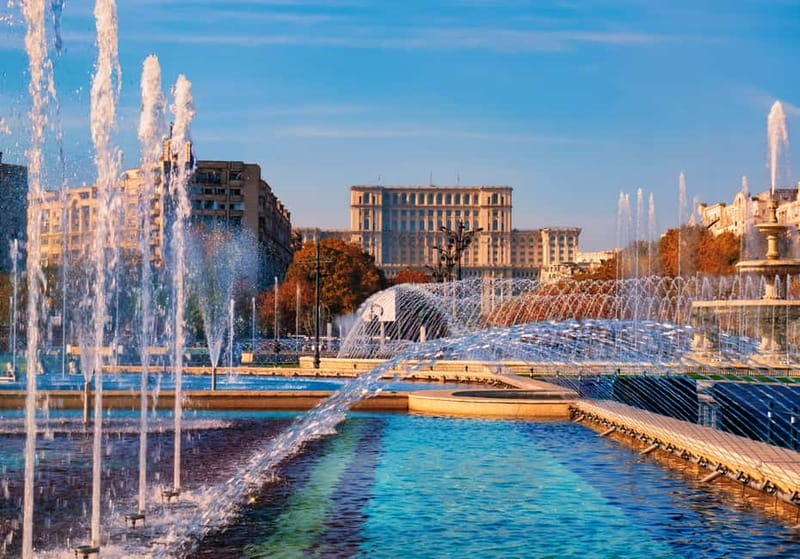
Caru’ cu bere appears as one of the route’s stops along Calea Victoriei. The guide explains the site and places it within the wider story of Bucharest.
This helps keep the walk from becoming too narrowly focused on official communist monuments. Bucharest is a city of overlapping periods, and the route uses well-known places alongside less obvious stops to show how those periods meet.
The value here comes from context. A restaurant or historic building can feel separate from political history until the guide connects it to the city’s changing public life. You learn to read the centre not as a museum frozen in one era, but as a place repeatedly reshaped by politics and social change.
Revolution Square and the end of dictatorship
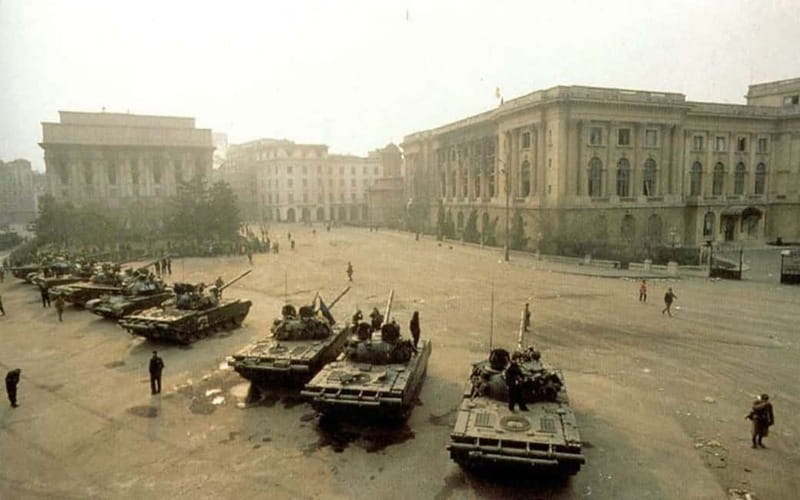
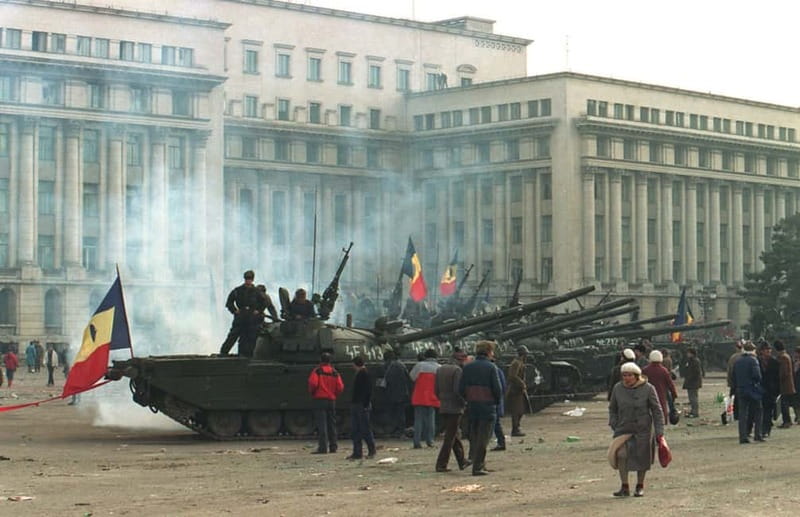
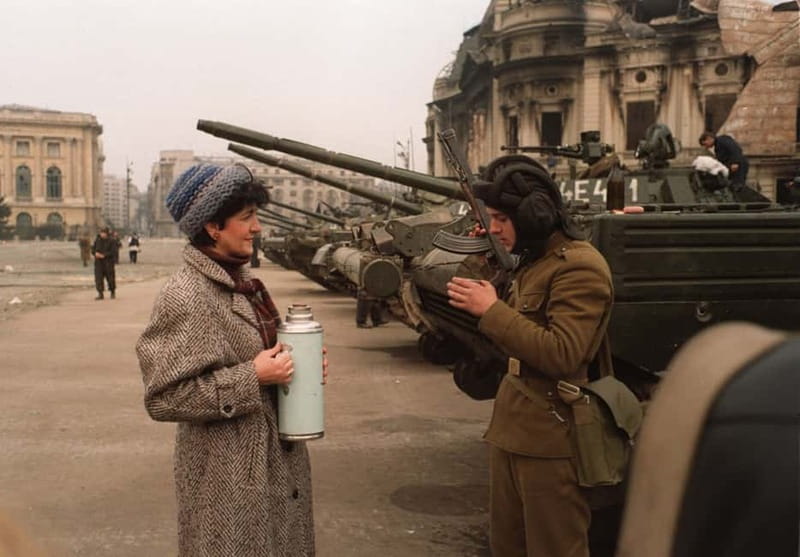
The final section leads to Revolution Square, where the tour ends. This is where the story reaches December 1989, the fall of Ceaușescu, and the beginning of democracy.
The guide reconstructs the days of the Revolution and explains how the communist regime came to an end. Because you have already heard about surveillance, shortages, urban destruction, and public fear, the final story carries more meaning than it would at the start of the walk.
Revolution Square is also a fitting place to finish because it links the past with Romania’s current political life. The experience does not present democracy as a simple ending. It shows that the transition created its own challenges and that the memory of communism remains important.
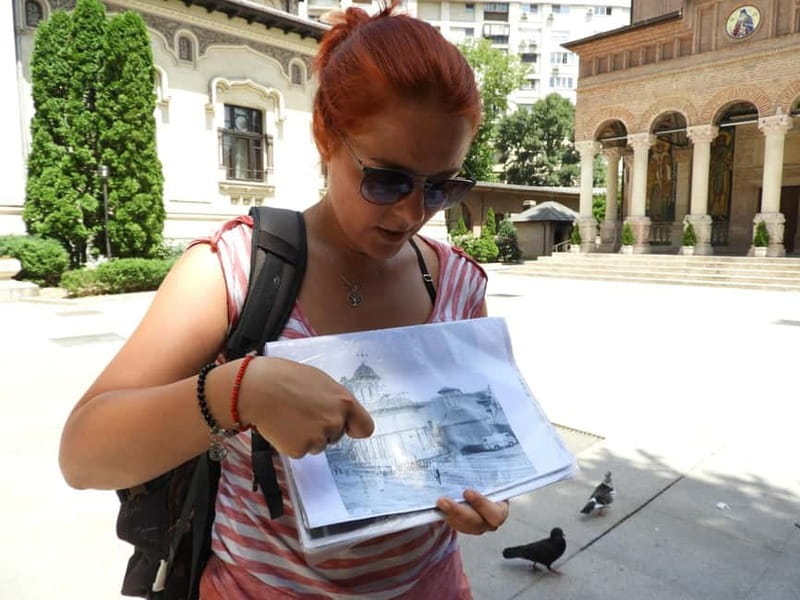
Several guides use photographs or other visual aids during the walk. That is particularly useful during the Revolution section, when images can help you connect the current appearance of the square with the events that took place there.
The guides make the difference
The guide is the most important part of this experience. Names that appear repeatedly include Andreea, Daniela, Mihai, Octavian, and Ion. Each brings a slightly different approach, but the common strengths are clear English, strong command of the subject, and a willingness to answer questions.
Andreea is praised for personal stories and careful explanations. Daniela is often described as friendly, structured, and especially good at making complex events easy to follow. Mihai brings a personal connection to the period, having lived through part of it as a child, while Octavian is known for answering questions and adding detail without making the walk feel stiff.
Ion has used family experiences from the Cold War period, and some guides bring photographs or other visual material. These touches matter because Romania’s communist period is recent enough to be remembered by families, not just studied in books.
You should feel free to ask questions. The strongest part of the guiding style is the link between national events and individual life. The guide explains not only what the government did, but also how the changes affected parents, children, workers, shoppers, religious communities, and families.
Is the $31 price good value?
At $31 per person, the tour offers solid value if you want a serious introduction to modern Romanian history. Three hours with a live English-speaking guide, around 15 stops, a café pause, and a provided period-style snack gives you more than a basic orientation walk.
The value is strongest for first-time visitors. You see several important locations, but the real benefit is the connection between them. Without a guide, you could walk past the Parliament, Antim Monastery, Calea Victoriei, and Revolution Square without understanding how they fit together.
The price does not include hotel pickup, drinks, food at the café, or an interior visit to Parliament. Those are reasonable limits, but you should budget for your own café order and arrange a separate Parliament visit if that is a priority.
Practical advice for the three-hour route
Wear comfortable shoes. The route includes an uphill walk to the Patriarchal Cathedral, several city streets, and roughly three hours outside.
Bring clothing suited to the forecast. The tour runs in normal rain and other ordinary poor weather, though it may be cancelled if heavy rain, a blizzard, extreme wind, or extreme heat makes the route unsafe.
If rain is expected, an umbrella or waterproof layer is sensible. Guides have helped groups stay comfortable in wet conditions, but you should still arrive prepared.
The tour is in English. It is not suitable for wheelchair users or people with back problems according to the stated conditions. If you need a slower or more accessible route, confirm suitability before booking.
You can cancel up to 24 hours ahead for a full refund, and the reserve now, pay later option gives you some flexibility when arranging a Bucharest itinerary.
Who should book this walk?
You should book it if you want to understand Bucharest rather than simply photograph its grand buildings. It suits people interested in twentieth-century politics, architecture, religion, democracy, family stories, and the daily effects of government policy.
It is also a strong first-day activity. The route gives you background that can make later visits to museums, churches, neighbourhoods, and government buildings more meaningful.
You may want to skip it if you dislike walking, need step-free access, want a Parliament interior tour, or prefer a light sightseeing experience with little political discussion. The subject includes dictatorship, torture, hunger, surveillance, and revolution, so it is not a cheerful highlights tour.
Should you book the Bucharest Communism and History tour?
Yes, if recent history is part of why you came to Romania. For $31, you get a well-planned route, clear explanations, personal detail, and a more useful understanding of Bucharest than you would get from viewing the main monuments alone.
I especially recommend it for first-time visitors who want the city to make sense. Book it early, arrive at the Patriarchal Cathedral with time for the uphill walk, wear good shoes, and remember that Parliament is an exterior stop only. If you are ready to listen to a difficult but important story, this tour gives Bucharest a human face.
FAQ
How long does the Bucharest Communism and History walking tour last?
The tour lasts three hours.
Where does the tour begin?
It begins in front of the Patriarchal Cathedral. The closest metro station is Piata Unirii, also known as Union Square. You must walk uphill from the square to reach the cathedral.
Where does the tour finish?
The tour finishes at Revolution Square in Bucharest.
Is the Parliament building visited inside?
No. The House of the People, now the Parliament building, is viewed from outside. The guide provides information about its construction, meaning, and place in Ceaușescu’s rule.
What language is the tour conducted in?
The live guided tour is conducted in English.
Is food or coffee included?
A communist-style snack is included. Drinks or food you choose to buy during the café break are not included in the price.
Can I cancel the booking?
Yes. You can cancel up to 24 hours in advance for a full refund. The tour also offers a reserve now and pay later option.
Just added around the world
- Walking Tour of Boston’s Freedom Trail★ 4.5 · 77 reviews
- Downtown Freedom Trail Walking Tour – History & Architecture★ 4.5 · 194 reviews
- Boston Seafood Lovers Food and History Walking Tour★ 5.0 · 208 reviews
- Boston “Death and Dying” Walking Ghost Tour★ 4.5 · 223 reviews
- Boston Food of the North End Private Walking Tour★ 5.0 · 174 reviews
- Boston Movie Mile Walking Tour★ 4.5 · 119 reviews
- 1 If By Land Walking Tours★ 5.0 · 95 reviews
- Boston History and Freedom Trail Private Walking Tour★ 5.0 · 117 reviews
History Walking Tours, compared.
History and Hauntings of Salem Guided Walking Tour
Read our review →
Freedom Trail History Small Group Walking Tour
Read our review →
Historic Charleston Guided Sightseeing Walking Tour
Read our review →
Tapas Walking Tour with Food, Wine, and History
Read our review →
Savannah History and Haunts Candlelit Ghost Walking Tour
Read our review →
A History of Terror – Belfast City Centre Walking Tour
Read our review →Browse the lists this tour appears in