
Review · BUCHAREST WALKING TOURS
Bucharest: Relics of Communism 3-Hour Walking Tour
Communist Bucharest tells its story in concrete. This three-hour walk connects Revolution Square, forgotten churches, broad Civic Centre avenues, and the huge Palace of the Parliament with the ordinary realities of life under Nicolae Ceausescu. You hear about ration cards, propaganda, the black market, and the secret police while seeing the buildings that made the regime’s power visible.
I especially like the way the tour joins everyday life to architecture, rather than treating Bucharest as an outdoor museum. I also like the small-group format, limited to 10 people, which gives you room to ask questions. The main drawback is that three hours on foot can feel long in hot, cold, or wet weather, and the Palace of the Parliament portion is an exterior-focused stop within this walk, not a full interior visit.
The strongest guides appear to be the people leading it. Elena is repeatedly praised for detailed, personal explanations and a relaxed pace. Stefan and Tudor also received warm comments for their clear storytelling, photos, and practical advice about Bucharest. At $44 per person, this is not the city’s cheapest walk, but the small group and focused subject make it good value if Romania’s recent past matters to you.
Key points at a glance
- Start where Ceausescu gave his final speech: Revolution Square gives the 1989 uprising a real location rather than a vague date in a textbook.
- See power written in concrete: The Palace of the Parliament and Civic Centre show how architecture served Ceausescu’s political ambitions.
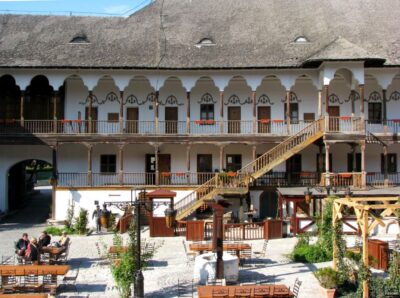
- Look beyond grand monuments: The Michael the Voivode Church helps explain what happened to older religious buildings during communist redevelopment.
- Hear about ordinary shortages: Ration cards, queues, propaganda, and black-market buying bring the period down to household level.
- Keep the group small: A maximum of 10 participants makes it easier to hear the guide and ask direct questions.
- Expect an English-language walk: The tour lasts three hours, begins at the Memorial of Rebirth, and ends at Piața Constituției.
Why this tour helps you understand Bucharest
Bucharest can be confusing at first glance. Elegant older buildings sit near concrete apartment blocks. Orthodox churches appear between wide roads and large government structures. A normal sightseeing walk may show you these sights without explaining why the city feels so uneven.
This tour supplies that missing connection. You learn how the communist government reshaped central Bucharest, especially during Ceausescu’s rule, and why so much of the historic center was altered or pushed aside. The buildings are not simply unattractive examples of old planning. They reflect an effort to create a capital organized around state power.
The tour also avoids making communism only an architectural subject. You discuss how people actually managed daily life. Ration cards controlled access to basic goods. The black market filled some gaps, though not safely or evenly. Propaganda shaped public information, while the secret police created fear and suspicion.
That balance is one of the walk’s best features. You see the official city, then hear about the private one. The grand avenues were built to project strength, but family life was shaped by shortages, rules, and uncertainty.
A few more walks around the world worth a look
- Prague: 3-Hour Walking Tour of Old Town & Prague Castle
★ 4.7 · 5,696 reviews - Experience Porto’s Charm: 3-Hour Guided Walking Tour
★ 5.0 · 2,432 reviews - Valletta: 3-Hour Walking Tour
★ 4.7 · 2,219 reviews
Revolution Square: starting beside the final speech
Meet your English-speaking guide at the Memorial of Rebirth in Revolution Square. This is the right place to begin because the square is tied directly to the collapse of Ceausescu’s regime.
The first guided section lasts about 20 minutes. You hear how the 1989 Revolution unfolded and how Romania moved from dictatorship toward democracy. The focus is not just on dates. The guide explains the meaning of the square and the events connected with the balcony where Ceausescu delivered his last public speech.
For me, this is likely to be the most emotionally charged part of the walk. The location gives the story weight. You are not hearing about a distant political change while looking at unrelated monuments. You are standing in the place where public confidence in the regime broke apart.
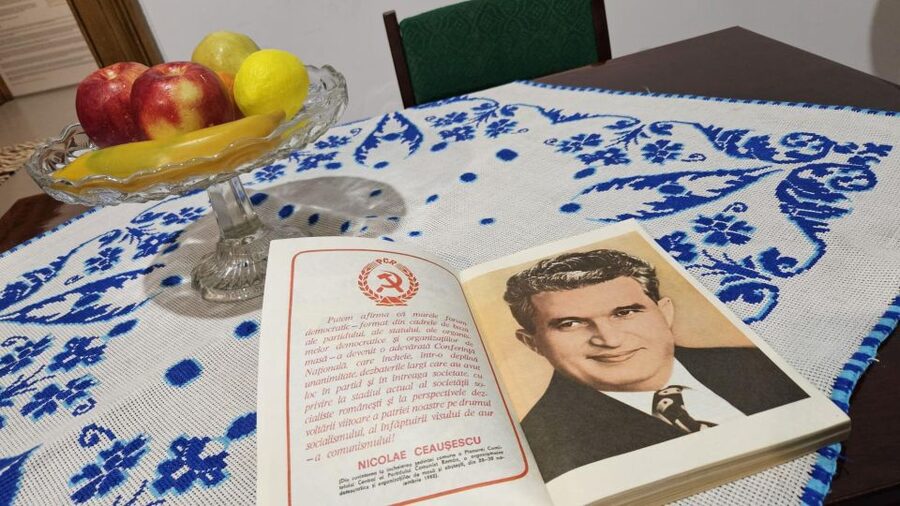
Expect questions and discussion here. Previous guides, especially Elena and Tudor, were praised for using photographs and other visual material to support their explanations. One guide even used a photographic record of the Revolution, while another brought old communist-era objects on some tours. These extras are not guaranteed, so think of them as a bonus rather than a promised feature.
The square can also be a busy urban setting, and the tour remains outdoors. You should be ready to listen while standing and moving between points.
Piața 21 Decembrie 1989 and the public memory of revolt
The next stop is Piața 21 Decembrie 1989, with about 15 minutes of guided discussion. The name itself preserves the date associated with the uprising and keeps the Revolution present in the city’s public vocabulary.
This short section works well after Revolution Square because it adds another layer to the story. You are encouraged to think about how political change appears in streets, names, memorials, and civic spaces. The tour is not only about what happened in 1989, but also about how Bucharest remembers it.
Guides are praised for giving balanced accounts and answering questions without rushing. That matters with a subject like this. Romania’s transition was not a neat switch from one system to another, and a good explanation should leave room for uncertainty and competing memories.
If your main interest is the Revolution, tell the guide early. Past participants found the guides willing to spend extra time on questions, and some tours ran beyond the scheduled length. Still, you should not assume an extended tour. The advertised duration is three hours.
Michael the Voivode Church: a quieter look at communist planning
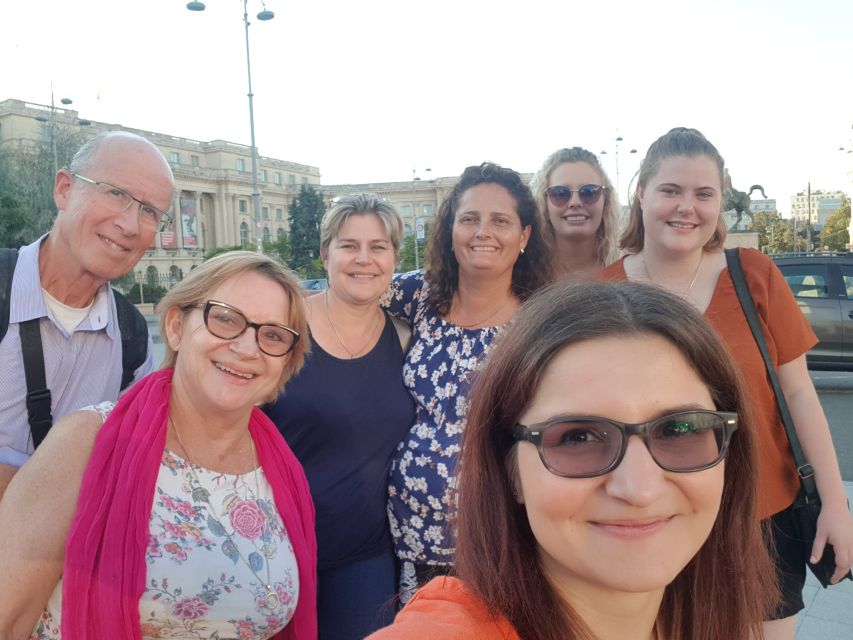
The walk then reaches Michael the Voivode Church. You have roughly 15 minutes for a visit and guided explanation.
This is where the tour moves away from the most famous political sights. The church represents the older Bucharest that survived beside, or in the path of, communist redevelopment. The experience is valuable because Ceausescu’s Civic Centre project did not simply add new buildings to an unchanged city. It changed the relationship between old religious sites, neighborhoods, and government architecture.
The phrase hidden churches is useful here. You may pass such places without noticing them, especially when your attention is pulled toward large roads and monumental buildings. The guide explains why some churches were neglected, concealed, moved, or threatened by the communist program.
Do not expect this to be a long religious art visit. The stop is brief and tied to the political story. That is a strength if you want context, but a limitation if you are seeking an extended church tour.
The contrast is especially effective: a modest, older place of worship followed by the grand scale of the Civic Centre. You begin to see the city as a record of competing ideas about Romanian identity.
Same streets, a different way to see them:
- Magical London: Harry Potter Guided Walking Tour
★ 4.7 · 22,044 reviews - Reykjavik Food Walk – Local Foodie Adventure in Iceland
★ 5.0 · 18,952 reviews - History and Hauntings of Salem Guided Walking Tour
★ 5.0 · 14,564 reviews - New Orleans Premier Ghost, Voodoo and Vampire Walking Tour
★ 4.5 · 12,856 reviews
Piața Unirii: from older Bucharest to the planned city
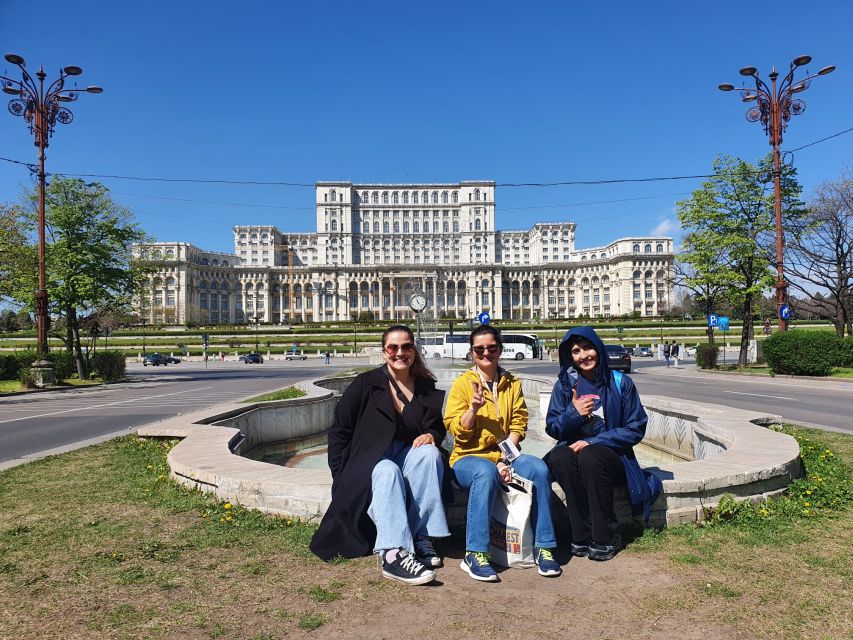
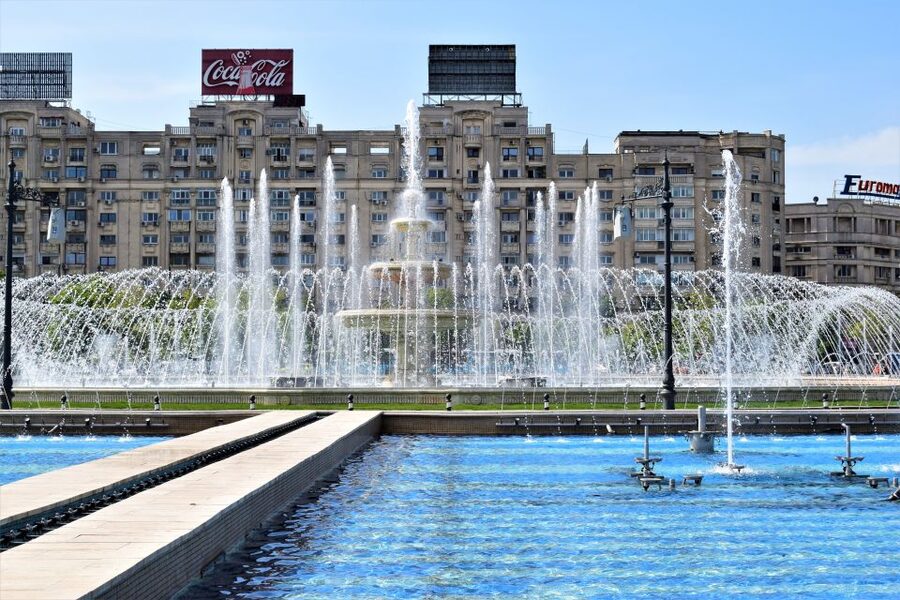
Piața Unirii receives about 15 minutes of guided attention. This part of the walk helps link the earlier historic fabric with the large-scale communist districts.
The square is useful as a transition point. Rather than moving abruptly from a Revolution site to the Palace of the Parliament, the guide shows you how Bucharest changes as you walk. Elegant architecture, older streets, communist apartment blocks, and broad modern roads do not always fit together comfortably. That awkwardness is part of the city’s story.
The guide can explain how urban planning affected movement and daily life. Large projects were meant to display order and authority, but they also changed neighborhoods and erased parts of the city. You gain a better sense of scale before reaching the Civic Centre.
This is another place where questions improve the experience. If you are curious about housing, food shortages, public buildings, or propaganda, ask. The best comments about Elena describe a guide who answered questions in detail while keeping the pace easy. That combination makes the walk feel personal rather than like a memorized speech.
The Palace of the Parliament and the Civic Centre
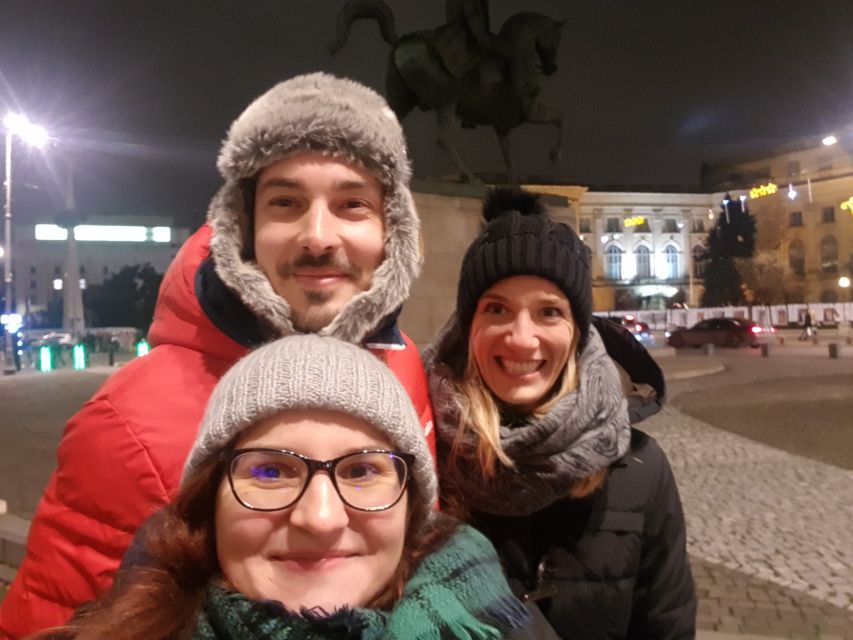
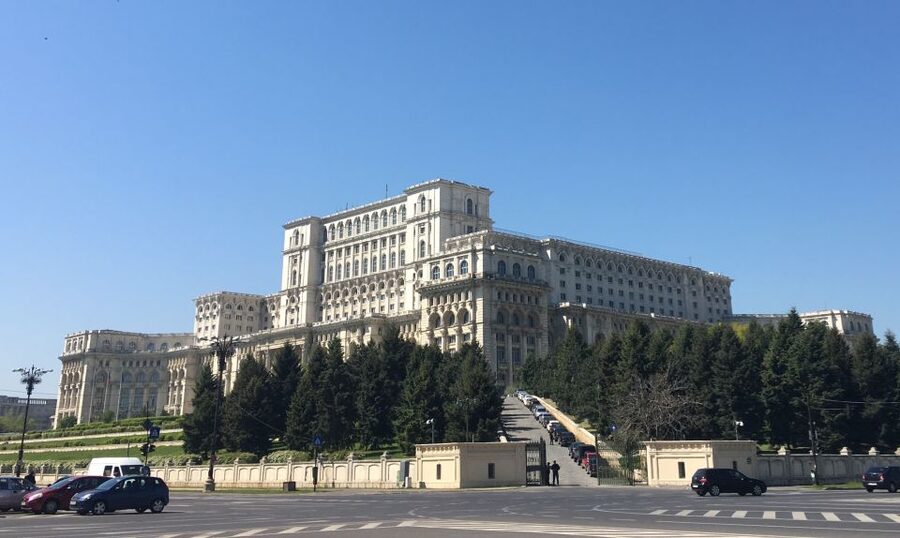
The Palace of the Parliament receives about 20 minutes of guided explanation, followed by the final walk toward Piața Constituției. This is the tour’s visual high point.
The building was planned as the absolute center of political power. Its scale makes that ambition obvious. You do not need an architectural background to understand the message: the state wanted a structure that dominated the capital and expressed the reach of the regime.
The surrounding Civic Centre buildings and wide avenues reinforce the same idea. The architecture is often described as Socialist realism, though the term covers a broad style of monumental state building. Here, the key point is less the label and more the purpose. These spaces were designed to make government authority feel permanent and overwhelming.
The guide explains how the project fit into Ceausescu’s rule and what was lost in the process. Older neighborhoods were cleared, churches were threatened, and the city was reorganized around the new center of power. The contrast between polished monumental facades and the private hardship of the period is hard to miss.
Be clear about what this experience includes. You see and discuss the Palace of the Parliament from the walking route, but the tour does not promise an interior Palace visit. If you want to go inside, you will need to arrange a separate visit. One past participant appreciated receiving help with Palace tickets after the walk, but that assistance should not be treated as a guaranteed part of the tour.
The walk ends at Piața Constituției. This is a sensible finish because you leave with the full scale of the Civic Centre in view. The route has moved from the sudden street politics of 1989 to the physical monument built to prevent such a challenge from happening again.
What daily life under Ceausescu adds to the walk
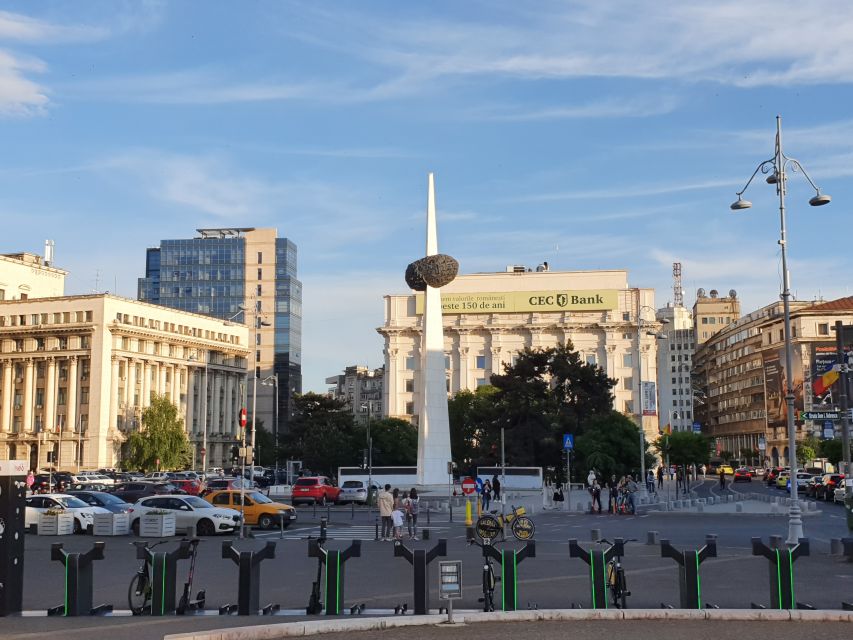
The strongest part of this experience may be the material about ordinary life. Monumental buildings are easy to photograph, but they do not tell you how people ate, shopped, worked, or trusted one another.
The guide discusses ration cards and shortages, along with the black market that grew around official limits. You hear about propaganda and the secret police, which helps explain why public behavior and private opinion could be very different.
This material gives the architecture a human scale. A huge government building may look impressive, but its meaning changes when you understand the pressure placed on Romanian households. You begin to ask who paid for these projects, who lived near them, and what everyday needs were pushed aside.
The personal style of the guides is a real advantage. Elena was praised for giving a balanced account and, at times, sharing personal connections to the period. One Bucharest-born participant found the experience emotional because she remembered 1989 as a child. That kind of response shows why the subject needs care. It is recent history, not an ancient chapter safely separated from living memory.
The tour also seems comfortable with different levels of prior knowledge. You can arrive knowing very little, or come with a strong interest in the Revolution. Guides have been praised for using light humor, photographs, old school materials, and clear answers without turning the walk into a lecture.
Pace, group size, and practical comfort
Three hours is enough time to build a serious story, but it is still a walking tour. You move between several central locations and spend time standing at outdoor stops. Comfortable shoes are a sensible choice, and you should check the weather before going.
The group is limited to 10 participants. That is a useful middle ground. You get more room for questions than on a large city tour, but you may still hear a range of interests and perspectives.
The pace appears deliberately relaxed. Elena was praised for allowing enough time at each stop, and other guides were credited with letting the tour run longer when discussion continued. Still, plan your day around the stated three-hour duration rather than hoping for extra time.
There is no hotel pickup or drop-off. You meet at the Memorial of Rebirth in Revolution Square and finish at Piața Constituției, so you should plan your own route to the start and your onward transport from the finish. The tour includes a Romanian snack souvenir, a small but pleasant local touch.
Free cancellation is available up to 24 hours before the tour for a full refund, and you can reserve now and pay later. Those terms are useful if your Bucharest plans are still shifting.
Is $44 a fair price?
At $44 per person, the cost is above what you might pay for an informal free walking tour, but the comparison is not quite fair. This is a tightly focused subject tour with a small group, an English-speaking guide, a three-hour route, and access to local interpretation that is difficult to get from signs alone.
I see the best value for someone who wants to understand Bucharest rather than simply photograph its major buildings. The price is less convincing if you only want quick exterior views or already have strong knowledge of Romania’s communist period.
The guides are the main reason the fee can make sense. Elena’s detailed answers, Stefan’s light and witty delivery, and Tudor’s use of photos and extra explanations are repeatedly praised. The tour’s value depends heavily on the individual guide, as is true of any history walk, but the available feedback points to a consistently strong guiding standard.
The Romanian snack souvenir is a nice extra, though it should not decide your booking. The real return is the explanation of places you could otherwise pass without understanding.
Who should book this Bucharest walk?
You should book it if you have an interest in the 1989 Revolution, twentieth-century European politics, urban planning, or personal stories from life under dictatorship. It is also a smart early activity in Bucharest because it gives later sightseeing more meaning.
I would recommend it to first-time visitors who want a clear introduction, as well as history-minded people who already know the basic timeline. Locals and Romanian visitors can also find value in it. A Bucharest-born participant enjoyed the tour even with personal memories of the period.
It may not suit you if you dislike walking, want a full interior tour of the Palace of the Parliament, or prefer a broad overview of all Bucharest history. The route is focused firmly on communism, the Revolution, churches affected by redevelopment, and the Civic Centre.
The small group also makes it a good choice if you prefer conversation over a large crowd. Tell the guide what interests you, and you may get useful suggestions for books, links, or other places to visit. Elena has offered those kinds of follow-up recommendations in the past.
Should you book the Relics of Communism tour?
Yes, if you want the city’s concrete monuments explained through human experience. The route is well chosen, the subject is specific, and the best guides turn political history into clear stories about food, fear, housing, propaganda, religion, and public space.
Book it early in your Bucharest stay if possible. The Revolution Square opening and Civic Centre finish can provide a useful framework for the rest of your sightseeing. Just remember that this is an outdoor walking tour, not an interior Palace visit, and allow extra energy for three hours on foot.
At $44, I would call it good value for a small group and a strong English guide. It is especially worthwhile for anyone who wants to understand why Bucharest looks the way it does today.
FAQ
Where does the Bucharest communist history tour begin?
The tour begins at the Memorial of Rebirth in Revolution Square.
Where does the tour finish?
The walk finishes at Piața Constituției.
How long does the tour last?
The scheduled duration is three hours.
What language is the tour conducted in?
The live tour guide speaks English.
How many people can join the group?
The group is limited to 10 participants.
Does the tour include hotel pickup and drop-off?
No. Hotel pickup and drop-off are not included.
Is the Palace of the Parliament visited inside?
The tour includes a guided stop at the Palace of the Parliament, but the provided details do not include an interior visit. The route focuses on seeing and discussing the Palace and Civic Centre.
What is included in the price?
The price includes the walking tour with an English guide and a Romanian snack souvenir.
Can I cancel the booking?
Yes. You can cancel up to 24 hours in advance for a full refund.
Can I reserve now and pay later?
Yes. The booking terms allow you to reserve your place and pay later.
Just added around the world
- Bern Private Walking Tour with a Local★ 4.5 · 75 reviews
- Berlin Walking Tour★ 4.5 · 378 reviews
- Bern Walking Tour: Explore Top Sights & Hidden Gems★ 5.0 · 108 reviews
- Small Group Walking Tour of East Berlin with a French Guide★ 5.0 · 176 reviews
- Berlin Street Art Walking Tour – Off The Grid★ 5.0 · 270 reviews
- Berlin Highlights Private Guided Walking Tour★ 4.5 · 89 reviews
- Private Walking Tour: World War 2 and Cold War Sites in Berlin★ 5.0 · 230 reviews
- Kreuzberg Berlin: Off the Beaten Track PRIVATE Walking Tour★ 5.0 · 128 reviews
Bucharest Walking Tours, compared.
Bucharest: City Highlights Guided Walking Tour
Read our review →
Bucharest: Communism and History Guided City Walking Tour
Read our review →
Bucharest: Hidden Markets Walking Tour with Tastings
Read our review →
Bucharest: Ghost Stories & Romanian Mythology Walking Tour
Read our review →
Bucharest: Guided Walking Tour with Romanian Snack
Read our review →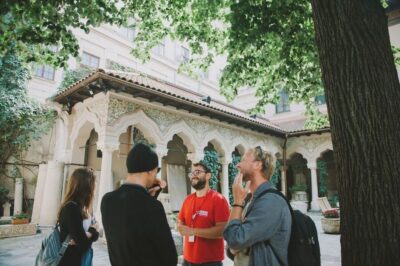
Browse the lists this tour appears in